
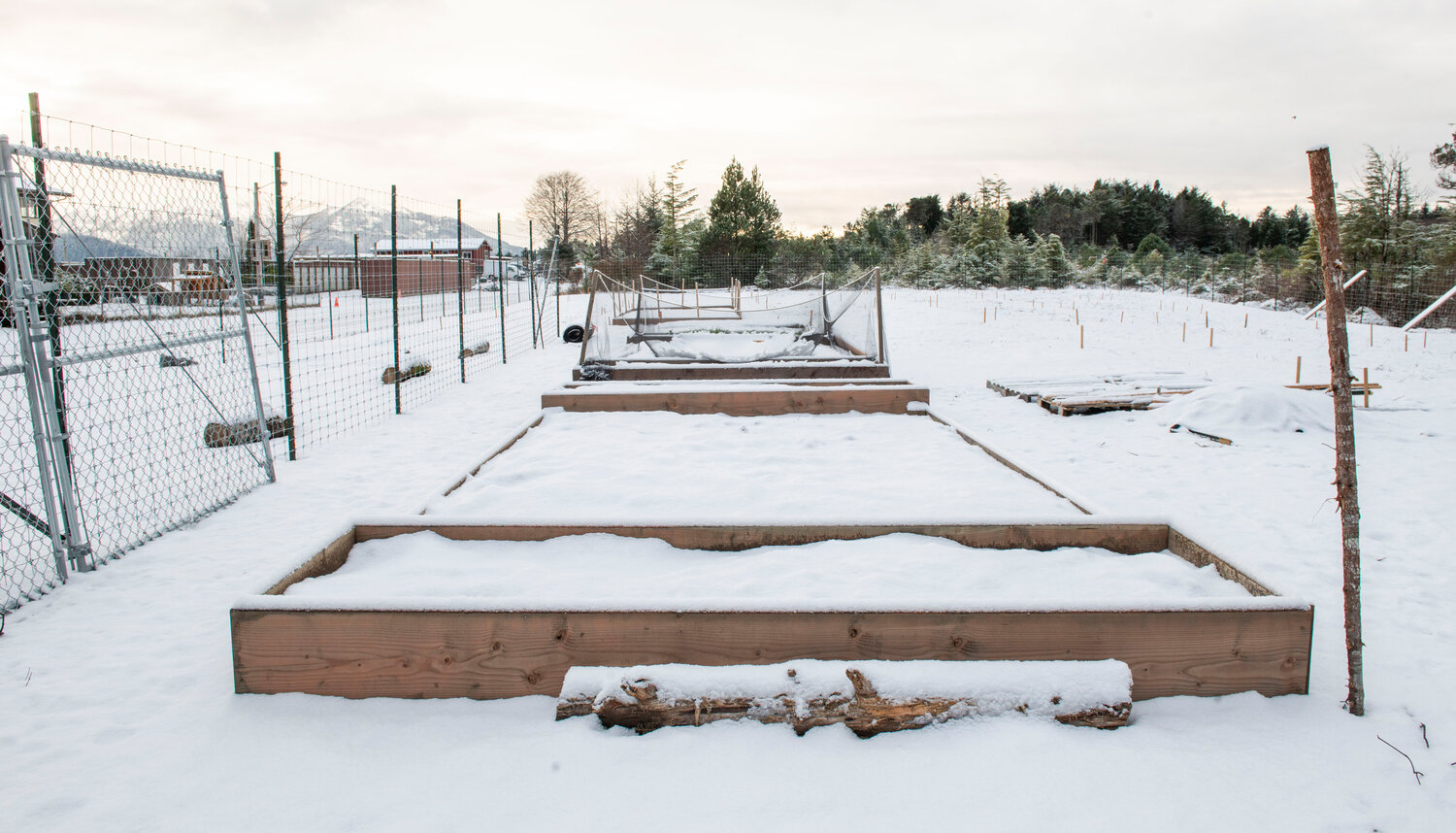
Daily Sitka Sentinel photo by JAMES POULSON
By IRIS SEGAL and ASHER GLICKMAN-FLORA
Special to the Daily Sitka Sentinel
Tucked away at the top of Jarvis Street, Joel Hanson and a crew of regular volunteers have been preparing a half-acre community garden for the spring 2026 growing season. It will consist of more than 40 20×10-foot plots which come February will be available to Sitka residents to lease for $55 annually.
Hanson is project manager of the Sitka Community Garden, and his plans include a structure consisting of a bathroom, workshop and seating area powered by solar panels, an upgraded workshop/toolshed and a covered picnic table.
The garden will hold its inaugural meeting to formally introduce the project to the community at 3 p.m. Saturday, December 13, behind St. Peter’s Episcopal Church, 611 Lincoln Street.
The journey to where the garden is now situated, on completely cleared and leveled muskeg, has been long in the making. The project took its first steps in 2020 when a group of Sitkans formed Transition Sitka. Some members of the original group were involved in the Sitka chapter of the Citizens Climate Lobby, who were interested in finding local projects to direct their sustainability efforts. Other founding members were just interested citizens, like Hanson.
Hanson had a major role in the formation of the organization.
“It was an ad-hoc group,” he said. “We didn’t even have a name yet. It was a group of people who wanted to focus on local sustainability issues.”
Hanson helped start Transition Sitka because “working at a local level benefits us because large governments have their limits supporting local projects.” The name comes from the international Transition Town movement, whose goal is to make it accessible for citizens to “engage with the need for change.”
Transition Sitka’s two priorities are to lower carbon dioxide emissions and increase the accessibility and the practice of food sovereignty.
When Hanson took the idea of the garden to one of Transition Sitka’s weekly meetings, everyone was on board, but it was Barbara Bingham, the current outreach coordinator for the garden and an original member of Transition Sitka, who took a special interest in the garden and teamed up with Hanson to turn it into a reality. All of their ventures to address these issues are deeply rooted in the community, and “strengthening connections,” Bingham said.
Hanson also reached out to the Sitka Local Foods Network (SLFN), a local non-profit started in 2009 that focuses on food security and sustainability.
“I thought that a separate, long-established organization involved as a partner alongside Transition Sitka would help in promoting and pursuing the idea of a community garden project,” Hanson said. The partnership complete, Hanson joined the SLFN board and now serves as treasurer.
Following this momentum, Hanson “was … trying to drum up local buy-in,” garnering letters of support from, among others, the Sitka Fire Department, City of Sitka Parks and Recreation Committee, Sitka Conservation Society, Sitka Homeless Coalition, and the city Sustainability Commission.
Once they had this foundation of community support, Hanson and Bingham spent hours designing the garden and scouting out suitable public land, drawing large inspiration from other community gardens in Southeast Alaska, most notably the Juneau Community Garden.
They like Juneau’s model “because it’s successful,” Bingham said. She and Hanson wanted a garden that would become a longstanding institution in Sitka, like Juneau’s garden has been since its founding 20 years ago.
After narrowing potential locations to two – Osprey Street and Jarvis Street – Hanson began informally meeting with the city government, inquiring about the land’s availability.
The city government also was looking to address citizen concerns about food security and accessibility. In 2022, they drafted a five-year strategic plan to create an outline and timeline to address these issues. The plan states that the government will “(convene) community partners to develop an action plan that will address the challenges of food security.” As they actively searched for solutions to the problem of food sustainability, the plan for the community garden became more poised to gain the legislative support it needed to begin work.
First, Hanson needed two Assembly members to endorse his project before submitting a detailed proposal to the Planning Commission. The proposal included a description of what the work on the garden would look like, who would be involved, what tasks would be completed and when, and what larger purpose the garden would have in the wider community.
In addition to getting city approval to begin work, they also needed clearance from the U.S. Army Corps of Engineers because the west side of Jarvis Street is considered wetlands.
It took nearly three years from his initial inquiries about the land to being awarded the lease in May.
Then, just two weeks after the city awarded them the Jarvis Street lease, Sitka Community Garden learned it had received a grant of $345,000 from the U.S. Environmental Protection Agency through a non-profit called Philanthropy Northwest. Funded by the EPA, Philanthropy Northwest allocates money to projects like the community garden across the United States.
This grant, along with sponsorships by local businesses (Seamart, Tongass Threads, Harry Race, Sitka Legacy Foundation and the White Elephant), greatly expedited the progress of the garden. With the money, they delegated the hardest work, such as clearing big trees, to the professionals.
But hiring professionals is atypical of Hanson. He prefers to be self-sufficient, spending the money on tools so that he and the people involved can build and maintain the garden themselves. Hanson even opted to build the fence around the garden, (something he has no experience with) instead of hiring the Southeast Fence Specialists to do it for him.
Hanson’s “do it ourselves” philosophy is seen in his hopes for the garden. He doesn’t want the plot owners to just sow their plots, but to play an active role in maintaining the garden.
“The hope is that the garden can become a sort of cooperative,” he said.
Hanson and Bingham aspire to create another non-profit, independent of SLFN and Transition Sitka, named Sitka Community Gardens. Although the association between SLFN and Transition Sitka will remain, at least in the beginning, the sole purpose of Sitka Community Gardens will be to both provide the framework that will allow plot holders to tend to the garden, and to create and plan for more community gardens in Sitka.
The garden will hold its inaugural meeting to formally introduce the project to the community at 3 p.m. on Saturday, Dec. 13, behind St. Peter’s Episcopal Church, 611 Lincoln Street.
____________________________________
Asher Glickman-Flora and Iris Segal are students at Outer Coast in Sitka.
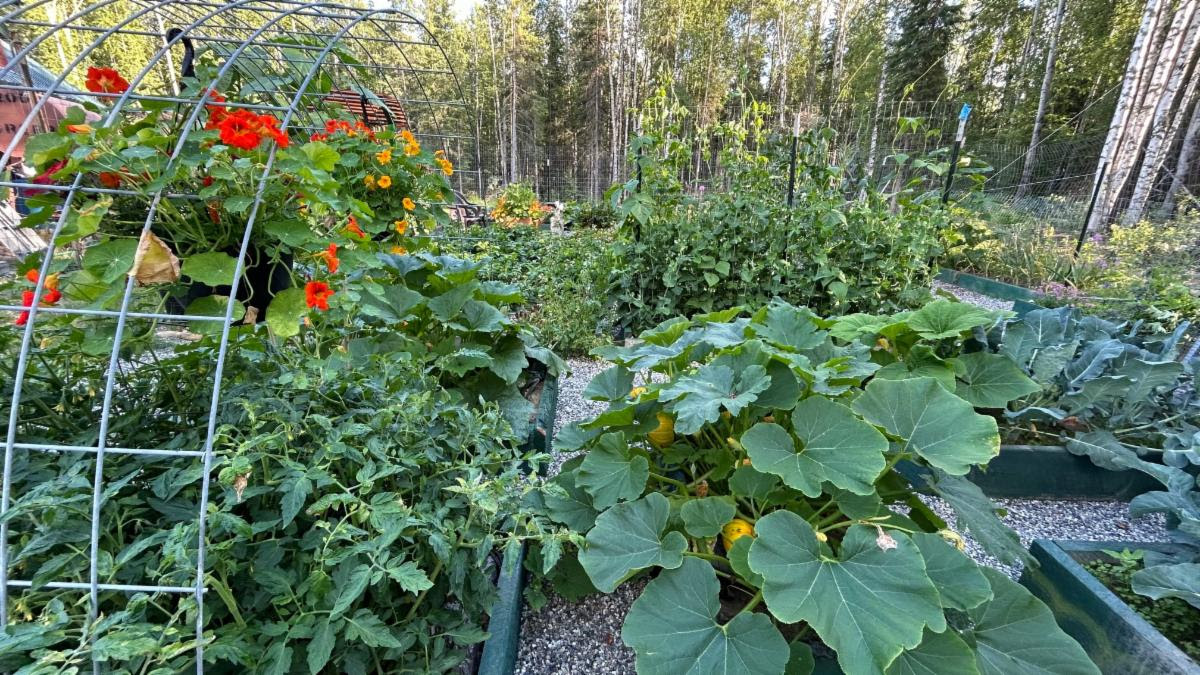
 Sitka Local Foods Network
You must be logged in to post a comment.