Andrea Fraga of Middle Island Gardens works at the Sitka Farmers Market, at ANB Founders Hall, in 2022. (Daily Sitka Sentinel File Photo by JAMES POULSON)
By COLE HADDOCK Daily Sitka Sentinel Staff Writer
The Sitka Farmers Market opens its 19th season Saturday at ANB Founders Hall, bringing vegetables, eggs, honey, chocolate, sourdough and ceramics for purchase.
The market, organized by the Sitka Local Foods Network, runs from 10 a.m. to 1 p.m. every other Saturday through September. This year’s dates are June 27, July 11, July 25, Aug. 8, Aug. 22, Sept. 5 and Sept. 19.
All 18 vendor tables, including six new vendors, are sold. The event is an opportunity to support these vendors and meet the community.
“You see people hugging during the whole market,” said Debe Brincefield, co-manager of the event. “People can’t wait to get in there and see everyone and participate.”
Two stands will sell produce grown in Sitka. St. Peter’s Fellowship Farm, located behind St. Peter’s Episcopal Church, is run by Laura Schmidt and a team of volunteers who harvest produce the morning of the market. Middle Island Farms is run by Andrea Fraga and Kaleb Aldred. Both farms grow kale, zucchini, squash, carrots, garlic, basil, rhubarb and salad mixes, along with other cold-weather crops.
“When you come and buy produce from St. Peters, it was in the dirt that morning,” Brincefield said.
Other popular vendors include the Alaska Flour Company, known for its cookie, muffin and pancake mixes, and the Theobroma Chocolate Company, which makes milk and dark chocolate bars branded for the market. Vendors also will sell sourdough, baked goods and manuka honey.
One of the oldest vendors is the Sitka Cancer Survivors Society, which auctions a handmade quilt at the end of each season. Other art vendors will sell handmade bowls, Native art, earrings and paintings. The Sheldon Jackson Museum will bring their artist-in-residence to the market.
The market supports the Sitka Local Foods Network’s mission to strengthen food sovereignty on the island.
“We believe food sovereignty is the right of our community to control our own food systems — the power to decide how our food is produced, distributed and consumed,” Brincefield said. She added that the network aims to “prioritize sustainable and culturally relevant food over corporate, market-driven mass production.”
Sourcing local food is especially difficult in Sitka because of the island’s terrain and weather, Brincefield said. She moved to Sitka 25 years ago from New Jersey, where she once grew bell peppers, squash, zucchini and 28 tomato plants. She loves the community she found in Sitka. Adopted by Patricia Svetlak and given the Tlingit name Dosikee, she is of the Tak’deintaan Clan. She said the challenges Sitkans face in growing and finding local food motivated her to join the food network.
“Comparing us to down South, they have more land, they have road systems,” she said. “We don’t have that opportunity to do that here. So in our own little world, [the Sitka Local Foods Network] is trying to make a difference.”
The market is run by many volunteers and vendors, including Joel Hanson, president of the Sitka Local Foods Network, who also oversees the city’s Community Garden on Jarvis Street, and Sam Biancheri, a graduate of Outer Coast and this year’s new co-manager.
For questions or further information, you may call Debe Brincefield at (907) 738-4323.
The Sitka Community Gardens Association and University of Alaska Fairbanks Cooperative Extension Service invite all gardeners to gather, connect and share their midsummer gardening stories and successes over a potluck dinner at 6 p.m. on Wednesday, July 8 at the St. Peter’s By The Sea Episcopal Church See House (behind the church).
Sarah Lewis, health, home and family development agent with UAF CES Juneau District, gives a presentation on “Preserving the Garden Harvest.” Sitka community gardeners are especially encouraged to attend and take a dish to share.
In addition, Lewis will offer a series of food classes from July 7-12 in Sitka. The classes are listed on the attached flier.
The first Sitka Farmers Market of the summer will be from 10 a.m. to 1 p.m. on Saturday, June 27, at the Alaska Native Brotherhood Founders Hall, 235 Katlian St.
This is the first of seven Sitka Farmers Markets this summer (up from six in recent years). The other dates are Saturdays, July 11, July 25, Aug. 8, Aug. 22, Sept. 5, and Sept. 19.
Sitka Community Garden’s Barbara Bingham, outreach coordinator, and Joel Hanson, project manager, stand in the Jarvis Street garden Tuesday. Some of the more than 40 20×10-foot plots staked out for Sitka residents to lease for $55 annually are still available.(JAMES POULSON / Daily Sitka Sentinel)
By CATHY LI Daily Sitka Sentinel Staff Writer
Among the natural abundance of bright pink salmonberry blossoms and the tender green of spruce tips, infusing the air with their citrusy fragrance, the 36 out of 45 occupied plots that comprise Sitka Community Garden at the end of Jarvis Street is flourishing in the midst of its first growing season open to the public.
The citrusy fragrance doesn’t compete in the olfactory arena, however, with the pile of compost donated and shipped in by the Juneau Community Garden.
But to project manager Joel Hanson, it’s all part of the excitement of welcoming the first group of Sitka gardeners to the community garden — manure and all.
In addition to shoots of chard, beans, peas, radishes, leeks, sunflowers and carrots in the 36 assigned plots, Hanson is overseeing the construction of a 22-by-14-foot multi-purpose building that will include a tool room, restroom and open three-sided shelter.
Some of the lumber is from a Petersburg mill, also used by gardeners to build their individually-designed plots, and some of it is donated by the nearby Sitka Self Storage facility.
He also recently facilitated the installation of a central water line — though Hanson said with a laugh that it’s “not like we need a whole lot of watering around here.”
The garden is funded through a two-year $345,000 grant from Philanthropy Northwest’s Thriving Communities Grantmaking Program, a subsidiary funded by the Environmental Protection Agency, set to expire in June 2027.
Hanson said he is “uncertain as to the long-term prospects for this grant.” During the 2025 Department of Government Efficiency cuts, EPA revoked some of the promised funding, but Philanthropy Northwest appealed on behalf of the grantees and a stay was issued — freezing the removal of the funds.
However, Hanson said, the administration has appealed the stay, and it’s unknown when a decision on it will be made.
“We’re trying to complete all the improvements as fast as we can before the uncertainty resolves itself. Hopefully, it will resolve itself favorably and we won’t have to worry,” Hanson said. “Hopefully we will have spent most of the money and been reimbursed before the time comes.”
This flurry of activity is a lot to manage, but Hanson said “it’s a huge benefit because it shows community buy-in.”
“There’s obviously buy-in from people who want to start growing gardens here, but there’s also a huge buy-in in terms of volunteer contributions,” he said.
Sitka Community Garden was founded through a partnership between Transition Sitka and the Sitka Local Foods Network, though Hanson is trying to establish a separate organization called the Sitka Community Gardens Association.
The association is currently registered as a non-profit corporation in the state of Alaska and is the entity awarded the Jarvis Street lease from the City and Borough of Sitka, but it doesn’t yet have a 501(c)(3) status, Hanson said.
Barbara Bingham, the garden outreach coordinator and a founding member of Transition Sitka, was instrumental in making the community garden a reality.
“Our grocery stores, by some accounts, have about three days worth of groceries. If all barge service was cut off, we’re not going to last long. And the produce that we get up here has traveled a long way. It’s lost a lot of nutrition, it’s very expensive, and so the more we can produce ourselves, the healthier we will be,” Bingham said.
“The idea that we’re building community at the same time is really what makes this such a heartwarming, uplifting kind of project,” she added. “But we need more than one garden. We need a network. The more areas we can turn into agricultural areas, the better.”
On a one-acre parcel near Rudolph Walton Circle, Sitka Tribe of Alaska is doing exactly that. Through a long-term lease with the Baranof Island Housing Authority, STA is in the conceptual design phase of establishing a tribal community garden.
Though they’re a bit behind schedule, STA Resource Protection Director Jeff Feldpausch indicates, they are hopeful the site plans contracted with Corvus Design, based in Juneau, will be done by the end of June.
Then the design will be consolidated into a master plan, used in local and federal permitting processes, before the construction contractor breaks ground later this year.
In the meantime, STA’s Kayanní Commission Coordinator Sienna Reid has been working out of garden beds at the STA Resource Protection Department’s and Sitka Rangers’ offices to plant Tlingit potatoes. Her favorite thing to make with the specialty potatoes is a soup or chowder.
“There’s a lot of clan history around it that’s not associated with my clan, so I’m not going to tell the oral history, but what I do know is that Tlingit potatoes came up to Southeast Alaska through trading and canoes, and they’ve been here in Alaska for quite a long time,” Reid said. “One of the things that make them special is they’re associated with our traditional harvests. A lot of folks would, on their way to fish camp, plant the potatoes. Then in the fall, when they’re returning back to their winter village, the potatoes are ready to harvest. They tie in nicely with the seasonal harvests that are already happening.”
Reid worked with people in town during the Sustainable Southeast Partnership retreat and Sitka Native Education Program students during April and May 2026 to prepare the garden beds and plant the potatoes, respectively. Tlingit potatoes are also planted in the Sitka Ranger District plots.
The tribal garden project is funded through a $385,000 grant awarded by a private organization called the Native American Agriculture Fund, which has supported STA before in a raspberry plant distribution and a new gill net for its traditional foods program.
“They’re very generous and open-minded, so it’s a special opportunity for us. A lot of tribes they work with down south are farming and ranching on a large scale, but [they recognize] that we still provide a lot of food, but in a different way. They’re one of the funders that’s remained more stable for us,” Reid said.
Reid’s hope for the tribal garden is twofold: growing more traditional foods for Sitka Tribe’s internal food distribution programs, primarily supporting elders and low-income individuals; and providing space for tribal citizens and SNEP students to have hands-on food sovereignty opportunities.
She said about half the beds will be dedicated to each purpose.
“I think food is a really core part of our cultural identity, as well as our physical health and our well-being. Making sure that our tribal citizens have access to traditional foods, or just foods that connect them to plants and outdoors and with each other, is a really critical part of the work we do,” Reid said.
While the tribal garden is under development, Sitka Community Garden is open to all Sitkans. There are nine more 10-by-20-foot plots, which cost $55 to rent. The next community meeting and potluck will be 6-8 p.m. July 8 at the St. Peter’s See House, with a presentation about preserving gardening harvests.
“It’s a self-sufficiency undertaking. It’s not exactly subsistence as much as it is a kind of self-reliance,” Hanson said. “I think as isolated as we are here in Southeast Alaska, we need to be a little bit more self-reliant, especially in politically uncertain times like we seem to be in right now.”
Registration is open for the 2026 Sitka Farmers Markets, which take place from 10 a.m. to 1 p.m. on seven alternate Saturdays — June 27, July 11, July 25, Aug. 8, Aug. 22, Sept. 5, and Sept. 19 — at the Alaska Native Brotherhood Founders Hall.
Community garden plots are now available at the Jarvis Street Community Garden, on the upper end of Jarvis Street, adjacent to Híx’ti Sáani housing community.
The 10-foot-by-20-foot plots are $55 a year.
An orientation for new members is being held 11 a.m. Saturday, May 9, at the garden.
‘‘It’s not too late to get your garden growing and join the community at the community garden,’’ organizers said.
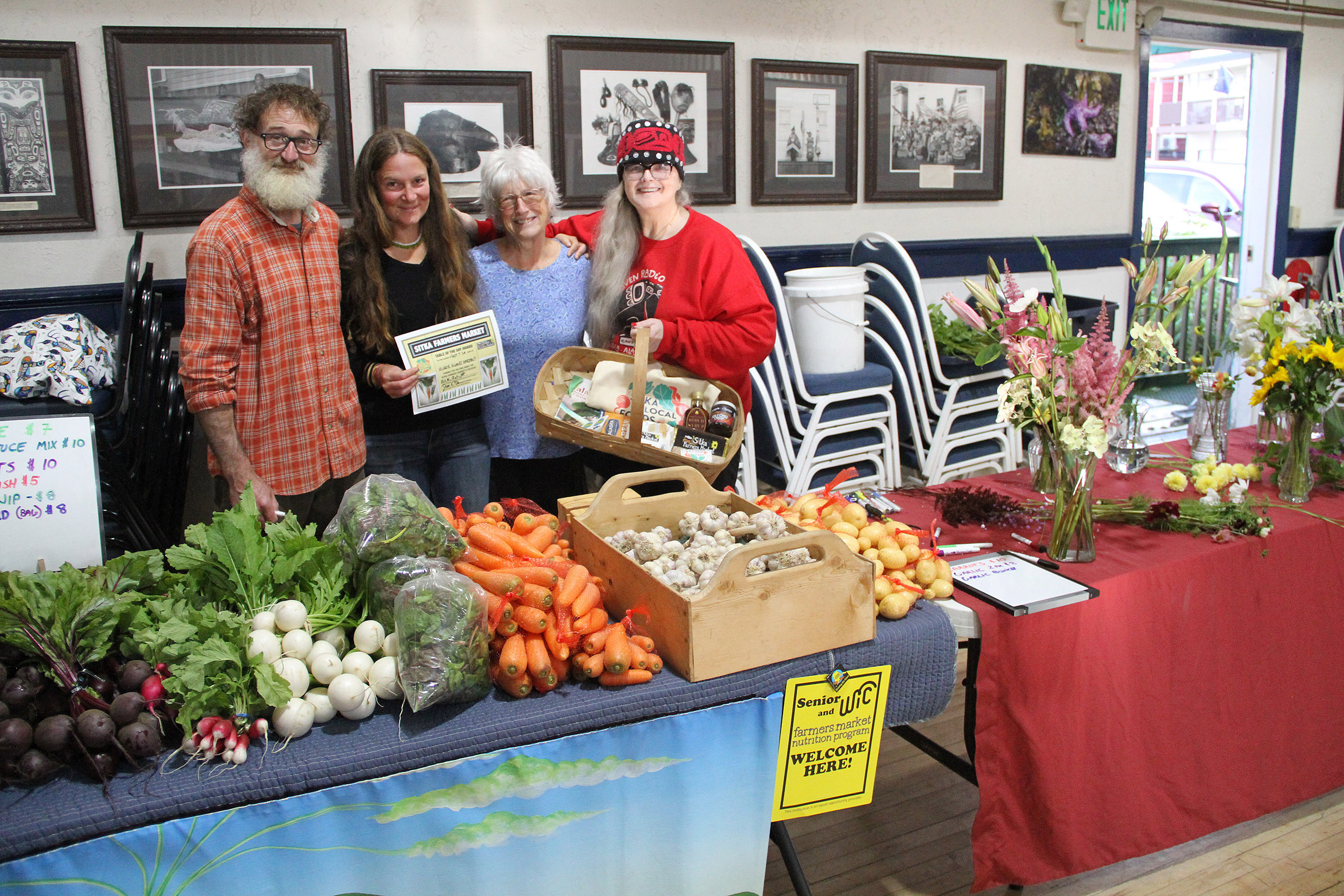
PHOTO COURTESY OF SITKA LOCAL FOODS NETWORK Sitka Farmers Market manager Debe Brincefield, right, presents the Table of the Day Award for the Sept. 7, 2024, Sitka Farmers Market to Kaleb Aldred, Andrea Fraga, and Elisabeth Schafer of Middle Island Gardens. They sold a variety of locally grown produce and flower arrangements. They received a certificate, a tote bag, a selection of Alaska Flour Company products, an Alaska Farmers Market Cookbook, some Barnacle kelp salsa, some Bridge Creek Birch Syrup, and Sitka Farmers Market special label chocolate bars.[/caption]
Welcome to the 2026 Sitka Farmers Market online vendor registration page (click this link to actually register). We tried this online system three years ago and found this page makes it easier to register and pay to be a vendor at the Sitka Farmers Market.
This summer, for its 19th season, the Sitka Local Foods Network is hosting seven markets from 10 a.m. to 1 p.m. on Saturdays — June 27, July 11, July 25, Aug. 8, Aug. 22, Sept. 5, and Sept. 19 — at Alaska Native Brotherhood Founders Hall (235 Katlian Street), where we held 13 of our first 15 years of markets. This will be our 17th year at ANB out of 19 seasons.
One change this year is we no longer have half tables, and we’ve reduced the price of a full table to $35 per market (down from $40). We have a special rate of $175 for vendors who register for all six markets before the first market happens, which means you pay for six markets and get the seventh market free ($210 if the six markets are not paid for before the first market). Vendors can register for one or two markets, or all six. We also have a youth vendor program for ages 14 and younger, which is $20 for all seven markets (please let us know ahead of time which specific markets you plan to attend).
The Sitka Farmers Market is a community event hosted by the Sitka Local Foods Network, whose mission is to increase the amount of locally produced and harvested food in the diets of Southeast Alaskans. Our focus is on local — fresh produce, fish, baked goods, prepared foods, cottage foods, arts and crafts — and all products must be made in Alaska (preferably in Sitka or Southeast Alaska, cooked foods may use non-local foods so long as the food is cooked on site). Since our mission is geared toward food security and our space is limited this year, if we have too many vendors try to register our food booths will have a higher priority over arts and crafts.
After having to relocate for two years due to COVID-19, we returned to our ANB Hall roots in 2022 for our 15th season of markets. We have been back at ANB Hall again since the pandemic faded away. We are able to have indoor and outdoor spaces, but if we don’t have a lot of vendors we will move all people inside.
Since COVID-19 is still around, we will encourage wearing masks inside the ANB Hall when Sitka is at the Moderate or High risk levels. While most people now are vaccinated against the coronavirus, there still are people who aren’t vaccinated and there are periodic hot spots when the illness flares up. We don’t want the market to be a place that spreads the coronavirus. Even with our outside booths, we encourage vendors and customers to wear masks, to use hand sanitizer, and to avoid bunching up while giving others six feet of space.
Please read the market vendor rules and responsibilities document linked below. All vendors using this site to register for the market will be held to these rules. We ask all vendors to register by the Friday morning before the markets where they intend to sell. Unless you specify you want to be outside, we will try to find room for you indoors.
Vendors can pay using PayPal or credit/debit card. When you get to the Payment options, click PayPal (not Invoice) and it should give you the option of using a PayPal account or four different types of cards (Visa, MasterCard, AmEx, Discover). If you prefer to pay by cash or check, contact Debe Brincefield at (907) 738-4323.
We will provide a $30 refund for full-table and outside cancellations, but to get the refund you are required to let us know before Wednesday of the week of your registered market that you can’t make it. We are billed for transaction fees and other expenses, so the $5 covers those fees. There is no refund if you don’t let us know until after Wednesday.
Debe Brincefield is the Sitka Farmers Market manager this summer. Laura Schmidt is our lead gardener at St. Peter’s Fellowship Farm, where the Sitka Local Foods Network grows most of the produce it sells at the market. Joel Hanson is the president of the Sitka Local Foods Network.
WHITE E GRANTS – White Elephant Shop volunteer Sarah Jordan, left, presents a grant award of $2,000 to representatives of the Sitka Local Food Network, President Joel Hanson, Laura Schmidt and Andrea Fraga. ‘‘This year, thanks to quality donations and dedicated shoppers, we are able to give $145,000 back to the community,’’ the White Elephant said. (Photo provided to the Sentinel)
Sitka Farmers Market manager Debe Brincefield, right, presents the Table of the Day Award for the Sept. 7, 2024, Sitka Farmers Market to Kaleb Aldred, Andrea Fraga, and Elizabeth Schafer of Middle Island Gardens. They sold a variety of locally grown produce and flower arrangements. They received a certificate, a tote bag, a selection of Alaska Flour Company products, an Alaska Farmers Market Cookbook, some Barnacle kelp salsa, some Bridge Creek Birch Syrup, and Sitka Farmers Market special label chocolate bars.
The Sitka Local Foods Network has set six market dates, with a possible seventh, for the 2026 Sitka Farmers Market. These dates are tentative, so subject to change.
The six firmer market dates are from 10 a.m. to 1 p.m. on Saturdays, July 11, July 25, Aug. 8, Aug. 22, Sept. 5, and Sept. 19. If weather cooperates and we have enough produce available, a seventh market will be on June 27. All of these will be at the Alaska Native Brotherhood Founders Hall, 235 Katlian Street.
Registration will be announced in the near future, when our online registration site will open. For more details, email sitkalocalfoodsnetwork@gmail.com.
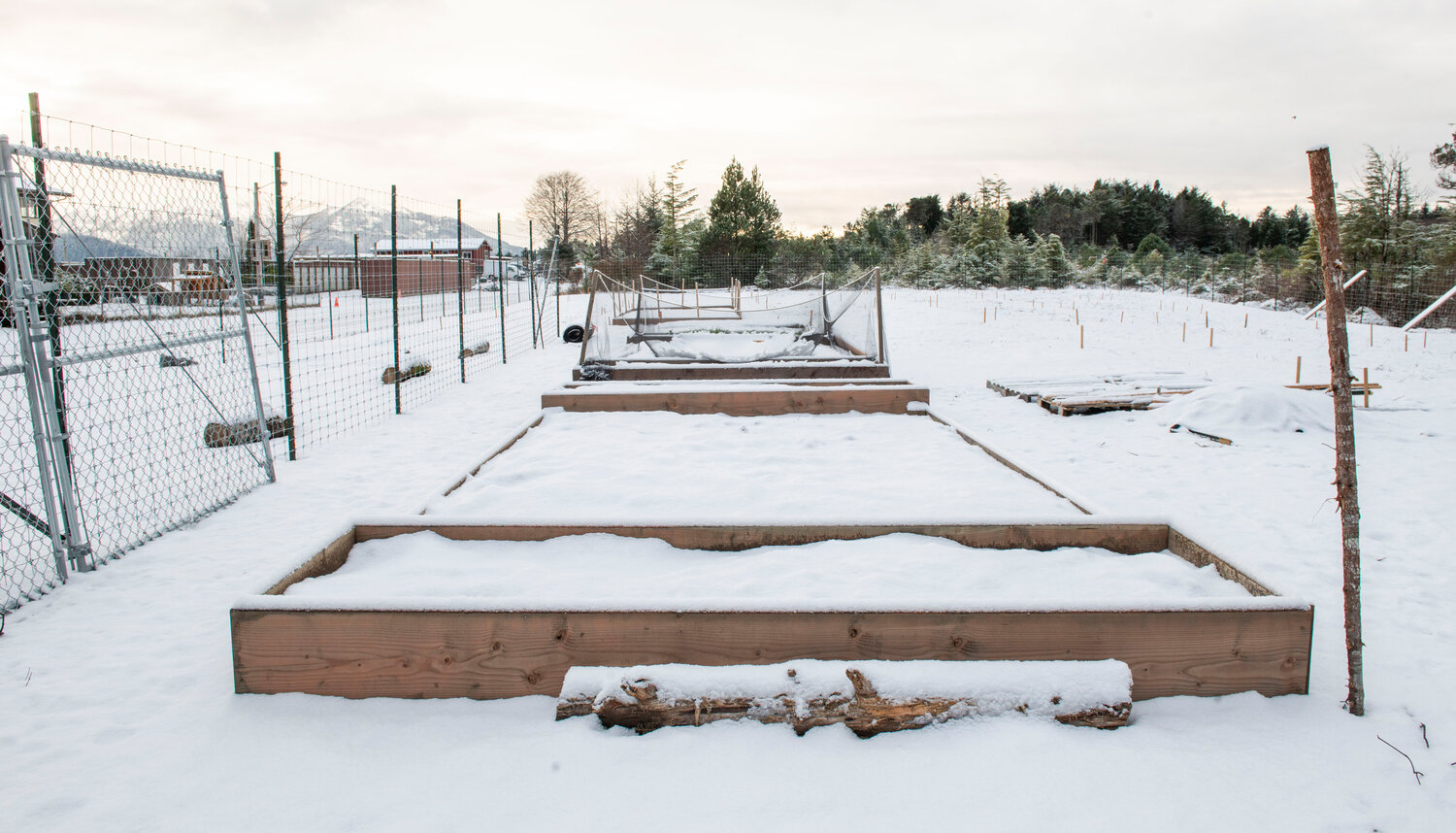
Snow covers growing beds at the new community garden on Jarvis Street on Thursday, Dec. 11. Daily Sitka Sentinel photo by JAMES POULSON
By IRIS SEGAL and ASHER GLICKMAN-FLORA Special to the Daily Sitka Sentinel
Tucked away at the top of Jarvis Street, Joel Hanson and a crew of regular volunteers have been preparing a half-acre community garden for the spring 2026 growing season. It will consist of more than 40 20×10-foot plots which come February will be available to Sitka residents to lease for $55 annually.
Hanson is project manager of the Sitka Community Garden, and his plans include a structure consisting of a bathroom, workshop and seating area powered by solar panels, an upgraded workshop/toolshed and a covered picnic table.
The garden will hold its inaugural meeting to formally introduce the project to the community at 3 p.m. Saturday, December 13, behind St. Peter’s Episcopal Church, 611 Lincoln Street.
The journey to where the garden is now situated, on completely cleared and leveled muskeg, has been long in the making. The project took its first steps in 2020 when a group of Sitkans formed Transition Sitka. Some members of the original group were involved in the Sitka chapter of the Citizens Climate Lobby, who were interested in finding local projects to direct their sustainability efforts. Other founding members were just interested citizens, like Hanson.
Hanson had a major role in the formation of the organization.
“It was an ad-hoc group,” he said. “We didn’t even have a name yet. It was a group of people who wanted to focus on local sustainability issues.”
Hanson helped start Transition Sitka because “working at a local level benefits us because large governments have their limits supporting local projects.” The name comes from the international Transition Town movement, whose goal is to make it accessible for citizens to “engage with the need for change.”
Transition Sitka’s two priorities are to lower carbon dioxide emissions and increase the accessibility and the practice of food sovereignty.
When Hanson took the idea of the garden to one of Transition Sitka’s weekly meetings, everyone was on board, but it was Barbara Bingham, the current outreach coordinator for the garden and an original member of Transition Sitka, who took a special interest in the garden and teamed up with Hanson to turn it into a reality. All of their ventures to address these issues are deeply rooted in the community, and “strengthening connections,” Bingham said.
Hanson also reached out to the Sitka Local Foods Network (SLFN), a local non-profit started in 2009 that focuses on food security and sustainability.
“I thought that a separate, long-established organization involved as a partner alongside Transition Sitka would help in promoting and pursuing the idea of a community garden project,” Hanson said. The partnership complete, Hanson joined the SLFN board and now serves as treasurer.
Following this momentum, Hanson “was … trying to drum up local buy-in,” garnering letters of support from, among others, the Sitka Fire Department, City of Sitka Parks and Recreation Committee, Sitka Conservation Society, Sitka Homeless Coalition, and the city Sustainability Commission.
Once they had this foundation of community support, Hanson and Bingham spent hours designing the garden and scouting out suitable public land, drawing large inspiration from other community gardens in Southeast Alaska, most notably the Juneau Community Garden.
They like Juneau’s model “because it’s successful,” Bingham said. She and Hanson wanted a garden that would become a longstanding institution in Sitka, like Juneau’s garden has been since its founding 20 years ago.
After narrowing potential locations to two – Osprey Street and Jarvis Street – Hanson began informally meeting with the city government, inquiring about the land’s availability.
The city government also was looking to address citizen concerns about food security and accessibility. In 2022, they drafted a five-year strategic plan to create an outline and timeline to address these issues. The plan states that the government will “(convene) community partners to develop an action plan that will address the challenges of food security.” As they actively searched for solutions to the problem of food sustainability, the plan for the community garden became more poised to gain the legislative support it needed to begin work.
First, Hanson needed two Assembly members to endorse his project before submitting a detailed proposal to the Planning Commission. The proposal included a description of what the work on the garden would look like, who would be involved, what tasks would be completed and when, and what larger purpose the garden would have in the wider community.
In addition to getting city approval to begin work, they also needed clearance from the U.S. Army Corps of Engineers because the west side of Jarvis Street is considered wetlands.
It took nearly three years from his initial inquiries about the land to being awarded the lease in May.
Then, just two weeks after the city awarded them the Jarvis Street lease, Sitka Community Garden learned it had received a grant of $345,000 from the U.S. Environmental Protection Agency through a non-profit called Philanthropy Northwest. Funded by the EPA, Philanthropy Northwest allocates money to projects like the community garden across the United States.
This grant, along with sponsorships by local businesses (Seamart, Tongass Threads, Harry Race, Sitka Legacy Foundation and the White Elephant), greatly expedited the progress of the garden. With the money, they delegated the hardest work, such as clearing big trees, to the professionals.
But hiring professionals is atypical of Hanson. He prefers to be self-sufficient, spending the money on tools so that he and the people involved can build and maintain the garden themselves. Hanson even opted to build the fence around the garden, (something he has no experience with) instead of hiring the Southeast Fence Specialists to do it for him.
Hanson’s “do it ourselves” philosophy is seen in his hopes for the garden. He doesn’t want the plot owners to just sow their plots, but to play an active role in maintaining the garden.
“The hope is that the garden can become a sort of cooperative,” he said.
Hanson and Bingham aspire to create another non-profit, independent of SLFN and Transition Sitka, named Sitka Community Gardens. Although the association between SLFN and Transition Sitka will remain, at least in the beginning, the sole purpose of Sitka Community Gardens will be to both provide the framework that will allow plot holders to tend to the garden, and to create and plan for more community gardens in Sitka.
The garden will hold its inaugural meeting to formally introduce the project to the community at 3 p.m. on Saturday, Dec. 13, behind St. Peter’s Episcopal Church, 611 Lincoln Street.
____________________________________
Asher Glickman-Flora and Iris Segal are students at Outer Coast in Sitka.

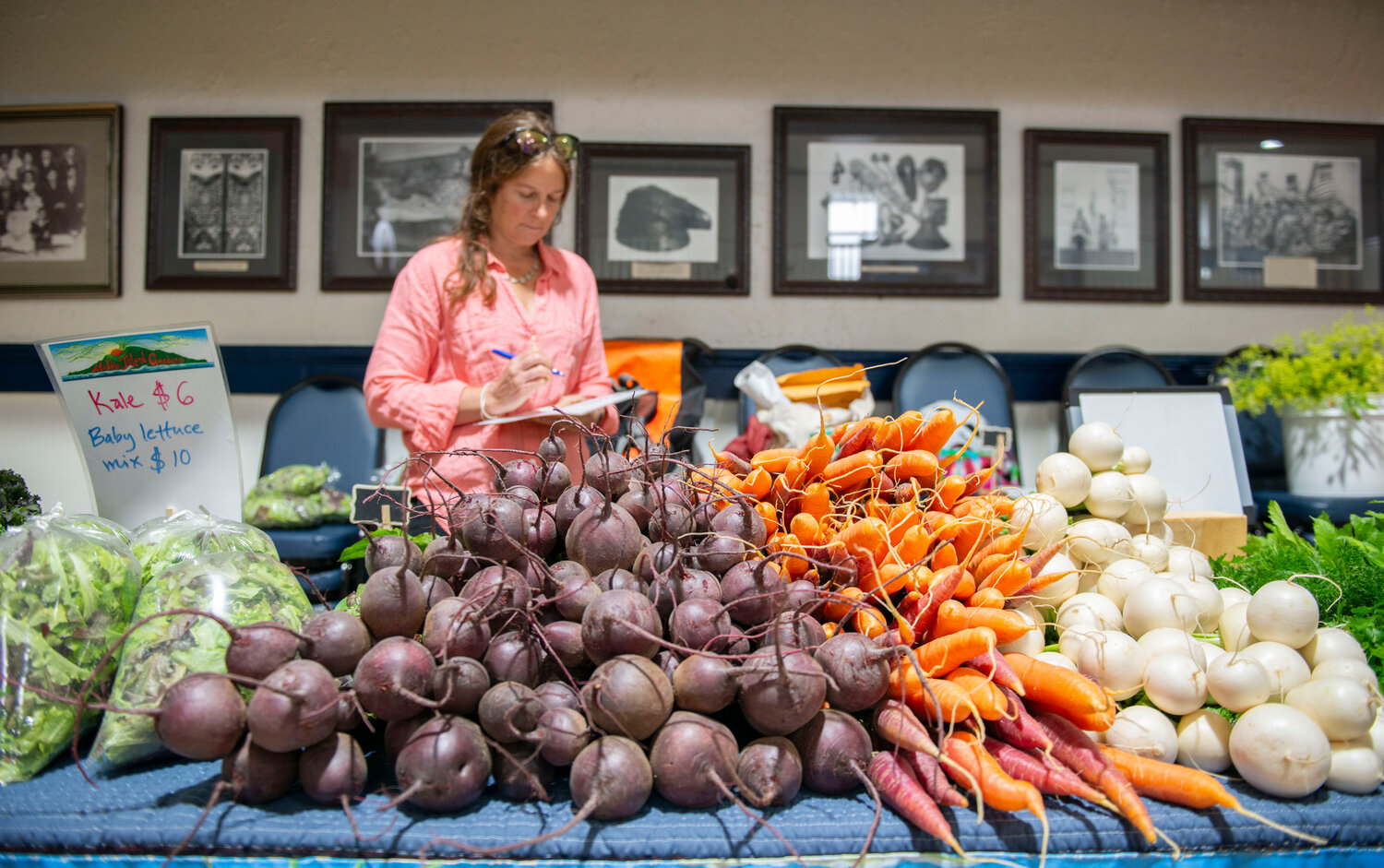

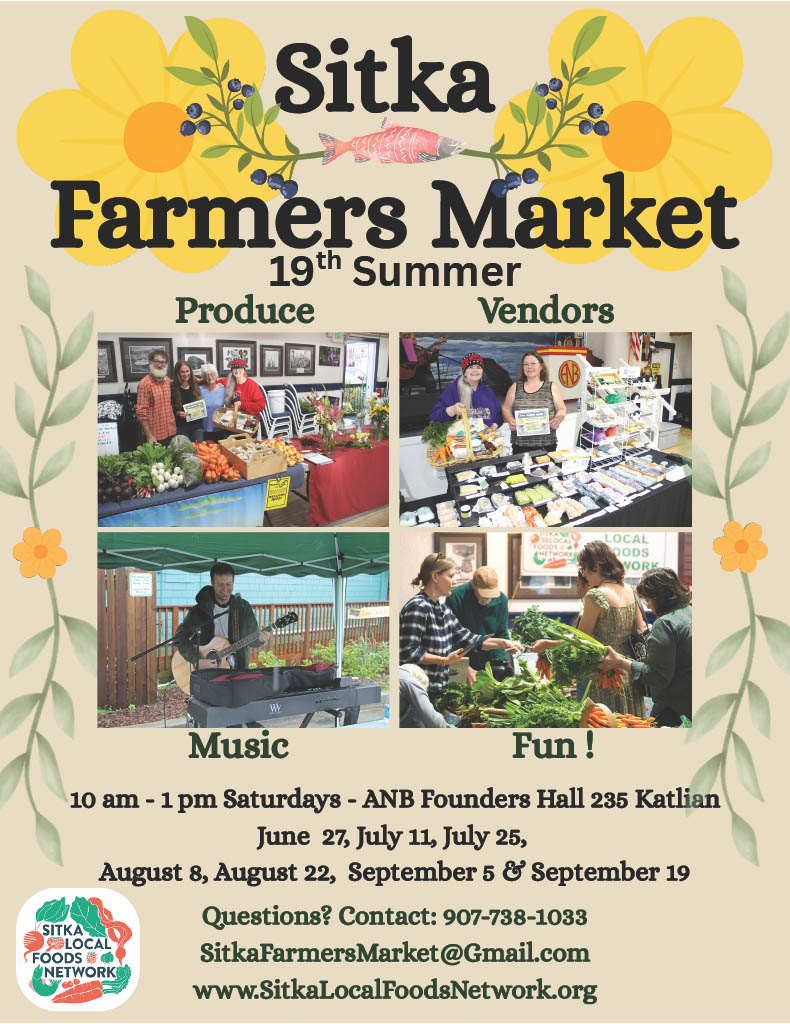
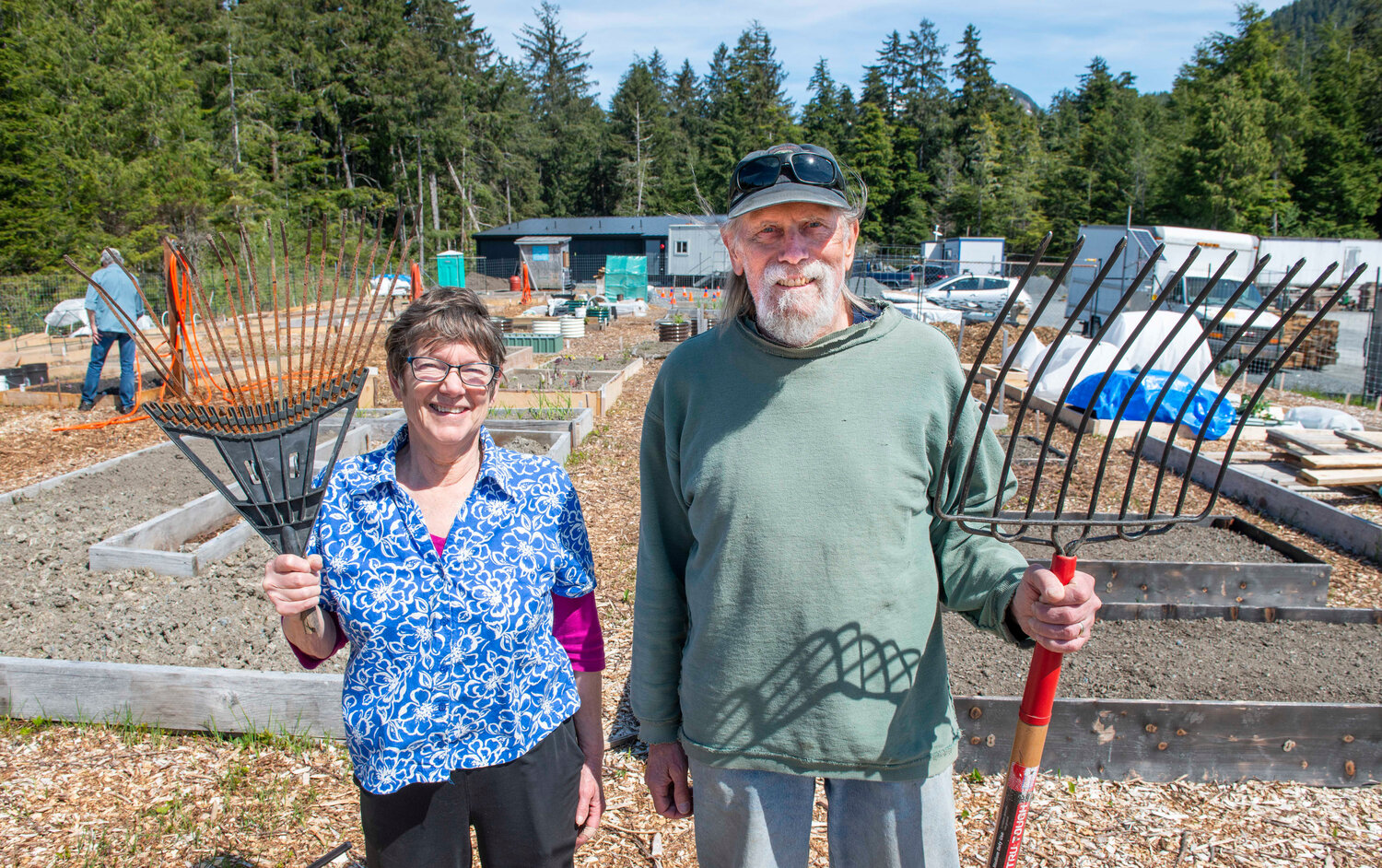
 PHOTO COURTESY OF SITKA LOCAL FOODS NETWORK
 This summer, for its 19th season, the
  Please read the market vendor rules and responsibilities document linked below. All vendors using this site to register for the market will be held to these rules. We ask all vendors to register by the Friday morning before the markets where they intend to sell. Unless you specify you want to be outside, we will try to find room for you indoors.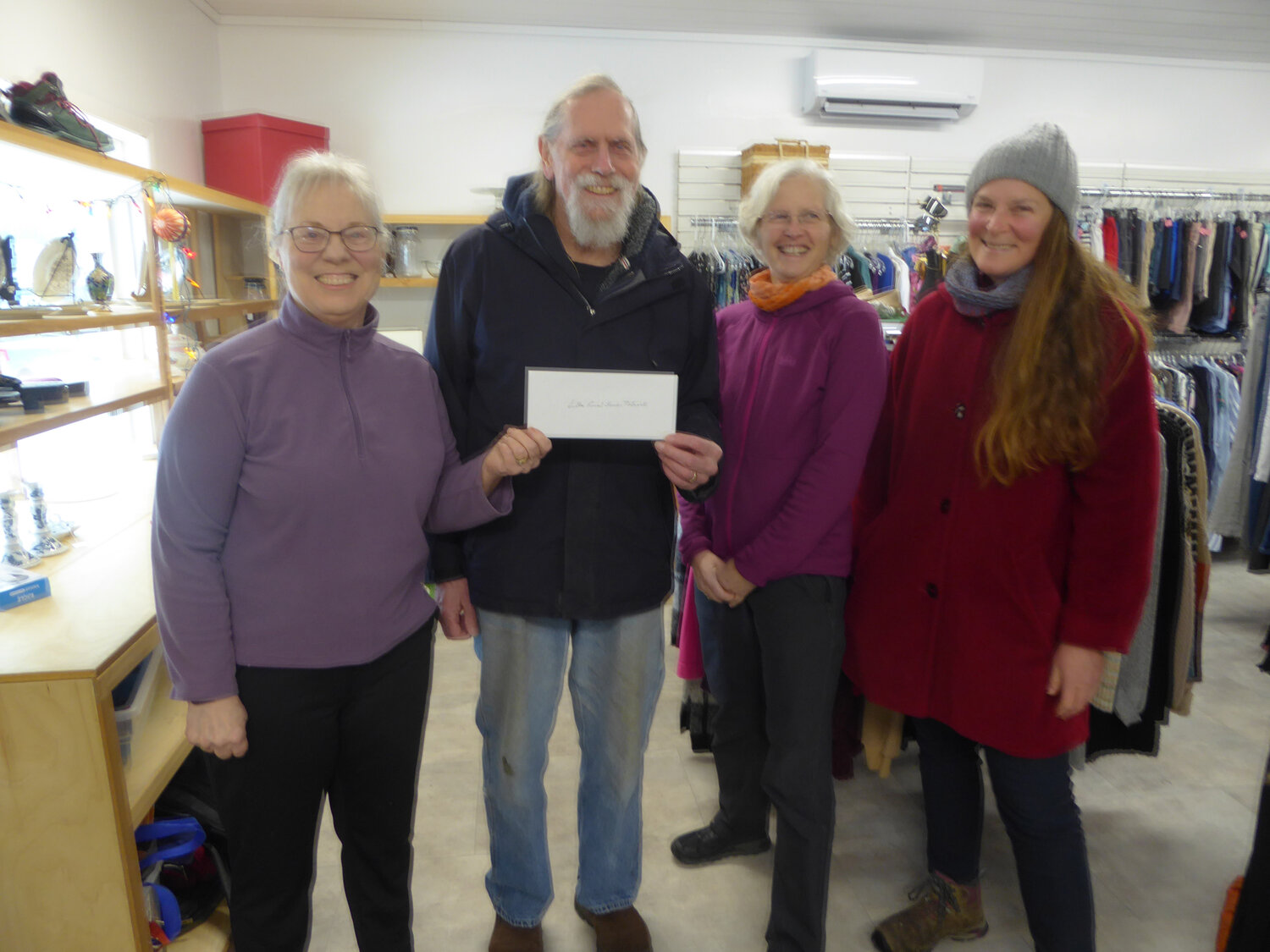


You must be logged in to post a comment.