• It’s time to … learn about gardening in a high tunnel

photo 1 (1)

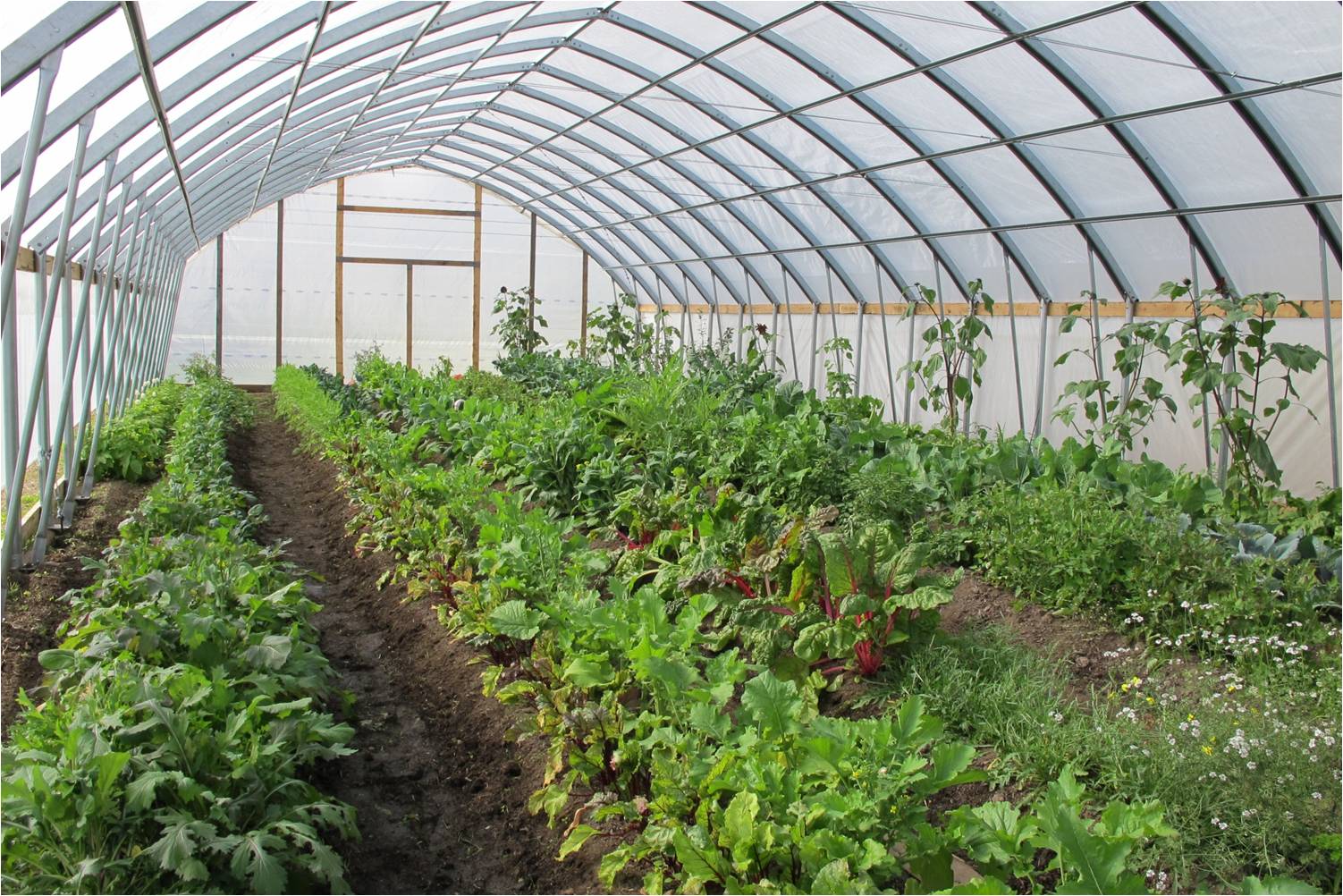
Have you ever wanted to learn more about growing vegetables in a high tunnel or hoop house? Your Sitka Local Foods Network is teaming up with local landscape architect and 20-year Sitka gardener Barth Hamberg, who will host a free discussion about high-tunnel gardening at 7 p.m. on Wednesday, June 25, at Hamberg’s garden.

High tunnels, also known as hoop houses or temporary greenhouses, extend the growing season so more food is produced before and after the traditional dates for growing stuff outdoors. High tunnels are different than greenhouses in that they are passively heated by the sun, so they have lower energy costs than greenhouses. This link has frequently asked questions and answers about seasonal high tunnel systems for crops.

“Last summer I constructed a high tunnel with a grant from the NRCS (Natural Resources Conservation Service),” Hamberg said. “This is my first season in production and I’m experimenting with may different plants and learning a lot about the advantages of the high tunnel. It’s working great.”

Some of the topics Hamberg will discuss include:

  • siting and constructing a high tunnel
  • selecting a high tunnel manufacturer and style of tunnel
  • planting for winter harvest
  • planting for early spring harvest
  • high tunnel maintenance requirements
  • irrigation systems
  • making the high tunnel an enjoyable place to work and to be
  • compost-based soil fertility in the high tunnel

“My interest is growing food in the most efficient and beautiful way possible,” Hamberg said.

People interested in attending this discussion should call Hamberg at 738-9145 to reserve a space and to receive the address and directions to his garden.

The Sitka Local Foods Network education committee has been hosting a series of “It’s time to …” workshops this spring and summer designed to help local residents learn about various aspects of vegetable gardening and fruit growing. Many of these classes will be informal get-togethers at various gardens around town. Please watch our website, Facebook pageFacebook group, and local news media for information about upcoming classes. If you have an “It’s time to …” workshop you’d like to teach, contact Michelle Putz at 747-2708.

The SLFN education committee is still looking to expand our network of local volunteers who can teach classes (formal and informal) this year about growing food, please email Charles Bingham at charleswbingham3@gmail.com with info about what topics you can teach, your gardening experience, and contact information so we can add you to our database of instructors.

• USDA Natural Resources Conservation Service offers funding support program for high tunnels

picture8

The U.S. Department of Agriculture’s Natural Resources Conservation Service (NRCA) has revamped its cost-sharing program that enables qualifying landowners who produce food to build high tunnels.

High tunnels, also known as hoop houses or temporary greenhouses, extend the growing season so more food is produced before and after the traditional dates for growing stuff outdoors.

High tunnels are different than greenhouses in that they are passively heated by the sun, so they have lower energy costs than greenhouses. High tunnels are at least six-feet tall, and low tunnels aren’t eligible in this program. Food in high tunnels is planted either directly into the ground or in raised beds. To learn more about the USDA’s high tunnel program, click here (note, link is to FY2013 program information, there have been updates for FY2015 but no link was available). This link has frequently asked questions and answers about seasonal high tunnel systems for crops.

Picture10This program started a couple of years ago as a pilot program, but now is a permanent part of of the NRCS EQIP (Environmental Quality Incentive Programs). One major change is there now is no size restriction on the size of structures NRCS will provide cost-sharing funds (previously it was limited to up to 2,178 square feet, or 5 percent of one acre). Also, geodesic domes are now eligible. Both the land owner and land must meet certain eligibility requirements. Funding is provided on a reimbursable status once the high tunnel is installed and certified to meet NRCS standards. In previous years only a couple of Sitka residents have taken advantage of the program, but other areas of the state, such as Homer, have built dozens of high tunnels through the program.

For information regarding the NRCS technical service or program participation in Southeast Alaska, please contact Samia Savella at the Juneau field office at (907) 586-7220 or samia.savell@ak.usda.gov. Applications currently are being accepted for the 2015 fiscal year (Oct. 1, 2014, to Sept. 30, 2015) and applications must be received at the Juneau field office on or before June 15, 2014. Click here for a link to the Alaska NRCS page.

• High Tunnel Fact Sheet March 2014

• Flier about Southeast Alaska cost-sharing program March 2014

• New high tunnels at Judy Johnstone’s Sprucecot Garden get media attention

Sitka Local Foods Network President Kerry MacLane, left, and Sprucecot Garden Owner Judy Johnstone pose in front of one of the high tunnels recently erected on Judy's land on Peterson Street. (Photo Courtesy of KCAW-Raven Radio)

Sitka Local Foods Network President Kerry MacLane, left, and Sprucecot Garden Owner Judy Johnstone pose in front of one of the high tunnels recently erected on Judy’s land on Peterson Street. (Photo Courtesy of KCAW-Raven Radio)

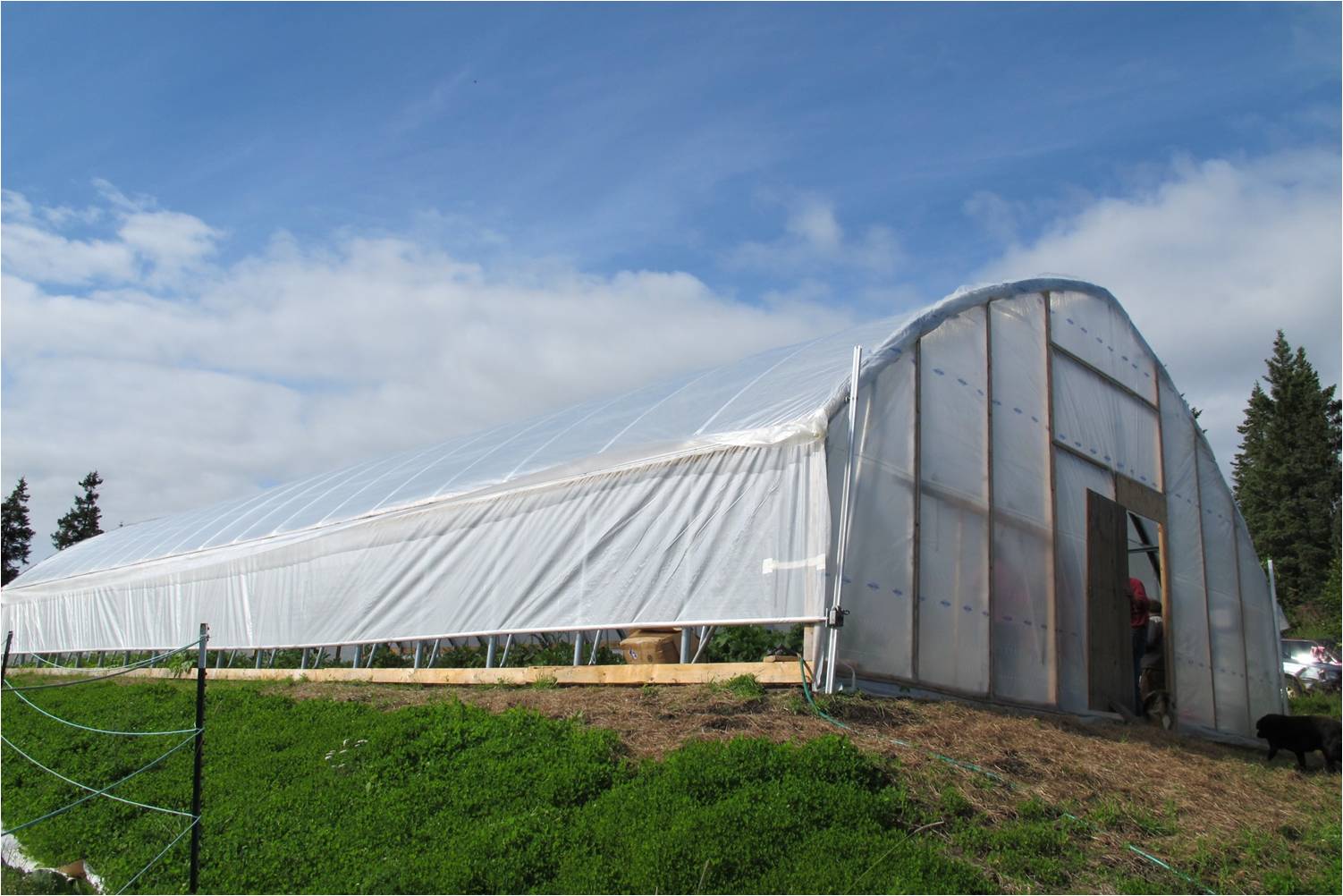
Longtime Sitka gardener Judy Johnstone will be able to extend the growing season at her Sprucecot Garden on Peterson Street after a crew erected two new high tunnels on her land.

The high tunnels, which basically are temporary greenhouses with a large frame holding a transparent plastic cover and without a built-in power supply, already have raised the temperatures inside by about 15-20 degrees over the low-50s we’ve had in Sitka so far this summer. They will enable Judy to start her plants earlier in the spring and keep producing food later into the fall.

The high tunnels were funded through a cost-sharing program run by the USDA National Resources Conservation Service, which is accepting applications for new high tunnel projects through June 15.

These are the first high tunnels to go up in Sitka, but there have been several built in other parts of the state (the lower Kenai Peninsula near Homer has about 90 of them). Since these are the first high tunnels in Sitka, they’ve received lots of coverage in the local media. The Daily Sitka Sentinel featured an article on Page 1 of its Friday, June 8, 2012, edition (password required), and KCAW-Raven Radio featured Judy and Sitka Local Foods Network President Kerry MacLane in its Monday, June 11, 2012, Morning Edition show interview and in a story on its Tuesday, June 12, 2012, newscasts.

• USDA Natural Resources Conservation Service offers cost-share program for high tunnels

The U.S. Department of Agriculture’s Natural Resources Conservation Service (NRCA) is offering a cost-sharing program that enables qualifying landowners who produce food to build high tunnels.

High tunnels, also known as hoop houses or temporary greenhouses, can help extend the growing season at both the start and end of the season so more food is produced.

High tunnels are different than greenhouses in that they are passively heated by the sun, so they have lower energy costs than greenhouses. Food in high tunnels is planted either directly into the ground or in raised beds. To learn more about the USDA’s high tunnel program, click here. This link has frequently asked questions and answers.

NRCS will provide cost-sharing funds on structures up to 2,178 square feet (5 percent of one acre). Both the land owner and land must meet certain eligibility requirements. Funding is provided on a reimbursable status once the high tunnel is installed and certified to meet NRCS standards.

For information regarding the NRCS technical service or program participation in Southeast Alaska, please contact the Juneau field office at (907) 586-7220 or samia.savell@ak.usda.gov. Applications currently are being accepted for the 2013 fiscal year (Oct. 1, 2012, to Sept. 30, 2013) and applications must be received at the Juneau field office on or before June 15, 2012. For contact info to other Alaska field offices, click this link.

• Press release about the USDA Natural Resources Conservation Service high tunnel cost-sharing program

• FAQs about the USDA Natural Resources Conservation Service high tunnel cost-sharing program

• Informational handout about the USDA Natural Resources Conservation Service high tunnel cost-sharing program

• Sitka gardeners extend growing seasons with government pilot study on high tunnels

Several Sitka gardeners will be extending their growing seasons this year thanks to a government soil conservation program designed to study the effectiveness of “high tunnels” or “hoop houses” when it comes to growing more local food in a conservation-minded way. To qualify you need to have grown $1,000 worth of produce for two of the past five years, even if just for your family and friends.

The Sitka participants will be constructing the greenhouse-like structures this year, which will enable them to grow more local food. For participating in the study, the government will reimburse them for the cost of the materials. This project is part of a nationwide effort to improve our community food security called “Know Your Farmer, Know Your Food.” As part of the project, the U.S. Department of Agriculture will conduct a three-year, 38-state study on high tunnels to see if they help reduce pesticide use, extend the growing season, keep vital nutrients in the soil, etc. This YouTube video has more information about the pilot study and shows several smaller family garden-sized high tunnels being placed in the White House garden.

“There is great potential for high tunnels to expand the availability of healthy, locally-grown crops — a win for producers and consumers,” U.S. Department of Agriculture Deputy Secretary Kathleen Merrigan said. “This pilot project is going to give us real-world information that farmers all over the country can use to decide if they want to add high tunnels to their operations. We know that these fixtures can help producers extend their growing season and hopefully add to their bottom line.”

If you meet the requirement, feel free to participate by contacting our local USDA Natural Resources Conservation Service (NRCS) agent for Southeast Alaska, Samia Savell in Juneau at 586-7220, or go to http://www.nrcs.usda.gov/. NRCS will fund one high tunnel per qualifying farm, and a high tunnel can cover as much as 5 percent of one acre.

High tunnels have been used successfully in Alaska, including up in Fairbanks where temperatures drop to minus-50. Last September, the University of Alaska Fairbanks School of Natural Resources and Agricultural Sciences reported on a two-year project where 39 varieties of apples had been grown in high tunnels at the Fairbanks Experiment Farm. The UAF Cooperative Extension Service also reported on the project (with short videos), and the Fairbanks Daily News-Miner also reported on the story.