• Sitka Food Hub chosen as one of Sitka Health Summit’s two new community wellness projects for 2013-14

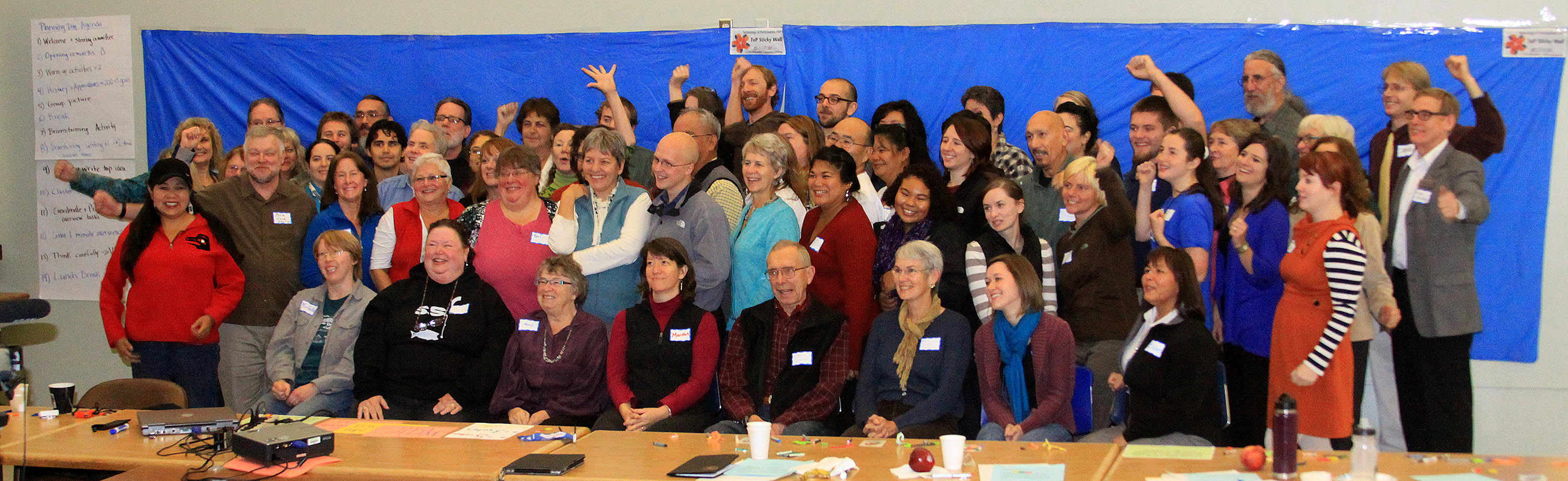
SitkaHealthSummitPlanningDayGroup

Summit_LogoWhen the Sitka Health Summit met on Friday at Sweetland Hall to choose its new community wellness projects for the next year, Sitka residents chose creating a Sitka Food Hub as one of the priority projects.

The Sitka Food Hub has multiple purposes. It will serve as a local community food bank, and provide emergency food storage for Sitka. In addition, it will be a program that can help teach food storage and canning skills so residents can fill their own pantries.

Some of the reasons members gave for creating a Sitka Food Hub included eliminating hunger in Sitka, providing canning and food education, providing a community food storage on high ground, helping Sitka prepare for emergencies and have community resiliency, increasing Sitka’s food security, and more.

The goal of the Sitka Food Hub is to work together as a community to make sure everyone in Sitka has access to healthy food daily and for any emergencies. The project will receive $1,500 as seed money and facilitation help from the Sitka Health Summit. The Sitka Health Summit’s other community wellness project this year is to create a task force to prevent the use of meth in Sitka.

The first meeting of the Sitka Food Hub group will be from 6:30-8 p.m. on Thursday, Oct. 3, at Harrigan Centennial Hall. All community members are invited, especially if they are connected to local schools, emergency planning organizations, food organizations, clergy, government agencies, health programs, and others who deal in hunger and food security issues. If you can’t attend, but might be able to provide us with resources and partnership opportunities, please contact us.

To learn more about the Sitka Food Hub and to get onto the group’s email list, contact Marjorie Hennessy at 747-7509 (days) or marjorie@sitkawild.org.

The re

• SEARHC, UAF Cooperative Extension Service to host ‘Basics of Food Preservation’ classes

University of Alaska Fairbanks Cooperative Extension Service Tanana District Agent Roxie Dinstel demonstrates proper home canning techniques (Photo courtesy of the UAF Cooperative Extension Service)

University of Alaska Fairbanks Cooperative Extension Service Tanana District Agent Roxie Dinstel demonstrates proper home canning techniques (Photo courtesy of the UAF Cooperative Extension Service)

Are you looking for ways to safely put up your grub? Do you have extra salmon or veggies you want to preserve for eating this winter? Two “Basics of Food Preservation” classes will be taught Wednesday, Aug. 31, in Sitka.

The first class takes place at noon on Aug. 31 at the SouthEast Alaska Regional Health Consortium (SEARHC) S’áxt’ Hít Mt. Edgecumbe Hospital Litehouse Cafeteria conference rooms. The second class is at 7 p.m. at Kettleson Memorial Library.

Both one-hour classes will be taught by University of Alaska Fairbanks Cooperative Extension Service Tanana District Agent Roxie Dinstel of Fairbanks, who will cover safe canning and preserving for various types of foods. Roxie helped create the UAF Cooperative Extension Service‘s new Preserving Alaska’s Bounty online tutorials for home canners, which can be found at http://www.uaf.edu/ces/preservingalaskasbounty/. (Note, Adobe Flash Player required to view tutorials, but it can be downloaded from the site.) She also helped write several of the UAF Cooperative Extension Service’s publications on canning, which are available from your local UAF Cooperative Extension Service office (at the University of Alaska Southeast-Sitka Campus in Sitka) or can be downloaded online at http://www.uaf.edu/ces/publications/.

In addition to the two classes on home canning, Roxie also will be available to test pressure gauges for home canning equipment owned by Sitka residents. These tests can tell you if your gauge is still accurate, or if it needs to be replaced for safe canning.

These classes are sponsored by the University of Alaska Fairbanks Cooperative Extension Service, Kettleson Memorial Library and SEARHC Health Promotion. All are welcome to attend, and the classes are free. For more information, please contact Martha Pearson at 966-8783 or martha.pearson@searhc.org.

• ANSWER Camp prepares for 2009 students

ANSWER Camp teachers Adriana Rodriguez, left, Alberta Demantle, Jordan Baumgartner, Collauna Marley and Chohla Moll prepare sockeye salmon for the smoker Wednesday night so it will be ready when the students arrive in Sitka on Friday.

ANSWER Camp teachers Adriana Rodriguez, left, Alberta Demantle, Jordan Baumgartner, Collauna Marley and Chohla Moll prepare sockeye salmon for the smoker Wednesday night so it will be ready when the students arrive in Sitka on Friday.

Seventh and eighth grade students from all over Alaska will be arriving in Sitka this week for the 12th annual Alaska Native Student Wisdom Enrichment Retreat, commonly known as ANSWER Camp, a 12-day residential program for Alaska Native students sponsored by the Southeast Regional Resource Center (SERRC) out of Juneau.

Students at the ANSWER Camp stay at Mt. Edgecumbe High School in Sitka for two weeks of intensive science, math and cultural experiences as they explore traditional methods of food preservation. ANSWER Camp takes place from July 17-30, and it is free to the 75-80 students lucky enough to be selected from several rural Alaska communities to participate in the program. A U.S. Department of Education grant pays for the students’ transportation to and from Sitka, their housing and food.

ANSWER Camp makes math and science instruction more meaningful for the students by linking traditional Alaska Native values to western scientific principles. The program prepares middle school students from rural Alaska to enter high school, and it helps make science and math come alive for the students as they learn how even traditional cultural activities such as preserving subsistence foods are affected by science and math.

While the students prepare salmon, they will do tests to see how different brine mixtures affect the taste (chemistry). They also will learn how to preserve berries, seaweed and medicinal plants. The students will learn biology by studying critters, and they will gather different plants to study botany. ANSWER Camp has helped steer many students toward science and health careers later in life.

This is one of several camps in the Sitka area that teach people about traditional foods from Southeast Alaska. The Sitka Native Education Program (SNEP) hosts several events during the summer, as so do Sitka residents John and Roby Littlefield at their Dog Point Fish Camp. The Alaska Native Sisterhood camp in Sitka also hosts traditional foods camps at Dog Point Fish Camp.

Click here for more information about the Alaska Native Student Wisdom Enrichment Retreat, commonly called the ANSWER Camp, sponsored by the Southeast Regional Resource Center (SERRC).

Chohla Moll grabs some sockeye salmon out of the brine mixture so she can hang it in the smoker.

Chohla Moll grabs some sockeye salmon out of the brine mixture so she can hang it in the smoker.

Sockeye salmon hangs from the racks in the smoker.

Sockeye salmon hangs from the racks in the smoker.