• Sitka Tribe of Alaska hosts regional training on paralytic shellfish poisoning and other marine biotoxins

DSCN4202 2

Shellfish lovers in Southeast Alaska have a lot to be thankful for this year, as the Sitka Tribe of Alaska hosted a regional training on how to detect paralytic shellfish poisoning and other marine biotoxins Nov. 20-21 in Sitka.

This workshop brought to town several technicians from seven different regional tribes for the first training since the Southeast Alaska Tribal Toxins (SEATT) partnership to study harmful algal blooms (HABs) was announced in October. SEATT partners include Sitka Tribe of Alaska, the Klawock Cooperative Association, Craig Tribal Association, Yakutat Tlingít Tribe, Petersburg Indian Association, Organized Village of Kasaan, and the Central Council of Tlingít and Haida Indian Tribes of Alaska (CCTHITA). In addition to the grant to create the partnership, Sitka Tribe of Alaska also received a second grant to create a regional lab in Sitka to help monitor HABs in Southeast Alaska.

Harmful algal blooms, such as paralytic shellfish poisoning (PSP), typically have not been monitored in Southeast Alaska for subsistence and recreational harvesters of clams, mussels, oysters, cockles, and other bivalves (commercial harvests are tested). Even though many people in Southeast Alaska love to harvest shellfish, eating it comes with some risks. There have been several PSP outbreaks in recent years that sent people to the hospital, and in 2010 two deaths were attributed to PSP and other HABs, such as Alexandrium, Pseudonitzchia and Dinophysis.

Being able to put trained monitors in several Southeast Alaska communities, the hope is the health risk can be reduced. Each technician will make weekly reports to the lab, which will help harvesters have better information as to the safety of their shellfish. To learn more about the training, check out this link from the Sitka Conservation Society website and this link from the National Oceanic and Atmospheric Administration (NOAA) Coastal Science website.

This slideshow requires JavaScript.

• Sitka Tribe of Alaska, six other tribes partner to build lab to monitor shellfish biotoxins such as PSP

Cockles-Alaska-Department-of-Health-and-Social-Services

The Sitka Tribe of Alaska (STA) has formed the Southeast Alaska Tribal Toxins (SEATT) partnership with six other Southeast tribes to monitor harmful algal blooms (HABs) in Southeast Alaska. In addition, STA has been awarded a grant to build a lab to monitor biotoxins, which frequently impact clams, mussels, cockles, and other shellfish harvested in the region.

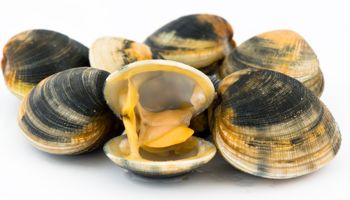
raw-clams-350SEATT will unify Southeast Alaska tribes in monitoring HAB events that pose a human health risk to the subsistence shellfish harvester, such as paralytic shellfish poisoning (PSP). This monitoring effort will provide weekly data on the timing and distribution of HABs, along with measurements of environmental conditions, indicators, and potential mechanisms that trigger HAB events.

In addition to STA, SEATT partners include the Klawock Cooperative Association, Craig Tribal Association, Yakutat Tlingít Tribe, Petersburg Indian Association, Organized Village of Kasaan, and the Central Council of Tlingít and Haida Indian Tribes of Alaska (CCTHITA).

The National Oceanic and Atmospheric Administration (NOAA) Marine Biotoxin Programs from Seattle, Wash., and Charleston, S.C., have committed to provide training through workshops to help develop the SEATT program. The Sitka Tribe of Alaska is hosting a workshop in November for SEATT to provide training on sample collection techniques and data entry. NOAA staff will help facilitate the trainings using previously established protocols used by other HAB monitoring groups throughout nation.

Each SEATT tribe received funding through the Environmental Protection Agency (EPA) Indian General Assistance Program (IGAP) totaling $210,000 for fiscal year 2015, with plans to continue through 2017. The Sitka Tribe of Alaska also received an additional $150,000 to support SEATT with the bi-annual technical workshops and conduct cellular toxin analysis.

Ipe-fig1n addition, the Sitka Tribe of Alaska received $527,000 for the development of a marine biotoxin lab in Sitka from the Administration for Native Americans’ Environmental Regulatory Enhancement program. The lab will provide the SEATT partners the ability to assess their communities’ vulnerability for human health risks following with the same regulatory standards used by other state and federal agencies.

The STA lab will conduct toxin analysis on shellfish using the new Receptor Binding Assay (RBA) technique developed at the NOAA Charleston laboratory. The RBA was just recently accepted as a regulatory method used to determine toxin levels in shellfish by the Interstate Shellfish Sanitation Conference (ISSC) and has been adopted into the National Shellfish Sanitation Program (NSSP).

• Alaska Department of Health issues PSP warning for Southeast Alaska shellfish

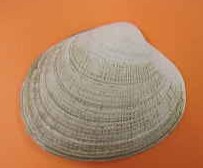
The butter clam has one set of rings that go one direction only, around the same center point (Photo courtesy of Alaska Department of Environmental Conservation)

The butter clam has one set of rings that go one direction only, around the same center point (Photo courtesy of Alaska Department of Environmental Conservation)

On Friday, June 22, the Alaska Department of Health and Social Services issued a paralytic shellfish poisoning (PSP) warning for Southeast Alaska shellfish. Please be aware that there have been several PSP blooms in recent years, and the PSP toxin has sent several people to the hospital and even resulted in a couple of deaths.

The state in general does not recommend the recreational or subsistence harvest of shellfish (in particular filter-feeding bi-valves such as clams, cockles, oysters, mussels and others) from Alaska beaches because they are not checked for the PSP toxin. Commercial shellfish is tested for PSP and safe to eat. In addition to the links in the press release below, here is a link to more information about PSP from the SouthEast Alaska Regional Health Consortium (SEARHC), http://searhc.org/publications/featured_stories/2011_06_psp.php. Now here is the text of the release:


Scientists advise against harvesting shellfish due to large “red tide” in Southeast Alaska

State health officials remind public about risks


ANCHORAGE — Warm weather combined with an increasingly large algae bloom in Southeast Alaska has scientists advising extra caution to would-be recreational shellfish harvesters. Water samples taken from around Etolin Island show increasing levels of Alexandrium algae, which produces paralytic shellfish poisoning (PSP) in shellfish. Tests have also shown a slight increase in Alexandrium levels on the west coast of Prince of Wales Island as well as extremely high levels around Juneau.

The littleneck clam has two sets of rings that cross each other at 90 degree angles (Photo courtesy of Alaska Department of Environmental Conservation)

The littleneck clam has two sets of rings that cross each other at 90 degree angles (Photo courtesy of Alaska Department of Environmental Conservation)

Scientists have also identified unsafe levels of three different species of Dinophysis algae, which produces diarrhetic shellfish poisoning (DSP), in samples from around Ketchikan. DSP can cause diarrhea, PSP can cause paralysis.

“These Alexandrium levels are similar to what we saw last year when we had such high levels of PSP toxins in shellfish,” said Kate Sullivan, with the University of Alaska Southeast and co-founder of the Alaska Harmful Algal Bloom Partnership (AHAB). “Last summer we had a number of cases, including four people who needed to be hospitalized. We want people to be extra cautious and remember that the only safe shellfish is the kind you buy at the store.”

A cockle has deep ridges similar to a Ruffles potato chip (Photo courtesy of Alaska Department of Environmental Conservation)

A cockle has deep ridges similar to a Ruffles potato chip (Photo courtesy of Alaska Department of Environmental Conservation)

Early signs of paralytic shellfish poisoning often include tingling of the lips and tongue. Symptoms may progress to tingling of fingers and toes, then loss of control of arms and legs, followed by difficulty breathing. Death can result in as little as two hours.

All locally harvested shellfish — including clams, mussels, oysters, geoducks and scallops — can contain paralytic shellfish poison. Crabmeat is not known to contain the PSP toxin, but crab guts can contain unsafe levels of toxin and should be discarded. There is no way to tell if a beach is safe for harvesting by looking at it. Toxins can be present in large amounts even if the water looks clear. Also, the toxin can remain in shellfish long after the algae bloom is over. PSP cannot be cooked, cleaned or frozen out of shellfish. Commercially grown shellfish is tested and considered safe.

Paralytic shellfish poisoning is considered a public health emergency. Suspected cases must be reported immediately to the Section of Epidemiology by health care providers at 907-269-8000 during work hours or 800-478-0084 after hours.

For more information on PSP go to:

http://www.cdc.gov/nczved/divisions/dfbmd/diseases/marine_toxins/, or

http://www.epi.alaska.gov/id/dod/psp/ParalyticShellfishPoisoningFactSheet.pdf

• Recent paralytic shellfish poisoning (PSP) serve as reminder to not eat certain types of locally harvested shellfish

The butter clam has one set of rings that go one direction only, around the same center point (Photo courtesy of Alaska Department of Environmental Conservation)

The butter clam has one set of rings that go one direction only, around the same center point (Photo courtesy of Alaska Department of Environmental Conservation)

This past week, there were four suspected cases of paralytic shellfish poisoning (PSP) reported in Juneau. These four cases, combined with a couple of PSP cases in the Ketchikan/Metlakatla areas this winter and record-high levels of the PSP toxin found in shellfish last summer should serve as reminders that the state discourages eating recreationally and subsistence-harvested shellfish on most beaches in Alaska.

The first three PSP cases reported to the Alaska Section on Epidemiology last week involved clams harvested over the Easter weekend near Juneau — the first case reported April 10 involved razor clams from Admiralty Island and the next two cases reported April 12 involved butter clams from either Lincoln Island or Ralston Island. On April 13, another case was reported where a person ate pink neck clams (also known as surf clams) harvested from Shelter Island.

The littleneck clam has two sets of rings that cross each other at 90 degree angles (Photo courtesy of Alaska Department of Environmental Conservation)

The littleneck clam has two sets of rings that cross each other at 90 degree angles (Photo courtesy of Alaska Department of Environmental Conservation)

In each case, the people who ate the clams experienced classic PSP toxin symptoms — tingling and numbness of the mouth and tongue that eventually can extend into the extremities and then the rest of the body. Once the toxin moves into the body, it can paralyze the heart and lungs, causing them to stop and leading to intensive care treatment and possibly death (PSP deaths were reported in Juneau and Haines in 2010). If people experience these symptoms, they should get to the hospital immediately because sometimes a hospital respirator can save a life.

PSP can cause severe health problems and even death, and there is no antidote. The toxin is not visible, and requires special testing to be detected. It can occur during any month of the year, and the toxin can remain in affected shellfish for as long as two years. There is no antidote to the toxin. PSP generally affects bivalves that filter food when they eat, such as clams, cockles, mussels, oysters or scallops. Crab meat does not carry the PSP toxin, but crab guts can have the toxin since crab eat bivalves.

A cockle has deep ridges similar to a Ruffles potato chip (Photo courtesy of Alaska Department of Environmental Conservation)

A cockle has deep ridges similar to a Ruffles potato chip (Photo courtesy of Alaska Department of Environmental Conservation)

Southeast Alaska beaches, like most beaches in the state frequented by recreational and subsistence harvesters, are not tested by the state for the PSP toxin. The state does check commercially harvested shellfish for the toxin, but in recent months at least one commercial geoduck season was closed because of the toxin’s presence.

To learn more about PSP, here is an informational page created by the SouthEast Alaska Regional Health Consortium (SEARHC) after last year’s extremely high levels of PSP toxin were discovered. This page features information about how PSP is formed, what types of shellfish can carry the PSP toxin, basic first aid for PSP symptoms and more.

• Paralytic Shellfish Poisoning Fact Sheet from the State of Alaska

• Paralytic shellfish poisoning (PSP) warning issued for Southeast Alaska

The enclosed copy is courtesy of the SouthEast Alaska Regional Health Consortium (SEARHC) website.
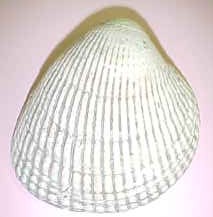
A cockle has deep ridges similar to a Ruffles potato chip (Photo courtesy of Alaska Department of Environmental Conservation)

A cockle has deep ridges similar to a Ruffles potato chip (Photo courtesy of Alaska Department of Environmental Conservation)

This past week has seen five cases of paralytic shellfish poisoning (PSP) in Alaska, including two cases in Southeast Alaska that resulted in the June 17 death of a Juneau woman who ate a cockle and the June 22 death of a Haines man who ate a Dungeness crab. The other three cases were in Kodiak and they resulted in illness from eating butter clams.

The two Southeast deaths, if confirmed by autopsy, will be the first paralytic shellfish poisoning deaths in Alaska since 1997. In 2009 there was just one reported case of PSP in Alaska, and there were no cases of PSP in 2008 and one in 2007. There have been periodic outbreaks of PSP over the years, with the most deadly instance coming when clams and mussels gathered from Peril Straits near Sitka killed more than 100 Russians and Aleuts in 1799.

According to the Alaska Department of Health and Social Services, the 57-year-old Juneau woman reportedly ate cockles she gathered on June 14 from the Point Louisa end of Auke Bay. She died June 17 after being hospitalized at Bartlett Regional Hospital in Juneau. The Alaska Department of Environmental Conservation tested cockles from Auke Bay after the woman was hospitalized and DEC found the Auke Bay cockles had much higher levels of PSP than acceptable (they should not have more than 80 parts per million, and the cockles had 2,044 parts per million).

The 57-year-old Haines man reportedly ate Dungeness crab on June 18 that he caught off Jenkins Rock near the Chilkat Inlet of Lynn Canal. He was hospitalized at Bartlett Regional Hospital on June 18 and released from the hospital on June 21. He died in his Haines home early on June 22. Dungeness crab meat does not contain PSP, but the viscera (guts) can have the toxin, health officials said. People should not eat crab viscera. The Department of Environmental Conservation plans to test crabs from Southeast for PSP.

What is paralytic shellfish poisoning (PSP)?

Paralytic shellfish poisoning, or PSP, is a potentially lethal toxin that can lead to fatal respiratory paralysis, according to the Alaska Department of Environmental Conservation. The toxin comes from algae, which is a food source for clams, mussels, crabs and other shellfish found across Alaska. This toxin can be found in shellfish every month of the year, and butter clams have been known to store the toxin for up to two years. The toxin cannot be seen with the naked eye, and there is no simple test a person can do before they harvest. One of the highest concentrations of PSP in the world was reported in shellfish from Southeast Alaska.
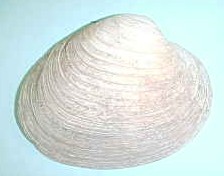
The butter clam has one set of rings that go one direction only, around the same center point (Photo courtesy of Alaska Department of Environmental Conservation)

The butter clam has one set of rings that go one direction only, around the same center point (Photo courtesy of Alaska Department of Environmental Conservation)

Symptoms of PSP can begin almost immediately, or they can take several hours after eating the affected shellfish before they appear. Symptoms include shortness of breath, tingling, dizziness and numbness. If you suspect someone has symptoms of PSP, get that person to a medical facility fast (an Alaska Sea Grant link below has first aid for PSP). Death is rare from PSP, but some people have died after eating just one clam or mussel with the PSP toxin, while in other cases it took eating many clams or mussels to get enough of the poison to cause death.

Are Southeast beaches safe for subsistence or recreational shellfish harvesting?

The Department of Environmental Conservation recommends harvesting of shellfish only from DEC-certified beaches, and the only certified beaches in the state are located in the Cook Inlet and Kachemak Bay areas of Southcentral Alaska. According to DEC, there are no certified beaches in populated areas of Southeast Alaska, Kodiak or the Aleutian Islands. The only beaches DEC can certify as safe for shellfish collecting are those where state-certified testing of clams and mussels is done regularly.

The littleneck clam has two sets of rings that cross each other at 90 degree angles (Photo courtesy of Alaska Department of Environmental Conservation)

The littleneck clam has two sets of rings that cross each other at 90 degree angles (Photo courtesy of Alaska Department of Environmental Conservation)

“Do not eat shellfish from uncertified beaches,” DEC Program Specialist George Scanlan said. “Anyone who eats PSP-contaminated shellfish is at risk for illness or death.”

The DEC warning does not apply to commercially grown and harvested shellfish available in grocery stores and restaurants. Commercially grown and harvested shellfish goes through a regular testing program before it goes to market.

Paralytic shellfish poisoning (PSP) resources

DEC page about paralytic shellfish poisoning (PSP) and how it works, http://www.dec.state.ak.us/eh/fss/seafood/psp/psp.htm

DEC links page with more info about PSP,
http://www.dec.state.ak.us/eh/fss/seafood/psphome.htm

DEC page about identifying butter clams, littleneck clams and cockles (has photos),
http://www.dec.state.ak.us/eh/fss/seafood/psp/shellfish.htm

Current DEC warning about PSP in Alaska (dated June 16, 2010),
http://dec.alaska.gov/press_releases/2010/2010_06_16_psp%20final.pdf

Joint DH&SS/DEC press release about Haines case of PSP (dated June 21, 2010),
http://www.hss.state.ak.us/press/2010/Additional_case_of_PSP_reported_062110.pdf

DH&SS  fact sheet about paralytic shellfish poisoning, http://www.hss.state.ak.us/pdf/201006_shellfish.pdf

Twitter feed for the Alaska Department of Health and Social Services,
http://twitter.com/alaska_DHSS

Alaska Sea Grant page with links about paralytic shellfish poisoning,
http://seagrant.uaf.edu/features/PSP/psp_page.html

Alaska Sea Grant page with first aid for PSP victims (get victim to medical facility fast),
http://seagrant.uaf.edu/features/PSP/PSP_aid.html

Centers of Disease Control and Prevention page on marine toxins (including PSP),
http://www.cdc.gov/nczved/divisions/dfbmd/diseases/marine_toxins/