• Lori Adams discusses weeding and feeding in her latest Daily Sitka Sentinel garden column

(Lori Adams, who owns Down-To-Earth U-Pick Garden and is a frequent vendor at the Sitka Farmers Market, will be writing a regular garden column in the Daily Sitka Sentinel this summer. The Sentinel is allowing us to reprint the columns on this site after they first appear in the newspaper. This column appeared on Page 4 of the Wednesday, July 11, 2012, edition of the Daily Sitka Sentinel.)

GARDENING IN SITKA

By Lori Adams

WEED AND FEED

I consider July 15 to be the middle of the gardening season. By this time a large portion of the nutrients you added to your beds in the spring have either been used up or washed away by the rain, and the weeds are threatening to take over the garden. Weeds rob what little nutrients are left in your soil, block sunlight and harbor mold and mildew. It can really make a difference in the health and harvest of your garden if you invest some time in weeding and amending the soil at this time.

If you tilled your garden this spring like I did, and did not mulch with seaweed, you were probably amazed at the carpet of weeds that sprouted up. It is very important to take the time to sit down and pull every single one of them before they produce seeds. If you did till and mulch with seaweed, you probably saw a pronounced decrease in the amount of weeds in your garden.

Most weeds really aren’t a problem if you are diligent to pull them before they produce seed and are sure to get all the roots because once they are pulled they are gone forever. The only two weeds I have had real trouble with are horsetail and Japanese knotweed. These two weeds have invasive root systems that are just about impossible to eradicate. If you break them off, the broken end just grows multiple sprouts. A small piece laying on the ground can even take root.

Someone once told me that the best defense is a good offense … that these weeds like acidic, poor soil, so the first step is to add lime to the soil and make it as nutritious as possible. It helped, but was not a complete solution. I noticed that where I till they are drastically reduced. I think it is because the roots get chopped up into bits, the bits sprout, I pull on the sprouts and the entire bits come up.

The places were I can’t till or really work it over with a trowel (like the asparagus bed) have become infested with horsetail. This year I mulched the asparagus bed heavily with beach seaweed/leaf mulch and I noticed that the horsetail roots are starting to spread through the loose mulch. When I pulled on them I was able to pull up long root sections. In fact, the other weeds that were growing in the beach mulch pulled up easily. I plan on gathering lots of beach mulch this fall.

If you have a traditional bottomless box bed that has a lot of horsetail in it, it is probably coming up from the ground below.  You can’t till in the box so the only way to get rid of it is to completely empty the bed, lay two layers of landscaping cloth in the bottom and up around the OUTSIDE of the box a few inches and staple it to the sides of the box. Then sift the dirt to remove every scrap of root, and start over. If anyone reading this has a magic bullet for these weeds please let me know.

To add nutrients to your beds either fertilize with commercial fertilizer, spread cured compost an inch thick over every bed or mulch with seaweed. Even with this awful weather we’ve been having I think you will see a definite difference in the health of your garden if you weed and feed.

Brought to you by Down-To-Earth U-Pick Garden

2103 Sawmill Creek Road

Open June-August / Monday to Saturday, 11 a.m. to 6 p.m.

747-6108 or 738-2241
http://downtoearthupick.blogspot.com/

• Lori Adams discusses everything she’s learned about growing Kohlrabi in her latest Daily Sitka Sentinel garden column

(Lori Adams, who owns Down-To-Earth U-Pick Garden and is a frequent vendor at the Sitka Farmers Market, will be writing a regular garden column in the Daily Sitka Sentinel this summer. The Sentinel is allowing us to reprint the columns on this site after they first appear in the newspaper. This column appeared on Page 4 of the Tuesday, July 3, 2012, edition of the Daily Sitka Sentinel.)

GARDENING IN SITKA

By Lori Adams

EVERYTHING I’VE LEARNED ABOUT GROWING KOHLRABI

Many people have never even heard of Kohlrabi, but I think it is one of my favorite garden vegetables. Kohlrabi is from the brassica family. It is a round bulb like a turnip but it grows just above the soil level and has leaves that grow out from the bulb in many different places, not just the top.  There are two different colors, green and purple.

Although Kohlrabi is a bulb it is a heavy feeder. Preparation of the bed for Kohlrabi should begin in the fall with a heavy amendment of nitrogen. I like to use salmon and seaweed and seashell sand, and then cover the bed with black plastic for the winter to prevent the leeching of nutrients.

In the spring it wouldn’t hurt to also till in some herring roe on kelp. Just be sure that the roe has time to break down a little before it’s time to plant so you don’t burn your plants. Seeds can be planted directly out in prepared beds mid-April, but I recommend starting them indoors mid-March and then transplanting them outdoors mid-April.

In a raised bed make a dish-shaped depression and then dig a hole in the center of it for the transplant. Bury the transplant up to its first set of true leaves using 6-inch spacing between plants. The depression will function as a catch basin for water to prevent the plant from drying out.

Brassicas require steady moisture, so it’s not a bad idea to mulch around all the plants with seaweed. Just be sure the plants aren’t buried and have minimum contact with the seaweed. Mulching with seaweed really helps retain moisture, keeps the weeds down and also feeds the plants. If you have a wet, moldy garden without raised beds you may want to skip this step.

As with all brassicas, it is very important to cover Kohlrabi with floating row cover and to leave it on until July 15 or harvest time, whichever comes first. Row cover will protect the plants from frost and wind and rain damage, but more importantly it will keep out the root maggot fly – the mortal enemy of any plant in the brassica family.

To harvest Kohlrabi just pull up the bulb and use a sharp knife to cut off the tough root and peel away the skin and leaves. Around the root area you will find that the bulb is tough and the skin is thick, but as you work up to the top the bulb gets more tender and the skin gets thinner. At the very top you hardly have to peel away any skin at all.

I always eat my Kholrabi raw, but I read that it is also delicious cooked.  It tastes a lot like the center of a broccoli stem. It’s less watery and more dense and sweet than a turnip. The leaves are also edible and can be used like kale.

Brought to you by Down-To-Earth U-Pick Garden

2103 Sawmill Creek Road

Open June-August / Monday to Saturday, 11 a.m. to 6 p.m.

747-6108 or 738-2241
http://downtoearthupick.blogspot.com/

• Lori Adams discusses composting in her latest Daily Sitka Sentinel garden column

(Lori Adams, who owns Down-To-Earth U-Pick Garden and is a frequent vendor at the Sitka Farmers Market, will be writing a regular garden column in the Daily Sitka Sentinel this summer. The Sentinel is allowing us to reprint the columns on this site after they first appear in the newspaper. This column appeared on Page 4 of the Wednesday, June 27, 2012, edition of the Daily Sitka Sentinel.)

GARDENING IN SITKA

By Lori Adams

COMPOSTING

Sitka has poor soil. Any plant waste thrown into our garbage cans travels by barge and truck to Eastern Washington. Bagged soil is expensive and travels by truck and barge to get here. Garden waste can be turned into soil. COMPOSTING IS IMPORTANT!

Concentrated fertilizers provide plants with basic nutrients and are potent enough that they only need to be applied once or twice a year. Compost feeds plants with a gentler mixture of basic nutrients and a multitude of micronutrients, but must be applied about once a month to adequately feed your plants. Many people use a combination of the two.

“Compost” is defined as “a mixture of decaying organic material used to improve soil structure and provide nutrients.” Basically it’s the process of throwing excess plants and plant parts into a pile to rot down and turn into soil. This process can take about a year, but if you educate yourself and compost with a plan there are ways to speed up the process.

Plant parts fall into two main categories — Carbon/Brown and Nitrogen/Green. Composting experts suggest using 30 parts carbon to 1 part nitrogen.

  • EXAMPLES OF CARBON MATERIALS: untreated sawdust, straw, leaves, shredded newspaper, corn stalks and cobs, needles and cones, wood ashes (be sure the ashes are cold!)
  • EXAMPLES OF NITROGEN MATERIALS: manure, seaweed, chemical-free grass clippings, coffee grounds, food waste, spent brewer’s grain, fish waste
  • EXAMPLES OF MATERIALS NOT TO USE: cooking oil, soap, cat or dog poop, walnuts, maple leaves, colored paper, weed seed heads or roots, diseased plants
  • LOCATION: anywhere in the sun where it’s safe from rats, dogs and bears

There are many styles of composting bins you can purchased, but I think the ideal setup would be three bins side by side, no larger than 4 feet by 4 feet, made from pallets with see-through roofing to keep out the rain. The bottom would be just dirt to allow free movement of worms and bacteria and the fronts would be open.

In Bin No. 1 accumulate plant material. At some point, spend a day gathering bulk materials and layer them with your plant material in Bin No. 2. (Any new material that accumulates from now on is held in Bin No. 1.)  After a week use a pitch fork to “flip” the pile into Bin No. 3. Flipping gets oxygen throughout the whole pile better than stirring does which will really speed up the decomposition process. You should now notice quite a bit of heat coming from the pile and it should not stink.

Flip the pile once a week back and forth between Bins No. 2 and No. 3 for about two months.  By then it should resemble dirt. Sift it for use and throw all the chunks into Bin No. 1.

Remember that compost is not magical … whatever you put into your pile is what you will get out of it as far as nutrition is concerned. Be sure to adjust your pH level by adding some lime or seashell sand to it before you use it.

If you want to learn more about composting, I highly suggest you read these two books — “Let It Rot,” by Stu Campbell, and “The Complete Compost Gardening Guide,” by Barbara Pleasant and Deborah L. Martin.

Once your compost is ready you can spread it about 1 inch thick around your plants and watch them grow!!

Brought to you by Down-To-Earth U-Pick Garden

2103 Sawmill Creek Road

Open June-August / Monday to Saturday, 11 a.m. to 6 p.m.

747-6108 or 738-2241

http://downtoearthupick.blogspot.com/


• Lori Adams discusses everything she’s learned about growing leeks in her latest Daily Sitka Sentinel garden column

(Lori Adams, who owns Down-To-Earth U-Pick Garden and is a frequent vendor at the Sitka Farmers Market, will be writing a regular garden column in the Daily Sitka Sentinel this summer. The Sentinel is allowing us to reprint the columns on this site after they first appear in the newspaper. This column appeared on Page 5 of the Wednesday, June 20, 2012, edition of the Daily Sitka Sentinel.)

GARDENING IN SITKA

By Lori Adams

EVERYTHING I’VE LEARNED ABOUT GROWING LEEKS

Last year I had some gardening friends recommend that I try growing leeks.  I have to admit that I was not really familiar with leeks and had never thought about growing them.  I had been wanting to grow nice onions and hadn’t found anyone that had any real success with them, so I thought I would give the leeks a try.  I am so glad I did!  They are really hardy plants that work really well as onions.

I start my leeks from seeds in the sunroom on Feb. 15. The seeds can be planted very close together, about a half-inch apart. After germination I feed them once a week with a diluted liquid fertilizer. To prep the bed for them I like to amend the soil with plenty of food and organic material. My favorite natural amendments are starfish, compost, seaweed and seashell sand.

On April 15, when the seedlings are about 9 inches high, it’s time to transplant them outside. To transplant, I just take the block of soil and tightly packed seedlings out of the pot, separate the seedlings, trim the roots to 2 inches and plant them about 6 inches deep with about 9-12 inch spacing.  The green blades of fully grown leeks can be a little coarse and the white root are quite tender, so if you plant the seedlings deep you can force the leeks to have long, white, blanched roots.  As the leeks get bigger you can “hill” up the dirt around them to make the roots even longer.

Elliot Coleman, the leading expert in cool weather vegetable gardening, from Maine, recommends dropping the seedling into a 9-inch deep hole but not covering the plant with dirt. He says that over time the dirt will settle in on its own. Elliot Coleman has written several outstanding books that contain a lot of very useful information which Sitka gardeners can use. But as you read them, just keep in mind that although Maine is cold and has a maritime climate it is at the same latitude as Eugene, Ore. …. a huge difference in winter daylight.

Leeks can be harvested at any time, but they don’t reach full maturity until the fall.  As I mentioned earlier they are extremely hardy so they can be left out in the garden well after the first frost.

There is one more thing I would like to point out. I have been planting my leeks in beds that I have not been covering with row cover. This spring I planted a few of my leek seedlings in a friend’s garden as a favor while she was out of town. Her beds are covered with row cover.  When I went over to her house to check on things a few weeks ago I was amazed to see how much bigger her leeks were than mine … ABOUT 10 TIMES BIGGER!  I will not make the mistake of keeping them uncovered next year.

Brought to you by Down-To-Earth U-Pick Garden

2103 Sawmill Creek Road

Open June-August / Monday to Saturday, 11 a.m. to 6 p.m.

747-6108 or 738-2241

http://downtoearthupick.blogspot.com/

• Alaska Department of Health issues PSP warning for Southeast Alaska shellfish

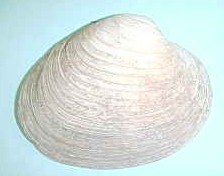
The butter clam has one set of rings that go one direction only, around the same center point (Photo courtesy of Alaska Department of Environmental Conservation)

The butter clam has one set of rings that go one direction only, around the same center point (Photo courtesy of Alaska Department of Environmental Conservation)

On Friday, June 22, the Alaska Department of Health and Social Services issued a paralytic shellfish poisoning (PSP) warning for Southeast Alaska shellfish. Please be aware that there have been several PSP blooms in recent years, and the PSP toxin has sent several people to the hospital and even resulted in a couple of deaths.

The state in general does not recommend the recreational or subsistence harvest of shellfish (in particular filter-feeding bi-valves such as clams, cockles, oysters, mussels and others) from Alaska beaches because they are not checked for the PSP toxin. Commercial shellfish is tested for PSP and safe to eat. In addition to the links in the press release below, here is a link to more information about PSP from the SouthEast Alaska Regional Health Consortium (SEARHC), http://searhc.org/publications/featured_stories/2011_06_psp.php. Now here is the text of the release:


Scientists advise against harvesting shellfish due to large “red tide” in Southeast Alaska

State health officials remind public about risks


ANCHORAGE — Warm weather combined with an increasingly large algae bloom in Southeast Alaska has scientists advising extra caution to would-be recreational shellfish harvesters. Water samples taken from around Etolin Island show increasing levels of Alexandrium algae, which produces paralytic shellfish poisoning (PSP) in shellfish. Tests have also shown a slight increase in Alexandrium levels on the west coast of Prince of Wales Island as well as extremely high levels around Juneau.

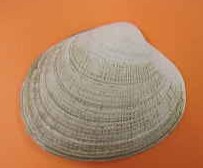
The littleneck clam has two sets of rings that cross each other at 90 degree angles (Photo courtesy of Alaska Department of Environmental Conservation)

The littleneck clam has two sets of rings that cross each other at 90 degree angles (Photo courtesy of Alaska Department of Environmental Conservation)

Scientists have also identified unsafe levels of three different species of Dinophysis algae, which produces diarrhetic shellfish poisoning (DSP), in samples from around Ketchikan. DSP can cause diarrhea, PSP can cause paralysis.

“These Alexandrium levels are similar to what we saw last year when we had such high levels of PSP toxins in shellfish,” said Kate Sullivan, with the University of Alaska Southeast and co-founder of the Alaska Harmful Algal Bloom Partnership (AHAB). “Last summer we had a number of cases, including four people who needed to be hospitalized. We want people to be extra cautious and remember that the only safe shellfish is the kind you buy at the store.”

A cockle has deep ridges similar to a Ruffles potato chip (Photo courtesy of Alaska Department of Environmental Conservation)

A cockle has deep ridges similar to a Ruffles potato chip (Photo courtesy of Alaska Department of Environmental Conservation)

Early signs of paralytic shellfish poisoning often include tingling of the lips and tongue. Symptoms may progress to tingling of fingers and toes, then loss of control of arms and legs, followed by difficulty breathing. Death can result in as little as two hours.

All locally harvested shellfish — including clams, mussels, oysters, geoducks and scallops — can contain paralytic shellfish poison. Crabmeat is not known to contain the PSP toxin, but crab guts can contain unsafe levels of toxin and should be discarded. There is no way to tell if a beach is safe for harvesting by looking at it. Toxins can be present in large amounts even if the water looks clear. Also, the toxin can remain in shellfish long after the algae bloom is over. PSP cannot be cooked, cleaned or frozen out of shellfish. Commercially grown shellfish is tested and considered safe.

Paralytic shellfish poisoning is considered a public health emergency. Suspected cases must be reported immediately to the Section of Epidemiology by health care providers at 907-269-8000 during work hours or 800-478-0084 after hours.

For more information on PSP go to:

http://www.cdc.gov/nczved/divisions/dfbmd/diseases/marine_toxins/, or

http://www.epi.alaska.gov/id/dod/psp/ParalyticShellfishPoisoningFactSheet.pdf

• Lori Adams discusses everything she’s learned about growing cauliflower in her latest Daily Sitka Sentinel garden column

(Lori Adams, who owns Down-To-Earth U-Pick Garden and is a frequent vendor at the Sitka Farmers Market, will be writing a regular garden column in the Daily Sitka Sentinel this summer. The Sentinel is allowing us to reprint the columns on this site after they first appear in the newspaper. This column appeared on Page 6 of the Wednesday, June 13, 2012, edition of the Daily Sitka Sentinel.)

GARDENING IN SITKA

By Lori Adams

EVERYTHING I’VE LEARNED ABOUT GROWING CAULIFLOWER

Cauliflower is from the brassica family and all brassicas do really well here in Southeast Alaska. To prep your bed for cauliflower it should be amended with a fair amount of nitrogen as cauliflower is a heavy feeder. I like to prep my bed the previous fall with seaweed, seashell sand and salmon carcasses that are spaced about a foot apart. The next spring I start the seeds indoors around March 15.

All of the varieties I tried did well here, and the funny thing was that most of them matured at about the same time regardless of how many days the packets said were necessary. The only plants that matured later where the ones that were accidentally planted in partial shade. I think it might be a good idea to grow some in the sun and some in the shade on purpose to spread the harvest season out a bit.

I transplant the starts on April 15 while the starts are young and vigorous. If brassica starts get too old they will be stunted and not worth planting. The roots reach the boundaries of the 4-inch pot and the plant decides that its all the space it’s going to get so it stops growing.

When I transplant cauliflower starts I make a dish shaped depression in the soil and then dig a hole in the middle of it deep enough to bury the start up to its first true leaves. The depression acts as a catch basin for water to keep the starts from drying out. You would think that nothing would dry out with our weather, but a good raised bed that is properly amended with lots of sand can dry out in just one day of nice weather. I find it is also helpful to mulch the bed with a 4-inch layer of seaweed to ensure steady, adequate moisture. Just be sure the seaweed does not touch the plants so there is no chance of it rotting the tender starts.

Cauliflower needs to have lots of room to grow big beautiful heads so I like to space them at least 18 inches to 2 feet apart. When the starts are small it is tempting to crowd them close together to get more plants in the bed, but it is never worth it. If cauliflower plants are too close together they will produce little tiny heads, so try to imagine full-sized plants when you set them out.  I cover all my brassica beds with floating row cover and leave it on until July 15 to warm up the beds and protect the plants from the root maggot fly.

Many books will tell you that as cauliflower heads develop you need to “bleach” or “blanch” the heads by tying some leaves together over the top to protect them from the sun. This does not seem to be necessary here in Sitka. In fact, the year I tried it the slugs seemed very happy to have this great hiding area and ate my plants up. Sometimes the heads do turn slightly purple from the sun but it has no effect on their flavor.

It’s hard to know when to harvest cauliflower because it looks so beautiful and the heads just keep getting bigger and bigger, but if it goes past its prime the flowerets start to separate. This is called “ricing.” Ricing does not affect the flavor either, but for best results try to harvest cauliflower right before this happens. Once cauliflower is harvested the plant is finished and will not produce any more.

It’s a good idea to start some more seeds in June so that at harvest time you can pull the old plant, amend the spot with some compost and then pop a new start in for a second harvest later in the fall.

Brought to you by Down-To-Earth U-Pick Garden

2103 Sawmill Creek Road

Open June-August / Monday to Saturday, 11 a.m. to 6 p.m.

747-6108 or 738-2241

http://downtoearthupick.blogspot.com/

• New high tunnels at Judy Johnstone’s Sprucecot Garden get media attention

Sitka Local Foods Network President Kerry MacLane, left, and Sprucecot Garden Owner Judy Johnstone pose in front of one of the high tunnels recently erected on Judy's land on Peterson Street. (Photo Courtesy of KCAW-Raven Radio)

Sitka Local Foods Network President Kerry MacLane, left, and Sprucecot Garden Owner Judy Johnstone pose in front of one of the high tunnels recently erected on Judy’s land on Peterson Street. (Photo Courtesy of KCAW-Raven Radio)

Longtime Sitka gardener Judy Johnstone will be able to extend the growing season at her Sprucecot Garden on Peterson Street after a crew erected two new high tunnels on her land.

The high tunnels, which basically are temporary greenhouses with a large frame holding a transparent plastic cover and without a built-in power supply, already have raised the temperatures inside by about 15-20 degrees over the low-50s we’ve had in Sitka so far this summer. They will enable Judy to start her plants earlier in the spring and keep producing food later into the fall.

The high tunnels were funded through a cost-sharing program run by the USDA National Resources Conservation Service, which is accepting applications for new high tunnel projects through June 15.

These are the first high tunnels to go up in Sitka, but there have been several built in other parts of the state (the lower Kenai Peninsula near Homer has about 90 of them). Since these are the first high tunnels in Sitka, they’ve received lots of coverage in the local media. The Daily Sitka Sentinel featured an article on Page 1 of its Friday, June 8, 2012, edition (password required), and KCAW-Raven Radio featured Judy and Sitka Local Foods Network President Kerry MacLane in its Monday, June 11, 2012, Morning Edition show interview and in a story on its Tuesday, June 12, 2012, newscasts.

• Lori Adams discusses maximizing small garden spaces in her latest Daily Sitka Sentinel garden column

(Lori Adams, who owns Down-To-Earth U-Pick Garden and is a frequent vendor at the Sitka Farmers Market, will be writing a regular garden column in the Daily Sitka Sentinel this summer. The Sentinel is allowing us to reprint the columns on this site after they first appear in the newspaper. This column appeared on Page 4 of the Wednesday, June 6, 2012, edition of the Daily Sitka Sentinel.)

GARDENING IN SITKA

By Lori Adams

MAXIMIZING SPACE IN A SMALL GARDEN

Make beds wide and pathways narrow. A raised bed is effective as long as it is no wider than 48 inches. Many people don’t like beds this wide because they can’t straddle them, but the effort it takes to walk around the row is worth it if you get more vegetables. My pathways are wider than I’d like because I need room for groups of people, but for most gardens the pathways only need to be wide enough for a small wheelbarrow.

Go vertical.  Build trellises and chose varieties that take advantage of vertical space.  For instance,  tomatoes can be grown in cages, zucchini and cucumber plants can be trained to grow up trellises, plants like strawberries can be grown in hanging pots, and tall varieties of peas and beans will easily  climb up fencing. Hill up potato plants for more spuds and leeks for longer blanched stalks.

Choose varieties that give you the most bang for your buck. Many broccoli varieties continue to produce sprouts long after you have harvested the central head. I have harvested fresh broccoli from the garden for Thanksgiving dinner. Grow leaf lettuce instead of head lettuce for multiple harvests, and edible podded peas (snap and snow peas) rather than shelling peas for more poundage. Choose hard-neck rather than soft-neck garlic so you can harvest the scapes for summer garlic flavor in stir fries, in addition to the bulbs you harvest in the fall. There are beet and radish varieties that are cylindrical rather than round, and if you have deep sifted soil you can choose extra long carrot varieties. Choose cabbage varieties that produce dense, heavy heads. Also, choose both early and late varieties of each crop to assure a continuous supply.

Use harvest methods that encourage more growth.  Leaf lettuce will tolerate up to three harvests if you cut it 2-3 inches from the ground instead of harvesting the entire plant. Peas, cucumbers, beans, radish pods, berries and tomatoes all benefit from frequent pickings. Most will stop producing if you don’t keep up with them. I have seen pea pods mature overnight. Pea pods must be picked EVERY DAY. If possible, celery, Swiss chard and rhubarb should be harvested a few stalks at a time rather than all at once. The plants recover faster if they still have two-thirds of their foliage. Harvest only outer stalks and use a pulling, twisting motion rather than cutting the stalks. When cutting fennel bulbs leave a generous amount of root and it will sprout with multiple baby fennel plants. Rather than pulling up green onions, cut them off 2-3 inches above the soil line and they will continue to grow more greens all season. I believe you could do the same thing with leeks but I have never tried it. Harvest root crops from crowded areas first to encourage surrounding plants to bulk up.

Pruning is important.  Herb plants that are shooting up and trying to go to seed should be pinched back to encourage branching out. The same holds true with spinach. Pruning off dead leaves and rotten vegetables or fruit keeps all plants healthier and producing longer. Pea plants can be topped once they have reached the desired height and they will branch out resulting in more peas. Don’t forget that many pea tops are edible. Prune excess broccoli and cauliflower leaves because they take a lot of energy. Target leaves that are diseased, touching the ground, touching other plants or shading surrounding vegetables. Just don’t remove more that one-third of the leaves on any one plant. Don’t forget that broccoli and cauliflower leaves are edible. Raspberries can be successfully topped to prevent them from falling over or breaking. They will also branch out and you can end up with more berries. Each raspberry clump should have all dead stalks removed and have no more than 3-5 live stalks remaining. As Brussels sprouts reach the size of marbles, start breaking off leaves starting from the bottom to send more energy into the sprouts. Toward the end of the season pinch out the top of the plant for really large sprouts. Don’t forget that Brussels sprout tops and leaves are edible. Remove strawberry runners so more energy goes into the berries.

Use floating row cover.  Using a row cover such as “remay” or “agribond” can extend your season by as much as 3-4 months. It keeps the soil and crops about 10 degrees warmer than the outside temperature. Ideally you should keep your vegetables covered all year, but at the very least you should keep all brassica crops covered until July 15th to protect them from root maggot flies. Supports are not necessary but beneficial — they protect the plants and extend the life of the cover.

Plant seeds at the recommended spacing.  More does not always mean more. If plants are too crowded they will not produce as well as they should. Broccoli, cauliflower and cabbages that are planted too closely together produce small heads. Consider placing seeds or transplants rather than sprinkling seeds, or better yet purchase a seeder. The extra time that it takes to carefully place your seeds ensures that every square inch of a small garden is utilized.

Plant in blocks rather than rows. A row of broccoli can leaf out over a row of beets next to it and shade it out. A block of broccoli planted on the north side of a block of beets will have no negative affects.

Practice successive plantings. About 1-2 months (depending on the crop) after you plant crops like spinach, fennel, cilantro, kohlrabi, napa cabbage, lettuce or cauliflower, you can start a second set of them indoors. The second set will be ready to plant out about the time you harvest the first set. With some crops you can do this several times during the season. Don’t forget to amend the soil between each successive planting.

Consider pulling up some of your flowers. This last idea is not a very popular one. It is pleasant to have ornamentals in your yard, but consider scaling back, mixing vegetables in amongst your flowers or even replacing ornamentals with edibles that are pretty, such as sunflowers, nasturtiums, flowering kale, chives, cabbage, herbs or rainbow Swiss chard.

Brought to you by Down-To-Earth U-Pick Garden

2103 Sawmill Creek Road

Open June-August / Monday to Saturday, 11 a.m. to 6 p.m.

747-6108 or 738-2241

http://downtoearthupick.blogspot.com/

• Lori Adams discusses growing spinach and lettuce in her latest Daily Sitka Sentinel garden column

(Lori Adams, who owns Down-To-Earth U-Pick Garden and is a frequent vendor at the Sitka Farmers Market, will be writing a regular garden column in theDaily Sitka Sentinel this summer. The Sentinel is allowing us to reprint the columns on this site after they first appear in the newspaper. This column appeared on Page 4 of the Wednesday, May 30, 2012, edition of the Daily Sitka Sentinel.)

GARDENING IN SITKA

By Lori Adams

EVERYTHING I’VE LEARNED ABOUT GROWING

SPINACH AND LETTUCE

For years I tried to grow lettuce and spinach and had terrible luck. But the last few years I’ve made some major changes and have been thrilled with the results.

Prepping the bed for greens starts the previous fall. I put a layer of salmon carcasses over the bed, pile on a foot of seaweed/leaf mulch, dump about an inch of seashell sand over the top and cover the whole bed with black plastic. The plastic keeps the nutrients from being washed away.

Seeds are started around mid-March. I count out the number of seeds for proper spacing in the bed (6-9 inches) and start the seeds indoors. I know that seems tedious, but it is crucial for success. In the past I would simply broadcast the seeds, but there were bare spots and the seedlings that did come up were too close together.

In April I uncover the row, run a tiller through it and let the ducks work it over really good, getting all the slugs and slug eggs. In mid-April, when the seedlings have at least two true leaves, I shoo the ducks out and transplant the greens into half of the bed with the proper spacing, covering the other half with black plastic again to save the space for a second planting later in the year. Finally I cover the whole bed with row cover.

Taking care of the greens is easy. Just provide adequate moisture and pull the weeds. The tender transplants will not grow much for a while, but once they recover from transplant shock they will show signs of growth. They are surprisingly hardy.

Harvesting can begin once the plants have about six true leaves.  I just take a few here and there by clipping them from the plants with a scissors.

  • SPINACH: Once spinach plants get too tall I top them and they branch out with more stalks. Last year the stems got HUGE. They were hollow and filled with rain but the plants stayed healthy and the leaves did not get bitter for months!  I have friends who wait until their spinach plants have 16 leaves and then they pull the entire plant, throw a handful of compost in the empty spot and plant another seed. They have never had their spinach bolt using this method and have a continuous supply all season.
  • LETTUCE: I only grow loose-eaf varieties of lettuce. Down To Earth U-Pick Garden customers just harvest by cutting the entire plant about two inches from the ground.  The plants grow back and provide two more cuttings by using this method.

Eating greens is the best part.  Some people do not like home-grown lettuce because of its bitter taste. But if you soak the leaves in a sink full of cold water for about 15 minutes this bitter taste is eliminated and the leaves get sweet and crisp.  Greens can be kept stems-down in a container of water like a bouquet of flowers in the fridge, or on the back deck of the boat, without wilting or turning brown for days — just change the water daily.

Brought to you by Down-To-Earth U-Pick Garden

2103 Sawmill Creek Road

Open June-August / Monday to Saturday, 11 a.m. to 6 p.m.

747-6108 or 738-2241

http://downtoearthupick.blogspot.com/

• Lori Adams discusses coping with Sitka’s weather in her latest Daily Sitka Sentinel garden column

(Lori Adams, who owns Down-To-Earth U-Pick Garden and is a frequent vendor at the Sitka Farmers Market, will be writing a regular garden column in theDaily Sitka Sentinel this summer. The Sentinel is allowing us to reprint the columns on this site after they first appear in the newspaper. This column appeared on Page 4 of the Wednesday, May 23, 2012, edition of the Daily Sitka Sentinel.)

GARDENING IN SITKA

By Lori Adams

COPING WITH SITKA’S WEATHER

This spring the weather has been particularly wet and cold. If this is your first year of gardening you may be having a difficult time. Try not to get discouraged. Remember that successful Sitka gardeners do not succeed because of the weather … they succeed IN SPITE of the weather through ingenuity and hard work.

There are four things that are essential if you want to succeed.

  1. Raise your beds to warm up the soil and ensure adequate drainage
  2. Amend your soil with sand to speed up drainage
  3. Choose varieties that are known to do well here
  4. Use row cover to heat up the soil and minimize rain damage

At the Down To Earth U-Pick Garden, I cover almost every single bed with row cover. It costs some money and it is difficult to keep in place, but it is well worth it. As early as May 10, I was picking BEAUTIFUL spinach and I know it’s mostly due to row cover.

Row cover is a lightweight fabric-type of material that is usually made out of spun polyester. It protects plants while allowing light and water to flow through it. It comes in varying widths and lengths that you lay over your beds. Using it can increase the temperature of the bed by as much as 10 degrees. It protects plants from wind, deters harmful insects and minimizes rain damage.

Although it works to simply lay it over the bed and let the plants push it up as they grow, it’s best to suspend it using PVC pipe, wire hoops or fencing that’s bent into arches to keep it from soaking up mud and weighing down the plants.

Even though it is fragile, row cover can last for years if you handle it carefully. Weigh the edges down firmly to keep it from it from whipping around in the wind and avoid laying it over sharp edges. I lay seine web over the top of my row cover to keep it smooth and secure. I leave my cover on until July 15 or harvest time, whichever comes first.

Here are a few more tips for dealing with the weather:

  • use clean material for pathways such as wood chips, gravel or shells
  • improve drainage on your property
  • buy some boots and lightweight raingear that are comfortable
  • designate a place inside to drip-dry your raingear so it’s ready each time you need it
  • remove as much brush and trees as possible to improve sunlight and airflow
  • use proper plant spacing to improve airflow and prevent mold and rot

DON”T GIVE UP!  Just take note of the problems you are having this year and get advice on how to improve things for next year. Most vegetables we grow here don’t mind the weather and will recover once it warms up and the weather improves.

Brought to you by Down-To-Earth U-Pick Garden

2103 Sawmill Creek Road

Open June-August / Monday to Saturday, 11 a.m. to 6 p.m.

747-6108 or 738-2241

http://downtoearthupick.blogspot.com/