• SEARHC, UAF Cooperative Extension Service to host ‘Basics of Food Preservation’ classes

University of Alaska Fairbanks Cooperative Extension Service Tanana District Agent Roxie Dinstel demonstrates proper home canning techniques (Photo courtesy of the UAF Cooperative Extension Service)

University of Alaska Fairbanks Cooperative Extension Service Tanana District Agent Roxie Dinstel demonstrates proper home canning techniques (Photo courtesy of the UAF Cooperative Extension Service)

Are you looking for ways to safely put up your grub? Do you have extra salmon or veggies you want to preserve for eating this winter? Two “Basics of Food Preservation” classes will be taught Wednesday, Aug. 31, in Sitka.

The first class takes place at noon on Aug. 31 at the SouthEast Alaska Regional Health Consortium (SEARHC) S’áxt’ Hít Mt. Edgecumbe Hospital Litehouse Cafeteria conference rooms. The second class is at 7 p.m. at Kettleson Memorial Library.

Both one-hour classes will be taught by University of Alaska Fairbanks Cooperative Extension Service Tanana District Agent Roxie Dinstel of Fairbanks, who will cover safe canning and preserving for various types of foods. Roxie helped create the UAF Cooperative Extension Service‘s new Preserving Alaska’s Bounty online tutorials for home canners, which can be found at http://www.uaf.edu/ces/preservingalaskasbounty/. (Note, Adobe Flash Player required to view tutorials, but it can be downloaded from the site.) She also helped write several of the UAF Cooperative Extension Service’s publications on canning, which are available from your local UAF Cooperative Extension Service office (at the University of Alaska Southeast-Sitka Campus in Sitka) or can be downloaded online at http://www.uaf.edu/ces/publications/.

In addition to the two classes on home canning, Roxie also will be available to test pressure gauges for home canning equipment owned by Sitka residents. These tests can tell you if your gauge is still accurate, or if it needs to be replaced for safe canning.

These classes are sponsored by the University of Alaska Fairbanks Cooperative Extension Service, Kettleson Memorial Library and SEARHC Health Promotion. All are welcome to attend, and the classes are free. For more information, please contact Martha Pearson at 966-8783 or martha.pearson@searhc.org.

• Sonja Koukel of the UAF Cooperative Extension Service writes about discovering treasures from the CES catalog

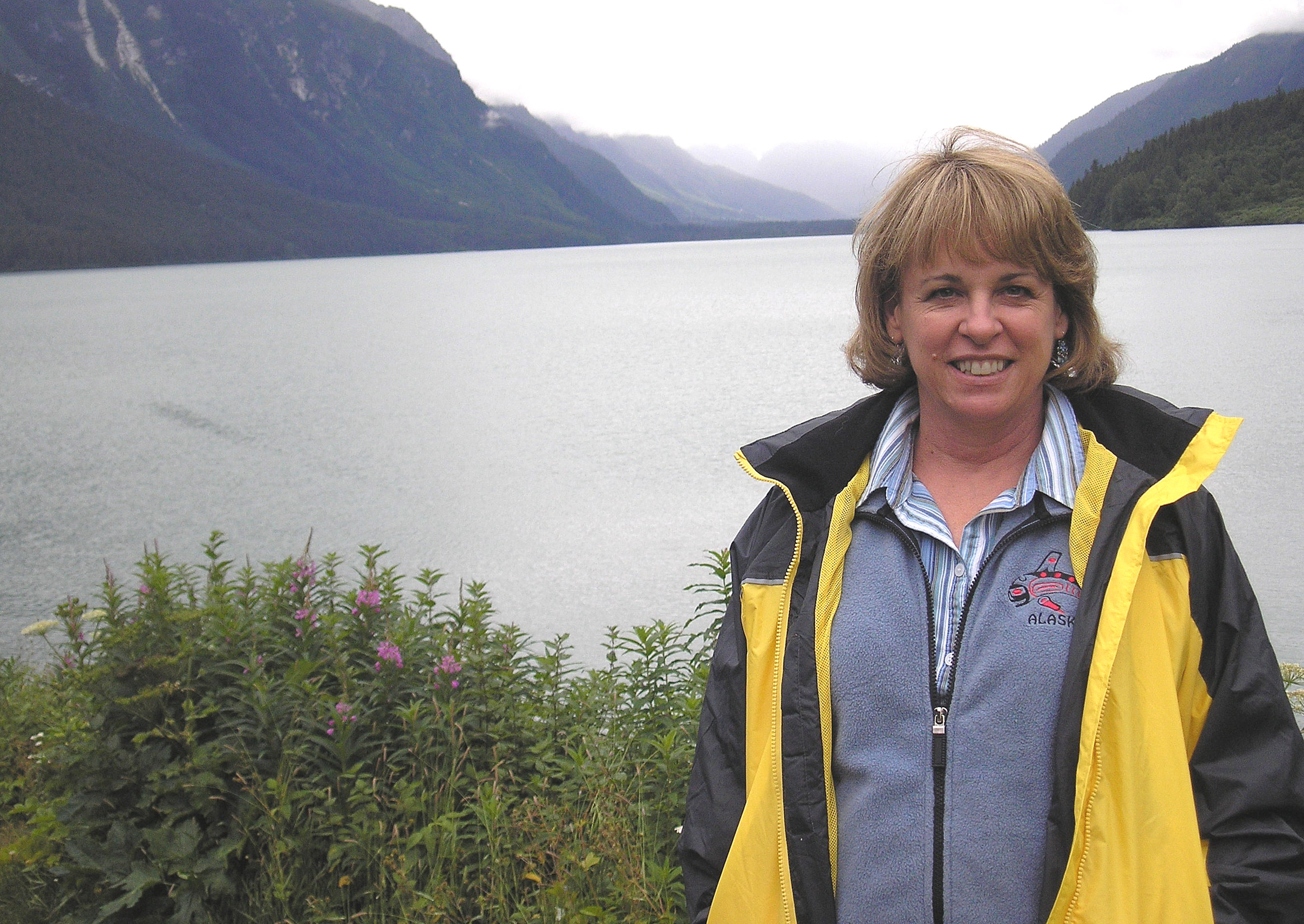
Dr. Sonja Koukel, PhD, of the UAF Cooperative Extension Service

Dr. Sonja Koukel, PhD, of the UAF Cooperative Extension Service

Discover Treasures from the UAF Cooperative Extension Service

By Dr. Sonja Koukel, PhD
Health, Home & Family Development Program
UAF Cooperative Extension Service, Juneau Office

_____

When was the last time you visited the University of Alaska Fairbanks Cooperative Extension Service (UAF CES) website? Perhaps it’s been awhile, or perhaps you’ve never taken the time to surf the site and take stock of all the treasures available in hard copy, electronic media, and on the Internet.

Every year the CES Communications Department provides a “Publications & Media” catalog listing research-based publications in the major program areas: Agriculture & Horticulture; Community Resource & Economic Development; Energy Education & Housing; and Health, Home & Family Development. Some publications are free and may be downloaded from the website. Those with a small fee can be ordered using the online form (http://www.uaf.edu/ces/pubs/), calling the toll-free number (1-877-520-5211), or contacting the local district office.

Let’s take a look at the treasure trove of information available through the Health, Home & Family Development (HHFD) program. For instance, there are a number of publications listed in the “Food, Nutrition and Health” category. Here, you will find information on storing vegetables and fruits, freezing vegetables, making fruit leather, making jerky, facts on botulism, and a variety of recipes including sourdough, rhubarb, zucchini, and wild berries. Several vegetable fact sheets provide nutrition and health guidelines (such as vitamin, mineral, and fiber content), harvesting, storage, and preparation with sample recipes included. Selected vegetables include beets, broccoli, cabbage, carrots, potatoes, squash, herbs, and chard. Bonus — all these fact sheets are free!

In my view, the most exciting new developments are the educational modules made possible through a USDA grant. Titled, “Preserving Alaska’s Bounty,” the web-based modules and DVDs were created and developed as a team effort involving HHFD faculty, program assistants, and the communications staff. The series focuses on home preservation of Alaska Native foods. Client feedback on the media, gathered from an online satisfaction survey, has been very positive.

The primary purpose for developing the modules was to provide research-based information for rural communities and areas that do not have extension faculty members on-site. The web modules are developed in a sequential manner so that each step is clearly defined and explained. There are hyperlinks within the modules that link the user to additional information. Topics are grouped into three main categories: Canning Basics, Canning Products & Methods (i.e., canning fish, meat, jams/jellies), and Meat Products & Methods (i.e., sausage, jerky). These modules are free. Locate them at (http://www.uaf.edu/ces/preservingalaskasbounty/index.html)

For those who learn best by watching demonstrations, the DVDs bring the extension experts into your home. Health, Home & Family Development program area faculty from all seven Alaska districts serve as the educators. To date, seven DVDs have been released on the following topics: Canning Basics, Canning Meat and Fish in Jars, Canning Meat and Fish in Cans, Pickling, Drying Foods, Sausage and Jerky, and the just-released, Jams and Jellies. More titles will be available in the very near future, these include: Root Cellars, Fireweed, Processing Reindeer (game meats), and Harvesting Alaska Seaweeds. The DVDs are available at a nominal fee of $5.

The Alaska Native foods preservation series is the culmination of a five-year process. It is a topic that figures into all the HHFD program areas: nutrition, food budgeting, eating locally, and energy conservation. Recently, the CES HHFD team received recognition for their work, “A Multimedia Approach to Preserving Alaska’s Bounty,” from the National Extension Honorary Society of Epsilon Sigma Phi.

In the new year, take a moment to visit the UAF Cooperative Extension Service website and discover all the treasures that await you. Contact: sdkoukel@alaska.edu or 907-796-6221.

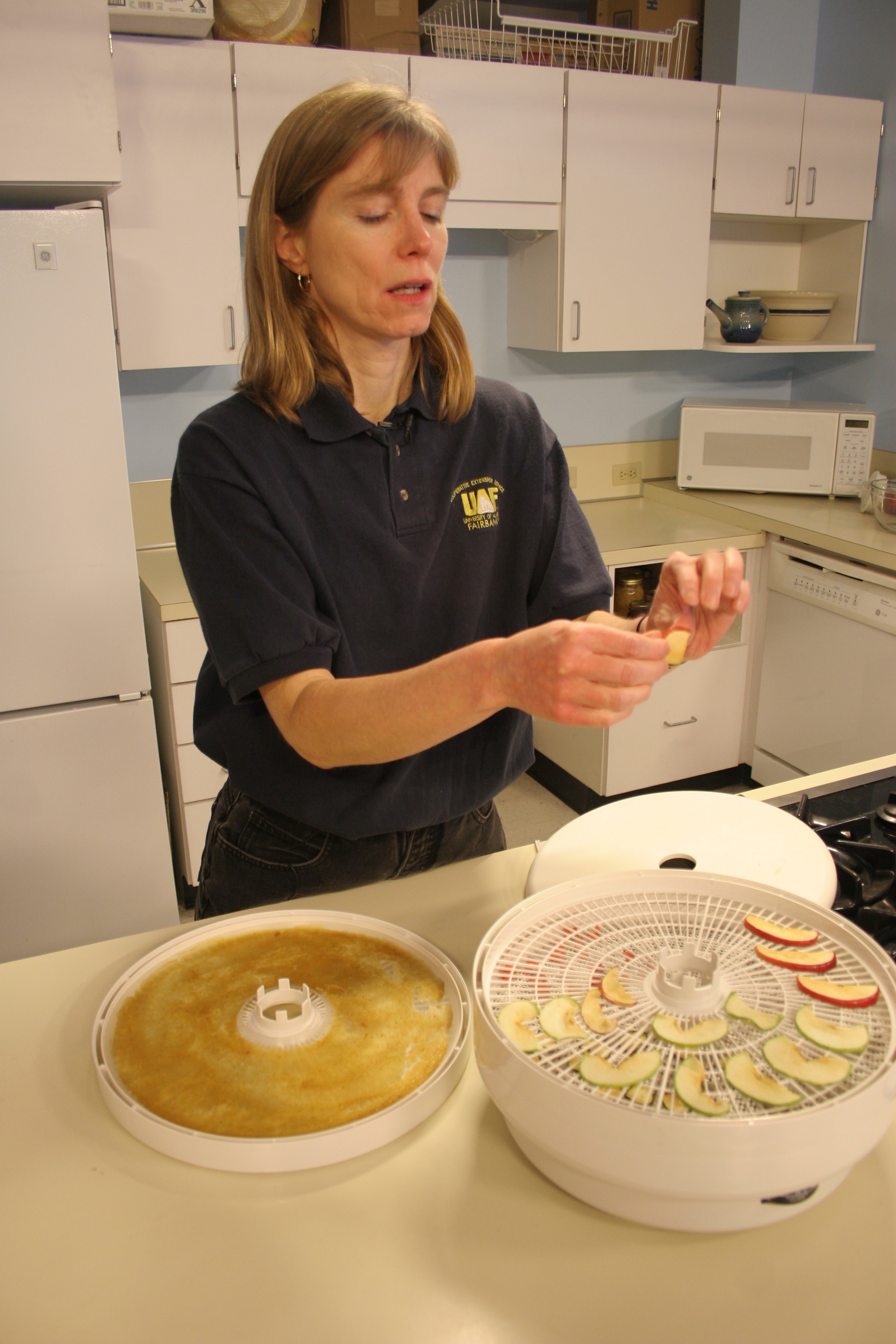
Julie Cascio of UAF Cooperative Extension Service's Health, Home and Family Development program in the Palmer/Mat-Su district demonstrates how to dry apples

Julie Cascio of UAF Cooperative Extension Service's Health, Home and Family Development program in the Palmer/Mat-Su district demonstrates how to dry apples

• Sonja Koukel of the UAF Cooperative Extension Service writes about preserving Alaska wild berries

Dr. Sonja Koukel of the UAF Cooperative Extension Service's Juneau office displays some wild berry preserves

Dr. Sonja Koukel of the UAF Cooperative Extension Service's Juneau office displays some wild berry preserves

Preserving Alaska’s Wild Berries

By Dr. Sonja Koukel, PhD
Health, Home & Family Development Program
UAF Cooperative Extension Service, Juneau Office

_____

Is your freezer teeming with berries harvested last season? If so, now is the time to preserve them in jams, jellies, or syrups. As the winter days grow darker and shorter, preserving berries provides an emotional uplift as the activity brings with it memories of sunshine and relaxing hours spent in the beauty that is Alaska.

While freezing is an acceptable preservation method for berries, it is not the most economical and there is the risk of power outages that could compromise the storage time. Freezing is the least time consuming method of food storage than canning.  However, when foods are home canned, they enjoy a longer shelf life, can be stored at room temperature, and are not affected by power outages.

Berries are a high acid food; therefore jams and jellies can be processed quickly and easily using the boiling water canning method. In this method, filled jars are covered with boiling water and heated to an internal temperature of 212 degrees (F). At this temperature, bacteria, yeasts and molds that could be a health hazard or cause the food to spoil are destroyed. Additionally, the hot water inactivates enzymes that cause foods to spoil. The canning process removes air from the jar and a vacuum seal is formed when the product cools. The seal prevents air from getting back into the product, bringing with it microorganisms that could recontaminate the food.

As mentioned, removing the air from the jar is important as microorganisms will not thrive in an anaerobic environment. Presented with these facts, some individuals question the “inversion” method that is often included along with the directions found in purchased packages of pectin. According to this method, the filled, hot jars are turned upside-down after the rings have been screwed onto the tops. After five minutes, the jar is turned upright to cool, after which it is stored on pantry shelves. The problem with this method is that the air has not been exhausted from the jar, which can encourage mold growth. To ensure food quality and safety, all jellied products are processed in a boiling water canner.

Recipes for jams and jellies are available in packages of pectin, cook books, magazines, and food preservation guides. For Alaska berries, check out the UAF Cooperative Extension Service publication, “Collecting and Using Alaska’s Wild Berries and Other Wild Products.” A best-seller, this publication provides berry facts, storage and preservation methods, and recipes. Blueberries, currants, highbush cranberries, and red huckleberries can be found along with fireweed and wild roses. Over the holiday season, the “Berry Book” is offered at the reduced rate of $7. Contact your district office or place an order online at  http://www.uaf.edu/ces/pubs

If you have never preserved jams or jellies, or would like to review the process, visit the UAF Cooperative Extension Service website for fact sheets that can be downloaded free to your home computer: http://www.uaf.edu/ces/pubs/catalog/. Newly released educational modules can be viewed online: http://www.uaf.edu/ces/preservingalaskasbounty/index.html.

Alaska wild berry preserves are a great treat

Alaska wild berry preserves are a great treat

• Sonja Koukel of the UAF Cooperative Extension Service writes about storing potatoes

SKoukel

Dr. Sonja Koukel of the UAF Cooperative Extension Service
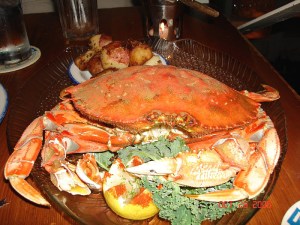
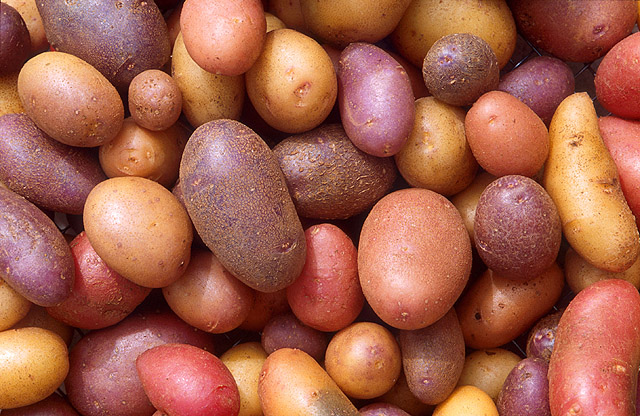
Photo courtesy of USDA Agricultural Research Service Image Gallery / Photo by Scott Bauer -- The average American eats 142 pounds of potatoes a year, making the tubers the vegetable of choice in this country

Photo courtesy of USDA Agricultural Research Service Image Gallery / Photo by Scott Bauer -- The average American eats 142 pounds of potatoes a year, making the tubers the vegetable of choice in this country

Storing Potatoes

By Dr. Sonja Koukel, PhD
Health, Home & Family Development Program
UAF Cooperative Extension Service, Juneau Office

—————

They live. They breathe. And because they’re 80 percent water, potato tubers thrive in humid locations. In moist Southeast Alaska, where are the best spots in your home to store your potatoes?

Research by University of Idaho Cooperative Extension Service scientists and College of Southern Idaho students has confirmed that the optimum sites for home-stored potatoes are cool, dark and ventilated rooms, closets, cabinets and garages. In studies conducted in their own residences, the agricultural science students also found that the perforated plastic bags used in many groceries offer the best environment for extending shelf life.

Potatoes stored inside these bags in unheated areas of the students’ homes benefited from a relatively cool average temperature of 57 degrees Fahrenheit and a relatively high average humidity of 67 percent. They shrank just 0.9 percent — only slightly more than the 0.6 percent weight loss measured in commercially stored potatoes. Potatoes on counter tops, in refrigerators and under the sink fared considerably worse.

If you only buy enough potatoes to eat within a few days, you can store them almost anywhere in your home as long as you keep them out of the light. But if you buy or harvest several pounds, your choice of location can clearly affect the potatoes’ long-term usability. Warm temperatures encourage sprouting and tuber disease, cold temperatures cause spuds to turn brown when fried, exposure to light prompts greening, sealed plastic containers starve tubers of oxygen and dry environments are downright withering.

The researchers recommend storing potatoes in an unheated entrance, spare room, attic, basement or garage insulated to protect against freezing, or in an extra refrigerator whose temperature can be set a few degrees higher than normal.

Whether you harvested potatoes from your garden or cashed in on a special sale, following these storage guidelines will help maintain a fresh product. And, a note of interest, the UAF Cooperative Extension Service has developed a new DVD on root cellars that will be available soon. You can access UAF Cooperative Extension Service publications at http://www.uaf.edu/ces/pubs/.

Article resource: University of Idaho Cooperative Extension Service, http://info.ag.uidaho.edu/pdf/CIS/CIS1153.pdf (article opens as PDF file).

• Sonja Koukel of the UAF Cooperative Extension Service writes about home canning crab and shrimp

Dr. Sonja Koukel of the UAF Cooperative Extension Service

Dr. Sonja Koukel of the UAF Cooperative Extension Service

2814027500088610947sTovNd_ph

The following column originally appeared in the Sept. 30-Oct. 6, 2009, issue of Capital City Weekly and was made available to the Sitka Local Foods Network site. This column runs monthly.

More on Home Canning Seafood: Crab and Shrimp

By Dr. Sonja Koukel, PhD
Health, Home & Family Development Program
UAF Cooperative Extension Service

For the Aug. 5 Capital City Weekly issue, I submitted an article focusing on home canning seafood, specifically crab and geoducks. I was pleased to receive an e-mail from a reader asking for more information. As many of you may have had the same questions I’m sharing my responses here.

To refresh: In the article, I provided the guideline for freezing crab as that is the best preservation method for this food. Experts recommend boiling the live crab for five minutes -– at which time the crab is considered “cooked.”

Our reader asked two questions.

The first:

“Please let me know if this [recommended time] is a misprint. All the people I know who cook crab heat water in a crab cooking vessel until the water boils, then they boil the crab a minimum of 15 minutes before cooling it. I have often wondered if the 15-minute boiling period is too long, but have always deferred to the locals with crab experience. What is the critical issue in crab cooking?”

The second question:

“When cooking shrimp, on the other hand, the accepted practice seems to be: put the critters in a pot, bring the water to boil, then remove the shrimp when they float to the surface, which does not take very long.”

My responses to these two questions follow.

Dear Capital City Weekly Reader,

In regards to your questions, I did some further research over the weekend on the topics of cooking crab and shrimp. Here is what I found.

Crab:

The University of Alaska Fairbanks Cooperative Extension Service uses the University of Georgia Extension publication, “So Easy to Preserve,” as the main resource for home canning and food preservation information. Much of the information in this publication is based on the USDA, “Complete Guide to Home Canning,” as well as research from Extension Services across the US. In fact, Alaska Cooperative Extension is represented in the publication for the processing times for canning fish in quart jars (Kristy Long, Foods Specialist UAF CES).

For more information, I resourced other Extension websites and found a variety of cooking times for preparing crab for freezing. Oregon State University Extension publication, “home freezing of seafood” (PNW0586), recommends the following for whole crab: [after preparing crab] Cook in boiling salt water (2-4 Tbsp. per gallon, according to your taste preference) for 12-15 minutes. If the back is left intact, add 10 minutes to the cooking time. Add 2-3 minutes to the cooking time if the water doesn’t boil within a few minutes after adding the crab.

This from the Sea Grant Extension Program, UC Davis, “Freezing Seafood at Home”: You can either freeze crabmeat in the shell or as picked crabmeat. Cook crab before freezing to prevent discoloration of the crabmeat. Drop live crabs into enough boiling water to cover the crabs. Cover and return water to a boil. Boil for about 25 minutes. Remove crabs from boiling water and cool them immediately in cold water. Let crabs cool for several minutes and then drain.

One purpose served by boiling the crab prior to freezing is that the process makes the meat easier to remove from the shell. As far as food safety, boiling will kill any parasites and/or bacteria that contribute to the decay of the shellfish. My sources claim that this is done after one minute in the boiling water. A celebrity chef wrote on his website that the cooking time for crab is not based on food safety but on the product being undercooked, cooked, and overcooked. A good guideline for cooking crab is to check the color of the shell. When the crab is done, the shell turns an orange/red color.

Something to take into consideration when looking at information on the Internet, many sources group all types of crab into one category. On the East Coast, most crab will be Maryland blue crab which are smaller than the Dungeness crab normally consumed in the Northwest. Just keep in mind that you have a safe and easy to handle product when the crab is boiled at least five minutes prior to freezing.

Now, the reply to the shrimp question.

The Sea Grant Extension Program, University of Delaware, instructs cooking the live shrimp just to the point of being done (the flesh turns from translucent to opaque). The cooking method you describe — putting live shrimp in a pot of boiling water and removing when they float to the top — is right on. If you were to time this procedure you probably will find that it takes approximately 3-5 minutes to boil one pound of medium sized shrimp.

I appreciate input from readers and welcome all suggestions, inquiries, and ideas. Please contact me via email: sdkoukel@alaska.edu or phone: 907-796-6221.

Sonja Koukel, PhD, is an assistant professor in the Health, Home & Family Development Program for the Juneau District office of the UAF Cooperative Extension Service. Reach her at sdkoukel@alaska.edu or 907-796-6221.

• To extend the lives of berries, give them a hot bath

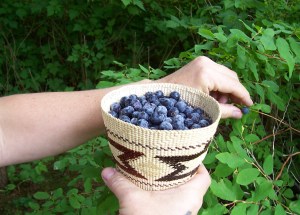
Picking blueberries in Sitka

Picking blueberries in Sitka

It happens to all berry fans. You pick a bunch of berries, or buy some in the store, and within a day or two you have mold growing on them. Yuck.

Earlier this week, the New York Times ran an article (free registration required to open link) about how to solve this problem. Give the berries a warm to hot bath of about 125 to 140 degrees (depending on the thickness of the berries skin). This process is called “thermotherapy,” and it seems to do the trick.

• UAF Cooperative Extension Service offers online resources for home canners

Salmon ready for canning in jars (Photo courtesy of University of Alaska Fairbanks Cooperative Extension Service)

Salmon ready for canning in jars (Photo courtesy of University of Alaska Fairbanks Cooperative Extension Service)

Did you catch a lot of fish this summer and now you want to can some of them to eat this winter? Do you want to make salmonberry preserves with all those lush, ripe salmonberries you picked this week?

The University of Alaska Fairbanks Cooperative Extension Service recently launched a series of interactive online demonstrations called “Preserving Alaska’s Bounty.” Want to learn how to can salmon using jars? Click on the link and you are taken to a page with photos and short descriptions mixed in with video clips to show you how to can your fish. There is an introduction and sections on equipment, preparation, packing, canning, cooling and storage. There also are links to additional resources.

If you want to learn about making jams and jellies, there’s an online demonstration on that topic. There also are demonstrations about canner basics, acidity, canning fish using cans, canning wild meats in jars and in cans, and more. Jeff Fay from the UAF Cooperative Extension Service said there also are DVDs that cover some of the same topics, and more titles are expected to be added to the site in the next year or two.

If you do a little bit of surfing around the UAF Cooperative Extension Service’s Web site, you’ll find all kinds of how-to materials. There are materials on gardening, recipes, home construction, food safety, winterizing your house and other topics.

If you can’t find what you need on the UAF Cooperative Extension Service site, other state land grant universities have their own version of the Cooperative Extension Service and most of their materials are available for download off the Internet. One of the attachments below is to a handout from the Iowa State University Cooperative Extension Service about how to freeze a variety of fruits and vegetables to maintain freshness and nutritional value.

Click here to go to the “Preserving Alaska’s Bounty” page on the University of Alaska Fairbanks Cooperative Extension Service Web site

Click here to go to a catalog of available DVDs from the University of Alaska Fairbanks Cooperative Extension Service

Click here to go to the main page for the University of Alaska Fairbanks Cooperative Extension Service

Click here to open an Adobe Acrobat PDF file of a handout on freezing fruits and vegetables from the Iowa State University Cooperative Extension Service

A batch of fruit is ready to be canned in jars (Photo courtesy of the University of Alaska Fairbanks Cooperative Extension Service)

A batch of fruit is ready to be canned in jars (Photo courtesy of the University of Alaska Fairbanks Cooperative Extension Service)

• ANSWER Camp prepares for 2009 students

ANSWER Camp teachers Adriana Rodriguez, left, Alberta Demantle, Jordan Baumgartner, Collauna Marley and Chohla Moll prepare sockeye salmon for the smoker Wednesday night so it will be ready when the students arrive in Sitka on Friday.

ANSWER Camp teachers Adriana Rodriguez, left, Alberta Demantle, Jordan Baumgartner, Collauna Marley and Chohla Moll prepare sockeye salmon for the smoker Wednesday night so it will be ready when the students arrive in Sitka on Friday.

Seventh and eighth grade students from all over Alaska will be arriving in Sitka this week for the 12th annual Alaska Native Student Wisdom Enrichment Retreat, commonly known as ANSWER Camp, a 12-day residential program for Alaska Native students sponsored by the Southeast Regional Resource Center (SERRC) out of Juneau.

Students at the ANSWER Camp stay at Mt. Edgecumbe High School in Sitka for two weeks of intensive science, math and cultural experiences as they explore traditional methods of food preservation. ANSWER Camp takes place from July 17-30, and it is free to the 75-80 students lucky enough to be selected from several rural Alaska communities to participate in the program. A U.S. Department of Education grant pays for the students’ transportation to and from Sitka, their housing and food.

ANSWER Camp makes math and science instruction more meaningful for the students by linking traditional Alaska Native values to western scientific principles. The program prepares middle school students from rural Alaska to enter high school, and it helps make science and math come alive for the students as they learn how even traditional cultural activities such as preserving subsistence foods are affected by science and math.

While the students prepare salmon, they will do tests to see how different brine mixtures affect the taste (chemistry). They also will learn how to preserve berries, seaweed and medicinal plants. The students will learn biology by studying critters, and they will gather different plants to study botany. ANSWER Camp has helped steer many students toward science and health careers later in life.

This is one of several camps in the Sitka area that teach people about traditional foods from Southeast Alaska. The Sitka Native Education Program (SNEP) hosts several events during the summer, as so do Sitka residents John and Roby Littlefield at their Dog Point Fish Camp. The Alaska Native Sisterhood camp in Sitka also hosts traditional foods camps at Dog Point Fish Camp.

Click here for more information about the Alaska Native Student Wisdom Enrichment Retreat, commonly called the ANSWER Camp, sponsored by the Southeast Regional Resource Center (SERRC).

Chohla Moll grabs some sockeye salmon out of the brine mixture so she can hang it in the smoker.

Chohla Moll grabs some sockeye salmon out of the brine mixture so she can hang it in the smoker.

Sockeye salmon hangs from the racks in the smoker.

Sockeye salmon hangs from the racks in the smoker.