• Former Sitka resident Nic Mink publishes book, ‘Salmon: A Glocal History,’ highlighting salmon in Sitka and the world

NicolaasMinkWithBookOnSalmon

Former Sitka resident Nicolaas “Nic” Mink — now the Urban Sustainable Foods Fellow at Butler University, Indianapolis — recently published the book Salmon: A Global History that highlights salmon in Sitka, Alaska, and the world.

The book is published by Reaktion Books, LTD, as part of The Edible Series, which features books about different types of food from around the world. The small hardback book is 127 pages with 49 illustrations (30 in color), recipes, bibliography, and index. It costs $18 in the United States ($9.99 on Kindle).

Nic used to lead the now-defunct Sitka Salmon Tours, which took visitors on a walking tour around Sitka to show them the different stages of salmon growth and processing, during the two-plus years he lived in Sitka and worked with the Sitka Conservation Society. He said many of the scripts he developed for the tours were incorporated into the book, which isn’t much longer than a traditional academic paper. Now that he lives in Indiana, Nic still has connections to Sitka’s salmon through a company he started called Sitka Salmon Shares, which markets sustainably caught salmon, halibut, sablefish (black cod), and other fish from Sitka and Juneau to residents of the Midwest United States.

While exploring the state of salmon throughout the world, Nic said he centered a lot of the book on Sitka’s salmon because of its place in the history of the fish. In addition to looking at the natural history of salmon eating, the book also examines cured, canned, and fresh salmon, plus the future of edible salmon. He writes about the role of salmon with Alaska Native cultures, how Alaska’s salmon industry was impacted when a British boy died from botulism after eating canned salmon from Ketchikan in the 1980s, the differences between wild Alaska salmon and farmed salmon, and more.

The book’s description, from the book jacket:

The story of salmon takes readers on a culinary journey from the coast of Alaska to the rivers of Scotland, tracing salmon’s history from the earliest known records to the present. He tells the story of how the salmon was transformed from an abundant fish found seasonally along coastal regions to a mass-produced canned food  and a highly prized culinary delight.

Rich in omega-3 fatty acids, cheap, and widely available, salmon is often listed as an essential part of any diet. A delicious and versatile fish, it can be used to make sashimi, cold smoked for lox, or shaped into a fishcake as an alternative to hamburgers. But while salmon is enjoyed all over the globe, it also swims at the center of controversy, with commercial fishing, global warming, and loss of freshwater habitats all threatening salmon populations and the ecological and health impacts of intense salmon farming under fire.

• Sitka Local Foods Network to host annual meeting and potluck on Saturday, Jan. 11

DisplayBasketOfCrops

The Sitka Local Foods Network will host its annual meeting and potluck dinner from 6-7:30 p.m. on Saturday, Jan. 11, at the Sitka Unitarian Universalist Fellowship Hall (408 Marine St., parking off of Spruce Street).

Participants are encouraged to bring a dish featuring local foods to share, and please bring your own utensils (note, this is a non-alcoholic event). This event is a good event to attend for people who want to learn more about the Sitka Local Foods Network and what we do around town.

“Attendees will hear about project updates plus the current board will vote on by-law changes,” Sitka Local Foods Network Board President Lisa Sadleir-Hart said. “New board members also are being recruited.”

Individuals interested in board of directors membership can email sitkalocalfoodsnetwork@gmail.com for an application. For more information, call Lisa at 747-5985.

• Sitka Local Foods Network board of directors application

• Sitka Local Foods Network board of directors job description

• Pacific High School receives national recognition for locally sourced school lunches

Pacific High freshman Oleana Valley makes lunch for her classmates as AmeriCorps volunteer Abby Long plans future recipes. (KCAW photo/Emily Forman)

Pacific High freshman Oleana Valley makes lunch for her classmates as AmeriCorps volunteer Abby Long plans future recipes. (KCAW photo/Emily Forman)

The Pacific High School lunch program, which recently received statewide recognition in the 2013 Alaska Farm To School Challenge, now is receiving national attention for its locally sourced school lunches.

The student lunches from the Sitka alternative high school recently were featured in an article in USA Today about what America’s school lunches look like.

They also were featured in a KCAW-Raven Radio story about the recent recognition. The KCAW article touched on how much the students gained by picking locally sourced ingredients from Sitka over box-packaged items to make their food.

• UAF Cooperative Extension Service offers Certified Food Protection Manager class by videoconference in Sitka

CFPM flyer 1-15-14

Friday, Dec. 20, is the registration deadline for a certified food protection manager workshop being taught on Wednesday, Jan. 15, by University of Alaska Fairbanks Cooperative Extension Service. This is an all-day statewide class that will be offered live in Fairbanks and Palmer, and by videoconferencing to Sitka and Kotzebue.

A certified food protection manager (CFPM) is responsible for monitoring and managing all food establishment operations to ensure that the facility is operating in compliance with food establishment regulations.

A CFPM is knowledgeable about food safety practices and uses this knowledge to provide consumers with safe food, protect public health and prevent food-borne illnesses. Alaska regulations require food establishments to have at least one CFPM on staff.

This course takes place from 9 a.m. to 5 p.m. (with a half-hour lunch), and participants will take a computer-based exam at the end of the class. The reason the deadline is two weeks before the class is to guarantee course materials reach all the students in time for the class. The cost is $175, and the course will be taught by Kate Idzorek of Fairbanks and Julie Cascio of Palmer. Students can register here.

The Sitka videoconference for the class will take place in Room 110 at the University of Alaska Southeast Sitka Campus. To learn more, contact the Sitka District Office of the UAF Cooperative Extension Service at 747-9440, or contact Kate Idzorek at 907-474-5391 (toll-free, 1-877-520-5211) or kjidzorek@alaska.edu in Fairbanks.

• Sitka Food Co-op looking to hire a part-time general manager to start in March

SitkaFoodCoopVision

SitkaFoodCoopMedGreenLogoThe Sitka Food Co-op is looking to hire its first general manager. The general manager position will be part time, about 25-30 hours per month, with the job to start in March.

The main duties of the general manager include coordinating and overseeing co-op orders and deliveries, while meeting the goals and objectives of the co-op as established by the board of directors and members. Other tasks include working with the volunteer coordinator, monitoring the co-op’s ongoing operations (including technology, facilities and equipment), and communicating any problems or other concerns back to the board of directors. This will be the co-op’s first paid staff member.

The Sitka Food Co-op is a community-based, member-owned and operated cooperative that believes in “Nourishing the community by focusing on value while providing healthy foods and quality products.” The co-op currently serves more than 110 local households and businesses in Sitka, and is growing monthly. According to the co-op’s ad, “This is a wonderful opportunity for an energetic person committed to cooperative values and principles, likes to work from home, and is interested in ‘Bringing good food and community together.'”

Incorporated in September 2011, the purposes of the Sitka Food Co-op are to:

  1. Create a community-based, member-owned buying service;
  2. Make available wholesome natural and organic foods and products as inexpensively as possible;
  3. Support and encourage local growing of fresh organic foods;
  4. Purchase and purvey, whenever feasible, the goods or services of local and regional growers; and
  5. Serve as a center for activities and services which otherwise enrich the life of the community.

The position features a salary and benefits package based on experience, and incentive packages mutually agreed upon by the board and general manager. The job features a six-month trial period. Applicants should have a basic knowledge of Word, Excel, Quickbooks and Google Drive. The hiring of  new general manager is part of the Sitka Food Co-op’s new strategic plan adopted in November 2013.

To apply, please submit a letter of interest, resume and three employment references with full contact information to sitkafoodcoop@gmail.com. Applications also can be mailed to Sitka Food Co-op, P.O. Box 6407, Sitka, Alaska, 99835. A job description is posted below, as well on the co-op’s website. Applications are due by Jan. 15, 2014.

• Sitka Food Co-op general manager job description

• Alaska Pure Sea Salt of Sitka wins national recognition with magazine’s taste test award


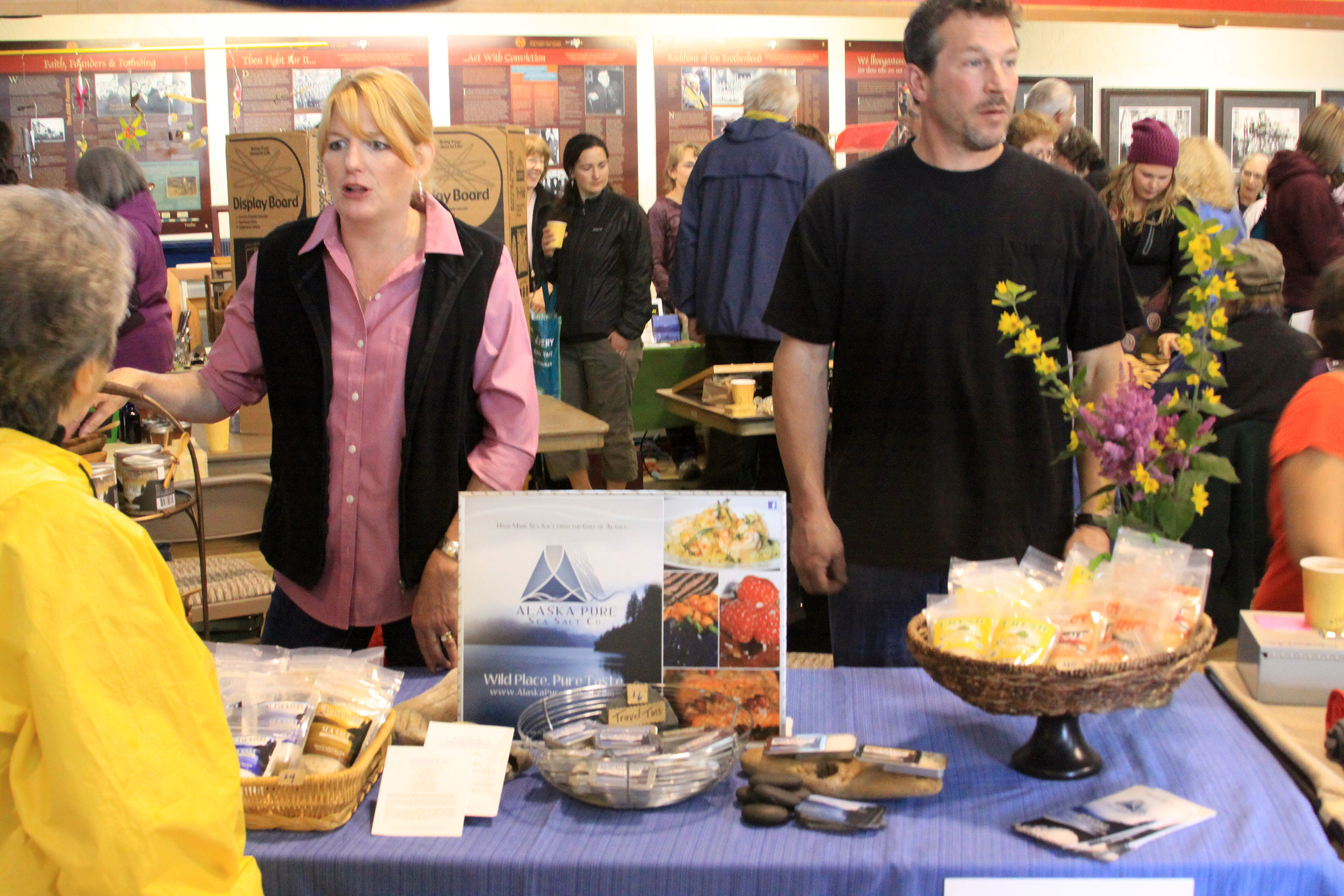
Darcy and Jim Michener of Alaska Pure Sea Salt discuss their product with customers at the Sitka Farmers Market.

Darcy and Jim Michener of Alaska Pure Sea Salt discuss their product with customers at the Sitka Farmers Market.

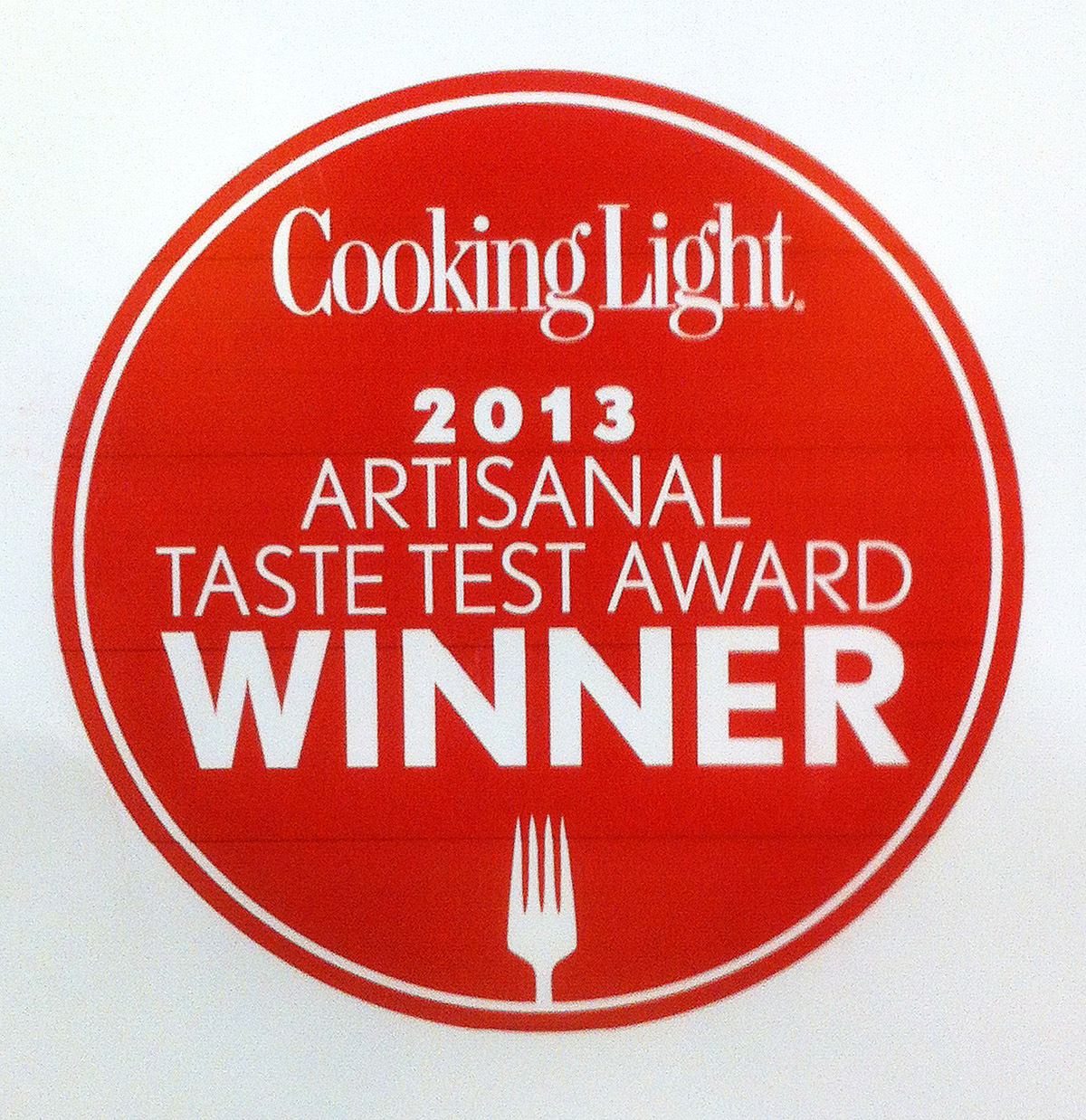
AwardAlaskaPureSeaSaltAlaska Pure Sea Salt, which is manufactured in Sitka by the husband-wife team of Jim and Darcy Michener, recently received a 2013 Artisanal Taste Test Award from Cooking Light magazine.

The couple started making salt in April 2000 after finding sea salt crystals lining a pan of sea water they left overnight on a hot stove while enjoying their first anniversary at their remote cabin. They began returning to the cabin every April to make anniversary salt, and they began experimenting with the best way to get a pyramid crystal shape and with a variety of flavors and infusions. They began supplying local chefs with the sea salt in 2008, and in recent years expanded to start selling the sea salt at various shops around the country and local trade shows, such as the Sitka Farmers Market, Sitka Artisans Market,  and Sitka Seafood Festival, as well from its website’s online store.

KCAW-Raven Radio recently did a story about the Micheners winning the award and detailing their hand-made manufacturing process. According to Cooking Light magazine, the judges said:

It’s hard to know which is more divine; this salt’s texture or its vivid hue. The gorgeous flat flakes are delicate on the palate, shattering beautifully with the faintest pressure. It’s nice, clean salt flavor has just a hint of fruity acidity. Equally striking sprinkled on scallops, dusted on a cookie or clinging to the rim of a margarita glass.

• Wilcox family prepares to run across country to raise awareness about Monsanto

Fund Run

DavidWilcoxSpeaksAtMayMarchAgainstMonsantoRallyA Sitka family is gearing up for a cross-country run in January to raise awareness about genetically modified organisms (GMOs) in food and the dubious practices of agriculture giant Monsanto.

David Wilcox, 15, and his father, Brett, will begin their 3,000-mile from Huntington Beach, Calif., to Cape May, N.J.,  with stops in St. Louis (home of Monsanto) and Washington, D.C. David and Brett will receive support from mom, Kris, and sister, Olivia. The current Southeast Conference-Class 3A high school cross-country running champion from Sitka High School, David is hoping to become the second-youngest runner to complete a run across the United States (he recently found out there was a younger runner who did a similar run back in 1928). The family hosted March Against Monsanto events in Sitka in May and October as part of an international movement against the company’s practices.

“Running across the USA! Wow! David and I are growing more and more excited to pound pavement, run trails, meet people, and advocate with millions of like-minded Americans for a GMO free USA!” Brett Wilcox said.

Even though the run won’t start until January, the Wilcox family has several activities planned for December to help publicize and raise funds for the project. Brett recently self-published a book, We’re Monsanto: Feeding the World, Lie After Lie, Book One. Brett and the rest of the Wilcox family will be at Old Harbor Books for a book-signing from 2-4 p.m. on Saturday, Dec. 7, and he will give a reading and book-signing at 5 p.m. on Sunday, Dec. 15, at Kettleson Memorial Library.

BrettWilcoxWithBookIn addition, from 9 a.m. to 3 p.m. on Saturday, Dec. 14, David will run 100 laps of the Moller Park track as a fundraiser for the trip. People can pledge per lap, or pledge lump sums at this event. Other runners are encouraged to join in the fun by running in Sitka or wherever they are and recording their laps. Also at 7 p.m. on Saturday, Dec. 14, the Wilcox family will have a table at the Elvis Monthly Grind at the Sheet’ká Kwáan Naa Kahídi.

“The topic of genetic modification can be heavy and confusing–confusing primarily because Monsanto and other chemical giants don’t want us to know about the problems associated with modern chemical-based agriculture,” Brett Wilcox said. “We’re Monsanto: Feeding the World, Lie After Lie is a fun, fast and creative approach designed to cast light on Monsanto’s products, poisons and lies. I wrote We’re Monsanto to give mainstream Americans the power to say no to Monsanto’s GMOs, say no to agricultural imperialism, and to say no to Monsanto’s lies. Once we understand that Earth’s natural biodiversity and agroecology are the true solutions to feeding a hungry world, we free ourselves from Monsanto’s poison-saturated false promises.”

To learn more about the run, you can read this Dec. 2, 2013, article from the Daily Sitka Sentinel or go to the Wilcox family website, Running The Country. The family also has created a crowd-funding campaign on Indiegogo.com, Running for a GMO-Free USA, where it hopes to raise money to help pay for the trip. In addition, Brett moderates a Facebook group, March Against Monsanto SE Alaska, and a group page about the run called, Running The Country.

• Sitka Conservation Society to host annual Wild Foods Potluck on Dec. 8 at Sweetland Hall

Wild Foods Potluck no words

WildFoodsPotluckHelp Sitka celebrate its wonderful bounty of local and wild foods by joining the Sitka Conservation Society for its annual Wild Foods Potluck from 5-7:30 p.m. on Sunday, Dec. 8, at Sweetland Hall on the Sheldon Jackson Campus.

This annual event features a variety of wild foods that can be harvested around Sitka, including many varieties of fish, deer, ducks, berries, seaweed, beach greens, and more. This event gives local residents a chance to sample a multitude of wild food dishes for a true taste of Sitka. If you don’t have any wild foods, just garnish your dish with a local plant.

“Bring a dish that features ingredients from the outdoors and meet others interested in subsistence foods and the conservation field,” said the Sitka Conservation Society’s Ray Friedlander, who is helping coordinate the event. “Your dish could win a prize if you enter it into the Best Dish, Best Side, and Best Dessert category.”

This event is non-alcoholic, and it is open to all residents of Sitka, including members and non-members of the Sitka Conservation Society. For more information, contact Ray Friedlander or Mary Wood at the Sitka Conservation Society at 747-7509, or go to http://www.sitkawild.org/.

• Pacific High School wins recognition in 2013 Alaska Farm to School Challenge

Pacific High School student chefs (from left) Allana Carlos, Walter Borbridge, and Justin Tucker

Pacific High School student chefs (from left) Allana Carlos, Walter Borbridge, and Justin Tucker

Pacific High School of Sitka is an Alaska Farm to School Challenge prize-winner after serving a local lunch this October. The meal highlighted coho salmon sourced through the Sitka Conservation Society’s Fish to Schools program along with Sitka-grown produce and biscuits made from Alaska-grown barley flour.

In celebration of National Farm to School Month this October, the Alaska Division of Agriculture presented the 2013 Alaska Farm to School Challenge. The challenge encouraged schools and community members to highlight projects and activities that bring foods produced or grown in Alaska into schools. These projects underlined a broader goal of promoting the benefits of increasing procurement of Alaskan foods for use in schools.

Pacific High School’s cooking class prepared the meal for students, staff and visitors on Oct. 24. The class is part of the alternative high school’s Healthy Lunch, Healthy Lives program, which provides students with the tools and knowledge to incorporate wellness into their everyday lives through culinary arts, nutrition, and gardening education.

For more information on this program or Pacific High School’s efforts to increase sourcing of local products, contact Sarah Ferrency at ferrencys@sitkaschools.org.

• Sitka Food Co-op to host all-day planning workshop on Saturday, Nov. 23

SitkaFoodCoopPlanningEvent

Are you interested in helping the Sitka Food Co-op develop its short- and long-term plans? Then come join us in an all-day planning workshop from 9 a.m. to 3:30 p.m. on Saturday, Nov. 23, at the Fireside Room at the First Presbyterian Church, 505 Sawmill Creek Rd.

This workshop will be facilitated by Lisa Sadleir-Hart, board president of the Sitka Local Foods Network and project coordinator of the Sitka Community Food Assessment. Workshop participants will create an action plan for the co-op’s next five years, as well as developing the co-op’s vision and priorities.

Sitka Food Co-op Board Chair Keith Nyitray said, “Topics to be covered include whether we need a paid “general manager” position, whether and/or when to conduct a feasibility study about opening a retail store-front, starting home-deliveries, submitting paperwork to accept WIC, whether to switch incorporation to a non-profit status or not, moving toward establishing a two-tiered membership system, bulk buying and/or member equity sharing, and more.”

According to the Co-op’s website, the purposes of the Sitka Food Co-op are to:

  1. Create a community-based, member-owned buying service;
  2. Make available wholesome natural and organic foods and products as inexpensively as possible;
  3. Support and encourage local growing of fresh organic foods;
  4. Purchase and purvey, whenever feasible, the goods or services of local and regional growers and producers; and
  5. Serve as a center for activities and services which otherwise enrich the life of the community.

This workshop is open to everyone, including non-members, but please RSVP by Nov. 21 at sitkafoodcoop@gmail.com. There will be a potluck lunch, so please bring a dish to share. To learn more about the Sitka Food Co-op, go to http://sitkafoodcoop.org/.