• Recent articles highlight food security issue in rural Alaska

The New York Times on Saturday ran a lengthy article by former Fairbanks Daily News-Miner reporter Stefan Milkowski about how weak runs of king salmon are hurting Yukon River communities. The article is datelined from the village of Marshall, near the mouth of the Yukon River, where villagers already are feeling the pinch of no salmon to fill their freezers for the winter.

This is a region where heating oil costs $7 a gallon and a can of condensed milk goes for nearly $4. It also is a region that last year faced critical food shortages last year, with many faith groups from around the country sending food to help tide the residents through the winter. Click here to read accounts from “Anonymous Bloggers” about last year’s airlift and what villagers are doing to prepare for this winter.

The food shortages resulted in some July protest fisheries, which resulted in the arrest of the only police officer in Marshall, Jason Isaac, who joined other villagers in claiming state and federal fish and wildlife officials were more concerned with a Canadian fish treaty than they were about rural Alaskans. The Tundra Drums reports that 67,000 Yukon kings reached Canada, about 10,000 to 13,000 more than the treaty called for.

In relatively close-by Bethel, Tim Meyers and his wife Lisa have helped their communities food security with Meyer’s Farm, which is growing enough fruits and vegetables that Bethel residents can buy weekly boxes of locally grown produce for $30. This shows that local produce can be grown in rural Alaska to reduce our dependency on store-bought food.

Food security also hits closer to home, where state Sen. Albert Kookesh of Angoon faces a trial over subsistence fishing practices near his home village.

Not all of the local foods news in Alaska is gloom and doom this week. The Fairbanks Daily News-Miner featured a story on Monday about the growth of the Delta Meat and Sausage plant in Delta Junction, which processes locally raised Galloway cattle and game meat shot by local hunters.

Also, this week’s Chilkat Valley News (Haines weekly) included a brief item about a Haines moose hunter who was the beneficiary of a snow goose dropped by a hawk that didn’t have the strength to carry its prey.

Finally, the Alaska Dispatch site includes an update on the inaugural Alaska Local Food Film Festival, which runs from Oct. 2-8 at the Beartooth Theatrepub and Grill in Anchorage. Sitka filmmaker Ellen Frankenstein presented her movie “Eating Alaska” on Sunday, Oct. 4.

• Sonja Koukel of the UAF Cooperative Extension Service writes about home canning crab and shrimp

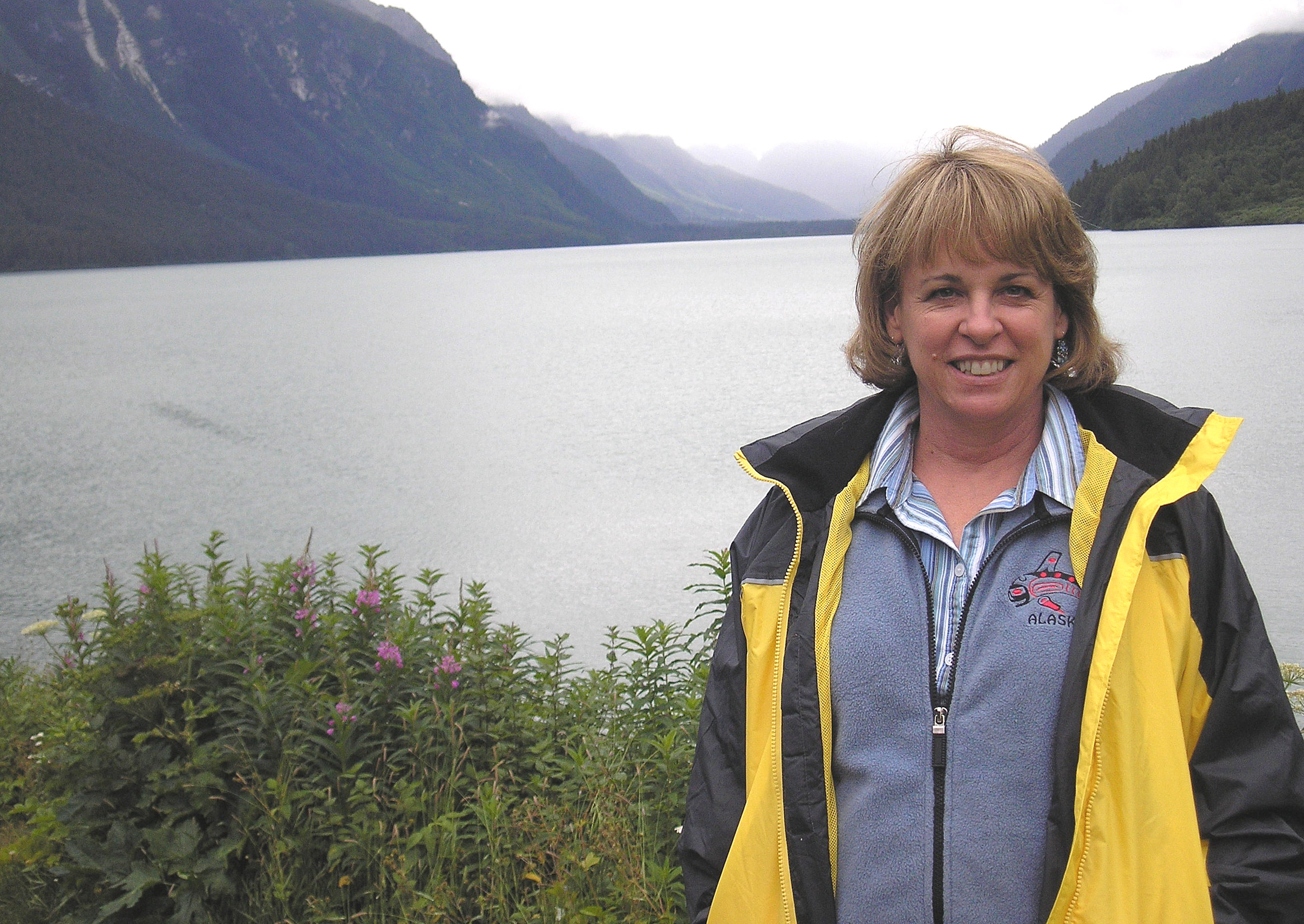
Dr. Sonja Koukel of the UAF Cooperative Extension Service
Dr. Sonja Koukel of the UAF Cooperative Extension Service

2814027500088610947sTovNd_ph

The following column originally appeared in the Sept. 30-Oct. 6, 2009, issue of Capital City Weekly and was made available to the Sitka Local Foods Network site. This column runs monthly.

More on Home Canning Seafood: Crab and Shrimp

By Dr. Sonja Koukel, PhD
Health, Home & Family Development Program
UAF Cooperative Extension Service

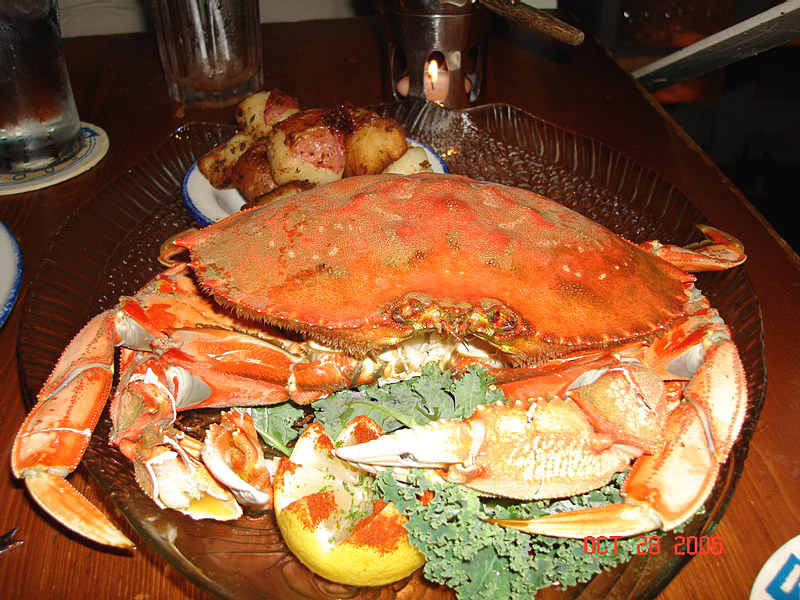
For the Aug. 5 Capital City Weekly issue, I submitted an article focusing on home canning seafood, specifically crab and geoducks. I was pleased to receive an e-mail from a reader asking for more information. As many of you may have had the same questions I’m sharing my responses here.

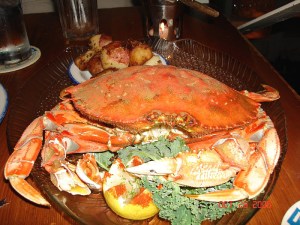
To refresh: In the article, I provided the guideline for freezing crab as that is the best preservation method for this food. Experts recommend boiling the live crab for five minutes -– at which time the crab is considered “cooked.”

Our reader asked two questions.

The first:

“Please let me know if this [recommended time] is a misprint. All the people I know who cook crab heat water in a crab cooking vessel until the water boils, then they boil the crab a minimum of 15 minutes before cooling it. I have often wondered if the 15-minute boiling period is too long, but have always deferred to the locals with crab experience. What is the critical issue in crab cooking?”

The second question:

“When cooking shrimp, on the other hand, the accepted practice seems to be: put the critters in a pot, bring the water to boil, then remove the shrimp when they float to the surface, which does not take very long.”

My responses to these two questions follow.

Dear Capital City Weekly Reader,

In regards to your questions, I did some further research over the weekend on the topics of cooking crab and shrimp. Here is what I found.

Crab:

The University of Alaska Fairbanks Cooperative Extension Service uses the University of Georgia Extension publication, “So Easy to Preserve,” as the main resource for home canning and food preservation information. Much of the information in this publication is based on the USDA, “Complete Guide to Home Canning,” as well as research from Extension Services across the US. In fact, Alaska Cooperative Extension is represented in the publication for the processing times for canning fish in quart jars (Kristy Long, Foods Specialist UAF CES).

For more information, I resourced other Extension websites and found a variety of cooking times for preparing crab for freezing. Oregon State University Extension publication, “home freezing of seafood” (PNW0586), recommends the following for whole crab: [after preparing crab] Cook in boiling salt water (2-4 Tbsp. per gallon, according to your taste preference) for 12-15 minutes. If the back is left intact, add 10 minutes to the cooking time. Add 2-3 minutes to the cooking time if the water doesn’t boil within a few minutes after adding the crab.

This from the Sea Grant Extension Program, UC Davis, “Freezing Seafood at Home”: You can either freeze crabmeat in the shell or as picked crabmeat. Cook crab before freezing to prevent discoloration of the crabmeat. Drop live crabs into enough boiling water to cover the crabs. Cover and return water to a boil. Boil for about 25 minutes. Remove crabs from boiling water and cool them immediately in cold water. Let crabs cool for several minutes and then drain.

One purpose served by boiling the crab prior to freezing is that the process makes the meat easier to remove from the shell. As far as food safety, boiling will kill any parasites and/or bacteria that contribute to the decay of the shellfish. My sources claim that this is done after one minute in the boiling water. A celebrity chef wrote on his website that the cooking time for crab is not based on food safety but on the product being undercooked, cooked, and overcooked. A good guideline for cooking crab is to check the color of the shell. When the crab is done, the shell turns an orange/red color.

Something to take into consideration when looking at information on the Internet, many sources group all types of crab into one category. On the East Coast, most crab will be Maryland blue crab which are smaller than the Dungeness crab normally consumed in the Northwest. Just keep in mind that you have a safe and easy to handle product when the crab is boiled at least five minutes prior to freezing.

Now, the reply to the shrimp question.

The Sea Grant Extension Program, University of Delaware, instructs cooking the live shrimp just to the point of being done (the flesh turns from translucent to opaque). The cooking method you describe — putting live shrimp in a pot of boiling water and removing when they float to the top — is right on. If you were to time this procedure you probably will find that it takes approximately 3-5 minutes to boil one pound of medium sized shrimp.

I appreciate input from readers and welcome all suggestions, inquiries, and ideas. Please contact me via email: sdkoukel@alaska.edu or phone: 907-796-6221.

Sonja Koukel, PhD, is an assistant professor in the Health, Home & Family Development Program for the Juneau District office of the UAF Cooperative Extension Service. Reach her at sdkoukel@alaska.edu or 907-796-6221.

• 2010 Kayaaní Commission calendars are available for sale

KayaaniCommissionCalendarFront

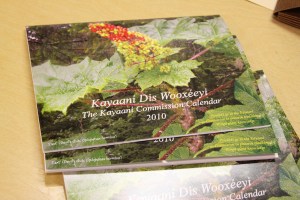
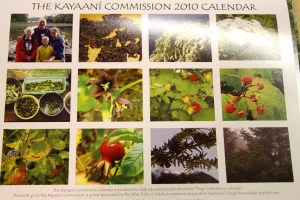
The 2010 Kayaaní Commission calendars are available from Sitka Tribe of Alaska for $16 each. These full-color calendars feature photos and information about many common edible and medicinal plants found in the Sitka area. Also available are copies of “The Kayaaní Commission Ethnobotany Field Guide to Selected Plants Found In Sitka, Alaska,” which cost $15 each. Proceeds from the sale of these two publications go to the Kayaaní Commission to help preserve traditional Tlingít plant knowledge.

The mission of the Kayaaní Commission is “to preserve our spiritual way of life. The religion of the Tlingít is the Earth. The Tlingít are one with the Earth. The Kayaaní Commission is here to preserve and protect traditional ways of our ancestral knowledge.” The Kayaaní Commission is sponsored by Sitka Tribe of Alaska and the Sitka National Historical Park.

Calendar and field guide purchases can be made at the Sitka Tribe of Alaska main building (456 Katlian St.) or the Sitka Tribe of Alaska Resources Protection Dept. (429 Katlian St.), or by calling 907-747-7178 or e-mailing pbass@sitkatribe.org. Please make checks payable to the STA Kayaaní Commission.

KayaaniCommissionCalendarBack

• UAS-Sitka Campus to host class on how to identify Southeast Alaska mushrooms

se_mushrooms_brochure_fall09_Page_2

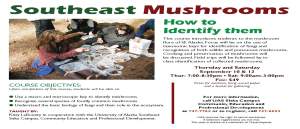
The University of Alaska Southeast-Sitka Campus Community Education and Professional Development program will host Kitty LaBounty as she teaches the class “Southeast Mushrooms: How to identify them.” This two-day class takes place from 7-8:30 p.m. on Thursday, Sept. 10, and from 9 a.m. to 3 p.m. on Saturday, Sept. 12, at the UAS-Sitka Campus (with field trips). The course fee is $49 and students should dress for the outdoors, bring waxed paper and a bucket for gathering.

This course is designed to introduce students to the mushroom flora of Southeast Alaska. The focus will be on the use of taxonomic keys for identification of fungi and recognition of both edible and poisonous mushrooms. Cooking and preservation of mushrooms will be discussed. Field trips are followed by in-class identification of collected mushrooms.

The class needs to have at least 10 students registered by Monday, Sept. 7 (note that Monday is a holiday, so you might want to register by Friday). The class is limited to 18 students. For more information, contact the UAS-Sitka Campus Community Education and Professional Development program at 747-7762. To register, call 747-6653. Click here to download the course brochure as a PDF file.

For mushroom lovers who can’t participate in the class, there is a free natural history presentation scheduled for 7 p.m. on Friday, Sept. 18, at the UAS-Sitka Campus called “Why Mushrooms Matter.” The talk features speaker Steve Trudell, affiliate professor in the College of Forest Resources and lecturer in the Biology Department at the University of Washington. He also is co-author of a new book, “Mushrooms of the Pacific Northwest.”

• To extend the lives of berries, give them a hot bath

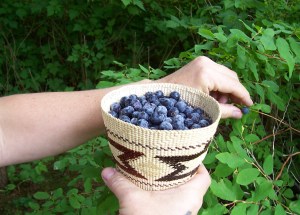
Picking blueberries in Sitka

Picking blueberries in Sitka

It happens to all berry fans. You pick a bunch of berries, or buy some in the store, and within a day or two you have mold growing on them. Yuck.

Earlier this week, the New York Times ran an article (free registration required to open link) about how to solve this problem. Give the berries a warm to hot bath of about 125 to 140 degrees (depending on the thickness of the berries skin). This process is called “thermotherapy,” and it seems to do the trick.

• First Alaskans magazine highlights healthy berries

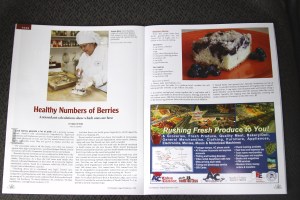
Screenshot of First Alaskans magazine article on healthy berries

Screenshot of First Alaskans magazine article on healthy berries

The August/September 2009 issue of First Alaskans magazine — a statewide magazine of Native business, culture and lifestyle — features an article called “Health Numbers of Berries: Antitoxidant calculations show which ones are best.” This article isn’t posted on the First Alaskans magazine Web site, so a scanned black-and-white PDF version is available by clicking here. The article also includes a recipe for Blueberry Buckle.

For more information about healthy berries, the Far North Science news service, written and edited by Doug O’Harra, about news, research and natural acts from Alaska, released a 2007 story called “Alaska Blueberries: Brain Food” (click here to see the article as published in The Alaska Report). The article includes a link to a 2006 report on extremely high antitoxidant rates in a variety of Alaska berries by University of Alaska Fairbanks researcher Patricia Holloway

• Juneau Empire spotlights harvest of Tlingít potatoes

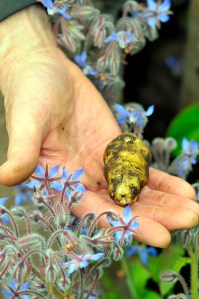
(Photo courtesy of Klas Stolpe/Juneau Empire) Bill Ehlers, assistant gardener at the Jensen-Olson Arboretum in Juneau, holds a Tlingít potato next to some borage plant flowers.

(Photo courtesy of Klas Stolpe/Juneau Empire) Bill Ehlers, assistant gardener at the Jensen-Olson Arboretum in Juneau, holds a Tlingít potato next to some borage plant flowers.

The Juneau Empire on Monday (click here) ran a nice photo package of a sustainable harvest camp at the Jensen-Olson Arboretum in Juneau that was hosted by the 4-H program run by UAF Cooperative Extension Service and the Alaska Department of Fish & Game. The photos feature several children harvesting “Maria’s Potatoes,” a type of Tlingít potato grown from seed potatoes that originally came from deceased Tlingít elder Maria Miller’s garden in Klukwan. These fingerling potatoes do well in Southeast Alaska’s rainy climate and have been around for hundreds of years. The story link above has a link to an audio slideshow by Juneau Empire photographer Michael Penn. The slideshow is worth watching.

By the way, click here to read more about the Tlingít potato posted on the Sitka Local Foods Network site about three weeks ago. Elizabeth Kunibe did want to clarify that in the link to the Chilkat Valley News story she is misquoted so it appears that she “discovered” the Ozette potato (another Native American variety). She said she is not the discoverer.

Kunibe also said the Tlingít potatoes can be sold, but for food only and not for seed. Some of them contain potato viruses, transmitted by vectors, that can affect the soil and other varieties of potatoes. She said when people buy seed potatoes, they need to make sure they have “clean seed” or “virus-free seed” before they plant. She said potato viruses do not affect humans who eat the potatoes, but we need to use clean seed to keep the viruses from destroying crops (like what happened in the Irish potato famine). She said the UAF Cooperative Extension Service, which has offices in Sitka and Juneau, may have more information on how to find virus-free seed potatoes.

Kunibe, who made a presentation on Tlingít potatoes and traditional gardening in Sitka last year, is hoping to schedule another trip to Sitka for a future presentation. Kunibe also wanted share this link from the USDA Agricultural Research Service about newly discovered nutritional benefits of potatoes, especially in regards to phytochemicals and cancer prevention.

• Herbal medicine workshop to be taught Sept. 4-6 at UAS-Sitka Campus

“Native American Herbal Medicines: Going Into The Woods,” a workshop teaching about the harvest, preparation and use of medicinal plants in Southeast Alaska, will take place Friday through Sunday, Sept. 4-6, at the University of Alaska Southeast-Sitka Campus.

The emphasis will be on treatment based on Native American and other approaches to acute disorders, with some discussion of chrinic illnesses. The focus will be on external remedies, including wild herbal oils, salves, ointments, foot baths and more.

The class fee is $149. For more information or to register, call the UAS-Sitka Campus Continuing Education and Professional Development office at 747-7762.

• Sitka Native Education program to host Jam and Jam on Aug. 28

The Sitka Native Education Program will host a Jam and Jam at 5 p.m. on Friday, Aug. 28, at the Alaska Native Brotherhood Hall with the Gajaa Heen Dancers and others.

The group will prepare salmonberry and rhubarb/strawberry jam in the Alaska Native Sisterhood kitchen at ANB Hall starting at 5 p.m. Following the class, all attending are invited to a campfire jam session on the Mt. Edgecumbe High School campus.

Materials will be provided for the jam-making class, which is targeted toward youth. Participants wanting to take home jam may bring their own jars, lids and berries to the class.

The Learn and Serve workshop is free. Participating youth are reminded that the final product will be for local elders. For more information, call the Sitka Native Education Program (SNEP) at 747-8561.

• Tlingít potato makes a comeback in Juneau

(Photo courtesy of Klas Stolpe/Juneau Empire) Bill Ehlers, assistant gardener at the Jensen-Olson Arboretum in Juneau, holds a Tlingít potato next to some borage plant flowers.

There was an interesting article in Wednesday’s edition of the Juneau Empire about the revival of a Tlingít potato that was a staple in Tlingít gardens for hundreds of years (Click here to read the Juneau Empire article by Kimberly Marquis).

Tlingít and Haida gardeners grew their own vegetables more than 200 years ago, and potatoes were one of their most important crops. In an article in the Winter 2008/2009 newsletter for Alaska EPSCoR (Experimental Program to Stimulate Competitive Research), University of Alaska Southeast social science/anthropology student Elizabeth Kunibe said residents of many Southeast Alaska villages planted gardens of root vegetables — such as potatoes, rutabagas and parsnips — on neighboring islands in the spring while they headed to their fish camps. They harvested them when they returned home in the fall (Click here to read the article on Pages 4-5).

Kunibe said many of these gardens disappeared over the past century, especially as the U.S. Forest Service parceled out some islands for homesteads or fox farms. She said Tlingíts in Sitka lost their island gardens in World War II when the government forbade private water travel. The increasing availability of imported food and other disruptions, such as tuberculosis outbreaks, also sped up the demise of the individual and community gardens found in many Native villages. Kunibe said in 1952 they grew 4,000 pounds of potatoes in Angoon, but the gardens disappeared and Angoon was without a garden until the last year or two when there was a movement to start a community garden.

The Tlingít potato is a fingerling potato with a yellowish skin and somewhat lumpy shape. They do not do well mashed or fried, but taste great in soups or roasted, said Merrill Jensen, manager of the Jensen-Olson Arboretum in Juneau where they expect to harvest about 1,500 pounds of the potatoes next month. The Tlingít potato also is known as “Maria’s Potato” in honor of the late Maria (Ackerman) Miller, the Haines woman who in 1994 gave Juneau’s Richard and Nora Dauenhauer their first seed potatoes. Miller, who died in 1995, told the Dauenhauers the potatoes had been in her family for more than 100 years.

According to Kunibe, who sent samples to a plant geneticist for DNA testing, the Tlingít potato is a distinct variety among potatoes, but they are very similar to two other varieties of Native American potatoes — the Ozette or Makah potato from Washington State’s Olympic Peninsula and the Haida potato from Kasaan on Alaska’s Prince of Wales Island. In a June 7, 2007, article in the Chilkat Valley News (click here to read it), Kunibe said potatoes arrived in Southeast Alaska aboard Spanish ships as early as 1765. She said the three Native American varieties are closely related to potatoes grown in Mexico and the Chilean coastal areas. (Most modern domestic potatoes are descended from species native to the Peruvian Andes.) The Tlingít potato grows well in our rainy climate and keeps a long time in a root cellar. Kunibe said the potatoes became a prime Southeast Alaska commerce item in the early 1800s and the Russian fleets contracted with the Tlingít and Haida tribes to grow them.

Bob Gorman, a master gardener who works with the Sitka office of the University of Alaska Fairbanks Cooperative Extension Service, said off the top of his head he didn’t know of anybody growing the potato in Sitka right now, though he did suggest several longtime gardeners who might know if people grew them in the past. Maybelle Filler, a master gardener who works with the SEARHC Diabetes Program, said they are looking to bring some seed potatoes to give to Sitka gardeners, but she had been told the potatoes can’t be sold at local markets (though they can be given away).

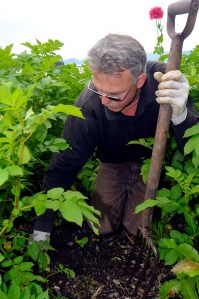
(Photo courtesy of Klas Stolpe/Juneau Empire) Bill Ehlers, assistant gardener of the Jensen-Olson Arboretum in Juneau, tends to a Tlingít potato plant on July 27, 2009. The potatoes will be used as seed stock to be distrbuted to people interested in growing the variety.