• Juneau Empire article gives uses for wild berries

Salmonberries await picking near the entrance to Sitka National Historical Park

Salmonberries await picking near the entrance to Sitka National Historical Park

This definitely has been a great years for berries in Southeast Alaska. There have been bumper crops of salmonberries and the blueberries are just starting to come in. Other types of berries also have done well, and I’ve got a friend who’s given away several Zip-Loc bags full of strawberries from her garden.

So now that you’ve picked all these berries, how do you use them? Earlier this week we had a post to a link about home canning, which had information about making jams and jellies and info about freezing the berries.

Sunday’s Juneau Empire has an article about how to use your berry booty to make two fun desserts. The article is written by Ginny Mahar, a chef who works for Rainbow Foods and also writes a blog full of recipes for locally grown food. Also, there’s a new book on Alaska’s Wild Berries from the UAF Cooperative Extension Service for sale at Old Harbor Books.

Click here to read the Juneau Empire article about using berries

Click here to read Ginny Mahar’s “Food-G” blog

• Vote for Sitka Farmers Market in the America’s Favorite Farmers Market contest

SitkaFarmersMarketSign

America's Favorite Farmers Markets

Do you enjoy the Sitka Farmers Market? If so, vote for us in the America’s Favorite Farmers Market contest sponsored by the American Farmland Trust, a non-profit organization dedicated to preserving America’s agricultural resources.

To vote, click here and then search for the Sitka Farmers Market by using the zip code or state directories. The deadline to vote is midnight EST on Saturday, Aug. 8 (8 p.m. Alaska time on Friday, Aug. 7). The online voting form asks what you like about the market, so be prepared to type something in the box. The top small, medium and large markets win a large quantity of “No Farms, No Food” totebags to distribute at a market in September.

By the way, the next Sitka Farmers Market is from 10 a.m. to 2 p.m. this Saturday, Aug. 1, at Alaska Native Brotherhood Hall (235 Katlian St.). We’re looking forward to seeing you at the market.

This weekend’s market will feature nearly 30 vendors with local fish, produce and arts and crafts. There also will be music on the stage by Ted Howard and friends, and the jam tent outside. As usual, there will be children’s activities.

If you have extra produce from your garden, the Sitka Local Foods Network table (outside by the Sitka Farmers Market sign) accepts donations and does buy some produce to sell at its booth. All money raised by the Sitka Local Foods Network booth goes into various projects sponsored by the 501(c)(3) non-profit group, including the Sitka Farmers Market, community gardens, the proposed Sitka Community greenhouse and other projects.

Click here to vote for the Sitka Farmers Market in the America’s Favorite Farmers Market contest

Click here to learn more about the America’s Favorite Farmers Market contest hosted by the American Farmland Trust

fm-flyer

• Gardening column reminds us time to harvest food is now

Anchorage Daily News garden columnist Jeff Lowenfels, a member of the Garden Writers Association Hall of Fame, in his column on Wednesday reminded us that the time to begin harvesting our vegetable gardens starts now. We don’t want to let any food go to waste on the ground. If we don’t want the food, there are others who do.

In his column, Lowenfels tells us which plants to harvest and how to do it, with special tips for broccoli, Kohlrabi, cauliflower, carrots and others. While geared toward the Anchorage audience, the column is worth a read for Sitka gardeners.

On a side note, Lowenfels is the garden columnist who first suggested the “Plant a Row for the Hungry” campaign, which encourages gardeners to plant an extra row or two of food that will be donated to local homeless shelters or food banks. He raised the idea in his column as a way to help out Bean’s Cafe, an Anchorage soup kitchen, and the Garden Writers Association liked the idea so well that they made it a national effort.

Click here to read the Anchorage Daily News gardening column by Jeff Lowenfels about the time to harvest is now

Click here to learn about the Garden Writers Association’s “Plant a Row for the Hungry” campaign

• UAF Cooperative Extension Service offers online resources for home canners

Salmon ready for canning in jars (Photo courtesy of University of Alaska Fairbanks Cooperative Extension Service)

Salmon ready for canning in jars (Photo courtesy of University of Alaska Fairbanks Cooperative Extension Service)

Did you catch a lot of fish this summer and now you want to can some of them to eat this winter? Do you want to make salmonberry preserves with all those lush, ripe salmonberries you picked this week?

The University of Alaska Fairbanks Cooperative Extension Service recently launched a series of interactive online demonstrations called “Preserving Alaska’s Bounty.” Want to learn how to can salmon using jars? Click on the link and you are taken to a page with photos and short descriptions mixed in with video clips to show you how to can your fish. There is an introduction and sections on equipment, preparation, packing, canning, cooling and storage. There also are links to additional resources.

If you want to learn about making jams and jellies, there’s an online demonstration on that topic. There also are demonstrations about canner basics, acidity, canning fish using cans, canning wild meats in jars and in cans, and more. Jeff Fay from the UAF Cooperative Extension Service said there also are DVDs that cover some of the same topics, and more titles are expected to be added to the site in the next year or two.

If you do a little bit of surfing around the UAF Cooperative Extension Service’s Web site, you’ll find all kinds of how-to materials. There are materials on gardening, recipes, home construction, food safety, winterizing your house and other topics.

If you can’t find what you need on the UAF Cooperative Extension Service site, other state land grant universities have their own version of the Cooperative Extension Service and most of their materials are available for download off the Internet. One of the attachments below is to a handout from the Iowa State University Cooperative Extension Service about how to freeze a variety of fruits and vegetables to maintain freshness and nutritional value.

Click here to go to the “Preserving Alaska’s Bounty” page on the University of Alaska Fairbanks Cooperative Extension Service Web site

Click here to go to a catalog of available DVDs from the University of Alaska Fairbanks Cooperative Extension Service

Click here to go to the main page for the University of Alaska Fairbanks Cooperative Extension Service

Click here to open an Adobe Acrobat PDF file of a handout on freezing fruits and vegetables from the Iowa State University Cooperative Extension Service

A batch of fruit is ready to be canned in jars (Photo courtesy of the University of Alaska Fairbanks Cooperative Extension Service)

A batch of fruit is ready to be canned in jars (Photo courtesy of the University of Alaska Fairbanks Cooperative Extension Service)

• Nice article on blueberries in Fairbanks Daily News-Miner

It’s that time of year again, the blueberries are getting ready for picking.

The Fairbanks Daily News-Miner had a nice story on the arrival of blueberry season in Wednesday’s paper. The story includes four recipes from the University of Alaska Fairbanks Cooperative Extension Service.

Alaska has a deep and abiding love for its wild blueberries. Blueberries are on several lists of “super foods” because they have very high numbers of antioxidants, which help protect us from disease. Blueberries also have a high level of vitamin C. It’s easy to see why Alaska Natives have included blueberries in their diets for centuries.

Blueberries have all this, and they’re yummy, too.

Click here to read the Fairbanks Daily News-Miner article about the arrival of blueberry season

Click here to learn about the booklet “Collecting and Using Alaska Wild Berries and Other Wild Products,” which is available from the University of Alaska Fairbanks Cooperative Extension Service

• Saturday’s Sitka Farmers Market leads into National Farmers Market Week

SitkaFarmersMarketSign

This Saturday’s second Sitka Farmers Market of the season will serve as the perfect lead-in for National Farmers Market Week next week.

The Sitka Farmers Market takes place from 10 a.m. to 2 p.m. on Saturday, Aug. 1, at the Alaska Native Brotherhood Hall (235 Katlian St.) and in the adjoining parking lot owned by the Baranof Island Housing Authority. Recently U.S. Secretary of Agriculture Tom Vilsack proclaimed Aug. 2-8 of this year as the 10th annual National Farmers Market Week.

“Farmers markets are good for everyone,” says Stacy Miller, Executive Director of the Farmers Market Coalition, a non-profit organization supporting farmers markets across the country. “They are good for your health, good for your community and good for the economy. Not to mention, farmers markets offer the freshest foods from America’s most entrepreneurial farmers and they preserve our country’s agricultural traditions.”

“The Sitka Farmers Market offers unique varieties of fresh, nutritious food at the peak of flavor, creates a vibrant community gathering place, and provides the opportunity for learning about healthy life choices and local products,” says Linda Wilson, Sitka Farmers Market Co-Coordinator.

The Sitka Farmers Market started last year as a project from the 2008 Sitka Health Summit. We hosted three successful markets last year, and this year we have five on the schedule with Saturday’s being the second of the summer. Even though the Sitka Farmers Markets are new, they’ve quickly become community gathering points whenever they’re held, and ANB Hall is packed with people.

The Sitka Farmers Market features about 20-25 vendors each market who sell locally grown produce, locally harvested fish and locally made arts and crafts. Local musicians perform on the stage inside ANB Hall and in the jam tent outside, local cooks make ready-to-eat dishes and there are activities for the children. The Sitka Farmers Market is the only farmers market in Southeast Alaska authorized to accept WIC vouchers, which can be used by WIC-eligible families to purchase produce.

Booths are available for Saturday’s market for a nominal $5 each, but the emphasis is on locally produced food and arts and crafts. For more information about this week’s market, contact Linda Wilson at 747-3096 (nights) or lawilson87@hotmail.com, or contact Kerry MacLane at maclanekerry@yahoo.com.

Click this link to learn more about the Farmers Market Coalition and why farmers markets are becoming more important in America.

The Gimbal Botanicals booth at the July 18 first Sitka Farmers Market of the season.
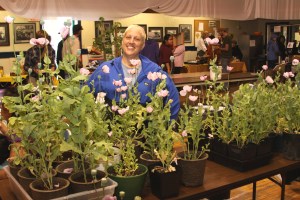
The Gimbal Botanicals booth at the July 18 first Sitka Farmers Market of the season.

Cindy Westergaard sells plants at the July 18 Sitka Farmers Market

Cindy Westergaard sells plants at the July 18 Sitka Farmers Market

• Eight fun facts about Saturday’s first Sitka Farmers Market

SitkaFarmersMarketSign

1. The first of five scheduled Sitka Farmers Markets this summer takes place from 10 a.m. to 2 p.m. on Saturday, July 18, at the Alaska Native Brotherhood Hall on Katlian Street.

2. More than 20 local vendors will be selling fresh veggies, fish, art and more.

3. The Gajaa Heen Dancers will be selling fry bread as a fundraising project for the group. Other ready-to-eat food includes black cod, crepes and fresh oysters.

4. Live music will be provided by the Sitka Blues Band inside the hall. Also, an open jam session will take place under a tent outside — all musicians are welcome.

5. Registered participants in the state’s Women, Infants and Children (WIC) supplemental nutrition program can exchange $5 vouchers for fresh produce from one of several approved stands. The Sitka Farmers Market is the first market in Southeast Alaska authorized to process WIC vouchers.

6. The children’s craft activity this market focuses on healthy eating and is called “eating by the colors.” Please bring the kids!

7. Creating the Sitka Farmers Market was selected by Sitka residents as a top community health priority at the 2008 Sitka Health Summit.

8. This event is sponsored by the Sitka Local Foods Network, Alaska Native Brotherhood/Alaska Native Sisterhood, Baranof Island Housing Authority, Sitka Conservation Society, the Alaska Farmers Market Association and the SEARHC Health Promotion and Diabetes Prevention programs.

Musicians play in the jam session tent

Musicians play in the jam session tent

Grilling black cod collars from the Alaska Longline Fisherman's Association

Grilling black cod collars from the Alaska Longline Fisherman's Association

• ANSWER Camp prepares for 2009 students

ANSWER Camp teachers Adriana Rodriguez, left, Alberta Demantle, Jordan Baumgartner, Collauna Marley and Chohla Moll prepare sockeye salmon for the smoker Wednesday night so it will be ready when the students arrive in Sitka on Friday.

ANSWER Camp teachers Adriana Rodriguez, left, Alberta Demantle, Jordan Baumgartner, Collauna Marley and Chohla Moll prepare sockeye salmon for the smoker Wednesday night so it will be ready when the students arrive in Sitka on Friday.

Seventh and eighth grade students from all over Alaska will be arriving in Sitka this week for the 12th annual Alaska Native Student Wisdom Enrichment Retreat, commonly known as ANSWER Camp, a 12-day residential program for Alaska Native students sponsored by the Southeast Regional Resource Center (SERRC) out of Juneau.

Students at the ANSWER Camp stay at Mt. Edgecumbe High School in Sitka for two weeks of intensive science, math and cultural experiences as they explore traditional methods of food preservation. ANSWER Camp takes place from July 17-30, and it is free to the 75-80 students lucky enough to be selected from several rural Alaska communities to participate in the program. A U.S. Department of Education grant pays for the students’ transportation to and from Sitka, their housing and food.

ANSWER Camp makes math and science instruction more meaningful for the students by linking traditional Alaska Native values to western scientific principles. The program prepares middle school students from rural Alaska to enter high school, and it helps make science and math come alive for the students as they learn how even traditional cultural activities such as preserving subsistence foods are affected by science and math.

While the students prepare salmon, they will do tests to see how different brine mixtures affect the taste (chemistry). They also will learn how to preserve berries, seaweed and medicinal plants. The students will learn biology by studying critters, and they will gather different plants to study botany. ANSWER Camp has helped steer many students toward science and health careers later in life.

This is one of several camps in the Sitka area that teach people about traditional foods from Southeast Alaska. The Sitka Native Education Program (SNEP) hosts several events during the summer, as so do Sitka residents John and Roby Littlefield at their Dog Point Fish Camp. The Alaska Native Sisterhood camp in Sitka also hosts traditional foods camps at Dog Point Fish Camp.

Click here for more information about the Alaska Native Student Wisdom Enrichment Retreat, commonly called the ANSWER Camp, sponsored by the Southeast Regional Resource Center (SERRC).

Chohla Moll grabs some sockeye salmon out of the brine mixture so she can hang it in the smoker.

Chohla Moll grabs some sockeye salmon out of the brine mixture so she can hang it in the smoker.

Sockeye salmon hangs from the racks in the smoker.

Sockeye salmon hangs from the racks in the smoker.

• First Sitka Farmers Market is this Saturday

SitkaFarmersMarketSign

The first of five Sitka Farmers Markets this summer will be held from 10 a.m. to 2 p.m. this Saturday, July 18, at the ANB Hall. The Sitka Blues Band will provide music inside the hall and other local musicians are welcome to join an open jam session outside the hall. The children’s activity focuses on healthy eating and is called “eating by the colors.”

Over 20 local vendors will be on hand to sell, barter or trade fresh vegetables, herbs, teas, flowers, berries, plants, salmon, art and more. Ready-to-eat food includes grilled black cod, crepes, fry bread and more. Additionally, there will be information on home gardening and building your own greenhouse. The Sitka Farmers Market is the first farmers market in Southeast Alaska authorized to accept WIC vouchers.

For more information, contact Linda Wilson at 747-3096.

Checking out the first 2008 Sitka Farmers Market

Checking out the first 2008 Sitka Farmers Market

• Welcome to the Sitka Local Foods Network blog

SitkaLocalFoodsNetwork5Logo

Hello and welcome to the Sitka Local Foods Network blog. The Sitka Local Foods Network is a 501(c)3 non-profit group dedicated to promoting the growing, harvesting and eating of local foods in Sitka, Alaska. This blog will be used to keep people updated on what we’re doing and let people know how they can participate in this community effort.

The 2008 Sitka Health Summit planted the seeds for the Sitka Local Foods Network when Sitka community members got together and chose two local-foods-oriented projects as community health priorities. The Sitka Health Summit participants wanted to start a public market so Sitka residents had easier access to local fish and produce, and the participants wanted to build a community greenhouse and expand the community garden programs so more local produce could be grown in Sitka. Since there were a lot of tie-ins between the two projects, the Sitka Local Foods Network was created to streamline the work efforts.

The Sitka Local Foods Network now has five major focus areas:

* Creating and operating the Sitka Farmers Market, where people can sell locally grown produce, locally harvested fish and locally produced arts and crafts.

* Expanding local community gardens, so people who don’t have their own plots of land can grow their own fruits and vegetables. Sitka currently has the Blatchley Community Garden where families and other groups can get their own plot, and the new St. Peter’s Fellowship Farm which is a cooperative community garden with most of the food being sold at the farmers markets or used by non-profit groups.

* Planning and building a Sitka Community Greenhouse, which can help extend the growing season and allow us to grow additional crops.

* Promoting the use of traditional foods (subsistence foods), such as local salmon, halibut, cod, deer, berries, seaweeds and other foods that were in the Tlingít diet before non-Natives arrived in Sitka.

* Providing educational opportunities, technical expertise and encouragement so Sitka residents who want to build their own gardens have the knowledge and support they need.