• UAF Cooperative Extension Service offers Certified Food Protection Manager class by videoconference in Sitka

CFPM flyer 7-9-14

Friday, June 27, is the registration deadline for a certified food protection manager workshop being taught on Wednesday, July 9, by University of Alaska Fairbanks Cooperative Extension Service. This is an all-day statewide class that will be offered live in Fairbanks and Palmer, and by videoconferencing to Sitka and Ketchikan.

A certified food protection manager (CFPM) is responsible for monitoring and managing all food establishment operations to ensure that the facility is operating in compliance with food establishment regulations.

A CFPM is knowledgeable about food safety practices and uses this knowledge to provide consumers with safe food, protect public health and prevent food-borne illnesses. Alaska regulations require food establishments to have at least one CFPM on staff.

This course takes place from 9 a.m. to 5 p.m. (with a half-hour lunch), and participants will take a computer-based exam at the end of the class. The reason the deadline is two weeks before the class is to guarantee course materials reach all the students in time for the class. The cost is $200, and the course will be taught by Marsha Munsell of Fairbanks and Julie Cascio of Palmer. Students can register here (scroll down and select the July 9 item)

The Sitka videoconference for the class will take place in Room 110 at the University of Alaska Southeast Sitka Campus. To learn more, contact the Sitka District Office of the UAF Cooperative Extension Service at 747-9440, or contact Kathy McDougall at (907) 474-2420 (Fairbanks number) or kmmcdougall@alaska.edu.

• Palmer-based CSA looks into distributing produce boxes to Southeast customers

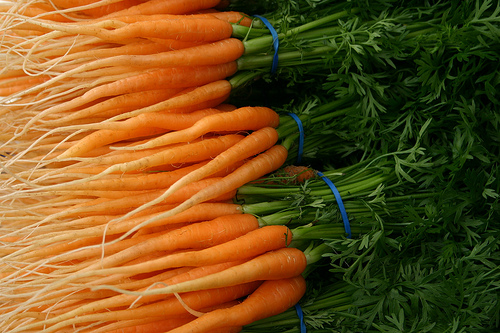
Baby carrots from the Glacier Valley Farm CSA photostream by South Anchorage Farmers Market Reporter Alison Arians

Baby carrots from the Glacier Valley Farm CSA photostream by South Anchorage Farmers Market Reporter Alison Arians

Glacier Valley Farm CSA, which is based in the Palmer area, is considering expanding its distribution network to include some Southeast communities, including Sitka.

Glacier Valley currently distributes its produce in the Anchorage, Mat-Su Valley and Kenai Peninsula areas. However, a customer service rep named Nelli said the CSA has been receiving a lot of interest from Southeast Alaska. For those not familiar with a CSA, or Community Supported Agriculture, small farms sell subscriptions or memberships to local residents, who share in the produce of that farm through weekly boxes of fruits and veggies (and sometimes fresh bread). Glacier Valley Farm CSA is owned by Arthur and Michelle Keyes, who also own A & M Farms.

Red cabbage from the Glacier Valley Farm CSA photostream by South Anchorage Farmers Market Reporter Alison Arians

Red cabbage from the Glacier Valley Farm CSA photostream by South Anchorage Farmers Market Reporter Alison Arians

“We are getting a growing list of interested people together, so that when we officially launch our Southeast service we can let folks know,” Nelli wrote in an e-mail.

She encourages people to go to the Glacier Valley Farm CSA website and learn more about the services it provides. On its site, Glacier Valley advertises itself as, “The only year-round CSA produce box program featuring Alaskan vegetables.” When it can, the program uses Alaska Grown produce from some of the better-known Mat-Su Valley farms. But sometimes Lower 48 fruits and veggies do make it into the boxes, especially in the winter when storage veggies may look a bit sketchy.

The CSA’s site lists produce box contents from previous weeks, community pick-up locations, recipes, and how to order information.This link features photos of some of the fruits and veggies Glacier Valley Farm CSA sells at the South Anchorage Farmers Market.

Nelli said if people are interested in regularly ordering a produce box or have any questions, they should e-mail her at customerservice@glaciervalleycsa.com to let her know. She said people also should let her know their home community (Sitka, Juneau, etc.) so she can let people know when there are enough people in that community to start service.

While the Glacier Valley Farm CSA program is not based in Southeast Alaska, there are some people in town who prefer to eat Alaska Grown produce, even if it travels nearly the same distance from Anchorage and the Mat-Su Valley as produce from Washington-based Full Circle Farm CSA, Chelan Produce and other organizations that serve Sitka. The Sitka Local Foods Network encourages Sitka residents to buy produce grown by Sitka gardeners first, then look within the region before buying produce grown elsewhere.

• Alaska Food Policy Council created to examine how our food system relates to our economy, security and health

In response to concerns by Alaskans about food security, health and job creation, the Alaska Food Policy Council is being formed and it will host a meeting on May 18-19 at a location TBA in Anchorage.

“This will be a chance for Alaskans to come together and develop a plan to produce more food for our communities,” said Danny Consenstein, the Executive Director of the USDA Alaska Farm Service Agency in Palmer.

The Alaska Food Policy Council wants your help in examining how our food system relates to our economy, our security and our health. The meeting will provide an opportunity for the wide variety of food system stakeholders to connect, so they can begin to develop comprehensive solutions toward building a stronger Alaska food system.

The first face-to-face meeting takes place from noon to 5 p.m. on Tuesday, May 18, and from 8 a.m. to noon on Wednesday, May 19, at a location TBA in Anchorage. Mark Winne of the Community Food Security Coalition will facilitate the meeting. The goal will be to learn about food policy councils (which exist in many states and local communities), consult with experts to establish the lay of the land in Alaska, and to begin to set the direction for the Alaska Food Policy Council to take. Sitka Local Foods Network President Kerry MacLane has been asked to represent our group on this council, and he said he plans to attend the May meeting.

Seating is limited for this meeting, so please contact Public Health Specialist Diane Peck, MPH, RD, with the Alaska Department of Health and Social Services by May 1 to RSVP or request more information. Diane can be reached at 269-8447 (Anchorage) or diane.peck@alaska.gov. The Alaska Center for the Environment’s local food project page has more information about the creation of the Alaska Food Policy Council.

Alaska Food Policy Council meeting flier for May 18-19 in Anchorage

• Sitka film featured in Palmer’s “Local Harvest, Local Food” film festival, a Sitka café featured for using local food and other local foods news

Food Film Fest Poster-2

Join the Palmer Arts Council for its inaugural “Local Harvest, Local Food” film fest from Thursday, Nov. 19, through Sunday, Nov. 22, at the Strangebird Consulting Office in downtown Palmer. “Good Food” screens at 7 p.m. on Thursday, Nov. 19; “Fresh” shows at 7 p.m. on Friday, Nov. 20; “Eating Alaska” by Sitka filmmaker Ellen Frankenstein screens at 7 p.m. on Saturday, Nov. 21; and “Ingredients” shows at 3 p.m. on Sunday, Nov. 22. After the Sunday showing there will be a discussion about women in agriculture with Cynthia Vignetti. Suggested donations are $10-15 for all films except for Sunday, which is free.

A Sitka restaurant, the Larkspur Café, was featured in Capital City Weekly last week. The article talks about the origins of the restaurant, which is located in the same building as KCAW-Raven Radio. It also discusses the restaurant’s use of local foods, including owners Amelia Budd and Amy Kane purchasing produce from the Sitka Farmers Market during the summer.

In other local foods news from around the state, the National Oceanic and Atmospheric Administration (NOAA) recently announced an expansion to the state’s subsistence halibut fishery to include more rural residents (this includes the Sitka area). The new rules, which take effect on Dec. 4, redefine who qualifies as a rural resident. The previous rules defined rural residents as people living in a rural community or people belonging to a Native tribe with customary and traditional uses of halibut, and the news rules try to catch subsistence halibut users who fell outside the previous definition. Click this link for more information about subsistence halibut regulations and applications.

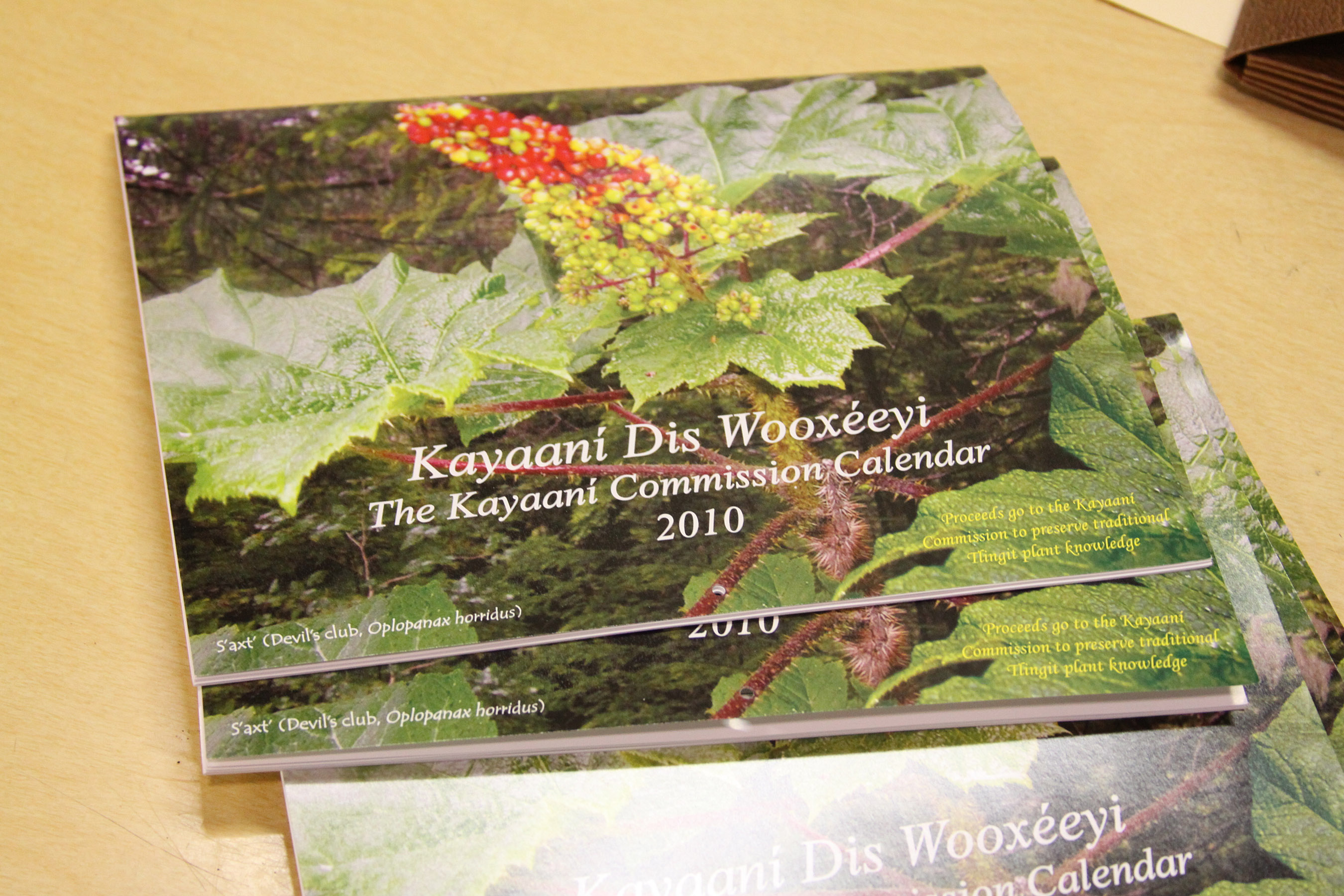
The Daily Sitka Sentinel has been running a brief announcement from the Sitka Tribe of Alaska’s Kayaaní Commission, which is selling 2010 calendars, CDRoms and field guides about traditional uses of native plants. Here is the information:

Kayaaní Native Plant Publications Available: 2010 Kayaaní Harvest Calendars featuring native plants and their traditional and cultural uses ($16, $2 postage per address); Interactive Ethnobotanical CDRoms with native species, their Tlingít, scientific and common names, and interviews with Elders on the traditional and medicinal uses of plants ($15, $1 postage per address); Ethnobotanical Field Guides ($16, $1 postage per address). We will mail to the addresses of your choice. Order by Dec. 18 for guaranteed delivery before Christmas. Call or e-mail with your order: 907-747-7178, pbass@sitkatribe.org, STA Kayaaní Commission, 456 Katlian. All proceeds will assist the nonprofit Kayaaní Commission in protecting, perpetuating and preserving knowledge of native plants.

The Chilkat Valley News weekly newspaper from Haines featured an article about sixth-graders at Haines School learning how to compost their leftover food (including leftover meat) so it can be used for gardening. The school is working with the Takshanuk Watershed Council to teach the students about composting. The students call their compost project “Marvin” because it’s a living organism.

The Alaska Dispatch recently ran a feature called “Growing Season” that discusses some of the farms in the Matanuska-Susitna valleys that grow local food. The feature includes video clips of harvest time at a couple of the farms featured.

The Mat-Su Frontiersman had a feature called “Chicken U,” which is about raising chickens in Alaska and getting them to produce eggs during the winter months.

The Anchorage Daily News also mentioned Chicken University, which will be one of several presentations at the Alaska Farm Bureau annual meeting on Friday, Nov. 13, at the Millennium Hotel in Anchorage. Other presentations are on growing apples in Alaska and preserving your harvest.

The Anchorage Daily News also had an article about how to get local produce in Anchorage during the winter, either through the Glacier Valley CSA produce boxes from Palmer or the indoor farmers market at the Northway Mall.

Anchorage Daily News garden columnist Jeff Lowenfels wrote a column about how hydroponic gardening is easier and cheaper than ever. The column includes lots of links for people who want to try this method of growing food without soil (by the way, there is a hydroponic garden at McMurdo Station in Antarctica that keeps the scientists there stocked in fresh produce in a land of ice).

Fran Durner’s “Talk Dirt To Me” blog on the Anchorage Daily News site includes a post about how snow can act as mulch for the garden.

The Ester Republic, a monthly publication for the community near Fairbanks, runs periodic articles about sustainability and local food security issues. Some of the articles are linked in the archives, and the editors are working to get more of the past articles on these topics online so more people can enjoy them.
KayaaniCommissionCalendarFront´