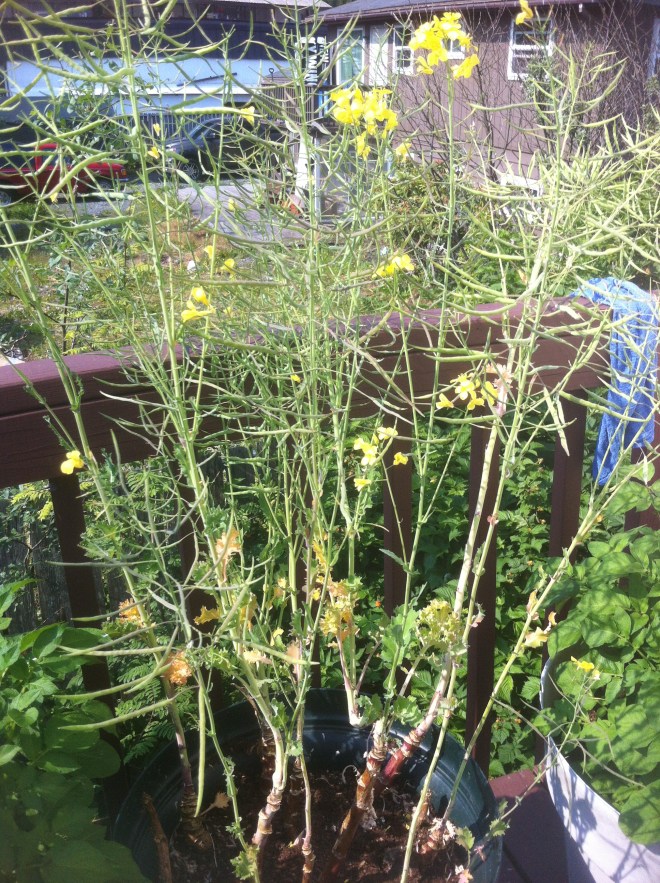
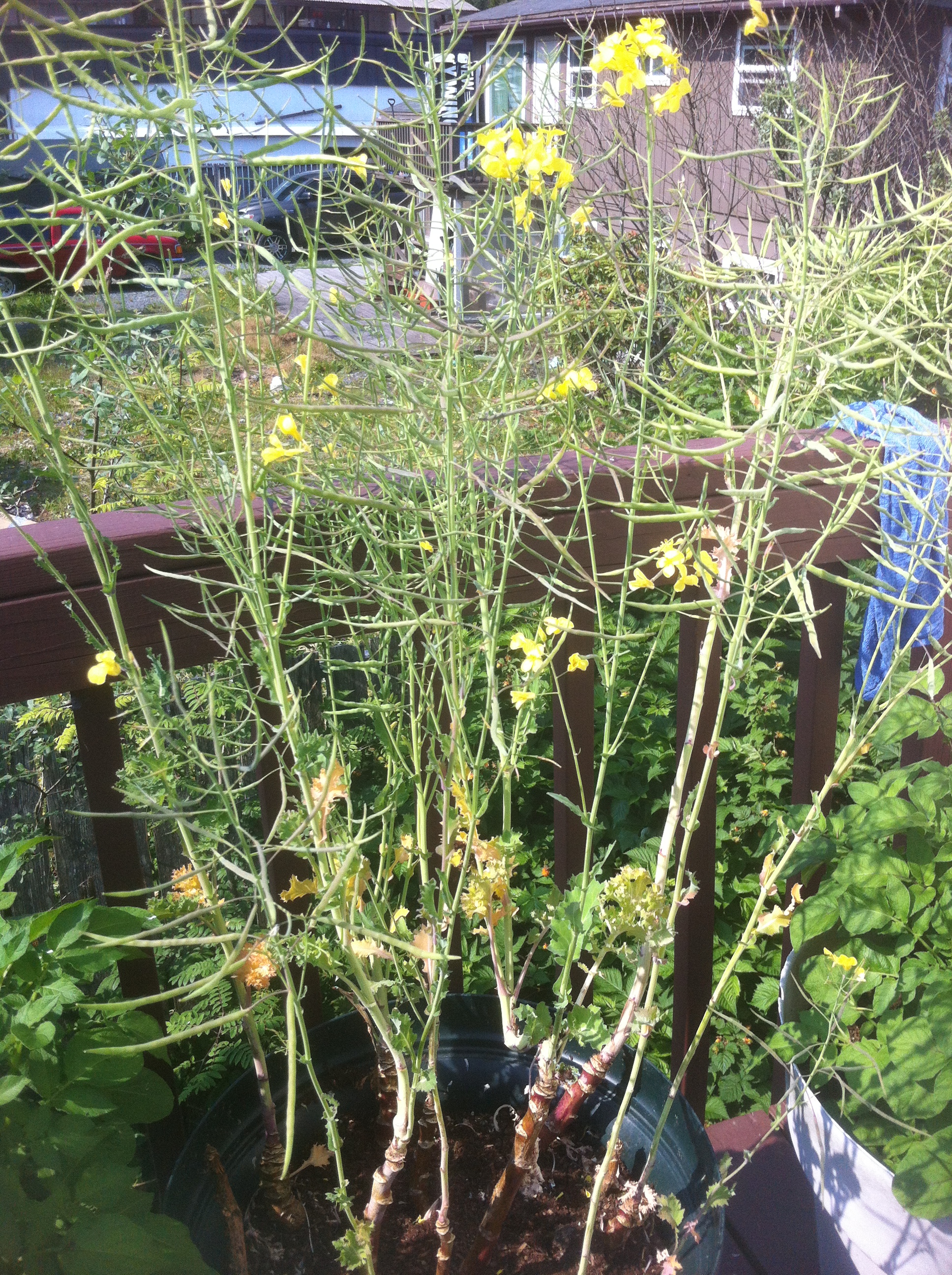
Container of kale bolting (going to seed)
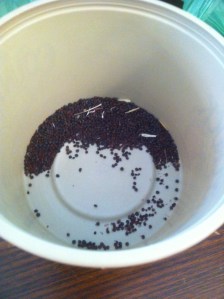
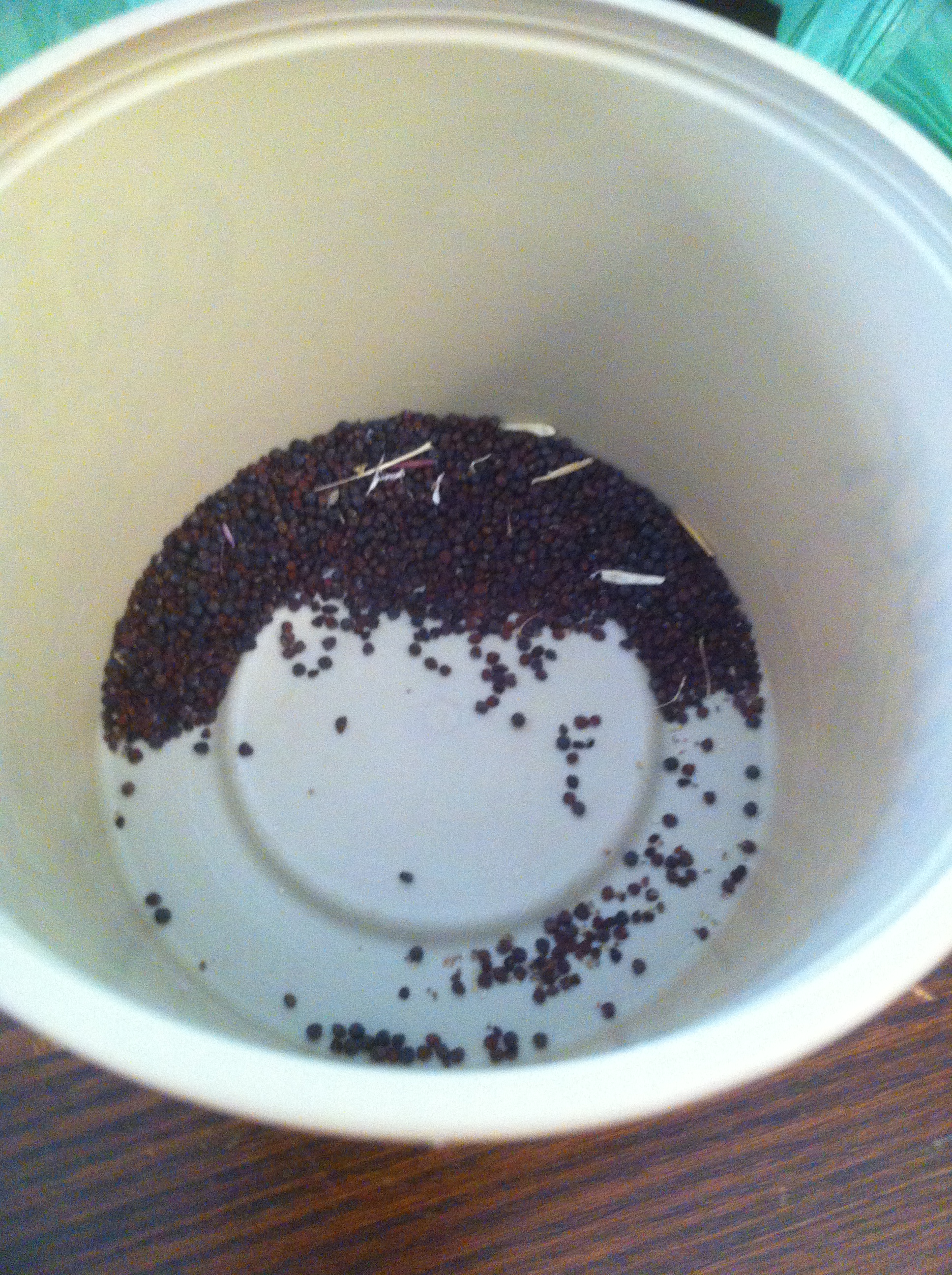
Collected kale seed
Farmers have been saving seeds for thousands of years, but in recent years saving seeds also has become an act of defiance. Saving seeds is a way to preserve and improve the biodiversity of your crops, while also thumbing your nose at agribusiness giants such as Monsanto who have made it difficult and even illegal for small farmers to save their own seeds.
In Sitka, saving seeds means preserving the best crops that grow in our rainy climate. You also can share seeds among friends to help them get the best varieties of a particular crop.

Kale seed pods ready to be split so the seeds can be extracted and saved
So how do you do it? Saving seeds isn’t that difficult and there are many resources available online that can give you the basics. Here is a primer on saving seeds from the Colorado State University Cooperative Extension Service, and the Seed Savers Exchange provides these resources.
The John Trigg Ester Library, located in the town of Ester just outside Fairbanks, provides a list of Alaska resources for saving seeds. The Growing Ester’s Biodiversity program is believed to be the state’s only official seed library, where saved seeds are collected with the intention of sharing them with other gardeners and farmers. That’s different from a seed bank, where seeds are collected and stored, but not for sharing. Here is a FAQ page about how people can borrow seeds from the Ester seed library, and here is a tutorial from the seed library about saving tomato seeds.
Deirdre Helfferich, who also is the managing editor for the University of Alaska Fairbanks Agricultural & Forestry Experiment Station, coordinates the Growing Ester’s Biodiversity seed library at the John Trigg Ester Library. This is how she explains the difference between a seed library and a seed bank, and this is why she says we need to save seeds:
A seed bank is a depository for the owners of its seeds or germplasm. So, the Svalbard Global Seed Vault (in Norway) is a seed bank. Until recently, Native Seeds/SEARCH (in Tucson, Ariz.) was a seed bank with limited availability for growing. It now has a seed library program.
The basic difference is the mode of preservation and distribution: the bank holds the seeds for its depositors, and as though the seeds are in a museum, to be regenerated only every so often to keep the line going. Seed banks won’t just share the seed with anyone, and will store their seed in deep dormancy as long as possible.
A seed library, on the other hand, preserves through distribution and growth each year. This means that the plants tend to adapt to the local where they are grown over time, of course, and don’t remain unchanged.
Seed libraries are also usually focused on the traditions and human context associated with the seed: what it means, the stories associated, the uses, the histories, etc. Seed libraries have to do with the cultures in which their charges were domesticated, preserved, passed down, donated. This can be as simple as “We traditionally use this tomato in grandma’s lasagne recipe so we call it Grandma’s Lasagne Tomato,” to “This tomato has been in our family for generations back when we were living in a little village in Italy and tomatoes were first introduced from the New World.”
The other thing about seed libraries is that they are libraries, and a library is grounded in sharing, in the abundance mentality. One gives away, trusting that good things will come back. And that network of relationships builds a community of trust. Contrast this to a bank, which holds its contents at bay from a hostile world.
Of course, we need things like Svalbard because there ARE nuts out there running our regulatory agencies and monocropping everything to the point where we simply may not have the variety we need. Seed libraries and seed banks offer two kinds of bulwarks to the crazies.
In an earlier conversation, Deirdre said part of the mission of the Ester seed library is “to inspire other seed library programs or variations on the theme.” With that in mind, I decided to see if I could save some seed.

My bag of kale seed pods hanging in my living room to dry
I’m not the most experienced gardener, but this year I had a container of second-year kale that bolted after growing all winter (see photo at top of article), providing me with a nice crop of seed pods instead of leafy kale this summer. So, rather than toss the kale, I decided to collect the seed pods and see if I could save some seed.
Since it’s so rainy in Sitka, I couldn’t dry the seed pods outdoors. So I threw them into a plastic shopping bag and hung them in my living room for a month or two (out of the reach of my cats).
When the seed pods were finally dry enough so you could split them like shelling peanuts, I took the bag down and started collecting the seeds in a plastic margarine tub (see third photo). It can be somewhat tedious work, splitting all the seed pods to get the seeds loose, but it also can be meditative. Once you have all of the seeds separated from the seed pods, you should store them in a cool, dry place until you are ready to germinate them. Hopefully, these kale seeds will sprout next spring.




 Sitka Local Foods Network
You must be logged in to post a comment.