USDA Natural Resources Conservation Service updates its high tunnel funding program

Producing crops in our maritime climate has its advantages, including long daylight hours during the growing season and mild “shoulder” seasons that allow for additional growing time when compared to other places in Alaska. It also has its challenges, of which farmers and gardeners here are acutely aware — too much rainfall and cool temperatures can persist throughout the growing season, impacting crop quality and quantity, and limiting the types of crops that typically can be produced.

Controlling the growing environment by covering the growing area can help improve growing conditions. Row covers or low tunnels can be used to cover individual beds and are both easy to install and maintain, or high tunnels can be used to cover larger areas but are more complex to install and require more active management of both the structure itself and the growing space they cover.

The USDA Natural Resources Conservation Service (NRCS) can help farmers and gardeners with identifying opportunities for conservation on their growing operations. NRCS works with individual growers to develop a conservation plan based on their objectives and resource concerns. Staff tailor plans to the site-specific conditions of the land where crops are grown, and develop alternatives for addressing resource concerns. Implementing the recommendations is voluntary.

Once a conservation plan has been completed, eligible lands and landowners may also qualify for financial assistance through the Environmental Quality Incentives Program (EQIP). The program includes funding for a variety of practices that can help improve crop quality and soil health, including low tunnels, high tunnels, nutrient management, crop rotation, cover cropping, and irrigation practices. EQIP contracts reimburse the producers based on current payment rates once the practices are installed to NRCS standards. EQIP applications are accepted continuously, though the first deadline for the current fiscal year’s funding is April 18, 2024.

Additional information about working with NRCS and about the high tunnel initiative can be found at the links below:

Conservation Technical Assistance | Natural Resources Conservation Service (usda.gov), https://www.nrcs.usda.gov/getting-assistance/conservation-technical-assistance

USDA Conservation Compliance – Frequently Asked Questions, https://www.nrcs.usda.gov/sites/default/files/2022-10/WC-HEL%20FAQ%20final_0.pdf

EQIP-fact-sheet.pdf (usda.gov), https://www.nrcs.usda.gov/sites/default/files/2022-10/EQIP-fact-sheet.pdf

For more information, contact the Southeast Alaska NRCS Field Office located in Juneau at 907-586-7220, (Kathleen.Dilley@usda.gov or Samia.Savell@usda.gov). Click this link for more Alaska office contacts. Click here for the Alaska NRCS page link.
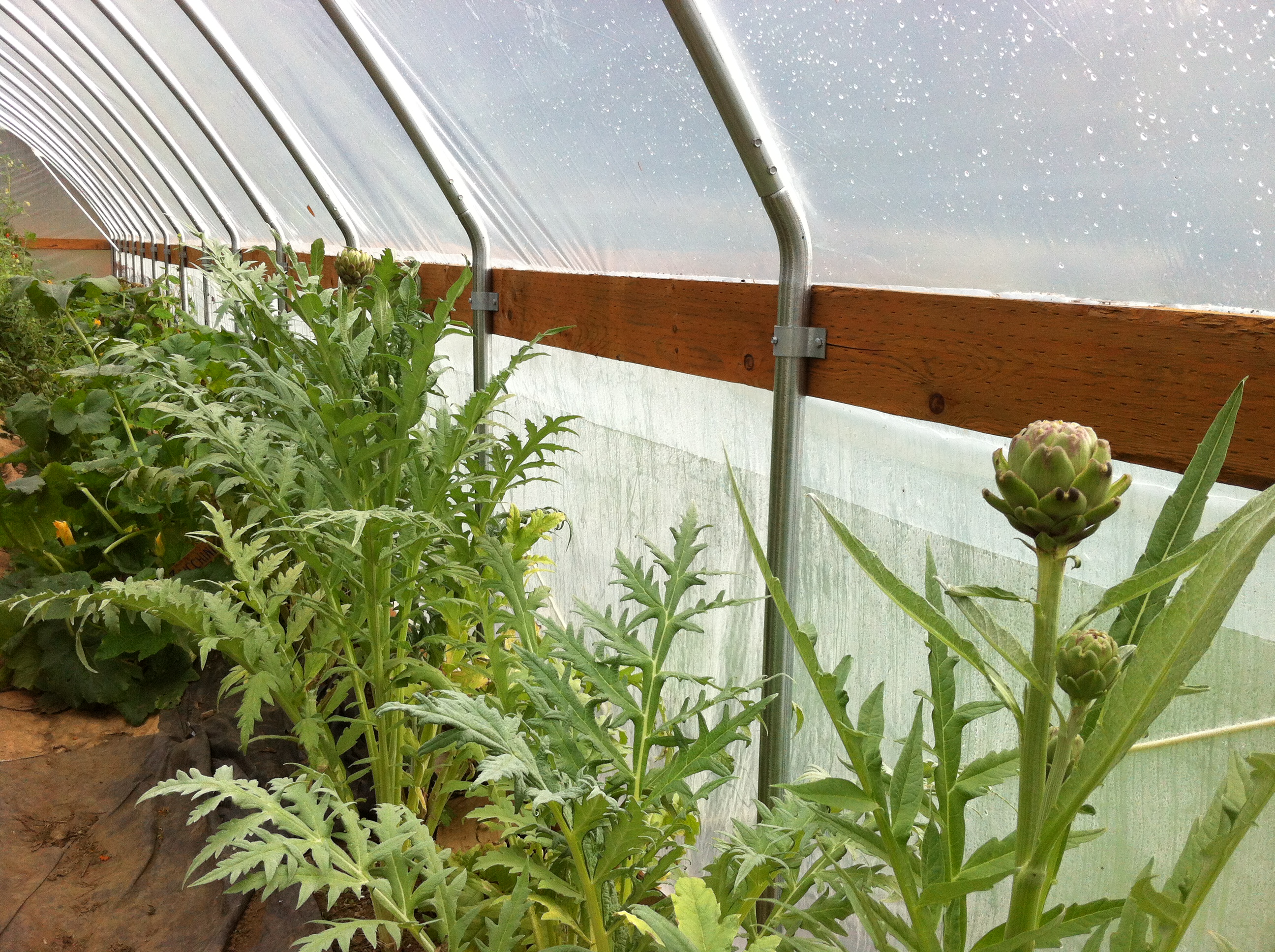
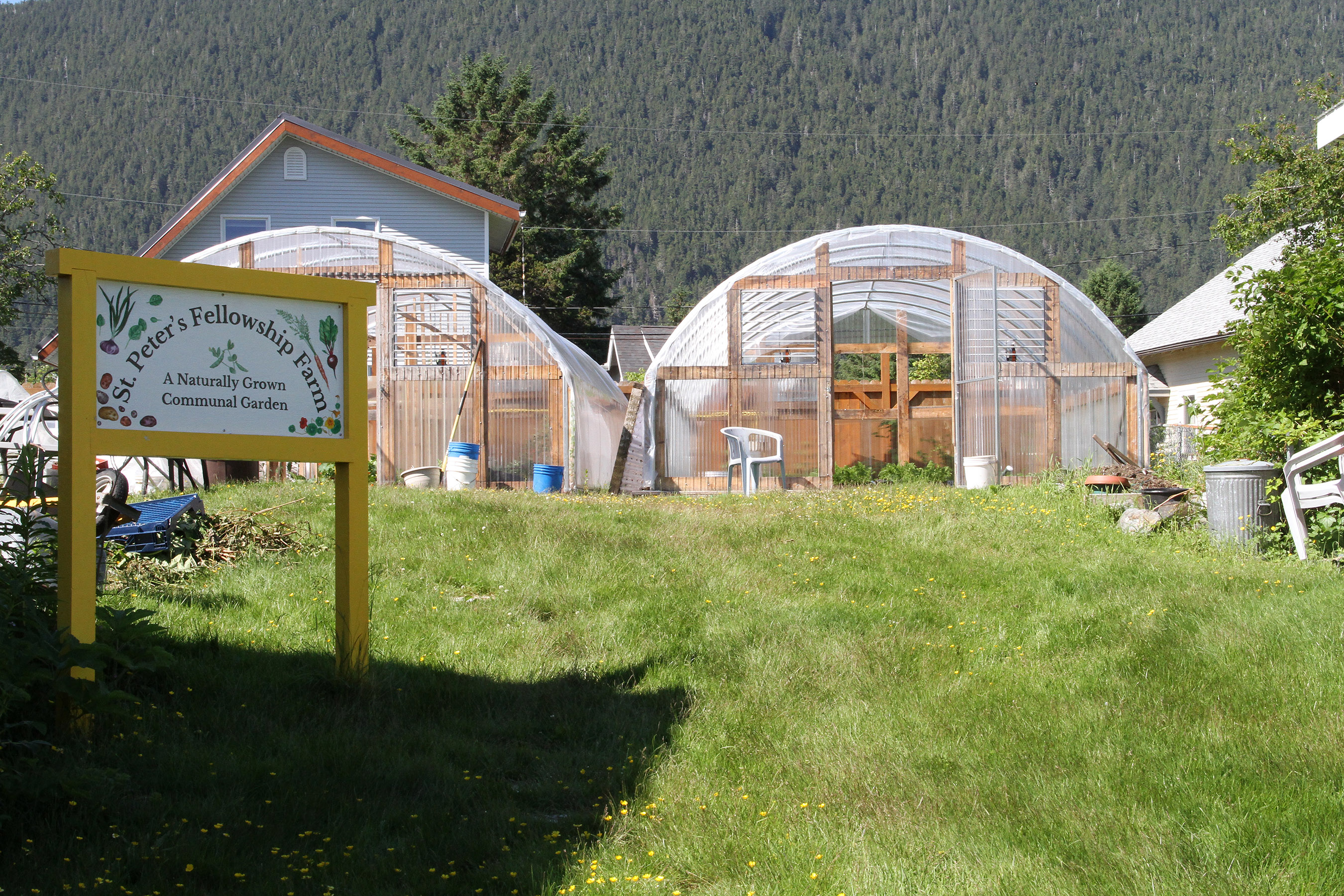
New high tunnels help grow more produce at St. Peter’s Fellowship Farm

Since its origin as a small communal garden located in space behind St. Peter’s By The Sea Episcopal Church in April 2008, St. Peter’s Fellowship Farm has grown much of the produce sold at the Sitka Farmers Market.

Coordinated by the Sitka Local Foods Network, with Laura Schmidt serving as lead gardener for the past decade, St. Peter’s Fellowship Farm has grown in efficiency and production so there are more fresh veggies available for Sitka residents.

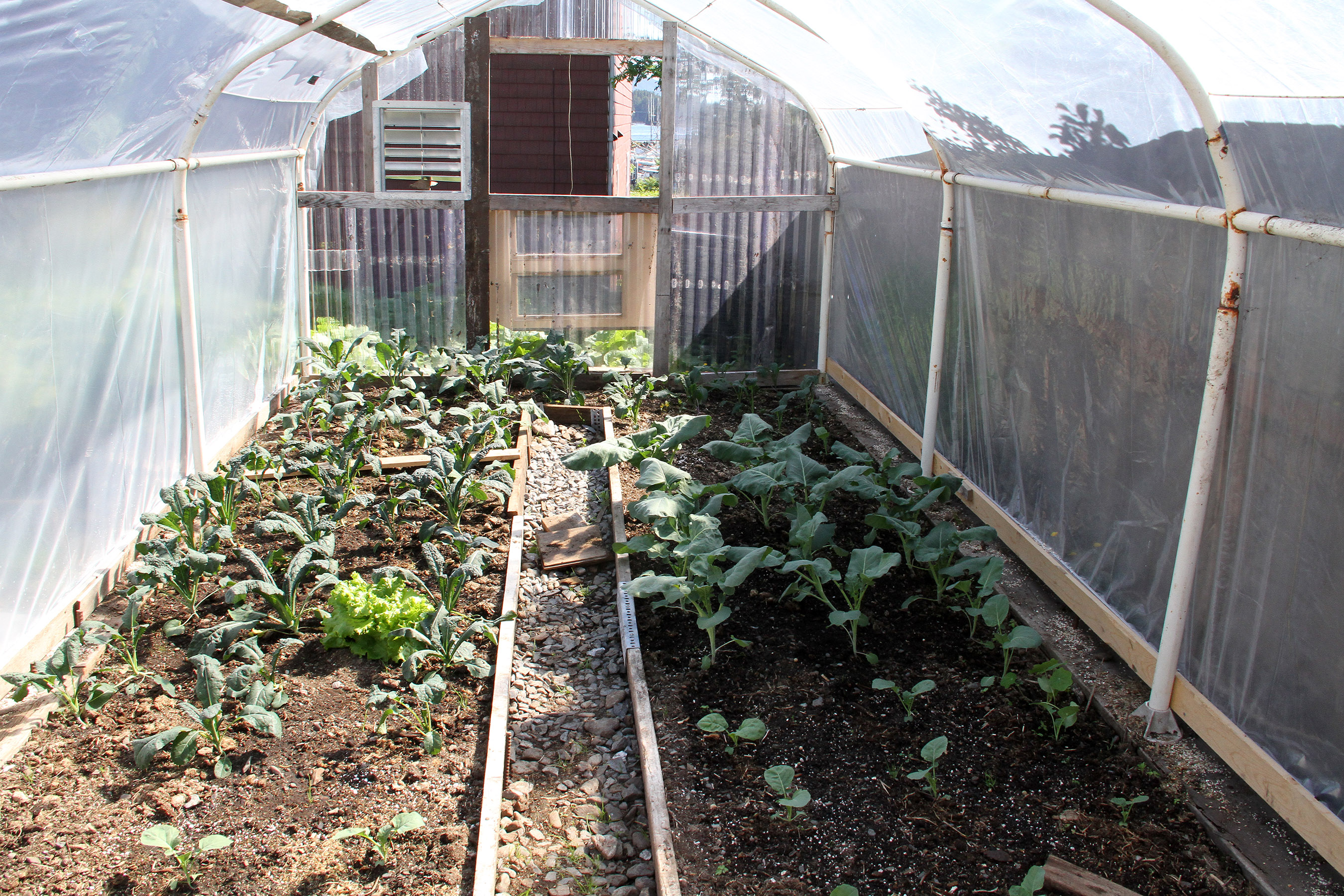
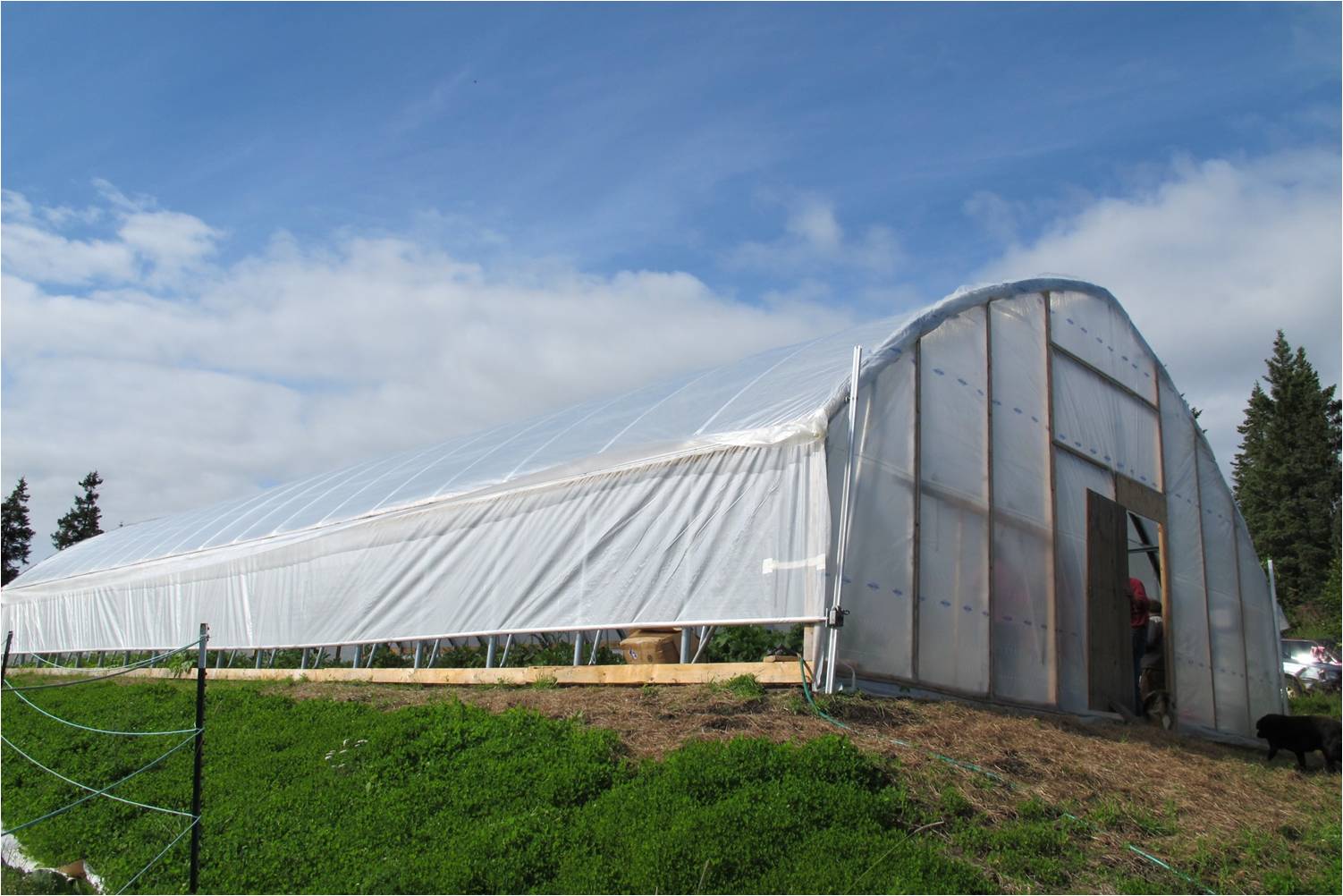
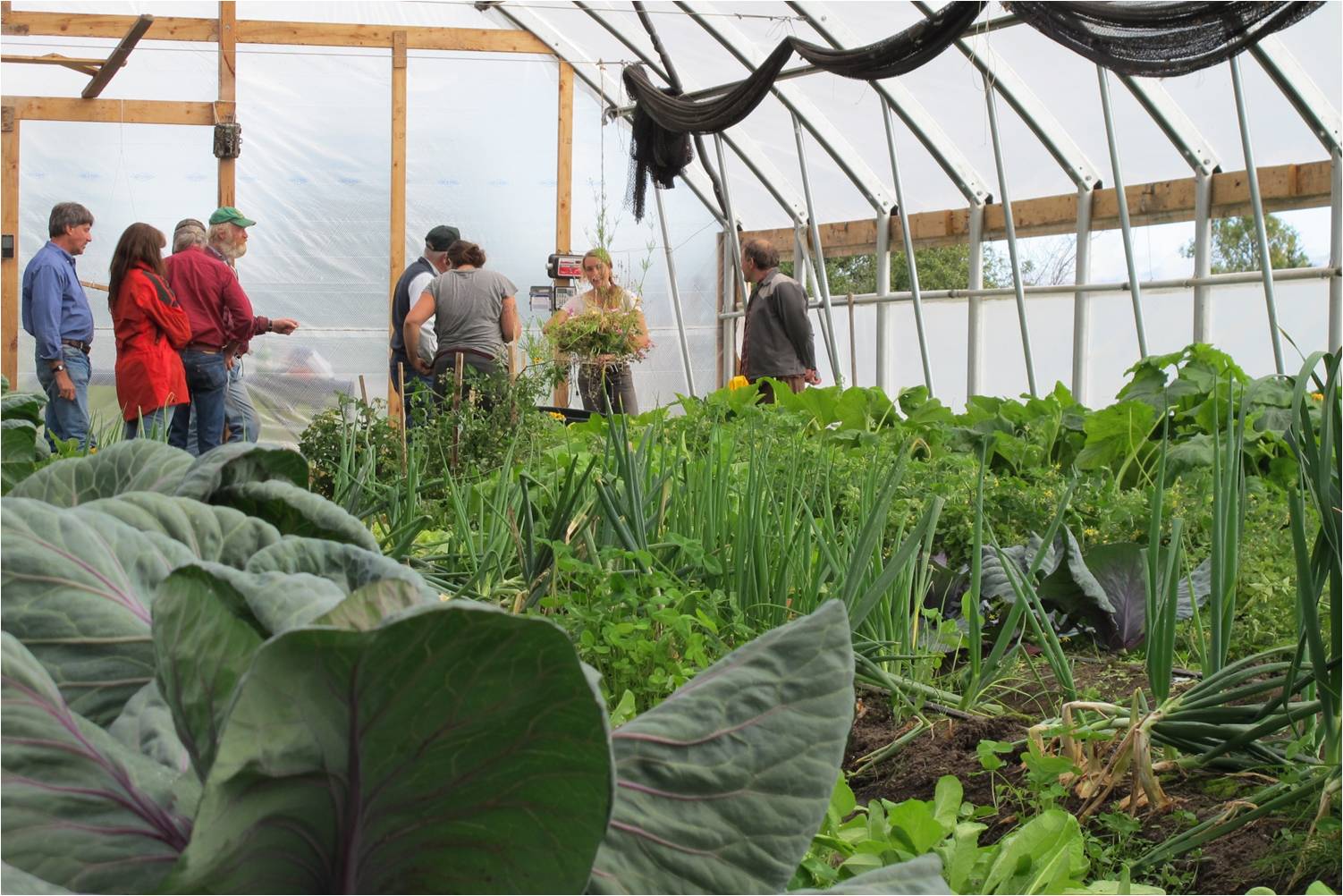
In recent years, that means the addition of high tunnels, also called hoop houses. High tunnels look like greenhouses, but don’t have the heaters, powered ventilation systems or evaporative coolers commonly found in greenhouses. Even without those extras, high tunnels can extend the growing season and even counter the effects of a cold, wet summer such as the one we had in 2020 when it seemed like it rained just about all the time.

It started with a small, used high tunnel a former Sitka Local Foods Network board member donated to the group when she moved out of town. That small high tunnel, which still is in use at St. Peter’s Fellowship Farm, has been at the communal garden for about 5-6 years now. It was first used as a place to start seedlings and now has chard and kale growing in it.

In the spring of 2020, the Sitka Local Foods Network board approved the purchase of a 16×28 quonset hut-style high tunnel, manufactured by Oregon Valley Greenhouses and sold locally through Spenard Builder’s Supply. This high tunnel was constructed by a volunteer crew coordinated by Laura Schmidt, and was planted in time for the 2020 summer.

That high tunnel saved our 2020 Sitka Farmers Market season, as it helped protect some of the more fragile plants from the extreme cold and rain we had that year. That prompted the Sitka Local Foods Network to buy another 16×28 high tunnel of the same make and model, plus we added an automated venting system and fan to both of the new high tunnels.

Despite the nice weather last week, the 2021 spring has been cold and wet so the produce still needs better weather to kick into gear. But the new high tunnels will greatly help us keep Sitka in produce this summer.

Click this link, if you want to support the Sitka Local Foods Network’s efforts to grow more healthy produce for Sitka residents. St. Peter’s Fellowship Farm holds a Certified Naturally Grown farm designation, which shows the Sitka Local Foods Network’s commitment to growing produce in a sustainable manner with the minimal use of chemical fertilizers.

Samia Savell to host meeting Aug. 9 in Sitka to discuss soil quality, high tunnels, and other USDA NRCS programs

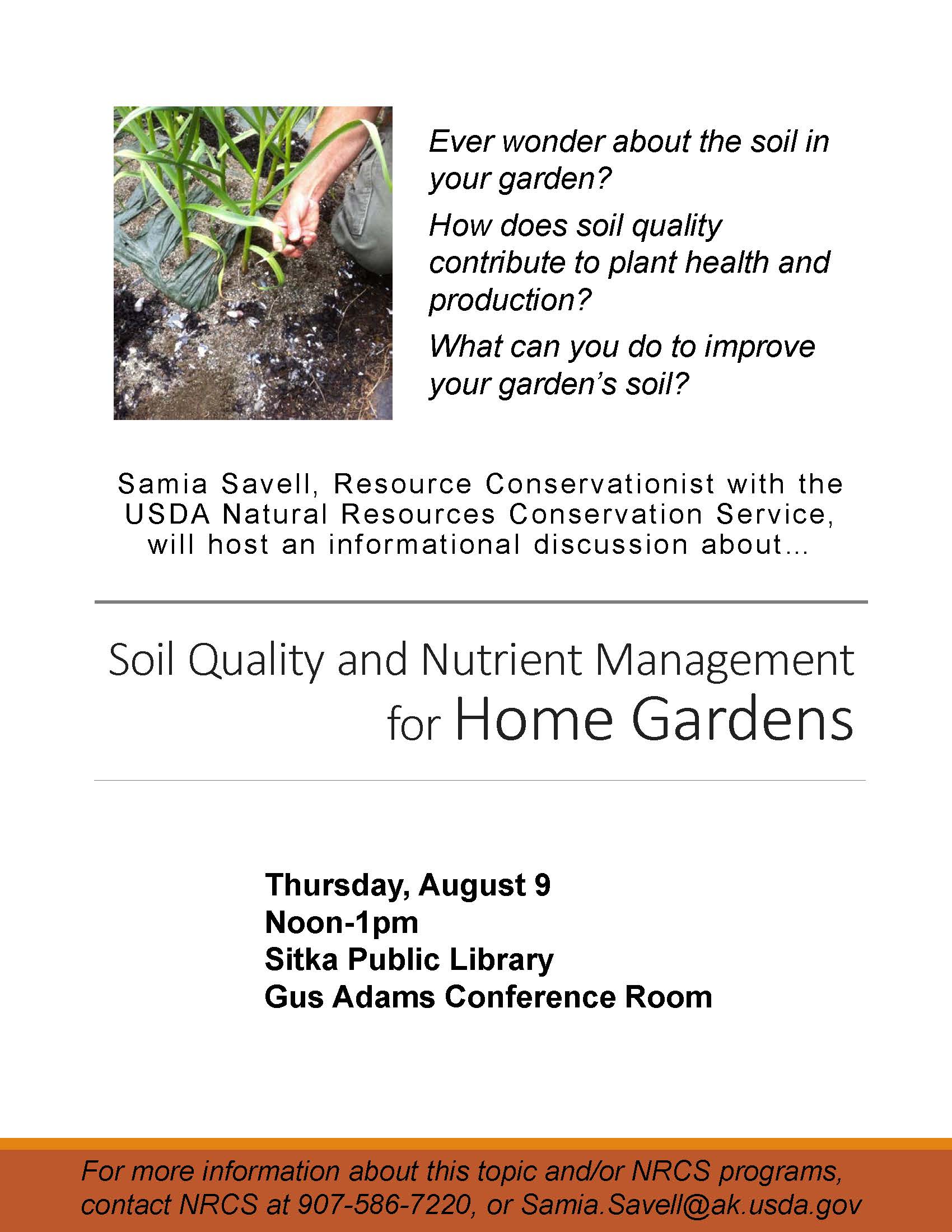
Are you interested in learning how soil quality impacts your home garden? Do you want to learn how to get funding for a high tunnel to extend your growing season? Join Samia Savell of the U.S. Department of Agriculture’s Natural Resources Conservation Service office in Juneau for an informal discussion about those topics and others at noon to 1 p.m. on Thursday, Aug. 9, in the Gus Adams Meeting Room at the Sitka Public Library. Note, Samia has reserved the meeting room until 2 p.m. in case people want to stay after and ask her questions.

The USDA Natural Resources Conservation Service (NRCS) assists agricultural producers with conservation efforts on their cultivated land. Technical assistance is available upon request, and is tailored to each landowner’s unique situation. Working with NRCS staff, landowners identify resource concerns such as poor soil quality or plant health, inefficient water use, or even energy conservation, and develop a plan to address those concerns while supporting their production goals.

Program funding through the Environmental Quality Incentives Program (EQIP) can help defray costs of implementing conservation practices outlined in the plan. Applications are currently being accepted for fiscal year 2019 EQIP funding. Interested producers must first establish farm records with the Farm Services Agency, and verify that they and their land are eligible for funding.

Typical practices supported through EQIP funding in Southeast Alaska include nutrient management, crop rotation, cover crops, and high tunnels. High tunnels, also known as hoop houses or temporary greenhouses, extend the growing season so more food is produced before and after the traditional weather dates for growing stuff outdoors. They also can help with irrigation and drainage, and with pest control.

High tunnels differ from greenhouses in that crops are grown in the ground or in raised beds rather than in containers. Geodomes are also eligible for funding. Funding through EQIP requires the landowner to purchase a structure and install it according to the manufacturer’s instructions. Additional information can be found in the NRCS high tunnel fact sheet (attached), or by contacting the Juneau Field Office. Low tunnels, which usually involve some PVC pipe bent over a garden bed and covered with row cover, and homemade structures are not eligible in this program.

More information about NRCS programs can be found at https://www.nrcs.usda.gov/Internet/FSE_DOCUMENTS/nrcseprd1338028.pdf or by contacting the Juneau Field Office at 907-586-7220.

• Information about the USDA NRCS high tunnel program in Alaska

Samia Savell of USDA Natural Resources Conservation Service to be in Sitka to meet with growers

Samia Savell of the Juneau office of the U.S. Department of Agriculture‘s Natural Resources Conservation Service (NRCS) will be in Sitka on Friday, June 23, to meet with local food growers about her program’s services. She currently is setting up one-on-one meetings from 4-6 p.m. on Friday afternoon at the Sitka Public Library study room.

Among the services provided by the USDA NRCA’s Alaska program is nutrient management to improve soil quality, irrigation system design, energy conservation, and possibly funding for high tunnels if it will improve crop condition and varieties (the high tunnel program is geared toward conserving resources and is offered through the Environmental Quality Incentives Program).

If you are interested in learning more about the programs and how you can work with the USDA NRCA, or setting up a meeting, please contact Samia at (907) 586-7220, Extension 100, or email her at samia.savell@ak.usda.gov.

Registration open now for Southeast Alaska Farmers Summit on Feb. 24-26 in Haines

registration-open-dec

Share lessons learned and techniques for overcoming challenges of commercially growing food in Southeast Alaska; learn specific skills, technology, and research that contribute to commercial farming success and efficiency; connect with new and experienced farmers to build an inspiring network.

Early bird registration is now open for the Southeast Alaska Farmers Summit 2017, the second biennial summit designed to bring together experienced and aspiring commercial growers and support agencies. The summit will be held Friday through Sunday, Feb. 24-26, at the Chilkat Center in Haines. A discounted registration rate is available to attendees who register on or before Friday, Jan. 20. Travel and registration scholarships are available.

The conference will feature presentations from experienced commercial growers and support agencies, and topical discussions and panels to share resources and lessons learned. Speakers include Doug Collins, Extension Faculty and Soil Scientist with Washington State University’s Small Farms Program; Megan Talley, Farm Manager and Educator at Alaska Pacific University; and experienced farmers from Southeast Alaska; among others.

“This will be an opportunity for commercial growers of Southeast Alaska to learn from each other, find opportunities to collaborate, and build a network that can leverage everyone’s efforts,” said Lia Heifetz, Local Food Director for Southeast Alaska Watershed Coalition. “Many resources will be shared over the course of the weekend – from financial planning for small farms to innovative solutions for soil building, policy implications for agriculture, and much more.”

Other topics to be addressed at the Southeast Alaska Farmers Summit include:

  • On Farm Food Safety
  • Building your Farm Community
  • Planning for a CSA
  • The Future of Seed Saving in Alaska
  • High Tunnel Applications and Innovations
  • Electric and Walk-in Cold Storage for your Farm
  • Biomass Heated Greenhouses and Aquaponics
  • Per Foot Crop Values for Market Sales
  • Using Local Amendments to Improve Soil Quality
  • Fruit Trees and Grafting Techniques
  • Policy and Initiatives
  • Building a Future of Farming with Internships and Education
  • Business Planning and Farm Finances

For more information and to register for the conference, please visit this website, http://www.alaskawatershedcoalition.org/safs2017/, or contact Lia Heifetz at lia@growsoutheast.com.

Deadline approaching for FY2017 high tunnel cost share program

2017 High Tunnel_1

IMG_8020Applications are being accepted for the fiscal year 2017 fiscal year high tunnel cost share program in Southeast Alaska, which is coordinated by the U.S. Department of Agriculture (USDA) Natural Resources Conservation Service (NRCS).

Applications for the FY2017 funding period are due by Sept. 1, 2016, in the USDA NRCS Juneau Field Office. However, applicants are encouraged to apply early for the program, which is part of the USDA Environmental Quality Incentives Program (EQIP).

“Since people need to verify they are eligible prior to submitting an application, I highly recommend that people interested in applying for NRCS programs get in touch with the field office by July 31,” said Samia Savell, USDA District Conservationist for the Juneau Field Office. “The Juneau Field Office now has two additional staff – Will Murray and Jodi Hastings. Any of us can answer questions or assist with the necessary application requirements.”

The USDA Natural Resources Conservation Service (NRCS) may provide funding assistance to qualified landowners in order to offset the cost of purchasing professionally manufactured high tunnels.

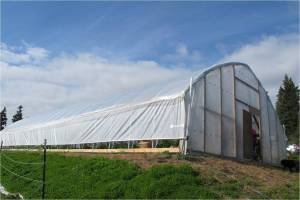
Juneau_tunnel1High tunnels, also known as hoop houses or temporary greenhouses, extend the growing season so more food is produced before and after the traditional weather dates for growing stuff outdoors. They also can help with irrigation and drainage, and with pest control.

High tunnels are different than greenhouses in that they are passively heated by the sun, so they have lower energy costs than greenhouses. High tunnels are at least nine feet tall (an increase from six feet tall in recent years), so people can walk upright in them. Low tunnels, which usually involve some PVC pipe bent over a garden bed and covered with row cover, aren’t eligible in this program. Food in high tunnels is planted either directly into the ground or in raised beds, not in containers.

Picture10To learn more about the USDA’s high tunnel program, click here, and click here to get information about the application procedure. This link has frequently asked questions and answers about seasonal high tunnel systems for crops. This link has a fact sheet about high tunnels.

The high tunnel cost share program started a couple of years ago as a pilot program, but now is a permanent part of of the NRCS EQIP (Environmental Quality Incentive Programs). The program recently was revamped, and one major change is there now is no size restriction on the structures NRCS provides cost-sharing funds (previously it was limited to up to 2,178 square feet, or 5 percent of one acre). Also, geodesic domes are now eligible. Both the land owner and land must meet certain eligibility requirements.

Funding is provided on a reimbursable status once the high tunnel is installed and certified to meet NRCS standards. In 2012 there was just one high tunnel in Sitka, but in 2013 there were six. Other areas of the state, such as Homer, have built dozens of high tunnels through the program.

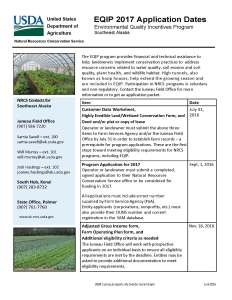
EQIP FY 2017 Dates to Know“The application itself is due by Sept. 1, but applicants must have already gotten a farm and tract number by registering with the Farm Services Agency – and it can take some time to get that done,” Savell said. This link includes a table outline of the various dates when things are due (or click the image at left).

For information regarding the NRCS technical service or program participation in Southeast Alaska, please contact Samia Savell, Will Murray, or Jodi Hastings at the Juneau field office at (907) 586-7220 or 586-7208, or send an email to samia.savell@ak.usda.gov, william.murray@ak.usda.gov, or joanne.hastings@ak.usda.gov. Click here for a link to the Alaska NRCS page. Contact information for the offices in Alaska is also available at www.ak.nrcs.usda.gov/contact/fieldoffices.html.


• USDA Natural Resources Conservation Service offers funding support program for high tunnels

picture8

The deadline has been set for the next round of applications for the U.S. Department of Agriculture’s Natural Resources Conservation Service (NRCA) cost-sharing program. This program enables qualifying landowners who produce food to build high tunnels with financial assistance from the USDA.

The next NRCS Alaska program deadline is June 15, 2016. However, the program usually sets two applications deadlines a year so applications can be batched and ranked. Applications that miss the June 15 deadline will be held for the next deadline (usually about Oct. 15, but it hasn’t yet been posted online for 2016). Applicants are encouraged to apply outside two deadline cycles, because sometimes funding is available.

“The next deadline is June 15, 2016 – for funding in the 2017 fiscal year,” said Samia Savell, of the Juneau Field Office of the USDA-NRCS. “However, we often get additional funding in the current fiscal year and have the opportunity to fund applications that have been submitted past the prior deadlines. In other words, if you know of people who are interested in the program, please have them contact me to get the application materials. We do accept applications at any time.”

High tunnels, also known as hoop houses or temporary greenhouses, extend the growing season so more food is produced before and after the traditional weather dates for growing stuff outdoors. They also can help with irrigation and drainage, and with pest control.

High tunnels are different than greenhouses in that they are passively heated by the sun, so they have lower energy costs than greenhouses. High tunnels are at least nine feet tall (an increase from six feet tall in recent years), so people can walk upright in them. Low tunnels, which usually involve some PVC pipe bent over a garden bed and covered with row cover, aren’t eligible in this program. Food in high tunnels is planted either directly into the ground or in raised beds, not in containers. To learn more about the USDA’s high tunnel program, click here, and click here to get information about the application procedure. This link has frequently asked questions and answers about seasonal high tunnel systems for crops.

Picture10This program started a couple of years ago as a pilot program, but now is a permanent part of of the NRCS EQIP (Environmental Quality Incentive Programs). The program recently was revamped, and one major change is there now is no size restriction on the structures NRCS provides cost-sharing funds (previously it was limited to up to 2,178 square feet, or 5 percent of one acre). Also, geodesic domes are now eligible. Both the land owner and land must meet certain eligibility requirements.

Funding is provided on a reimbursable status once the high tunnel is installed and certified to meet NRCS standards. In 2012 there was just one high tunnel in Sitka, but in 2013 there were six. Other areas of the state, such as Homer, have built dozens of high tunnels through the program.

For information regarding the NRCS technical service or program participation in Southeast Alaska, please contact Samia Savell or Will Murray at the Juneau field office at (907) 586-7220 or 586-7208, or send email to samia.savell@ak.usda.gov or william.murray@ak.usda.gov. The June 15, 2016, deadline is the first deadline for the Fiscal Year 2017 funding cycle. Click here for a link to the Alaska NRCS page. Click here for an interview with Samia Savell on KRBD-FM (Ketchikan) about the program.

• High Tunnels In Alaska Fact Sheet (October 2015)

• Flier about Southeast Alaska cost-sharing program for FY2016 (March 2015, note, information should be similar for FY2017)

• USDA Natural Resources Conservation Service offers funding support program for high tunnels

picture8

The deadline is coming up for the next round of applications for the U.S. Department of Agriculture’s Natural Resources Conservation Service (NRCA) cost-sharing program. This program enables qualifying landowners who produce food to build high tunnels with financial assistance from the USDA.

The next NRCA Alaska program deadline is June 15. However, the program usually sets two applications deadlines a year so applications can be batched and ranked. Applications that miss the June 15 deadline will be held for the next deadline (usually Sept. 15, but it hasn’t yet been posted online).

High tunnels, also known as hoop houses or temporary greenhouses, extend the growing season so more food is produced before and after the traditional weather dates for growing stuff outdoors. They also can help with irrigation and drainage, and with pest control.

High tunnels are different than greenhouses in that they are passively heated by the sun, so they have lower energy costs than greenhouses. High tunnels are at least six-feet tall, so people can walk upright in them. Low tunnels, which usually involve some PVC pipe bent over a garden bed and covered with row cover, aren’t eligible in this program. Food in high tunnels is planted either directly into the ground or in raised beds. To learn more about the USDA’s high tunnel program, click here, and click here to get information about the application procedure. This link has frequently asked questions and answers about seasonal high tunnel systems for crops.

Picture10This program started a couple of years ago as a pilot program, but now is a permanent part of of the NRCS EQIP (Environmental Quality Incentive Programs). The program recently was revamped, and one major change is there now is no size restriction on the structures NRCS provides cost-sharing funds (previously it was limited to up to 2,178 square feet, or 5 percent of one acre). Also, geodesic domes are now eligible. Both the land owner and land must meet certain eligibility requirements.

Funding is provided on a reimbursable status once the high tunnel is installed and certified to meet NRCS standards. In 2012 there was just one high tunnel in Sitka, but in 2013 there were six. Other areas of the state, such as Homer, have built dozens of high tunnels through the program.

For information regarding the NRCS technical service or program participation in Southeast Alaska, please contact Samia Savell or Will Murray at the Juneau field office at (907) 586-7220 or 586-7208, or send email to samia.savell@ak.usda.gov or william.murray@ak.usda.gov. The June 15 deadline is the first deadline for the Fiscal Year 2016 funding cycle. Click here for a link to the Alaska NRCS page. Click here for an interview with Samia Savell on KRBD-FM (Ketchikan) about the program.

• High Tunnel In Alaska Fact Sheet (March 2014)

• Flier about Southeast Alaska cost-sharing program for FY2016 (March 2015)

• USDA Natural Resources Conservation Service offers funding support program for high tunnels

picture8

The deadline is coming up for the next round of applications for the U.S. Department of Agriculture’s Natural Resources Conservation Service (NRCA) cost-sharing program that enables qualifying landowners who produce food to build high tunnels.

The NRCA Alaska program sets two applications deadlines a year (Sept. 15 and June 15) so applications can be batched and ranked. Applications that miss the Sept. 15 deadline will be held for the June 15 deadline.

High tunnels, also known as hoop houses or temporary greenhouses, extend the growing season so more food is produced before and after the traditional dates for growing stuff outdoors.

High tunnels are different than greenhouses in that they are passively heated by the sun, so they have lower energy costs than greenhouses. High tunnels are at least six-feet tall, and low tunnels aren’t eligible in this program. Food in high tunnels is planted either directly into the ground or in raised beds. To learn more about the USDA’s high tunnel program, click here (note, link is to FY2014 program information, there have been updates for FY2015 but no link was available). This link has frequently asked questions and answers about seasonal high tunnel systems for crops.

Picture10This program started a couple of years ago as a pilot program, but now is a permanent part of of the NRCS EQIP (Environmental Quality Incentive Programs). The program recently was revamped, and one major change is there now is no size restriction on the size of structures NRCS will provide cost-sharing funds (previously it was limited to up to 2,178 square feet, or 5 percent of one acre). Also, geodesic domes are now eligible. Both the land owner and land must meet certain eligibility requirements.

Funding is provided on a reimbursable status once the high tunnel is installed and certified to meet NRCS standards. In 2012 there was just one high tunnel in Sitka, but in 2013 there were six. Other areas of the state, such as Homer, have built dozens of high tunnels through the program.

For information regarding the NRCS technical service or program participation in Southeast Alaska, please contact Samia Savella at the Juneau field office at (907) 586-7220 or samia.savell@ak.usda.gov. Applications currently are being accepted for the 2015 fiscal year (Oct. 1, 2014, to Sept. 30, 2015) and applications must be received at the Juneau field office on or before Sept. 15, 2014. Click here for a link to the Alaska NRCS page.

• High Tunnel Fact Sheet March 2014

• Flier about Southeast Alaska cost-sharing program March 2014

• Samia Savell of USDA Natural Resources Conservation Service to give presentation in Sitka on high tunnels

picture8

Picture10Want to learn how to extend your growing season with high tunnels and find out how Sitka growers can receive help from the USDA to purchase a high tunnel? Samia Savell of the Juneau office of the U.S. Department of Agriculture’s Natural Resources Conservation Service will give a presentation from 5-6 p.m. on Thursday, July 10, at Harrigan Centennial Hall.

In recent years, the USDA Natural Resources Conservation Service (NRCS) has offered a cost-sharing program that enables qualifying landowners who produce food to build high tunnels. Samia has overseen that program for Southeast Alaska, and several gardeners in Sitka have taken advantage of the program.

High tunnels, also known as hoop houses or temporary greenhouses, extend the growing season so more food is produced before and after the traditional dates for growing stuff outdoors. High tunnels are different than greenhouses in that they are passively heated by the sun, so they have lower energy costs than greenhouses. High tunnels are at least six-feet tall, and low tunnels aren’t eligible in this program. Food in high tunnels is planted either directly into the ground or in raised beds.

For more information about the presentation, contact Sitka Local Foods Network Board President Lisa Sadleir-Hart at 747-5985. To learn more about the USDA NRCS high tunnel program, contact Samia Savella at the Juneau field office at (907) 586-7220 or samia.savell@ak.usda.gov.