The Sitka Community Food Assessment Indicators Report was released on Monday, and the findings will help guide future food system planning in Sitka.
A 2012 Sitka Health Summit project, the Sitka Community Food Assessment has examined where Sitka residents get their food, what types they eat, what they grow, what they hunt and fish for, where they shop, what type of access people have to healthy food, and other questions about Sitka’s food supply. The findings of the food assessment will help Sitka improve its food security.
After Sitka residents chose the Sitka Community Food Assessment as a project at the September 2012 Sitka Health Summit, the work group received a grant to hire a coordinator and contract with a data person. A revised version of a questionnaire from a similar project on the Kenai Peninsula was posted online, available at the library, and discussed in focus groups, with more than 400 residents answering the 36 questions. In November 2013, some of the initial data was presented at the Sitka Food Summit, where about 60 residents discussed the results and noted any further research that needed to be done. Since then, the work group, in partnership with The Island Institute and others, fine-tuned the data before writing and editing the indicators report.
“We hope the Sitka Community Food Assessment Indicators Report can guide future food system planning and plant seeds for innovative responses that will strengthen Sitka’s food landscape,” project coordinator Lisa Sadleir-Hart wrote in the 26-page document’s introduction. “The Sitka Community Food Assessment Indicators Report uncovers many weaknesses in our food system as well as some incredible assets that define Sitka’s food culture — a rich ecosystem filled with nutritious gems from the land and sea plus a generous spirit of sharing with our neighbors. Now that we’ve defined the current foodscape in Sitka, let’s work together to build a more resilient food system that can deeply nourish the entire community for generations to come.”
The Sitka Community Food Assessment Indicators Report opens with Sitka’s demographics and several Sitka food facts. It then features data about how many people in Sitka hunt, fish, gather, and/or grow their own food, as well as some barriers. Next is information about where people in Sitka shop for their food, followed by how many people in Sitka are on some form of food assistance. The report also includes information about food in the schools, and local food manufacturing.
The findings will be presented to the community during an upcoming meeting of the Sitka Assembly, and the report will be posted online here (see below) and on The Island Institute’s website.
Bob Gorman, Extension Agent of the Sitka office of the University of Alaska Fairbanks Cooperative Extension Service, shows some germinating seed starts during a free garden workshop on March 11, 2009.
The two-part class about Southeast gardening will include topics such as selecting and starting seeds, transplants, grow lights, greenhouses, growing media, and managing garden soils. These are the last three workshops Bob will teach before he retires after a long career with the UAF Cooperative Extension Service in Sitka.
Monday, April 21, 7-8:30 p.m., UAS Sitka Campus Room 229, “Extending the Growing Season.”
The Sitka Local Foods Network education committee has chosen its two families for its new garden mentoring program, and will begin hosting classes for first-time gardeners at the homes of our selected families.
To protect the privacy of the selected families, they will be referred to as Family A and Family B and the locations of their gardens will be given when first-time gardeners call to RSVP for the classes. These free classes are open to all first-time gardeners in Sitka. Family A lives near the end of Halibut Point Road, and Family B lives midway down HPR. The classes will be similar at each location, so people wanting to participate only need to sign up for one class. New classes will be added as the spring/summer progress, so keep watching for more.
Our confirmed classes so far:
Garden preparation class (choosing a location, building planters, soil and soil requirements, etc.), note a free planter box will be given to one participant in each garden-prep class.
Family A, 5 p.m. on Wednesday, April 23
Family B, 4 p.m. on Sunday, April 27
Planting class (easy-to-grow plants, how, where and when to plant, planting)
Family A, 5 p.m. on Friday, May 2
Family B, 4 p.m. on Sunday, May 4
For more information, contact Michelle Putz at 747-2708 or michelleputzfood@yahoo.com.
The Sitka Local Foods Network reminds you that it’s time to get out in the garden and build your garden planters.
Michelle Putz will present a short workshop on building garden planters from 4-5:30 p.m. on Friday, April 18, at 131 Shelikof Way. These planters will be used for our two first-time gardener families in the Sitka Local Foods Network garden mentor program. Garden planters can range from the frames for raised garden beds to smaller planters used in container gardening. Participants are encouraged to bring drills with Phillips-head bits and extension cords, if they have them. Parking space is limited, so please consider walking, riding your bike or carpooling. More information is available by calling Michelle at 747-2708.
The Sitka Local Foods Network is hosting a series of “It’s time to …” workshops this spring and summer designed to help local residents learn about various aspects of vegetable gardening and fruit growing. Many of these classes will be informal get-togethers at various gardens around town. Please watch our website, Facebook page, Facebook group, and local news media for information about upcoming classes.
In addition, don’t forget the Sitka Local Foods Network education committee will meet from 5:30-7 p.m. on Monday, May 5, at Harrigan Centennial Hall to discuss future workshops and classes for the rest of the spring and summer.
We are still looking to expand our network of local volunteers who can teach classes (formal and informal) this year about growing food, so please attend if you’re interested. If you can’t attend, please email Charles Bingham at charleswbingham3@gmail.com with info about what topics you can teach, your gardening experience, and contact information so we can add you to our database of instructors.
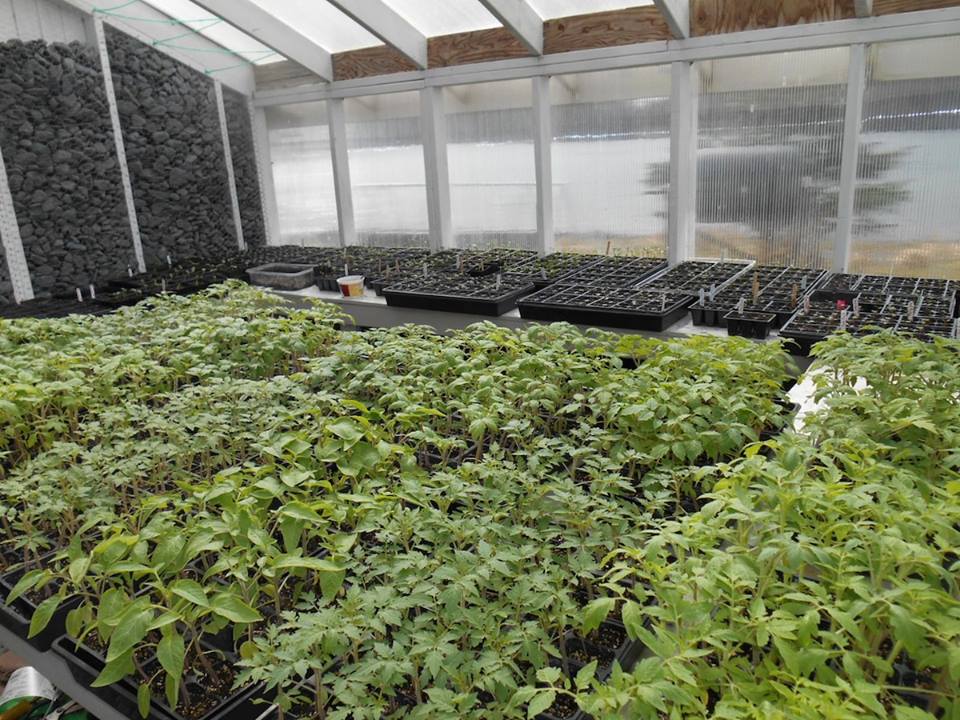
Plant starts in Sitka gardener Keith Nyitray’s greenhouse
The Sitka Local Foods Network and Sitka Food Co-op are teaming up to make garden starts available for Sitka food gardeners.
The plant starts will be available through the Sitka Local Foods Network on the next three monthly Sitka Food Co-op delivery days, from 4:30-6:30 p.m. on Monday, April 21, May 19 and June 23, at the Sitka First Presbyterian Church (505 Sawmill Creek Road). The sale of these plant starts helps benefit the Sitka Local Foods Network, and we thank the Sitka Food Co-op for the opportunity to sell them on their delivery pick-up days. The plant starts are from Sitka gardeners and are of plants that do well in Sitka’s climate.
For more information, contact Keith Nyitray of the Sitka Food Co-op at sitkafoodcoop@gmail.com or go to http://sitkafoodcoop.org/
Earth Day is on Tuesday, April 22, and Earth Week is April 20-26. Sitka will host a variety of activities for Earth Week, including some gardening classes, a youth eco-challenge, free bus rides all month, spring clean-up events, and the 13th annual Parade of the Species. Click the event names at this link for more activity details.
Giving Earth Week an early start is a presentation at 1 p.m. on Saturday, April 12, in Room 106 at the University of Alaska Southeast Sitka Campus, when Gordon Wrobel will discuss his three-year USDA project to build local food systems in Elfin Cove. Contact the Sitka Local Foods Network at sitkalocalfoodsnetwork@gmail.com for more information.
Lauren Oakes will discuss yellow cedar ecology and long-term vegetation changes in temperate forests impacted by climate change at 7:30 p.m. on Thursday, April 17, at the UAS Sitka Campus as part of the ongoing Natural History Seminar Series.
Bob Gorman of the Sitka District office of the University of Alaska Fairbanks Cooperative Extension Service will give two presentations at 7 p.m. at the UAS Sitka Campus — on Monday, April 21, about extending the growing season and greenhouses, and on Tuesday, April 22, about sustainable wood heat.
There will be clean-up events from 9-11
a.m. on Saturday, April 19, for 4-H club members and other youth, and from noon to 2 p.m. on Tuesday, April 22, for Sitka Conservation Society members and other community members, both at locations TBA. There also is a community-wide spring clean-up event from April 26
through May 11, when people can bring in a variety of large items and hazardous materials to the Sawmill Cove Scrap Yard, hosted by the City and Borough of Sitka Public Works Department.
The Sitka Community Ride bus service will provide free bus rides during the entire month of April in its annual recognition of Earth Day.
The youth eco-challenge is from 9 a.m. to noon on Saturday, April 26, at Sitka National Historical Park. School-aged youth teams will test their skills of compass navigation, bear safety, and fire building while they make their way through the Sitka National Historical Park. Sign up in teams of four, or as individuals and be put on a team. Teams of multiple ages are recommended. It’s a race. Contact Mary Wood to register, 747-7509.
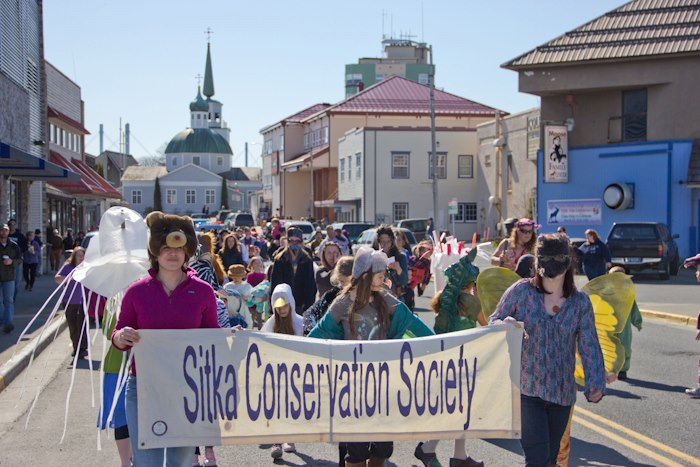
Finally, the 13th annual Parade of Species, hosted by the Sitka Conservation Society, is on Friday, April 25. Parade participants are invited to dress as their favorite animal or plant and gallop, slither, swim, or fly with us. We will meet in Totem Square at 2:30 p.m. and parade down Lincoln Street to Harrigan Centennial Hall at 3 p.m. There will be a number of community organizations with hands-on Earth Day inspired activities for the whole family from 3-4:30 p.m. Prizes will be awarded for Best Use of Recycled Material, Most Realistic, and Best Local Plant/Animal. For more information contact mary@sitkawild.org or call 747.7509. Click here for photos of 2013 Parade of Species costumes.
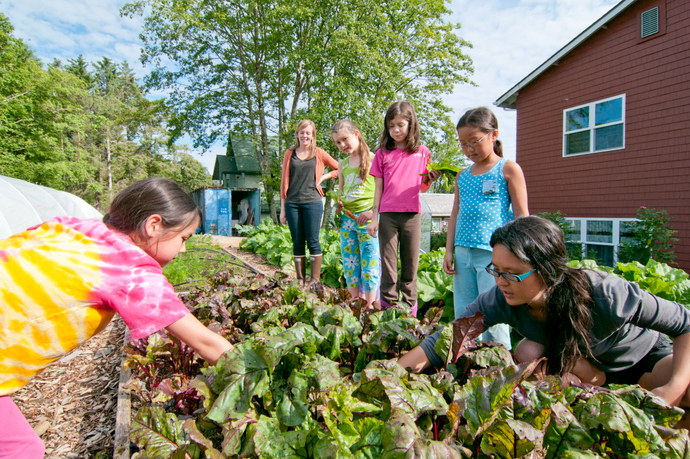
We would love some mentorship and modeling to help us out and build community between our youth and gardeners. If you are interested in sharing your skills and spending a few hours with youth this summer, contact Mary Wood at the Sitka Conservation Society, 747-7509 or mary@sitkawild.org.
Mary said the 4-H club has space at St. Peter’s Fellowship Farm, so they are looking to meet with local gardeners and see what they are doing; so more like site visits. She’s hoping the gardeners also might be interested in taking volunteer leadership roles with the club and developing mentoring partnerships, which will help make the club program sustainable.
Sitka’s 4-H club is a positive youth development organization that gets youth civically engaged and physically active. Sitka has three 4-H projects: Baking, Shooting Sports, and the Alaska Way of Life outdoor education program. Sitka 4-H Community Club meetings are held at 12:30 p.m. the second Saturday of each month (April 12 is the next meeting) at the Sitka Unitarian Universalist Fellowship Hall (408 Marine St.).
Shooting Sports: Contact Paul Rioux for more information, paulg.rioux@gmail.com.
Baking: Contact Amy Sweeney for more information, a_sitka_sweeney@yahoo.com.
Alaska Way of Life: Get outside, explore the Tongass, and build community with 4-H. Visit the Sitka Conservation Society website for more information on current events. Summer club registration for hiking, and gardening, and other activities is coming soon. Contact Mary at the Sitka Conservation Society for more information, 747-7509 or mary@sitkawild.org.
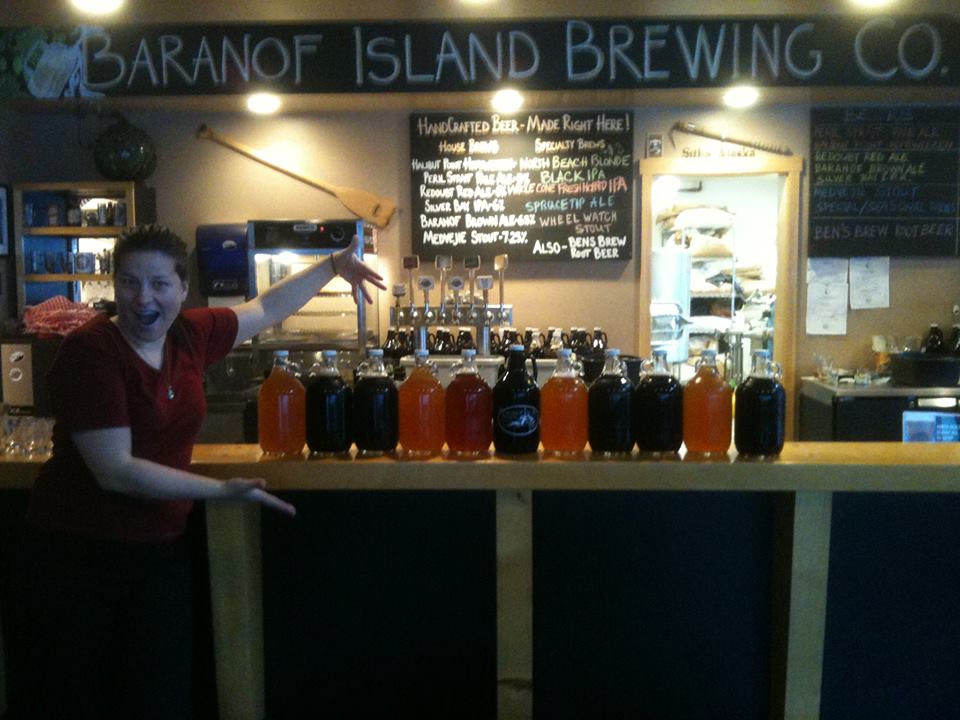
Sitka’s local brewery, Baranof Island Brewing Co. (BIBCO), will host a community night fundraiser for the Sitka Local Foods Network from 3-8 p.m. on Wednesday, April 30, at the brewery’s taproom (215 Smith St.).
BIBCO hosts community nights on Wednesdays for a variety of community nonprofit organizations and worthy causes (only one group per night). The brewery donates a portion of the day’s gross sales to the cause depending on the overall sales (up to $500 gets 10 percent, $501-$1,000 gets 15 percent, and $1,001 or more gets 20 percent). The nonprofit groups are able to share information about their projects during the event.
The brewery is owned by Rick Armstrong and Suzan Hess, who started selling small batches of their beer in 2010. The brewery has grown in the few years it’s been open, and now the brew is distributed throughout Southeast Alaska and other parts of the state. On occasion they’ll source locally harvested spruce tips and other flavorings for the beer, and they make their spent grain available to local gardeners for compost (bring your own container).
The BIBCO taproom has a variety of locally brewed beer available (Halibut Point Hefeweizen, Peril Strait Pale Ale, Medvejie Stout, Silver Bay IPA, Redoubt Red Ale, Baranof Brown Ale, seasonal and special brews, and Ben’s Brew Root Beer for the kids and non-drinkers), pizza and other food, and a selection of BIBCO swag (t-shirts, refillable growlers, glassware, beer bread mix, soap, etc.). If you can’t stay for some food and liquid refreshments (note, there is a 36-ounce limit on alcoholic drinks served at the taproom, per state law), Wednesday is a good time to refill your growlers or buy some BIBCO swag for your family and friends.
For more information about Baranof Island Brewing Co., call 747-BREW (747-2739), stop by the brewery, go to the BIBCO website, or go to the BIBCO page on Facebook.
The Sitka Local Foods Network reminds you that it’s time to get out in the garden and plant your potatoes.
Potatoes are some of the most productive and easy-to-grow vegetables in Sitka. Michelle Putz will present two free, short, hands-on potato-planting workshops at 9 a.m. on Saturday, April 12, and again at 9 a.m. on Saturday, April 19, at 131 Shelikof Way. Parking space is limited, so please consider walking, riding your bike or carpooling. More information is available by calling Michelle at 747-2708.
The Sitka Local Foods Network is hosting a series of “It’s time to …” workshops this spring and summer designed to help local residents learn about various aspects of vegetable gardening and fruit growing. Many of these classes will be informal get-togethers at various gardens around town. Please watch our website, Facebook page, Facebook group, and local news media for information about upcoming classes.
In addition, don’t forget the Sitka Local Foods Network education committee will meet from 5:30-7 p.m. on Monday, May 5, at Harrigan Centennial Hall to discuss future workshops and classes for the rest of the spring and summer.
We are still looking to expand our network of local volunteers who can teach classes (formal and informal) this year about growing food, so please attend if you’re interested. If you can’t attend, please email Charles Bingham at charleswbingham3@gmail.com with info about what topics you can teach, your gardening experience, and contact information so we can add you to our database of instructors.
(EDITOR’S NOTE: The following article first appeared on this site in April 2010. It is repeated because much of the information remains current and newsworthy.)
As you start to plan your garden for this spring and summer, don’t forget to Plant A Row For The Hungry. The Plant A Row For The Hungry program (also known as Plant A Row or PAR) is a national campaign by the Garden Writers Association of America that got its start in Alaska.
In the cold winter of 1994, Anchorage Daily News garden columnist and former Garden Writers Association of America President Jeff Lowenfels was returning to his hotel after a Washington, D.C., event when he was approached by a homeless person who asked for some money to buy food. Lowenfels said Washington, D.C., had signs saying, “Don’t give money to panhandlers,” so he shook his head and kept on walking. But the man’s reply, “I really am homeless and I really am hungry. You can come with me and watch me eat,” stayed with Lowenfels for the rest of his trip.
Jeff Lowenfels
The encounter continued to bother Lowenfels, even as he was flying back to Anchorage. During the flight, Lowenfels came up with an idea when he started writing his weekly garden column (the longest continuously running garden column in the country, with no missed weeks since it started on Nov. 13, 1976). He asked his readers to plant one extra row in their gardens to grow food to donate to Bean’s Café, an Anchorage soup kitchen. The idea took off.
When Anchorage hosted the Garden Writers Association of America convention in 1995, Lowenfels took the GWAA members to Bean’s Café to learn about the Plant A Row For Bean’s Café program. The Garden Writers Association of America liked the idea, and it became the national Plant A Row For The Hungry campaign (also known as Plant A Row or PAR). In 2002, the Garden Writers Association Foundation was created as a national 501(c)(3) nonprofit to manage the Plant A Row For The Hungry program.
“I am not surprised by the growth of PAR,” Lowenfels wrote in an e-mail to the Sitka Local Foods Network. “It is now in all 50 states and across Canada and there are thousands of variations of the original program — from prison gardens for the hungry to botanical gardens donating their produce from public display gardens. This is because gardeners always share information and extra food, so the idea was a natural.”
It took five years for the program to reach its first million pounds of donated food, but the second million only took two years and the next eight years saw a million pounds of donated food (or more) each year. Since 1995, more than 14 million pounds of food have been donated. Not only that, the program is getting ready to expand overseas to Australia, England and other countries with avid gardeners.
“We have supplied something in the vicinity of enough food for 50 million meals,” Lowenfels wrote in his e-mail. “Gardeners can solve this hunger problem without the government. And we don’t need a tea party to do it! Or chemicals, I might add, as author of a book on organic gardening (Teaming With Microbes, written with Wayne Lewis)!” (Lowenfels recently released a second book, Teaming With Nutrients, which is a follow-up to his first book).
According to the U.S. Department of Agriculture, one out of every eight U.S. households experiences hunger or the risk of hunger. Many people skip meals or eat too little, sometimes going an entire day or more without food. About 33 million Americans, including 13 million children, have substandard diets or must resort to seeking emergency food because they can’t always afford to buy the food they need. In recent years the demand for hunger assistance has increased 70 percent, and research shows that hundreds of children and adults are turned away from food banks each year because of lack of resources.
While many people credit Lowenfels for creating the Plant A Row For The Hungry program, Lowenfels says the real heroes are the gardeners growing the extra food and donating it to local soup kitchens, senior programs, schools, homeless shelters and neighbors. You can hear him pass along the credit to all gardeners at the end of this interview last year with an Oklahoma television station (video also embedded below).
“One row. That’s all it takes. No rules other than the food goes to the hungry. You pick the drop-off spot or just give it to a needy friend or neighbor. Nothing slips between the lip and the cup, I say,” Lowenfels wrote in his e-mail.
For people wanting to Plant A Row For The Hungry in Sitka, there are several places that would love to help distribute some fresh locally grown veggies or berries to those who are less fortunate, such as the Salvation Army, Sitkans Against Family Violence (SAFV), local churches, Sitka Tribe of Alaska and other organizations. The food the Sitka Local Foods Network grows at St. Peter’s Fellowship Farm communal garden goes to the Sitka Farmers Market.
The Sitka Local Foods Network also takes donations of local produce to sell at the Sitka Farmers Markets, and all proceeds are used to help pay for SLFN projects geared toward helping more people in Sitka grow and harvest local food. For more information, contact SLFN President Lisa Sadleir-Hart or one of the other board members at sitkalocalfoodsnetwork@gmail.com.


 The Sitka Community Food Assessment Indicators Report was released on Monday, and the findings will help guide future food system planning in Sitka.









You must be logged in to post a comment.