• Two associated with Sitka Local Foods Network win awards at Alaska Health Summit

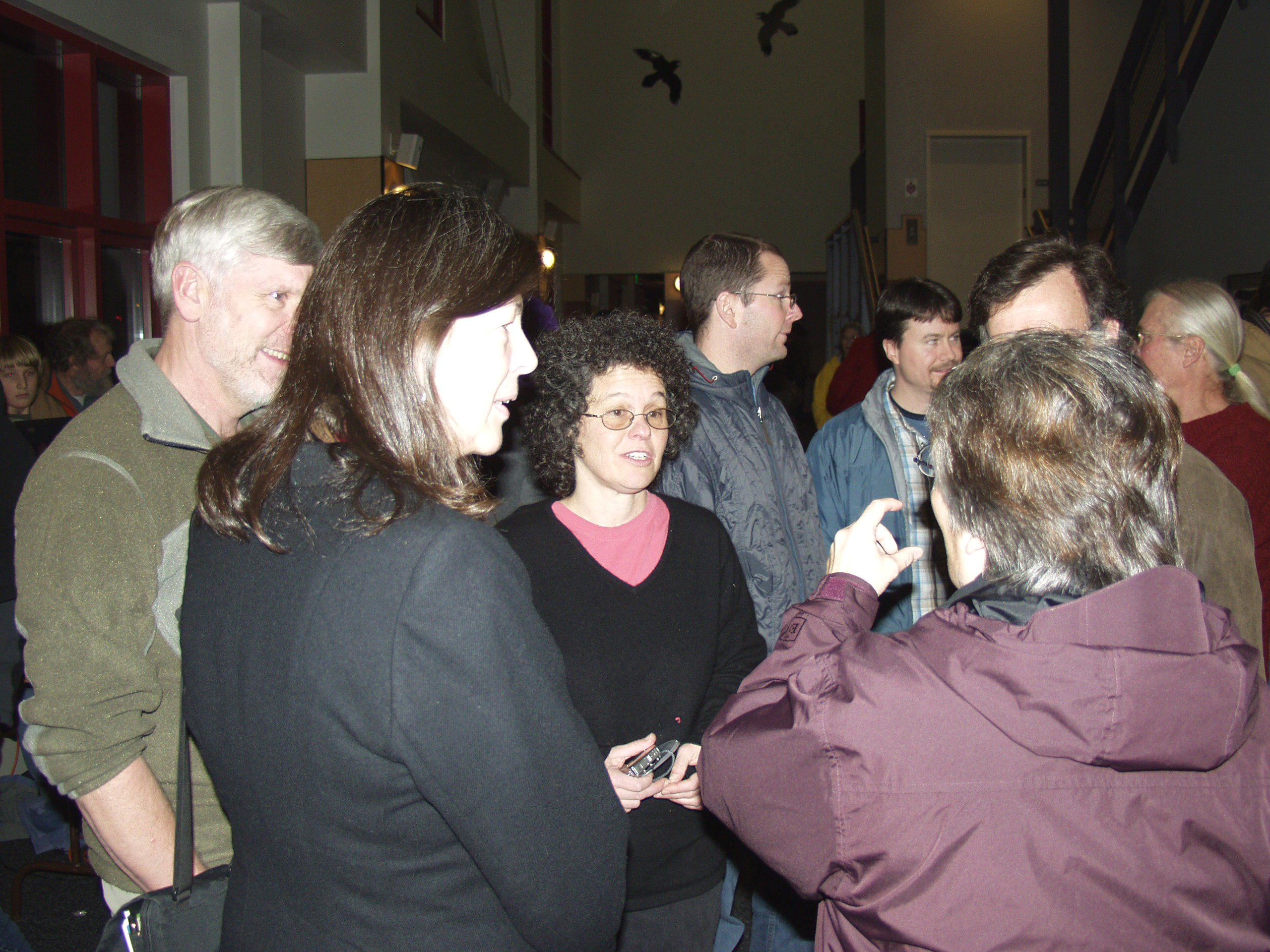
Sitka filmmaker Ellen Frankenstein, center, of Frankenstein Productions, greets fans after the Sitka premiere of her film "Eating Alaska" in October 2008

Sitka filmmaker Ellen Frankenstein, center, of Frankenstein Productions, greets fans after the Sitka premiere of her film "Eating Alaska" in October 2008

The Alaska Public Health Association (ALPHA) honored two programs with ties to the Sitka Local Foods Network during the Alaska Health Summit banquet on Dec. 9. Sitka filmmaker Ellen Frankenstein (and her Frankenstein Productions company) and the SouthEast Alaska Regional Health Consortium (SEARHC) Steps to a Healthier SE Alaska program both won the Alaska Community Service Award. According to ALPHA, the Alaska Community Service Award “recognizes an organization, business or group making a significant contribution to improving the health of Alaskans. It is ALPHA’s intent that nominees outside the public health tradition be considered for this award. A nominee does not need to be an ALPHA member.”

Frankenstein has produced several documentary films over the years, including “Eating Alaska,” which focuses on how we choose the food we eat. Eating Alaska debuted in the fall of 2008, and Frankenstein has taken it to film festivals all over the state and country. “Eating Alaska” received funding support from the SEARHC Steps to a Healthier SE Alaska program and other funders, plus technical support was provided by SEARHC health educators, physicians and dietitians. Some of Frankenstein’s other films include “No Loitering,” “Carved from the Heart,” “A Matter of Respect,” and “Miles from the Border.” She currently is working on a documentary film project with Haida weaver Dolores Churchill.

“As someone who fills in the occupation blank on forms with ‘filmmaker/artist,’ this award represents the fact that labels and lines don’t matter when it comes to social change and to making our lives healthier,” Frankenstein wrote from Austin, Texas, where she was attending a screening of Eating Alaska. “It not only validates my work, but represents your open-mindedness to the potential of working collaboratively and creatively with kids and adults, using art, media and storytelling to influence well-being and healthy communities.”

Frankenstein also sent this note to her e-mail group:

EATING ALASKA: ART AND HEALTH!
We just got the news the project has been awarded The Alaska Public Health Association’s 2009 Community Service Award for Health. In the process of making this film and in its use we’ve worked with nutritionists, health educators, medical and public health practitioners to add to the conversation about what we can do to make our homes, workplaces, schools and communities healthier and more sustainable. We appreciate the help everyone has given to the project to help us “contribute to improving the health of Alaskans” and others far beyond.

The SEARHC Steps to a Healthier SE Alaska program, which closes this month, was honored for the work it did over the life of its five-year grant (the national Steps to a Healthier US grant has ended, so that means all of the local grants that were part of the national grant also are ending). The Steps program funded 77 projects worth just over $1.1 million in 12 Southeast Alaska communities. Steps was one of the major funders and organizers of the Sitka Health Summit, which is where the Sitka Local Foods Network originated.

The Steps program’s goals were to increase opportunities for physical activity, improve nutrition and reduce the impact of tobacco in Southeast Alaska. The program also worked to reduce diabetes, obesity and asthma in Southeast communities. To accomplish its goals, Steps developed partnerships with schools, worksites, tribes and other community groups so they could change social norms and policies, and make evidence-based and culturally relevant interventions. In addition to the projects, Steps also hosted conferences and workshops to help programs learn how to work in collaboration.

The Steps program used the socio-ecological model, which emphasizes that an individual’s health status is influenced not only by his or her attitudes and practices, but also by personal relationships and community and societal factors. Nearly half of the 77 Steps grants (37) went to community projects, with the others geared toward schools and worksites. More than three-quarters of the grants (60) focused on improving nutrition and/or increasing physical activity. Together, the projects reached 128,000 people (with many people reached by multiple projects) in the communities of Angoon, Craig, Haines, Hoonah, Hydaburg, Juneau, Kake, Kasaan, Klawock, Klukwan, Sitka and Wrangell.

“Overall, the Steps initiative helped build capacity within communities, worksites and schools to work collaboratively, to plan evidence-based programs, and to monitor and evaluate program success,” said Grace Brooks, Steps Grant Manager. “Steps also contributed to an overall increased understanding of the importance of policy in supporting community, school and workplace health.”

In other local foods news from around the state this past week, the Alaska Dispatch ran an article about an indoors farmers market this winter at Anchorage’s Northway Mall.

Capital City Weekly featured a story by Carla Petersen about how the search for elusive cranberries is worth the challenge.

The National Oceanic and Atmospheric Administration (NOAA) announced last week that it is encouraging the use of catch shares to preserve the remaining stocks of halibut (the article features a photo from Sitka).

The Anchorage Daily News featured a story about Gov. Sean Parnell proposing to spend $1.3 million to research declining Yukon River salmon runs.

The Juneau Empire had a story about how an arts advocacy group in Juneau, Arts for Kids, has teamed up with Sitka-based Theobroma Chocolate Co. to offer SmART bars as a fundraiser for art scholarships for graduating seniors in Juneau.

The publicity poster for the movie Eating Alaska

• Sonja Koukel of the UAF Cooperative Extension Service writes about preserving Alaska wild berries

Dr. Sonja Koukel of the UAF Cooperative Extension Service's Juneau office displays some wild berry preserves

Dr. Sonja Koukel of the UAF Cooperative Extension Service's Juneau office displays some wild berry preserves

Preserving Alaska’s Wild Berries

By Dr. Sonja Koukel, PhD
Health, Home & Family Development Program
UAF Cooperative Extension Service, Juneau Office

_____

Is your freezer teeming with berries harvested last season? If so, now is the time to preserve them in jams, jellies, or syrups. As the winter days grow darker and shorter, preserving berries provides an emotional uplift as the activity brings with it memories of sunshine and relaxing hours spent in the beauty that is Alaska.

While freezing is an acceptable preservation method for berries, it is not the most economical and there is the risk of power outages that could compromise the storage time. Freezing is the least time consuming method of food storage than canning.  However, when foods are home canned, they enjoy a longer shelf life, can be stored at room temperature, and are not affected by power outages.

Berries are a high acid food; therefore jams and jellies can be processed quickly and easily using the boiling water canning method. In this method, filled jars are covered with boiling water and heated to an internal temperature of 212 degrees (F). At this temperature, bacteria, yeasts and molds that could be a health hazard or cause the food to spoil are destroyed. Additionally, the hot water inactivates enzymes that cause foods to spoil. The canning process removes air from the jar and a vacuum seal is formed when the product cools. The seal prevents air from getting back into the product, bringing with it microorganisms that could recontaminate the food.

As mentioned, removing the air from the jar is important as microorganisms will not thrive in an anaerobic environment. Presented with these facts, some individuals question the “inversion” method that is often included along with the directions found in purchased packages of pectin. According to this method, the filled, hot jars are turned upside-down after the rings have been screwed onto the tops. After five minutes, the jar is turned upright to cool, after which it is stored on pantry shelves. The problem with this method is that the air has not been exhausted from the jar, which can encourage mold growth. To ensure food quality and safety, all jellied products are processed in a boiling water canner.

Recipes for jams and jellies are available in packages of pectin, cook books, magazines, and food preservation guides. For Alaska berries, check out the UAF Cooperative Extension Service publication, “Collecting and Using Alaska’s Wild Berries and Other Wild Products.” A best-seller, this publication provides berry facts, storage and preservation methods, and recipes. Blueberries, currants, highbush cranberries, and red huckleberries can be found along with fireweed and wild roses. Over the holiday season, the “Berry Book” is offered at the reduced rate of $7. Contact your district office or place an order online at  http://www.uaf.edu/ces/pubs

If you have never preserved jams or jellies, or would like to review the process, visit the UAF Cooperative Extension Service website for fact sheets that can be downloaded free to your home computer: http://www.uaf.edu/ces/pubs/catalog/. Newly released educational modules can be viewed online: http://www.uaf.edu/ces/preservingalaskasbounty/index.html.

Alaska wild berry preserves are a great treat

Alaska wild berry preserves are a great treat

• Daily Sitka Sentinel features Running of the Boots preview, plus other news about local foods from around the region

Celebration_Logo-forever

Runners hit the trail during the 14th Annual Running of the Boots race on Sept. 27, 2008, in Sitka.

Runners hit the trail during the 14th Annual Running of the Boots race on Sept. 27, 2008, in Sitka.

The Friday issue of the Daily Sitka Sentinel featured an article and photo previewing the 15th annual Running of the Boots on Saturday (Page 9), which is a fundraiser for the Sitka Local Foods Network. Unfortunately, the announcement did not make onto the Sentinel’s Web site. The Running of the Boots starts at 11 a.m. on Saturday, Sept. 26, at the Crescent Harbor shelter (registration opens at 10 a.m.). The entry fee is $5 per person, or $20 per family, and there is a lip-synch contest after the race that costs $10 to enter. Click here for all the details about Running of the Boots.

In other news about local food around the region, the Juneau Empire ran several stories in its Outdoors section on Friday.

Click here to read the On The Trails column by Mary Willson, who writes about picking berries this late in the season.

Click here to read a brief item about some gardening presentations hosted by the Juneau Garden Club from 1-4:30 p.m. on Saturday, Sept. 26, at Centennial Hall in Juneau.

Click here to read a story by Kwame Diehl about a fishing trip in Juneau to catch some halibut.

Click here to read a story by Abby Lowell about where to catch silver (coho) salmon in the Juneau area.

Click here to read Anchorage Daily News photographer Fran Durner’s “Talk Dirt To Me” garden blog, who writes about growing organic produce and a potato dig in Palmer this weekend.

• Baranof Elementary students dig up potatoes and other local food stories in the news

Daily Sitka Sentinel screenshot of Baranof Elementary School student picking potatoes

Daily Sitka Sentinel screenshot of Baranof Elementary School student picking potatoes

Monday’s edition of the Daily Sitka Sentinel features a photo of Baranof Elementary School first-grader Keaton Kelling, 7, holding up a couple of potatoes he dug up from the Russian Bishop’s House garden on Thursday. First-grade students from Baranof Elementary harvested crops of peas, potatoes, carrots and other vegetables they planted last spring when they were kindergarten students. Most crops did well this year. (Sentinel Photo by James Poulson)

Monday's picking potatoes photo from the Daily Sitka Sentinel

Monday's picking potatoes photo from the Daily Sitka Sentinel

There were several other local food stories in Alaska newspapers over the weekend. Here’s a quick rundown.

Click here to read a story from Sunday’s Juneau Empire that features an Alaskanized version of a recipe for “salmon maritako,” a stew made by Spanish fishermen. The article is by Ginny Mahar, a chef at Rainbow Foods who also writes the Food-G blog. Many of the recipes Ginny posts on her blog include local, Southeast Alaska ingredients.

Click here to read an article from Sunday’s Fairbanks Daily News-Miner about a University of Alaska Fairbanks Cooperative Extension Service project at the Fairbanks Experimental Farm where they are using high-tunnel greenhouses to grow more apples and berries in northern climates. Click here to go directly to the UAF Cooperative Extension Service project page.

Click here to read Wednesday’s Anchorage Daily News gardening column by Jeff Lowenfels about now being the time to prepare plants for winter. Most of the column deals with flowers, but he does have some info about preparing tomato plants for the winter at the end of the column.

Click here to read an Associated Press story posted on the Anchorage Daily News Web site on Monday about how hoop houses (a low-cost type of greenhouse that uses plastic on a frame) are extending the growing season for urban farmers in northern climates. The version of the story on the ADN site didn’t have any photos of the hoop houses, so click here to see a version with photos.

Click here to read a transcript from National Public Radio of a story about two Walmart truckers who drive 2,600 miles one way from an Oregon warehouse to Alaska each week to deliver produce to Alaska stores. That’s a long way to transport a piece of lettuce or a carrot we can grow in Alaska, and that distance doesn’t include how far the produce had to travel to get to the Oregon warehouse before being trucked to Alaska. The story originated from the Alaska Public Radio Network, which has the story in streaming audio on its site.

Finally, click here for a humorous column from the July 2009 Field and Stream by Scott Bestul comparing the taste of Grade A Choice Holstein beef vs. wild venison when both are prepared the same way. This isn’t really a local story, but deer hunting season is coming soon in Southeast Alaska.

• Fifth and final Sitka Farmers Market of the summer takes place this Saturday, Sept. 12, at ANB Hall

SitkaFarmersMarketSign

The fifth and final Sitka Farmers Market of the 2009 season takes place from 10 a.m. to 2 p.m. this Saturday, Sept. 12, at the Alaska Native Brotherhood Hall (235 Katlian St.). Hope to see you there.

The Sitka Farmers Market features about 20-30 vendors each market who sell locally grown produce, locally harvested fish and locally made arts and crafts. The market features musicians inside, a jam tent outside, local cooks with ready-to-eat dishes and a fun activity for children. The Sitka Farmers Market is the only farmers market in Southeast Alaska authorized to accept WIC (Women, Infants, Children nutrition program) vouchers, which can be used by WIC-eligible families to purchase produce.

The non-profit Sitka Local Foods Network accepts donations of garden vegetables for its corner stand. Proceeds from the Sitka Local Foods Network booth go to future markets and to local food projects. Volunteers willing to help set up and take down the booths on Saturday before and after the market are greatly appreciated. We also appreciate volunteers who can help harvest produce from the St. Peter’s Fellowship Farm community garden (behind St. Peter’s By The Sea Episcopal Church) early on Saturday so it can be sold at the market.

Vendor booths are available for this Saturday’s market at $5 a table. Vendors are encouraged to be set up by 9:30 a.m., and all vendors selling processed food need to complete the state’s online food safety course before bringing the food (and completion certificate) to market, http://alaska.state.gegov.com/foodworker/.

For more information about this week’s market or to sign up as a volunteer, contact Linda Wilson at 747-3096 (nights) or lawilson87@hotmail.com.

Karen Christner sells plants and local food items on Aug. 29, 2009

Karen Christner sells plants and local food items on Aug. 29, 2009

Kelsey Jacobsen sells her art prints on Aug. 29, 2009

Kelsey Jacobsen sells her art prints on Aug. 29, 2009

• Juneau Empire features Table of the Day Award winners from fourth Sitka Farmers Market

Screenshot of Sunday's Juneau Empire feature on the Sitka Farmers Market table of the day award

Screenshot of Sunday's Juneau Empire feature on the Sitka Farmers Market table of the day award

Click here to see where the Juneau Empire on Sunday, Sept. 6, featured Table of the day Award winners Evening Star Grutter and Fabian Grutter of Eve’s Farm from the fourth Sitka Farmers Market of the summer on Aug. 29. By the way, this photo also appeared in the Friday, Sept. 4, edition of the Daily Sitka Sentinel (but there’s no online link).

Don’t forget that our final Sitka Farmers Market of the summer takes place from 10 a.m. to 2 p.m. on Saturday, Sept. 12, at Alaska Native Brotherhood Hall (235 Katlian St.). We look forward to seeing you at the market.

• Alaskans love their giant vegetables and other stories in the news

This is the time of year when Alaska has two state fairs in progress — in Palmer and in Fairbanks — and it’s also the time of year when people bring out the record-setting vegetables they’ve grown. This year is no exception, and there are several stories in the news about huge veggies grown in Alaska.

Click here to read an Anchorage Daily News story about the record-setting 125.9-pound cabbage grown by Steve Hubacek of Wasilla. This cabbage not only broke the Alaska state record, but also qualified for entry in the Guinness Book of World Records.

Click here to see an Anchorage Daily News video of the great pumpkin weigh-off between Dale Marshall of Anchorage and current state record-holder J.D. Megchelsen of Nikiski. Marshall’s winning pumpkin weighed 594 pounds.

Click here to read an article from the Fairbanks Daily News-Miner about monster vegetables entered in the Alaska Feed Co. vegetable contest at the Tanana Valley State Fair in Fairbanks.

Click here to read Anchorage Daily News photographer Fran Durner’s “Talk Dirt To Me” blog entry about colorful Alaska State Fair flowers.

Click here to read an article about invasive weeds by Anchorage Daily News garden columnist Jeff Lowenfels.

Click here to see a Capital City Weekly photo package from the second annual Juneau Farmers Market and Local Food Festival held last Saturday. Click here to see a larger photo gallery posted on the Capital City Weekly online site.

Click here to read a letter to the editor in the Fairbanks Daily News-Miner about Alaska’s bountiful harvest of berries this summer.

• To extend the lives of berries, give them a hot bath

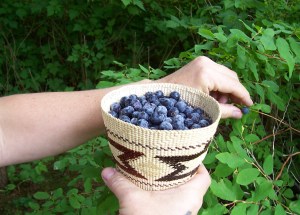
Picking blueberries in Sitka

Picking blueberries in Sitka

It happens to all berry fans. You pick a bunch of berries, or buy some in the store, and within a day or two you have mold growing on them. Yuck.

Earlier this week, the New York Times ran an article (free registration required to open link) about how to solve this problem. Give the berries a warm to hot bath of about 125 to 140 degrees (depending on the thickness of the berries skin). This process is called “thermotherapy,” and it seems to do the trick.

• Fourth Sitka Farmers Market of summer takes place on Saturday (Aug. 29)

SitkaFarmersMarketSign

The fourth Sitka Farmers Market of the summer takes place from 10 a.m. to 2 p.m. this Saturday (Aug. 29) at the Alaska Native Brotherhood Hall (235 Katlian St.).

The Sitka Farmers Market features about 20-30 vendors each market who sell locally grown produce, locally harvested fish and locally made arts and crafts. The market features musicians inside, a jam tent outside, local cooks with ready-to-eat dishes and a fun activity for children. The Sitka Farmers Market is the only farmers market in Southeast Alaska authorized to accept WIC vouchers, which can be used by WIC-eligible families to purchase produce.

The non-profit Sitka Local Foods Network accepts donations of garden vegetables for its corner stand. Proceeds from the Sitka Local Foods Network booth go to future markets and to local food projects.

Vendor booths are available for this Saturday’s market at $5 a table. Vendors are encouraged to be set up by 9:30 a.m., and all vendors selling processed food need to complete the state’s online food safety course before bringing the food (and completion certificate) to market, http://alaska.state.gegov.com/foodworker/.

For more information about this week’s market or to sign up as a volunteer, contact Linda Wilson at 747-3096 (nights) or lawilson87@hotmail.com.

By the way, if you haven’t already done so, then click the logo below to cast your vote for the Sitka Farmers Market in the “Love Your Farmers Market” contest, sponsored by Care2.com and LocalHarvest.org.

The contest will award the voters’ favorite farmers market the grand prize, which could go a long way toward helping the Sitka Farmers Market support local family farmers and gardeners provide Sitka with fresh, healthy, locally grown food. Voting opened on June 19 and closes on Sept. 17. In addition to the $5,000 grand prize for the top farmers market, there are several other prizes including weekly $250 prizes for a random market and some prizes for voters (tote bags, $50 prizes for top recruiters to spend at their market, etc.). We appreciate your vote.

love your farmers market contest - help your market win $5,000 - vote today!

• First Alaskans magazine highlights healthy berries

Screenshot of First Alaskans magazine article on healthy berries

Screenshot of First Alaskans magazine article on healthy berries

The August/September 2009 issue of First Alaskans magazine — a statewide magazine of Native business, culture and lifestyle — features an article called “Health Numbers of Berries: Antitoxidant calculations show which ones are best.” This article isn’t posted on the First Alaskans magazine Web site, so a scanned black-and-white PDF version is available by clicking here. The article also includes a recipe for Blueberry Buckle.

For more information about healthy berries, the Far North Science news service, written and edited by Doug O’Harra, about news, research and natural acts from Alaska, released a 2007 story called “Alaska Blueberries: Brain Food” (click here to see the article as published in The Alaska Report). The article includes a link to a 2006 report on extremely high antitoxidant rates in a variety of Alaska berries by University of Alaska Fairbanks researcher Patricia Holloway