• Take the $5 Per Week Alaska Grown Challenge and help improve Alaska’s food security

AlaskaGrown2_Graphic

AlaskaGrown3_GraphicThe Alaska Farm Bureau announces the $5 Per Week Alaska Grown Challenge – a statewide campaign to increase consumer spending on Alaska Grown products with the goal of strengthening local economies and increasing Alaska’s food security.

The Kenai Peninsula Chapter of the Alaska Farm Bureau, in partnership with the Kenai Soil and Water Conservation District and several other local organizations (including the Sitka Local Foods Network), launched the $5 Per Week Alaska Grown Challenge on May 5, in honor of Alaska Agriculture Day. Now the Challenge is going statewide with the help of social media, Alaska Farm Bureau chapters, and local food advocates across the state.

“We’d like to see the state investing in agriculture the way it invests in the resource extraction industries,” said Heidi Chay, district manager of the Kenai Soil and Water Conservation District. “After all, everyone needs to eat, and Alaska is at the end of a very long and vulnerable food chain. The signs of agriculture’s growth potential are all around us. … However, if the state can’t or won’t invest in agriculture the way it should, it’s on Alaskan consumers to take the lead. That’s why the District joined with local partners last month to launch the $5 Per Week Alaska Grown Challenge. We’re calling on Alaskans to invest a small part of their food dollars in the future of Alaskan agriculture, by spending $5 per week per person year-round. Farmers market season is a great time to start.”

Sitka residents will be able to participate in the Challenge by purchasing local veggies at the Sitka Farmers Markets this summer. The markets take place from 10 a.m. to 1 p.m. on alternate Saturdays, July 4, July 18, Aug. 1, Aug. 15, Aug. 29, and Sept. 12, at the Alaska Native Brotherhood Founders Hall, 235 Katlian St.

“I’m excited by the prospect of growing local producers pocketbooks with the $5 Per Week Alaska Grown Challenge in Sitka,” said Lisa Sadleir-Hart, Sitka Local Foods Network Board President. “It’s about supporting local foods and your neighbors as well as giving your body the benefit of fresh food. I plan on spending at least $5 a week on local food and doing it at the Sitka Farmers Market makes absolute sense.”

The Challenge calls on Alaskans to spend $5 per week per person on Alaska Grown products year-round. With farmers market season just around the corner, this is the perfect time for Alaskans to commit to investing a portion of their consumer dollars in the future of Alaskan agriculture.

graphic1Agriculture has played an important role in Alaska’s history. Today it is a growing industry with increasing numbers of farms producing food, forage and fiber for local consumers, as well as peonies and rhodiola for sale around the world.

Although farm production is rising, the economic potential of Alaskan farms is far from realized.  More than 95 percent of Alaska’s food is imported, which means that most of our food dollars are leaving the state.

Are Alaska farmers prepared to scale up to meet increasing demand? Yes. According to the Alaska Division of Agriculture, 67 percent of Alaska farmers surveyed indicate that they would increase production if they had more market options. Meanwhile, a warming climate and the rapid adoption of season-extension technologies such as high tunnels are creating more favorable conditions for agriculture.

The Alaska Farm Bureau is calling on every resident in Alaska to join the $5 Per Week Alaska Grown Challenge. If every Alaskan spent $5 per week on Alaska Grown products, year-round, it would have a $188 million dollar impact.

Why buy Alaska grown? Not only are you supporting Alaskans and boosting our economy, you’re also getting a fresher, tastier, more nutritious product. In a blind taste test, 82 percent of Alaskans surveyed could taste the difference between products grown here and those shipped up. Adults and kids say Alaska grown is sweeter, fresher-tasting and crispier.

The $5 Per Week Alaska Grown Challenge isn’t hard. The key, simply enough, is to eat what grows here. You can find a wide variety of produce and value-added products like bread, jam and pickles at farmers markets throughout the summer. Alaska Grown carrots, potatoes, cabbage, milk and barley products (flour, couscous and even pancake mix!) are available year-round in local grocery stores, joined by lettuce, tomatoes, cucumbers and broccoli during the growing season. Local farms produce meat, poultry, eggs and honey, which are available direct from the farm and at locally-owned retailers. Farmers grow more than just food; Alaska also has cut flower and natural fiber industries with products available. Local restaurants, breweries, distilleries and wineries purchase local products to use in their recipes. And don’t forget our local seafood products.

Not sure where to find Alaska Grown? Check out the $5 Per Week Alaska Grown Challenge website (http://www.alaskafb.org/challenge/) where you will find links to local and statewide resources including the Alaska Grown Source Book, a list of local producers and farmers markets. Be sure to ask for Alaska Grown when you are eating out as well.

Take the challenge: $5 per person per week. You’ll help local farmers, boost the local economy, increase Alaska’s food security, and eat better too. Sign up for the challenge here, http://www.alaskafb.org/challenge.

• Taste of Alaska white paper

• Celebrate local farmers and gardeners on Alaska Agriculture Day on Tuesday, May 5

04.22.15 Alaska Agriculture Day

Alaskans will celebrate Alaska Agriculture Day on Tuesday, May 5. On this day, Alaskans are encouraged to support local agriculture by seeking out and purchasing products produced in Alaska and educating youth about the vital role that agriculture plays in our economy.

Here are a few ideas from the Division of Agriculture on how to celebrate Alaska Agriculture Day:

  • Join the 34,278 people who “like” the Alaska Grown Facebook page at https://www.facebook.com/dnr.alaskagrown and learn about the exciting things Alaskans are producing around the state.
  • Contact your local agriculture groups/chapters (such as FFA, Farm Bureau, Agriculture in the Classroom etc.) to see if they are hosting an event in your area.
  • Sign up for a Community Supported Agriculture (CSA) program at a local farm.
  • Buy and incorporate Alaska Grown products into your meals.
  • If you are a farmer, consider asking a local school if you can visit a classroom to educate children about your operation and Alaska agriculture.
  • Visit and thank a local farmer in person. To find a farm near you, check the Alaska Grown Source Book at http://dnr.alaska.gov/ag/sourcebook/sourcebookindex2014.html.

In Sitka, you can celebrate Alaska Agriculture Day by starting a food garden (even a couple of containers on your deck can provide you with potatoes, carrots or greens). Teachers are encouraged to offer a lesson plan or two about the importance of agriculture in Alaska and in Sitka (also, click here to listen to a Sitka History Minute feature about the potato in Sitka from KCAW-Raven Radio).

During the growing season, please support the Sitka farmers and production gardeners listed in the Alaska Grown Source Book (chief contact in parentheses) — Anam Cara Family Garden (Lisa Sadleir-Hart), Blatchley Community Gardens (David Nuetzel), Down To Earth U-Pick Garden (Lori Adams), Finn Island Farm (Keith Nyitray), Sprucecot Gardens (Judy Johnstone), and St. Peter’s Fellowship Farm (Lisa Sadleir-Hart or Laura Schmidt). There also are a few Sitka farms and production gardens not listed in the Alaska Grown Source Book, such as Sea View Garden (Linda Wilson), The Sawmill Farm (Bobbi Daniels) and Welsh Family Forget-Me-Not Garden (Florence Welsh). Many of these farms and gardens will be vendors during the Sitka Farmers Markets, which start on July 4 this summer.

• Sitka Local Foods Network seeks host family for our summer Bulldogs on Baranof intern

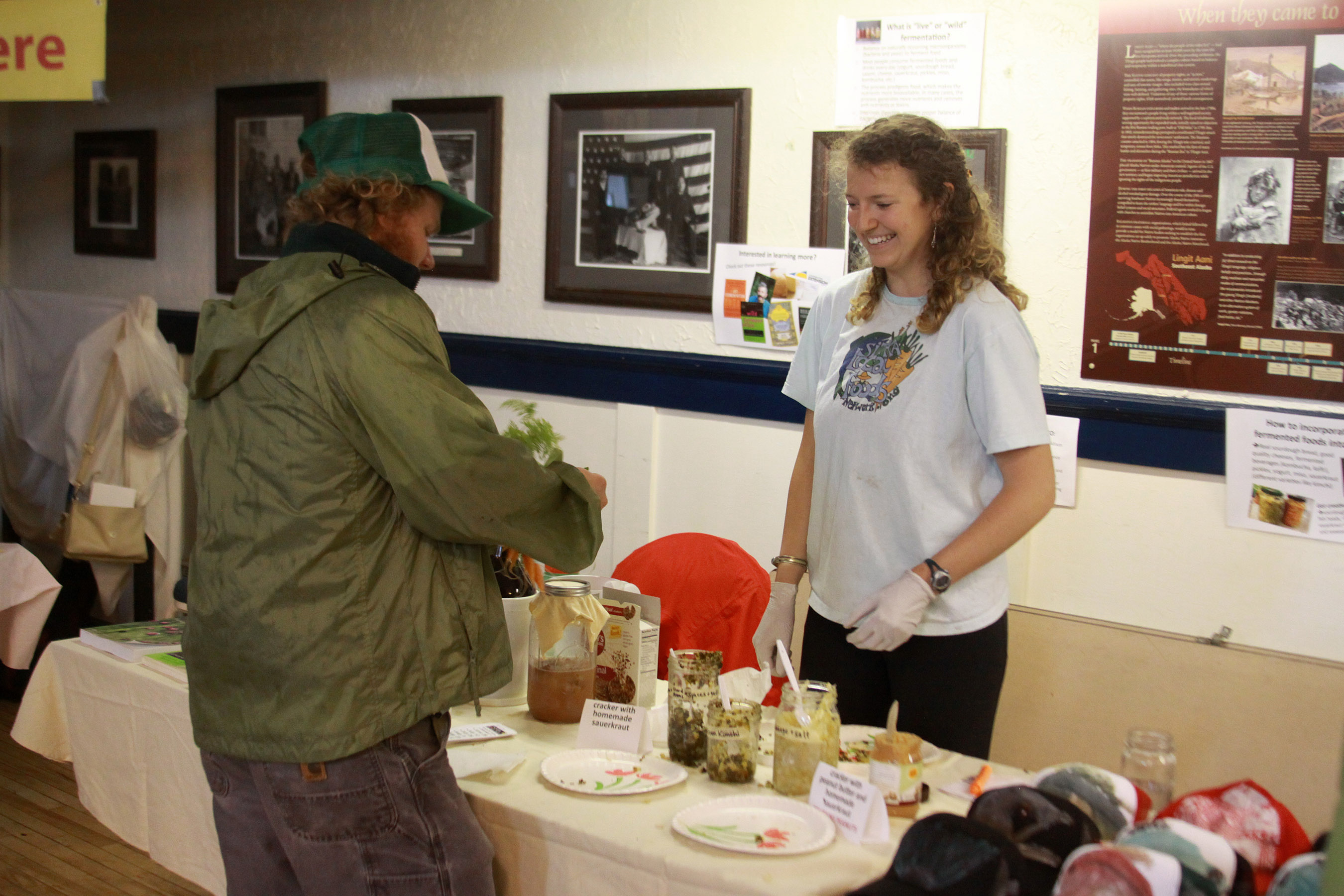
McLane Ritzel, the Sitka Local Foods Network's 2014 summer Bulldogs on Baranof intern, hosts a fermentation demonstration during the Sitka Farmers Market.

McLane Ritzel, the Sitka Local Foods Network’s 2014 summer Bulldogs on Baranof intern, hosts a fermentation demonstration during the Sitka Farmers Market.

Over the past couple of years, the Sitka Local Foods Network has hosted a Bulldogs on Baranof summer intern.

Our interns have been a big help during the summer, pitching in with the Sitka Farmers Market, St. Peter’s Fellowship Farm, lead education events, and even writing website articles about local farmers market vendors. The Bulldogs on Baranof program started out bringing Yale University students to Sitka for the summer to help out with local nonprofit organizations, but recently expanded to include students from other colleges.

Usually, a local couple hosts these interns for the 2-3 months they’re in Sitka for the summer. But this year, our usual hosts have family coming to town and won’t be able to offer housing.

We are hoping to find a host family for this summer who can host our intern (our first male intern this year) from mid-June through mid-August or early September. This involves providing a spare bedroom, some meals and kitchen access, and occasional rides around town (we try to provide a bike).

If you can help, please contact Sitka Local Foods Network board president Lisa Sadleir-Hart at 747-5985 or sitkalocalfoodsnetwork@gmail.com. Thanks.

• Gardening work party set for Earth Week at St. Peter’s Fellowship Farm

StPetersSignWithToDoListSign

A group of kids harvests garlic during an Aug. 12, 2011, work party at St. Peter's Fellowship Farm.

A group of kids harvests garlic during an Aug. 12, 2011, work party at St. Peter’s Fellowship Farm.

Are you interested in meeting other Sitka gardeners and learning about how to grow food in Sitka’s rainy climate? Then join us for an Earth Week garden party from 2-4 p.m. on Saturday, April 25, at St. Peter’s Fellowship Farm.

St. Peter’s Fellowship Farm is located behind St. Peter’s By The Sea Episcopal Church on Katlian Street (the brown church with the steeple above Crescent Harbor). It is a communal garden that grows food to be sold at the Sitka Farmers Markets, at a table when Chelan Produce is in town, and used for various school lunch and hunger programs around town. This year’s Sitka Farmers Markets are from 10 a.m. to 1 p.m. on Saturdays, July 4, July 18, Aug. 1, Aug. 15, Aug. 29, and Sept. 12, at the Alaska Native Brotherhood Founders Hall (235 Katlian St.).

“We will be putting starts in the ground, weeding and prepping beds for planting,” St. Peter’s Fellowship Farm lead gardener Laura Schmidt said.

The garden work parties are kid-friendly, so feel free to bring the munchkins to help.

To learn more, call St. Peter’s Fellowship Farm lead gardener Laura Schmidt at 738-7009 or 623-7003, or contact Sitka Local Foods Network board president Lisa Sadleir-Hart at 747-5985 or sitkalocalfoodsnetwork@gmail.com.

• Alaska Food Policy Council asks state legislators to return Farm to School program funds to the budget

FTSLogo

(Editor’s note: The following item is a letter to the editor from the Alaska Food Policy Council sent to several newspapers around Alaska regarding cuts to the Farm to School Program. One of the three signers to the letter is Sitka Local Foods Network Board President Lisa Sadleir-Hart, who also serves on the Alaska Food Policy Council governing board. To learn more about the Alaska Farm to School Program, check out the brochure below or contact Program Coordinator Johanna Herron at 907-761-3870 or johanna.herron@alaska.gov.)

As the legislature continues swinging its scythe at the state budget, one of the programs about to be felled is Farm to School. And in case you don’t have kids that can tell you firsthand the benefits of the program, or if you’re not an Alaska grower that finds a market in supplying school cafeterias with Alaska Grown produce, let us tell you what the Department of Natural Resources, Division of Agriculture, Farm to School Program does: It provides expertise and support for those working to increase the connection of students, teachers, and school food service providers with products grown and produced in Alaska. This connection most commonly happens in the school lunchroom or in a school garden.

Yet, in a state that prides itself in self-reliance, consider these striking facts:

  1. Alaskans spend $1.5 BILLION dollars on imported food each year.
  2. Only 5-10 percent of food consumed is produced or harvested in state, but great swaths of arable land remain uncultivated.
  3. About 15 percent of Alaska households are food insecure.
  4. Alaskans spend about $450 million dollars on treating diet-related medical conditions.
  5. We have a population that is largely disconnected from the food system – most kids can’t tell you what lies beneath the frilly green of a carrot top coming out of the soil.

These figures might sound gloomy, but they highlight the immense opportunity that we have to become healthier, wealthier, and more food secure. What if we spent that $1.5 billion on Alaska Grown products and kept that money in local economies? What if we produced more healthy foods in quantities that could meet the demands of our school cafeterias? What if we provided our children with the tools and knowledge necessary to make healthy food choices and maintain a healthy weight?

WhatIsAlaskaFarmToSchoolWe already have a key mechanism to achieving these goals – it’s the Farm to School Program. The Farm to School Program helps to prioritize getting locally produced, healthy goods into cafeterias; raise a generation of food leaders and smart consumers; and create a large, reliable market for increased in-state food production.

In three short years, the number of Alaska School Districts involved in Farm to School has grown from zero to 68 percent! There’s been an 11-percent increase in school gardens state-wide. One-hundred percent of the school districts are now serving at least one local food item in their meal programs and there’s still tremendous room for growth. In five years, the program has leveraged over $1 million dollars from partner agencies. This is just the shortlist of accomplishments.

All of this and more has been achieved with an annual budget of about $190,000. Talk about bang for your buck! If the legislature eliminates or cuts funding to the Farm to School Program, they aren’t cutting the fat out of the budget. They are cutting the carrots, the potatoes, the greens, and even the local fish out of your children’s lunches, and they’re cutting supports necessary to expand in-state production.

We implore the legislature not to eliminate or reduce the funding for our Farm to School Program. It is an incredibly efficient use of a small amount of funds that has proven itself over the past five years and is one of the shining pillars of a state food system that is becoming stronger, more sustainable, and more resilient. Don’t let the legislature undo our current progress, and don’t let it stand in the way of what more can be done.

Signed,

Liz Snyder, Victoria Briggs, and Lisa Sadleir-Hart
Present and Past Board Co-Chairs, Alaska Food Policy Council (AFPC)

• Alaska Farm to School Brochure

• It’s time to … mark your calendars and get ready for spring with these garden and livestock education classes

SLFNSpringGardenClassesFEB2015

Thinking about your garden, especially with our warm winter? It’s time to mark your calendars with several upcoming Spring 2015 garden classes offered by the Sitka Local Foods Network Education Committee.

GreensInHoopHouseStPetersThese free classes will cover a variety of topics, from gardening basics and choosing what veggies to grow in Sitka to learning about fruit tree pruning, composting and seed-starting. But wait, there’s more. We recently added classes on raising chickens and rabbits. Some of the classes have limited space and require preregistration, so sign up early.

We will be adding more classes to this list as they become available, so check the website for updates. We plan to post individual class announcements as we get closer to the actual class dates.

And now, here’s the list of classes so far:

  • Everyone Can Compost — 6:30-8 p.m., Wednesday, March 4, Sitka Unitarian Universalist Fellowship Hall (408 Marine Street, parking off Spruce Street), teacher Jennifer Carter, no preregistration required.
  • Fruit Tree Pruning Basics Workshop — 10 a.m., Saturday, March 7, St. Peter’s Fellowship Farm (behind St. Peter’s By The Sea Episcopal Church), teacher Jud Kirkness, no preregistration required.
  • Growing and Fertilizing Rhubarb — 11 a.m., Saturday, March 14, at the home of Perry Edwards/Michelle Putz (131 Shelikof), teachers Perry Edwards and Michelle Putz, no preregistration required.
  • Raising Chickens 101 — 6:30-8 p.m., Wednesday, March 25, Sitka Unitarian Universalist Fellowship Hall (408 Marine Street, parking off Spruce Street), teacher Bobbi Daniels, no preregistration required.
  • Starting Vegetable Seedlings Workshop — 6:30 p.m., Tuesday, March 31, Harrigan Centennial Hall, teacher Jennifer Carter, learn how to start seedlings and go home with a tray of planted seeds, class limited to 15 people, preregistration required.
  • Raising Rabbits 101 — 6:30-8 p.m., Wednesday, April 8, Sitka Unitarian Universalist Fellowship Hall (408 Marine Street, parking off Spruce Street), teacher Bobbi Daniels, no preregistration required.
  • Seed-Starting Basics — 2 p.m., Saturday, April 11, call for location (Michelle Putz, 747-2708), teacher Linda Wilson, class limited to 8-10 people, preregistration required.

We had 55 people attend our first two classes in January and February, kicking off a year-long series of education events on a variety of topics related to vegetable gardening, livestock, and food preservation in Sitka. Our garden mentor program classes also will be open to the public, once they start in April.

For more information or to sign up for classes requiring preregistration, contact Jennifer Carter at 747-0520 or 1-850-491-2666 (cell), or Michelle Putz at 747-2708.

• Spring 2015 garden education classes from the Sitka Local Foods Network (opens as PDF)

• Sitka Local Foods Network garden education classes for Winter/Spring 2015 get strong launch

SLFNSpringGardenClasses2

The first two classes from the Winter/Spring 2015 schedule of the Sitka Local Foods Network Education Committee are in the books and more than 50 students attended. The Vegetable Gardening 101 class on Jan. 27 had 33 people in attendance, while the Choosing What Veggies to Grow in Sitka class on Feb. 3 had 22 students.

These classes show Sitka has a hunger for learning more about how to grow and raise its own food, and we’re hoping to offer a wide variety of classes that help accomplish that goal. Our next class is Everyone Can Compost, taught by Jennifer Carter at 6:30-8 p.m. on Wednesday, March 4, at the Sitka Unitarian Universalist Fellowship Hall (408 Marine St., parking is off Spruce Street). Other upcoming classes include Fruit Tree Pruning Basics on March 7, Growing and Fertilizing Rhubarb on March 14, Starting Vegetable Seedlings on on March 31, and Seed-Starting Basics on April 11. The full schedule is attached, and the link above has more details.

We also are looking for more teachers who feel comfortable teaching an aspect of gardening they know well and is suited for Sitka. If you think you can teach a class, please contact Michelle Putz at 747-2708 or michelleputzfood@yahoo.com. Below are handouts related to the first two classes, plus a slideshow of photos from the first class.

• Winter/Spring 2015 garden education classes from the Sitka Local Foods Network (opens as PDF)

• Vegetable Gardening 101 Handout

• Vegetable Garden Varieties for Southeast Alaska (from UAF Cooperative Extension Service)

• Vegetable Gardening in Southeast Alaska (from UAF Cooperative Extension Service)

• Raised-Bed Gardening in Alaska (from UAF Cooperative Extension Service)

This slideshow requires JavaScript.

• Sitka Local Foods Network seeks host family for our summer Bulldogs on Baranof intern

McLane Ritzel, the Sitka Local Foods Network's 2014 summer Bulldogs on Baranof intern, hosts a fermentation demonstration during the Sitka Farmers Market.

McLane Ritzel, the Sitka Local Foods Network’s 2014 summer Bulldogs on Baranof intern, hosts a fermentation demonstration during the Sitka Farmers Market.

Over the past couple of years, the Sitka Local Foods Network has hosted a Bulldogs on Baranof summer intern.

Our interns have been a big help during the summer, pitching in with the Sitka Farmers Market, St. Peter’s Fellowship Farm, lead education events, and even writing website articles about local farmers market vendors. The Bulldogs on Baranof program started out bringing Yale University students to Sitka for the summer to help out with local nonprofit organizations, but recently expanded to include students from other colleges.

Usually, a local couple hosts these interns for the 2-3 months they’re in Sitka for the summer. But this year, our usual hosts have family coming to town and won’t be able to offer housing.

We are hoping to find a host family for this summer who can host our intern from mid-June through mid-August or early September. This involves providing a spare bedroom, some meals and kitchen access, and occasional rides around town (we try to provide a bike).

If you can help, please contact Sitka Local Foods Network board president Lisa Sadleir-Hart at 747-5985 or sitkalocalfoodsnetwork@gmail.com. Thanks.

• Sitka Local Foods Network elects officers, installs new board members at January meeting

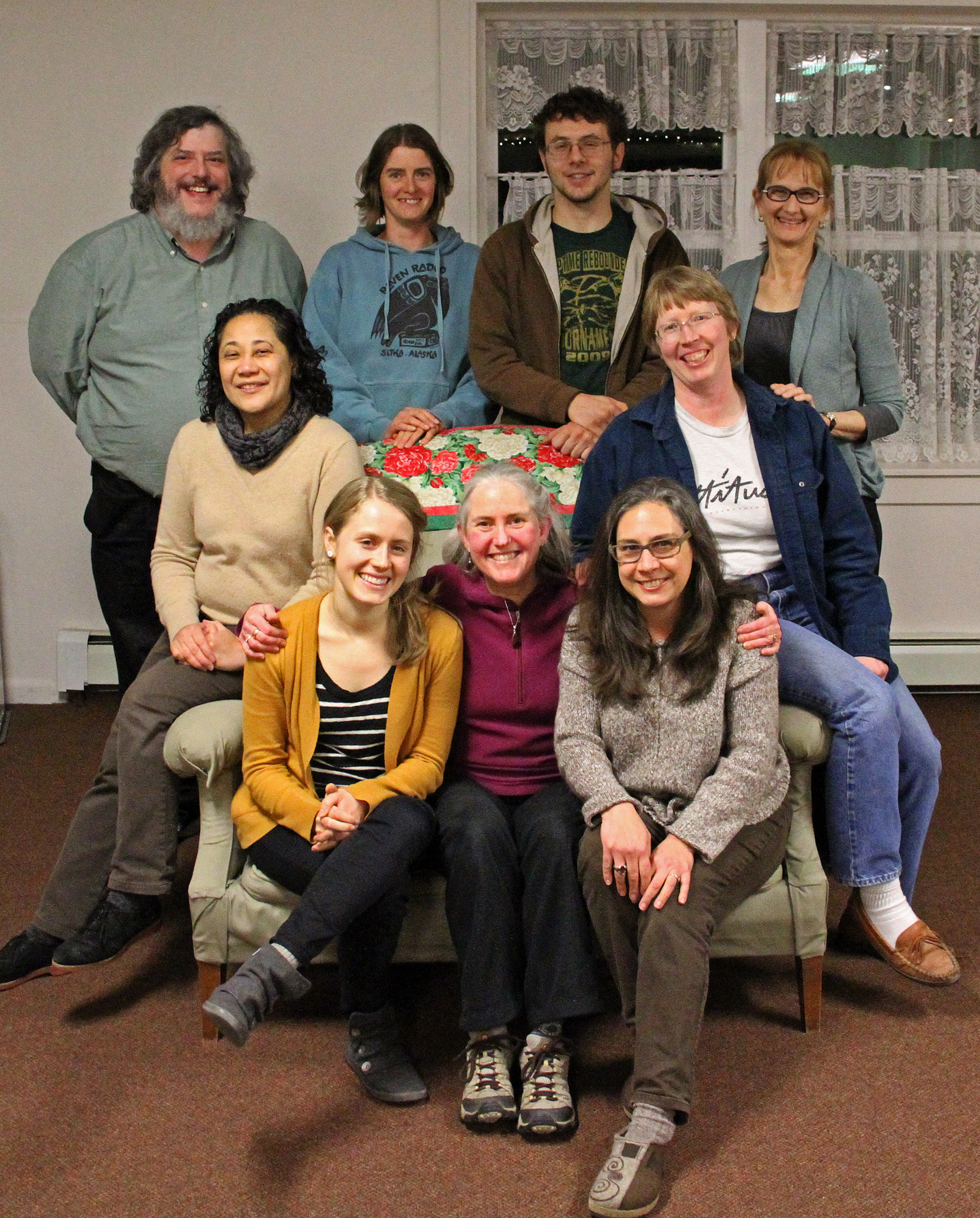
The 2015 Sitka Local Foods Network board of directors. Front row, from left, Alli Gabbert, Lisa Sadleir-Hart, and Jennifer Carter. Middle row, from left, Maybelle Filler and Michelle Putz. Back row, from left, Charles Bingham, Brandie Chastain, Matthew Jackson, and Beth Kindig.

The 2015 Sitka Local Foods Network board of directors. Front row, from left, Alli Gabbert, Lisa Sadleir-Hart, and Jennifer Carter. Middle row, from left, Maybelle Filler and Michelle Putz. Back row, from left, Charles Bingham, Brandie Cheatham, Matthew Jackson, and Beth Kindig.

The Sitka Local Foods Network elected officers and welcomed three new board members at its monthly board meeting on Jan. 12.

President Lisa Sadleir-Hart and treasurer Maybelle Filler retained their elected offices, while Matthew “Jackson” Jackson was elected vice president and Alli Gabbert was elected secretary. Charles Bingham remains communications director.

In addition, Alli Gabbert, Jennifer Carter and Brandie Cheatham officially became board members in January (at our annual board retreat on Jan. 10). They were selected to join the board in December, but weren’t able to vote until January.

The 2015 board members are (terms end in December):

  • Lisa Sadleir-Hart, president, board term ends 2015
  • Matthew Jackson, vice president, board term ends 2016
  • Alli Gabbert, secretary, board term ends 2015
  • Maybelle Filler, treasurer, board term ends 2015
  • Charles Bingham, communications director, board term ends 2017
  • Jennifer Carter, board term ends 2017
  • Michelle Putz, board term ends 2016
  • Beth Kindig, board term ends 2016
  • Brandie Cheatham, board term ends 2017

The Sitka Local Foods Network meets from 6:30-8:30 p.m. on the second Monday of each month, with a 30-minute budget meeting at 6 p.m., at the See House behind St. Peter’s By The Sea Episcopal Church (usually in the upstairs classroom). However, in February we will meet on the third Monday (Feb. 16) to avoid a couple of board member conflicts.

Our board usually doesn’t meet during the summer (June, July, August), when the Sitka Farmers Market is in session and most people are gardening or fishing. Meeting times are subject to change so watch the website calendar for schedule updates. Meetings are open to the public, and new volunteers are welcome. We usually select new board members in December and elect officers in January.

• It’s time to … mark your calendars and get ready for spring with these garden education classes (UPDATED)


Winter blahs got you down? Thinking about your garden, especially with our warm winter? It’s time to mark your calendars with several upcoming Spring 2015 garden classes offered by the Sitka Local Foods Network Education Committee.

GreensInHoopHouseStPetersThese free classes will cover a variety of topics, from gardening basics and choosing what veggies to grow in Sitka to learning about fruit tree pruning, composting and seed-starting. Some of the classes have limited space and require preregistration, so sign up early. Also, we may be adding more classes to this list as they become available, so check the website for updates. We plan to post individual class announcements as we get closer to the actual class dates. (NOTE: The list of classes was updated on Jan. 21.)

And now, here’s the list of classes so far:

  • Vegetable Gardening 101 — 6:30-8 p.m., Tuesday, Jan. 27, Harrigan Centennial Hall, teachers Michelle Putz and Linda Wilson, class tailored for beginners, no preregistration required.
  • Choosing What Veggies to Grow in Sitka — 6:30-8 p.m., Tuesday, Feb. 3, Harrigan Centennial Hall, teachers Lisa Sadleir-Hart and Maybelle Filler, class tailored for beginners, no preregistration required.
  • Everyone Can Compost — 6:30-8 p.m., Wednesday, March 4, Sitka Unitarian Universalist Fellowship Hall (408 Marine Street, parking off Spruce Street), teacher Jennifer Carter, no preregistration required.
  • Fruit Tree Pruning Basics Workshop — 10 a.m., Saturday, March 7, St. Peter’s Fellowship Farm (behind St. Peter’s By The Sea Episcopal Church), teacher Jud Kirkness, no preregistration required.
  • Growing and Fertilizing Rhubarb — 11 a.m., Saturday, March 14, at the home of Perry Edwards/Michelle Putz (131 Shelikof), teachers Perry Edwards and Michelle Putz, no preregistration required.
  • Starting Vegetable Seedlings Workshop — 6:30 p.m., Tuesday, March 31, Harrigan Centennial Hall, teacher Jennifer Carter, learn how to start seedlings and go home with a tray of planted seeds, class limited to 15 people, preregistration required.
  • Seed-Starting Basics — 2 p.m., Saturday, April 11, call for location (Michelle Putz, 747-2708), teacher Linda Wilson, class limited to 8-10 people, preregistration required.

These classes will kick off a year-long series of education classes on a variety of topics related to vegetable gardening in Sitka. Our garden mentor program classes also will be open to the public. For more information or to sign up for classes requiring preregistration, contact Michelle Putz at 747-2708.

In addition, the University of Alaska Fairbanks Cooperative Extension Service teaches several classes that can be accessed from Sitka. The UAF Cooperative Extension Service is hosting a five-session class on Feb. 3, 5, 10, 12, and 17 on starting and operating a specialty food business in Alaska, and it will host an online Alaska Master Gardener course from Feb. 17 through May 18. These also will be announced on our website when they become available.

• Winter/Spring 2015 garden education classes from the Sitka Local Foods Network (opens as PDF)