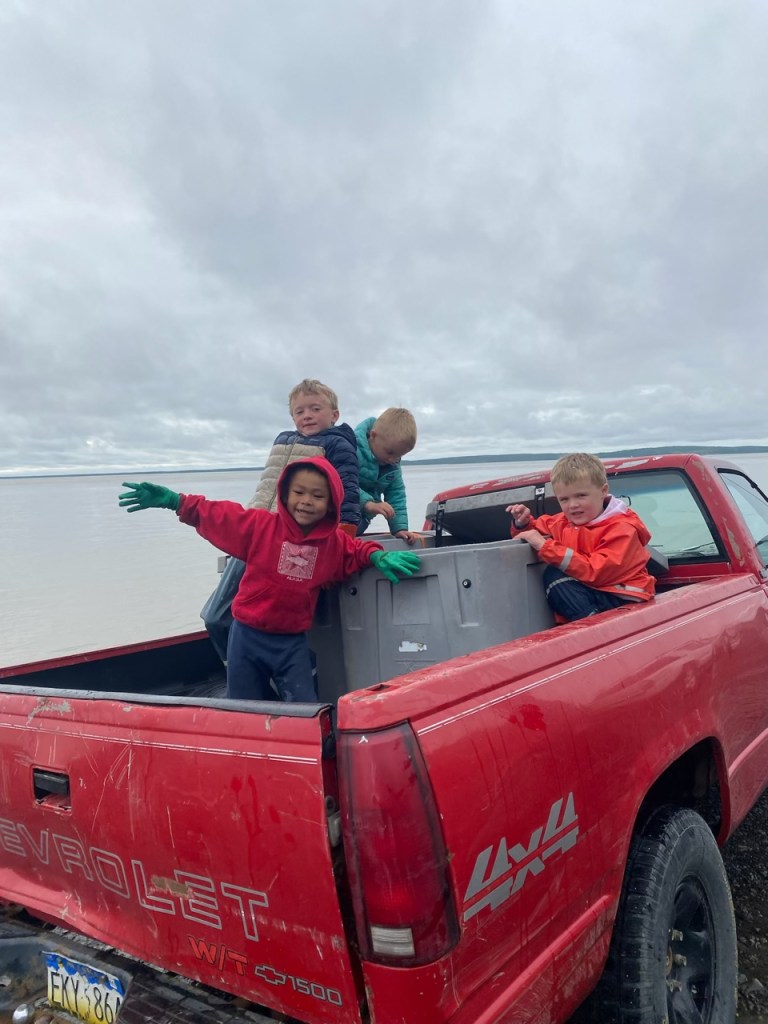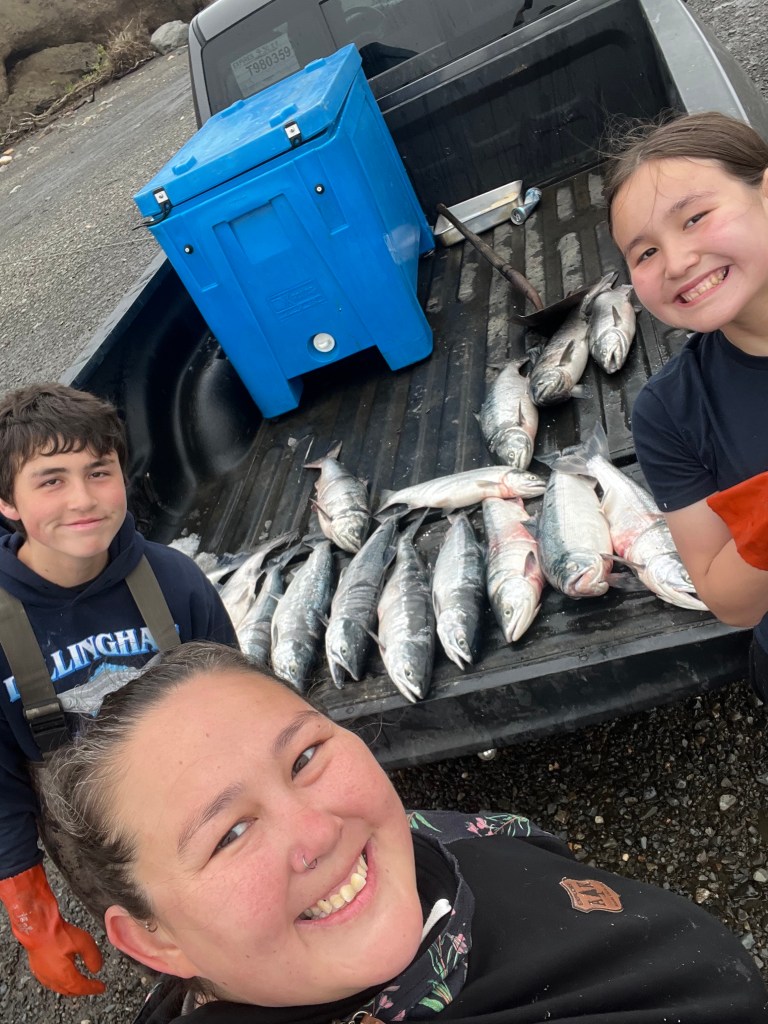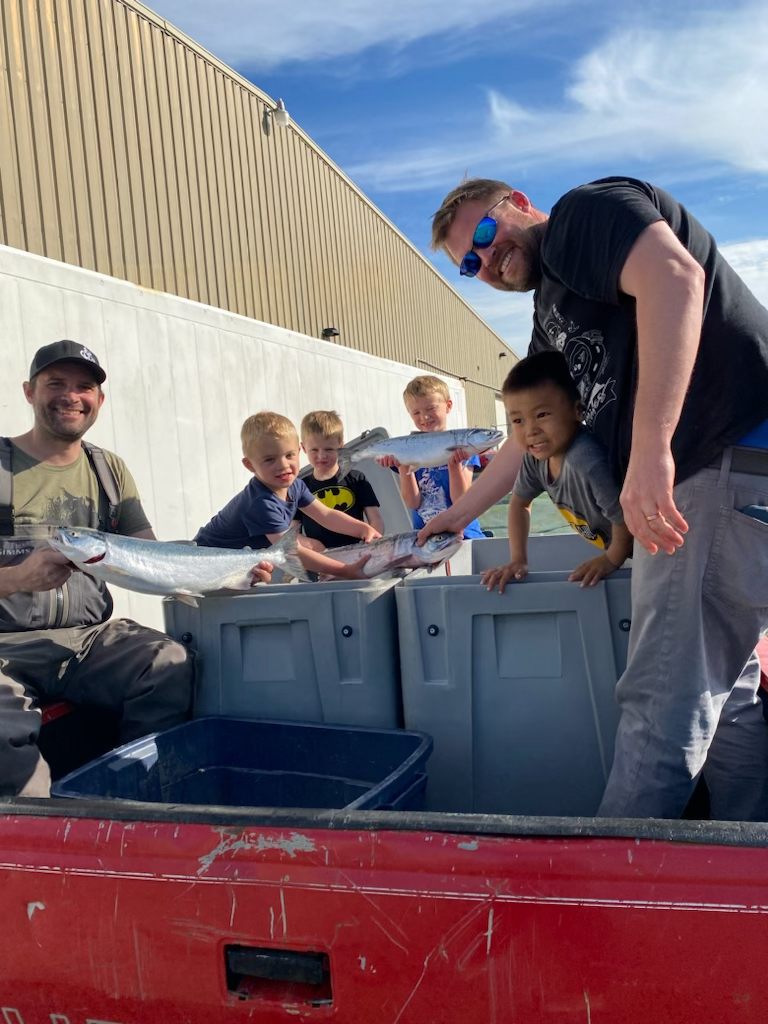
Sitka-based fishing group, Bristol Bay community members collect more than 5,000 pounds of donated salmon for Yukon and Chignik communities 

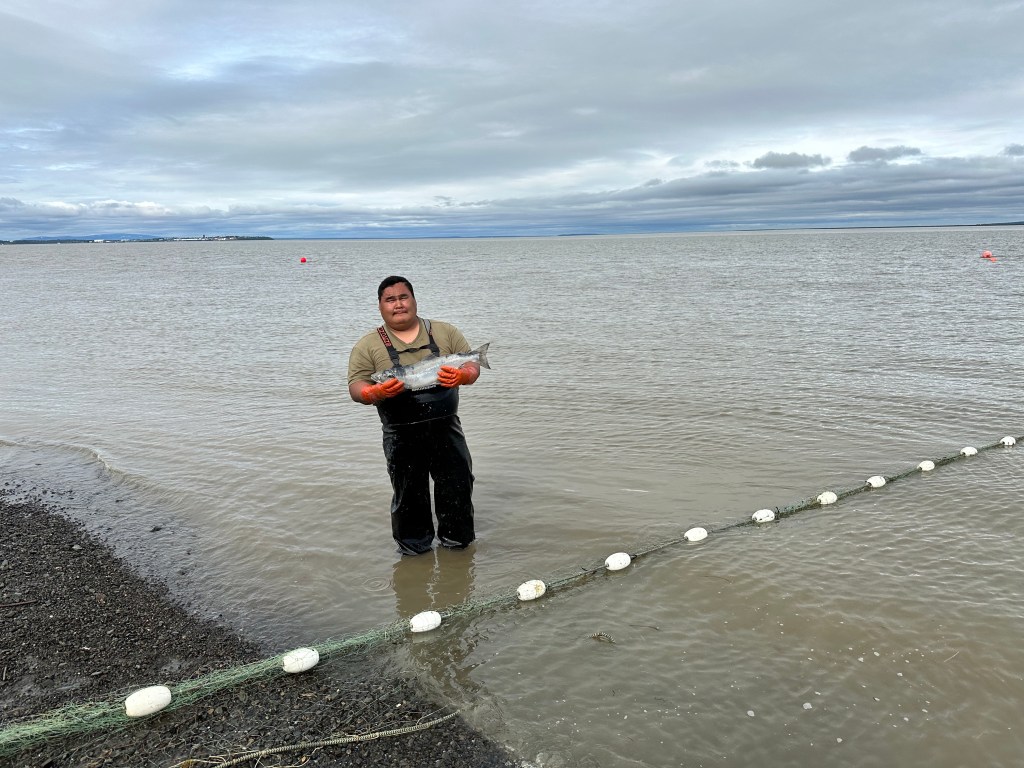
Cody Larson of Bristol Bay Native Association and Sitka’s Ben Blakey of Northline Seafoods show some of the donated salmon to Dillingham children. (Photo courtesy of Alaska Longline Fishermen’s Association (ALFA).

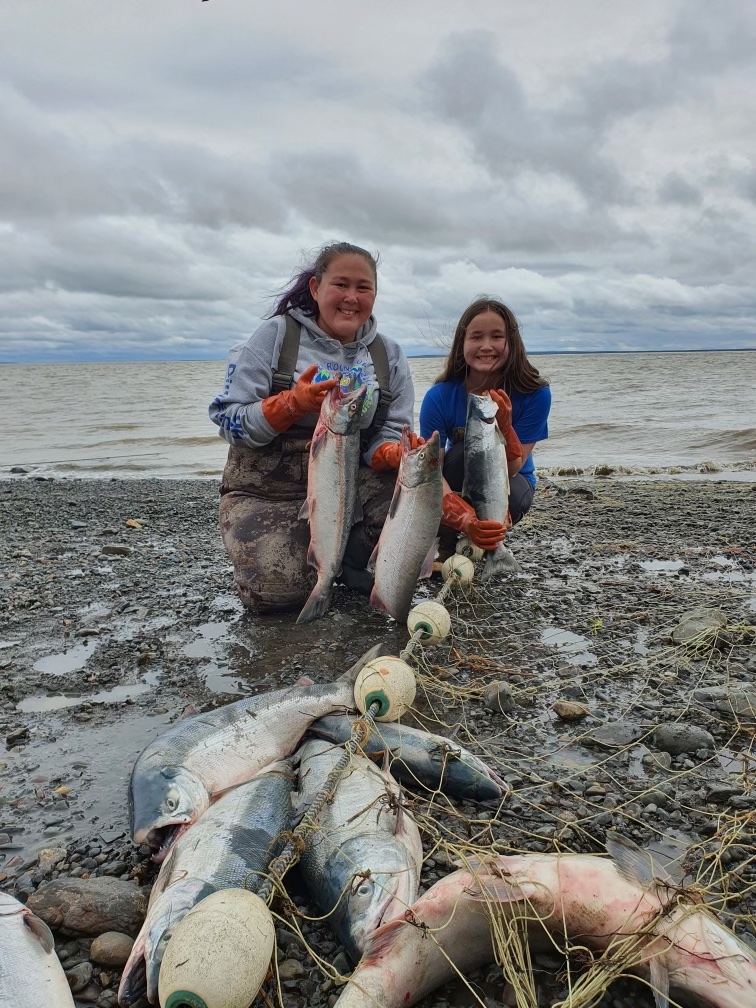
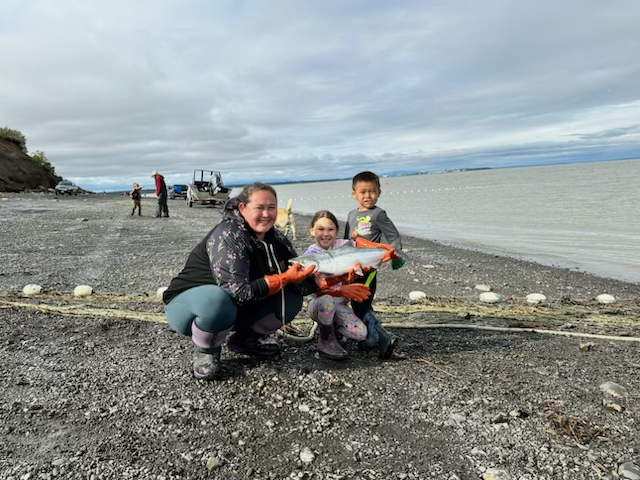
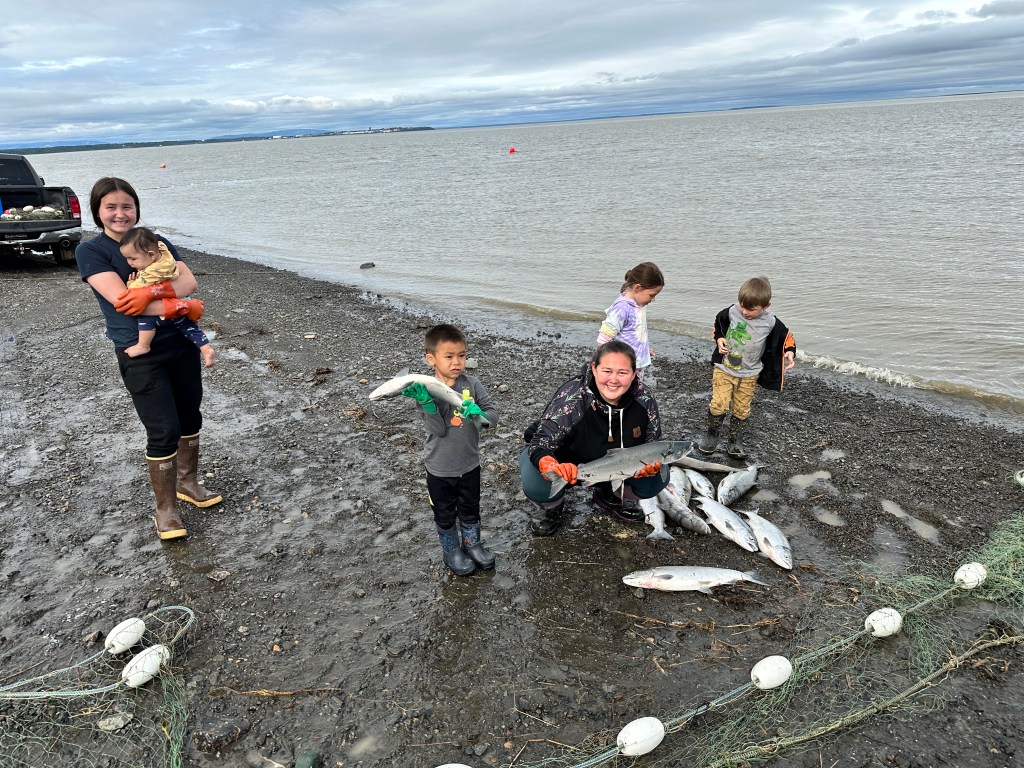
DILLINGHAM, Alaska — In June, Dillingham-area residents harvested and collected more than 5,000 pounds of subsistence-caught sockeye salmon that will be distributed to families in the Yukon and Chignik river areas unable to harvest their own local salmon due to low salmon returns.

The salmon donation was coordinated through the Sitka-based Alaska Longline Fishermen’s Association’s (ALFA) Seafood Distribution Network with the help of local partners, including Northline Seafoods, Bristol Bay Native Association, Grant Aviation, and Bristol Bay Native Corporation.

In June, before Bristol Bay’s commercial fishery opened, local Dillingham residents helped ALFA collect subsistence salmon from families who were fishing at Dillingham’s Kanakanak Beach. Sitka-based Northline Seafoods — a new seafood processor in Bristol Bay that specializes in processing and freezing whole fish — helped oversee the cleaning and freezing of the salmon. The salmon was frozen whole in response to requests from Yukon and Chignik communities for whole fish so that they could fully use the salmon and practice their food traditions. In addition, each salmon was labeled with the name of the family that donated it.

In the coming weeks, Grant Aviation will help fly the salmon to Yukon and Chignik villages, including Alakanuk, Pitkas Point, Saint Mary’s, Chignik Lagoon, and Chignik Bay. The fish will also be used by the Yukon River Drainage Fishermen’s Association Educational Exchange program where several youth will travel to communities on the Yukon and share their experiences around salmon.

“This salmon donation project was a bit of an experiment for us; we didn’t know how many people would be willing to contribute a portion of their subsistence harvest for families that they didn’t know. When people heard that we were collecting salmon for the Yukon and Chigniks, they jumped at the chance to contribute and help other Alaskans — especially those who depend on subsistence for their diet and culture. We were thrilled by the positive responses and were able to collect our target of 5,000 pounds of salmon much quicker than anticipated,” said Natalie Sattler, program director for the Alaska Longline Fishermen’s Association. “We couldn’t have done it without the generous support of our partners, especially Bristol Bay Native Association, Grant Aviation, and Northline Seafoods.”

“Our company was first approached in 2020 to help address the growing shortage of salmon in Alaska’s rural communities and have been involved in the Seafood Distribution Network ever since. Making sure local Alaskans have access to high quality seafood is incredibly important to us and we are committed to supporting the Network’s ongoing efforts to build the infrastructure and distribution systems needed to improve the resiliency and sustainability of Alaska’s local food system,” CEO of Northline Seafoods Ben Blakey said. 

“At a time when so many communities are struggling with low salmon returns and facing another summer of empty smokehouses and freezers, I am filled with hope to see local, grassroots efforts like this salmon donation project in Dillingham. This project not only embodies what subsistence is all about, but it is also an example of Alaskans at their best: sharing and taking care of each other during times of need. Low salmon abundance is an issue that needs to be addressed at every level, from the federal government down to individual communities, and efforts like this are an important piece of that larger goal, ” Alaska U.S. Rep. Mary Peltola said.

The Seafood Distribution Network emerged through ALFA’s Seafood Donation Program, which was started in March 2020 in response to COVID-19 and its impacts on local fisheries and families. Since then, ALFA’s Seafood Donation Program has provided more than 645,000 donated Alaska seafood meals to families experiencing food insecurity in Alaska and the Pacific Northwest.

With funding from the USDA, ALFA is currently undergoing a Regional Food System Partnership planning process in which it will develop a more long-term plan for the Seafood Distribution Network and future seafood donation efforts.

• Seabank, the 2022 annual report of the Alaska Sustainable Fisheries Trust

Volunteers needed to help us get St. Peter’s Fellowship Farm communal garden ready

A to-do list of chores at the St. Peter’s Fellowship Farm communal garden

The Sitka Local Foods Network is creating a pool of volunteers to help us get the St. Peter’s Fellowship Farm communal garden and our satellite gardens ready to grow food for the summer. Volunteers are encouraged to attend a gardening work party from 2:30-4 p.m. on Saturday, May 5, at the garden.

St. Peter’s Fellowship Farm is located behind St. Peter’s By The Sea Episcopal Church (611 Lincoln St.). This communal garden is where we grow most of the produce sold at the Sitka Farmers Markets during the summer. St. Peter’s Fellowship Farm is recognized by the U.S. Department of Agriculture’s The People’s Garden program. The People’s Garden works across USDA and with partners to start and sustain school gardens, community gardens, urban farms, and small-scale agriculture projects in rural and urban areas with the mission of growing healthy food, people and communities.

If you want to help us prepare the garden for planting, amend soil, clean up the garden, and plant seeds, contact St. Peter’s Fellowship Farm lead gardener Laura Schmidt at 738-7009 to let her know about your availability. During the spring, Laura usually is working in the garden most weekdays, and she’s looking for a couple of assistants each day instead of hosting regular work parties on the weekends.

Looking for volunteers to help us get St. Peter’s Fellowship Farm communal garden ready

The Sitka Local Foods Network is creating a pool of volunteers to help us get the St. Peter’s Fellowship Farm communal garden and our satellite gardens ready to grow food for the summer.

St. Peter’s Fellowship Farm is located behind St. Peter’s By The Sea Episcopal Church (611 Lincoln St.). This communal garden is where we grow most of the produce sold at the Sitka Farmers Markets during the summer. St. Peter’s Fellowship Farm is recognized by the U.S. Department of Agriculture’s The People’s Garden program. The People’s Garden works across USDA and with partners to start and sustain school gardens, community gardens, urban farms, and small-scale agriculture projects in rural and urban areas with the mission of growing healthy food, people and communities.

If you want to help us prepare the garden for planting, amend soil, clean up the garden, and plant seeds, contact St. Peter’s Fellowship Farm lead gardener Laura Schmidt at 738-7009 to let her know about your availability. During the spring, Laura usually is working in the garden most week days, and she’s looking for a couple of assistants each day instead of hosting a big work party on the weekends.

• Sitka added as site for UAF Cooperative Extension Service agriculture grant-writing seminar

GrantWritingLocalFood

The University of Alaska Fairbanks Cooperative Extension Service will offer a free grant-writing workshop from 1-5 p.m. on Monday, March 30, to help Alaskans apply for federal grants relating to local food production and farmers markets.

Palmer Extension agent Steve Brown will teach the free workshop from 1 to 5 p.m. in Palmer and by videoconference in Kenai, Homer, Nome and Fairbanks. At the request of Sitka residents, on Wednesday, March 25, Sitka was added as an additional site for the videoconference.

The 2014 farm bill authorized $30 million annually for grants to be awarded nationally through the U.S. Department of Agriculture’s Farmers Market and Local Food Promotion Program. The program awards competitive grants to develop new market opportunities for farm and ranch operations serving local and regional markets. According to USDA, farmers market grants will support farmers markets and other producer-to-consumer activities, while the local food promotion grants will support enterprises that aggregate, store, distribute and process local and regional food.

The workshop will be offered at the Matanuska Experiment Farm in Palmer, the Kenai Community Library, Kenai Peninsula College in Homer, the district Extension office in Fairbanks at 724 27th Ave. and the Northwest Campus, B West, in Nome. The Sitka location for the workshop is Room 106 of the University of Alaska Southeast Sitka Campus.

The preferred registration deadline is Friday, March 27, but since Sitka was added as a site so close to the presentation walk-in participants will be allowed at this location. For more information or to register, call the Palmer Extension office at 907-745-3360. Sitka residents should pre-register by contacting Jasmine Shaw at 747-9440 or jdshaw2@alaska.gov.

• New high tunnels at Judy Johnstone’s Sprucecot Garden get media attention

Sitka Local Foods Network President Kerry MacLane, left, and Sprucecot Garden Owner Judy Johnstone pose in front of one of the high tunnels recently erected on Judy's land on Peterson Street. (Photo Courtesy of KCAW-Raven Radio)

Sitka Local Foods Network President Kerry MacLane, left, and Sprucecot Garden Owner Judy Johnstone pose in front of one of the high tunnels recently erected on Judy’s land on Peterson Street. (Photo Courtesy of KCAW-Raven Radio)

Longtime Sitka gardener Judy Johnstone will be able to extend the growing season at her Sprucecot Garden on Peterson Street after a crew erected two new high tunnels on her land.

The high tunnels, which basically are temporary greenhouses with a large frame holding a transparent plastic cover and without a built-in power supply, already have raised the temperatures inside by about 15-20 degrees over the low-50s we’ve had in Sitka so far this summer. They will enable Judy to start her plants earlier in the spring and keep producing food later into the fall.

The high tunnels were funded through a cost-sharing program run by the USDA National Resources Conservation Service, which is accepting applications for new high tunnel projects through June 15.

These are the first high tunnels to go up in Sitka, but there have been several built in other parts of the state (the lower Kenai Peninsula near Homer has about 90 of them). Since these are the first high tunnels in Sitka, they’ve received lots of coverage in the local media. The Daily Sitka Sentinel featured an article on Page 1 of its Friday, June 8, 2012, edition (password required), and KCAW-Raven Radio featured Judy and Sitka Local Foods Network President Kerry MacLane in its Monday, June 11, 2012, Morning Edition show interview and in a story on its Tuesday, June 12, 2012, newscasts.

• Sitka gardeners extend growing seasons with government pilot study on high tunnels

Several Sitka gardeners will be extending their growing seasons this year thanks to a government soil conservation program designed to study the effectiveness of “high tunnels” or “hoop houses” when it comes to growing more local food in a conservation-minded way. To qualify you need to have grown $1,000 worth of produce for two of the past five years, even if just for your family and friends.

The Sitka participants will be constructing the greenhouse-like structures this year, which will enable them to grow more local food. For participating in the study, the government will reimburse them for the cost of the materials. This project is part of a nationwide effort to improve our community food security called “Know Your Farmer, Know Your Food.” As part of the project, the U.S. Department of Agriculture will conduct a three-year, 38-state study on high tunnels to see if they help reduce pesticide use, extend the growing season, keep vital nutrients in the soil, etc. This YouTube video has more information about the pilot study and shows several smaller family garden-sized high tunnels being placed in the White House garden.

“There is great potential for high tunnels to expand the availability of healthy, locally-grown crops — a win for producers and consumers,” U.S. Department of Agriculture Deputy Secretary Kathleen Merrigan said. “This pilot project is going to give us real-world information that farmers all over the country can use to decide if they want to add high tunnels to their operations. We know that these fixtures can help producers extend their growing season and hopefully add to their bottom line.”

If you meet the requirement, feel free to participate by contacting our local USDA Natural Resources Conservation Service (NRCS) agent for Southeast Alaska, Samia Savell in Juneau at 586-7220, or go to http://www.nrcs.usda.gov/. NRCS will fund one high tunnel per qualifying farm, and a high tunnel can cover as much as 5 percent of one acre.

High tunnels have been used successfully in Alaska, including up in Fairbanks where temperatures drop to minus-50. Last September, the University of Alaska Fairbanks School of Natural Resources and Agricultural Sciences reported on a two-year project where 39 varieties of apples had been grown in high tunnels at the Fairbanks Experiment Farm. The UAF Cooperative Extension Service also reported on the project (with short videos), and the Fairbanks Daily News-Miner also reported on the story.

• Food security in Alaska a big issue in recent local foods news stories

Last week, the Anchorage Daily News’ Alaska Newsreader blog reported on a story from the Huffington Post’s The Daily Beast blog that ranked Alaska second in failing to properly feed its people. The story used data from a new USDA survey on household food security in 2008, where Alaska was ranked in the middle of the pack, but it re-ranked the states based on the household food security rankings combined with statewide income and access to programs (including bureaucratic issues) that feed the hungry. By the way, Colorado had the dubious No. 1 ranking. The Juneau Empire ran an editorial from the Washington Post about the USDA survey that compared food insecurity vs. hunger.

The University of Alaska Fairbanks School of Natural Resources and Agricultural Science blog reported on a food security meeting in Fairbanks earlier this month hosted by the Sustainable Community Action Network for Fairbanks (SCANFairbanks, site hasn’t been updated in more than a year). The UAF SNRAS blog article mentioned food security projects from around the state, including work being done by the Sitka Local Foods Network. The Fairbanks Community Cooperative Market blog also had an article about the meeting.

The food security issue has been around for awhile. Earlier this year, the Alaska Food Coalition reported on Alaska’s Hungriest Communities. More than a year ago, back when Sarah Palin still was governor, Kim Sollien of the Alaska Trust Food Network (and Chickaloon Tribe) wrote an open letter to then-Gov. Palin detailing Alaska’s food security problems. While the letter is more than a year old, many of the issues still exist. Last year, the Christian Science Monitor ran an article about Alaska’s food challenges and how new farmers are coming online.

In other local foods news this week, the Tundra Drums reported that a teacher from the Kuskokwim River village of Quinhagak is receiving a $10,000 grant from former talk show host Jenny Jones’ foundation to build a community greenhouse.

Laine Welch’s Alaska Fisheries column this week discussed how more halibut this year was consumed in homes instead of restaurants.

The Fairbanks Daily News-Miner reported on a problem moose hunters in the Interior have been having with Tanana Valley Meats being overloaded so it’s taking too long to process the meat, processed meat returns have been light and some meat has been rancid.

Finally, the Alaska Dispatch reported on a KTVA-TV story about Permafrost Alaska Vodka, which is made by Glacier Creek Distillery and uses potatoes grown in the Mat-Su valleys, earning a top ranking from the Beverage Tasting Institute of Chicago.