• Alaska Food Policy Council seeks people to join its five priority strategies action plan work groups

The Alaska Food Policy Council  is seeking Alaska residents to participate in five workgroups to help develop action plans for certain key food issues in the state.

A group of 30 council members met on April 4-5 to develop basic action plans geared toward five priority strategies to improve food security in the state. Now they need people to begin implementing the individual action plans. The five priority strategies are part of the Alaska Food Policy Council’s three-year strategic plan developed at its Jan. 12 meeting.

The five priority strategies include:

  • Improving school-based programs such as Farm to Schools and Fish to Schools;
  • Strengthening enforcement of the state’s 7-percent bidding preference for Alaska Grown food;
  • Improving emergency food preparedness plans throughout the state;
  • Serving as a research aggregator/resource to help people get a better handle on Alaska’s food situation and supply chain; and
  • Supporting local food efforts throughout the state.

The Alaska Food Policy Council got its start during a May 18-19, 2010, meeting in Anchorage. Sitka Local Foods Network treasurer Lisa Sadleir-Hart, a registered dietitian and SEARHC Health Educator, is one of the 30 members of the council.

These five work groups are open to anybody who has a special interest in the various topics. To learn more about the work groups, contact Lisa Sadleir-Hart at 966-8735 or lisa.sadleir-hart@searhc.org, or contact Alaska Food Policy Council Coordinator Diane Peck with the Alaska Department of Health and Social Services Obesity Prevention and Control Program at 269-8447 or diane.peck@alaska.gov.

• Alaska Food Policy Council School Programs Action Plan (Strategy 1)

• Alaska Food Policy Council Local Grown Action Plan (Strategy 2)

• Alaska Food Policy Council Disaster Preparedness Action Plan (Strategy 3)

• Alaska Food Policy Council Research and Information Action Plan (Strategy 4)

• Alaska Food Policy Council Public Engagement Action Plan (Strategy 5)

• New high tunnels at Judy Johnstone’s Sprucecot Garden get media attention

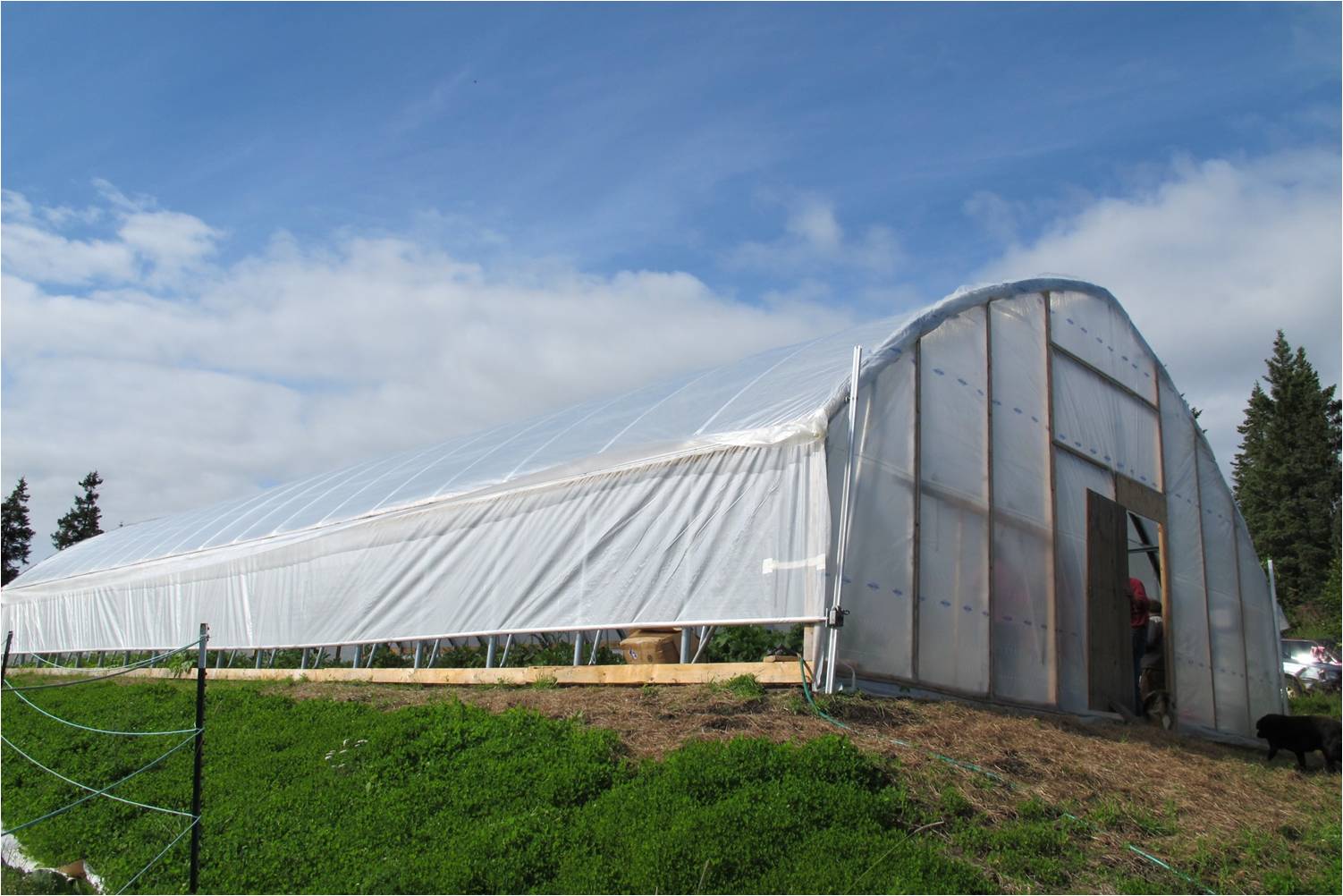
Sitka Local Foods Network President Kerry MacLane, left, and Sprucecot Garden Owner Judy Johnstone pose in front of one of the high tunnels recently erected on Judy's land on Peterson Street. (Photo Courtesy of KCAW-Raven Radio)

Sitka Local Foods Network President Kerry MacLane, left, and Sprucecot Garden Owner Judy Johnstone pose in front of one of the high tunnels recently erected on Judy’s land on Peterson Street. (Photo Courtesy of KCAW-Raven Radio)

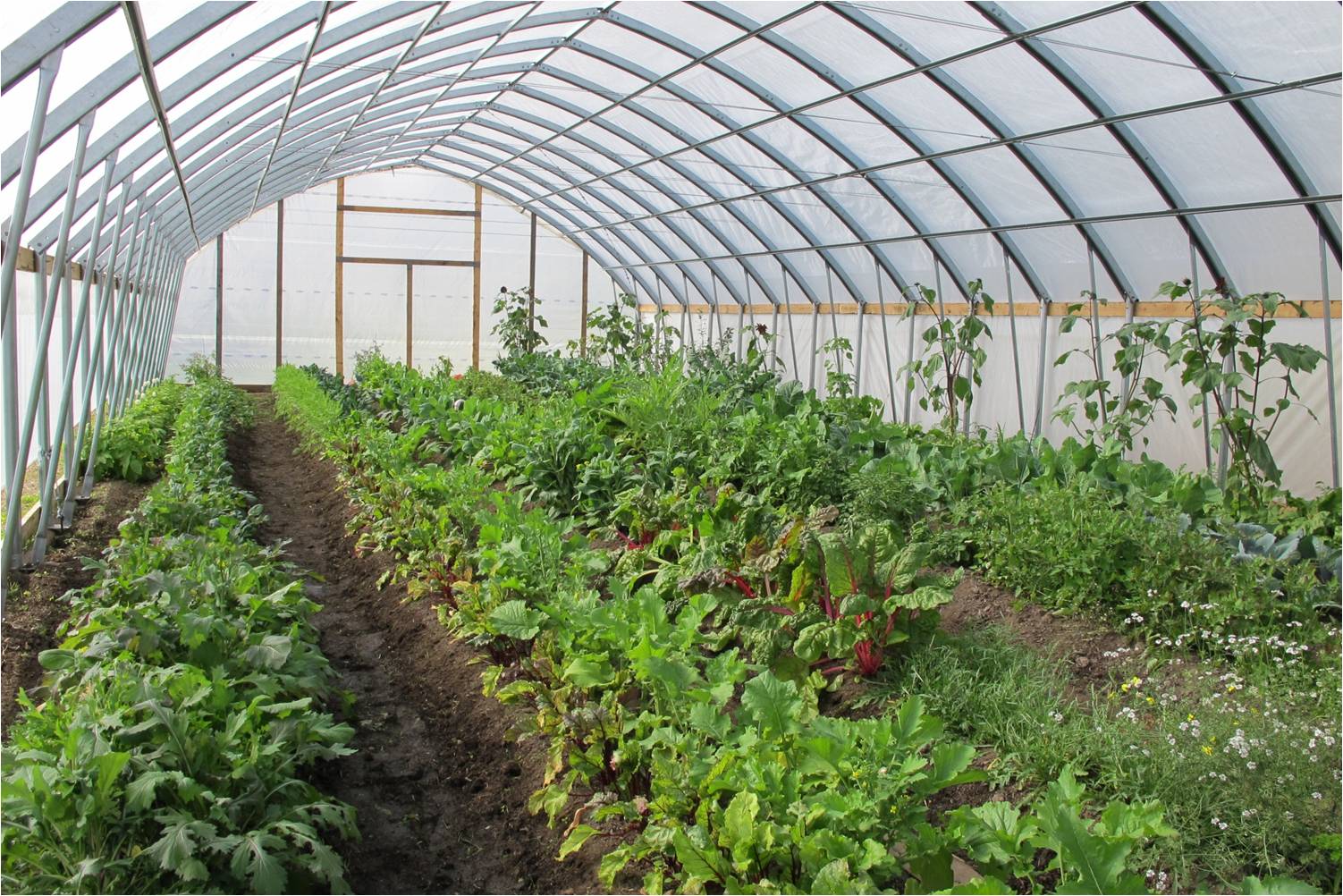
Longtime Sitka gardener Judy Johnstone will be able to extend the growing season at her Sprucecot Garden on Peterson Street after a crew erected two new high tunnels on her land.

The high tunnels, which basically are temporary greenhouses with a large frame holding a transparent plastic cover and without a built-in power supply, already have raised the temperatures inside by about 15-20 degrees over the low-50s we’ve had in Sitka so far this summer. They will enable Judy to start her plants earlier in the spring and keep producing food later into the fall.

The high tunnels were funded through a cost-sharing program run by the USDA National Resources Conservation Service, which is accepting applications for new high tunnel projects through June 15.

These are the first high tunnels to go up in Sitka, but there have been several built in other parts of the state (the lower Kenai Peninsula near Homer has about 90 of them). Since these are the first high tunnels in Sitka, they’ve received lots of coverage in the local media. The Daily Sitka Sentinel featured an article on Page 1 of its Friday, June 8, 2012, edition (password required), and KCAW-Raven Radio featured Judy and Sitka Local Foods Network President Kerry MacLane in its Monday, June 11, 2012, Morning Edition show interview and in a story on its Tuesday, June 12, 2012, newscasts.

• Lori Adams discusses maximizing small garden spaces in her latest Daily Sitka Sentinel garden column

(Lori Adams, who owns Down-To-Earth U-Pick Garden and is a frequent vendor at the Sitka Farmers Market, will be writing a regular garden column in the Daily Sitka Sentinel this summer. The Sentinel is allowing us to reprint the columns on this site after they first appear in the newspaper. This column appeared on Page 4 of the Wednesday, June 6, 2012, edition of the Daily Sitka Sentinel.)

GARDENING IN SITKA

By Lori Adams

MAXIMIZING SPACE IN A SMALL GARDEN

Make beds wide and pathways narrow. A raised bed is effective as long as it is no wider than 48 inches. Many people don’t like beds this wide because they can’t straddle them, but the effort it takes to walk around the row is worth it if you get more vegetables. My pathways are wider than I’d like because I need room for groups of people, but for most gardens the pathways only need to be wide enough for a small wheelbarrow.

Go vertical.  Build trellises and chose varieties that take advantage of vertical space.  For instance,  tomatoes can be grown in cages, zucchini and cucumber plants can be trained to grow up trellises, plants like strawberries can be grown in hanging pots, and tall varieties of peas and beans will easily  climb up fencing. Hill up potato plants for more spuds and leeks for longer blanched stalks.

Choose varieties that give you the most bang for your buck. Many broccoli varieties continue to produce sprouts long after you have harvested the central head. I have harvested fresh broccoli from the garden for Thanksgiving dinner. Grow leaf lettuce instead of head lettuce for multiple harvests, and edible podded peas (snap and snow peas) rather than shelling peas for more poundage. Choose hard-neck rather than soft-neck garlic so you can harvest the scapes for summer garlic flavor in stir fries, in addition to the bulbs you harvest in the fall. There are beet and radish varieties that are cylindrical rather than round, and if you have deep sifted soil you can choose extra long carrot varieties. Choose cabbage varieties that produce dense, heavy heads. Also, choose both early and late varieties of each crop to assure a continuous supply.

Use harvest methods that encourage more growth.  Leaf lettuce will tolerate up to three harvests if you cut it 2-3 inches from the ground instead of harvesting the entire plant. Peas, cucumbers, beans, radish pods, berries and tomatoes all benefit from frequent pickings. Most will stop producing if you don’t keep up with them. I have seen pea pods mature overnight. Pea pods must be picked EVERY DAY. If possible, celery, Swiss chard and rhubarb should be harvested a few stalks at a time rather than all at once. The plants recover faster if they still have two-thirds of their foliage. Harvest only outer stalks and use a pulling, twisting motion rather than cutting the stalks. When cutting fennel bulbs leave a generous amount of root and it will sprout with multiple baby fennel plants. Rather than pulling up green onions, cut them off 2-3 inches above the soil line and they will continue to grow more greens all season. I believe you could do the same thing with leeks but I have never tried it. Harvest root crops from crowded areas first to encourage surrounding plants to bulk up.

Pruning is important.  Herb plants that are shooting up and trying to go to seed should be pinched back to encourage branching out. The same holds true with spinach. Pruning off dead leaves and rotten vegetables or fruit keeps all plants healthier and producing longer. Pea plants can be topped once they have reached the desired height and they will branch out resulting in more peas. Don’t forget that many pea tops are edible. Prune excess broccoli and cauliflower leaves because they take a lot of energy. Target leaves that are diseased, touching the ground, touching other plants or shading surrounding vegetables. Just don’t remove more that one-third of the leaves on any one plant. Don’t forget that broccoli and cauliflower leaves are edible. Raspberries can be successfully topped to prevent them from falling over or breaking. They will also branch out and you can end up with more berries. Each raspberry clump should have all dead stalks removed and have no more than 3-5 live stalks remaining. As Brussels sprouts reach the size of marbles, start breaking off leaves starting from the bottom to send more energy into the sprouts. Toward the end of the season pinch out the top of the plant for really large sprouts. Don’t forget that Brussels sprout tops and leaves are edible. Remove strawberry runners so more energy goes into the berries.

Use floating row cover.  Using a row cover such as “remay” or “agribond” can extend your season by as much as 3-4 months. It keeps the soil and crops about 10 degrees warmer than the outside temperature. Ideally you should keep your vegetables covered all year, but at the very least you should keep all brassica crops covered until July 15th to protect them from root maggot flies. Supports are not necessary but beneficial — they protect the plants and extend the life of the cover.

Plant seeds at the recommended spacing.  More does not always mean more. If plants are too crowded they will not produce as well as they should. Broccoli, cauliflower and cabbages that are planted too closely together produce small heads. Consider placing seeds or transplants rather than sprinkling seeds, or better yet purchase a seeder. The extra time that it takes to carefully place your seeds ensures that every square inch of a small garden is utilized.

Plant in blocks rather than rows. A row of broccoli can leaf out over a row of beets next to it and shade it out. A block of broccoli planted on the north side of a block of beets will have no negative affects.

Practice successive plantings. About 1-2 months (depending on the crop) after you plant crops like spinach, fennel, cilantro, kohlrabi, napa cabbage, lettuce or cauliflower, you can start a second set of them indoors. The second set will be ready to plant out about the time you harvest the first set. With some crops you can do this several times during the season. Don’t forget to amend the soil between each successive planting.

Consider pulling up some of your flowers. This last idea is not a very popular one. It is pleasant to have ornamentals in your yard, but consider scaling back, mixing vegetables in amongst your flowers or even replacing ornamentals with edibles that are pretty, such as sunflowers, nasturtiums, flowering kale, chives, cabbage, herbs or rainbow Swiss chard.

Brought to you by Down-To-Earth U-Pick Garden

2103 Sawmill Creek Road

Open June-August / Monday to Saturday, 11 a.m. to 6 p.m.

747-6108 or 738-2241

http://downtoearthupick.blogspot.com/

• Please follow parking guidelines at community garden during Blatchley Middle School construction

Passing along a note from Blatchley Community Garden manager Dave Nuetzel about parking during this summer’s construction project at Blatchley Middle School.

This is an important issue:

If you or any other gardener parks near the fence we all may lose the garden!!

The contractors for the school need to have full access to their area.  There are signs and BIG arrows pointing at the signs.  We MUST park on Oja Way, the side road next to the garden toward Petro Marine.

Please notify anyone parking there of the rules. If they ignore you call me, or contact Sitka Community Schools.

If there are any conflicts on this matter we will all lose our garden for the summer.

Dave Nuetzel
Blatchley Community Garden
Community.Garden@hotmail.com
738-8732

• Lori Adams discusses growing spinach and lettuce in her latest Daily Sitka Sentinel garden column

(Lori Adams, who owns Down-To-Earth U-Pick Garden and is a frequent vendor at the Sitka Farmers Market, will be writing a regular garden column in theDaily Sitka Sentinel this summer. The Sentinel is allowing us to reprint the columns on this site after they first appear in the newspaper. This column appeared on Page 4 of the Wednesday, May 30, 2012, edition of the Daily Sitka Sentinel.)

GARDENING IN SITKA

By Lori Adams

EVERYTHING I’VE LEARNED ABOUT GROWING

SPINACH AND LETTUCE

For years I tried to grow lettuce and spinach and had terrible luck. But the last few years I’ve made some major changes and have been thrilled with the results.

Prepping the bed for greens starts the previous fall. I put a layer of salmon carcasses over the bed, pile on a foot of seaweed/leaf mulch, dump about an inch of seashell sand over the top and cover the whole bed with black plastic. The plastic keeps the nutrients from being washed away.

Seeds are started around mid-March. I count out the number of seeds for proper spacing in the bed (6-9 inches) and start the seeds indoors. I know that seems tedious, but it is crucial for success. In the past I would simply broadcast the seeds, but there were bare spots and the seedlings that did come up were too close together.

In April I uncover the row, run a tiller through it and let the ducks work it over really good, getting all the slugs and slug eggs. In mid-April, when the seedlings have at least two true leaves, I shoo the ducks out and transplant the greens into half of the bed with the proper spacing, covering the other half with black plastic again to save the space for a second planting later in the year. Finally I cover the whole bed with row cover.

Taking care of the greens is easy. Just provide adequate moisture and pull the weeds. The tender transplants will not grow much for a while, but once they recover from transplant shock they will show signs of growth. They are surprisingly hardy.

Harvesting can begin once the plants have about six true leaves.  I just take a few here and there by clipping them from the plants with a scissors.

  • SPINACH: Once spinach plants get too tall I top them and they branch out with more stalks. Last year the stems got HUGE. They were hollow and filled with rain but the plants stayed healthy and the leaves did not get bitter for months!  I have friends who wait until their spinach plants have 16 leaves and then they pull the entire plant, throw a handful of compost in the empty spot and plant another seed. They have never had their spinach bolt using this method and have a continuous supply all season.
  • LETTUCE: I only grow loose-eaf varieties of lettuce. Down To Earth U-Pick Garden customers just harvest by cutting the entire plant about two inches from the ground.  The plants grow back and provide two more cuttings by using this method.

Eating greens is the best part.  Some people do not like home-grown lettuce because of its bitter taste. But if you soak the leaves in a sink full of cold water for about 15 minutes this bitter taste is eliminated and the leaves get sweet and crisp.  Greens can be kept stems-down in a container of water like a bouquet of flowers in the fridge, or on the back deck of the boat, without wilting or turning brown for days — just change the water daily.

Brought to you by Down-To-Earth U-Pick Garden

2103 Sawmill Creek Road

Open June-August / Monday to Saturday, 11 a.m. to 6 p.m.

747-6108 or 738-2241

http://downtoearthupick.blogspot.com/

• Sitka Local Foods Network seeks assistant manager for Sitka Farmers Market

The Sitka Local Foods Network is seeking an assistant manager for the fifth year of Sitka Farmers Markets this summer. This person not only will assist Sitka Farmers Market coordinator Johanna Willingham, he or she also will assist lead gardener Laura Schmidt at St. Peter’s Fellowship Farm in the growing of local produce to sell at the market.

This is a contract position for about 10-15 hours per week. The Sitka Farmers Market assistant manager commits to being available for six markets this summer, from 10 a.m. to 2 p.m. on alternate Saturdays starting July 7 and running through Sept. 15 (July 7, 21, Aug. 4, 18, Sept. 1 and 15) at the Alaska Native Brotherhood Hall on Katlian Street.

Duties include submitting PSAs to local media about the markets and work parties at St. Peter’s Fellowship Farm. The assistant manager will recruit local musicians to play at the markets, and will help set up and clean up before and after the markets. He or she also will help harvest at St. Peter’s Fellowship Farm before and during the markets, as needed.

For more information about the position, contract Johanna Willingham at sitkalocalfoodsnetwork@gmail.com or at 1-706-207-3184. More information can be found in the attached document. The deadline to apply is Friday, June 1, and the position starts on June 15.

• Job description for 2012 Sitka Farmers Market assistant manager position

• Lori Adams discusses coping with Sitka’s weather in her latest Daily Sitka Sentinel garden column

(Lori Adams, who owns Down-To-Earth U-Pick Garden and is a frequent vendor at the Sitka Farmers Market, will be writing a regular garden column in theDaily Sitka Sentinel this summer. The Sentinel is allowing us to reprint the columns on this site after they first appear in the newspaper. This column appeared on Page 4 of the Wednesday, May 23, 2012, edition of the Daily Sitka Sentinel.)

GARDENING IN SITKA

By Lori Adams

COPING WITH SITKA’S WEATHER

This spring the weather has been particularly wet and cold. If this is your first year of gardening you may be having a difficult time. Try not to get discouraged. Remember that successful Sitka gardeners do not succeed because of the weather … they succeed IN SPITE of the weather through ingenuity and hard work.

There are four things that are essential if you want to succeed.

  1. Raise your beds to warm up the soil and ensure adequate drainage
  2. Amend your soil with sand to speed up drainage
  3. Choose varieties that are known to do well here
  4. Use row cover to heat up the soil and minimize rain damage

At the Down To Earth U-Pick Garden, I cover almost every single bed with row cover. It costs some money and it is difficult to keep in place, but it is well worth it. As early as May 10, I was picking BEAUTIFUL spinach and I know it’s mostly due to row cover.

Row cover is a lightweight fabric-type of material that is usually made out of spun polyester. It protects plants while allowing light and water to flow through it. It comes in varying widths and lengths that you lay over your beds. Using it can increase the temperature of the bed by as much as 10 degrees. It protects plants from wind, deters harmful insects and minimizes rain damage.

Although it works to simply lay it over the bed and let the plants push it up as they grow, it’s best to suspend it using PVC pipe, wire hoops or fencing that’s bent into arches to keep it from soaking up mud and weighing down the plants.

Even though it is fragile, row cover can last for years if you handle it carefully. Weigh the edges down firmly to keep it from it from whipping around in the wind and avoid laying it over sharp edges. I lay seine web over the top of my row cover to keep it smooth and secure. I leave my cover on until July 15 or harvest time, whichever comes first.

Here are a few more tips for dealing with the weather:

  • use clean material for pathways such as wood chips, gravel or shells
  • improve drainage on your property
  • buy some boots and lightweight raingear that are comfortable
  • designate a place inside to drip-dry your raingear so it’s ready each time you need it
  • remove as much brush and trees as possible to improve sunlight and airflow
  • use proper plant spacing to improve airflow and prevent mold and rot

DON”T GIVE UP!  Just take note of the problems you are having this year and get advice on how to improve things for next year. Most vegetables we grow here don’t mind the weather and will recover once it warms up and the weather improves.

Brought to you by Down-To-Earth U-Pick Garden

2103 Sawmill Creek Road

Open June-August / Monday to Saturday, 11 a.m. to 6 p.m.

747-6108 or 738-2241

http://downtoearthupick.blogspot.com/

• USDA Natural Resources Conservation Service offers cost-share program for high tunnels

The U.S. Department of Agriculture’s Natural Resources Conservation Service (NRCA) is offering a cost-sharing program that enables qualifying landowners who produce food to build high tunnels.

High tunnels, also known as hoop houses or temporary greenhouses, can help extend the growing season at both the start and end of the season so more food is produced.

High tunnels are different than greenhouses in that they are passively heated by the sun, so they have lower energy costs than greenhouses. Food in high tunnels is planted either directly into the ground or in raised beds. To learn more about the USDA’s high tunnel program, click here. This link has frequently asked questions and answers.

NRCS will provide cost-sharing funds on structures up to 2,178 square feet (5 percent of one acre). Both the land owner and land must meet certain eligibility requirements. Funding is provided on a reimbursable status once the high tunnel is installed and certified to meet NRCS standards.

For information regarding the NRCS technical service or program participation in Southeast Alaska, please contact the Juneau field office at (907) 586-7220 or samia.savell@ak.usda.gov. Applications currently are being accepted for the 2013 fiscal year (Oct. 1, 2012, to Sept. 30, 2013) and applications must be received at the Juneau field office on or before June 15, 2012. For contact info to other Alaska field offices, click this link.

• Press release about the USDA Natural Resources Conservation Service high tunnel cost-sharing program

• FAQs about the USDA Natural Resources Conservation Service high tunnel cost-sharing program

• Informational handout about the USDA Natural Resources Conservation Service high tunnel cost-sharing program

• Lori Adams discusses everything she’s learned about planting celery in her latest Daily Sitka Sentinel garden column

(Lori Adams, who owns Down-To-Earth U-Pick Garden and is a frequent vendor at the Sitka Farmers Market, will be writing a regular garden column in theDaily Sitka Sentinel this summer. The Sentinel is allowing us to reprint the columns on this site after they first appear in the newspaper. This column appeared on Page 4 of the Wednesday, May 16, 2012, edition of the Daily Sitka Sentinel.)

GARDENING IN SITKA

By Lori Adams

EVERYTHING I’VE LEARNED ABOUT PLANTING CELERY

When I found out that Sitka gardeners grow celery I was amazed. I didn’t know it was possible, that only commercial farmers could do it. But celery is easy to grow if you have a few tips.

Plant celery seeds indoors mid-February. They take a long time to germinate and grow very slowly, so don’t get discouraged. Once they’ve sprouted it is likely that you will have problems with aphids. I don’t know where they come from.

Even though I sterilize my sunroom and use sterile potting soil, I still get aphids. The best natural way to get rid of them is to mix up a solution of one gallon of water and one tablespoon of dishwashing liquid to spray over the entire plant – especially the underside of the leaves where the aphids like to hang out.  According to the Internet it isn’t necessary to rinse the soap off.  You might have to spray two separate times to be sure they are all dead.

This past week a friend helped me spray my celery and she suggested that I start spraying them a couple of times when they are little as a preventive measure instead of waiting until the plants are large, hard to handle and covered with aphids.  I think that’s a great idea.

As far as soil preparation is concerned, celery likes rich soil that is almost boggy, so do not let it dry out. Amend with nitrogen-rich material such as salmon and seaweed in the fall or herring roe and seaweed or commercial fertilizer in the spring. Adjust your pH balance by adding lime or seashell sand.

Transplant seedlings outside about mid-June. Make a “dish” shaped depression in the soil to act as a catch basin for water, dig a hole in the center, bury the start as deep as you can without covering its growing center, firm the soil around the base of the floppy plant to get it as upright as possible. Then spread an inch or two of seaweed over the surface of the soil to retain moisture and cover the entire row with row cover.

During the first weeks after transplanting, the outside stalks of the plants may start to yellow and die from transplant shock. Use a scissors to carefully clip away dying stalks close to the base of the fragile transplants. When outside stalks stop dying and the center of the plants begins vigorously growing straight upwards, you will know that your plant is happy.

Do not wait for your celery plants to get as large as the ones in the supermarket before harvesting. Your plants may never get that big. Wait until the plants are sturdy and the outside stalks are big enough to suit you and then, while supporting the plant with one hand, twist and pull a stalk from the base of the plant with the other hand while using a down-and-out type of motion.

Do NOT cut the stalks off of mature plants with a scissors leaving a stub behind to rot and never take more than one-third of the plant at one time and it will keep producing sweet delicious stalks well after our first frost. Don’t forget that the celery leaves are edible too and make a great addition to soups and stir-fries.

Next week’s column — How to cope with Sitka’s weather.

Brought to you by Down-To-Earth U-Pick Garden

2103 Sawmill Creek Road

Open June-August / Monday to Saturday, 11 a.m. to 6 p.m.

747-6108 or 738-2241

http://downtoearthupick.blogspot.com/

• Sitka herring researcher Heather Meuret-Woody makes her case for better management

(EDITOR’S NOTE: On Tuesday, May 15, the Sitka Tribe of Alaska hosted the Sitka Herring Summit to discuss issues regarding the management, or mismanagement, of herring stocks in Southeast Alaska. Sitka herring researcher Heather Meuret-Woody made this presentation, which also appeared as a shorter letter to the editor in the Daily Sitka Sentinel on May 18. The opinions expressed are Heather’s alone, though the Sitka Local Foods Network has written letters supporting the Sitka Tribe of Alaska in its bid to get the Alaska Department of Fish and Game to reduce the commercial quota for herring in Sitka Sound.)

Sitka Sound Herring Summit

May 15, 2012

Heather Meuret-Woody

Sitka Sound Herring Researcher

I have been a Sitka Sound herring researcher for about 10 years. I have decided to share my few thoughts on the Sitka Sound herring population. With this said, in my opinion there was not 144,143 tons of the predicted mature herring biomass returning to Sitka Sound. An overestimate of the biomass seems to be the suspect.

Managers of forage fish know that traditional stock management techniques do not work well with forage fish. The reason for the failure of traditional stock assessment techniques is that the “catchability” of forage fish increases as the stock declines. However, due to the schooling nature of forage fish and their vulnerability to modern acoustics and fishing gear, catch rates remain constant, even when the stock is rapidly falling in size (Beverton, 1990). Thus declines in stock size will not be apparent to managers or to the fishing industry, based on catch per unit effort statistics. Management of forage fish stocks requires direct measurement of stock size. This can be accomplished by surveying fish abundance during the spawning season, or by conducting scientifically designed acoustic surveys of schools of forage fish. Failure to monitor the stock directly will result in the inability to determine changes, even severe declines, in forage fish abundance. With that said, ADF&G does not measure the Sitka Sound herring stock directly. They may do acoustic surveys and aerial surveys but the data is not used for determining stock size in the ASA model. ADF&G relies almost entirely upon spawn deposition estimates to determine the spawning biomass. Hebert, 2010 states, “Estimates of total egg deposition on Macrocystis kelp may be highly variable, and transects that cross Macrocystis kelp beds could result in very high egg deposition estimates, resulting in high uncertainty around total estimates of egg deposition.” ADF&G also notes in this report that they have issues with diver calibration. One diver may visually estimate more or less eggs compared to another diver. Individual calibration factors can have a potentially large impact on spawn deposition estimates of biomass.
Accurate and regular estimates of fecundity are important for “ground-truthing” assumptions used by ADF&G. Fecundity estimates are used to convert estimates of herring egg deposition into mature biomass, and is used quite commonly among world-wide herring managers. ADF&G has only measured fecundity 4 times since the 1970s (Hulson et al., 2008). Since then, they just estimate fecundity based on weights, so large female herring lay approximately 40,000 eggs and small female herring lay approximately 20,000 eggs. Using un-validated parameters is extremely risky. For example, a 10% change in the egg per gram measurement used to convert spawn to fish, can result in a 20% change in the number of fish estimated.

In 2007, 2008, and 2009, spawning herring were sampled for Ichthyophonus prevalences in Sitka Sound. The results showed that 27% – 40% were positive for Ichthyophonus. All of this data is provided by Hershberger, Winton, and Purcell, from USGS Marrowstone Marine Field Station. The results of the 2010 and 2011 data from this ongoing research were not available at the time of this letter. Sitka Sound herring have had the Ichthyophonus disease for years and ADF&G has not incorporated this data into their current management. The ASA model does not account for disease, just “natural mortality.” However, this “natural mortality” is not based on observed data, but has been estimated by picking a random, but “conservative” number and applying it to the herring stock.

Sitka Sound herring follow the Pacific Decadal Oscillation (PDO) which is a 14-year oscillatory cycle and is highly correlated with an annual index of zooplankton biomass. Strong negative values of the PDO were observed in autumn 2011: “If these values persist through winter and early spring 2011-2012, they could result in the best ocean conditions observed in decades,” according to the 2011 annual update for the Ocean Ecosystem Indicators of Salmon Marine Survival in the Northern California Current research project, which has been ongoing since 1998. Additionally, “These negative values are expected to continue into spring 2012, which suggests that the northern North Pacific Ocean will also remain cold through spring 2012, giving rise to continuation of good ocean conditions.” So it is hard to imagine with this optimal ocean condition that Sitka Sound herring experienced mass mortality since last year. This winter we experienced the Arctic Oscillation which is essentially a pressure pattern that drives the jet stream, and controls how strong its winds are and where the jet stream position is. This winter, the jet stream trough, which tends to push the jet stream far to the north, helped drive storms into Alaska.

From 2006-2010, ADF&G has been trying to convince the public that the Sitka Sound herring had changed their maturation rates. They claimed that the herring were maturing later. Instead of herring reaching maturity at age-3 and age-4 they were not maturing until age-5, age-6, and age-7. Of course this was not actual observed data. ADF&G did not base this on ovarian histology or anything concrete, instead the changes were based on a number estimate to make the ASA model fit the data rather than using field data to fix the model. No other herring stocks along the Pacific Coast have herring delaying maturation, so it shouldn’t surprise anyone that Sitka’s herring are maturing at their usual rate. Additionally, ADF&G claimed that the herring were surviving longer, and the survivability rate they have been using is 87%. Again this was not based on anything managers actually observed, but was again a random number forced to make the ASA model fit the data. Even Hebert, 2010 states “External estimates of age-specific survival would improve the ASA model and provide more accurate forecasts of spawning biomasses.” If the Sitka Sound herring actually had 87% survivability rate, then the only way herring could have died was to be eaten by a predator or get caught in a purse seine net.

In 2008, I did a co-study with the ADF&G Age Determination Laboratory in Juneau. ADF&G collected 50 herring from the winter bait fishery and aged the herring via scale reading. I then received those 50 herring and aged them via otolith aging – and this is not the break and burn method, this is the thin-sectioning method that is widely recognized world-wide and even used by the California Department of Fish and Game on herring stocks. The herring aged via otolith actually aged 2 years younger on the average than the scale aging methodology. If you recall, ADF&G announced 12/16/2010 that their aging assessments were wrong for the period of 1999-2010. Once they re-aged all of the archived samples, they too came up with an average of 2 years difference. Additionally, because the ASA model used by ADF&G to forecast the mature biomass requires a long time series of reliable age estimates, the department chose not to use the ASA model, but instead relied on a biomass accounting model to forecast the 2011 Sitka Sound mature herring population.

Significant fisheries-induced evolutionary change has been researched in Norway in Baltic herring and has lead to the entrainment hypothesis: an explanation for the persistence and innovation in spawning herring migrations and life cycle spatial patterns (Petitgas et al. 2006). This research is quite intriguing and deserves more consideration. In 2008, the commercial fishery occurred along the entire Kruzof Island shore line in very shallow water. While the herring schools were being fished upon, a large percentage of the spawning biomass seemed to avoid the purse seiners and hit the first shoreline available, Kruzof, and spawned. Now if you review ADF&G spawn maps that go back to 1964 you will know that there has been less than 15 times that the herring biomass used the Kruzof shoreline as spawning habitat. The Kruzof Island shoreline is not very suitable spawning habitat as newly hatched larvae would be swept up in the currents and advected out of Sitka Sound, causing low survivability (Sundberg, 1981). However, if herring spawn on the islands, i.e. Middle Island, Kasiana, or along the road system, the currents in Sitka Sound keep the hatched larvae in the inner bays and water ways which are excellent for retention and increases survivability. Keeping in mind that herring recruit into a mature cohort at around age-4, the 2008 commercial sac roe fishery may have reduced the amount of recruits that we would have seen this year in 2012. Unfortunately we will never know because ADF&G does not measure immature herring. I have researched juvenile herring populations in Sitka Sound for several years and found that one of the most important rearing areas is along the Halibut Point Road shoreline from Katlian Bay and Nakwasina in the north to Halibut Point Marine and Cove Marina in the south (Meuret-Woody and Bickford, 2009). Unfortunately, the new dock at Halibut Point Marine will soon become a place for net pen-rearing of hatchery salmon smolts – with no consideration on the impacts it could have on juvenile herring populations.

Finally I’d like to point out that ADF&G staff has been quoted saying that herring only seem to spawn in Salisbury Sound when there is such a large biomass that extra spawning habitat is needed. So basically they claim Salisbury Sound is a spill-over spawning habitat, although they have no data to support this assertion. If this were actually true, based on biomass size, then where was the huge spill-over of spawning biomass in Salisbury Sound in 2011 and 2012 – both of which were huge forecast biomass years? In my published paper, Identifying Essential Habitat (Source vs. Sink Habitat) for Pacific Herring in Sitka Sound Using Otolith Microchemistry (Meuret-Woody and Bickford, 2009) it appears that Salisbury Sound actually supports a small discrete population of herring (10%), separate from Sitka Sound herring. Salisbury Sound may also be a source population for Hoonah Sound, supplying approximately 14% of the population for Hoonah Sound. Why doesn’t ADF&G rely on published data instead of relying on guesses made by their managers?