• Sitka Farmers Market shoppers treated to a preview of Bye Bye Birdie

This slideshow requires JavaScript.

Shoppers at the second Sitka Farmers Market of the season on Saturday, July 21, at Alaska Native Brotherhood Hall were treated to a special preview of the musical comedy “Bye Bye Birdie,” which is being performed this weekend by students from the Sitka Fine Arts Camp.

The students, who only had 11 days to learn the play, performed three songs at the market. They will perform the full play three times this weekend, at 7 p.m. on Friday, July 27, at at 2 p.m. and 7 p.m. on Saturday, July 28, at the Sitka Performing Arts Center (at Sitka High School). Tickets are $20. To learn more about the production, KCAW-Raven Radio recently had two stories about the show, one by camp counselor/photographer Berett Wilber and one by KCAW staff news reporter Ed Ronco. The show also was the interview subject of the Morning Edition interview Thursday morning, July 26, on KCAW.

• Suzan Brawnlyn, the Chef at the Market, provides her recipes from the second Sitka Farmers Market

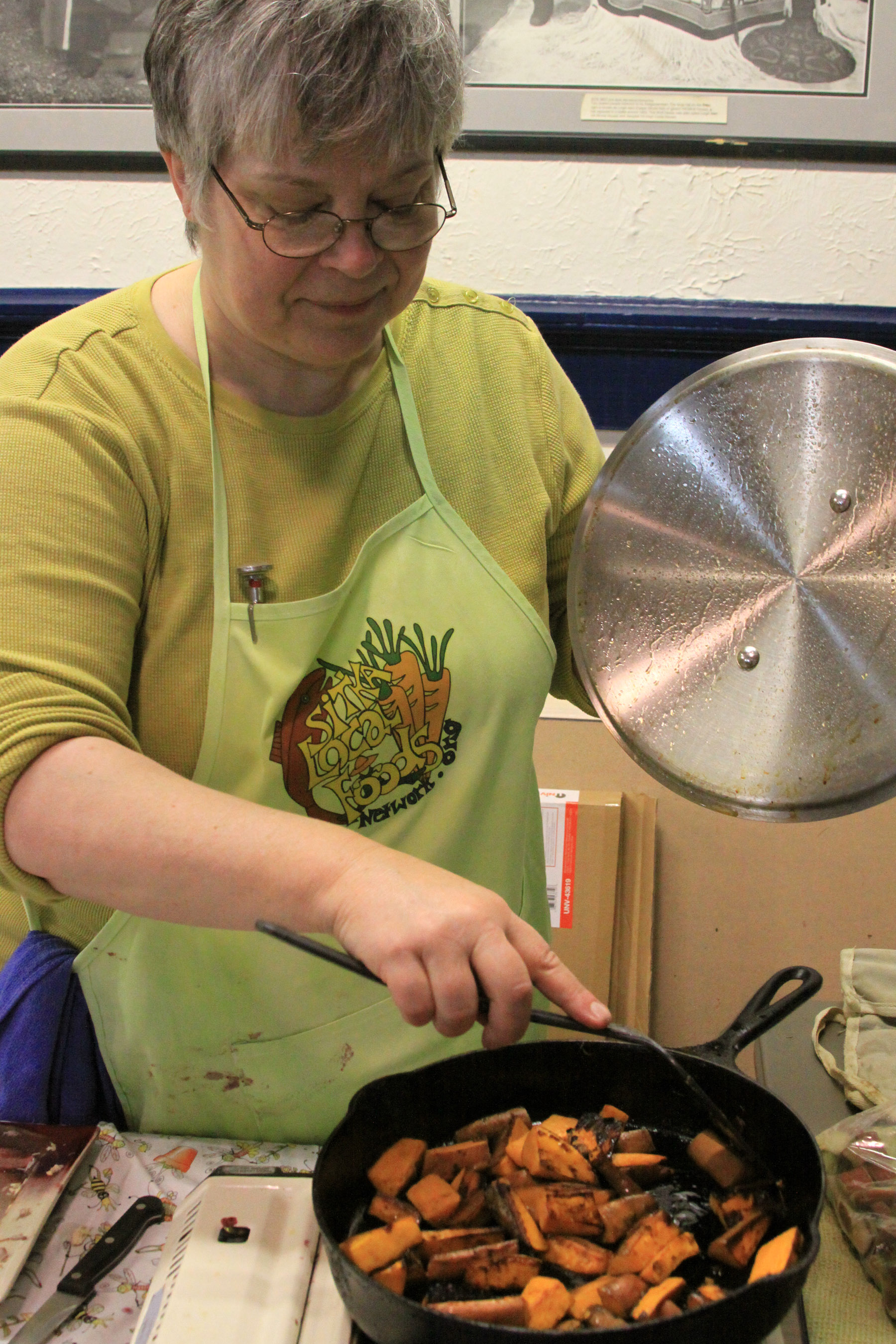
Suzan Brawnlyn, the Chef at the Market, holds a sample cup of honey miso-glazed black cod with broccoli and bok choy stir fry during a cooking demonstration on July 21, 2012, at the second Sitka Farmers Market of the season.

Suzan Brawnlyn, the Chef at the Market, holds a sample cup of honey miso-glazed black cod with broccoli and bok choy stir fry during a cooking demonstration on July 21, 2012, at the second Sitka Farmers Market of the season.

This year, the Sitka Local Foods Network is happy to feature local chef Suzan Brawnlyn as its “Chef at the Market.” Suzan received a grant to provide cooking demonstrations at at least four of our six markets this year. Suzan also has been making her recipes available so people can try them at home. Her recipes from the second market on July 21 are posted below. To get her first batch of recipes, click this link.

The next Sitka Farmers Market is from 10 a.m. to 2 p.m. on Saturday, Aug. 4, at Alaska Native Brotherhood Hall (235 Katlian St.).The Sitka Local Foods Network is seeking volunteers to help set up tables and tents before the market starts, and to tear down and pack up the market after it ends. We need volunteers for all of the remaining markets (Aug. 4, 18, Sept. 1 and 15). If you have a strong back and helping hands, please contact Johanna Willingham at 738-8336 for more details.

• Chef at the Market recipes from the second Sitka Farmers Market of the season, July 21, 2012

• Lori Adams discusses everything she’s learned about growing fennel in her latest Daily Sitka Sentinel garden column

(Lori Adams, who owns Down-To-Earth U-Pick Garden and is a frequent vendor at the Sitka Farmers Market, will be writing a regular garden column in the Daily Sitka Sentinel this summer. The Sentinel is allowing us to reprint the columns on this site after they first appear in the newspaper. This column appeared on Page 4 of the Wednesday, July 18, 2012, edition of the Daily Sitka Sentinel.)

GARDENING IN SITKA

By Lori Adams

EVERYTHING I’VE LEARNED ABOUT GROWING FENNEL

I have to admit that up until about two years ago I didn’t even know what fennel was.  Florence Welsh recommended that I grow it because it does so well here in Sitka and is truly delicious. I am so glad I gave it a try.

Fennel has a round, slightly oval-shaped bulb that grows above the ground and looks sort of like a fat, short celery, while the tops look a lot like dill. If you eat fennel raw it tastes strongly of anise (licorice), but when cooked the flavor changes to this amazing mellow flavor I can’t even describe.

In preparation for growing fennel I like to amend the bed with seaweed in the fall and again in the spring. If the spring seaweed has a sprinkling of herring roe on it, it’s fine because fennel is a fairly heavy feeder. I start my seeds indoors mid-March and transplant them outside mid-April.

When transplanting the floppy, fragile starts, be sure to make a dish-shaped depression in the soil and then dig a hole in the center of the depression. Bury the starts deep enough in the hole to ensure that they are firmly supported with dirt and plant them with about 10-12 inch spacing. After they recover from transplant shock and begin to grow they will straighten out and become more stout.

It is a really good idea to mulch around each start with seaweed to keep the weeds down, feed the starts and retain moisture.  Cover the starts with row cover and for best results use hoop supports that will hold the cover up 2-3 feet off the ground.  Fennel has beautiful bushy foliage that can get quite tall and if the cover is too low it will break the foliage and make the plants very unattractive.

Fennel is ready to eat anytime you want to, but it is best to wait until it has reached maturity for maximum size. You’ve probably noticed the fennel in the grocery store produce aisle … the large, round, plump bulbs are white and the stems of the foliage are stout. My fennel never looks like that. The bulbs are smaller, more flat — almost disc-shaped — and greener in color.  The foliage and stems are more dainty and tender.

Sometimes a few plants will “bolt” and just send up a series of branches getting really tall. They are edible, but don’t amount to much. Adequate spacing usually minimizes bolting.

Because fennel matures so early you can successfully raise two plantings. You probably can plan to be able to start your first harvest mid to late July. If you take a sharp knife and cut the bulb loose leaving the root in the ground it is possible that the root will sprout up baby fennel for a second harvest.

But it is a more sure thing to start some more fennel seeds indoors around June 1, pull mature plants out of the ground root and all, amend the empty spot with compost and transplant new starts in the same spot. If you don’t have room indoors for starting more seeds just pop a new seed into the empty spots as you harvest mature plants.

Brought to you by Down-To-Earth U-Pick Garden

2103 Sawmill Creek Road

Open June-August / Monday to Saturday, 11 a.m. to 6 p.m.

747-6108 or 738-2241

http://downtoearthupick.blogspot.com/

• Ted and Julie to provide musical entertainment at Saturday’s Sitka Farmers Market

Mandolin player/guitarist/fiddler Ted Horner and pianist Julie Schmitt will provide musical entertainment during the second Sitka Farmers Market of the season, from 10 a.m. to 2 p.m. on Saturday, July 21, at Alaska Native Brotherhood Hall (235 Katlian St.).

Ted and Julie also performed during the first Sitka Farmers Market of the season on July 7. The SitNiks will perform music from Russia and other countries during the third Sitka Farmers Market of the summer on Aug. 4. The rest of the season’s musical lineup will be announced later.

Musicians interested in performing at future Sitka Farmers Markets can call market manager Johanna Willingham at 738-8836 or by e-mail at johanna.willingham@gmail.com.

• Alaskans Own Seafood wins Table of the Day at first Sitka Farmers Market of 2012

Table of the Day: Natalie Sattler of Alaskans Own Seafood, center, receives the Table of the Day award from Sitka Farmers Market Manager/Sitka Local Foods Network Board Member Johanna Willingham, left, and Sitka Local Foods Network Board Member Doug Osborne during the first Sitka Farmers Market of the season on Saturday, July 7, 2012, at the Alaska Native Brotherhood Hall in Sitka. At each market a vendor is honored by the Sitka Local Foods Network, which sponsors the Sitka Farmers Market. The next market is from 10 a.m. to 2 p.m. on Saturday, July 21, 2012, at ANB Hall, 235 Katlian St.

• Lori Adams discusses weeding and feeding in her latest Daily Sitka Sentinel garden column

(Lori Adams, who owns Down-To-Earth U-Pick Garden and is a frequent vendor at the Sitka Farmers Market, will be writing a regular garden column in the Daily Sitka Sentinel this summer. The Sentinel is allowing us to reprint the columns on this site after they first appear in the newspaper. This column appeared on Page 4 of the Wednesday, July 11, 2012, edition of the Daily Sitka Sentinel.)

GARDENING IN SITKA

By Lori Adams

WEED AND FEED

I consider July 15 to be the middle of the gardening season. By this time a large portion of the nutrients you added to your beds in the spring have either been used up or washed away by the rain, and the weeds are threatening to take over the garden. Weeds rob what little nutrients are left in your soil, block sunlight and harbor mold and mildew. It can really make a difference in the health and harvest of your garden if you invest some time in weeding and amending the soil at this time.

If you tilled your garden this spring like I did, and did not mulch with seaweed, you were probably amazed at the carpet of weeds that sprouted up. It is very important to take the time to sit down and pull every single one of them before they produce seeds. If you did till and mulch with seaweed, you probably saw a pronounced decrease in the amount of weeds in your garden.

Most weeds really aren’t a problem if you are diligent to pull them before they produce seed and are sure to get all the roots because once they are pulled they are gone forever. The only two weeds I have had real trouble with are horsetail and Japanese knotweed. These two weeds have invasive root systems that are just about impossible to eradicate. If you break them off, the broken end just grows multiple sprouts. A small piece laying on the ground can even take root.

Someone once told me that the best defense is a good offense … that these weeds like acidic, poor soil, so the first step is to add lime to the soil and make it as nutritious as possible. It helped, but was not a complete solution. I noticed that where I till they are drastically reduced. I think it is because the roots get chopped up into bits, the bits sprout, I pull on the sprouts and the entire bits come up.

The places were I can’t till or really work it over with a trowel (like the asparagus bed) have become infested with horsetail. This year I mulched the asparagus bed heavily with beach seaweed/leaf mulch and I noticed that the horsetail roots are starting to spread through the loose mulch. When I pulled on them I was able to pull up long root sections. In fact, the other weeds that were growing in the beach mulch pulled up easily. I plan on gathering lots of beach mulch this fall.

If you have a traditional bottomless box bed that has a lot of horsetail in it, it is probably coming up from the ground below.  You can’t till in the box so the only way to get rid of it is to completely empty the bed, lay two layers of landscaping cloth in the bottom and up around the OUTSIDE of the box a few inches and staple it to the sides of the box. Then sift the dirt to remove every scrap of root, and start over. If anyone reading this has a magic bullet for these weeds please let me know.

To add nutrients to your beds either fertilize with commercial fertilizer, spread cured compost an inch thick over every bed or mulch with seaweed. Even with this awful weather we’ve been having I think you will see a definite difference in the health of your garden if you weed and feed.

Brought to you by Down-To-Earth U-Pick Garden

2103 Sawmill Creek Road

Open June-August / Monday to Saturday, 11 a.m. to 6 p.m.

747-6108 or 738-2241

http://downtoearthupick.blogspot.com/

• Suzan Brawnlyn, the Chef at the Market, provides her recipes from the first Sitka Farmers Market

Suzan Brawnlyn, the Chef at the Market, cooks rhubarb and sweet potatoes during a cooking demonstration on July 7, 2012, at the first Sitka Farmers Market of the season.

Suzan Brawnlyn, the Chef at the Market, cooks rhubarb and sweet potatoes during a cooking demonstration on July 7, 2012, at the first Sitka Farmers Market of the season.

This year, several farmers markets from around the state received a share of a $15,000 grant from the Alaska Division of Agriculture to host a “Chef at the Market.” The Sitka Farmers Market is one of the lucky 11 markets, and local chef Suzan Brawnlyn will be doing cooking demonstrations at at least four of the six Sitka Farmers Markets this summer.

KCAW-Raven Radio hosted Suzan and Sitka Farmers Market manager Johanna Willingham for its Morning Interview on Monday, July 2, 2012. Suzan’s recipes from the first Sitka Farmers Market of the season on Saturday, July 7, are linked below. She plans to have a new cooking demonstration at the second market from 10 a.m. to 2 p.m. on Saturday, July 21, at Alaska Native Brotherhood Hall.

• Chef at the Market recipes from the first Sitka Farmers Market of the season, July 7, 2012

• Lori Adams discusses everything she’s learned about growing Kohlrabi in her latest Daily Sitka Sentinel garden column

(Lori Adams, who owns Down-To-Earth U-Pick Garden and is a frequent vendor at the Sitka Farmers Market, will be writing a regular garden column in the Daily Sitka Sentinel this summer. The Sentinel is allowing us to reprint the columns on this site after they first appear in the newspaper. This column appeared on Page 4 of the Tuesday, July 3, 2012, edition of the Daily Sitka Sentinel.)

GARDENING IN SITKA

By Lori Adams

EVERYTHING I’VE LEARNED ABOUT GROWING KOHLRABI

Many people have never even heard of Kohlrabi, but I think it is one of my favorite garden vegetables. Kohlrabi is from the brassica family. It is a round bulb like a turnip but it grows just above the soil level and has leaves that grow out from the bulb in many different places, not just the top.  There are two different colors, green and purple.

Although Kohlrabi is a bulb it is a heavy feeder. Preparation of the bed for Kohlrabi should begin in the fall with a heavy amendment of nitrogen. I like to use salmon and seaweed and seashell sand, and then cover the bed with black plastic for the winter to prevent the leeching of nutrients.

In the spring it wouldn’t hurt to also till in some herring roe on kelp. Just be sure that the roe has time to break down a little before it’s time to plant so you don’t burn your plants. Seeds can be planted directly out in prepared beds mid-April, but I recommend starting them indoors mid-March and then transplanting them outdoors mid-April.

In a raised bed make a dish-shaped depression and then dig a hole in the center of it for the transplant. Bury the transplant up to its first set of true leaves using 6-inch spacing between plants. The depression will function as a catch basin for water to prevent the plant from drying out.

Brassicas require steady moisture, so it’s not a bad idea to mulch around all the plants with seaweed. Just be sure the plants aren’t buried and have minimum contact with the seaweed. Mulching with seaweed really helps retain moisture, keeps the weeds down and also feeds the plants. If you have a wet, moldy garden without raised beds you may want to skip this step.

As with all brassicas, it is very important to cover Kohlrabi with floating row cover and to leave it on until July 15 or harvest time, whichever comes first. Row cover will protect the plants from frost and wind and rain damage, but more importantly it will keep out the root maggot fly – the mortal enemy of any plant in the brassica family.

To harvest Kohlrabi just pull up the bulb and use a sharp knife to cut off the tough root and peel away the skin and leaves. Around the root area you will find that the bulb is tough and the skin is thick, but as you work up to the top the bulb gets more tender and the skin gets thinner. At the very top you hardly have to peel away any skin at all.

I always eat my Kholrabi raw, but I read that it is also delicious cooked.  It tastes a lot like the center of a broccoli stem. It’s less watery and more dense and sweet than a turnip. The leaves are also edible and can be used like kale.

Brought to you by Down-To-Earth U-Pick Garden

2103 Sawmill Creek Road

Open June-August / Monday to Saturday, 11 a.m. to 6 p.m.

747-6108 or 738-2241

http://downtoearthupick.blogspot.com/

• Lori Adams discusses composting in her latest Daily Sitka Sentinel garden column

(Lori Adams, who owns Down-To-Earth U-Pick Garden and is a frequent vendor at the Sitka Farmers Market, will be writing a regular garden column in the Daily Sitka Sentinel this summer. The Sentinel is allowing us to reprint the columns on this site after they first appear in the newspaper. This column appeared on Page 4 of the Wednesday, June 27, 2012, edition of the Daily Sitka Sentinel.)

GARDENING IN SITKA

By Lori Adams

COMPOSTING

Sitka has poor soil. Any plant waste thrown into our garbage cans travels by barge and truck to Eastern Washington. Bagged soil is expensive and travels by truck and barge to get here. Garden waste can be turned into soil. COMPOSTING IS IMPORTANT!

Concentrated fertilizers provide plants with basic nutrients and are potent enough that they only need to be applied once or twice a year. Compost feeds plants with a gentler mixture of basic nutrients and a multitude of micronutrients, but must be applied about once a month to adequately feed your plants. Many people use a combination of the two.

“Compost” is defined as “a mixture of decaying organic material used to improve soil structure and provide nutrients.” Basically it’s the process of throwing excess plants and plant parts into a pile to rot down and turn into soil. This process can take about a year, but if you educate yourself and compost with a plan there are ways to speed up the process.

Plant parts fall into two main categories — Carbon/Brown and Nitrogen/Green. Composting experts suggest using 30 parts carbon to 1 part nitrogen.

  • EXAMPLES OF CARBON MATERIALS: untreated sawdust, straw, leaves, shredded newspaper, corn stalks and cobs, needles and cones, wood ashes (be sure the ashes are cold!)
  • EXAMPLES OF NITROGEN MATERIALS: manure, seaweed, chemical-free grass clippings, coffee grounds, food waste, spent brewer’s grain, fish waste
  • EXAMPLES OF MATERIALS NOT TO USE: cooking oil, soap, cat or dog poop, walnuts, maple leaves, colored paper, weed seed heads or roots, diseased plants
  • LOCATION: anywhere in the sun where it’s safe from rats, dogs and bears

There are many styles of composting bins you can purchased, but I think the ideal setup would be three bins side by side, no larger than 4 feet by 4 feet, made from pallets with see-through roofing to keep out the rain. The bottom would be just dirt to allow free movement of worms and bacteria and the fronts would be open.

In Bin No. 1 accumulate plant material. At some point, spend a day gathering bulk materials and layer them with your plant material in Bin No. 2. (Any new material that accumulates from now on is held in Bin No. 1.)  After a week use a pitch fork to “flip” the pile into Bin No. 3. Flipping gets oxygen throughout the whole pile better than stirring does which will really speed up the decomposition process. You should now notice quite a bit of heat coming from the pile and it should not stink.

Flip the pile once a week back and forth between Bins No. 2 and No. 3 for about two months.  By then it should resemble dirt. Sift it for use and throw all the chunks into Bin No. 1.

Remember that compost is not magical … whatever you put into your pile is what you will get out of it as far as nutrition is concerned. Be sure to adjust your pH level by adding some lime or seashell sand to it before you use it.

If you want to learn more about composting, I highly suggest you read these two books — “Let It Rot,” by Stu Campbell, and “The Complete Compost Gardening Guide,” by Barbara Pleasant and Deborah L. Martin.

Once your compost is ready you can spread it about 1 inch thick around your plants and watch them grow!!

Brought to you by Down-To-Earth U-Pick Garden

2103 Sawmill Creek Road

Open June-August / Monday to Saturday, 11 a.m. to 6 p.m.

747-6108 or 738-2241

http://downtoearthupick.blogspot.com/


• Sitka Local Foods Network to host six Sitka Farmers Markets in 2012

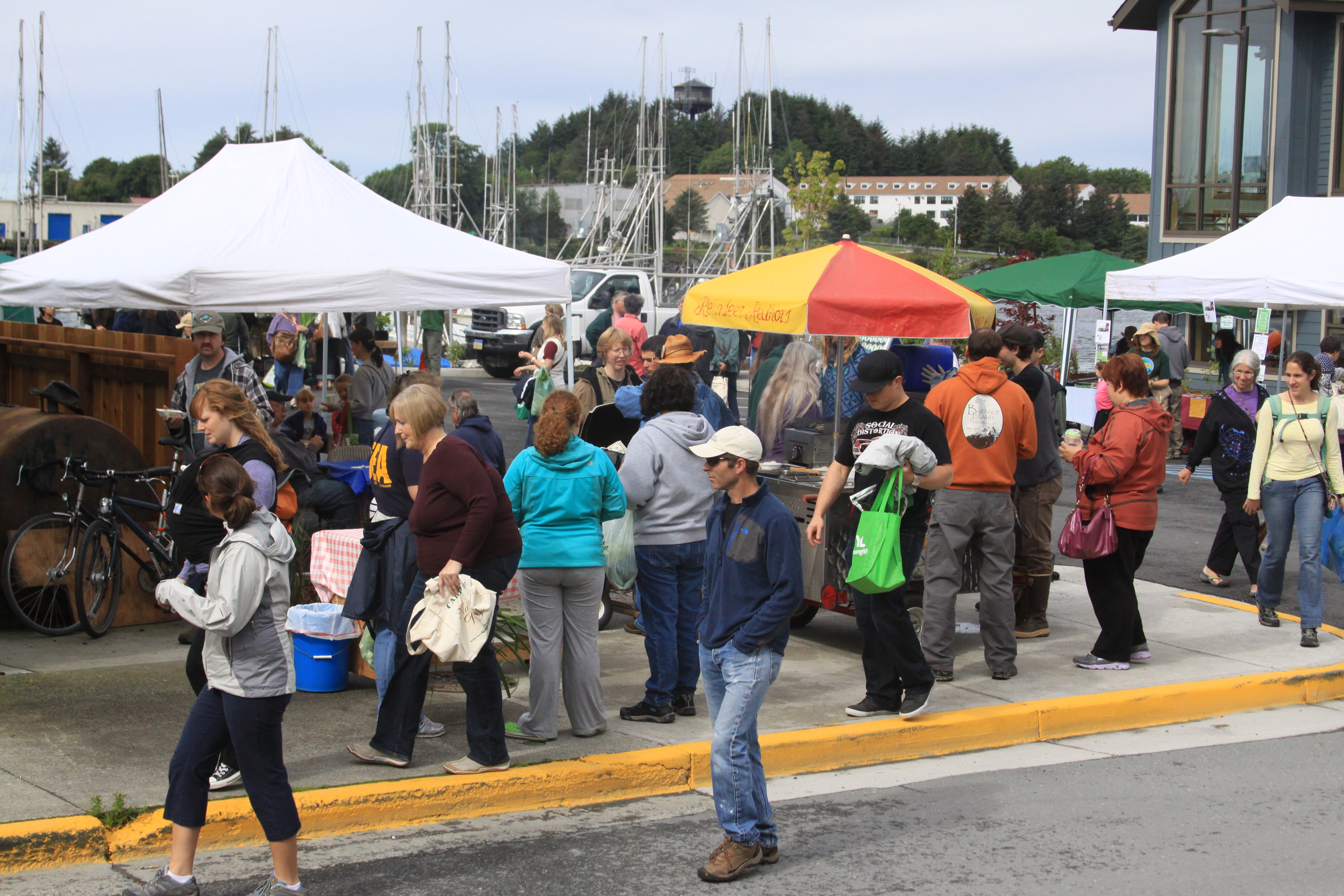
The Sitka Local Foods Network will host its fifth summer of Sitka Farmers Markets with six markets that start on July 7 and take place on alternate Saturdays through Sept. 15. The Sitka Farmers Markets give Sitka residents a chance to buy and sell locally produced food and crafts.

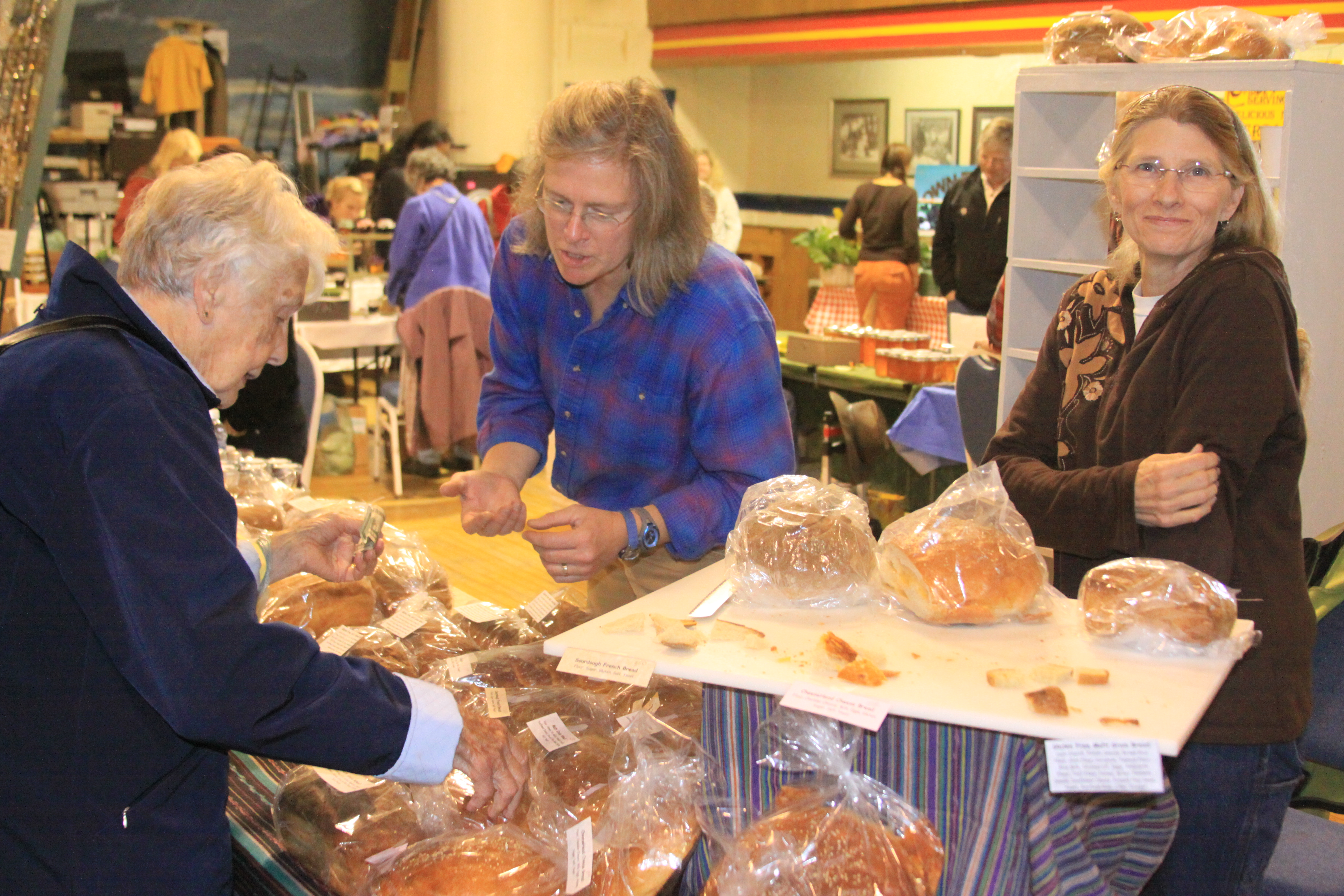
The Sitka Farmers Markets take place from 10 a.m. to 2 p.m. on Saturday, July 7, 21, Aug. 4, 18, Sept. 1 and Sept. 15 at the Alaska Native Brotherhood Hall (235 Katlian St.). The markets feature local seafood (fresh, frozen, and cooked, ready to eat), locally grown and harvested fruits and vegetables, baked bread, locally made jams and jellies, cooking demonstrations, live entertainment, locally brewed and roasted coffee, music, local arts and crafts, and a variety of other items gathered or made in Sitka. We emphasize local products and lots of fun. We are the first farmers market in Southeast Alaska to accept WIC coupons. You also can vote for the Sitka Farmers Market in the America’s Favorite Farmers Markets contest by following the links at http://www.sitkalocalfoodsnetwork.org/.

“The Sitka Farmers Market is like a carnival every other Saturday,” Sitka Local Foods Network Board President Kerry MacLane said. “It’s a fun community space to enjoy with your family or to meet your friends for fresh coffee and baked goods. There is live music, cooking demonstrations, art, and, of course, fresh veggies, fruit and seafood.”

The Sitka Farmers Market started as a community project that came out of a health priority planning meeting at the 2008 Sitka Health Summit. This event is sponsored by the Sitka Local Foods Network, Alaska Native Brotherhood Camp No. 1, Alaska Native Sisterhood Camp No. 4, Baranof Island Housing Authority, Sitka Conservation Society, the Alaska Farmers Market Association and the SEARHC Health Promotion and Diabetes Prevention programs.

“Thanks to our creative and enthusiastic vendors, the Sitka Farmers Market will be celebrating its fifth successful year.” said Johanna Willingham, Sitka Local Foods Network Board Member and Sitka Farmers Market Coordinator. “We have delighted in watching our market grow over the years and due to popular demand we are beginning our market two weeks earlier this year. Outdoor vendors and musicians will still be able to enjoy the newly paved parking lot with landscaping, thanks to BIHA. A tent will be set up for outdoor dining where you can listen to live music and enjoy some great food. Some new items will be added to some familiar vendors’ tables — dried sea veggies, sea asparagus and sea salt. Look forward to fresh snap and snow peas for snacking, ready-to-eat salads, handmade tamales and, as always, fresh black cod tips.”

Vendor fees are $20 for a 6-foot table, $30 for an 8-foot table and $15 for a 4-foot table. Vendors with their own tents pay $2 per foot. As always, we offer cost incentives for vendors growing locally produced food. The fees will help us cover the costs of renting ANB Hall and its kitchen, hiring musicians and other expenses. To learn more about being a vendor or to sign up for a table, contact Sitka Farmers Market Coordinator Johanna Willingham at 738-8336 or by e-mail johanna.willingham@gmail.com. Vendor rules, registration forms and other information for potential vendors can be found at http://www.sitkalocalfoodsnetwork.org/.