• Sitka Farmers Market prepares for eighth summer of fresh, local veggies

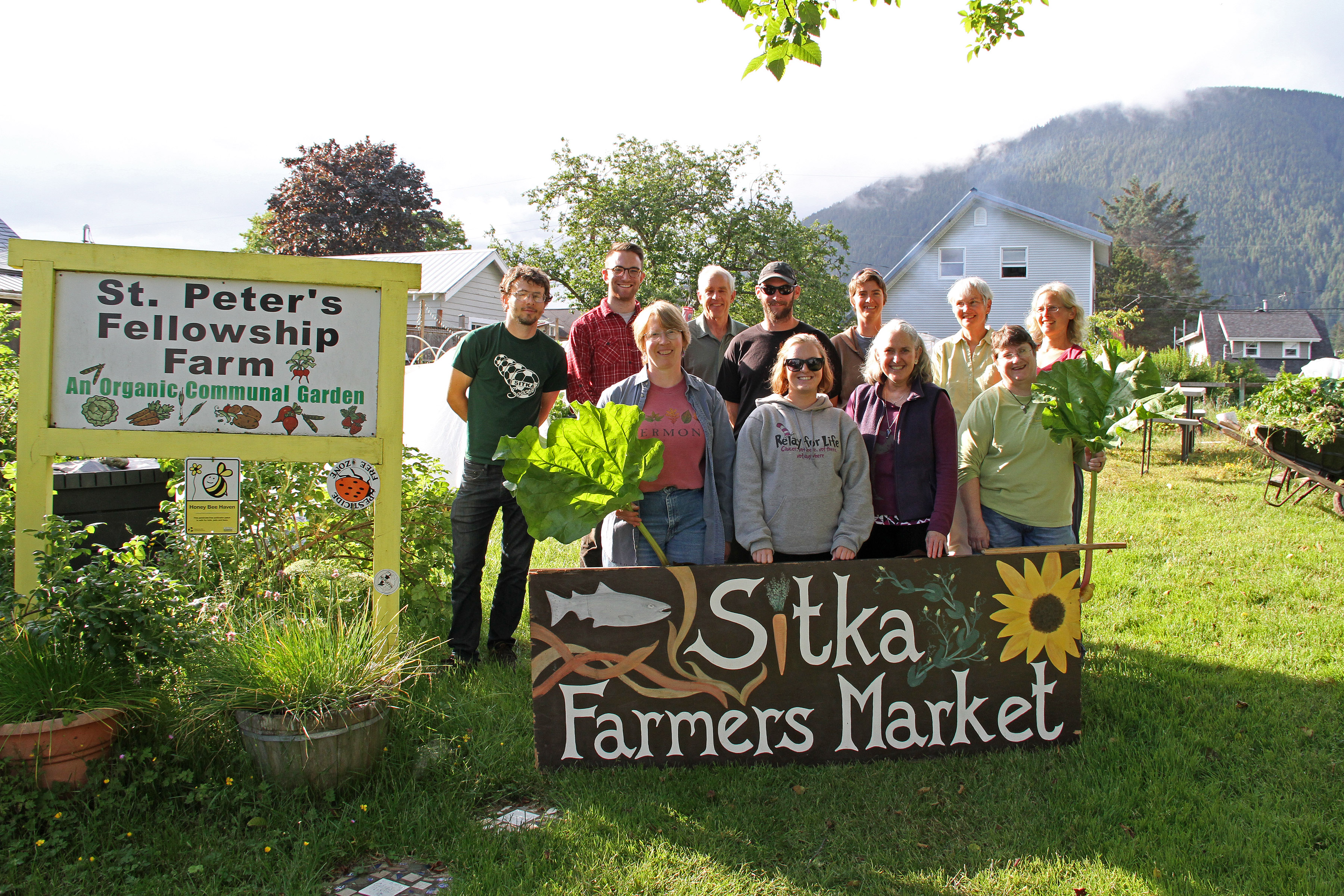
PHOTO COURTESY OF SITKA LOCAL FOODS NETWORK Sitka Local Foods Network board members and supporters pose at the St. Peter's Fellowship Farm communal garden on Monday. St. Peter's Fellowship Farm supplies most of the local produce sold at the Sitka Farmers Markets during the summer. The first Sitka Farmers Market of the season is from 10 a.m. to 1 p.m. on Saturday, July 4, at the Alaska Native Brotherhood Founders Hall, 235 Katlian St. The other five Sitka Farmers Market dates are July 18, Aug. 1, Aug. 15, Aug. 29, and Sept. 12. Pictured are, front row from left, Michelle Putz, Muriel Sadleir-Hart, Lisa Sadleir-Hart, and Kathy Jones. Back row, Matthew Jackson, Jonathan Adler, Peter Gorman, Jud Kirkness, Brandie Cheatham, Mary Therese Thomson, and Laura Schmidt.

PHOTO COURTESY OF SITKA LOCAL FOODS NETWORK
Sitka Local Foods Network board members and supporters pose at the St. Peter’s Fellowship Farm communal garden on Monday. St. Peter’s Fellowship Farm supplies most of the local produce sold at the Sitka Farmers Markets during the summer. The first Sitka Farmers Market of the season is from 10 a.m. to 1 p.m. on Saturday, July 4, at the Alaska Native Brotherhood Founders Hall, 235 Katlian St. The other five Sitka Farmers Market dates are July 18, Aug. 1, Aug. 15, Aug. 29, and Sept. 12. Pictured are, front row from left, Michelle Putz, Muriel Sadleir-Hart, Lisa Sadleir-Hart, and Kathy Jones. Back row, Matthew Jackson, Jonathan Adler, Peter Gorman, Jud Kirkness, Brandie Cheatham, Mary Therese Thomson, and Laura Schmidt.

Sitka Local Foods Network uses St. Peter’s Fellowship Farm and Sitka Farmers Market to improve food security in Sitka

During the stormy months of winter, most people in Sitka aren’t thinking about their gardens. But that’s when St. Peter’s Fellowship Farm Lead Gardener Laura Schmidt is trying to figure out which vegetables to plant in which garden bed, starting seeds, and (if the soil isn’t frozen) amending the soil with seaweed and other nutrients to get an early start on the garden.

As the lead gardener since 2011, a contract position with the Sitka Local Foods Network, Schmidt is responsible for growing most of the fresh, local vegetables sold during the Sitka Farmers Markets each summer. She oversees food production at the St. Peter’s Fellowship Farm communal garden, located behind St. Peter’s By The Sea Episcopal Church, and at an extension garden located at Pat Arvin’s house.

Schmidt and her volunteer gardeners have about 3,000 square feet in production. Last year they grew about 300 pounds of rhubarb and 100 pounds of kale. “That’s a lot of kale,” Schmidt said. Besides kale and rhubarb, they also grow garlic, onions, potatoes, kohlrabi, cabbage, broccoli, fava beans, spinach, carrots, beets, nasturtiums, zucchini, cucumbers, and more.

“It’s fun to have it all come together. It’s nice to see it turn into food,” Schmidt said. “It’s a fun puzzle because every year is different, and how do we make it more productive.”

2015SitkaFarmersMarketFlierSitka residents will have a chance to celebrate their independence from store-bought and overly processed food at the first Sitka Farmers Market of the summer, which takes place from 10 a.m. to 1 p.m. on Saturday, July 4, at the Alaska Native Brotherhood Founders Hall. The other five markets will be on July 18, Aug. 1, Aug. 15, Aug. 29, and Sept. 12.

“It’s very important. People come for the produce. It’s the prime attraction,” Sitka Farmers Market Manager Debe Brincefield said. “We have jams and jellies, bread, fish, and arts and crafts, but people bring their produce bags and are happy to fill them.”

The Sitka Farmers Market and St. Peter’s Fellowship Farm are two of the main projects of the Sitka Local Foods Network, and both projects came out of the second Sitka Health Summit, which took place in April 2008. The first garden beds were built and planted at St. Peter’s Fellowship Farm by May 2008, and food grown at St. Peter’s was available for sale at the first Sitka Farmers Market in August 2008. Since then, both projects have been a growing concern.

These two projects came about because many in Sitka were concerned about food security, especially as the country entered a major recession in 2008. It’s estimated about 90-95 percent of the food eaten in Alaska is shipped here from the Lower 48 or foreign countries, and artificially cheap transportation made it easier for people to buy their food from the store than to grow or harvest it themselves, which was the norm in Sitka until the 1950s and 1960s. With so little food being grown locally, Sitka residents worried what might happen if fuel prices went up or if we had a natural disaster that destroyed our ports and/or airport.

There also were worries about how much longer residents could afford store-bought food, especially as Sitka food prices went up 43.6 percent from September 2003 to 2011, according to the Sitka Community Food Assessment Indicators Report (a 2012 Sitka Health Summit project). The report also noted that 1,410 Sitka residents participated in the food stamp program in 2013, about one-sixth of Sitka’s population of about 9,000. Sitka residents redeemed $1,645,702 in food stamp dollars in 2012, an increase of $201,000 from 2011.

The Sitka Farmers Market and St. Peter’s Fellowship Farm are two key elements for improving food security in Sitka, with education about gardening and food preservation being another key element.

“It helps people to connect the food to the market, and hopefully realize the Sitka Local Foods Network is the umbrella organization,” Sitka Local Foods Network Board President Lisa Sadleir-Hart said. “We knew if we had a market, we had to have food to sell. We have a lead gardener in Laura who has grown and expanded the St. Peter’s Fellowship Farm and our extension garden at Pat Arvin’s every year. And we have generous people who donate produce from their gardens for us to sell, such as Jud Kirkness, Linda Wilson and my family.”

AK 2015 FMNP Poster SLFNTo help families struggling with food security, the Sitka Farmers Market became the first farmers market in Southeast Alaska to accept SNAP (food stamps) and WIC nutrition benefits, including the Alaska Quest electronic benefits transfer cards used for SNAP. The Sitka Farmers Market also matches dollars spent on SNAP-approved foods (produce, fish, baked goods, barley products, etc.), which allows Alaska Quest card users to double their purchase by as much as $20 per person per market. That means a family of four with SNAP benefits can be matched up to $80. This year, the Sitka Farmers Market will partner with the SouthEast Alaska Regional Health Consortium (SEARHC) on a new program where SEARHC beneficiaries with chronic disease are prescribed vouchers for fruits and vegetables.

And the growing is spreading.

“As I was taking a walk around town the other day, I identified three new gardens,” Sadleir-Hart said. “They also have a new garden at the Pioneer Home where they’re growing food.”

For more information about the Sitka Local Foods Network, Sitka Farmers Market and St. Peter’s Fellowship Farm, go to http://www.sitkalocalfoodsnetwork.org/ or email sitkalocalfoodsnetwork@gmail.com. To learn about being a vendor at the Sitka Farmers Market, contact Debe Brincefield at sitkafarmersmarket@gmail.com or call 738-8683.

(Editor’s note: The story above appeared in the Weekender section of the July 2, 2015, edition of the Daily Sitka Sentinel. It was written by Sitka Local Foods Network board member/communications director Charles Bingham.)

• Sitka’s first home horticulture stand opens for business under new zoning ordinance

Image 2

The first home horticulture stand has opened in Sitka, taking advantage of a new zoning ordinance passed by the Sitka Assembly last December.

Anam Cara Family Garden, owned by Tom Hart and Lisa Sadleir-Hart, opened on Wednesday afternoon, July 1, in front of the family home at 815 Charles St. The farm stand will be open from 5:30-7 p.m. on Wednesdays through the summer, according to the stand’s Facebook page, https://www.facebook.com/GardenStandonCharlesStreet.

Before opening the home horticulture stand, the Hart/Sadleir-Hart family (which includes daughter, Muriel Sadleir-Hart) had to go through an extensive process with the city to get approval to sell their excess produce. The hope is the new process will be streamlined so the city’s planning commission can approve permits without home gardeners having to go all the way to the Sitka Assembly for approval.

“We started preparing for opening our garden stand a year ago when we approached the city planner at the time, Wells Williams,” said Lisa Sadleir-Hart, who also is president of the Sitka Local Foods Network board of directors. “He was absolutely supportive of our efforts and coached us through the ordinance change process that would allow the sale of produce from a garden stand on our property in a residential zone. We met with the Planning and Zoning commission three times and the City and Borough Assembly three times, then came back to the Planning and Zoning commission three times after the zoning ordinance was passed. We were really glad to have moved through the public process to ensure our neighbors were supportive of what we wanted to pursue. The total time from the initiation of the public process to the date we actually received our conditional use permit, took about nine months. We had our ‘open garden stand’ event on July 1 and are looking forward to testing this venue for selling our excess produce.”

The ordinance allows garden stands in residential areas, but they are limited to six feet by eight feet. And to reduce the impact on neighbors, stands can only operate four hours a day, two days a week, between May and October. The ordinance specifically doesn’t include livestock or animal products. Home gardeners who set up produce stands in front of their homes will be required to have a business license and pay city sales tax.

• What you put on your fork matters in seventh annual Farmers Market Celebration

FARMMARKETCELEB_LOGO_D

What you put on your fork matters. That’s the message behind American Farmland Trust’s seventh annual Farmers Market Celebration. The celebration calls on shoppers to help identify the cream of the crop — the best of America’s farmers markets — and in Alaska we think that’s the Sitka Farmers Market.

SitkaFarmersMarketSignThe celebration calls on shoppers to help identify the best of America’s farmers markets. The summer-long event launched June 21 and runs through Sept. 23. The first Sitka Farmers Market of the summer is from 10 a.m. to 1 p.m. on Saturday, July 4, at the Alaska Native Brotherhood Founders Hall. The other five Sitka Farmers Markets this summer are on Saturdays, July 18, Aug. 1, Aug. 15, Aug. 29, and Sept. 12.

“The Celebration encourages market customers, family farmers, community activists – anyone who believes they’ve got the best farmers market in the country – to endorse their market in four special areas: Focus on Farmers, Healthy Food for All, Pillar of the Community, and Champion for the Environment,” said Susan Sink, American Farmland Trust vice president of development and external relations.

Shoppers are encouraged to use Instagram and join the local food community in saving farmland with their forks, as part of AFT’s “#OnMyFork” social media campaign. Supporters are encouraged to post pictures or videos of their farmers market to Instagram using the hashtag #OnMyFork. If you do post something about the Sitka Farmers Market, please tag our Sitka Local Foods Network page on Facebook, https://www.facebook.com/SitkaLocalFoodsNetwork.

“While farmers markets have been growing in popularity, keeping family farmers on farmland remains a nationwide challenge,” Sink says. “Many family farmers are struggling to stay financially afloat and face daily pressure from development to sell their land. Farmers markets provide a wonderful opportunity for family farmers to sell directly to consumers and to help make a living on their land.”

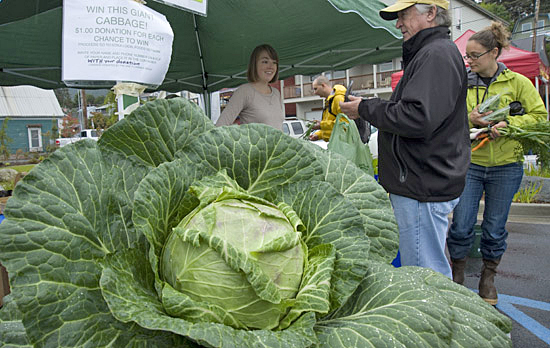
bigcabbagewsFarmers markets have a lot to offer. Beyond the beautiful array of fresh and local food, farmers markets help family farmers thrive, connect us as a community and can be catalysts for both environmental and social good. That is why American Farmland Trust is giving away awards to farmers markets who are the Best in Class in four special areas — Focus on Farmers, Healthy Food for All, Pillar of the Community, and Champion for the Environment.

If you have ever been to the Sitka Farmers Market, you may already know that they are the gold standard for farmers markets in these areas. If you haven’t been to the market before, here are a few reasons why the Sitka Farmers Market deserves to be named one of America’s top markets:

  • Focus on Farmers — The Sitka Local Foods Network, which sponsors the Sitka Farmers Market, has been working with local gardeners and small farmers to increase the amount of locally grown fruits and veggies in Sitka. Not only is locally grown food fresher and better tasting, but it’s better on the environment because it doesn’t have to travel thousands of miles to get to Alaska. The Sitka Farmers Market also is a good place to participate in the $5 Per Week Alaska Grown Challenge to help improve Alaska’s food security.
  • Healthy Food for All — The Sitka Farmers Market was the first farmers market in Southeast Alaska to accept SNAP (food stamps/Alaska Quest cards) and WIC vouchers for people benefitting from those programs. In addition, we have matching dollars of up to $20 per person per market available for SNAP-eligible foods (produce, fish, baked goods, barley products, etc.). This year we are partnering with SEARHC on a program where SEARHC beneficiaries with chronic diseases such as diabetes are prescribed vouchers for fresh produce.
  • Pillar of the Community — The Sitka Farmers Market not only serves as a community gathering place, but it also is a business incubator. It’s a good place for budding entrepreneurs to test ideas and products before going into full production. The Sitka Farmers Market emphasizes local, local, local, which helps put the focus on products from Sitka.
  • Champion for the Environment — It’s estimated that Alaska residents import about 90-95 percent of their food from the Lower 48 or foreign countries. By encouraging people to grow or harvest food locally, we’re cutting down on thousands of miles of transportation costs. That means less fuel is used, and fewer pollutants in the air.

To help shine a light on the Sitka Farmers Market, just go to http://markets.farmland.org/market/sitka-farmers-market/ and recommend our market. In past Farmers Market Celebrations, sponsored by the American Farmland Trust, the Sitka Farmers Market has been at or near the top among the Alaska rankings. Those rankings also helped us crack the recently released 101 Best Farmers Markets in America list compiled by TheDailyMeal.com.

• Sitka Farmers Market makes 101 Best Farmers Markets in America 2015 list

101-farmers-markets

TheDailyMeal.com has ranked the Sitka Farmers Market on its 101 Best Farmers Markets in America 2015 list.

The Sitka Farmers Market ranks 99th in the national rankings. The Homer Farmers Market ranked 60th (although it was incorrectly listed as being from Arkansas) and was the only other Alaska market in the rankings.

#99 Sitka Farmers Market, Sitka, Alaska

Besides being a wonderful farmers market, the Sitka Market provides healthy eating education and entertainment for the community as a part of the Sitka Local Foods Network. The market is open Saturdays from July to September.

The Sitka Farmers Market will take place six times this summer, from 10 a.m. to 1 p.m. on alternate Saturdays, July 4, July 18, Aug. 1, Aug. 15, Aug. 29, and Sept. 12, at the Alaska Native Brotherhood Founders Hall, 235 Katlian St. We offer a wide variety of locally grown produce, locally caught seafood, locally baked bread, and locally made arts and crafts. We also feature live music, and lots of family fun.

• Sitka Local Foods Network to host six Sitka Farmers Market events in 2015

2015SitkaFarmersMarketFlier

Celebrate your independence from store-bought and factory-processed food this year by joining the Sitka Local Foods Network as it hosts the eighth summer of Sitka Farmers Markets in 2015. There will be six markets this year, starting on July 4 and taking place on alternate Saturdays through Sept. 12. The Sitka Farmers Markets give Sitka residents a chance to buy and sell locally produced food and crafts.

The Sitka Farmers Markets take place from 10 a.m. to 1 p.m. on Saturday, July 4, July 18, Aug. 1, Aug. 15, Aug. 29, and Sept. 12 at the Alaska Native Brotherhood Founders Hall (235 Katlian St.). The markets feature local seafood (fresh, frozen, and cooked, ready to eat), locally grown and harvested fruits and vegetables, baked goods, locally made jams and jellies, live entertainment and music, local arts and crafts, and a variety of other items gathered or made in Sitka. We emphasize local products and lots of fun. We are the first farmers market in Southeast Alaska to accept WIC coupons and Alaska Quest EBT for SNAP (food stamp) users. Debe Brincefield is the Sitka Farmers Market manager, with Francis Wegman-Lawless serving as assistant manager.

“The Sitka Farmers Market is a great way to connect with community members and support local entrepreneurs,” Sitka Local Foods Network Board President Lisa Sadleir-Hart said. “Spending your dollars locally has a multiplying effect and helps your neighbors. We also encourage Sitkans to join the $5 Per Week Alaska Grown Challenge and support your local producers each week with $5. Dollars spent locally multiply in our community to the tune of about $3 for each dollar spent. So you get great local food and support your neighbors by spending locally.”

The Sitka Farmers Market started as a community wellness project that came out of a health priority planning meeting at the 2008 Sitka Health Summit. The markets are sponsored by the Sitka Local Foods Network, Alaska Native Brotherhood Camp No. 1, Alaska Native Sisterhood Camp No. 4, Baranof Island Housing Authority, the Alaska Farmers Market Association, the Alaska Division of Public Health Cancer Control Program, and the SEARHC Health Promotion and Diabetes Prevention programs.

“As with the past three seasons, we invite Sitkans who participate in food stamps to use their QUEST card at the market and we will match up to $20 per market for each food stamp participant in a household until resources are exhausted,” Sadleir-Hart said. “So for a family of four that could mean up to $80 extra dollars to shop at each market. Additionally, the St. Peter’s Fellowship Farm stand will be working with the SEARHC Health Promotion program to debut a new fruit and vegetable prescription program at the market. SEARHC’s nutritionist will provide eligible beneficiaries with $5 vouchers to use at the farm stand to access local, fresh produce. The farm stand also will accept WIC farmers market and fruits and vegetable vouchers (FVV).”

To learn more about the market and how to be a vendor, contact Sitka Farmers Market Manager Debe Brincefield at 738-8683 or by e-mail sitkafarmersmarket@gmail.com. Vendor rules, registration forms and other info for potential vendors can be found on the Documents page at http://www.sitkalocalfoodsnetwork.org/.

• Take the $5 Per Week Alaska Grown Challenge and help improve Alaska’s food security

AlaskaGrown2_Graphic

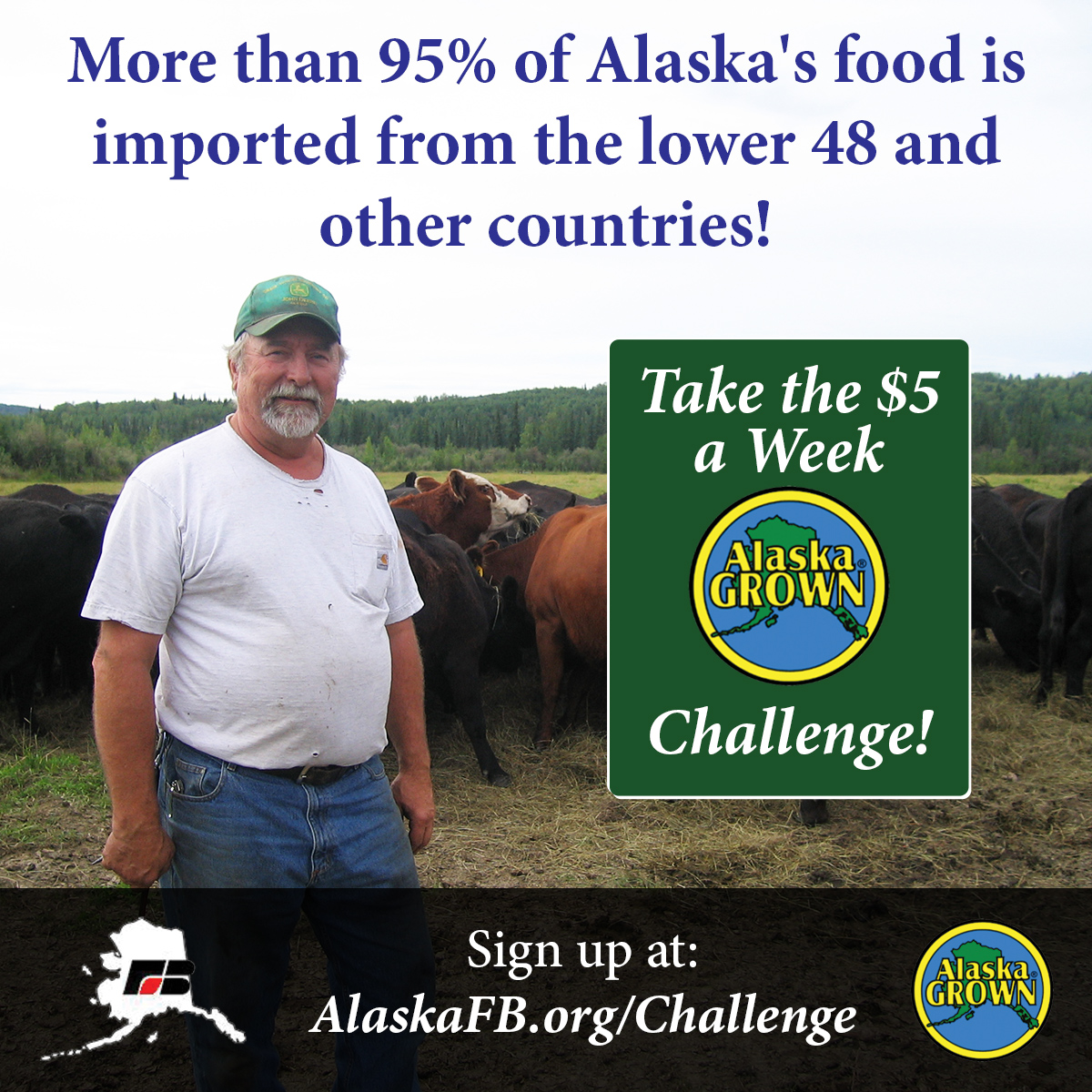
AlaskaGrown3_GraphicThe Alaska Farm Bureau announces the $5 Per Week Alaska Grown Challenge – a statewide campaign to increase consumer spending on Alaska Grown products with the goal of strengthening local economies and increasing Alaska’s food security.

The Kenai Peninsula Chapter of the Alaska Farm Bureau, in partnership with the Kenai Soil and Water Conservation District and several other local organizations (including the Sitka Local Foods Network), launched the $5 Per Week Alaska Grown Challenge on May 5, in honor of Alaska Agriculture Day. Now the Challenge is going statewide with the help of social media, Alaska Farm Bureau chapters, and local food advocates across the state.

“We’d like to see the state investing in agriculture the way it invests in the resource extraction industries,” said Heidi Chay, district manager of the Kenai Soil and Water Conservation District. “After all, everyone needs to eat, and Alaska is at the end of a very long and vulnerable food chain. The signs of agriculture’s growth potential are all around us. … However, if the state can’t or won’t invest in agriculture the way it should, it’s on Alaskan consumers to take the lead. That’s why the District joined with local partners last month to launch the $5 Per Week Alaska Grown Challenge. We’re calling on Alaskans to invest a small part of their food dollars in the future of Alaskan agriculture, by spending $5 per week per person year-round. Farmers market season is a great time to start.”

Sitka residents will be able to participate in the Challenge by purchasing local veggies at the Sitka Farmers Markets this summer. The markets take place from 10 a.m. to 1 p.m. on alternate Saturdays, July 4, July 18, Aug. 1, Aug. 15, Aug. 29, and Sept. 12, at the Alaska Native Brotherhood Founders Hall, 235 Katlian St.

“I’m excited by the prospect of growing local producers pocketbooks with the $5 Per Week Alaska Grown Challenge in Sitka,” said Lisa Sadleir-Hart, Sitka Local Foods Network Board President. “It’s about supporting local foods and your neighbors as well as giving your body the benefit of fresh food. I plan on spending at least $5 a week on local food and doing it at the Sitka Farmers Market makes absolute sense.”

The Challenge calls on Alaskans to spend $5 per week per person on Alaska Grown products year-round. With farmers market season just around the corner, this is the perfect time for Alaskans to commit to investing a portion of their consumer dollars in the future of Alaskan agriculture.

graphic1Agriculture has played an important role in Alaska’s history. Today it is a growing industry with increasing numbers of farms producing food, forage and fiber for local consumers, as well as peonies and rhodiola for sale around the world.

Although farm production is rising, the economic potential of Alaskan farms is far from realized.  More than 95 percent of Alaska’s food is imported, which means that most of our food dollars are leaving the state.

Are Alaska farmers prepared to scale up to meet increasing demand? Yes. According to the Alaska Division of Agriculture, 67 percent of Alaska farmers surveyed indicate that they would increase production if they had more market options. Meanwhile, a warming climate and the rapid adoption of season-extension technologies such as high tunnels are creating more favorable conditions for agriculture.

The Alaska Farm Bureau is calling on every resident in Alaska to join the $5 Per Week Alaska Grown Challenge. If every Alaskan spent $5 per week on Alaska Grown products, year-round, it would have a $188 million dollar impact.

Why buy Alaska grown? Not only are you supporting Alaskans and boosting our economy, you’re also getting a fresher, tastier, more nutritious product. In a blind taste test, 82 percent of Alaskans surveyed could taste the difference between products grown here and those shipped up. Adults and kids say Alaska grown is sweeter, fresher-tasting and crispier.

The $5 Per Week Alaska Grown Challenge isn’t hard. The key, simply enough, is to eat what grows here. You can find a wide variety of produce and value-added products like bread, jam and pickles at farmers markets throughout the summer. Alaska Grown carrots, potatoes, cabbage, milk and barley products (flour, couscous and even pancake mix!) are available year-round in local grocery stores, joined by lettuce, tomatoes, cucumbers and broccoli during the growing season. Local farms produce meat, poultry, eggs and honey, which are available direct from the farm and at locally-owned retailers. Farmers grow more than just food; Alaska also has cut flower and natural fiber industries with products available. Local restaurants, breweries, distilleries and wineries purchase local products to use in their recipes. And don’t forget our local seafood products.

Not sure where to find Alaska Grown? Check out the $5 Per Week Alaska Grown Challenge website (http://www.alaskafb.org/challenge/) where you will find links to local and statewide resources including the Alaska Grown Source Book, a list of local producers and farmers markets. Be sure to ask for Alaska Grown when you are eating out as well.

Take the challenge: $5 per person per week. You’ll help local farmers, boost the local economy, increase Alaska’s food security, and eat better too. Sign up for the challenge here, http://www.alaskafb.org/challenge.

• Taste of Alaska white paper

• USDA offers cost-share assistance program to help farms get certified as organic

Carrots2

2000px-USDA_organic_seal.svgWith the growth of the local foods movement in recent years, many consumers are more aware of the health benefits of eating organically grown food. But in Alaska, getting certified as organic is a challenge due to high costs and no accredited certifying agents being in the state.

In an effort to meet the growing demand for organic food, the U.S. Department of Agriculture (USDA) introduced two cost-share assistance programs to increase the number of farmers and manufacturers working with organic products. The programs cover three-quarters of the certification costs, up to $750 per category (up to $3,000 total), for each of the four categories of organic food — crops, livestock, processed products, and wild crops.

“The organic industry saw record growth in 2014, accounting for over $39 billion in retail sales in the United States,” said Agriculture Secretary Tom Vilsack. “The organic certification cost-share programs help more organic businesses succeed and take advantage of economic opportunities in this growing market.”

The USDA Agriculture Marketing Service National Organic Program (NOP) has allocated approximately $11.9 million to participating state departments of agriculture to help defray the costs of organic certification incurred by organic producers and processors. Reimbursements to organic operations will be made under the Agricultural Management Assistance (AMA) Certification Cost Share Program or the National Organic Certification Cost Share Program (NOCCSP).

The cost-share programs were included in the 2014 Farm Bill. NOCCSP has approximately $11 million available for producers and processors in participating states, U.S. territories and the District of Columbia. AMA has $900,000 for producers in 16 participating states (Alaska is not in the AMA program).

Each state has its own application process, and Barbara Hanson from the Alaska Division of Agriculture in Palmer is Alaska’s contact for the NOCCSP program. She can be contacted at (907) 761-3854 or barbara.hanson@alaska.gov. The program this year is for organic certification costs incurred between Oct. 1, 2014, and Sept. 30, 2015.

Organic certification is important because no food can claim to be organic without the certification, even if it’s grown or processed following organic standards. In Alaska, this has been a challenge because it’s difficult to get a USDA-accredited certifying agent out to our farms and there are none based in our state. So many Alaska farms go without the label. Click this link to learn more about the process for becoming certified as an organic farm.

• 2014 Alaska USDA organic certification cost-share program letter

• 2014 Alaska USDA organic certification cost-share program application

• What Is Organic Certification Fact Sheet

• USDA Organic Cost-Share Programs Information Sheet

• USDA Natural Resources Conservation Service offers funding support program for high tunnels

picture8

The deadline is coming up for the next round of applications for the U.S. Department of Agriculture’s Natural Resources Conservation Service (NRCA) cost-sharing program. This program enables qualifying landowners who produce food to build high tunnels with financial assistance from the USDA.

The next NRCA Alaska program deadline is June 15. However, the program usually sets two applications deadlines a year so applications can be batched and ranked. Applications that miss the June 15 deadline will be held for the next deadline (usually Sept. 15, but it hasn’t yet been posted online).

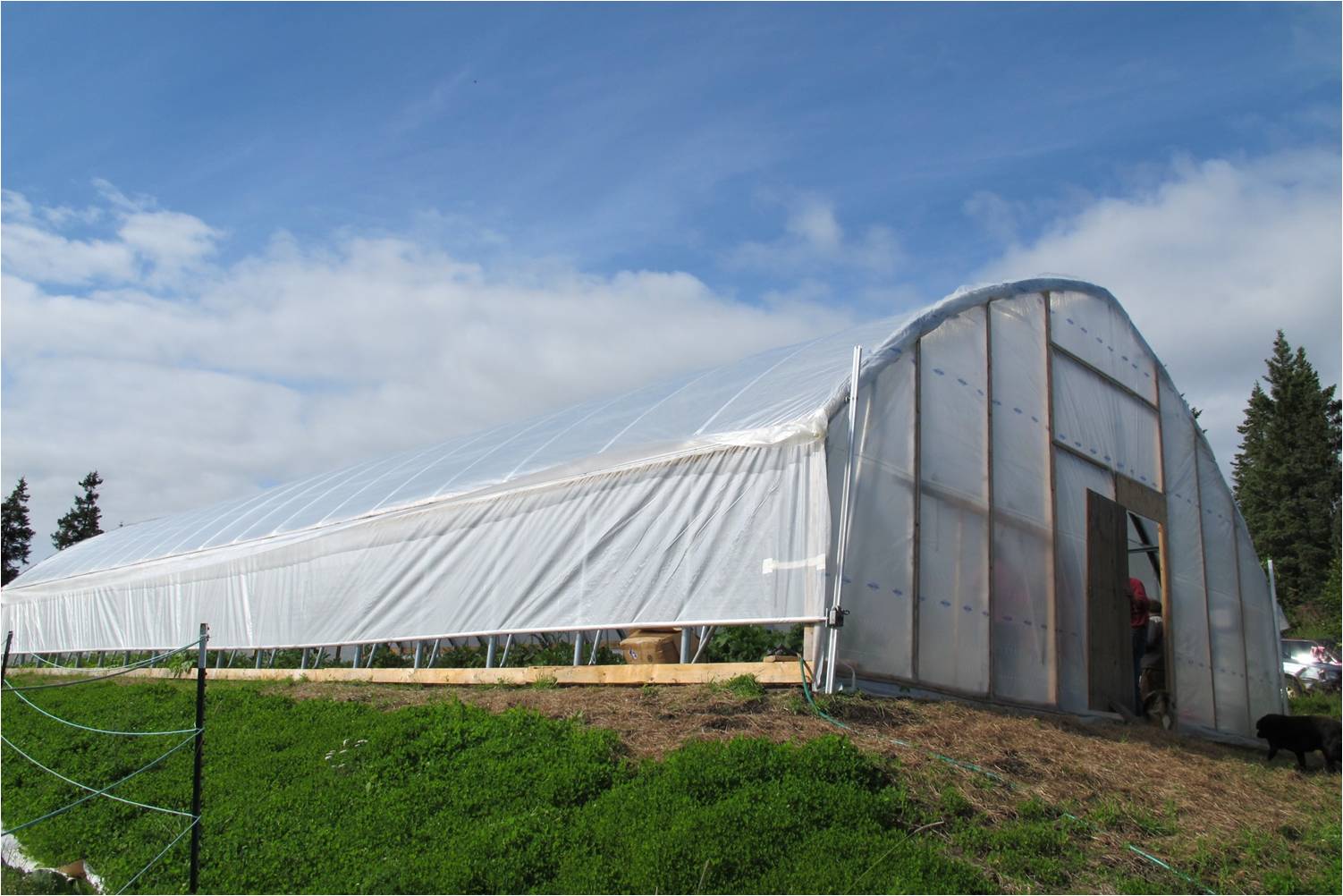
High tunnels, also known as hoop houses or temporary greenhouses, extend the growing season so more food is produced before and after the traditional weather dates for growing stuff outdoors. They also can help with irrigation and drainage, and with pest control.

High tunnels are different than greenhouses in that they are passively heated by the sun, so they have lower energy costs than greenhouses. High tunnels are at least six-feet tall, so people can walk upright in them. Low tunnels, which usually involve some PVC pipe bent over a garden bed and covered with row cover, aren’t eligible in this program. Food in high tunnels is planted either directly into the ground or in raised beds. To learn more about the USDA’s high tunnel program, click here, and click here to get information about the application procedure. This link has frequently asked questions and answers about seasonal high tunnel systems for crops.

Picture10This program started a couple of years ago as a pilot program, but now is a permanent part of of the NRCS EQIP (Environmental Quality Incentive Programs). The program recently was revamped, and one major change is there now is no size restriction on the structures NRCS provides cost-sharing funds (previously it was limited to up to 2,178 square feet, or 5 percent of one acre). Also, geodesic domes are now eligible. Both the land owner and land must meet certain eligibility requirements.

Funding is provided on a reimbursable status once the high tunnel is installed and certified to meet NRCS standards. In 2012 there was just one high tunnel in Sitka, but in 2013 there were six. Other areas of the state, such as Homer, have built dozens of high tunnels through the program.

For information regarding the NRCS technical service or program participation in Southeast Alaska, please contact Samia Savell or Will Murray at the Juneau field office at (907) 586-7220 or 586-7208, or send email to samia.savell@ak.usda.gov or william.murray@ak.usda.gov. The June 15 deadline is the first deadline for the Fiscal Year 2016 funding cycle. Click here for a link to the Alaska NRCS page. Click here for an interview with Samia Savell on KRBD-FM (Ketchikan) about the program.

• High Tunnel In Alaska Fact Sheet (March 2014)

• Flier about Southeast Alaska cost-sharing program for FY2016 (March 2015)

• Check out the June 2015 edition of the Sitka Local Foods Network newsletter

SLFNJune2015NewsletterScreenshot

The Sitka Local Foods Network just sent out the June 2015 edition of its newly launched monthly newsletter. Feel free to click this link to get a copy.

This edition of the newsletter has brief stories about several new street food options in Sitka that are highlighting local seafood, a Blessing of the Garden ceremony at St. Peter’s Fellowship Farm, an update on a June 2 meeting for prospective and past vendors of the Sitka Farmers Market, and a reminder about the Plant a Row for the Hungry program. Each story has links to our website for more information.

You can sign up for future editions of our newsletter by clicking on the registration form image in the right column of our website and filling in the information. If you received a copy but didn’t want one, there is a link at the bottom of the newsletter so you can unsubscribe. Our intention is to get the word out about upcoming events and not to spam people. We will not share our email list with others to protect your privacy.

• New street food vendors add a taste of seafood to the Sitka summer

AshmosAshleyMooreServing

AshmosSalmonTacosAndFriesOver the past decade there have been a handful of summer pop-up street food options in Sitka. This year there are several new food trucks/carts in town, and locally sourced seafood is featured on the menu.

In past years some of the bigger street food options included Reindeer Red Hots (which this year will only do special events like the Sitka Farmers Market and Sitka Seafood Festival instead of holding its regular street corner), the Ludvig’s Bistro Chowder Cart (still serving lunch of clam chowder and salmon or prosciutto baguettes in the Mill Building by the Sitka Sound Science Center) and the short-lived Two Chicks and a Kabob Stick (which closed a couple of years ago, though you can still get the Inga’s Spice Blend fish rub developed for the food cart).

AshmosSalmonMacAndCheeseThe most mobile of the new group of street food stands is Ashmo’s, a food truck owned by Ashley Moore specializing in Alaska seafood dishes. Ashmo’s has been parked out in front of the Coliseum movie theater on Lincoln Street for much of the summer. But the truck also has been available this summer at Baranof Island Brewing Company on Tuesday nights and for other special events (including the BIBCO community benefit night May 27 for the Sitka Local Foods Network), with occasional trips to the Old Sitka Docks, and by Eliason and New Thompson harbors.

AshmosFishAndChipsAshmo’s serves a variety of seafood dishes, with a menu that does change through the week. Among the mainstays are salmon mac and cheese, rockfish tacos, BIBCO beer-battered halibut, fish (cod) and chips, blackcod collars and rice, grilled king salmon and rice, and more. Salmon sliders and salmon tacos also have been on the menu on some days. Ashmo’s is usually open during the day in front of the Coliseum, and it also has been open late nights on weekends. Ashley usually posts a weekly schedule on her Facebook site.

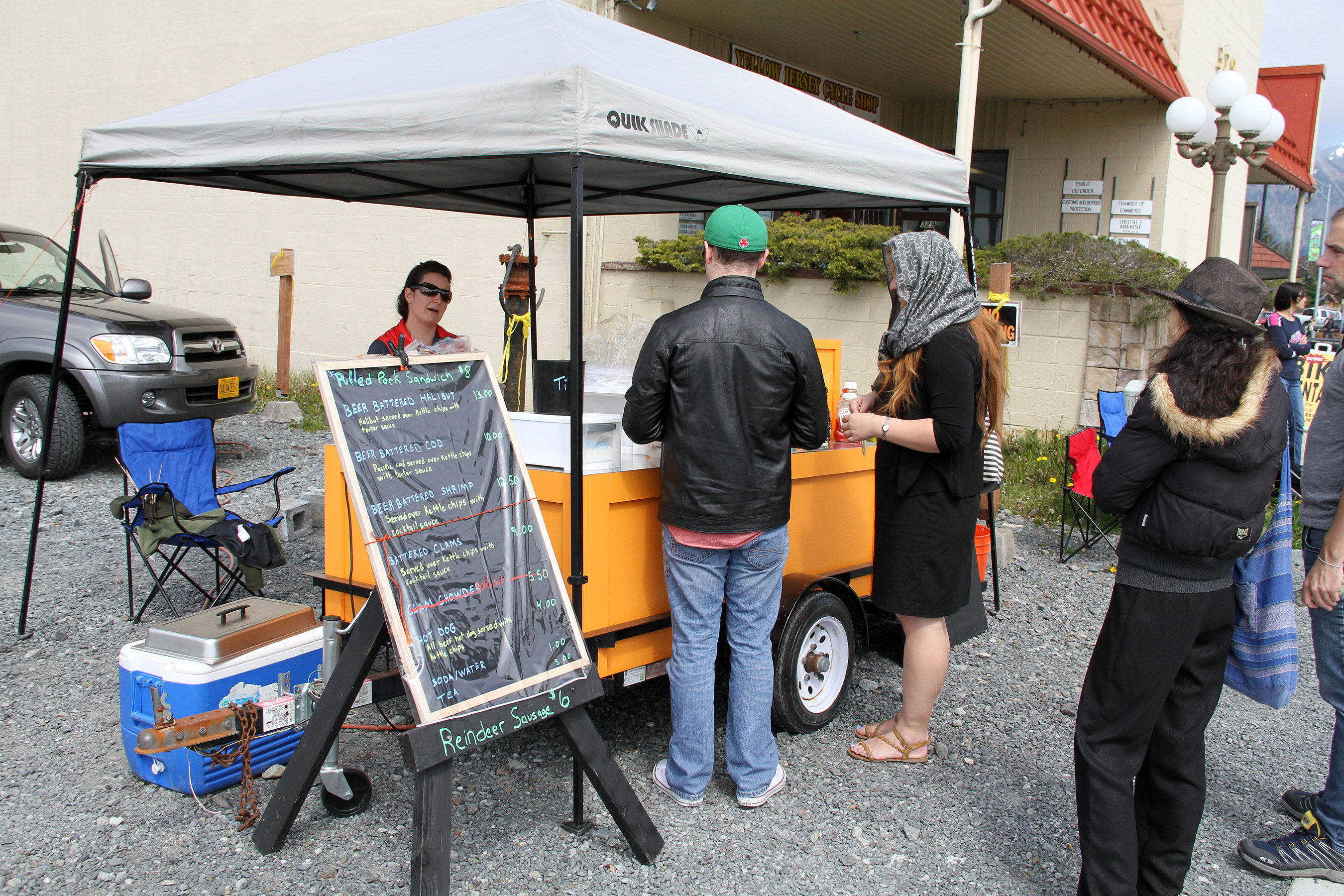
BarnacleBayKitchenHeidiMorrisonOn Harbor Drive next to Yellow Jersey Cycle Shop is Barnacle Bay Kitchen, owned by Heidi Morrison. Barnacle Bay Kitchen is open for lunch on cruise ship days and sells halibut and chips, cod and chips, rockfish lumpia (egg rolls), bacon-wrapped halibut kabobs, reindeer hot dogs, beef hotdogs, and pulled pork sandwiches.

BarnacleBayKitchenCodAndChipsIn addition, Heidi has a variety of chowders available (clam, seafood, or smoked salmon, depending on the day). For more information, call Heidi at 738-8504.

The Ráns Net pelmeni (Russian dumpling) stand actually came onto the scene in Sitka last summer, but this year owner Ayla Stromquist has a new building tucked into an alley on Lincoln Street across from Old Harbor Books and between Wintersong Soaps and the Cellar. PelmeniShe also has a couple of new flavors of pelmenis. Last year she had two flavors — meat (beef and pork mixed) and potato. This year she’s added chicken, smoked salmon and cream cheese, and sautéed onions.

The pelmeni stand is noted for being a late-night option on weekends, but it will be open for some lunches from 11 a.m. to 2:30 p.m. on Monday, Wednesday and Saturday, for dinner from 5-8 p.m. on Friday and Saturday, and from 11 p.m. to 2 a.m. on Friday and Saturday. Ayla also said she has a new machine on order to help press the pelmenis. The stand is closed until June 11, but people can watch the Facebook page or call Ayla at 738-5804 to get updated hours.

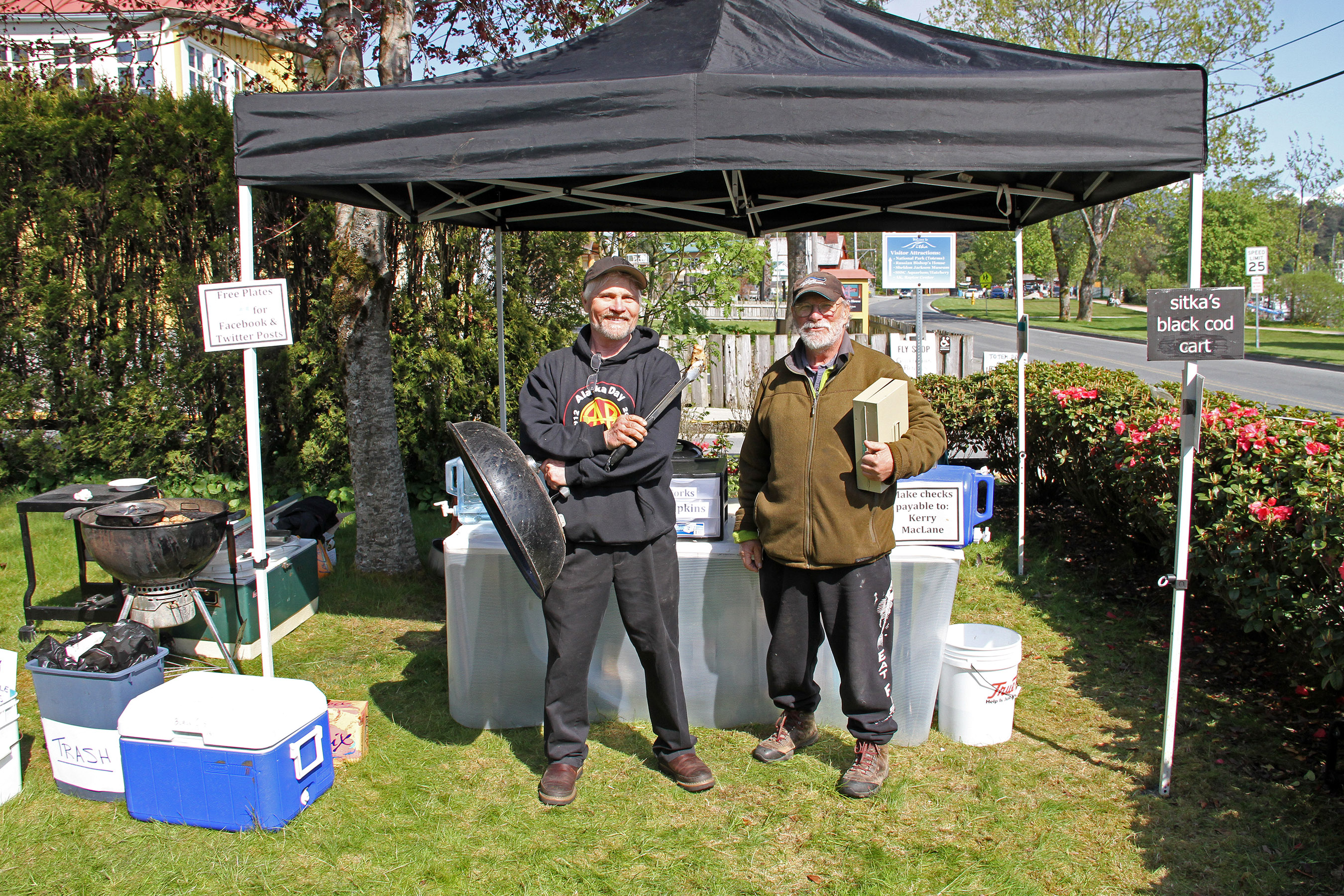
BlackcodCollarsKerryMacLaneWardEldridgeKerry MacLane and his blackcod (sablefish) collars have been a mainstay at the Sitka Farmers Market for several years. But this year he has a tent from 10 a.m. to 2 p.m. on cruise ship days in the front lawn at Sitka Rose Gallery on Lincoln Street. Kerry just sells one item, his BBQ grilled blackcod collars (aka blackcod tips) over rice. Kerry will reopen his stand on June 1. For more information, contact Kerry at 752-0654.

BlackCodTipsAndRice