• Paralytic shellfish poisoning (PSP) warning issued for Southeast Alaska

The enclosed copy is courtesy of the SouthEast Alaska Regional Health Consortium (SEARHC) website.

A cockle has deep ridges similar to a Ruffles potato chip (Photo courtesy of Alaska Department of Environmental Conservation)

A cockle has deep ridges similar to a Ruffles potato chip (Photo courtesy of Alaska Department of Environmental Conservation)

This past week has seen five cases of paralytic shellfish poisoning (PSP) in Alaska, including two cases in Southeast Alaska that resulted in the June 17 death of a Juneau woman who ate a cockle and the June 22 death of a Haines man who ate a Dungeness crab. The other three cases were in Kodiak and they resulted in illness from eating butter clams.

The two Southeast deaths, if confirmed by autopsy, will be the first paralytic shellfish poisoning deaths in Alaska since 1997. In 2009 there was just one reported case of PSP in Alaska, and there were no cases of PSP in 2008 and one in 2007. There have been periodic outbreaks of PSP over the years, with the most deadly instance coming when clams and mussels gathered from Peril Straits near Sitka killed more than 100 Russians and Aleuts in 1799.

According to the Alaska Department of Health and Social Services, the 57-year-old Juneau woman reportedly ate cockles she gathered on June 14 from the Point Louisa end of Auke Bay. She died June 17 after being hospitalized at Bartlett Regional Hospital in Juneau. The Alaska Department of Environmental Conservation tested cockles from Auke Bay after the woman was hospitalized and DEC found the Auke Bay cockles had much higher levels of PSP than acceptable (they should not have more than 80 parts per million, and the cockles had 2,044 parts per million).

The 57-year-old Haines man reportedly ate Dungeness crab on June 18 that he caught off Jenkins Rock near the Chilkat Inlet of Lynn Canal. He was hospitalized at Bartlett Regional Hospital on June 18 and released from the hospital on June 21. He died in his Haines home early on June 22. Dungeness crab meat does not contain PSP, but the viscera (guts) can have the toxin, health officials said. People should not eat crab viscera. The Department of Environmental Conservation plans to test crabs from Southeast for PSP.

What is paralytic shellfish poisoning (PSP)?

Paralytic shellfish poisoning, or PSP, is a potentially lethal toxin that can lead to fatal respiratory paralysis, according to the Alaska Department of Environmental Conservation. The toxin comes from algae, which is a food source for clams, mussels, crabs and other shellfish found across Alaska. This toxin can be found in shellfish every month of the year, and butter clams have been known to store the toxin for up to two years. The toxin cannot be seen with the naked eye, and there is no simple test a person can do before they harvest. One of the highest concentrations of PSP in the world was reported in shellfish from Southeast Alaska.
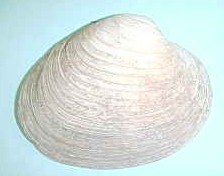
The butter clam has one set of rings that go one direction only, around the same center point (Photo courtesy of Alaska Department of Environmental Conservation)

The butter clam has one set of rings that go one direction only, around the same center point (Photo courtesy of Alaska Department of Environmental Conservation)

Symptoms of PSP can begin almost immediately, or they can take several hours after eating the affected shellfish before they appear. Symptoms include shortness of breath, tingling, dizziness and numbness. If you suspect someone has symptoms of PSP, get that person to a medical facility fast (an Alaska Sea Grant link below has first aid for PSP). Death is rare from PSP, but some people have died after eating just one clam or mussel with the PSP toxin, while in other cases it took eating many clams or mussels to get enough of the poison to cause death.

Are Southeast beaches safe for subsistence or recreational shellfish harvesting?

The Department of Environmental Conservation recommends harvesting of shellfish only from DEC-certified beaches, and the only certified beaches in the state are located in the Cook Inlet and Kachemak Bay areas of Southcentral Alaska. According to DEC, there are no certified beaches in populated areas of Southeast Alaska, Kodiak or the Aleutian Islands. The only beaches DEC can certify as safe for shellfish collecting are those where state-certified testing of clams and mussels is done regularly.
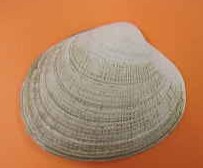
The littleneck clam has two sets of rings that cross each other at 90 degree angles (Photo courtesy of Alaska Department of Environmental Conservation)

The littleneck clam has two sets of rings that cross each other at 90 degree angles (Photo courtesy of Alaska Department of Environmental Conservation)

“Do not eat shellfish from uncertified beaches,” DEC Program Specialist George Scanlan said. “Anyone who eats PSP-contaminated shellfish is at risk for illness or death.”

The DEC warning does not apply to commercially grown and harvested shellfish available in grocery stores and restaurants. Commercially grown and harvested shellfish goes through a regular testing program before it goes to market.

Paralytic shellfish poisoning (PSP) resources

DEC page about paralytic shellfish poisoning (PSP) and how it works, http://www.dec.state.ak.us/eh/fss/seafood/psp/psp.htm

DEC links page with more info about PSP,
http://www.dec.state.ak.us/eh/fss/seafood/psphome.htm

DEC page about identifying butter clams, littleneck clams and cockles (has photos),
http://www.dec.state.ak.us/eh/fss/seafood/psp/shellfish.htm

Current DEC warning about PSP in Alaska (dated June 16, 2010),
http://dec.alaska.gov/press_releases/2010/2010_06_16_psp%20final.pdf

Joint DH&SS/DEC press release about Haines case of PSP (dated June 21, 2010),
http://www.hss.state.ak.us/press/2010/Additional_case_of_PSP_reported_062110.pdf

DH&SS  fact sheet about paralytic shellfish poisoning, http://www.hss.state.ak.us/pdf/201006_shellfish.pdf

Twitter feed for the Alaska Department of Health and Social Services,
http://twitter.com/alaska_DHSS

Alaska Sea Grant page with links about paralytic shellfish poisoning,
http://seagrant.uaf.edu/features/PSP/psp_page.html

Alaska Sea Grant page with first aid for PSP victims (get victim to medical facility fast),
http://seagrant.uaf.edu/features/PSP/PSP_aid.html

Centers of Disease Control and Prevention page on marine toxins (including PSP),
http://www.cdc.gov/nczved/divisions/dfbmd/diseases/marine_toxins/


• Sitka Seafood Festival steering committee to meet on Saturday, April 17

The next meeting of the Sitka Seafood Festival steering committee is 10 a.m. on Saturday, April 17, at Harrigan Centennial Hall.

During the April 10 meeting, the committee voted Lily Herwald in as secretary and Phyllis Hackett as bookkeeper. The committee also decided to book “NANDA: Acrobaticalist Ninja Action Heroes,” a four-man juggling, acrobatic, martial arts and comedy troupe that is performing at the Southeast Alaska State Fair on July 29-Aug. 1 in Haines, the weekend before the Sitka Seafood Festival (Aug. 6-7). A headline music group also is being booked.

Committee members will be canvassing local businesses for donations to cover the costs of hosting the inaugural Sitka Seafood Festival, and the deadline for donations is May 9 (Mother’s Day). A donation/sponsorship letter has been approved and committee members soon will distribute it to local businesses. Donations will be accepted after May 9, but that’s the deadline to be included in the event promotional materials, which uses a tier system based on the amount of the donation. Donation/sponsorship checks need to be written to the “Sitka Conservation Society” with a memo of “Sitka Seafood Festival” or “SCS/SSF” (the Sitka Conservation Society is letting us share their 501(c)(3) permit until we can get our own next year).

Also, committee members are seeking prizes for a raffle and raffle prize commitments are needed by Wednesday, April 14, to either Alicia Peavey (alaska_al33@hotmail.com or 1-928-607-4845) or Linda Olson (747-6985 or Baranof Elementary School). The raffle will feature 800 tickets at $5 each, with the drawing to take place on May 9 (Mother’s Day). Donations of merchandise, including locally caught seafood or gourmet meals of Sitka seafood, are greatly appreciated.

During the April 5 meeting, the steering committee decided to hold the inaugural Sitka Seafood Festival on Friday and Saturday, Aug. 6-7. The tentative plan is to have an opening dinner on Friday night with a guest chef and the possibility of live music. The main events will be on Saturday, with vendors set up all day, contests, a parade, cooking demos, music and educational activities. The headliner music guest will play a concert/dance on Saturday night.

To learn more about the Sitka Seafood Festival or to volunteer to help on one of the committees, e-mail sitkaseafoodfestival@gmail.com. You also can contact Alicia Peavey at alaska_al33@hotmail.com or 1-928-607-4845.

Sitka Seafood Festival minutes from the April 10, 2010, meeting

Sitka Seafood Festival committee breakdown and job tasks (updated)

Sitka Seafood Festival business donation assignments (who asks) (updated)

• Two associated with Sitka Local Foods Network win awards at Alaska Health Summit

Sitka filmmaker Ellen Frankenstein, center, of Frankenstein Productions, greets fans after the Sitka premiere of her film "Eating Alaska" in October 2008

Sitka filmmaker Ellen Frankenstein, center, of Frankenstein Productions, greets fans after the Sitka premiere of her film "Eating Alaska" in October 2008

The Alaska Public Health Association (ALPHA) honored two programs with ties to the Sitka Local Foods Network during the Alaska Health Summit banquet on Dec. 9. Sitka filmmaker Ellen Frankenstein (and her Frankenstein Productions company) and the SouthEast Alaska Regional Health Consortium (SEARHC) Steps to a Healthier SE Alaska program both won the Alaska Community Service Award. According to ALPHA, the Alaska Community Service Award “recognizes an organization, business or group making a significant contribution to improving the health of Alaskans. It is ALPHA’s intent that nominees outside the public health tradition be considered for this award. A nominee does not need to be an ALPHA member.”

Frankenstein has produced several documentary films over the years, including “Eating Alaska,” which focuses on how we choose the food we eat. Eating Alaska debuted in the fall of 2008, and Frankenstein has taken it to film festivals all over the state and country. “Eating Alaska” received funding support from the SEARHC Steps to a Healthier SE Alaska program and other funders, plus technical support was provided by SEARHC health educators, physicians and dietitians. Some of Frankenstein’s other films include “No Loitering,” “Carved from the Heart,” “A Matter of Respect,” and “Miles from the Border.” She currently is working on a documentary film project with Haida weaver Dolores Churchill.

“As someone who fills in the occupation blank on forms with ‘filmmaker/artist,’ this award represents the fact that labels and lines don’t matter when it comes to social change and to making our lives healthier,” Frankenstein wrote from Austin, Texas, where she was attending a screening of Eating Alaska. “It not only validates my work, but represents your open-mindedness to the potential of working collaboratively and creatively with kids and adults, using art, media and storytelling to influence well-being and healthy communities.”

Frankenstein also sent this note to her e-mail group:

EATING ALASKA: ART AND HEALTH!
We just got the news the project has been awarded The Alaska Public Health Association’s 2009 Community Service Award for Health. In the process of making this film and in its use we’ve worked with nutritionists, health educators, medical and public health practitioners to add to the conversation about what we can do to make our homes, workplaces, schools and communities healthier and more sustainable. We appreciate the help everyone has given to the project to help us “contribute to improving the health of Alaskans” and others far beyond.

The SEARHC Steps to a Healthier SE Alaska program, which closes this month, was honored for the work it did over the life of its five-year grant (the national Steps to a Healthier US grant has ended, so that means all of the local grants that were part of the national grant also are ending). The Steps program funded 77 projects worth just over $1.1 million in 12 Southeast Alaska communities. Steps was one of the major funders and organizers of the Sitka Health Summit, which is where the Sitka Local Foods Network originated.

The Steps program’s goals were to increase opportunities for physical activity, improve nutrition and reduce the impact of tobacco in Southeast Alaska. The program also worked to reduce diabetes, obesity and asthma in Southeast communities. To accomplish its goals, Steps developed partnerships with schools, worksites, tribes and other community groups so they could change social norms and policies, and make evidence-based and culturally relevant interventions. In addition to the projects, Steps also hosted conferences and workshops to help programs learn how to work in collaboration.

The Steps program used the socio-ecological model, which emphasizes that an individual’s health status is influenced not only by his or her attitudes and practices, but also by personal relationships and community and societal factors. Nearly half of the 77 Steps grants (37) went to community projects, with the others geared toward schools and worksites. More than three-quarters of the grants (60) focused on improving nutrition and/or increasing physical activity. Together, the projects reached 128,000 people (with many people reached by multiple projects) in the communities of Angoon, Craig, Haines, Hoonah, Hydaburg, Juneau, Kake, Kasaan, Klawock, Klukwan, Sitka and Wrangell.

“Overall, the Steps initiative helped build capacity within communities, worksites and schools to work collaboratively, to plan evidence-based programs, and to monitor and evaluate program success,” said Grace Brooks, Steps Grant Manager. “Steps also contributed to an overall increased understanding of the importance of policy in supporting community, school and workplace health.”

In other local foods news from around the state this past week, the Alaska Dispatch ran an article about an indoors farmers market this winter at Anchorage’s Northway Mall.

Capital City Weekly featured a story by Carla Petersen about how the search for elusive cranberries is worth the challenge.

The National Oceanic and Atmospheric Administration (NOAA) announced last week that it is encouraging the use of catch shares to preserve the remaining stocks of halibut (the article features a photo from Sitka).

The Anchorage Daily News featured a story about Gov. Sean Parnell proposing to spend $1.3 million to research declining Yukon River salmon runs.

The Juneau Empire had a story about how an arts advocacy group in Juneau, Arts for Kids, has teamed up with Sitka-based Theobroma Chocolate Co. to offer SmART bars as a fundraiser for art scholarships for graduating seniors in Juneau.

The publicity poster for the movie Eating Alaska

• Sitka film featured in Palmer’s “Local Harvest, Local Food” film festival, a Sitka café featured for using local food and other local foods news

Food Film Fest Poster-2

Join the Palmer Arts Council for its inaugural “Local Harvest, Local Food” film fest from Thursday, Nov. 19, through Sunday, Nov. 22, at the Strangebird Consulting Office in downtown Palmer. “Good Food” screens at 7 p.m. on Thursday, Nov. 19; “Fresh” shows at 7 p.m. on Friday, Nov. 20; “Eating Alaska” by Sitka filmmaker Ellen Frankenstein screens at 7 p.m. on Saturday, Nov. 21; and “Ingredients” shows at 3 p.m. on Sunday, Nov. 22. After the Sunday showing there will be a discussion about women in agriculture with Cynthia Vignetti. Suggested donations are $10-15 for all films except for Sunday, which is free.

A Sitka restaurant, the Larkspur Café, was featured in Capital City Weekly last week. The article talks about the origins of the restaurant, which is located in the same building as KCAW-Raven Radio. It also discusses the restaurant’s use of local foods, including owners Amelia Budd and Amy Kane purchasing produce from the Sitka Farmers Market during the summer.

In other local foods news from around the state, the National Oceanic and Atmospheric Administration (NOAA) recently announced an expansion to the state’s subsistence halibut fishery to include more rural residents (this includes the Sitka area). The new rules, which take effect on Dec. 4, redefine who qualifies as a rural resident. The previous rules defined rural residents as people living in a rural community or people belonging to a Native tribe with customary and traditional uses of halibut, and the news rules try to catch subsistence halibut users who fell outside the previous definition. Click this link for more information about subsistence halibut regulations and applications.

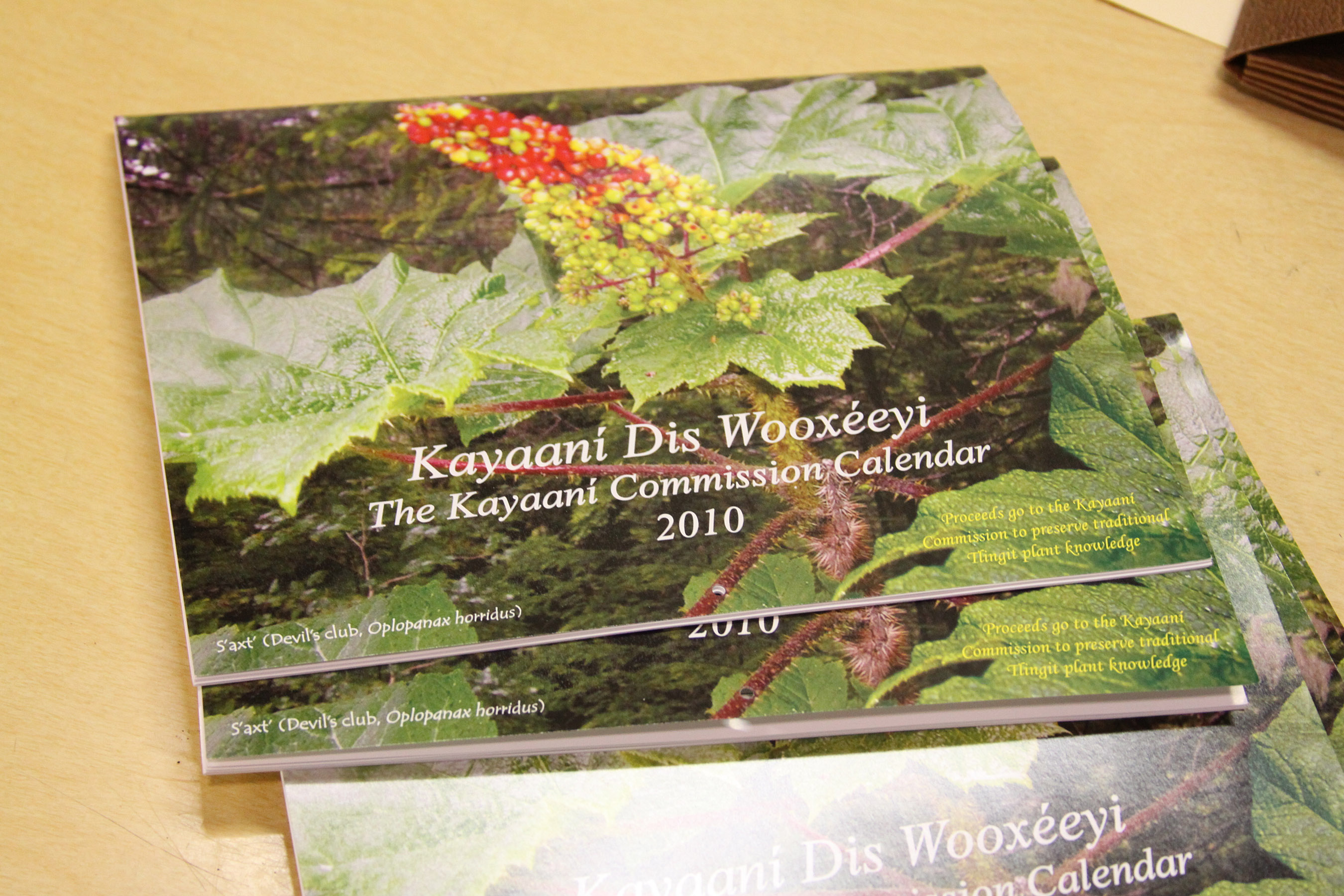
The Daily Sitka Sentinel has been running a brief announcement from the Sitka Tribe of Alaska’s Kayaaní Commission, which is selling 2010 calendars, CDRoms and field guides about traditional uses of native plants. Here is the information:

Kayaaní Native Plant Publications Available: 2010 Kayaaní Harvest Calendars featuring native plants and their traditional and cultural uses ($16, $2 postage per address); Interactive Ethnobotanical CDRoms with native species, their Tlingít, scientific and common names, and interviews with Elders on the traditional and medicinal uses of plants ($15, $1 postage per address); Ethnobotanical Field Guides ($16, $1 postage per address). We will mail to the addresses of your choice. Order by Dec. 18 for guaranteed delivery before Christmas. Call or e-mail with your order: 907-747-7178, pbass@sitkatribe.org, STA Kayaaní Commission, 456 Katlian. All proceeds will assist the nonprofit Kayaaní Commission in protecting, perpetuating and preserving knowledge of native plants.

The Chilkat Valley News weekly newspaper from Haines featured an article about sixth-graders at Haines School learning how to compost their leftover food (including leftover meat) so it can be used for gardening. The school is working with the Takshanuk Watershed Council to teach the students about composting. The students call their compost project “Marvin” because it’s a living organism.

The Alaska Dispatch recently ran a feature called “Growing Season” that discusses some of the farms in the Matanuska-Susitna valleys that grow local food. The feature includes video clips of harvest time at a couple of the farms featured.

The Mat-Su Frontiersman had a feature called “Chicken U,” which is about raising chickens in Alaska and getting them to produce eggs during the winter months.

The Anchorage Daily News also mentioned Chicken University, which will be one of several presentations at the Alaska Farm Bureau annual meeting on Friday, Nov. 13, at the Millennium Hotel in Anchorage. Other presentations are on growing apples in Alaska and preserving your harvest.

The Anchorage Daily News also had an article about how to get local produce in Anchorage during the winter, either through the Glacier Valley CSA produce boxes from Palmer or the indoor farmers market at the Northway Mall.

Anchorage Daily News garden columnist Jeff Lowenfels wrote a column about how hydroponic gardening is easier and cheaper than ever. The column includes lots of links for people who want to try this method of growing food without soil (by the way, there is a hydroponic garden at McMurdo Station in Antarctica that keeps the scientists there stocked in fresh produce in a land of ice).

Fran Durner’s “Talk Dirt To Me” blog on the Anchorage Daily News site includes a post about how snow can act as mulch for the garden.

The Ester Republic, a monthly publication for the community near Fairbanks, runs periodic articles about sustainability and local food security issues. Some of the articles are linked in the archives, and the editors are working to get more of the past articles on these topics online so more people can enjoy them.

KayaaniCommissionCalendarFront´

• Recent articles highlight food security issue in rural Alaska

The New York Times on Saturday ran a lengthy article by former Fairbanks Daily News-Miner reporter Stefan Milkowski about how weak runs of king salmon are hurting Yukon River communities. The article is datelined from the village of Marshall, near the mouth of the Yukon River, where villagers already are feeling the pinch of no salmon to fill their freezers for the winter.

This is a region where heating oil costs $7 a gallon and a can of condensed milk goes for nearly $4. It also is a region that last year faced critical food shortages last year, with many faith groups from around the country sending food to help tide the residents through the winter. Click here to read accounts from “Anonymous Bloggers” about last year’s airlift and what villagers are doing to prepare for this winter.

The food shortages resulted in some July protest fisheries, which resulted in the arrest of the only police officer in Marshall, Jason Isaac, who joined other villagers in claiming state and federal fish and wildlife officials were more concerned with a Canadian fish treaty than they were about rural Alaskans. The Tundra Drums reports that 67,000 Yukon kings reached Canada, about 10,000 to 13,000 more than the treaty called for.

In relatively close-by Bethel, Tim Meyers and his wife Lisa have helped their communities food security with Meyer’s Farm, which is growing enough fruits and vegetables that Bethel residents can buy weekly boxes of locally grown produce for $30. This shows that local produce can be grown in rural Alaska to reduce our dependency on store-bought food.

Food security also hits closer to home, where state Sen. Albert Kookesh of Angoon faces a trial over subsistence fishing practices near his home village.

Not all of the local foods news in Alaska is gloom and doom this week. The Fairbanks Daily News-Miner featured a story on Monday about the growth of the Delta Meat and Sausage plant in Delta Junction, which processes locally raised Galloway cattle and game meat shot by local hunters.

Also, this week’s Chilkat Valley News (Haines weekly) included a brief item about a Haines moose hunter who was the beneficiary of a snow goose dropped by a hawk that didn’t have the strength to carry its prey.

Finally, the Alaska Dispatch site includes an update on the inaugural Alaska Local Food Film Festival, which runs from Oct. 2-8 at the Beartooth Theatrepub and Grill in Anchorage. Sitka filmmaker Ellen Frankenstein presented her movie “Eating Alaska” on Sunday, Oct. 4.

• Capital City Weekly features Sitka Farmers Market’s Table of the Day Award and other news about local foods

Screenshot of Capital City Weekly feature on Sitka Farmers Market Table of the Day Award winners

Screenshot of Capital City Weekly feature on Sitka Farmers Market Table of the Day Award winners

Click here to see a photo in this week’s Capital City Weekly highlighting Evening Star Grutter and Fabian Grutter of Eve’s Farm, who won the Table of the Day Award during the fourth Sitka Farmers Market of the summer on Aug. 29. Don’t forget the fifth and final Sitka Farmers Market of the summer takes place from 10 a.m. to 2 p.m. this Saturday, Sept. 12, at Alaska Native Brotherhood Hall (235 Katlian St.). We look forward to seeing you there.

There also have been several other local foods stories in the news in Alaska in recent days.

Click here to read a Capital City Weekly article about the Autumn Festival on Saturday, Sept. 19, in Juneau. The Autumn Festival features some local food booths, in addition to the usual arts and crafts and the beer garden (part of the Autumn Pour homebrew competition) that make up the bulk of the show at the Juneau Arts and Culture Center.

Click here to listen to a newscast from KHNS-FM public radio in Haines that features a story about local efforts in Haines and Skagway to promote local foods during the Alaska Grown Eat Local Challenge on Aug. 23-29 (link opens an online MP3 audio file, story starts about halfway through the newscast). The story mentions that the last Haines Farmers Market of the season takes place from 10 a.m. to 1 p.m. on Saturday, Sept. 12 (click here for info).

Click here for an Anchorage Daily News article on what crops to expect at this weekend’s farmers markets in the Anchorage and Mat-Su valleys.

Click here to read an article from The Redoubt Reporter (an online news site from the Kenai Peninsula) about the annual honey extraction event hosted by the Eat Me Raw Honey Company in Kasilof (a community near Kenai and Soldotna). During this event, they clean honey out of the hives and processing it.

Click here to read an article from The Mat-Su Valley Frontiersman about Wasilla dentist Steve Hubacek and his two record-breaking cabbages at the Alaska State Fair in Palmer.

• SEARHC, Cooperative Extension hosts free garden workshop on Sept. 9

Master gardener Bob Gorman shows off seed starts in wet paper towels during a March garden workshop

Master gardener Bob Gorman shows off seed starts in wet paper towels during a March garden workshop

Do you want to grow some of your own food this summer, so you can have more fresh food choices and eat healthier dinners? Then the fourth and final installment in a continuing series of garden workshops is for you.

The SEARHC Diabetes and Health Promotion programs have teamed up with master gardener Bob Gorman of the Sitka office of the University of Alaska Fairbanks Cooperative Extension Service to offer a series of four free garden workshops during the summer of 2009. The last workshop of the series takes place from 1:30 to 3 p.m. on Wednesday, Sept. 9.

The class will be hosted at the SEARHC Community Health Services Building third-floor conference room in Sitka (1212 Seward Dr.). But participants in other communities will join by video or audioconference from the SEARHC Juneau Administration Building Conference Room, the SEARHC Jessie Norma Jim Health Center in Angoon, the Haines Borough Library, the SEARHC Kake Health Center and the SEARHC Alicia Roberts Medical Center in Klawock.

“Even though summer is winding down, people still have a lot they can do in this year’s growing season,” said Maybelle Filler, SEARHC Diabetes Grant Coordinator. “Southeast Alaska is unique in its growing conditions, and it’s great that the SEARHC Diabetes and Health Promotion programs can partner with the Sitka office of the University of Alaska Fairbanks Cooperative Extension Service to provide information on growing things in our area.”

The first three workshops in the four-workshop series were March 11, May 6 and July 8. The topics for the remaining workshop are:

* Sept. 9 — Late-winter plantings; trees and shrubs; house plants and indoor gardening; and winterizing your garden.

For more information about this series of free workshops, contact SEARHC Diabetes Grant Coordinator Maybelle Filler at 966-8739 or maybelle.filler@searhc.org. People who aren’t able to attend at one of the listed video or audioconferencing sites, should contact Maybelle for other options. Maybelle also has extra copies of the handouts for those who miss any of the garden workshops.

• SEARHC, Cooperative Extension host free garden workshops

BobGormanSeedStarts

(Photo — Master gardener Bob Gorman shows off germinating seed starts during a free garden workshop in March. He will lead another workshop on July 8.)

SEARHC, Cooperative Extension host free garden workshops

Do you want to grow some of your own food this summer, so you can have more fresh food choices and eat healthier dinners? Then the third in a continuing series of garden workshops is for you.

The SEARHC Diabetes and Health Promotion programs have teamed up with master gardener Bob Gorman of the Sitka office of the University of Alaska Fairbanks Cooperative Extension Service to offer a series of four free garden workshops during the summer of 2009. The remaining workshops take place from 1:30 to 3 p.m. on Wednesday, July 8, and Wednesday, Sept. 9.

These classes will be hosted at the SEARHC Community Health Services Building third-floor conference room in Sitka, but other communities will join by video or audioconference from the SEARHC Juneau Administration Building Conference Room, the SEARHC Jessie Norma Jim Health Center in Angoon, the Haines Borough Library, the SEARHC Kake Health Center and the SEARHC Alicia Roberts Medical Center in Klawock.

“Even though summer hasn’t fully arrived, people still have a lot they can do in this year’s growing season,” said Maybelle Filler, SEARHC Diabetes Grant Coordinator. “Southeast Alaska is unique in its growing conditions, and it’s great that the SEARHC Diabetes and Health Promotion programs can partner with the Sitka office of the University of Alaska Fairbanks Cooperative Extension Service to provide information on growing things in our area.”

The first two workshops in the four-workshop series were March 11 and May 6. The topics for the two remaining workshops are:
* July 8 — Gathering and pest management.
* Sept. 9 — Late-winter plantings, trees and shrubs; house plants and indoor gardening; and winterizing your garden.

For more information about this series of free workshops, contact SEARHC Diabetes Grant Coordinator Maybelle Filler at 966-8739 or maybelle.filler@searhc.org. People who aren’t able to attend at one of the listed video or audeoconferencing sites, should contact Maybelle for other options. Maybelle also has extra copies of the handouts for those who miss any of the garden workshops.