• Sitka Conservation Society publishes resource guide for statewide Fish to Schools programs

Serving Local Fish in School Cafeteria_Page_01

The Sitka Conservation Society, which coordinates Sitka’s Fish to Schools program, has published a new resource guide, A Guide to Serving Local Fish in School Cafeterias, to help other school districts around the state implement similar programs in their communities.

F2S_Elementary2The Sitka Fish to Schools program came out of the 2010 Sitka Health Summit, when local residents chose as one of its community wellness projects to serve more local seafood in our schools. Since then the program has grown so that all students from Grades 2-12 in Sitka have a local seafood lunch option at least twice a month. This includes the Sitka School District schools, Keet Gooshi Heen Elementary School, Blatchley Middle School, Sitka High School, and Pacific High School, plus other local schools, the state-run boarding school Mount Edgecumbe High School and the private K-8 The SEER School.

Sitka is one of the first districts in the state to serve local seafood through the National School Lunch Program and has become a leader in the State of Alaska in getting local foods into schools. In the last three years, the number of schools interested in serving local seafood has increased ten-fold. Haines, Dillingham, Kodiak, Galena, and Juneau are a few of the districts that are now serving seafood in their meal programs.

In an effort to support regional and statewide efforts to serve local foods in schools, the Sitka Conservation Society developed a “how-to” guide to serving fish in schools. Using Sitka as a case study, it outlines procurement and processing strategies, legalities, tips, and recipes. Also included are case studies from around the state that offer tips and suggestions based on the success of their programs.

F2S_Elementary3The Sitka Fish to Schools program has seen an increase in meal participation on fish lunch days, likely attributed to the participation of students who typically bring a sack lunch. One student who reported never liking fish started to eat fish after a local chef came to her classroom. Others students circle fish lunch dates on their school lunch calendar, refusing home lunch that day. And why are they so excited? A middle school student put it this way, “It’s healthy and good for you and you feel good after you eat it.” Others give reasons of wanting to become a fisherman or cite the economic value to their community.

In addition to this guide is the “Stream to Plate” curriculum, a unit of seven lessons that connect salmon to the classroom. The lessons address the ecological significance and human relationship to salmon. These lessons have been tried and refined the last three years with third graders at Keet Gooshi Heen Elementary School.

Chris Bryner, teacher and collaborator on the salmon unit said, “The Fish to Schools curriculum connects my classroom to the community. Students not only learn about a resource relevant to their daily lives, but come away with an understanding that learning happens inside and outside of school.”

As the ninth largest seafood port in the country, Sitka is paving the way for locally-sourced meals. Their efforts are part of a larger national movement, Farm to School, to get local foods in schools. The Alaska Farm to School program honored Sitka’s Fish to Schools program for its innovation a couple of years ago.

celebrate fish to state“The beauty of Fish to Schools is that it provides a practical, local solution to a multitude of current global issues,” Fish to Schools Co-Founder Lexi Fish said. Local sourcing reduces the environmental impact of foods grown and raised thousands of miles away and ultimately supports a more resilient food system.

Local fish in school lunches not only tastes “delicus” (stet), as one third grader put it, but also addresses food justice, nutrition, community sustainability, and conservation. To get a free copy of the guide and curriculum, visit http://sitkawild.org/2014/03/a-guide-to-serving-local-fish-in-school-cafeterias/ or contact Sitka Conservation Society Community Sustainability Organizer Tracy Gagnon at 747.7509 or tracy@sitkawild.org.

Also, don’t forget to stop by the Celebrate Fish to State event from 6:30-7:30 p.m. on Thursday, March 20, at Blatchley Middle School to learn more about the efforts to expand the Fish to Schools program statewide.
• Celebrate Fish to State takes place on March 20 to support statewide Fish to Schools program

celebrate fish to state

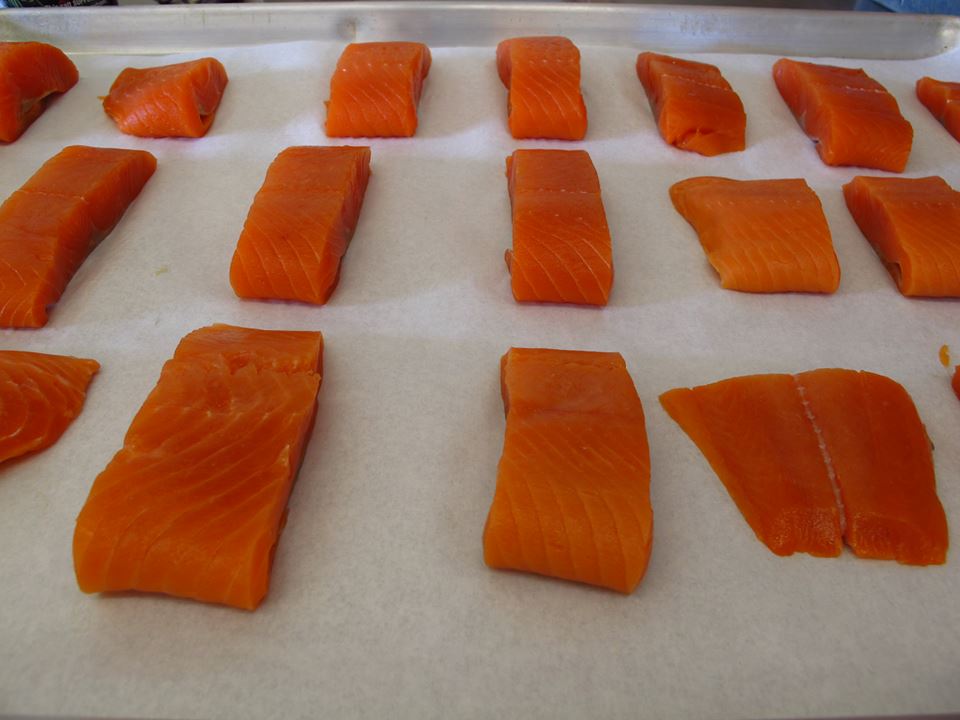
SCSCohoPortionsForCookingSitka’s Fish to Schools program has been extremely successful the past three years, and now there’s a movement to make similar programs available statewide. Join us from 6:30-7:30 p.m. on Thursday, March 20, at Blatchley Middle School as we celebrate Fish to State.

This event will celebrate the success of the Sitka Fish to Schools program, which is coordinated by the Sitka Conservation Society and other partners. The event will include short presentations from Sitka School Board President Lon Garrison, Sitka Local Foods Network President Lisa Sadleir-Hart, and Sitka Conservation Society Community Sustainability Organizer Tracy Gagnon. Light refreshments will be available.

The Sitka Fish to Schools program came out of the 2010 Sitka Health Summit, when local residents chose as one of its community wellness projects to serve more local seafood in our schools. Since then the program has grown so that all students from Grades 2-12 in Sitka have a local seafood lunch option at least twice a month. This includes the Sitka School District schools, Keet Gooshi Heen Elementary School, Blatchley Middle School, Sitka High School, and Pacific High School, plus other local schools, the state-run boarding school Mount Edgecumbe High School and the private K-8 The SEER School. The award-winning program has served as a model for a handful of other school districts in Alaska, and now there is a push to make it available statewide with a full curriculum and resource guide, plus financial support.

For more information, contact Ray Friedlander of the Sitka Conservation Society at 747-7509 or ray@sitkawild.org.


• Sitka School District touts more state investment into local foods for school lunch programs

SCSCohoPortionsForCooking

During its Feb. 4 meeting, the Sitka School Board put its weight behind an effort to increase funding for locally sourced food in schools across the state.

In a resolution to the legislature, the board cited the success of Sitka’s Fish to Schools program as justification for extending a similar statewide program beyond one year. Nutritional Alaskan Food for Schools (NAFS) was introduced by Rep. Bill Stoltze (R-Anchorage) in 2012, and piloted last year. This year the governor has included funding of $3 million dollars for the program — but only for one year. All schools in Alaska will receive funding from the program, based on student population. The Sitka School District and state-run Mount Edgecumbe High School received $39,000 from the program last year, which mostly went for seafood purchases (Mount Edgecumbe did buy some potatoes from Gustavus, and Pacific High School bought some vegetables from St. Peter’s Fellowship Farm).

In late January, Tracy Gagnon, who coordinates the Fish to Schools program for the Sitka Conservation Society, submitted the following letter to the editor to the Daily Sitka Sentinel outlining the reasons to support the program.

Nutritional Alaskan Foods for Schools

Dear Editor,

Sitka is one of the first communities in Alaska to push for local foods in schools through the Fish to Schools program; now it’s time to go state-wide. The Governor has included in his FY15 budget state funding to reimburse school districts for their purchases of Alaskan grown or caught foods through the Nutritional Alaskan Foods for Schools program (NAFS). This makes it possible for schools to serve local, nutritious foods to their students, sourcing from farmers, fishermen, and processors in or around their communities. NAFS improves Alaska’s food security and helps us create a more sustainable local food system.

Representative Stoltze proposed NAFS in 2011, and more than 100 vendors and 48 school districts benefited from this legislation in the 2012-2013 school year. Nearly 90 percent of those 48 school districts purchased local seafood.

Every year food producers and school food service providers wait anxiously every spring for NAFS to pass. And usually it’s too late for farmers to meet the extra demand because they’ve already planted their crops and food service has already purchased other foods. Making this funding permanent would provide both food service and food producers the consistency necessary for advanced planning and coordination of harvest to ensure supply meets demand.

The Sitka Conservation Society thanks both the leadership of Representative Stoltze and Governor Parnell for including NAFS in his proposed budget. We urge Alaska Legislators to support the permanent funding of a program that increases Alaska’s food security, catalyzes Alaska’s food production, supports local communities, and improves the health of our students.

Tracy Gagnon
Community Sustainability Organizer
Sitka Conservation Society

• Join us at the Fish to Schools benefit dinner on Wednesday, April 25

Come help Sitkans support the award-winning Fish to Schools program by attending a benefit dinner from 5:30-7:30 p.m. on Wednesday, April 25, at Sweetland Hall on the Sheldon Jackson Campus.

This benefit dinner will include a presentation of the grand prize of the Alaska Farm to Schools Challenge for the 2011-12 school year, which will be presented by Johanna Herron of the Alaska Department of Resources. The benefit features a local seafood dinner of crispy oven-baked rockfish prepared by chef Colette Nelson of Ludvig’s Bistro and students from Pacific High School’s food services program.

Tickets are $20 for adults, $15 for seniors and students, and $5 for youth age 18 and younger, and they can be purchased at Old Harbor Books. All proceeds benefit the Sitka Fish to Schools program that brings regular fish meal choices to students at Blatchley Middle School, Keet Gooshi Heen Elementary School and Pacific High School.

The Fish to Schools program (link goes to April 15 Juneau Empire article) was a community health project from the 2010 Sitka Health Summit, and the Sitka Conservation Society has been managing the 2-year-old program in partnership with the Sitka School District, local fishermen and other community partners. For more information about the Fish to Schools program, contact Tracy Gagnon of the Sitka Conservation Society at 747-7509 or tracy@sitkawild.org.

• Sitka’s ‘Fish to Schools’ project to be honored during Wednesday’s fish lunch at Keet Gooshi Heen Elementary School

Sitka’s Fish to Schools project will be honored with the grand prize of the Alaska Farm to School Challenge during the fish lunch from 11:20 a.m. to 12:30 p.m. on Wednesday, April 11, at Keet Gooshi Heen Elementary School. Alaska First Lady Sandy Parnell and Alaska Division of Agriculture Director Franci Havermeister will be in attendance to present the award.

Sitka’s Fish to Schools project came out of the 2010 Sitka Health Summit, when increasing access to locally harvest fish in school menus was chosen as one of the community’s top four health priorities for the year. The project started with a monthly fish lunch entrée option at Blatchley Middle School, then expanded to Keet Gooshi Heen Elementary and Pacific High School. The program now is twice-monthly, and it has grown with the support of the Sitka Conservation Society, Sitka School District, local fishermen, and other community members. The program has become a successful model for what can be done in other parts of the state.

“We are excited to honor Sitka in its efforts, and appreciate that First Lady Sandy Parnell also see the value in projects like this that highlight both Alaska’s youth and natural resource bounty,” Havermeister said in a press release.

For more information about Sitka’s Fish to Schools program, contact Tracy Gagnon at 747-7509 or tracy@sitkawild.org.

• Pacific High School and Sitka Conservation Society partner up to serve local fish in school lunches

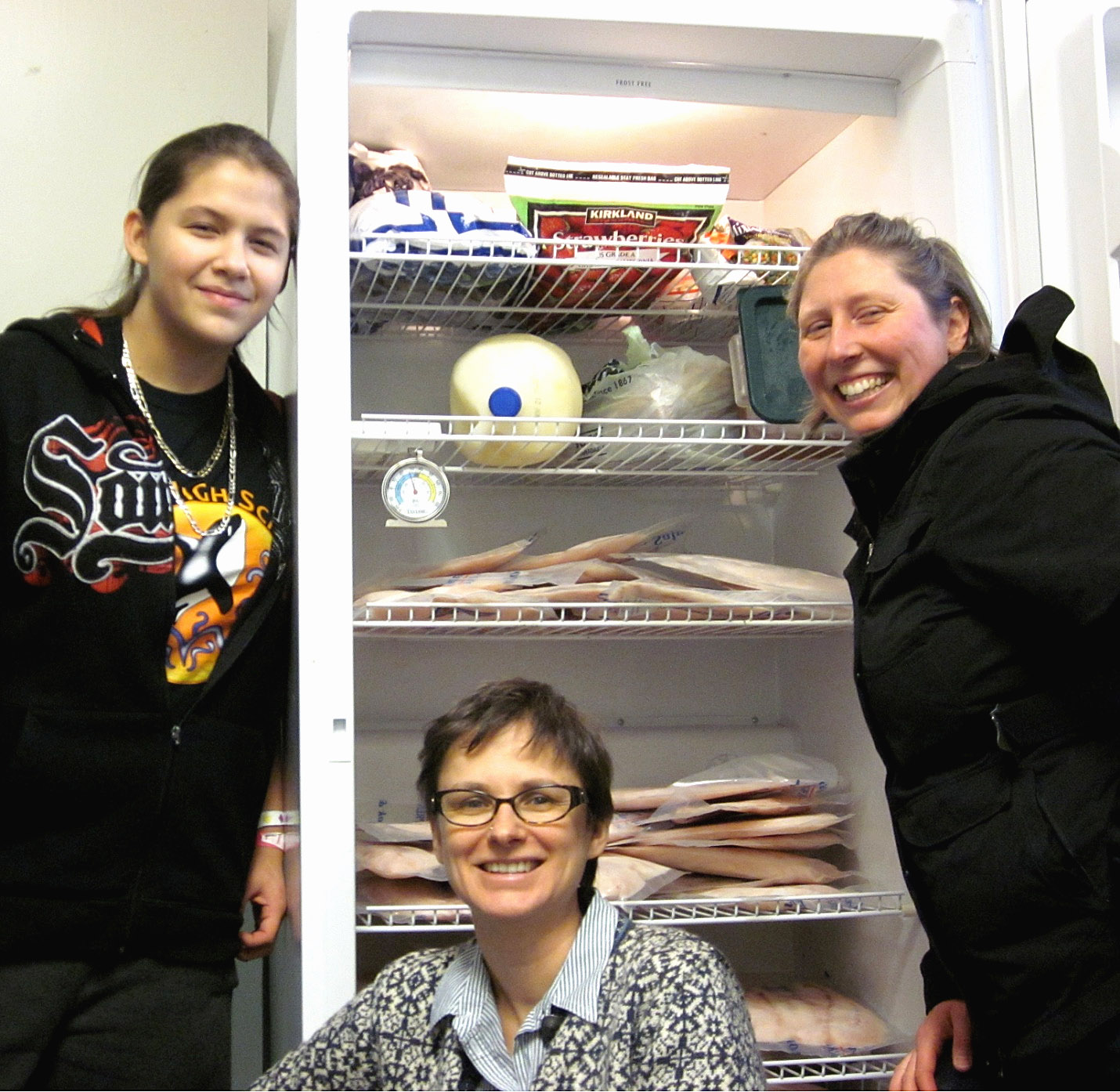
Pacific High School student Jessie Young, left, co-principal Sarah Ferrency, center, and lunch coordinator Johanna Willingham load rockfish into the freezer at Pacific High School. an alternative high school in Sitka, Alaska. (PHOTO COURTESY OF TRACY GAGNON / SITKA CONSERVATION SOCIETY)

Pacific High School student Jessie Young, left, co-principal Sarah Ferrency, center, and lunch coordinator Johanna Willingham load rockfish into the freezer at Pacific High School. an alternative high school in Sitka, Alaska. (PHOTO COURTESY OF TRACY GAGNON / SITKA CONSERVATION SOCIETY)

Pacific High School now serves local seafood in the cafeteria and joins the growing ranks of schools connecting to local foods. Starting Wednesday, Feb. 1, Pacific High students will have a choice of local seafood dishes twice a month due to a partnership with the Sitka Conservation Society.

Sitka, Alaska, is the ninth largest fishing port in the country, but only recently did school children have access to the abundance of local seafood in school lunches. The project began in 2010 after getting more fish in school lunches was voted on as one of Sitka’s four health priorities at the Sitka Health Summit. The Sitka Conservation Society took the lead on the project and partnered with Blatchley Middle School in the winter of 2010-11 school year and then with Keet Gooshi Heen Elementary School in 2011-12 to launch a Fish to Schools program. Due to the success of that program, it has evolved and spread to another school in the community.

Tracy Gagnon, Fish to Schools coordinator at Sitka Conservation Society said, “To kick off the new partnership, SCS’s Fish to Schools program will cook with Pacific High students to rally support for local fish lunches. A favorite recipe will be chosen for an upcoming Fish to Schools benefit.”

LOCALLY MADE– Americorps Volunteer Lauren Hahn, left, and Pacific High School students in the culinary arts program, Brendan Didrickson and Jenny Jeter, prepare a lunch of Caribbean rockfish with sweet potato fries, baked apples and wild rice at the school on Wednesday, Feb. 1. This was the first Pacific High lunch in the Fish to Schools program. The program began in 2010 as a Sitka Health Summit project when Sitka Conservation Society joined Blatchley Middle School to serve locally caught fish in school lunches. Since then, Keet Gooshi Heen Elementary School and now Pacific High have joined the twice-monthly program. On Wednesday, Feb. 8, SCS is inviting commercial fishers to join students at Keet for lunch. (Daily Sitka Sentinel photo by James Poulson, printed in the Tuesday, Feb. 7, 2012, edition)

LOCALLY MADE– Americorps Volunteer Lauren Hahn, left, and Pacific High School students in the culinary arts program, Brendan Didrickson and Jenny Jeter, prepare a lunch of Caribbean rockfish with sweet potato fries, baked apples and wild rice at the school on Wednesday, Feb. 1. This was the first Pacific High lunch in the Fish to Schools program. The program began in 2010 as a Sitka Health Summit project when Sitka Conservation Society joined Blatchley Middle School to serve locally caught fish in school lunches. Since then, Keet Gooshi Heen Elementary School and now Pacific High have joined the twice-monthly program. On Wednesday, Feb. 8, SCS is inviting commercial fishers to join students at Keet for lunch. (Daily Sitka Sentinel photo by James Poulson, printed in the Tuesday, Feb. 7, 2012, edition)

Unlike at the middle and elementary schools, Pacific High (the Sitka School District’s alternative high school) has more flexibility in the dishes it prepares with local fish. For example, the first Pacific High local seafood lunch will be Caribbean rockfish with sweet potato fries, baked apples and wild rice. Students help prepare the meals through the school’s culinary arts program. Every student earns their food handlers’ card and annually they cycle through a six-week cooking class. Students graduate high school with enough experience to enter into the cooking industry, bringing with them the knowledge to prepare scratch meals with healthy and local ingredients.

“We are striving to change the system by incorporating more local and traditional foods that the students want to eat,” said Johanna Willingham, Pacific High School lunch coordinator. “Through our innovative food-based meal program, the students are learning valuable life skills by developing recipes they enjoy and cooking with their local bounty.”

The Fish to Schools program creates new partnerships by uniting the local conservation organization and high school with community-based processors and fishermen. That partnership allows more students access to healthy lunches, as fish are packed with vitamins, proteins and omega-3 fatty acids that promote healthy hearts and healthy brains.

“Our community depends on the fish that comes out of the ocean, yet our school lunches were so disconnected from our local resources,” said Beth Short-Rhoads, Fish to Schools volunteer organizer, mother and fishing woman. “Thanks to Fish to Schools, our children now have access to local seafood. The fact that it is incredibly healthy is an even bigger bonus.”

There are more than 9,000 schools across the United States involved with local Farm to Schools programs. The majority of the programs serve land-based foods in the cafeterias, so Pacific High adds another layer by providing local seafood to students. This is an exciting opportunity to be part of the growing farm — or fish — to school movement across the country,” Gagnon said.

The Fish to Schools program also serves up local fish dishes at Blatchley Middle School and Keet Gooshi Heen Elementary School on the second and fourth Wednesdays during the school year. On Wednesday, Feb. 8, the program is honoring local commercial fishermen by inviting them to join the students at lunch so they can share the meal and answer questions the students may have about the fish. (Editor’s note: On Feb. 6, Tracy Gagnon, Beth Short-Rhoads and students Grace Gjertsen, Zofia Danielson and Sienna Reid were interviewed by Robert Woolsey about the We Love Our Fishermen! promotion on the Morning Edition show on KCAW-Raven Radio.)

The Sitka Conservation Society has been working to protect the temperate rain forest of Southeast Alaska and Sitka’s quality of life since 1967. SCS is based in the small coastal town of Sitka, in the heart of the Tongass National Forest, the nation’s largest national forest. For more information, go to http://www.sitkawild.org. To learn more about the Fish to Schools program, contact Tracy Gagnon at tracy@sitkawild.org or 747-7509.

• Sitka Health Summit project to get more fish in school lunches to start pilot study

From left, Lexi Fish, Linda Wilson and Kerry MacLane serve up fish tacos at Pacific High recently. At right are Sitka School Board President Lon Garrison and Superintendent Steve Bradshaw. The Sitka School District is considering adding locally caught fish to the school lunch program. (Daily Sitka Sentinel photo by James Poulson)

From left, Lexi Fish, Linda Wilson and Kerry MacLane serve up fish tacos at Pacific High recently. At right are Sitka School Board President Lon Garrison and Superintendent Steve Bradshaw. The Sitka School District is considering adding locally caught fish to the school lunch program. (Daily Sitka Sentinel photo by James Poulson)

Members of the Sitka Health Summit group trying to get more locally caught wild fish served in school lunches met with Sitka school officials Friday, Nov. 19, over a meal of fish tacos and agreed to a pilot study to see how many students will choose fish for lunch.

The project is one of four community health priorities/goals to come out of the 2010 Sitka Health Summit this October. Community members want to have more locally caught wild fish served in school lunches because the food is healthier than the usual school-lunch fare, especially with the Omega 3 fatty acids found in most finfish. Also, by using local fish will help the local commercial fishing industry and there is less of an environmental impact because there are fewer transportation miles used to get the food to Sitka.

On Friday, Nov. 19, members of the project task force — called FISH!, or Fish In Schools, Hooray! — met with Sitka School District Superintendent Steve Bradshaw and other school officials, including NANA Management Services, which has the food service contract for the school district. Representatives from several of Sitka’s fish processors and commercial fishing organizations also attended the fish taco lunch at the Southeast Alaska Career Center (located behind Pacific High School). One of the key issues is trying to find reasonably priced fish that doesn’t exceed the school district’s budget for protein.

During the meeting, the school district and FISH! decided to run a pilot project at Blatchley Middle School starting in January and running through the end of the school year. During the test program, fresh fish (starting with Pacific cod) will be served once a month as one of the four options available to students. If enough of the students select the fish, then the project will spread to all schools next year. The task force will promote the fish through the school newspaper, school newsletter and other local media. The task force will sponsor the cost difference during the first month of the project, with other groups picking up the cost difference in following months.

In addition to the Sitka School District, the task force also is working with Pacific High School (which creates its own menus separate from the district), Mt. Edgecumbe High School (which is run by the Alaska Department of Education and Early Development) and the Sitka Pioneer Home to get more locally caught wild fish into their menus.

(EDITOR’s NOTE: The Wednesday, Nov. 24, 2010, edition of the Daily Sitka Sentinel included a story about the project. The story is posted below as a PDF file, since the Sentinel’s site requires a password.)

• Daily Sitka Sentinel article from Nov. 24, 2010 — Schools Hope to Hook Students on Fish

• Planting fruit trees in Sitka and getting more seafood into local school meals are 2010 Sitka Health Summit projects

Cherry blossoms at Blatchley Community Garden

Cherry blossoms at Blatchley Community Garden

When Sitka residents met for the community planning day during the Sitka Health Summit earlier this month, two of the four health priority projects they chose to work on this year centered around local food issues.

One of the projects is to plant 200 fruit trees — apples, crabapples or cherry trees — in Sitka by the next Sitka Health Summit on Sept. 30-Oct. 1, 2011. The other food-related project is to get more locally caught wild fish into school lunch menus.

Both groups already are making progress toward their goals, and public meetings have been organized so Sitka residents can participate.

The fruit tree planting group meets from 7-8:30 p.m. on Monday, Oct. 25, at The Loft (408 Oja Way, Suite A, located across the residential street and a couple of buildings over from the Sitka Police Department’s side entry door on Oja Way). Apple cider and an apple dish will be offered.

All Sitka residents are welcome, especially those who have grown fruit trees in Sitka or Southeast Alaska and can share their experiences. Group member Lisa Sadleir-Hart created a brief survey about fruit trees in Sitka, and you can answer it by clicking this link, http://www.surveymonkey.com/s/QPWMJ3N. Please complete the survey, even if you can’t attend the meeting. The group temporarily is being facilitated by Kari Lundgren, who can be reached at 738-2089 for more information.

Black cod (aka sablefish) on the grill from the Alaska Longline Fisherman's Association booth at the Sitka Farmers Market

Black cod (aka sablefish) on the grill from the Alaska Longline Fisherman's Association booth at the Sitka Farmers Market

The wild fish for school lunches group has been meeting with officials with the Sitka School District and Mt. Edgecumbe High School, local fish vendors, catchers and processors, to see what they can do to get more locally caught wild fish — salmon, halibut, cod, sablefish, rockfish, etc. — served in Sitka schools.

The wild fish group’s first meeting will be for a fish lunch at noon on Friday, Nov. 19, at Pacific High School. Some people will show up at 11 a.m. to help cook the fish, which will be served at noon, and the actual meeting will be from 12:30-1:30 p.m. at the Southeast Alaska Career Center (located right behind Pacific High School). To learn more about the group, contact Kerry MacLane at 752-0654 or maclanekerry@yahoo.com.