• Sitka herring researcher Heather Meuret-Woody makes her case for better management

(EDITOR’S NOTE: On Tuesday, May 15, the Sitka Tribe of Alaska hosted the Sitka Herring Summit to discuss issues regarding the management, or mismanagement, of herring stocks in Southeast Alaska. Sitka herring researcher Heather Meuret-Woody made this presentation, which also appeared as a shorter letter to the editor in the Daily Sitka Sentinel on May 18. The opinions expressed are Heather’s alone, though the Sitka Local Foods Network has written letters supporting the Sitka Tribe of Alaska in its bid to get the Alaska Department of Fish and Game to reduce the commercial quota for herring in Sitka Sound.)

Sitka Sound Herring Summit

May 15, 2012

Heather Meuret-Woody

Sitka Sound Herring Researcher

I have been a Sitka Sound herring researcher for about 10 years. I have decided to share my few thoughts on the Sitka Sound herring population. With this said, in my opinion there was not 144,143 tons of the predicted mature herring biomass returning to Sitka Sound. An overestimate of the biomass seems to be the suspect.

Managers of forage fish know that traditional stock management techniques do not work well with forage fish. The reason for the failure of traditional stock assessment techniques is that the “catchability” of forage fish increases as the stock declines. However, due to the schooling nature of forage fish and their vulnerability to modern acoustics and fishing gear, catch rates remain constant, even when the stock is rapidly falling in size (Beverton, 1990). Thus declines in stock size will not be apparent to managers or to the fishing industry, based on catch per unit effort statistics. Management of forage fish stocks requires direct measurement of stock size. This can be accomplished by surveying fish abundance during the spawning season, or by conducting scientifically designed acoustic surveys of schools of forage fish. Failure to monitor the stock directly will result in the inability to determine changes, even severe declines, in forage fish abundance. With that said, ADF&G does not measure the Sitka Sound herring stock directly. They may do acoustic surveys and aerial surveys but the data is not used for determining stock size in the ASA model. ADF&G relies almost entirely upon spawn deposition estimates to determine the spawning biomass. Hebert, 2010 states, “Estimates of total egg deposition on Macrocystis kelp may be highly variable, and transects that cross Macrocystis kelp beds could result in very high egg deposition estimates, resulting in high uncertainty around total estimates of egg deposition.” ADF&G also notes in this report that they have issues with diver calibration. One diver may visually estimate more or less eggs compared to another diver. Individual calibration factors can have a potentially large impact on spawn deposition estimates of biomass.

Accurate and regular estimates of fecundity are important for “ground-truthing” assumptions used by ADF&G. Fecundity estimates are used to convert estimates of herring egg deposition into mature biomass, and is used quite commonly among world-wide herring managers. ADF&G has only measured fecundity 4 times since the 1970s (Hulson et al., 2008). Since then, they just estimate fecundity based on weights, so large female herring lay approximately 40,000 eggs and small female herring lay approximately 20,000 eggs. Using un-validated parameters is extremely risky. For example, a 10% change in the egg per gram measurement used to convert spawn to fish, can result in a 20% change in the number of fish estimated.

In 2007, 2008, and 2009, spawning herring were sampled for Ichthyophonus prevalences in Sitka Sound. The results showed that 27% – 40% were positive for Ichthyophonus. All of this data is provided by Hershberger, Winton, and Purcell, from USGS Marrowstone Marine Field Station. The results of the 2010 and 2011 data from this ongoing research were not available at the time of this letter. Sitka Sound herring have had the Ichthyophonus disease for years and ADF&G has not incorporated this data into their current management. The ASA model does not account for disease, just “natural mortality.” However, this “natural mortality” is not based on observed data, but has been estimated by picking a random, but “conservative” number and applying it to the herring stock.

Sitka Sound herring follow the Pacific Decadal Oscillation (PDO) which is a 14-year oscillatory cycle and is highly correlated with an annual index of zooplankton biomass. Strong negative values of the PDO were observed in autumn 2011: “If these values persist through winter and early spring 2011-2012, they could result in the best ocean conditions observed in decades,” according to the 2011 annual update for the Ocean Ecosystem Indicators of Salmon Marine Survival in the Northern California Current research project, which has been ongoing since 1998. Additionally, “These negative values are expected to continue into spring 2012, which suggests that the northern North Pacific Ocean will also remain cold through spring 2012, giving rise to continuation of good ocean conditions.” So it is hard to imagine with this optimal ocean condition that Sitka Sound herring experienced mass mortality since last year. This winter we experienced the Arctic Oscillation which is essentially a pressure pattern that drives the jet stream, and controls how strong its winds are and where the jet stream position is. This winter, the jet stream trough, which tends to push the jet stream far to the north, helped drive storms into Alaska.

From 2006-2010, ADF&G has been trying to convince the public that the Sitka Sound herring had changed their maturation rates. They claimed that the herring were maturing later. Instead of herring reaching maturity at age-3 and age-4 they were not maturing until age-5, age-6, and age-7. Of course this was not actual observed data. ADF&G did not base this on ovarian histology or anything concrete, instead the changes were based on a number estimate to make the ASA model fit the data rather than using field data to fix the model. No other herring stocks along the Pacific Coast have herring delaying maturation, so it shouldn’t surprise anyone that Sitka’s herring are maturing at their usual rate. Additionally, ADF&G claimed that the herring were surviving longer, and the survivability rate they have been using is 87%. Again this was not based on anything managers actually observed, but was again a random number forced to make the ASA model fit the data. Even Hebert, 2010 states “External estimates of age-specific survival would improve the ASA model and provide more accurate forecasts of spawning biomasses.” If the Sitka Sound herring actually had 87% survivability rate, then the only way herring could have died was to be eaten by a predator or get caught in a purse seine net.

In 2008, I did a co-study with the ADF&G Age Determination Laboratory in Juneau. ADF&G collected 50 herring from the winter bait fishery and aged the herring via scale reading. I then received those 50 herring and aged them via otolith aging – and this is not the break and burn method, this is the thin-sectioning method that is widely recognized world-wide and even used by the California Department of Fish and Game on herring stocks. The herring aged via otolith actually aged 2 years younger on the average than the scale aging methodology. If you recall, ADF&G announced 12/16/2010 that their aging assessments were wrong for the period of 1999-2010. Once they re-aged all of the archived samples, they too came up with an average of 2 years difference. Additionally, because the ASA model used by ADF&G to forecast the mature biomass requires a long time series of reliable age estimates, the department chose not to use the ASA model, but instead relied on a biomass accounting model to forecast the 2011 Sitka Sound mature herring population.

Significant fisheries-induced evolutionary change has been researched in Norway in Baltic herring and has lead to the entrainment hypothesis: an explanation for the persistence and innovation in spawning herring migrations and life cycle spatial patterns (Petitgas et al. 2006). This research is quite intriguing and deserves more consideration. In 2008, the commercial fishery occurred along the entire Kruzof Island shore line in very shallow water. While the herring schools were being fished upon, a large percentage of the spawning biomass seemed to avoid the purse seiners and hit the first shoreline available, Kruzof, and spawned. Now if you review ADF&G spawn maps that go back to 1964 you will know that there has been less than 15 times that the herring biomass used the Kruzof shoreline as spawning habitat. The Kruzof Island shoreline is not very suitable spawning habitat as newly hatched larvae would be swept up in the currents and advected out of Sitka Sound, causing low survivability (Sundberg, 1981). However, if herring spawn on the islands, i.e. Middle Island, Kasiana, or along the road system, the currents in Sitka Sound keep the hatched larvae in the inner bays and water ways which are excellent for retention and increases survivability. Keeping in mind that herring recruit into a mature cohort at around age-4, the 2008 commercial sac roe fishery may have reduced the amount of recruits that we would have seen this year in 2012. Unfortunately we will never know because ADF&G does not measure immature herring. I have researched juvenile herring populations in Sitka Sound for several years and found that one of the most important rearing areas is along the Halibut Point Road shoreline from Katlian Bay and Nakwasina in the north to Halibut Point Marine and Cove Marina in the south (Meuret-Woody and Bickford, 2009). Unfortunately, the new dock at Halibut Point Marine will soon become a place for net pen-rearing of hatchery salmon smolts – with no consideration on the impacts it could have on juvenile herring populations.

Finally I’d like to point out that ADF&G staff has been quoted saying that herring only seem to spawn in Salisbury Sound when there is such a large biomass that extra spawning habitat is needed. So basically they claim Salisbury Sound is a spill-over spawning habitat, although they have no data to support this assertion. If this were actually true, based on biomass size, then where was the huge spill-over of spawning biomass in Salisbury Sound in 2011 and 2012 – both of which were huge forecast biomass years? In my published paper, Identifying Essential Habitat (Source vs. Sink Habitat) for Pacific Herring in Sitka Sound Using Otolith Microchemistry (Meuret-Woody and Bickford, 2009) it appears that Salisbury Sound actually supports a small discrete population of herring (10%), separate from Sitka Sound herring. Salisbury Sound may also be a source population for Hoonah Sound, supplying approximately 14% of the population for Hoonah Sound. Why doesn’t ADF&G rely on published data instead of relying on guesses made by their managers?

• As you build your garden this spring, don’t forget to Plant A Row For The Hungry

(EDITOR’S NOTE: The following article first appeared on this site in April 2010. It is repeated because much of the information remains current and newsworthy.)

As you start to plan your garden for this spring and summer, don’t forget to Plant A Row For The Hungry. The Plant A Row For The Hungry program (also known as Plant A Row or PAR) is a national campaign by the Garden Writers Association of America that got its start in Alaska.

In the cold winter of 1994, Anchorage Daily News garden columnist and former Garden Writers Association of America President Jeff Lowenfels was returning to his hotel after a Washington, D.C., event when he was approached by a homeless person who asked for some money to buy food. Lowenfels said Washington, D.C., had signs saying, “Don’t give money to panhandlers,” so he shook his head and kept on walking. But the man’s reply, “I really am homeless and I really am hungry. You can come with me and watch me eat,” stayed with Lowenfels for the rest of his trip.

Jeff Lowenfels

Jeff Lowenfels

The encounter continued to bother Lowenfels, even as he was flying back to Anchorage. During the flight, Lowenfels came up with an idea when he started writing his weekly garden column (the longest continuously running garden column in the country, with no missed weeks since it started on Nov. 13, 1976). He asked his readers to plant one extra row in their gardens to grow food to donate to Bean’s Café, an Anchorage soup kitchen. The idea took off.

When Anchorage hosted the Garden Writers Association of America convention in 1995, Lowenfels took the GWAA members to Bean’s Café to learn about the Plant A Row For Bean’s Café program. The Garden Writers Association of America liked the idea, and it became the national Plant A Row For The Hungry campaign (also known as Plant A Row or PAR). In 2002, the Garden Writers Association Foundation was created as a national 501(c)(3) nonprofit to manage the Plant A Row For The Hungry program.

“I am not surprised by the growth of PAR,” Lowenfels wrote in an e-mail to the Sitka Local Foods Network. “It is now in all 50 states and across Canada and there are thousands of variations of the original program — from prison gardens for the hungry to botanical gardens donating their produce from public display gardens. This is because gardeners always share information and extra food, so the idea was a natural.”

It took five years for the program to reach its first million pounds of donated food, but the second million only took two years and the next eight years saw a million pounds of donated food (or more) each year. Since 1995, more than 14 million pounds of food have been donated. Not only that, the program is getting ready to expand overseas to Australia, England and other countries with avid gardeners.

“We have supplied something in the vicinity of enough food for 50 million meals,” Lowenfels wrote in his e-mail. “Gardeners can solve this hunger problem without the government. And we don’t need a tea party to do it! Or chemicals, I might add, as author of a book on organic gardening (Teaming With Microbes, written with Wayne Lewis)!”

According to the U.S. Department of Agriculture, one out of every eight U.S. households experiences hunger or the risk of hunger. Many people skip meals or eat too little, sometimes going an entire day or more without food. About 33 million Americans, including 13 million children, have substandard diets or must resort to seeking emergency food because they can’t always afford to buy the food they need. In recent years the demand for hunger assistance has increased 70 percent, and research shows that hundreds of children and adults are turned away from food banks each year because of lack of resources.

While many people credit Lowenfels for creating the Plant A Row For The Hungry program, Lowenfels says the real heroes are the gardeners growing the extra food and donating it to local soup kitchens, senior programs, schools, homeless shelters and neighbors. You can hear him pass along the credit to all gardeners at the end of this interview last year with an Oklahoma television station (video also embedded below).

“One row. That’s all it takes. No rules other than the food goes to the hungry. You pick the drop-off spot or just give it to a needy friend or neighbor. Nothing slips between the lip and the cup, I say,” Lowenfels wrote in his e-mail.

For people wanting to Plant A Row For The Hungry in Sitka, there are several places that would love to help distribute some fresh locally grown veggies or berries to those who are less fortunate, such as the Salvation Army, Sitkans Against Family Violence (SAFV), local churches, Sitka Tribe of Alaska and other organizations. The food the Sitka Local Foods Network grows at St. Peter’s Fellowship Farm communal garden goes to the Sitka Farmers Market, where people who are in the WIC (Women, Infants, Children) supplemental food program (operated in Southeast Alaska by the SouthEast Alaska Regional Health Consortium or SEARHC) can use special farmers market vouchers to buy fresh vegetables.

The Sitka Local Foods Network also takes donations of local produce to sell at the Sitka Farmers Markets, and all proceeds from the Sitka Farmers Markets are used to help pay for Sitka Local Foods Network projects geared toward helping more people in Sitka grow and harvest local food. For more information, contact Sitka Local Foods Network President Kerry MacLane (maclanekerry@yahoo.com), Sitka Local Foods Network Vice President Linda Wilson (lawilson87@hotmail.com) or Sitka Farmers Market Coordinator Johanna Willingham-Guevin (johanna.willingham@gmail.com).

• 2010 Plant A Row For The Hungry marketing brochure

• 2009 Start a local Plant A Row For The Hungry campaign brochure

• Kayaaní Commission to meet on Thursday, March 24

The Kayaaní Commission is regrouping and it will hold an organizational meeting at 6:30 p.m. on Thursday, March 24, in the upstairs conference room at the Sitka Tribe of Alaska administration building, 456 Katlian St.

The Kayaaní Commission was created by an ordinance from the Sitka Tribe of Alaska as a way preserve and protect plants and the traditional ways they are used in Sitka. The group looks at medicinal, ceremonial and food uses of local plants.

To learn more, contact Leighanne McGough (747-7167 or leighanne.mcgough@sitkatribe-nsn.gov) or Kristin Rothblum (kristin.rothblum@sitkatribe-nsn.gov) at the Sitka Tribe of Alaska.

• Wealth of resources available to learn about traditional foods

A selection of traditional plant books that are in popular use in Southeast Alaska

A selection of traditional plant books that are in popular use in Southeast Alaska

Living in Southeast Alaska, Sitka residents are exposed to a wealth of traditional foods that grow in our forests or can be found along our beaches. But many Sitka residents aren’t familiar with which plants are safe to eat, and which plants they should avoid. They also aren’t familiar with when are the prime times to gather certain plants.

In recent years, several books have been published to help teach people more about traditional plants and how they can be used. There also have been other groups, such as the Sitka Tribe of Alaska’s Kayaaní Commission, the Sealaska Heritage Institute and the Alaska Native Knowledge Network, that have posted traditional plant information online, including complete curriculum outlines for teachers to use in their classrooms.

Some of the more popular books used in Sitka (many of these can be found at Old Harbor Books) include:

  • Wild Edible & Medicinal Plants: Alaska, Canada & Pacific Northwest Rainforest: An Introductory Pocket Trail Guide (Volumes 1 and 2) by Carol R. Biggs
  • Wild Edible and Poisonous Plants of Alaska by the University of Alaska Fairbanks Cooperative Extension Service (FNH-00028)
  • Collecting and Using Alaska’s Wild Berries and Other Wild Products by the University of Alaska Fairbanks Cooperative Extension Service (FNH-00120)

In addition to these books, the Sealaska Heritage Institute has created curriculum resources using the Tlingít and Haida languages that are built around using traditional foods (links on language names go to Grades K-2 versions, but upper-lever courses available on main curriculum link). Examples of the Tlingít and Haida Grade K-2 courses for Plants are linked below as PDF documents, but there also are separate courses for beach greens, berries, cedar trees, hemlock trees, spruce trees, herring, hooligan, salmon, sea mammals, as well as for other cultural knowledge such as canoes, totem poles and Elizabeth Peratrovich.

The Alaska Native Knowledge Network also some curriculum resources posted online for Tlingít, Haida and Tsimshian culture, including some by Sitka teacher Pauline Duncan. The Alaska Native Plant Society has some information on traditional plant use, but the group is geared more toward the Anchorage area. The Alaska Natural History Program publishes an online Alaska Rare Plant Field Guide. The University of Alaska Fairbanks Cooperative Extension Service has online and printed guides available on plant identification, berries and berry use, and even has online tutorials about how to home can jams and jellies.

On a related note, the SouthEast Alaska Regional Health Consortium (SEARHC) Diabetes Program will be turning its focus to traditional living classes for 2011. The program will focus on traditional foods and activities to teach its Native patients and other community members how to prevent and manage their diabetes (the SEARHC Diabetes Program operates throughout Southeast Alaska, not just in Sitka). The SEARHC Diabetes Program is looking for resident experts in traditional living (fishing, hunting, gathering, preparation, storage, gardening, etc.) who can help teach these skills to others. The program also wants to learn what types of classes people want to see offered in their communities. For more information, contact SEARHC Health Educator Renae Mathson at 966-8797 or renae.mathson@searhc.org.

Sealaska Heritage Institute Tlingít plant curriculum (Grades K-2)

Sealaska Heritage Institute Haida plant curriculum (Grades K-2)

UAF Cooperative Extension Service Native Plants of Alaska page on devil’s club

Nellie’s Recipes: An ANTHC (Alaska Native Tribal Health Consortium) Traditional Food Cookbook for Assisted Living Homes

Alaska Traditional Food Resources (list from Eat Smart Alaska program run by Alaska Division of Public Health)

• Sitka subsistence herring egg harvest in progress

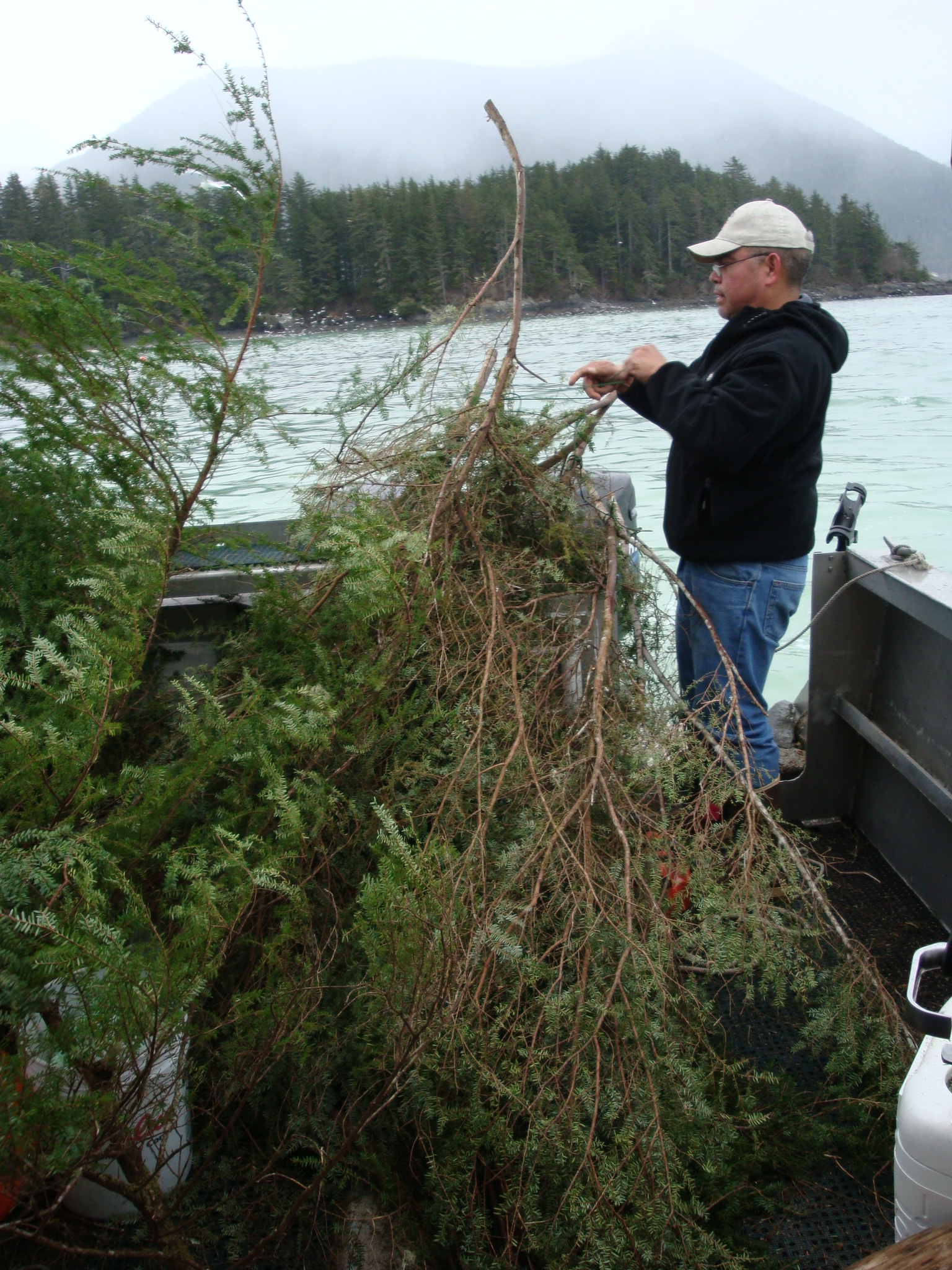
Michael Baines prepares hemlock trees and branches before they are placed in the water to catch herring spawn (Photo taken by Ed Ronco of KCAW-Raven Radio)

Michael Baines prepares hemlock trees and branches before they are placed in the water to catch herring spawn (Photo taken by Ed Ronco of KCAW-Raven Radio)

If it’s snowing in April, it probably means it’s time for the subsistence herring egg harvest in Sitka. This is one of the most important signs of spring in Sitka, especially for the Tlingít, Haida and Tsimshian people who lived in Southeast Alaska long before the first Europeans showed up.

On the KCAW-Raven Radio news Tuesday, KCAW reporter Ed Ronco reported on a trip he took with Sitka Tribe of Alaska Vice Chairman Michael Baines and his sister, Betty Baines, to place hemlock trees and branches into Sitka Sound, near Kasiana Island, to collect the herring spawn. The story link includes an audio postcard, where Michael Baines discusses the herring roe’s importance to the Native culture, and a few photos of the hemlock branches and trees being prepared. The herring eggs will collect on the branches, which will be pulled from the water a few days later, hopefully with a thick mass of roe. (Editor’s note: On Friday there was a follow-up story featuring the fishing vessel Julia Kae, skippered by Steve Demmert, which has been distributing herring eggs to local residents of Sitka and surrounding communities.)

The herring harvest is an amazing time in Sitka, because it seems like every species comes to town for the herring. There are more whales, eagles, sea gulls, sea lions, etc., around town, and even halibut and salmon are looking for meals of herring eggs. Pauline Duncan produced this Tlingít curriculum about herring geared toward younger students for the Alaska Native Knowledge Network. The blog Kiksadi News by Heen Kweix’ (Bob Gamble) tells how subsistence herring eggs are harvested and prepared (scroll down to the second item).

There also is a large commercial harvest of herring just before the subsistence herring roe harvest. The commercial harvest this year had a record guideline harvest of 18,293 tons, and finished just 550 tons short of that goal. The growing commercial harvest has put a lot of pressure on the relatively small subsistence harvest, in 2005 only 72,000 pounds (not tons) were taken out of a target range of 105,000 to 158,000 pounds. Sitka Tribe of Alaska regularly submits proposals to the Alaska Department of Fish and Game (which manages both the commercial and subsistence fisheries) to increase the subsistence harvest, but the proposals have not been passed. The subsistence herring eggs are used not just in Sitka, but all over the state and they are a popular trading subsistence food (for example, a Tlingít in Sitka might swap herring eggs with an Iñupiat for caribou meat from the Kotzebue area, since caribou is an item not found in Southeast Alaska).

• Sitka film featured in Palmer’s “Local Harvest, Local Food” film festival, a Sitka café featured for using local food and other local foods news

Food Film Fest Poster-2

Join the Palmer Arts Council for its inaugural “Local Harvest, Local Food” film fest from Thursday, Nov. 19, through Sunday, Nov. 22, at the Strangebird Consulting Office in downtown Palmer. “Good Food” screens at 7 p.m. on Thursday, Nov. 19; “Fresh” shows at 7 p.m. on Friday, Nov. 20; “Eating Alaska” by Sitka filmmaker Ellen Frankenstein screens at 7 p.m. on Saturday, Nov. 21; and “Ingredients” shows at 3 p.m. on Sunday, Nov. 22. After the Sunday showing there will be a discussion about women in agriculture with Cynthia Vignetti. Suggested donations are $10-15 for all films except for Sunday, which is free.

A Sitka restaurant, the Larkspur Café, was featured in Capital City Weekly last week. The article talks about the origins of the restaurant, which is located in the same building as KCAW-Raven Radio. It also discusses the restaurant’s use of local foods, including owners Amelia Budd and Amy Kane purchasing produce from the Sitka Farmers Market during the summer.

In other local foods news from around the state, the National Oceanic and Atmospheric Administration (NOAA) recently announced an expansion to the state’s subsistence halibut fishery to include more rural residents (this includes the Sitka area). The new rules, which take effect on Dec. 4, redefine who qualifies as a rural resident. The previous rules defined rural residents as people living in a rural community or people belonging to a Native tribe with customary and traditional uses of halibut, and the news rules try to catch subsistence halibut users who fell outside the previous definition. Click this link for more information about subsistence halibut regulations and applications.

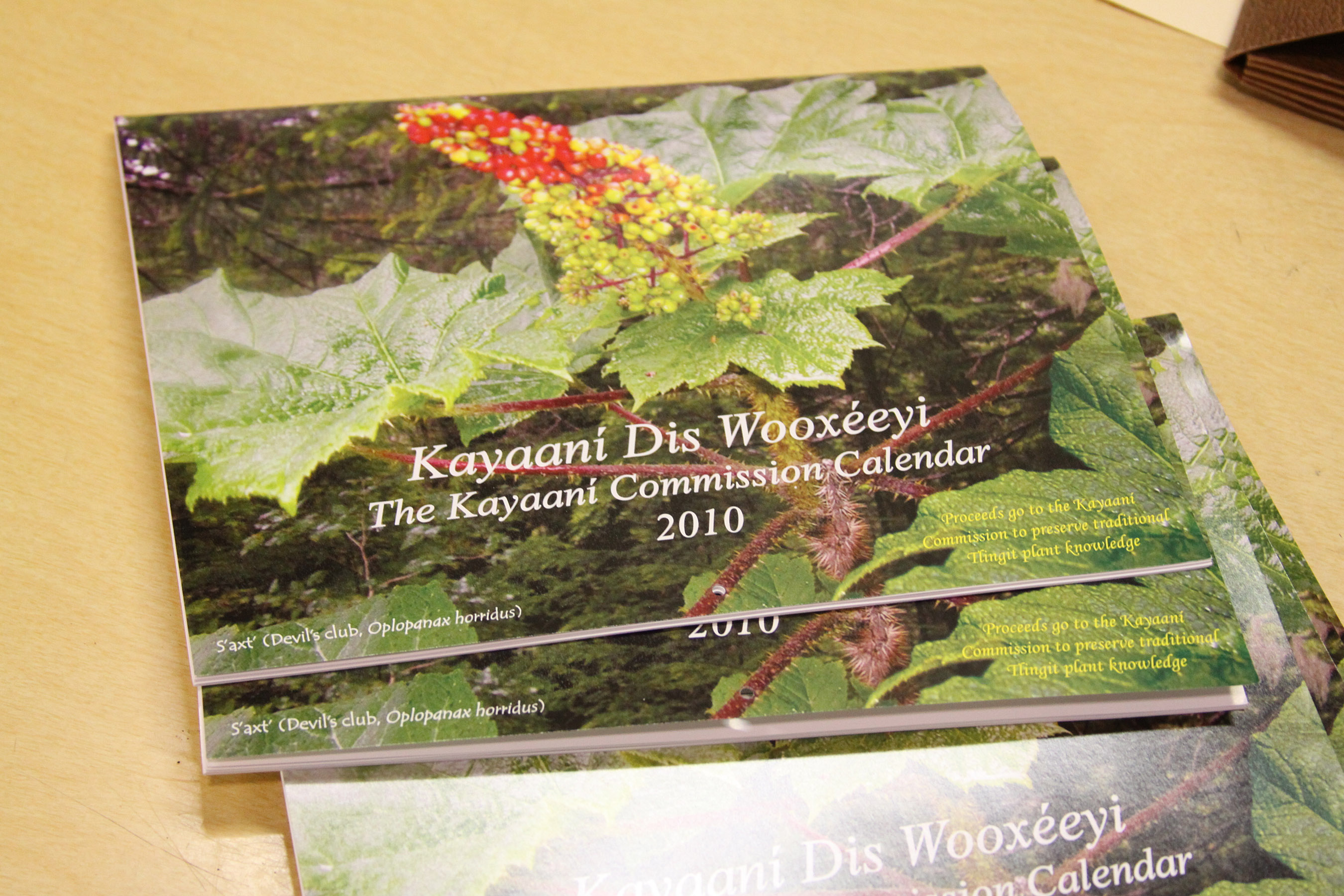
The Daily Sitka Sentinel has been running a brief announcement from the Sitka Tribe of Alaska’s Kayaaní Commission, which is selling 2010 calendars, CDRoms and field guides about traditional uses of native plants. Here is the information:

Kayaaní Native Plant Publications Available: 2010 Kayaaní Harvest Calendars featuring native plants and their traditional and cultural uses ($16, $2 postage per address); Interactive Ethnobotanical CDRoms with native species, their Tlingít, scientific and common names, and interviews with Elders on the traditional and medicinal uses of plants ($15, $1 postage per address); Ethnobotanical Field Guides ($16, $1 postage per address). We will mail to the addresses of your choice. Order by Dec. 18 for guaranteed delivery before Christmas. Call or e-mail with your order: 907-747-7178, pbass@sitkatribe.org, STA Kayaaní Commission, 456 Katlian. All proceeds will assist the nonprofit Kayaaní Commission in protecting, perpetuating and preserving knowledge of native plants.

The Chilkat Valley News weekly newspaper from Haines featured an article about sixth-graders at Haines School learning how to compost their leftover food (including leftover meat) so it can be used for gardening. The school is working with the Takshanuk Watershed Council to teach the students about composting. The students call their compost project “Marvin” because it’s a living organism.

The Alaska Dispatch recently ran a feature called “Growing Season” that discusses some of the farms in the Matanuska-Susitna valleys that grow local food. The feature includes video clips of harvest time at a couple of the farms featured.

The Mat-Su Frontiersman had a feature called “Chicken U,” which is about raising chickens in Alaska and getting them to produce eggs during the winter months.

The Anchorage Daily News also mentioned Chicken University, which will be one of several presentations at the Alaska Farm Bureau annual meeting on Friday, Nov. 13, at the Millennium Hotel in Anchorage. Other presentations are on growing apples in Alaska and preserving your harvest.

The Anchorage Daily News also had an article about how to get local produce in Anchorage during the winter, either through the Glacier Valley CSA produce boxes from Palmer or the indoor farmers market at the Northway Mall.

Anchorage Daily News garden columnist Jeff Lowenfels wrote a column about how hydroponic gardening is easier and cheaper than ever. The column includes lots of links for people who want to try this method of growing food without soil (by the way, there is a hydroponic garden at McMurdo Station in Antarctica that keeps the scientists there stocked in fresh produce in a land of ice).

Fran Durner’s “Talk Dirt To Me” blog on the Anchorage Daily News site includes a post about how snow can act as mulch for the garden.

The Ester Republic, a monthly publication for the community near Fairbanks, runs periodic articles about sustainability and local food security issues. Some of the articles are linked in the archives, and the editors are working to get more of the past articles on these topics online so more people can enjoy them.

KayaaniCommissionCalendarFront´

• 2010 Kayaaní Commission calendars are available for sale

KayaaniCommissionCalendarFront

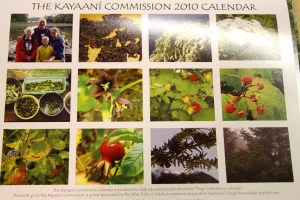
The 2010 Kayaaní Commission calendars are available from Sitka Tribe of Alaska for $16 each. These full-color calendars feature photos and information about many common edible and medicinal plants found in the Sitka area. Also available are copies of “The Kayaaní Commission Ethnobotany Field Guide to Selected Plants Found In Sitka, Alaska,” which cost $15 each. Proceeds from the sale of these two publications go to the Kayaaní Commission to help preserve traditional Tlingít plant knowledge.

The mission of the Kayaaní Commission is “to preserve our spiritual way of life. The religion of the Tlingít is the Earth. The Tlingít are one with the Earth. The Kayaaní Commission is here to preserve and protect traditional ways of our ancestral knowledge.” The Kayaaní Commission is sponsored by Sitka Tribe of Alaska and the Sitka National Historical Park.

Calendar and field guide purchases can be made at the Sitka Tribe of Alaska main building (456 Katlian St.) or the Sitka Tribe of Alaska Resources Protection Dept. (429 Katlian St.), or by calling 907-747-7178 or e-mailing pbass@sitkatribe.org. Please make checks payable to the STA Kayaaní Commission.

KayaaniCommissionCalendarBack