• Rep. Jonathan Kreiss-Tomkins of Sitka introduces bill to allow donations of fish and game to nonprofit meal programs

041614_JKT_house-floor

Rep. Jonathan Kreiss-Tomkins (D-Sitka) is the prime sponsor of a tripartisan bill that will allow nonprofit meal programs — such as those found at schools, hospitals and senior centers — to serve donated fish and game from sport and subsistence harvesters.

The bill, HB 179, is co-sponsored by seven other legislators — four Republicans (Cathy Muñoz of Juneau, Charisse Millett of Anchorage, Louise Stutes of Kodiak and Tammie Wilson of North Pole), two Democrats (Neal Foster of Nome and Sam Kito III of Juneau), and an Independent (Dan Ortiz of Ketchikan). The was introduced on April 1 and already has hearings set for next week in the resources (Monday, April 6) and fisheries (Tuesday, April 7) committees. If those committees pass the bill, it could go before the House floor for a vote as early as late next week.

“Because of that broad support, this bill is in not just the fast lane, but in the Autobahn-style fast lane,” Kreiss-Tomkins told the Daily Sitka Sentinel. “This bill could go from being introduced to a vote on the floor in eight or nine days.”

Kreiss-Tomkins said the bill was inspired in part by Sitka’s Fish to Schools program, which allows commercial fishermen to donate locally caught seafood to local schools so it can be served in student lunches. However, many parts of the state don’t have commercial fisheries, and Alaska law currently bars food service organizations funded by state or federal meal programs from serving subsistence- and sport-harvested fish and game, even if it is donated.

In the sponsor statement for the bill, Kreiss-Tomkins writes:

Hunting and fishing is at the heart of our shared heritage as Alaskans. Every Alaskan looks forward to the season he or she can again fill the freezer with salmon, moose, caribou, seal, or berries. Alaskans happily share this food with family, children, and elders.

This sharing is not possible in our public institutions, however. Well-meaning state laws intended to prevent the commercialization of wild game have also largely prevented children in schools and elders in hospitals and senior centers from eating the traditional Alaska foods that we treasure. As a result, even though we are surrounded by some of the best food in the world, our children eat corndogs rather than caribou at school lunch; our elders are served spaghetti rather than seal.

This action follows a 2013 amendment U.S. Rep. Don Young (R-Alaska) included in an agriculture bill that removed barriers that previously prohibited American Indians and Alaska Natives from serving traditional foods in hospitals, elder care facilities and schools. The amendment authorized the U.S. Department of Agriculture to allow for the donation and serving of traditional foods, which meet specific safety standards, in public facilities that primarily serve American Indians and Alaska Natives.

In his sponsor statement, Kreiss-Tomkins writes:

The bill also ensures traditional wild foods donated to and served by food service programs are safe to eat. The Department of Environmental Conservation already has regulations in place providing for the safe handling and processing of many traditional wild foods. HB 179 affirms the Department’s authority to oversee the safety of these foods.

HB 179 will nourish Alaska’s children and elders, both physically and spiritually. It will limit the amount of expensive and unhealthy processed food shipped to communities that have incredible food available just a short boat or snowmachine ride away. Children will develop an appreciation where their food comes from and elders will be able to keep eating the foods they love.
• HB 179 — Traditional Foods Bill

• HB 179 — Traditional Foods Bill Sponsor Statement

• Sitka Seafood Festival offers culinary scholarship and paid internship opportunity

culinary scholarship description

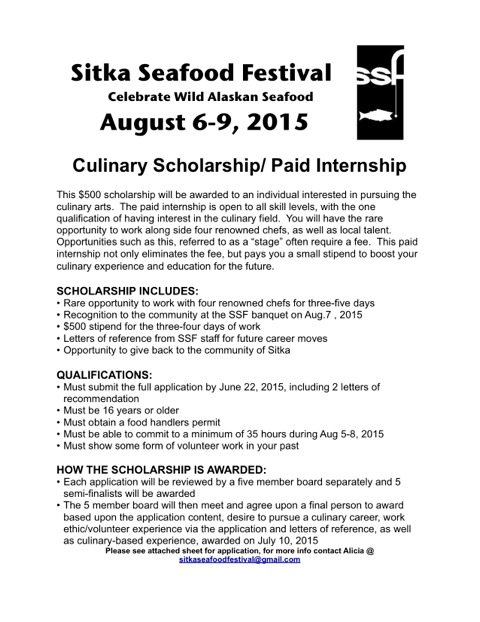
Scholarship 2015Are you a budding chef from Sitka who’d like an opportunity to work with some top-notch chefs from around the country? The Sitka Seafood Festival is offering its culinary scholarship and paid internship again for 2015. The application deadline is Monday, June 22.

This $500 scholarship will be awarded to an individual interested in pursuing the culinary arts. The program includes the opportunity to work with renowned chefs for 3-5 days, a $500 stipend for three days of work, letters of recommendation from Sitka Seafood Festival staff for future career moves, and recognition to the community during the Sitka Seafood Festival community banquet on Friday, Aug. 7. This is a great opportunity to give back to the community of Sitka.

This year’s guest chefs haven’t been announced yet. But last year the executive guest chef was Caleb France, with returning guest chefs Seth Caswell from Seattle, Mickey Neely from Chicago, Robert Kinneen from Anchorage, and Jeren Schmidt from Sitka.

This year’s Sitka Seafood Festival takes place on Thursday-Sunday, Aug. 6-9, with a variety of activities around Sitka. This year’s event schedule hasn’t been announced yet, but typically there is a community banquet featuring a variety of local seafood on Friday night, while Saturday’s activities include fish-tote races at Crescent Harbor, a parade down Lincoln Street, Scottish Highland Games at the Sitka Fine Arts Camp, live music, cooking demonstrations, and a variety of food, informational and artist booths in the marketplace at the Sitka Fine Arts Camp.

For more information, go to the Sitka Seafood Festival website, or contact the festival at sitkaseafoodfestival@gmail.com. You also can contact Alicia Haseltine at (928) 607-4845.

• Click here for a detailed description of the SSF Scholarship program.

• Click here for an application to the SSF Scholarship program.

• Second annual Sitka Herring Festival kicks off March 16 with month of events

Festival Flyer

You feel it in the air; you see it in the lengthening days; you smell it with the changing tides. That’s right, herring season (and Spring!) is right around the corner. And with the arrival of the herring comes the Sitka Tribe of Alaska‘s second annual Sitka Herring Festival, a month of fantastic event for adults and kids alike.

First, for the adults. This year, we’ve been able to bring an excellent speaker from Stonybrook University in New York thanks to a generous donation from Sealaska. At the community potluck from 6-9 p.m. on Tuesday, April 7, at Harrigan Centennial Hall, Dr. Ellen Pikitch will present on herring management and conservation throughout the world. Dr. Pikitch was one of the leading scientists on the Lenfest Forage Fish Task Force, is a pioneer in ocean conservation, and is a leader in ecosystem-based management of fisheries. This event will be a potluck style, so please bring a dish to share. We’re very excited to have her here during the herring season.

In addition to the community potluck, there will be a talk at the University of Alaska Southeast Sitka Campus from Dr. Shingo Hamada. Dr. Hamada is an anthropologist at the Research Institute for Humanity and Nature in Kyoto, Japan. His talk will be on Herring Fisheries and Food Culture in Japan. Mark your calendars for 7:30 p.m. on Monday, March 23, in UAS Sitka Campus Room 218. This is a partnership from the Natural History Seminar Series with UAS and the Sitka Sound Science Center. All are welcome, but be sure to bring your questions.

But what would a festival be without fun activities for the kids? This year’s festival will also include Yaa Khusgé Yaaw Woogoo — The Knowledge of Herring Camp, hosted by the Sitka School District and the Outdoor Foundation, in partnership with Sitka Tribe of Alaska and Sitka National Historical Park. This is a free, hands-on spring break camp connecting kids to culture that will take place from March 16-20 at Sitka National Historical Park. Middle school youth (grades 6-8) are welcome and encouraged to participate in this free camp. More information can be found at Sitka National Historical Park. Feel free to or pick up an application at the main office of STA or at the Sitka National Historical Park Visitor Center.

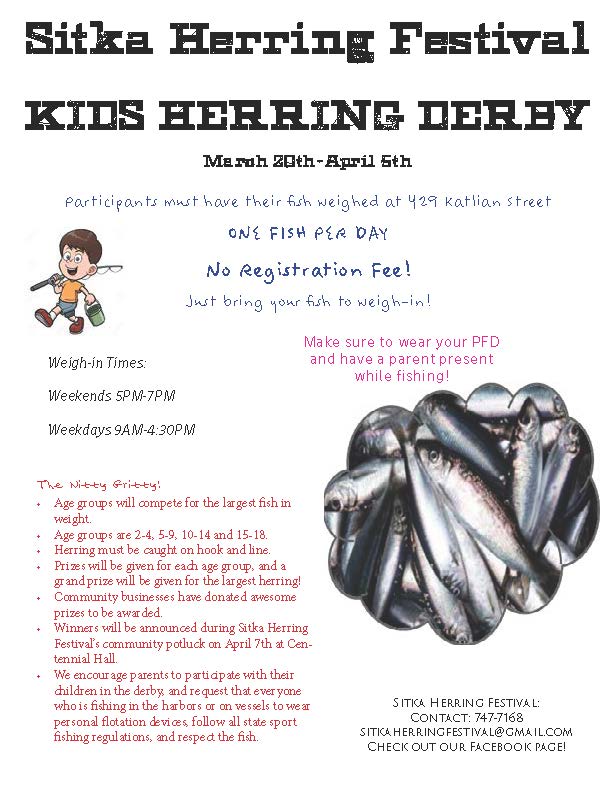
Derby FlyerFor those who like a little competition, there’s the Herring Derby and the Herring Run. Like last year, the Herring Derby will be a fun event for kids and parents. The Derby starts on Friday, March 20, and continues through Monday, April 6. Weigh your biggest fish every day (from 9 a.m. to 4:30 p.m. on Monday through Friday and from 5-7 p.m. on Saturday and Sunday) at the Sitka Tribe of Alaska Resources Production Office at 429 Katlian Street. May the best (biggest) fish win. Also like last year, Sitka Community Schools will host the Herring Run. The run will start at 11 a.m. on Saturday, April 4, at Harrigan Centennial Hall and will wind through the Totem Park trails before returning to Centennial Hall. Herring swim in schools, so bring your friends.

There will be more fun and educational events during the Festival, including a 4-H class through Sitka Conservation Society, Herring in the Hallway at Keet Gooshi Heen Elementary School, Discovery Days at the Sitka Sound Science Center, and the showing of a herring film showing at 7 p.m. on Friday, March 27, and at 2 p.m. on Saturday, March 28, at the Sitka National Historical Park  For the dancers among us, there will also be a Herring Hop from 6-11 p.m. on Saturday, March 28, at the Alaska Native Brotherhood Fellowship Hall. The Herring Hop is a fundraiser for the Cape Decision Lighthouse Society. The Herring Festival will also feature a Food Web Cruise on Saturday, March 21, as a fundraiser for another fantastic festival, the Sitka Whalefest.

More info for all these events can be found online at http://sitkaherringfestival.wordpress.com or at our Facebook page. Or you can email sitkaherringfestival@gmail.com or call 747-7168.

• 2015 Sitka Herring Fest calendar of events

• ‘Flora of Southeast Alaska’ class offered by UAS Sitka Campus to be a hybrid

Salmonberries await picking near the entrance to Sitka National Historical Park

Salmonberries await picking near the entrance to Sitka National Historical Park

A new biology class by University of Alaska Southeast Sitka Campus associate professor Kitty LaBounty will itself be a “hybrid”.

klabountyThe DNA of most traditional botany classes is to gather students around a table of samples and look at them in a face-to-face classroom setting. By offering Flora of Southeast Alaska as both a local and distance class, students from anywhere can get up to speed on how to identify the common native trees, shrubs and herbs of southeast and south central Alaska. Local students can participate in the lectures on campus, while students across Alaska can see the imagery online and hear the lectures either live or via digital recording.

Flora of Southeast Alaska is a one-credit, seven-week workshop. The focus will be on identification of common species and attaining an understanding of their place in the ecosystem of Southeast Alaska. Students will discover how these plants interact with other plants and animals, and how humans use these plants for food, fuel, medicine, or simply enjoyment.

In addition to illustrated weekly lectures, there will be written exercises and “check for understanding” activities. The class is available to any student without prerequisites. It does not count as credit toward a biology major at UAS.

Professor LaBounty brings her lifelong passion as a gardener and scientist to this topic, along with more than 25 years experience working on plant identification for state, federal and non-profit agencies in Alaska.

The class will meet from 5:30-7 p.m. on Thursdays from March 5 to April 30 — with March 19th off for spring break. The cost is $187 for local students and $227 for eLearning (distance) students.

For more information, contact Kitty LaBounty at UAS Sitka Campus. 747-9432. To register, call 747-7700. or toll-free, 800-478-6653.

• ‘Building Food Security in Alaska’ report released during Alaska Food Festival and Conference

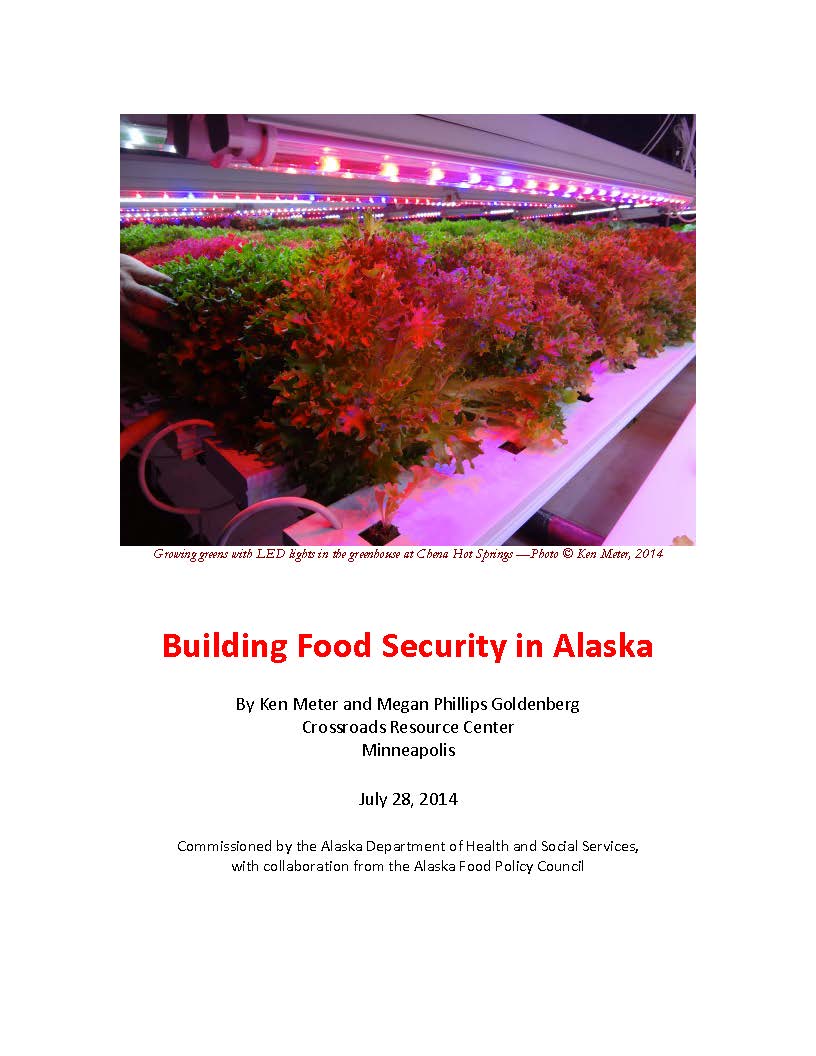
14-09-17_building-food-security-in-ak_exec-summary-recommendations_Page_01

The release of a new report, “Building Food Security in Alaska,” was one of the highlights of the recent Alaska Food Festival and Conference (Nov. 7-9 at the University of Alaska Lucy Anchorage Cuddy Center). This is one of the first comprehensive statewide food security reports compiled for Alaska.

The report was written by Ken Meter and Megan Phillips Goldenberg of the Crossroads Resource Center in Minneapolis, which has done six in-depth statewide food assessments over the past five years and 14 statewide food assessments overall. The report was commissioned by the Alaska Department of Health and Social Services, with collaboration from the Alaska Food Policy Council.

The Crossroads Resource Center website provides this summary of the report:

Like most other states, Alaska imports about 95 percent of the food it purchases. Yet this state is more distant from prevailing food production regions than other states. Alaskans feel a special sense of vulnerability. Despite a rich history in dairy and cattle production, most of these foods are now imported. Much of the arable farmland has been paved over by development. Moreover, Alaskans who wish to purchase some of the $3 billion of seafood harvested from its ocean waters typically have no choice but to buy through Seattle vendors.

Still, farms produce a rich variety of crops and livestock. Direct sales from farmers to household consumers run at 13 times the national average, amounting to one of every six dollars farmers earn selling food to humans. Lettuce, peppers, and cucumbers are available year-round from indoor farms. Chickens are grown inside greenhouses that rely upon surplus heat from nearby buildings.

In no other state is harvesting wild foods as important. Subsistence and personal use hunters bring in an estimated $900 million worth of salmon, caribou, moose, foraged greens and berries, and other foods. Yet even here, hunters and gatherers face special challenges: a decline of hunting skills, weakening ice, changing migrations, and radioactive fallout.

Our study, written by Ken Meter and Megan Phillips Goldenberg, offers practical steps for building a more reliable food supply by growing, storing, and marketing more Alaska-grown food to Alaskans. Commissioned by the Alaska Department of Health and Social Services.

Copies of the full 180-page report and a shorter executive summary and recommendations are linked below. In addition, most of the presentations and panel discussions from the Alaska Food Festival and Conference can be found here. This link includes a keynote presentation by Sitka Local Foods Network Board President Lisa Sadleir-Hart about the experience of compiling the Sitka Community Food Assessment, plus Sitka residents Keith Nyitray of the Sitka Food Co-op and Gordon Blue of the Alaska Sustainable Fisheries Trust participated in panel discussions about food cooperatives and community-based fisheries, respectively.

In addition, earlier this year two locally focussed food assessments were released. Copies of the Sitka Community Food Assessment Indicators Report (released in April 2014) and the Southeast Alaska Food System Assessment (released in February 2014) can be found in the Documents section of our website.

• Building Food Security in Alaska, Executive Summary and Recommendations, by Ken Meter and Megan Phillips Goldenberg (released November 2014)

• Building Food Security in Alaska, by Ken Meter and Megan Phillips Goldenberg (released November 2014)

• Natural History Seminar Series to feature presentation on Mushrooms of Alaska’s Southern Coasts

mohatth

The next topic of the Natural History Seminar Series will feature Kate Mohatt presenting “Mushrooms of Alaska’s Southern Coasts.” The presentation is at 7:30 p.m. on Friday Sept. 19, in Room 229 at the University of Alaska Southeast Sitka Campus.

Kate Mohatt is an ecologist for the Chugach National Forest who has been studying fungi in Montana and Alaska for several years. She has been a key organizer in the Girdwood Fungus Fair and a frequent speaker at the Tongass Rainforest Festival in Petersburg. Mohatt is the lead author of the 2013 publication, Mushrooms of the National Forests in Alaska (available at the USDA Forest Service, Sitka Ranger District office in Sitka, 204 Siginaka Way).

Mohatt will talk about the importance of fungi in forests, and about some common and interesting fungi found in Alaska. She also will lead a walk focused on forest fungi on Saturday, Sept. 20, in Sitka, with details shared at the Friday night seminar.

The seminar series is supported by a grant from the Sitka Permanent Charitable Trust to the Sitka Sound Science Center, and by the University of Alaska Southeast Sitka Campus with support from the USDA Forest Service. If you have questions, please contact Kitty LaBounty at 747-9432.

• Scenes from Alaska’s first Lexicon of Sustainability gallery show in Sitka

LexiconOfSustainabilityBackDoorEventFlier

the_lexicon_of_sustainability_postConversations were started, ukuleles were played, and kale-feta salad was eaten as the Sitka Local Foods Network hosted Alaska’s first pop-up art gallery show of the Lexicon of Sustainability on Thursday night, Aug. 28, at the Back Door Café.

So what is the Lexicon of Sustainability? According to the website, “The Lexicon of Sustainability is based on the simple premise: People will live more sustainably if they understand the basic terms and principles that will define the next economy.” The Lexicon of Sustainability features dozens of large photos of our food and farming systems, water and energy, with a variety of topics defined on each photo, such as food security, sustainable fisheries, farm to table, permaculture, etc.

“The Lexicon of Sustainability illuminates the vocabulary of sustainable agriculture, and with it, the conversation about America’s rapidly evolving food culture. The Lexicon of Sustainability educates, engages and activates people to pay closer attention to how they eat, what they buy, and where their responsibility begins for creating a healthier, safer food system in America.”

The photos from this first show will be on display through Saturday, Sept. 13, at the Back Door Café. Future Sitka shows include a Sitka Local Foods Network fundraiser tentatively set for Oct. 23 at the Sitka Fine Arts Camp/Sheldon Jackson Campus, and possibly a show at the University of Alaska Southeast Sitka Campus at a date TBA. Then the photos will go to Anchorage for the Alaska Food Festival and Conference on Nov. 7-9, hosted by the Alaska Food Policy Council. This batch of Lexicon of Sustainability photos will stay in Alaska so different groups can use them in their communities.

To learn more about this project, contact Sitka Local Foods Network Board of Directors President Lisa Sadleir-Hart at sitkalocalfoodsnetwork@gmail.com. A slideshow of images from Thursday night’s event is posted below.

This slideshow requires JavaScript.

• It’s time to … get outdoors and pick some berries

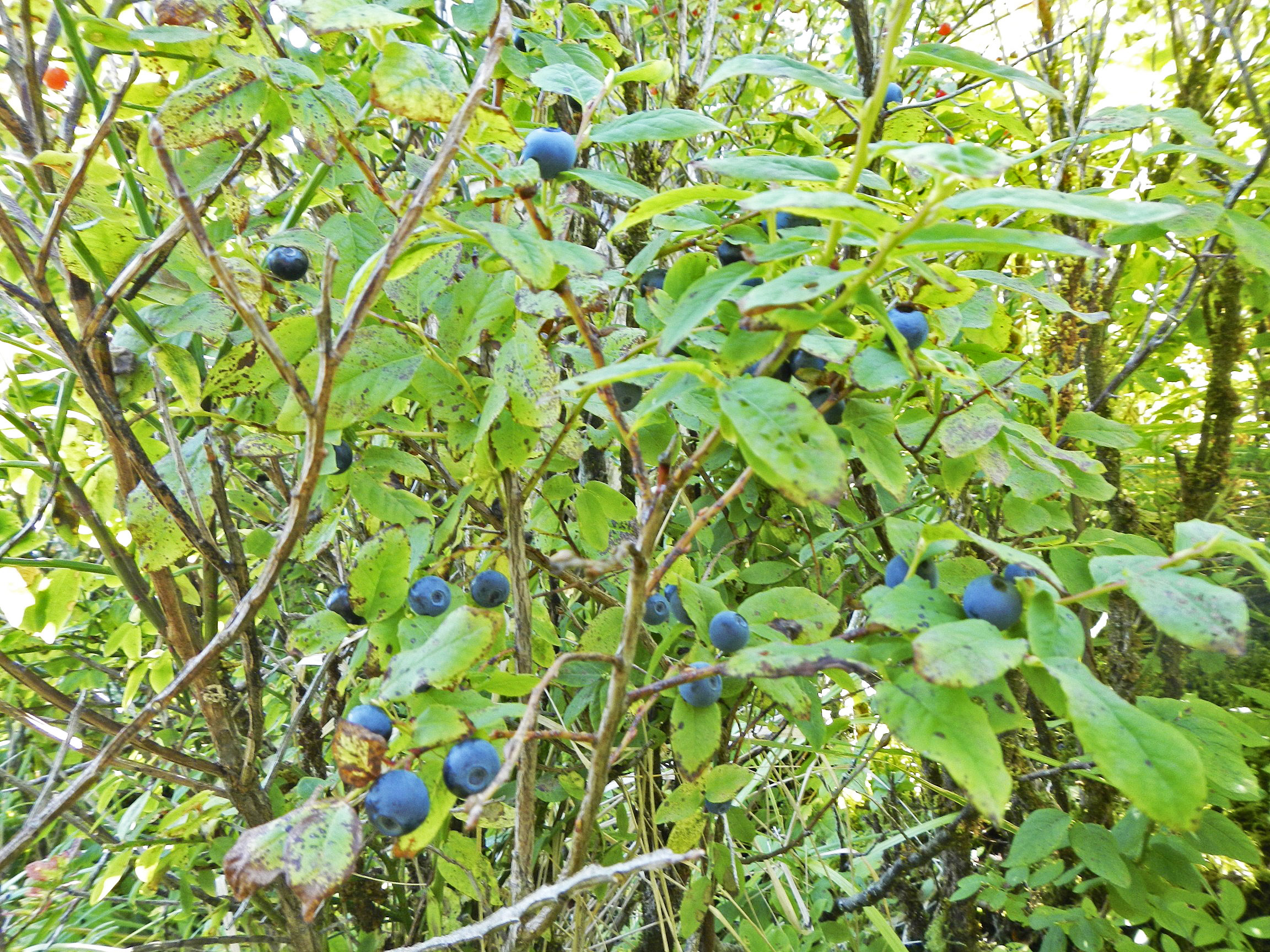
Blueberries (kanat'á)

Blueberries (kanat’á)

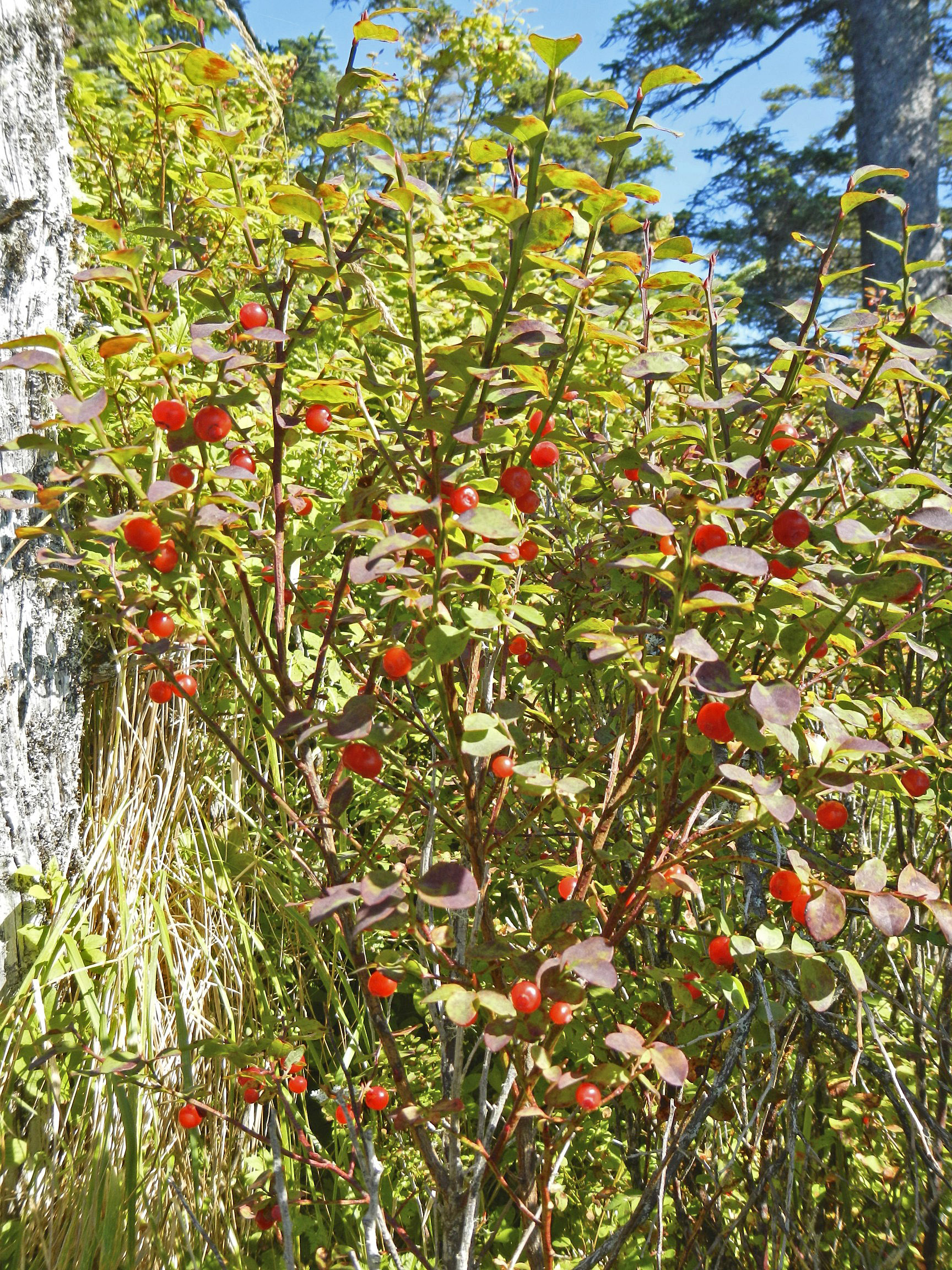
Huckleberries (tleikatánk)

Huckleberries (tleikatánk)

The Sitka Tribe of Alaska’s Kayaaní Commission (aka, the Plants Commission) and your Sitka Local Foods Network (SLFN) remind Sitka residents that it’s time to get out in the woods and pick huckleberries (tleikatánk) and blueberries (kanat’á).

Huckleberries and blueberries are extremely healthy fruits that grow in the forests and openings that surround Sitka. They are a traditional food of the Tlingít and have become a traditional food for Sitka residents who depend on nature’s bounty to keep their families healthy. They can be used fresh on a salad, in jams and smoothies, berry desserts and many other dishes. And they store well in the freezer for a healthy winter snack.

When going berry picking, please keep the following in mind (summarized from the Kayaaní Commission Traditional Harvesting Guidelines):

  • Be Courteous — other families are picking berries too; never take more than you need. If you accidentally got too much, share it with someone that you know will use it.
  • Be Safe — be positive about your identification of edible plants. Check your field guide for details if you are unsure. And pick berries during daylight with friends; make plenty of noise to keep bears away.
  • Take Care of the Berries — wash your berries with clean water before eating them and watch for rot, mildew, and insects. For best results: rinse berries, spread on a baking sheet to freeze, once frozen, slide off the tray and freeze in bags until ready to use.
  • Pick Clean Berries — from off the major road systems and in areas where you know pesticides and other chemicals will not have reached the berry plants.
  • Take Care of the Plants — make sure that there are plenty of other plants in the area (at least 10) to assure future abundance. Whenever possible, harvest so that the existing plant can reseed or recover after you are done. Treat the plants with respect. In Alaska Native cultures, it is traditional to thank the plant for its gift and give an offering. Each individual should show respect to the plant spirits in their own way.

“We encourage people to get out and pick the ripe berries. By getting out and picking berries you’ll get fresh, healthy food, exercise, and quality time with family and friends,” said Kayaaní Commission Coordinator Heather Riggs and Sitka Local Foods Network Vice President Michelle Putz. “Encouraging berry-picking for personal consumption and for winter storage supports both our missions. The Kayaaní Commission’s mission is to preserve their spiritual way of life and to preserve and protect traditional ways of their ancestral knowledge. The Sitka Local Foods Network’s mission is to increase the amount of locally produced and harvested food in the diets of Southeast Alaskans.”

While the kanat’á (blueberry) season is upon us, remember the plant is not finished offering its resources to the inhabitants of Sitka once the berries are gone. After the berries have completed their life cycle, the leaves from the plant can be utilized for its medicinal properties. Kanat’á leaves are high in antioxidants. These antioxidants can protect your body against heart disease and cancer. Making a tea from the leaves can help indigestion or a sore throat. Contact the Kayaaní Commission for more information on uses of native plants and methods of preparing plants.

More information about either group or local, traditionally harvested foods is available by calling Heather with the Kayaaní Commission at 747-7167 or Michelle with the Sitka Local Foods Network at 747-2708.

Please note that personal-use berry-picking is allowed on state and federal lands around Sitka, but any commercial-use berry-picking (money changes hands) requires a special permit, https://sitkalocalfoodsnetwork.org/2014/08/20/%E2%80%A2-tongass-national-forest-sitka-ranger-district-clarifies-rules-for-berry-picking-and-gathering-on-forest-lands/

• Kayaaní Commission Plant Gathering Guidelines

• 2003 Sitka Tribe of Alaska ordinance creating and defining the Kayaaní Commission

• UAS Sitka Campus to host annual class on how to identify Southeast Alaska mushrooms

SE mushrooms Brochure 2014_Page_2

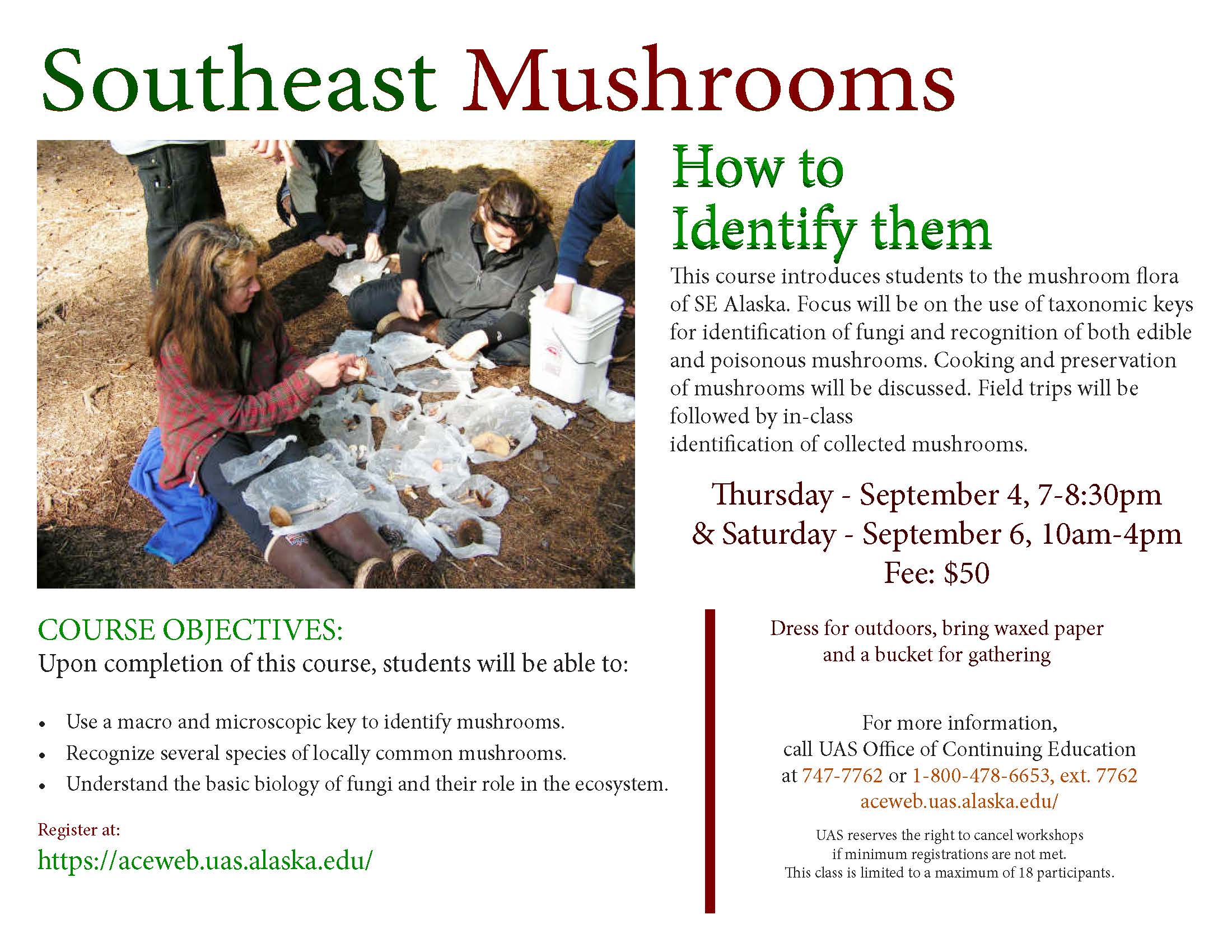
The University of Alaska Southeast Sitka Campus Office of Continuing Education will host its annual class “Southeast Mushrooms: How to Identify Them.”

This two-day class takes place from 7-8:30 p.m. on Thursday, Sept. 4, and from 10 a.m. to 4 p.m. on Saturday, Sept. 6, at the UAS Sitka Campus (with field trips). The course fee is $50 and students should dress for the outdoors, bring waxed paper and a bucket for gathering.

This course is designed to introduce students to the mushroom flora of Southeast Alaska. The focus will be on the use of taxonomic keys for identification of fungi and recognition of both edible and poisonous mushrooms. Cooking and preservation of mushrooms will be discussed. Field trips are followed by in-class identification of collected mushrooms.

There is a maximum of 18 students allowed in this class, and the class may be canceled if at least 10 people don’t pre-register for it. For more information, contact the UAS Sitka Campus Office of Continuing Education at 747-7762. To register, call 1-800-478-6653, Ext. 7762, or go to https://aceweb.uas.alaska.edu/. Click the link below to download the course brochure as a PDF file.

• “Southeast Mushrooms: How to Identify Them” class brochure for 2014

• Sitka Local Foods Network to host Alaska’s first Lexicon of Sustainability pop-up art show

LexiconOfSustainabilityBackDoorEventFlier

the_lexicon_of_sustainability_postYour Sitka Local Foods Network will host a free Alaska premiere of the Lexicon of Sustainability pop-up gallery art show from 6:30-8:30 p.m. on Thursday, Aug. 28, at the Back Door Café. Samples of a kale feta salad featuring kale grown in Sitka at St. Peter’s Fellowship Farm will be available, and the Back Door Café will be selling drinks and food during the show.

So what is the Lexicon of Sustainability? According to the website, “The Lexicon of Sustainability is based on the simple premise: People will live more sustainably if they understand the basic terms and principles that will define the next economy.” The Lexicon of Sustainability features dozens of large photos of our food and farming systems, water and energy, with a variety of topics defined on each photo, such as food security, sustainable fisheries, farm to table, permaculture, etc.

lex84_salmonsafe“The Lexicon of Sustainability illuminates the vocabulary of sustainable agriculture, and with it, the conversation about America’s rapidly evolving food culture. The Lexicon of Sustainability educates, engages and activates people to pay closer attention to how they eat, what they buy, and where their responsibility begins for creating a healthier, safer food system in America.”

In addition to the photos, the Lexicon of Sustainability includes a book, “Local: The New Face of Food and Farming in America,” by Douglas Gayeton. The project also was featured in a “Know Your Food” series of short films on PBS. Copies of Local have been ordered by Old Harbor Books and will be available for purchase soon.

WildHarvest“I had the good fortune to view the Lexicon of Sustainability art show at the Food Justice Conference in Oakland in 2012,” Sitka Local Foods Network Board President Lisa Sadleir-Hart said. “As conference attendees gathered around the posters, amazing conversations sprung up and started us thinking collaboratively about solutions and make connections with each other. I couldn’t wait to use art this way to stimulate social change conversations in Sitka around food.”

This will be the first of several Lexicon of Sustainability shows in Sitka, before the photos move north to Anchorage and the rest of the state (this batch of photos will remain in Anchorage with the Alaska Food Policy Council for future shows around the state). The photos from this first show will be on display through Saturday, Sept. 13, at the Back Door Café. Future Sitka shows include a Sitka Local Foods Network fundraiser in late October at the Sitka Fine Arts Camp/Sheldon Jackson Campus, and possibly a show at the University of Alaska Southeast Sitka Campus at a date TBA.

To learn more about this project, contact Lisa Sadleir-Hart at sitkalocalfoodsnetwork@gmail.com.

Lexicon-Local-Connected-Market-2