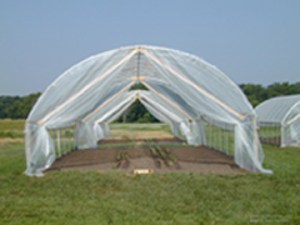
• Sitka gardeners to meet Tuesday, Jan. 19, at UAS

There will be an informal get together for interested Sitka gardeners from 7-9 p.m. on Tuesday, Jan. 19, in Room 106 at the University of Alaska Southeast-Sitka Campus on Japonski Island.

The get together provides a venue for gardeners of all types, interests and skills to informally exchange ideas, information, seeds and growing tips. Share and learn from other gardeners with no dues or commitments other than good fellowship.

Sitka gardeners plan to get together the third Tuesday of the month at the UAS-Sitka Campus. This month’s meeting is sponsored by UAS-Sitka Campus and the University of Alaska Fairbanks Cooperative Extension Service. For more information, call Cheryl Stromme at 747-9473 or Bob Gorman at 747-9413.

• The new Sitka Local Foods Network e-newsletter (Jan. 10)

Click here to read the current Sitka Local Foods Network e-newsletter courtesy of Linda Wilson. Don’t forget, you can sign up for the e-newsletter by typing your e-mail address in the “Join Our Mailing List” box on bottom of the left side of the page.

• Special board meeting on Tuesday, Jan. 12, for the Sitka Local Foods Network

There was too much business to get through during the regular board meeting of the Sitka Local Foods Network on Monday, Jan. 4, so a special board meeting will be held from 5-7 p.m. on Tuesday, Jan. 12, at the Sitka Economic Development Association (SEDA) conference room upstairs in the Troutte Center building on Lincoln Street. Here is the suggested agenda.

Sitka Local Foods Network
January 12, 2010, Board Meeting Agenda
5-7 p.m.  SEDA Meeting Room

* Approve Minutes of Last Meeting
* Review Mission Statement and Goals
* President’s Report: Turning Point; from volunteers to staff
* Standing reports
___o 501(c)(3) and financial update (Kerry)
___o Education/Let’s Grow Sitka update (Linda W.)
___o Sitka Farmers Market update/Educational Programs (Linda & Kerry)
___o St. Peter’s Fellowship farm update (Doug & Lisa)
___o Sitka Community Greenhouse update (workgroup – see minutes)
* Old Business
___o t-shirt update (Natalie & Peggy)
___o Ed Hume fundraiser (Maybelle – Lisa will bring her report; need approval of board to go ahead)
___o Earth day/Shane Smith
* New Business
___o Turning Point (Kerry);
___o Motion to support a CSA by inviting Hope and Florence to sign people up at the ‘Let’s Grow Sitka’ event.
___o  Island Institute Humanities project focused on sustainability
___o Other?

• Save the dates for 2010 Sitka Local Foods Network events

It’s time to mark a few Sitka Local Foods Network dates on the 2010 calendar.

The first date to mark is Sunday, March 14, when the second annual “Let’s Grow Sitka” event takes place from noon to 3 p.m. at the Alaska Native Brotherhood Hall. This event is associated with Sitka’s Artigras music and arts festival. Let’s Grow Sitka has a lot of information for gardeners as they prepare for spring plantings, and it’s a good place for new gardeners to learn what they need to start growing their own food. Booths on any garden-related topic are welcome, and space needs to be reserved as soon as possible (for information, call Linda Wilson at 747-3096, nights and weekends). This also is an event where people can talk about their local garden experiences, provide demonstrations and help get the community excited about the upcoming growing season.

Also, we have five of our six Sitka Farmers Market dates set for 2010. The Sitka Farmers Market takes place from 10 a.m. to 2 p.m. on the following Saturdays at the Alaska Native Brotherhood Hall:

  • July 17
  • July 31
  • Aug. 14
  • Aug. 28
  • Sept. 11

The last Sitka Farmers Market date will be discussed at the January board meeting (at noon on Monday, Jan. 4, at the See House behind the St. Peter’s By The Sea Episcopal Church). Under consideration are markets on July 3 or Sept. 25 (with the Running of the Boots). We need a sixth market to qualify to accept WIC coupons like we did last year. Vendors wanting to host booths at the Sitka Farmers Market should contact Linda Wilson for more information (2009 booth rules are posted in the Pages section under “Sitka Local Foods Network meeting minutes, other notes” and 2010 booth rules will be posted when they are available).

Also, be watching for details about two potential education events this spring when we hope to have guest speakers in town (one about Earth Day on April 22 and the other sometime around Memorial Day in May). Hopefully we’ll have event details soon.

• Change of venue for monthly Sitka Local Foods Network board meeting

Just a note that the location for the January meeting of the Sitka Local Foods Network board has been moved to the undercroft (basement) of the See House behind St. Peter’s By The Sea Episcopal Church on Lincoln Street. The January meeting is at noon on Monday, Jan. 4.

The Sitka Local Foods Network board of directors meets at noon on the first Monday of the month, usually at the Bayview Restaurant, during months when we aren’t hosting the Sitka Farmers Market.

• Sonja Koukel of the UAF Cooperative Extension Service writes about discovering treasures from the CES catalog

Dr. Sonja Koukel, PhD, of the UAF Cooperative Extension Service

Dr. Sonja Koukel, PhD, of the UAF Cooperative Extension Service

Discover Treasures from the UAF Cooperative Extension Service

By Dr. Sonja Koukel, PhD
Health, Home & Family Development Program
UAF Cooperative Extension Service, Juneau Office

_____

When was the last time you visited the University of Alaska Fairbanks Cooperative Extension Service (UAF CES) website? Perhaps it’s been awhile, or perhaps you’ve never taken the time to surf the site and take stock of all the treasures available in hard copy, electronic media, and on the Internet.

Every year the CES Communications Department provides a “Publications & Media” catalog listing research-based publications in the major program areas: Agriculture & Horticulture; Community Resource & Economic Development; Energy Education & Housing; and Health, Home & Family Development. Some publications are free and may be downloaded from the website. Those with a small fee can be ordered using the online form (http://www.uaf.edu/ces/pubs/), calling the toll-free number (1-877-520-5211), or contacting the local district office.

Let’s take a look at the treasure trove of information available through the Health, Home & Family Development (HHFD) program. For instance, there are a number of publications listed in the “Food, Nutrition and Health” category. Here, you will find information on storing vegetables and fruits, freezing vegetables, making fruit leather, making jerky, facts on botulism, and a variety of recipes including sourdough, rhubarb, zucchini, and wild berries. Several vegetable fact sheets provide nutrition and health guidelines (such as vitamin, mineral, and fiber content), harvesting, storage, and preparation with sample recipes included. Selected vegetables include beets, broccoli, cabbage, carrots, potatoes, squash, herbs, and chard. Bonus — all these fact sheets are free!

In my view, the most exciting new developments are the educational modules made possible through a USDA grant. Titled, “Preserving Alaska’s Bounty,” the web-based modules and DVDs were created and developed as a team effort involving HHFD faculty, program assistants, and the communications staff. The series focuses on home preservation of Alaska Native foods. Client feedback on the media, gathered from an online satisfaction survey, has been very positive.

The primary purpose for developing the modules was to provide research-based information for rural communities and areas that do not have extension faculty members on-site. The web modules are developed in a sequential manner so that each step is clearly defined and explained. There are hyperlinks within the modules that link the user to additional information. Topics are grouped into three main categories: Canning Basics, Canning Products & Methods (i.e., canning fish, meat, jams/jellies), and Meat Products & Methods (i.e., sausage, jerky). These modules are free. Locate them at (http://www.uaf.edu/ces/preservingalaskasbounty/index.html)

For those who learn best by watching demonstrations, the DVDs bring the extension experts into your home. Health, Home & Family Development program area faculty from all seven Alaska districts serve as the educators. To date, seven DVDs have been released on the following topics: Canning Basics, Canning Meat and Fish in Jars, Canning Meat and Fish in Cans, Pickling, Drying Foods, Sausage and Jerky, and the just-released, Jams and Jellies. More titles will be available in the very near future, these include: Root Cellars, Fireweed, Processing Reindeer (game meats), and Harvesting Alaska Seaweeds. The DVDs are available at a nominal fee of $5.

The Alaska Native foods preservation series is the culmination of a five-year process. It is a topic that figures into all the HHFD program areas: nutrition, food budgeting, eating locally, and energy conservation. Recently, the CES HHFD team received recognition for their work, “A Multimedia Approach to Preserving Alaska’s Bounty,” from the National Extension Honorary Society of Epsilon Sigma Phi.

In the new year, take a moment to visit the UAF Cooperative Extension Service website and discover all the treasures that await you. Contact: sdkoukel@alaska.edu or 907-796-6221.

Julie Cascio of UAF Cooperative Extension Service's Health, Home and Family Development program in the Palmer/Mat-Su district demonstrates how to dry apples

Julie Cascio of UAF Cooperative Extension Service's Health, Home and Family Development program in the Palmer/Mat-Su district demonstrates how to dry apples

• Wanton waste of deer meat, a record high herring quota and other local foods stories in the news

Over the past couple of weeks, at least 10 Sitka black tail deer corpses have been found in Sitka with lots of edible meat still on the bone but the prime cuts missing. According to the Anchorage Daily News, state wildlife officials are searching for the hunters, and wanton waste charges may be coming for those involved. There were six deer found off Green Lake Road, then four deer were found near Harbor Mountain Road five days later.

The Sitka Local Foods Network encourages the responsible and sustainable harvesting of traditional subsistence foods, such as deer, but we must respect the resource and use the entire animal. Not only is leaving edible meat in the field wasteful, but the last couple of years have been down years for deer survival and the actions of these wasteful hunters may mean fewer hunting opportunities next year for hunters who need the deer to feed their families. Anyone with information about the cases is asked to call Alaska Wildlife Troopers at 747-3254 or, to remain anonymous, Wildlife Safeguard at 1-800-478-3377.

In other local foods news, the Alaska Department of Fish and Game established a record sac roe herring quota for the 2010 season, a quota of more than 18,000 tons (more than 4,000 tons higher than last year’s then-record quota). The commercial herring fleet is very happy with the higher quota, but KCAW-Raven Radio reports local subsistence gatherers worry that the record quota will harm their ability to gather herring eggs on hemlock branches, a popular subsistence and barter food for local Tlingít and Haida residents. They also worry two straight years of record quotas will hurt the resource, since herring also serves as a key forage food for salmon, halibut, whales, sea lions and other species in the region.

The Juneau Empire reported that the State of Alaska asked for an extension to reply to an inquiry on subsistence management from the federal government. The federal government took over some management of subsistence in Alaska more than a decade ago because state laws weren’t in compliance with the Alaska National Interest Lands Conservation Act (ANILCA), which calls for a rural preference on subsistence in times of shortage, and the federal government may be expanding its role in subsistence management.

The Anchorage Daily News reported on Alaska pork being ready for the freezer at A.D. Farms, and that pork will be sold at the indoor farmers market at Anchorage’s Northway Mall. The story included a wrap-up of other local foods available at the market, and it had a recipe for crock-pot cod.

Laine Welch’s Alaska fishing column was about how more local fish is appearing in school lunch menus.

The Anchorage Daily News Alaska Newsreader feature reported on several Arctic travelers getting trichinosis from eating undercooked bear meat. The National Post of Canada also had a story on travelers eating undercooked bear meat, while the New York Times had an article about how trichinosis is common in bear meat that isn’t cooked properly.

The Anchorage Daily News had an article about how Alaska’s rhubarb probably first came from Russia.

Miller-McCune magazine had an article about how Alaska’s complex salmon politics can serve as a model for sustainable fisheries elsewhere in the world.

The Alaska Public Radio Network reported on a woman from Aniak, Dee Matter, who has taken freezing her food to a new level. The story also was on APRN’s Alaska News Nightly show.

The Fairbanks Daily News-Miner had a feature article about Kotzebue hunter and trapper Ross Schafer and the “Eskimo” way of life.

The Fairbanks Daily News-Miner had an article about a conflict between farmers and hunters over the future of the Delta bison herd.

The Juneau Empire ran a story about glaciers providing an important food source.

Anchorage Daily News garden columnist Jeff Lowenfels wrote about magazine gifts for gardeners.

The Seattle Post-Intelligencer ran an Associated Press article about Monsanto’s role in the business of agriculture, especially the way it squeezes out competitors in the seed industry.

Finally, the University of Alaska Fairbanks School of Natural Resources and Agricultural Sciences blog featured an article about a new study about food security challenges in Alaska.

• Two associated with Sitka Local Foods Network win awards at Alaska Health Summit

Sitka filmmaker Ellen Frankenstein, center, of Frankenstein Productions, greets fans after the Sitka premiere of her film "Eating Alaska" in October 2008

Sitka filmmaker Ellen Frankenstein, center, of Frankenstein Productions, greets fans after the Sitka premiere of her film "Eating Alaska" in October 2008

The Alaska Public Health Association (ALPHA) honored two programs with ties to the Sitka Local Foods Network during the Alaska Health Summit banquet on Dec. 9. Sitka filmmaker Ellen Frankenstein (and her Frankenstein Productions company) and the SouthEast Alaska Regional Health Consortium (SEARHC) Steps to a Healthier SE Alaska program both won the Alaska Community Service Award. According to ALPHA, the Alaska Community Service Award “recognizes an organization, business or group making a significant contribution to improving the health of Alaskans. It is ALPHA’s intent that nominees outside the public health tradition be considered for this award. A nominee does not need to be an ALPHA member.”

Frankenstein has produced several documentary films over the years, including “Eating Alaska,” which focuses on how we choose the food we eat. Eating Alaska debuted in the fall of 2008, and Frankenstein has taken it to film festivals all over the state and country. “Eating Alaska” received funding support from the SEARHC Steps to a Healthier SE Alaska program and other funders, plus technical support was provided by SEARHC health educators, physicians and dietitians. Some of Frankenstein’s other films include “No Loitering,” “Carved from the Heart,” “A Matter of Respect,” and “Miles from the Border.” She currently is working on a documentary film project with Haida weaver Dolores Churchill.

“As someone who fills in the occupation blank on forms with ‘filmmaker/artist,’ this award represents the fact that labels and lines don’t matter when it comes to social change and to making our lives healthier,” Frankenstein wrote from Austin, Texas, where she was attending a screening of Eating Alaska. “It not only validates my work, but represents your open-mindedness to the potential of working collaboratively and creatively with kids and adults, using art, media and storytelling to influence well-being and healthy communities.”

Frankenstein also sent this note to her e-mail group:

EATING ALASKA: ART AND HEALTH!
We just got the news the project has been awarded The Alaska Public Health Association’s 2009 Community Service Award for Health. In the process of making this film and in its use we’ve worked with nutritionists, health educators, medical and public health practitioners to add to the conversation about what we can do to make our homes, workplaces, schools and communities healthier and more sustainable. We appreciate the help everyone has given to the project to help us “contribute to improving the health of Alaskans” and others far beyond.

The SEARHC Steps to a Healthier SE Alaska program, which closes this month, was honored for the work it did over the life of its five-year grant (the national Steps to a Healthier US grant has ended, so that means all of the local grants that were part of the national grant also are ending). The Steps program funded 77 projects worth just over $1.1 million in 12 Southeast Alaska communities. Steps was one of the major funders and organizers of the Sitka Health Summit, which is where the Sitka Local Foods Network originated.

The Steps program’s goals were to increase opportunities for physical activity, improve nutrition and reduce the impact of tobacco in Southeast Alaska. The program also worked to reduce diabetes, obesity and asthma in Southeast communities. To accomplish its goals, Steps developed partnerships with schools, worksites, tribes and other community groups so they could change social norms and policies, and make evidence-based and culturally relevant interventions. In addition to the projects, Steps also hosted conferences and workshops to help programs learn how to work in collaboration.

The Steps program used the socio-ecological model, which emphasizes that an individual’s health status is influenced not only by his or her attitudes and practices, but also by personal relationships and community and societal factors. Nearly half of the 77 Steps grants (37) went to community projects, with the others geared toward schools and worksites. More than three-quarters of the grants (60) focused on improving nutrition and/or increasing physical activity. Together, the projects reached 128,000 people (with many people reached by multiple projects) in the communities of Angoon, Craig, Haines, Hoonah, Hydaburg, Juneau, Kake, Kasaan, Klawock, Klukwan, Sitka and Wrangell.

“Overall, the Steps initiative helped build capacity within communities, worksites and schools to work collaboratively, to plan evidence-based programs, and to monitor and evaluate program success,” said Grace Brooks, Steps Grant Manager. “Steps also contributed to an overall increased understanding of the importance of policy in supporting community, school and workplace health.”

In other local foods news from around the state this past week, the Alaska Dispatch ran an article about an indoors farmers market this winter at Anchorage’s Northway Mall.

Capital City Weekly featured a story by Carla Petersen about how the search for elusive cranberries is worth the challenge.

The National Oceanic and Atmospheric Administration (NOAA) announced last week that it is encouraging the use of catch shares to preserve the remaining stocks of halibut (the article features a photo from Sitka).

The Anchorage Daily News featured a story about Gov. Sean Parnell proposing to spend $1.3 million to research declining Yukon River salmon runs.

The Juneau Empire had a story about how an arts advocacy group in Juneau, Arts for Kids, has teamed up with Sitka-based Theobroma Chocolate Co. to offer SmART bars as a fundraiser for art scholarships for graduating seniors in Juneau.

The publicity poster for the movie Eating Alaska

• ‘Encounters with Richard Nelson’ radio show features episodes on venison and salmon

For the past four years, Sitka resident Richard Nelson has hosted a radio show called “Encounters,” which airs on KCAW-Raven Radio and other public radio stations around the state.

His Nov. 23 show was about venison. The show’s description — “Look over the shoulder of host Richard Nelson as he butchers a freshly killed deer. He tells stories of his learning to hunt from his Inupiaq teachers and we learn how knowing more about the food we eat can make us feel closer to the environment.”

His Aug. 10 show was about salmon. The show’s description — “Instead of heading uptown, head upstream this week with Richard Nelson as he gets into a salmon stream to experience the amazing annual life cycle event of wild Alaskan salmon.”

The rest of his shows are about life in Alaska and other spots in the arctic, and they range from bear safety to mosquitoes. Some of his episodes also deal with Nelson’s time spent in Australia.

• Sonja Koukel of the UAF Cooperative Extension Service writes about preserving Alaska wild berries

Dr. Sonja Koukel of the UAF Cooperative Extension Service's Juneau office displays some wild berry preserves

Dr. Sonja Koukel of the UAF Cooperative Extension Service's Juneau office displays some wild berry preserves

Preserving Alaska’s Wild Berries

By Dr. Sonja Koukel, PhD
Health, Home & Family Development Program
UAF Cooperative Extension Service, Juneau Office

_____

Is your freezer teeming with berries harvested last season? If so, now is the time to preserve them in jams, jellies, or syrups. As the winter days grow darker and shorter, preserving berries provides an emotional uplift as the activity brings with it memories of sunshine and relaxing hours spent in the beauty that is Alaska.

While freezing is an acceptable preservation method for berries, it is not the most economical and there is the risk of power outages that could compromise the storage time. Freezing is the least time consuming method of food storage than canning.  However, when foods are home canned, they enjoy a longer shelf life, can be stored at room temperature, and are not affected by power outages.

Berries are a high acid food; therefore jams and jellies can be processed quickly and easily using the boiling water canning method. In this method, filled jars are covered with boiling water and heated to an internal temperature of 212 degrees (F). At this temperature, bacteria, yeasts and molds that could be a health hazard or cause the food to spoil are destroyed. Additionally, the hot water inactivates enzymes that cause foods to spoil. The canning process removes air from the jar and a vacuum seal is formed when the product cools. The seal prevents air from getting back into the product, bringing with it microorganisms that could recontaminate the food.

As mentioned, removing the air from the jar is important as microorganisms will not thrive in an anaerobic environment. Presented with these facts, some individuals question the “inversion” method that is often included along with the directions found in purchased packages of pectin. According to this method, the filled, hot jars are turned upside-down after the rings have been screwed onto the tops. After five minutes, the jar is turned upright to cool, after which it is stored on pantry shelves. The problem with this method is that the air has not been exhausted from the jar, which can encourage mold growth. To ensure food quality and safety, all jellied products are processed in a boiling water canner.

Recipes for jams and jellies are available in packages of pectin, cook books, magazines, and food preservation guides. For Alaska berries, check out the UAF Cooperative Extension Service publication, “Collecting and Using Alaska’s Wild Berries and Other Wild Products.” A best-seller, this publication provides berry facts, storage and preservation methods, and recipes. Blueberries, currants, highbush cranberries, and red huckleberries can be found along with fireweed and wild roses. Over the holiday season, the “Berry Book” is offered at the reduced rate of $7. Contact your district office or place an order online at  http://www.uaf.edu/ces/pubs

If you have never preserved jams or jellies, or would like to review the process, visit the UAF Cooperative Extension Service website for fact sheets that can be downloaded free to your home computer: http://www.uaf.edu/ces/pubs/catalog/. Newly released educational modules can be viewed online: http://www.uaf.edu/ces/preservingalaskasbounty/index.html.

Alaska wild berry preserves are a great treat

Alaska wild berry preserves are a great treat