• Gardening work party set for Earth Week at St. Peter’s Fellowship Farm

StPetersSignWithToDoListSign

A group of kids harvests garlic during an Aug. 12, 2011, work party at St. Peter's Fellowship Farm.

A group of kids harvests garlic during an Aug. 12, 2011, work party at St. Peter’s Fellowship Farm.

Are you interested in meeting other Sitka gardeners and learning about how to grow food in Sitka’s rainy climate? Then join us for an Earth Week garden party from 2-4 p.m. on Saturday, April 25, at St. Peter’s Fellowship Farm.

St. Peter’s Fellowship Farm is located behind St. Peter’s By The Sea Episcopal Church on Katlian Street (the brown church with the steeple above Crescent Harbor). It is a communal garden that grows food to be sold at the Sitka Farmers Markets, at a table when Chelan Produce is in town, and used for various school lunch and hunger programs around town. This year’s Sitka Farmers Markets are from 10 a.m. to 1 p.m. on Saturdays, July 4, July 18, Aug. 1, Aug. 15, Aug. 29, and Sept. 12, at the Alaska Native Brotherhood Founders Hall (235 Katlian St.).

“We will be putting starts in the ground, weeding and prepping beds for planting,” St. Peter’s Fellowship Farm lead gardener Laura Schmidt said.

The garden work parties are kid-friendly, so feel free to bring the munchkins to help.

To learn more, call St. Peter’s Fellowship Farm lead gardener Laura Schmidt at 738-7009 or 623-7003, or contact Sitka Local Foods Network board president Lisa Sadleir-Hart at 747-5985 or sitkalocalfoodsnetwork@gmail.com.

• Alaskans Own community-supported fisheries program announces 2015 season subscription prices

AOFlyer2015Sitka

Sitka-based Alaskans Own seafood recently announced its subscription prices for its 2015 community-supported fisheries (CSF) program in Sitka, Juneau, Anchorage, and, new this year, Seattle.

Alaskans Own was the first CSF program in the state, modeling its program after the successful community-supported agriculture (CSA) programs that let customers deal directly with harvesters so they can buy subscription shares to the year’s crop/catch. In addition to the CSF program, Alaskans Own usually has a table at the Sitka Farmers Markets during the summer.

AO flier no tagsThis is the sixth year of the Alaskans Own CSF program, and there are four-month and six-month subscriptions available starting in May. The six-month subscriptions allow people to keep receiving freshly caught seafood through October instead of August, when the traditional four-month subscriptions end. Half-subscriptions also are available. Subscriptions include a mix of locally caught black cod (sablefish), halibut, king salmon, coho salmon, lingcod and miscellaneous rockfish, depending on the commercial fishing season and prices.

According to newly hired director Caroline Lester, this year’s price for a six-month full subscription (about 60 pounds, or 10 pounds a month) in Sitka is $886.16 (includes sales tax) and $446.40 for a half subscription (about 30 pounds). The price for a four-month full subscription (about 40 pounds) is $606.32 and $326.46 for a half subscription (about 20 pounds). Prices are slightly higher for the other communities participating in the program. People can use the Alaskans Own online store site to purchase their CSF shares. Deliveries in Sitka will be either the last or second-to-last Thursday of the month at the old mill building next to the Sitka Sound Science Center.

The Alaskans Own program is associated with the Alaska Sustainable Fisheries Trust. The Alaska Sustainable Fisheries Trust’s mission is to strengthen Alaskan fishing communities and marine resources through scientific research, education, and economic opportunity.

For more information, contact Caroline Lester at info@alaskansown.com or 738-2275.

• In the 19th and early 20th Centuries, Sitka was Alaska’s original garden city

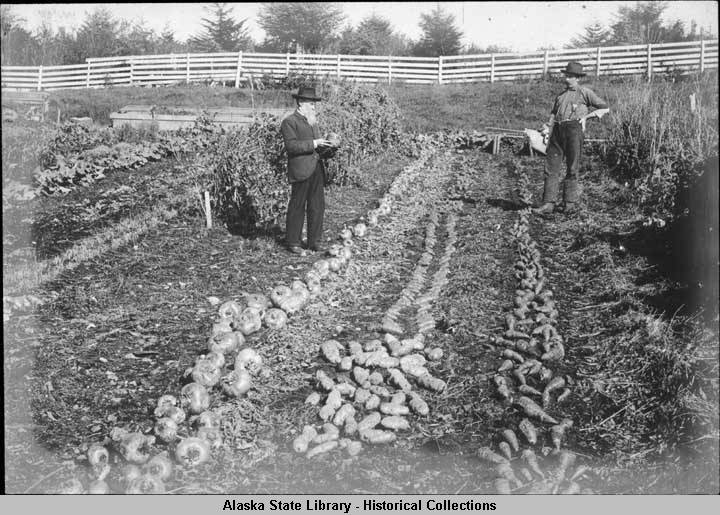
The 1900 potato harvest in the Sitka garden of Gov. John G. Brady. (Photo courtesy of Alaska State Library Historical Collections)
The 1900 harvest of potatoes and other vegetables from the Sitka garden of Gov. John G. Brady. (Photo courtesy of Alaska State Library Historical Collections)

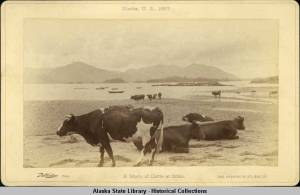
Sitka cattle on the beach in 1887 (Photo courtesy of Alaska State Library Historical Collections)

Sitka cattle on the beach in 1887 (Photo courtesy of Alaska State Library Historical Collections)

Even though Sitka doesn’t have much in the way of commercial agriculture and gardening these days, at one point in the 19th Century and early 20th Century Sitka was Alaska’s original garden city.

Sitka has a unique history that includes the Tlingít, Russian and American cultures. Even before the first Russians arrived in the 1700s and made Sitka (or New Archangel, as the Russians called it) the capital of Russian America in 1803, the Tlingíts had simple gardens for potatoes and other crops they’d received from Spanish and other explorers. The Tlingíts would plant potatoes and other root vegetables before they headed out to their fish camps, then they’d harvest the gardens as they made their way to their hunting and winter camps. In addition, the Tlingíts in Shee Atiká (Sitka) were constantly gathering roots, berries, and other food and medicinal plants that grew in the area. The Tlingíts also created an early form of mariculture, creating clam gardens by creating rock-walled beach terraces at low tide to keep clams and other shellfish in certain areas for easy growth and harvest.

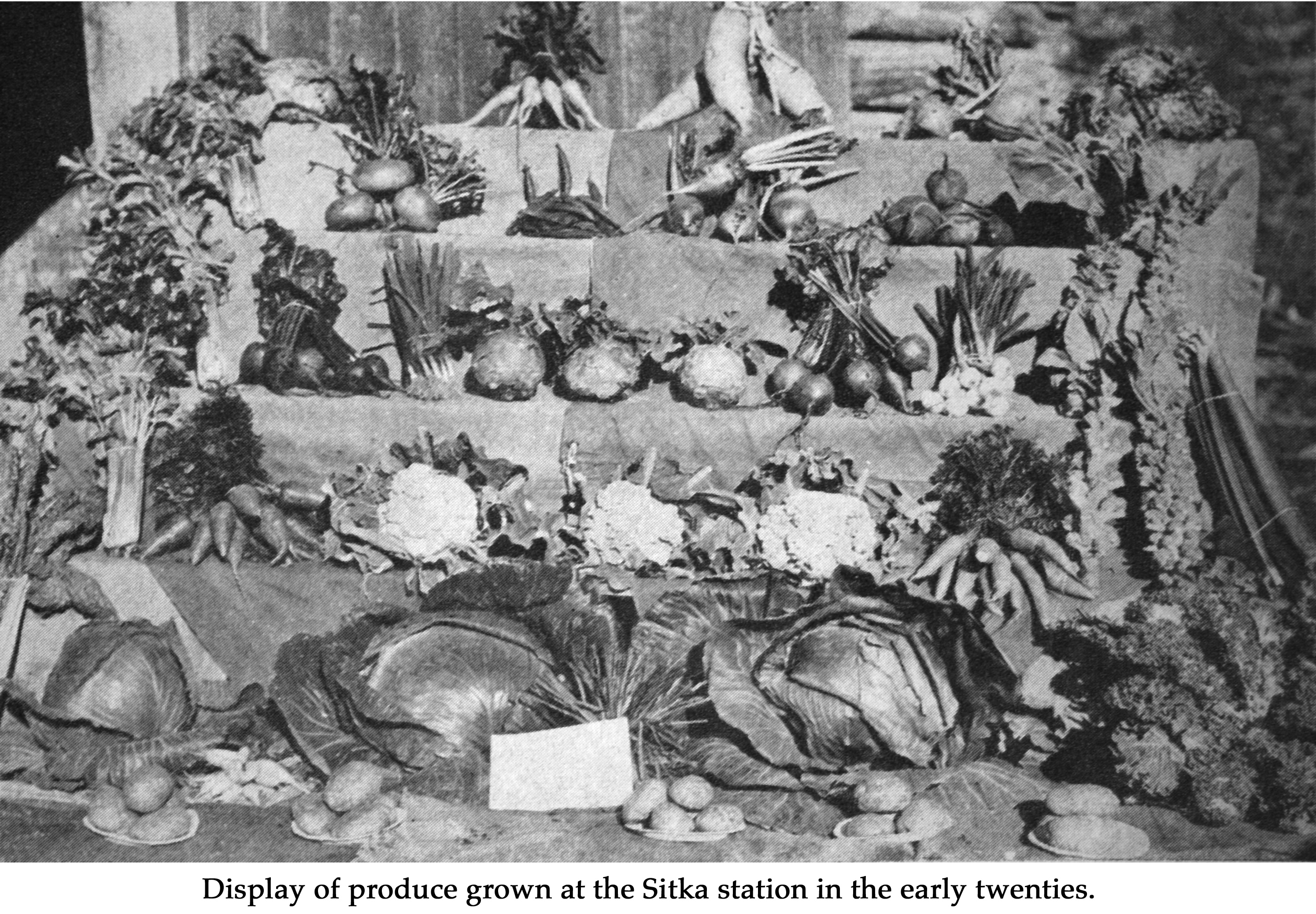
produceWhen the Russians arrived in Sitka, they were fur trappers and not colonists. However, the Russian czar required all land patents to have gardens, and that established the first formal vegetable and fruit production in Sitka. The Russians (along with the Finns and Swedes who served as indentured servants to the Russians) maintained several large gardens until 1867, when Russian America was sold to the United States.

Among the first Americans to arrive in Alaska were missionaries, including Dr. Sheldon Jackson who established a school for Native Americans in Sitka that eventually became Sheldon Jackson College and also served as Alaska’s Superintendent for Indian Education with the U.S. Department of Interior. In 1891, Dr. Jackson lobbied Congress to create a U.S. Department of Agriculture experimental farm in Sitka to see if agriculture had any potential in Alaska. It wasn’t until 1897, when Congress acted, passing a bill that in 1898 created USDA experimental farms in Sitka and Kodiak. Over the next few years, more USDA experimental farms would be established in Kenai, Rampart, Fairbanks, Copper Center, and Matanuska (Palmer).
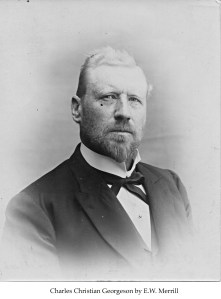
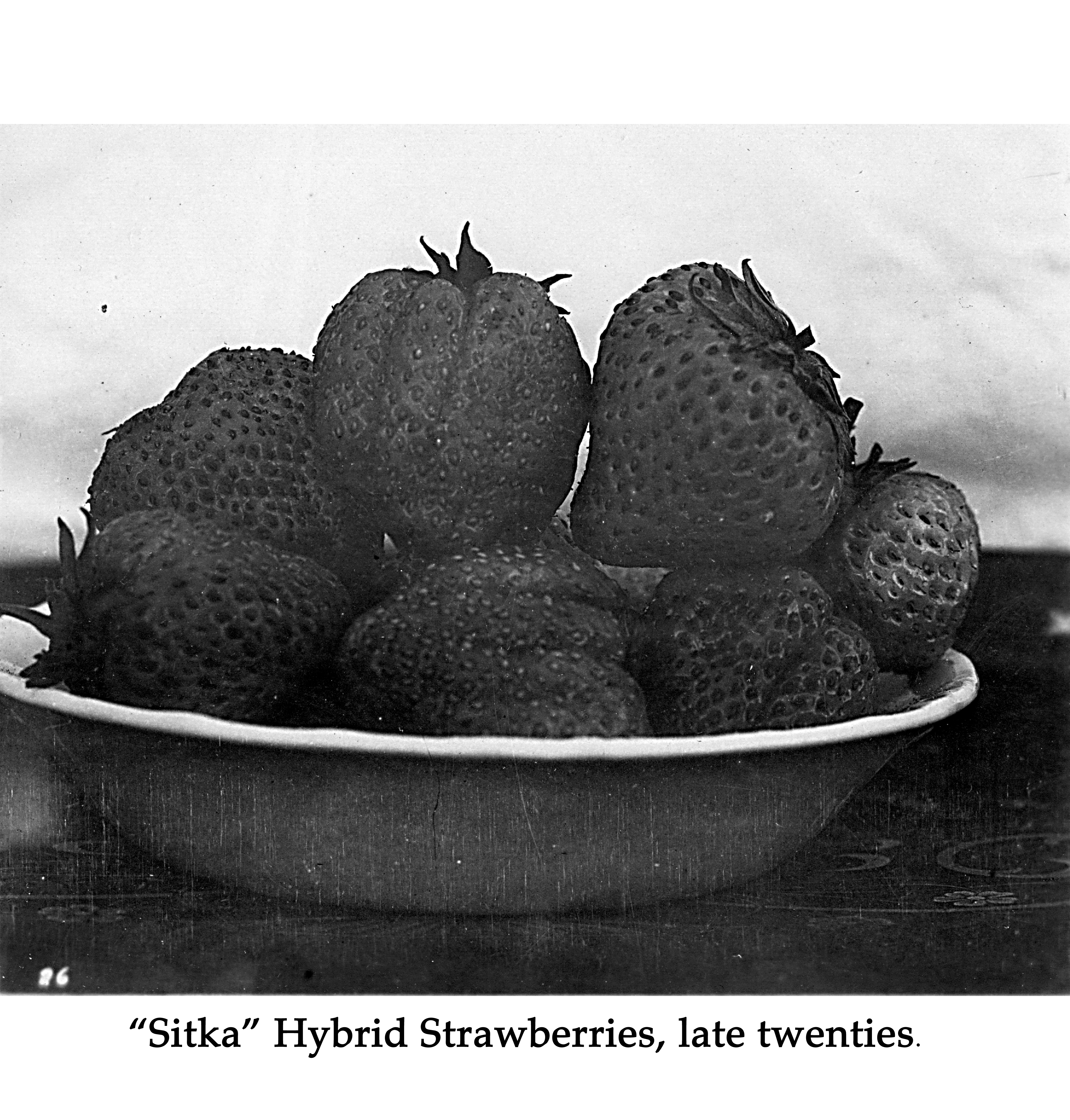
ccg2Many details about the USDA experimental farm in Sitka can be found in an article in the Spring 1998 issue of Agroborealis (Pages 7-11), celebrating 100 years of agriculture research in Alaska. The article includes information about some of the experiments run by lead horticulturist Charles Christian Georgeson, who later moved to the Fairbanks experimental station and now has a botanical garden named for him at the University of Alaska Fairbanks. One of Georgeson’s first experiments involved growing potatoes, and he noted how well the local seaweed worked as a fertilizer. He also developed the Sitka hybrid strawberry in 1905, combining a wild beach strawberry from Yakutat with a commercial variety of unknown origin (see Pages 30-32).
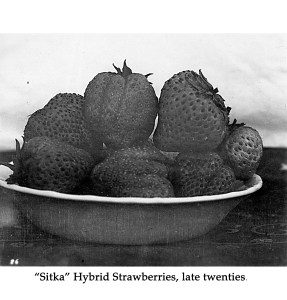
Ph 2824Unfortunately, many of the experimental farms were closed, except the two in Fairbanks and Palmer. The Sitka experimental station closed in 1931, and much of the land was converted to other uses. Until he retired in 2014, Bob Gorman, a longtime University of Alaska Fairbanks Cooperative Extension Service employee, maintained a few small garden plots on the former Sitka experimental farm site where he conducted a few experiments (including growing corn in a high tunnel). Some of the fruit trees planted by Georgeson more than 100 years ago still produce fruit.

A photo gallery of historic Sitka gardening photos is below, followed by a photo gallery of more recent photos of the former Sitka experimental farm taken during a September 2013 tour for the International Master Gardeners Conference Cruise when it visited town. The historical photos were provided to the Sitka Local Foods network in 2008 by then-Sitka Historical Society and Museum curator Ashley Kircher (now Ashley Oliphant) and intern Amy Thompson.

This slideshow requires JavaScript.

This slideshow requires JavaScript.

• Rep. Jonathan Kreiss-Tomkins of Sitka introduces bill to allow donations of fish and game to nonprofit meal programs

041614_JKT_house-floor

Rep. Jonathan Kreiss-Tomkins (D-Sitka) is the prime sponsor of a tripartisan bill that will allow nonprofit meal programs — such as those found at schools, hospitals and senior centers — to serve donated fish and game from sport and subsistence harvesters.

The bill, HB 179, is co-sponsored by seven other legislators — four Republicans (Cathy Muñoz of Juneau, Charisse Millett of Anchorage, Louise Stutes of Kodiak and Tammie Wilson of North Pole), two Democrats (Neal Foster of Nome and Sam Kito III of Juneau), and an Independent (Dan Ortiz of Ketchikan). The was introduced on April 1 and already has hearings set for next week in the resources (Monday, April 6) and fisheries (Tuesday, April 7) committees. If those committees pass the bill, it could go before the House floor for a vote as early as late next week.

“Because of that broad support, this bill is in not just the fast lane, but in the Autobahn-style fast lane,” Kreiss-Tomkins told the Daily Sitka Sentinel. “This bill could go from being introduced to a vote on the floor in eight or nine days.”

Kreiss-Tomkins said the bill was inspired in part by Sitka’s Fish to Schools program, which allows commercial fishermen to donate locally caught seafood to local schools so it can be served in student lunches. However, many parts of the state don’t have commercial fisheries, and Alaska law currently bars food service organizations funded by state or federal meal programs from serving subsistence- and sport-harvested fish and game, even if it is donated.

In the sponsor statement for the bill, Kreiss-Tomkins writes:

Hunting and fishing is at the heart of our shared heritage as Alaskans. Every Alaskan looks forward to the season he or she can again fill the freezer with salmon, moose, caribou, seal, or berries. Alaskans happily share this food with family, children, and elders.

This sharing is not possible in our public institutions, however. Well-meaning state laws intended to prevent the commercialization of wild game have also largely prevented children in schools and elders in hospitals and senior centers from eating the traditional Alaska foods that we treasure. As a result, even though we are surrounded by some of the best food in the world, our children eat corndogs rather than caribou at school lunch; our elders are served spaghetti rather than seal.

This action follows a 2013 amendment U.S. Rep. Don Young (R-Alaska) included in an agriculture bill that removed barriers that previously prohibited American Indians and Alaska Natives from serving traditional foods in hospitals, elder care facilities and schools. The amendment authorized the U.S. Department of Agriculture to allow for the donation and serving of traditional foods, which meet specific safety standards, in public facilities that primarily serve American Indians and Alaska Natives.

In his sponsor statement, Kreiss-Tomkins writes:

The bill also ensures traditional wild foods donated to and served by food service programs are safe to eat. The Department of Environmental Conservation already has regulations in place providing for the safe handling and processing of many traditional wild foods. HB 179 affirms the Department’s authority to oversee the safety of these foods.

HB 179 will nourish Alaska’s children and elders, both physically and spiritually. It will limit the amount of expensive and unhealthy processed food shipped to communities that have incredible food available just a short boat or snowmachine ride away. Children will develop an appreciation where their food comes from and elders will be able to keep eating the foods they love.

• HB 179 — Traditional Foods Bill

• HB 179 — Traditional Foods Bill Sponsor Statement

• Sitka Tribe of Alaska starts testing for paralytic shellfish poisoning (PSP) and other marine biotoxins

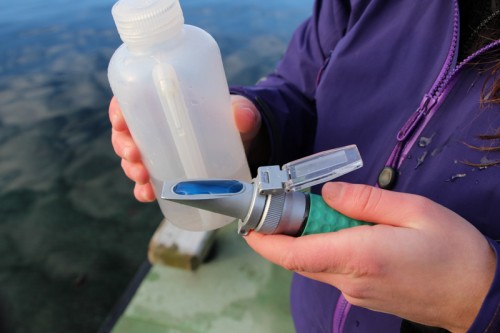
Esther Kennedy of the Sitka Tribe of Alaska Resource Protection Department samples water near the Starrigavan Recreation Area dock for marine biotoxins such as paralytic shellfish poisoning. (Photos by Emily Kwong, KCAW-Raven Radio)

Esther Kennedy of the Sitka Tribe of Alaska Resource Protection Department samples water near the Starrigavan Recreation Area dock for marine biotoxins such as paralytic shellfish poisoning. (Photos by Emily Kwong, KCAW-Raven Radio)

PSPTestingEquipmentThe Sitka Tribe of Alaska and its other tribal partners in Southeast Alaska have begun testing for paralytic shellfish poisoning (PSP) and other marine biotoxins.

The first-year testing program was detailed in a March 24 story on KCAW-Raven Radio, with each of the tribal partners concentrating on one particular spot in their communities (at Starrigavan Recreation Area in Sitka, where two people were sickened in October 2013) as the tribal testers become more comfortable with the testing procedures. Once the technicians become more proficient, and the regional testing lab is built, the program will be expanded to other beaches in Southeast Alaska. The second part of the two-part series aired on April 9 and discussed the benefits to commercial shellfish operations of having a lab in Southeast Alaska.

The Southeast Alaska Tribal Toxins (SEATT) program to study harmful algal blooms was announced in October, and Sitka Tribe of Alaska hosted a regional training in November. SEATT partners include Sitka Tribe of Alaska, the Klawock Cooperative Association, Craig Tribal Association, Yakutat Tlingít Tribe, Petersburg Indian Association, Organized Village of Kasaan, and the Central Council of Tlingít and Haida Indian Tribes of Alaska (CCTHITA). In addition to the grant to create the partnership, Sitka Tribe of Alaska also received a second grant to create a regional lab in Sitka to help monitor HABs in Southeast Alaska.

Harmful algal blooms, such as paralytic shellfish poisoning (PSP), typically have not been monitored in Southeast Alaska for subsistence and recreational harvesters of clams, mussels, oysters, cockles, and other bivalves (commercial harvests are tested). Even though many people in Southeast Alaska love to harvest shellfish, eating it comes with some risks. There have been several PSP outbreaks in recent years that sent people to the hospital, and in 2010 two deaths were attributed to PSP and other HABs, such as Alexandrium, Pseudonitzchia and Dinophysis.

Being able to put trained monitors in several Southeast Alaska communities, the hope is the health risk can be reduced. Each technician will make weekly reports to the lab, which will help harvesters have better information as to the safety of their shellfish.

• First classes set for second-year students in 2015 Sitka Local Foods Network garden mentor program

IMG_0022

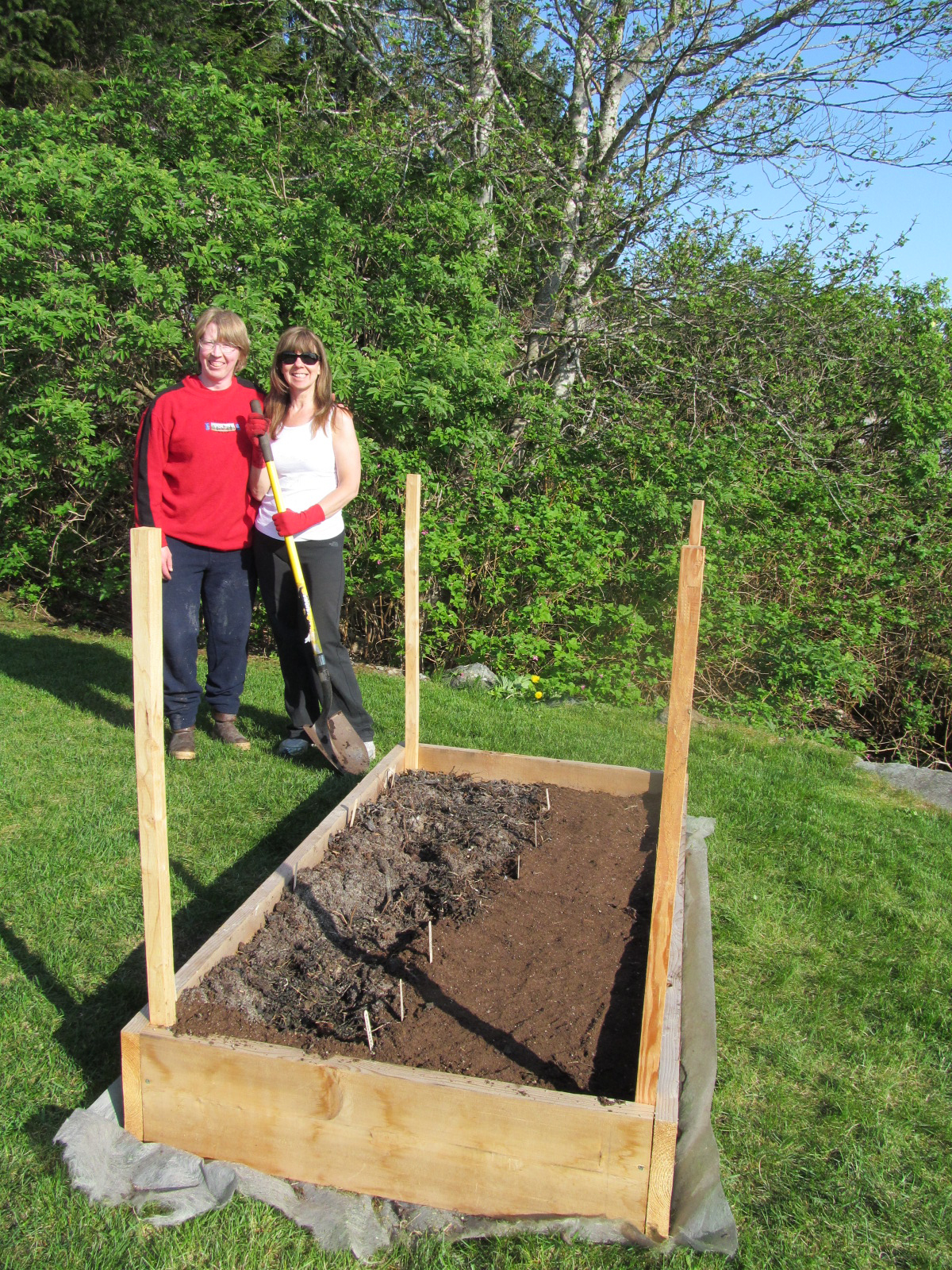
It’s time to plant your vegetable garden along with the Sitka Local Foods Network’s two second-year garden mentor families.

These two families (Anna Bradley and Tami O’Neill) participated in the first year of the program last summer, and now they’re back for more. Our two returning families will be planting carrots, chard, green onions and peas this year.
These four crops are slightly more difficult crops to grow that our first-year plantings of kale, lettuce, potatoes and rhubarb. Even though this year’s crops are more difficult to grow, many gardeners in Sitka still have good results with these vegetables.
The classes at each location will be similar, and they are free and open to the public. The schedule is:
  • Anna Bradley, 4764 Halibut Point Road, 3 p.m. on Sunday, May 3 (EDITOR’S NOTE: Due to illness, this class will be postponed to a date and time TBA).
  • Tami O’Neill, 2309 Merganser Drive, 10 a.m. on Saturday, May 23.
Don’t forget the schedule of first classes for our four first-year gardening families also has been posted and those classes are open to the public.
Michelle Putz has been contracted to coordinate the program and design lesson plans, after the Sitka Local Foods Network received a community development grant from First Bank. We also have about a half-dozen experienced Sitka gardeners who serve as mentors for the program. For more information, please contact Michelle at 747-2708.

• Sitka Farmers Market to host meeting April 7 for prospective and past vendors

SitkaFarmersMarketSign

The Sitka Local Foods Network will host a meeting for prospective and past vendors of the Sitka Farmers Market from 5:45-7:45 p.m. on Tuesday, April 7, at Harrigan Centennial Hall.

This is the eighth year of operation for the Sitka Farmers Market, which features six markets from 10 a.m. to 1 p.m. every other Saturday from July through September at the Alaska Native Brotherhood Founders Hall (this year’s dates are July 4, 18, August 1, 15, 29, and September 12). The Sitka Farmers Market was a community health initiative from the 2008 Sitka Health Summit.

The farmers markets feature booths from local farmers/gardeners, local fishermen, local bakers, and local artisans and craftspeople. Our emphasis is on local products from Sitka and Southeast Alaska. The farmers markets also are great Sitka gathering places.

A detailed description of the farmers markets and vendor forms can be found our website, http://www.sitkalocalfoodsnetwork.org/ (scroll down or look in the right-hand column). If you have any questions, please email the Sitka Local Foods Network Board of Directors at sitkalocalfoodsnetwork@gmail.com.

• It’s time to … plant your potatoes with a free workshop on April 12

PotatoesAndPotatoFork

The Sitka Local Foods Network reminds you that it’s time to get out in the garden and plant your potatoes.

Potatoes are some of the most productive and easy-to-grow vegetables in Sitka. Michelle Putz will present a free, hands-on potato-planting workshop at 10 a.m. on Sunday, April 12, at 131 Shelikof Way. Parking space is limited, so please consider walking, riding your bike or carpooling. More information is available by calling Michelle at 747-2708.

Also, the next meeting of the Sitka Local Foods Network education committee is from 6:30-8 p.m. on Wednesday, April 1, at the Sitka Unitarian Universalist Fellowship Hall, 408 Marine Street (parking off Spruce Street). We will be brainstorming ideas for upcoming classes, and we welcome local gardeners who want to teach classes to join our list of educators. Just give us a topic, best date and time, and we can help you find a venue.

For more information about Sitka Local Foods Network education classes, contact Jennifer Carter at 747-0520 or 1-850-491-2666 (cell), or Michelle Putz at 747-2708. This is one of the many free classes being offered this year by the Sitka Local Foods Network education committee. Click here to get a full list of our upcoming spring classes.

• Check out the April 2015 edition of the Sitka Local Foods Network newsletter

SLFN April 2015 newsletter screenshot

The Sitka Local Foods Network just sent out the April 2015 edition of its newly launched monthly newsletter. Feel free to click this link to get a copy.

This edition of the newsletter has brief stories about how to build a simple raised garden bed, the Plant a Row for the Hungry program, our open manager and assistant manager positions for the Sitka Farmers Market, some upcoming garden mentor program and other free garden classes, and the 2015 Pick.Click.Give. fundraising campaign. Each story has links to our website for more information.

You can sign up for future editions of our newsletter by clicking on the registration form image in the right column of our website and filling in the information. If you received a copy but didn’t want one, there is a link at the bottom of the newsletter so you can unsubscribe. Our intention is to get the word out about upcoming events and not to spam people. We will not share our email list with others to protect your privacy.

• First two classes set for 2015 Sitka Local Foods Network garden mentor program

IMG_0022

The first two classes for the 2015 Sitka Local Foods Network garden mentor program have been set for each of our four participating first-year families, and the classes will be open to the public. The classes will be similar at each location, except one where we will be planting a container garden instead of our usual raised garden beds.

For three of the four families, the first class will focus on site selection, garden preparation, building planter beds, simple vegetables and soil preparation. The second class will be about simple vegetables and planting. For our first-year gardener families, we teach them how to grow four hardy crops for Sitka — kale, lettuce, potatoes and rhubarb. These classes are essentially the same, so feel free to attend the Class 1 and Class 2 that best fits your schedule.

The class schedule and location for these three families is:

  • A.J. Bastian, 207 Brady St. — CLASS 1: 5:30 p.m. on Tuesday, April 7; CLASS 2: 5:30 p.m. on Thursday, April 30.
  • Rebecca Kubacki, 1202 Halibut Point Rd. — CLASS 1: 9 a.m. on Saturday, April 11; CLASS 2: 7 p.m. on Wednesday, May 6.
  • Breezy, 616 Sawmill Creek Rd. — CLASS 1: 3 p.m. on Saturday, April 11; CLASS 2: 6 p.m. on Tuesday, May 5.

Our fourth family — Josephine Dasalla, 1709 Halibut Point Rd., No. 31 (green trailer) — will feature a combined Class 1 and Class 2 at 5:30 p.m. on Wednesday, April 15. In this combined class, we will teach the family about containers, soil for containers, plant needs, and we will plant lettuce, kale, potatoes and raspberries (rhubarb is our usual fourth crop, but it is not an option at this location).

This is the second year of the garden mentor program, and our two families from last year — Anna Bradley and Tami O’Neill — are back for a second year where they will learn how to grow a few more difficult crops for Sitka, such as carrots and onions. We will announce those classes when they become available.

Michelle Putz has been contracted to coordinate the program and design lesson plans, after the Sitka Local Foods Network received a community development grant from First Bank. We also have about a half-dozen experienced Sitka gardeners who serve as mentors for the program. For more information, please contact Michelle at 747-2708.