• Wealth of resources available to learn about traditional foods

A selection of traditional plant books that are in popular use in Southeast Alaska

A selection of traditional plant books that are in popular use in Southeast Alaska

Living in Southeast Alaska, Sitka residents are exposed to a wealth of traditional foods that grow in our forests or can be found along our beaches. But many Sitka residents aren’t familiar with which plants are safe to eat, and which plants they should avoid. They also aren’t familiar with when are the prime times to gather certain plants.

In recent years, several books have been published to help teach people more about traditional plants and how they can be used. There also have been other groups, such as the Sitka Tribe of Alaska’s Kayaaní Commission, the Sealaska Heritage Institute and the Alaska Native Knowledge Network, that have posted traditional plant information online, including complete curriculum outlines for teachers to use in their classrooms.

Some of the more popular books used in Sitka (many of these can be found at Old Harbor Books) include:

  • Wild Edible & Medicinal Plants: Alaska, Canada & Pacific Northwest Rainforest: An Introductory Pocket Trail Guide (Volumes 1 and 2) by Carol R. Biggs
  • Wild Edible and Poisonous Plants of Alaska by the University of Alaska Fairbanks Cooperative Extension Service (FNH-00028)
  • Collecting and Using Alaska’s Wild Berries and Other Wild Products by the University of Alaska Fairbanks Cooperative Extension Service (FNH-00120)

In addition to these books, the Sealaska Heritage Institute has created curriculum resources using the Tlingít and Haida languages that are built around using traditional foods (links on language names go to Grades K-2 versions, but upper-lever courses available on main curriculum link). Examples of the Tlingít and Haida Grade K-2 courses for Plants are linked below as PDF documents, but there also are separate courses for beach greens, berries, cedar trees, hemlock trees, spruce trees, herring, hooligan, salmon, sea mammals, as well as for other cultural knowledge such as canoes, totem poles and Elizabeth Peratrovich.

The Alaska Native Knowledge Network also some curriculum resources posted online for Tlingít, Haida and Tsimshian culture, including some by Sitka teacher Pauline Duncan. The Alaska Native Plant Society has some information on traditional plant use, but the group is geared more toward the Anchorage area. The Alaska Natural History Program publishes an online Alaska Rare Plant Field Guide. The University of Alaska Fairbanks Cooperative Extension Service has online and printed guides available on plant identification, berries and berry use, and even has online tutorials about how to home can jams and jellies.

On a related note, the SouthEast Alaska Regional Health Consortium (SEARHC) Diabetes Program will be turning its focus to traditional living classes for 2011. The program will focus on traditional foods and activities to teach its Native patients and other community members how to prevent and manage their diabetes (the SEARHC Diabetes Program operates throughout Southeast Alaska, not just in Sitka). The SEARHC Diabetes Program is looking for resident experts in traditional living (fishing, hunting, gathering, preparation, storage, gardening, etc.) who can help teach these skills to others. The program also wants to learn what types of classes people want to see offered in their communities. For more information, contact SEARHC Health Educator Renae Mathson at 966-8797 or renae.mathson@searhc.org.

Sealaska Heritage Institute Tlingít plant curriculum (Grades K-2)

Sealaska Heritage Institute Haida plant curriculum (Grades K-2)

UAF Cooperative Extension Service Native Plants of Alaska page on devil’s club

Nellie’s Recipes: An ANTHC (Alaska Native Tribal Health Consortium) Traditional Food Cookbook for Assisted Living Homes

Alaska Traditional Food Resources (list from Eat Smart Alaska program run by Alaska Division of Public Health)

• Alaska Permaculture Guild to host state’s first permaculture design certification course

The Alaska Permaculture Guild will host Alaska’s first permaculture design certification course on Aug. 9-22, at the Ageya Wilderness School in Homer.

This complete, 72-hour course (two weeks) lays the foundation for understanding and using natural principles to design abundant, sustainable systems that provide for basic human needs of healthy foods, housing, energy and meaningful work and relationships, while also contributing to the regeneration of the earth.

For those not familiar with permaculture, it is a holistic design system used in more than 140 countries. According to the Alaska Permaculture Community site, permaculture is a holistic design process, using ecology as a basis for designing integrated systems: food production, community, economics, housing, with an embued ethic of caring for the earth, caring for people and sharing the surplus. That’s asking us to limit our consumption and design for abundance and then share that abundance with each other.

This course will cover all aspects of permaculture, including:

  • design processes and methodologies and tools
  • water storage, flow, and runoff
  • soil fertility, food web, testing, improvements
  • tree crops, agro-foresty, and forest gardens
  • integrating animals from intensive grazing to micro livestock
  • urban permaculture, ecology, village design
  • natural building, energy systems
  • economics, alternative currency and bartering systems.

This course includes a design practicum, where participants will work in groups to create designs using what they are learning. There will be many hands-on activities and local field trips so you can see theory in action. Optional evening workshops are offered with Alaskans experienced in applying permaculture in our challenging climate. There will be one day off in the middle of the course.

There is a long list of people who should consider taking this course, which includes homeowners and renters, planners and managers, government employees, building design and construction professionals, landscape architects, designers, gardeners, social workers, non-profit and community leaders, entrepreneurs, and students and educators.

Click here to find an application and fee schedule for the course, and to register. There are camping and heated yurt accommodations available for the course. Successful completion of this course will allow the participants to earn a Certificate in Permaculture Design, allowing them to use permaculture in their line of work.

• Fast Food Nation author encourages Alaskans to grow their own local food

Fast Food Nation author Eric Schlosser, second from left, visits with University of Alaska Fairbanks School of Natural Resources and Agricultural Sciences associate professor Joshua Greenberg, left, student Charles Caster, third from left, and professor Milan Shipka, right, during a May 27 visit to speak at UAF. (Photo courtesy of the UAF School of Natural Resources and Agricultural Sciences blog)

Fast Food Nation author Eric Schlosser, second from left, visits with University of Alaska Fairbanks School of Natural Resources and Agricultural Sciences associate professor Joshua Greenberg, left, student Charles Caster, third from left, and professor Milan Shipka, right, during a May 27 visit to speak at UAF. (Photo courtesy of the UAF School of Natural Resources and Agricultural Sciences blog)

Eric Schlosser, the author of “Fast Food Nation” and “Chew On This,” encouraged Alaskans to grow their own local foods during a May 27 lunch of Alaska-grown food with University of Alaska Fairbanks (UAF) School of Natural Resources and Agricultural Sciences (SNRAS) students, faculty and staff involved with food security and food production.

Schlosser, who also co-produced the films “Food, Inc.” and “There Will Be Blood,” was in Fairbanks to give a lecture that night as part of UAF’s Summer Sessions. Stories about his lecture can be found on the SNRAS blog and in the UAF Sun Star student newspaper, and a preview story was in the Fairbanks Daily News-Miner.

During his free lecture, Schlosser discussed the recent changes to how our food is grown and prepared, and about how we are losing contact with how our food gets to our plates. He focused on many of the industrial agriculture themes highlighted in his more popular book, “Fast Food Nation,” and some of the resulting problems, such as the low wages and vulnerable workforce in fast food production and the use of hormones in feedlot cattle and issues with antibiotics given feedlot animals.

He also delved into some of the resulting health issues from eating too much fast food, a topic he discussed in his book “Chew On This,” which was written for older children. (Editor’s note: “Chew On This” has a section about the Stop The Pop movement by schools in rural Alaska to eliminate soda pop from their school vending machines.) According to the SNRAS blog, Schlosser discussed the connections between our highly processed, industrial food and diseases such as diabetes.

The people most at risk are children and the elderly. Fast food, which is high in fat, sugar, starch, and salt, compromises the health of these vulnerable citizens. “These are ideal foods to make you unhealthy,” Schlosser said. “And they sell tons of soda because it is the most profitable thing they sell.”

While people in the US used to be some of the most fit people now they are terribly unfit. The obesity rate has nearly doubled for toddlers and tripled for children ages 6 to 11. “Alaska has one of the highest obesity rates in the US,” Schlosser said. “Alaska has more in common with Alabama and Mississippi than western states when it comes to obesity.”

Diabetes is another concern, with one in three children born in 2000 destined to develop diabetes. Among poor people the number is one in two.

“What is to be done?” Schlosser asked. “That all sounds really grim but an entirely different system is possible and necessary.” He stressed organic foods, buying local food, and reconnecting people with where food comes from. He said he is encouraged by the interest in sustainability found on college campuses.

“The fast food system exploits the weak and the poor and threatens our entire democratic system,” he said. “We need an agricultural system based on social policies and access to healthy, nutritional food for every member of society.”

Schlosser also noted how dependent Alaska has become on imported food, and how that impacts food security.

“Hey, you guys in Alaska gotta grow your own. You need to remember where food comes from. Alaska is the most food insecure state; that is not good.” He said Alaska has 15 million acres suitable for agriculture, yet only 30,000 acres are cultivated. (See addendum below.) “Rhode Island has twice as many farms as you and their value of agricultural products is twice as big. Now come on, you guys need to grow food in your back yards, have school gardens, and buy food grown in this state.”

(Addendum — From SNRAS Dean and AFES Director Carol Lewis, June 1, 2010: The 15 million acres is a wonderful quote, but if you look at Roeger (1958), you’ll see the rest of the story. Only 500,000 are accessible by road or rail. There are opportunities to use non-agricultural lands if we use controlled environments and composting, however. There are more than 30,000 acres actually cleared and in Delta alone there are about 100,000 acres.)

• Sitka Local Foods Network hosts Ed Hume for two sustainable gardening presentations on Memorial Day

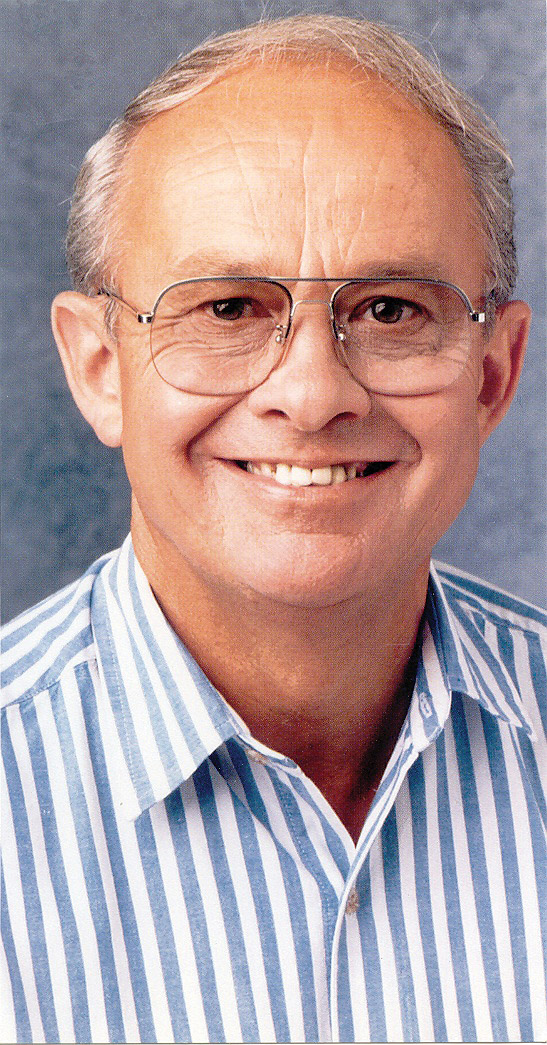
Ed Hume

Ed Hume

The Sitka Local Foods Network will host Northwest garden guru, author, TV personality and seed company owner Ed Hume for two Memorial Day presentations on sustainable gardening.

The two presentations take place on Monday, May 31, at Grace Harbor Church, 1904 Halibut Point Road (the gray building across from SeaMart). The first presentation is from 3-5 p.m. and the topic will be “Preparing the Northwest Garden: Soil preparation and garden design for the Pacific Northwest climate.” The second presentation is from 7-9 p.m. with a topic of “Vegetables and Ornamentals: Sustainable solutions for common problems, variety selection and ideas for ornamental gardening.”

Tickets are $15 per session, or $20 for both sessions, and they are available at Old Harbor Books or White’s Pharmacy (at AC Lakeside Grocery). The two “Sustainable Gardening with Ed Hume” presentations are fundraisers for the Sitka Local Foods Network (http://www.sitkalocalfoodsnetwork.org/), a non-profit organization that promotes and encourages the use of locally grown, harvested and produced foods in Sitka. Event sponsors include White’s Inc., True Value, Garden Ventures, and the SouthEast Alaska Regional Health Consortium (SEARHC) Health Promotion, Diabetes and Lifestyle Balance programs.

A separate event for SEARHC patients and their families living with diabetes or prediabetes is being planned for Tuesday, June 1. Details about that event will be announced later.

“I remember first hearing about Ed Hume and his year-round vegetable garden a couple of years ago at a Northwest Flower and Garden Show,” said SEARHC Diabetes Grant Coordinator Maybelle Filler, who is organizing the event for the Sitka Local Foods Network. “This seemed impossible since he lives in the same climate zone as Sitka and as far as I knew once winter hits, even fall time, there aren’t any vegetable gardens to be found. But as I sat there listening to his presentation and looking at his slides, it definitely was true. I was so impressed, and I thought what a great opportunity for Sitkans to listen to what he’s been able to do so we can extend the growing season for our own vegetable gardens.”

Hume is host of the weekly “Gardening in America” television show, the longest continuously running TV show on gardening at 42-plus years. He also hosts a weekly radio show. He is a member of the Garden Writers Association’s “Hall of Fame,” and won the National Garden Communicator’s Award in 1977. He has written several books on gardening, including “Gardening With Ed Hume: Northwest Gardening Made Easy.” He owns Ed Hume Seeds (http://www.humeseeds.com/), manages a children’s educational garden in Puyallup, Wash., and also is an internationally known speaker on gardening.

“Ed’s seed firm has a reputation for quality and reliability that is second to none,” said Kerry MacLane, Sitka Local Foods Network Board President. “We’re pretty lucky that such a famous expert is coming to Sitka. People do like to come to Sitka. Last year we hosted Ciscoe Morris (for a sold-out Memorial Day gardening presentation). This is getting to be a great tradition.”

No stranger to Southeast Alaska, Hume has visited Sitka and other communities in our region several times. His son used to fish out of Elfin Cove, and Hume said he conducted some of the trials for his seeds in an Elfin Cove garden to see if the plants were hardy enough for our climate.

During his presentations, Hume said he will discuss soil preparation and he will show how to improve vegetable garden soil since successful gardens need to start off with high-quality soil. Another topic includes the advantages of growing vegetables in raised beds, which provide warmer soil temperatures and better drainage. For those gardeners who have limited space, Hume will discuss the concept of the wide row to make small spaces more productive. Other topics will be the importance of garden layout for better light exposure and air circulation, fertilization issues and the environment, what types of vegetables to plant, and more.

At the two presentations on May 31, Sitka strawberry plant starts will be available for sale at $2 each as a fundraiser for the St. Peter’s Fellowship Farm communal garden (a Sitka Local Foods Network project). For information about the presentations and Ed Hume, contact Maybelle Filler at 966-8739. For information about the Sitka Local Foods Network and its projects, contact Kerry MacLane at 752-0654 or go to http://www.sitkalocalfoodsnetwork.org/.

Ed Hume sustainable gardening event flier (feel free to print out and post around Sitka)

• SEARHC, Sitka Local Foods Network host Ed Hume for sustainable gardening presentations

Ed Hume

Ed Hume

The SouthEast Alaska Regional Health Consortium (SEARHC) and Sitka Local Foods Network will host Northwest garden guru, author, TV personality and seed company owner Ed Hume for two presentations on sustainable gardening.

The two presentations take place on Monday, May 31 (Memorial Day), at Grace Harbor Church, 1904 Halibut Point Road (the gray building across from SeaMart). The first presentation is from 3-5 p.m. and the topic will be “Preparing the Northwest Garden: Soil preparation and garden design for the Pacific Northwest climate.” The second presentation is from 7-9 p.m. with a topic of “Vegetables and Ornamentals: Sustainable solutions for common problems, variety selection and ideas for ornamental gardening.”

Tickets are $15 per session, or $20 for both sessions, and they are available at Old Harbor Books or White’s Pharmacy (at AC Lakeside Grocery). The two “Sustainable Gardening with Ed Hume” presentations are fundraisers for the Sitka Local Foods Network (http://www.sitkalocalfoodsnetwork.org/), a non-profit organization that promotes and encourages the use of locally grown, harvested and produced foods in Sitka. Event sponsors include White’s Inc., True Value, the SEARHC Health Promotion, Diabetes and Lifestyle Balance programs and Garden Ventures.

A separate event for SEARHC patients and their families living with diabetes or prediabetes is being planned for Tuesday, June 1. Details about that event will be announced later.

“I remember first hearing about Ed Hume and his year-round vegetable garden a couple of years ago at a Northwest Flower and Garden Show,” said SEARHC Diabetes Grant Coordinator Maybelle Filler, who is organizing the event for the Sitka Local Foods Network. “This seemed impossible since he lives in the same climate zone as Sitka and as far as I knew once winter hits, even fall time, there aren’t any vegetable gardens to be found. But as I sat there listening to his presentation and looking at his slides, it definitely was true. I was so impressed, and I thought what a great opportunity for Sitkans to listen to what he’s been able to do so we can extend the growing season for our own vegetable gardens.”

Hume is host of the weekly “Gardening in America” television show, the longest continuously running TV show on gardening at 42-plus years. He also hosts a weekly radio show. He is a member of the Garden Writers Association’s “Hall of Fame,” and won the National Garden Communicator’s Award in 1977. He has written several books on gardening, including “Gardening With Ed Hume: Northwest Gardening Made Easy.” He owns Ed Hume Seeds (http://www.humeseeds.com/), manages a children’s educational garden in Puyallup, Wash., and also is an internationally known speaker on gardening.

“Ed’s seed firm has a reputation for quality and reliability that is second to none,” said Kerry MacLane, Sitka Local Foods Network Board President. “We’re pretty lucky that such a famous expert is coming to Sitka. People do like to come to Sitka. Last year we hosted Ciscoe Morris (for a sold-out Memorial Day gardening presentation). This is getting to be a great tradition.”

No stranger to Southeast Alaska, Hume has visited Sitka and other communities in our region several times. His son used to fish out of Elfin Cove, and Hume said he conducted some of the trials for his seeds in an Elfin Cove garden to see if the plants were hardy enough for our climate.

During his presentations, Hume said he will discuss soil preparation and he will show how to improve vegetable garden soil since successful gardens need to start off with high-quality soil. Another topic includes the advantages of growing vegetables in raised beds, which provide warmer soil temperatures and better drainage. For those gardeners who have limited space, Hume will discuss the concept of the wide row to make small spaces more productive. Other topics will be the importance of garden layout for better light exposure and air circulation, fertilization issues and the environment, what types of vegetables to plant, and more.

At the two presentations on May 31, Sitka strawberry plant starts will be available for sale at $2 each as a fundraiser for the St. Peter’s Fellowship Farm communal garden (a Sitka Local Foods Network project). For information about the presentations and Ed Hume, contact Maybelle Filler at 966-8739. For information about the Sitka Local Foods Network and its projects, contact Kerry MacLane at 752-0654 or go to http://www.sitkalocalfoodsnetwork.org/.

• SEARHC hosts May 12 lunchtime presentation about Sitka Community Greenhouse and Education Center project

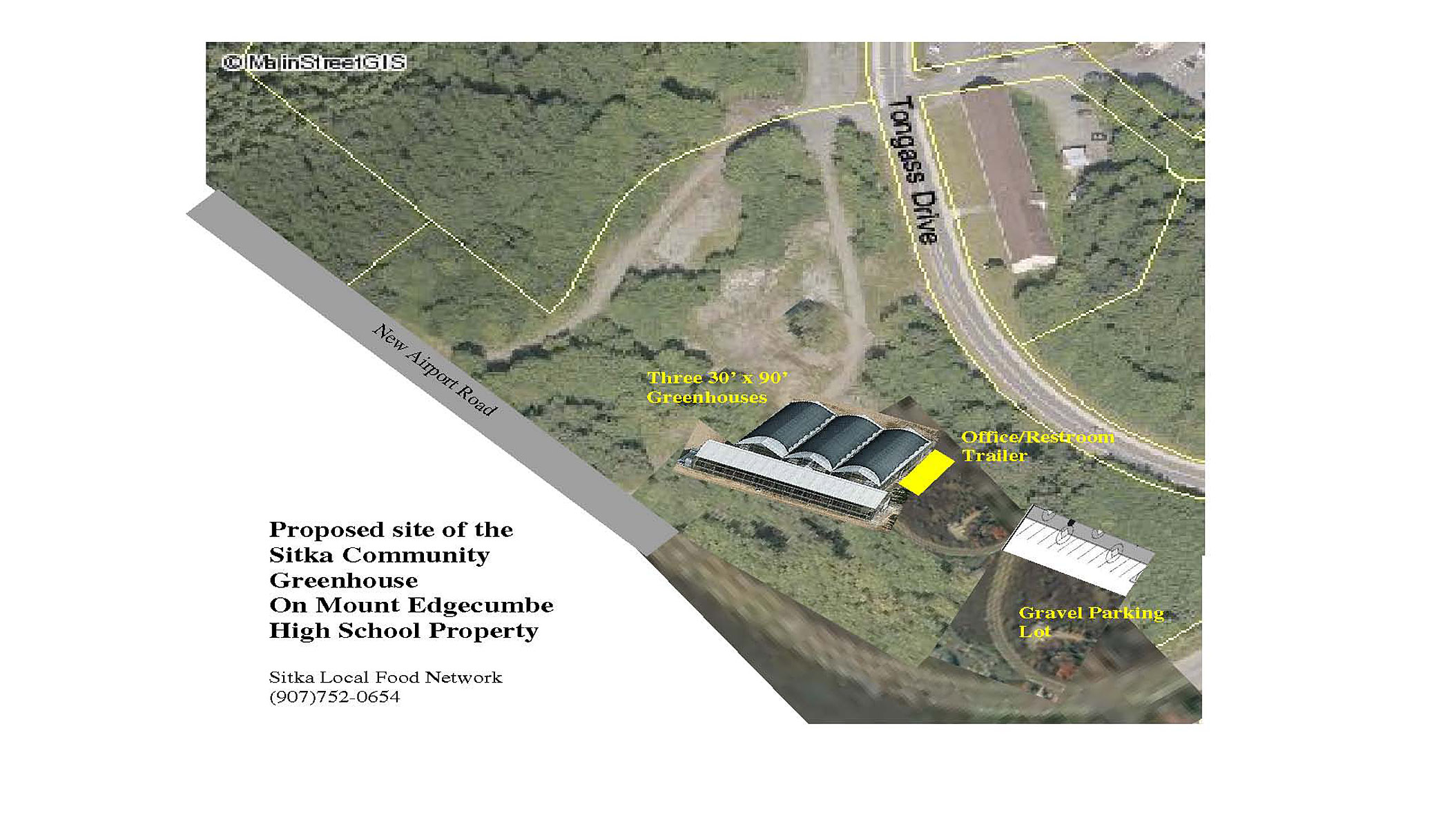
An artist's concept of one version of a proposed Sitka Community Greenhouse and Education Center

An artist's concept of one version of a proposed Sitka Community Greenhouse and Education Center

Have you heard about the proposed Sitka Community Greenhouse and Education Center? Join us for a short lunchtime presentation at noon on Wednesday, May 12, at the SEARHC At Kanik Hít Community Health Services Building first-floor conference room (1212 Seward Ave., down the hill from Mt. Edgecumbe Hospital, the building with the big totem pole in front).

The Sitka Community Greenhouse and Education Center is a project of the Sitka Local Foods Network to address one of the top local health priorities identified at the 2008 Sitka Health Summit. Currently, the Sitka Local Foods Network is in negotiations with the State of Alaska to lease an unused piece of Mt. Edgecumbe High School-owned land on Japonski Island near Mt. Edgecumbe Hospital.

If the lease goes through, the community greenhouse will help Sitka grow more fruits and vegetables locally while extending our short growing season. The greenhouse can provide educational opportunities for Mt. Edgecumbe High School and University of Alaska Southeast-Sitka Campus students, as well as for other school, church and community groups who want to learn more about growing their own food. The community greenhouse also can provide horticultural therapy for medical and behavioral health patients.

This short lunchtime PowerPoint presentation will be made by SEARHC Grant Writer Kerry MacLane, who also serves as president of the Sitka Local Foods Network, http://www.sitkalocalfoodsnetwork.org/. For more information, contact Kerry at 966-8839.

A 2009 proposal for the Sitka Community Greenhouse and Education Center (note, the education aspect of the project has been expanded since this proposal was written)

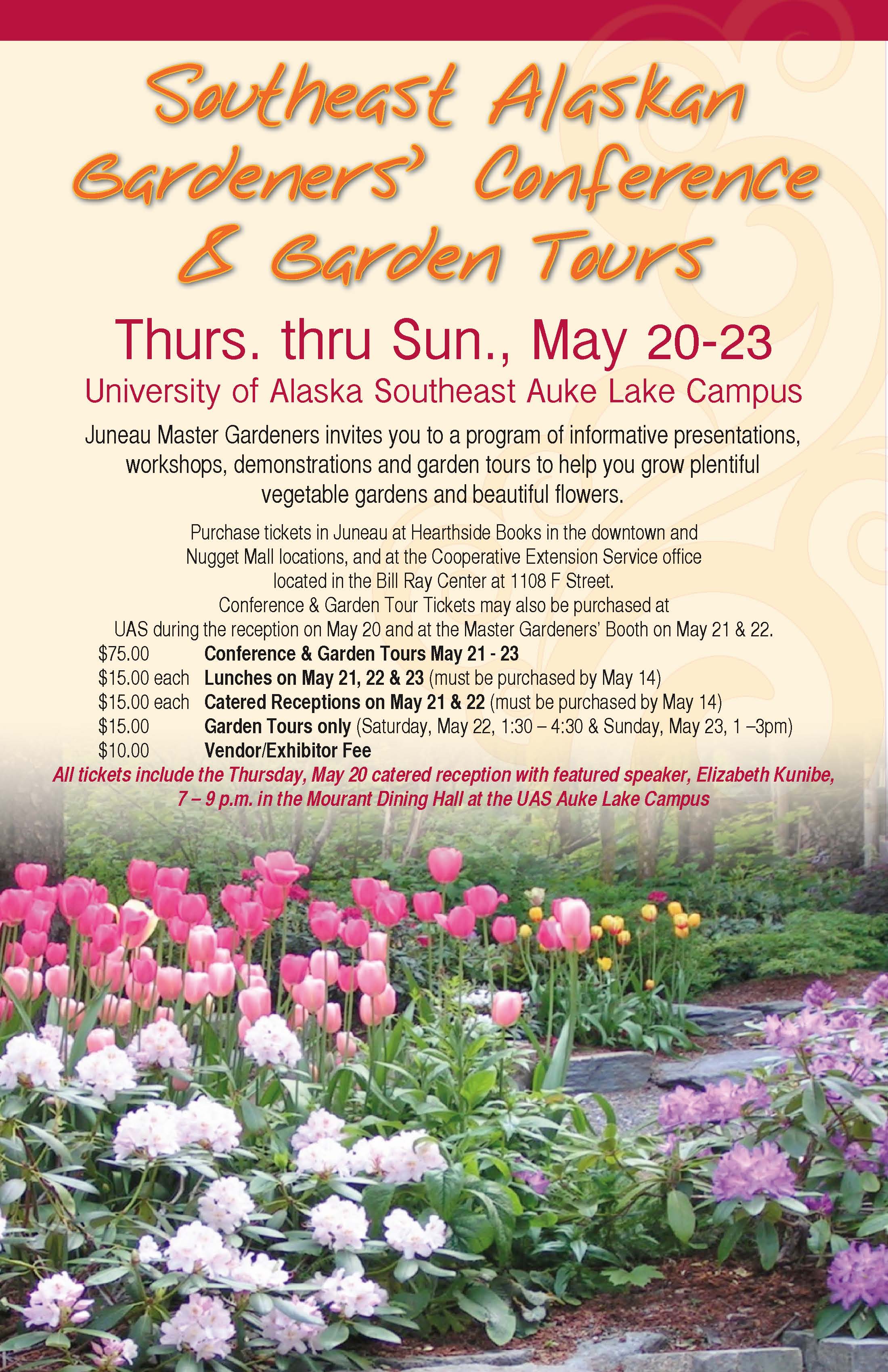
• Southeast Alaska Gardeners Conference and Garden Tours take place May 20-23 in Juneau

David Lendrum, co-president for the Southeast Alaska Master Gardeners Association this year, sent this invitation to Sitka gardeners about the Southeast Alaska Gardeners Conference and Garden Tours on May 20-23 in Juneau:

I would like to invite the Sitka local foods community to our biennial Southeast Garden Conference on May 20-23 at the University of Alaska Southeast-Juneau Campus (Auke Lake). The agenda will be available at our website, http://www.sealaskamastergardeners.org/.

The Extended Stay hotel by the airport has offered an rate of $79.00 per night to conference attendees.

Sitka’s own Florence Welsh of The Welsh Family Forget-Me-Not Gardens and Bob Gorman of the Sitka office of the University of Alaska Fairbanks Cooperative Extension Service are featured speakers. They will be accompanied by Sam Benowitz of RainTree Nursery (Morton, Wash.), anthropological researcher Betsy Kunibe (Juneau), who has been exploring the early agriculture of Southeast Alaska, especially the early potato introduction to native peoples, and Dan Heims of Terra Nova Nurseries (Canby, Ore.), who has reinvented perennial gardening in our modern times.

We also will have a trade show and demonstration venue, and if the Sitka Local Foods Network would like to have a display we would welcome it. You can call me with any questions,

David Lendrum
Landscape Alaska, landscapealaska@gci.net
Co-President of the Southeast Alaska Master Gardeners Association for this year
907-321-4149

Some of the conference highlights include workshops on tool use and maintenance, planter/container design and maintenance, nutrition in wild plants, landscaping to attract native pollinators, birds in the garden, greenhouses in Alaska, low-maintenance landscape design, native plant propagation, meconopsis, fruiting plants for Southeast Alaska, organic edibles, creating flower arrangements to last, rock setting and plant choice for Southeast Alaska, tree grafting, creating color and flash with new perennials, perennials around the world, taking cuttings and how to get roots on sticks, and compost and worms. A PDF file to the agenda is linked below.

Southeast Alaska Gardeners Conference and Garden Tours flier

Southeast Alaska Gardeners Conference and Garden Tours poster

Southeast Alaska Gardeners Conference and Garden Tours agenda

• Sitka Seafood Festival steering committee to meet on Thursday, May 6

The next meeting of the Sitka Seafood Festival steering committee takes place at 7:30 p.m. on Thursday, May 6, at Harrigan Centennial Hall (Editor’s note: The meeting has been changed to 7 p.m. on Thursday, May 6, at the Sitka Fire Station). Six smaller committees are supposed to hold meetings before the steering committee meets again.

During the April 17 steering committee meeting, the discussion included an update on the group’s fundraising raffle that takes place at noon on Sunday, May 9, at the Bayview Restaurant. Raffle tickets were distributed to committee members, who will sell them for $5 each. The tickets also will be available at several locations that will be announced later this week. The prizes include a Specialized Hardrock Sport Disc mountain bike worth $550 from Yellow Jersey Cycle Shop, $125 worth of king salmon from F/V Cloud Nine (Betsy and Moe Johnson) and 11 “Taste of Sitka” prizes of restaurant gift certificates with a variety of price values that will be awarded individually. For more raffle info or to purchase tickets, contact Linda Olson at 747-6985.

The steering committee also discussed the need to visit more businesses for donations or sponsorships. Committee members are trying to get the donations/sponsorships confirmed by May 9 so the businesses can be acknowledged in Sitka Seafood Festival promotions leading up to the festival. Donations will be accepted after the May 9 deadline, but they may not receive as much recognition. There are several tiers based on the level of the donation/sponsorship. Donation/sponsorship checks need to be written to the “Sitka Conservation Society” with a memo of “Sitka Seafood Festival” or “SCS/SSF” (the Sitka Conservation Society is letting the festival share the society’s 501(c)(3) non-profit permit until the festival can get its own permit).

Committee members also discussed the tentative schedule, which includes on Friday, Aug. 6, a formal opening banquet dinner with a guest chef and live music following the dinner. On Saturday, Aug. 7, the tentative schedule includes a parade, vendors (including food and a beer garden), educational booths, entertainment booths, a stage with live acts (bands, cooking demonstrations, NANDA, etc.), a variety of contests for the kids, a “Taste of Sitka” with local chefs, and the headliner band and dance at night.

So far, the committee has booked “NANDA: Acrobaticalist Ninja Action Heroes,” a four-man juggling, acrobatic, martial arts and comedy troupe (see clip below). The committee hopes to confirm a headline music act and guest chef in the near future.

To learn more about the Sitka Seafood Festival or to volunteer to help on one of the committees, e-mail sitkaseafoodfestival@gmail.com. You also can contact Alicia Peavey at alaska_al33@hotmail.com or 1-928-607-4845. The Sitka Seafood Festival also has a new website under development, and eventually updates will be posted on the site.

Tentative schedule for the 2010 Sitka Seafood Festival (Aug. 6-7)

Sitka Seafood Festival business donation assignments (who asks) (updated)

Advertising Committee and tasks

Beverage Committee and tasks

Culinary Committee and tasks

Education Committee and tasks

Entertainment Committee and tasks

Fundraising Committee and tasks

• Sitka gardeners to meet Tuesday, April 20, at UAS-Sitka Campus

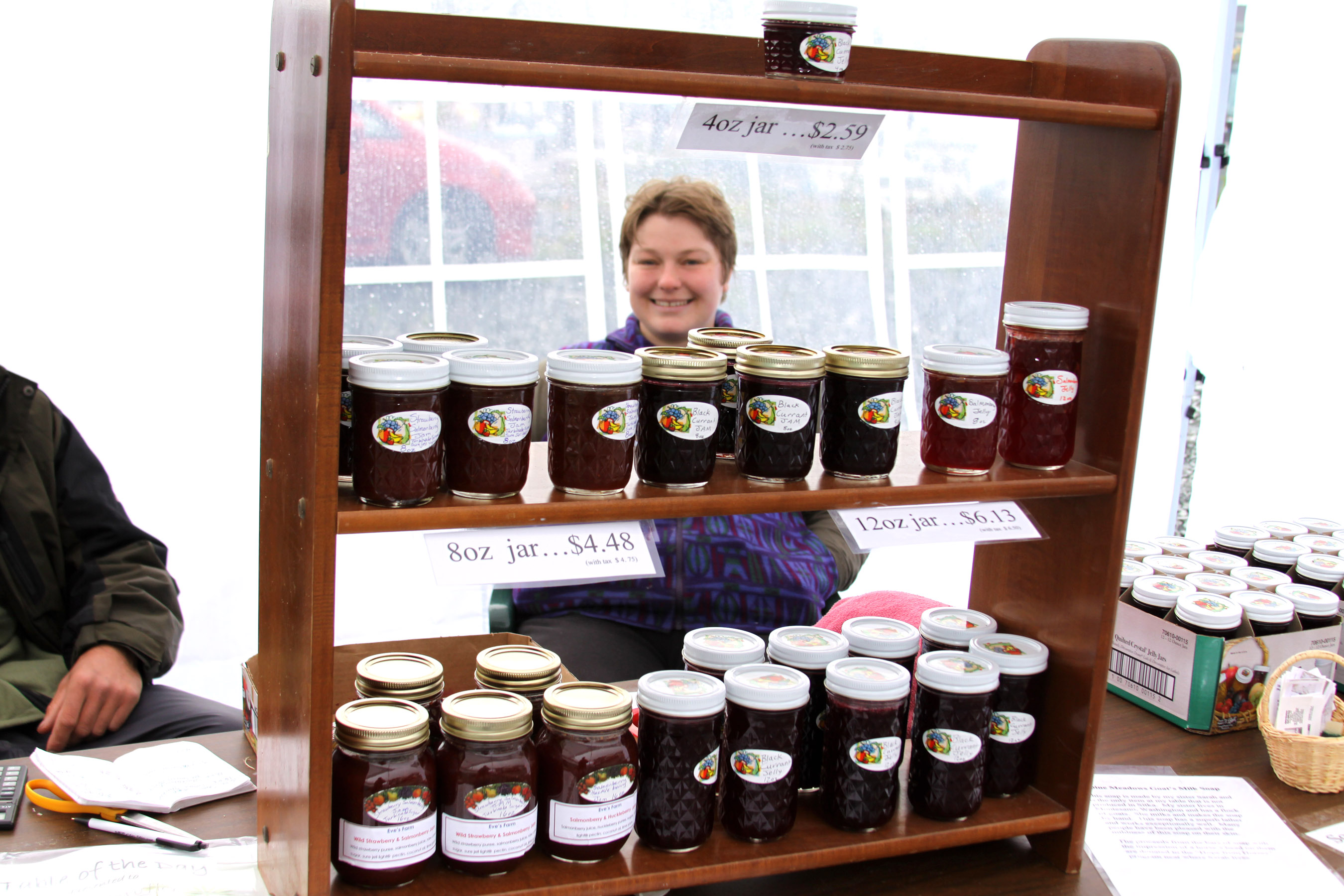
Local gardener Evening Star Grutter of Eve's Farm, shown here with some of her homemade jams during the Aug. 29, 2009, Sitka Farmers Market, will be the guest speaker at April's meeting of the Sitka Gardeners Club

Local gardener Evening Star Grutter of Eve's Farm, shown here with some of her homemade jams during the Aug. 29, 2009, Sitka Farmers Market, will be the guest speaker at April's meeting of the Sitka Gardeners Club

The Sitka Gardeners Club’s monthly get-together takes place from 7-8:30 p.m. on Tuesday, April 20, in Room 106 at the University of Alaska Southeast-Sitka Campus on Japonski Island.

The get-together provides a venue for gardeners of all types, interests and skills to informally exchange ideas, information, seeds and growing tips. Share and learn from other gardeners with no dues or commitments other than good fellowship.

Sitka gardeners plan to meet on the third Tuesday of the month at the UAS-Sitka Campus. This month’s meeting will feature gardening tips from Evening Star Grutter of Eve’s Farm, and it is sponsored by UAS-Sitka Campus and the University of Alaska Fairbanks Cooperative Extension Service. For more information, call Cheryl Stromme at 747-9473 or Bob Gorman at 747-9413.

• Sitka Seafood Festival steering committee to meet on Saturday, April 17

The next meeting of the Sitka Seafood Festival steering committee is 10 a.m. on Saturday, April 17, at Harrigan Centennial Hall.

During the April 10 meeting, the committee voted Lily Herwald in as secretary and Phyllis Hackett as bookkeeper. The committee also decided to book “NANDA: Acrobaticalist Ninja Action Heroes,” a four-man juggling, acrobatic, martial arts and comedy troupe that is performing at the Southeast Alaska State Fair on July 29-Aug. 1 in Haines, the weekend before the Sitka Seafood Festival (Aug. 6-7). A headline music group also is being booked.

Committee members will be canvassing local businesses for donations to cover the costs of hosting the inaugural Sitka Seafood Festival, and the deadline for donations is May 9 (Mother’s Day). A donation/sponsorship letter has been approved and committee members soon will distribute it to local businesses. Donations will be accepted after May 9, but that’s the deadline to be included in the event promotional materials, which uses a tier system based on the amount of the donation. Donation/sponsorship checks need to be written to the “Sitka Conservation Society” with a memo of “Sitka Seafood Festival” or “SCS/SSF” (the Sitka Conservation Society is letting us share their 501(c)(3) permit until we can get our own next year).

Also, committee members are seeking prizes for a raffle and raffle prize commitments are needed by Wednesday, April 14, to either Alicia Peavey (alaska_al33@hotmail.com or 1-928-607-4845) or Linda Olson (747-6985 or Baranof Elementary School). The raffle will feature 800 tickets at $5 each, with the drawing to take place on May 9 (Mother’s Day). Donations of merchandise, including locally caught seafood or gourmet meals of Sitka seafood, are greatly appreciated.

During the April 5 meeting, the steering committee decided to hold the inaugural Sitka Seafood Festival on Friday and Saturday, Aug. 6-7. The tentative plan is to have an opening dinner on Friday night with a guest chef and the possibility of live music. The main events will be on Saturday, with vendors set up all day, contests, a parade, cooking demos, music and educational activities. The headliner music guest will play a concert/dance on Saturday night.

To learn more about the Sitka Seafood Festival or to volunteer to help on one of the committees, e-mail sitkaseafoodfestival@gmail.com. You also can contact Alicia Peavey at alaska_al33@hotmail.com or 1-928-607-4845.

Sitka Seafood Festival minutes from the April 10, 2010, meeting

Sitka Seafood Festival committee breakdown and job tasks (updated)

Sitka Seafood Festival business donation assignments (who asks) (updated)