• USDA Natural Resources Conservation Service offers funding support program for high tunnels

picture8

The deadline is coming up for the next round of applications for the U.S. Department of Agriculture’s Natural Resources Conservation Service (NRCA) cost-sharing program that enables qualifying landowners who produce food to build high tunnels.

The NRCA Alaska program sets two applications deadlines a year (Sept. 15 and June 15) so applications can be batched and ranked. Applications that miss the Sept. 15 deadline will be held for the June 15 deadline.

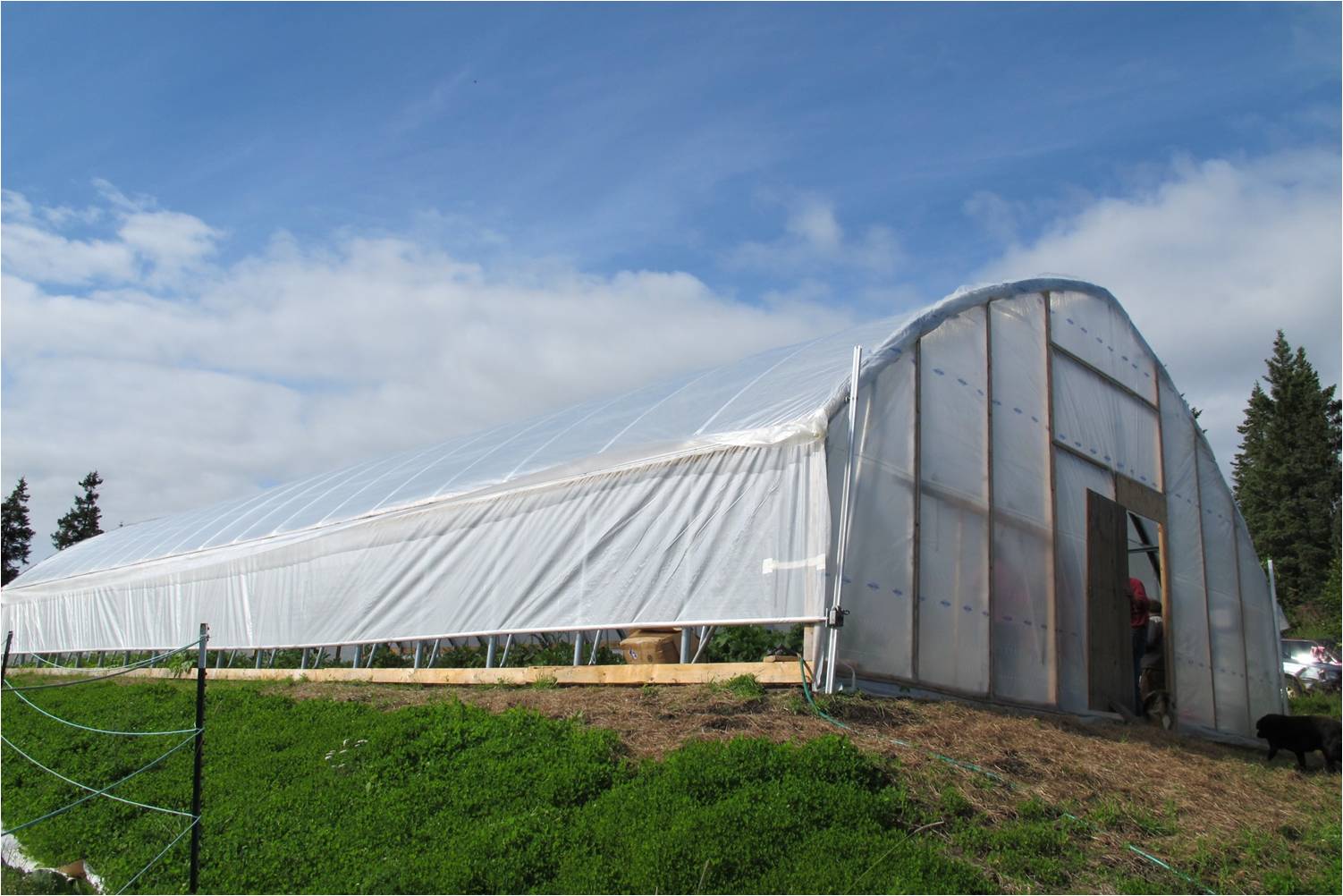
High tunnels, also known as hoop houses or temporary greenhouses, extend the growing season so more food is produced before and after the traditional dates for growing stuff outdoors.

High tunnels are different than greenhouses in that they are passively heated by the sun, so they have lower energy costs than greenhouses. High tunnels are at least six-feet tall, and low tunnels aren’t eligible in this program. Food in high tunnels is planted either directly into the ground or in raised beds. To learn more about the USDA’s high tunnel program, click here (note, link is to FY2014 program information, there have been updates for FY2015 but no link was available). This link has frequently asked questions and answers about seasonal high tunnel systems for crops.
Picture10This program started a couple of years ago as a pilot program, but now is a permanent part of of the NRCS EQIP (Environmental Quality Incentive Programs). The program recently was revamped, and one major change is there now is no size restriction on the size of structures NRCS will provide cost-sharing funds (previously it was limited to up to 2,178 square feet, or 5 percent of one acre). Also, geodesic domes are now eligible. Both the land owner and land must meet certain eligibility requirements.

Funding is provided on a reimbursable status once the high tunnel is installed and certified to meet NRCS standards. In 2012 there was just one high tunnel in Sitka, but in 2013 there were six. Other areas of the state, such as Homer, have built dozens of high tunnels through the program.

For information regarding the NRCS technical service or program participation in Southeast Alaska, please contact Samia Savella at the Juneau field office at (907) 586-7220 or samia.savell@ak.usda.gov. Applications currently are being accepted for the 2015 fiscal year (Oct. 1, 2014, to Sept. 30, 2015) and applications must be received at the Juneau field office on or before Sept. 15, 2014. Click here for a link to the Alaska NRCS page.

• High Tunnel Fact Sheet March 2014

• Flier about Southeast Alaska cost-sharing program March 2014

• Meet your vendors: Linda Wilson of Seaview Garden and Jewelry Arte

LindaWilson

SitkaFarmersMarketSign(This is part of a new series of “Meet your vendors” articles, where Sitka Local Foods Network Intern McLane Ritzel is writing features about our regular Sitka Farmers Market vendors.) 

Taking a stroll through this summer’s Sitka Farmers Markets, several perfectly baked rhubarb pies may have caught your eye. Outside in the tent next to the Sitka Local Foods Network produce tent, stood the talented gardener and craftswoman Linda Wilson, a Sitka local for the past three decades who owns Seaview Garden and Jewelry Arte.

Wilson’s father was in the USDA Forest Service. Wilson was raised in California until the age of 6, when her family moved to Ketchikan. A few years later, her father moved the family to Sitka and then to Juneau for his work. Wilson attended high school in Juneau, but yearned to be back in Sitka where they had bought a house in 1975 out on Halibut Point Road. The family returned to Sitka after Wilson’s father retired from the USDA Forest Service in 1982. Wilson lost both her mother and her brother to illnesses, and has been taking care of her father in Sitka since his retirement.

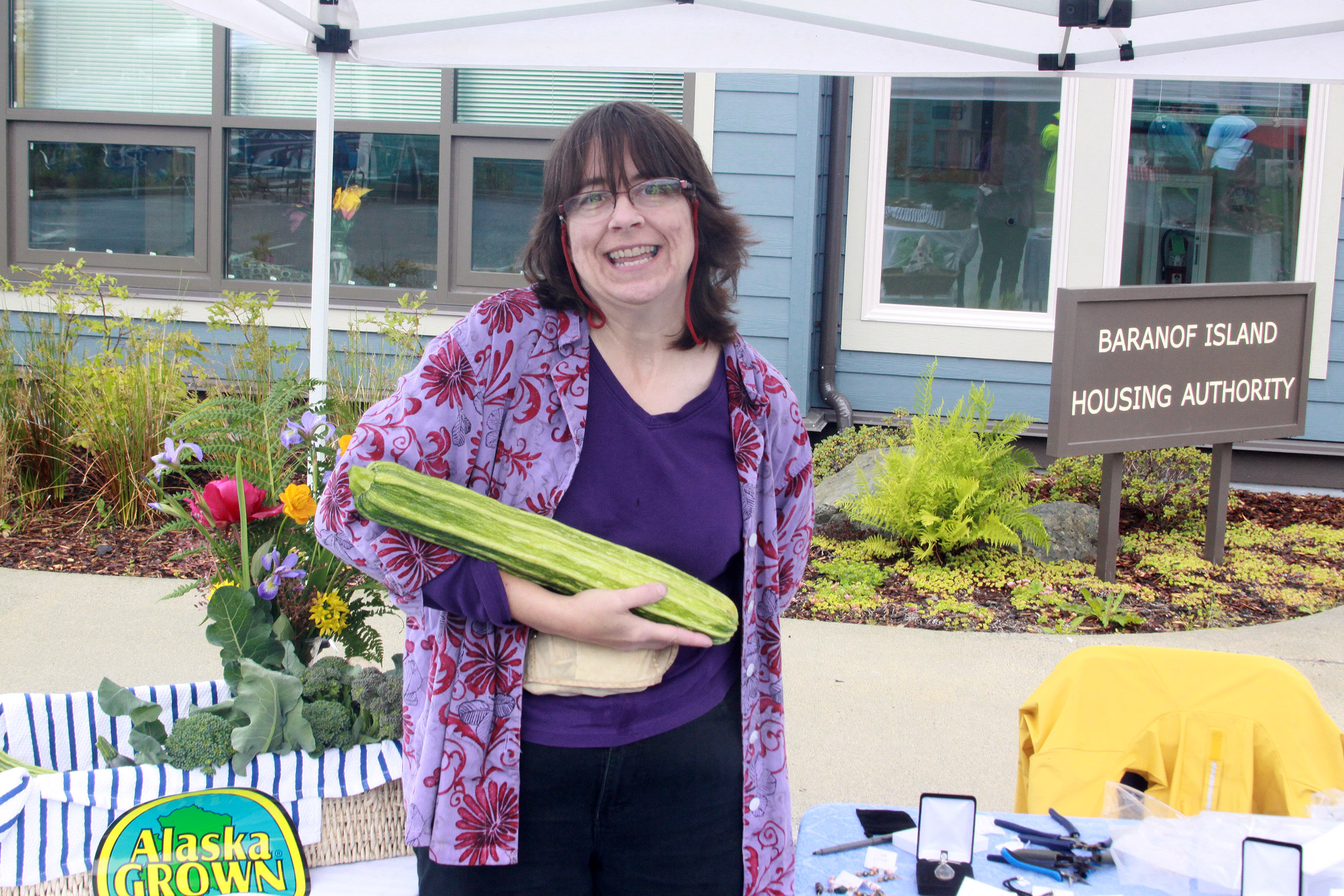
LindaWilsonWithZucchiniIn Sitka, Wilson fell into gardening, because outside of the house is where she felt she had the most control and freedom. Inside the house was dad’s territory. She ripped out her salmonberry bushes in 2004, and learned how to grow broccoli when she met Florence Welsh. Today, she grows carrots, snap peas, greens including kale, collard, and lettuce, and rhubarb. She loves composting and mostly uses coffee grounds and spent grains. At the Sitka Farmers Markets, she sold collard greens and delicious pies. Strawberry-rhubarb is her favorite.

This year, she has been growing zucchini and tomato plants inside her newly established high tunnel via a NRCS grant. She thanks those in the community who helped her put up the high tunnel, and particularly market vendor Kerry MacLane’s instrumental assistance. Even though she has retired from the Sitka Local Foods Network board of directors, Linda was one of the original board members. She also was one of the first managers of the Sitka Farmers Market, and she organized the first Let’s Grow, Sitka! education event.

LindaWilsonWithPieWilson loves making homemade pizza from scratch with homegrown tomatoes, onions, sliced zucchini, nasturtiums, broccoli, garlic, and basil. She says, “I grow tomatoes because it’s a challenge, and I’m gonna get it.” She also makes a mean pesto with carrot top greens. When she produces an overabundance of produce, she donates to the Salvation Army.

She loves to go mushroom foraging, and also picks berries to make a variety of jams. Her favorite is blueberry-huckleberry jam.

From 1985 until 2007, Wilson managed one of the local gift shops in town, where they sold authentic Russian imports. From 2003 to 2006, she also worked on a cruise ship in the Baltic Sea where she lectured on Russian arts and crafts, knowledge she had gained while managing the gift shop. Today, she works part-time with the Sitka Economic Development Association (SEDA), takes care of her father, and makes beautiful sculpted wire jewelry with gemstones.

Every February, Wilson makes a two-week trip down to one of the biggest jewelry shows in the world. She has attended the show 12 out of the past 13 years. Her favorite stones are fossils: coral, ammonites, and sand dollars, because, she says, “They used to be living.” She has a rock shop in her house where she houses her jewelry making studio with beautiful stones and lapidary equipment including a slab saw, trim saw, grinder, and rock tumbler, throughout. “Nature makes amazing things.”

LindaWilsonsJewelryWhen she is not out in the garden, tending to her father, or making jewelry, Wilson loves “petting kitty bellies.” They have two cats, Spike and Sandy, at home, though many more are buried out back. “Serving as compost,” Wilson jokes.

If you don’t see her at the Sitka Farmers Market, make sure to check out Linda Wilson’s beautiful jewelry at the Island Artists Gallery, an artists cooperative on Lincoln Street. Her jewelry makes great gifts for yourself, family members, and friends.

• Panel looks at allowing garden sales at homes

Tom Hart at Anam Cara Garden

Tom Hart at Anam Cara Garden

(The following article appeared in the Wednesday, Sept. 3, edition of the Daily Sitka Sentinel.)

By TOM HESSE
Sentinel Staff Writer

A potential zoning change that would allow gardeners to sell their extra produce from home started to take shape at Tuesday night’s Planning Commission meeting.

Lisa Sadleir-Hart works in Anam Cara Garden

Lisa Sadeir-Hart works in Anam Cara Garden

The proposal was brought forth by Lisa Sadleir-Hart and Thomas Hart [who own Anam Cara Garden] during an August meeting. The idea is to allow Sitkans with large gardens to sell their produce from their homes, which would include those in R-1, R-1 MH, R-2, R-2 MHP, GI and LI zoned districts. Since the zoning revision was first proposed, the city planning department has been trying to shape the rules, and Planning Director Wells Williams told commission members that there are a number of forms they could take.

“Like anything else, it’s a fairly simple concept but it gets complicated fairly quickly,” Williams said.

Currently, you-pick style gardens are allowed under a conditional use permit. Williams said the new proposal, which is being called commercial home horticulture, could follow a similar path. The big difference would be that gardeners could sell their produce and have a small stand in their yards where they could sell it. Those differences could be an issue in some neighborhoods, said commissioner Chris Spivey.

“There are definitely a lot of concerns about the sheer fact of having anything commercial in an R-1,” Spivey said.

Because of that, requests for commercial home horticulture permits would be done on a case-by-case basis under the proposals now being considered. Planning staff tentatively proposed a conditional use system whereby applicants would need to notify neighbors and take their applications through the planning process.

Sadleir-Hart said a four-week process to obtain a permit would be appropriate for gardeners who are looking ahead to the next growing season.

“Most people who would be moving through this process would be moving fall through winter,” she said. “To me that would be plenty of time and just being a good neighbor.”

Some of the issues commission members raised were about the days and times when sales would be allowed, how large garden stands could be, and how best to handle applications.

After a discussion, the commissioners decided the best system may be to set hours on a permit-to-permit basis.

“It’s that way with a lot of conditional use permits that we do. It varies from neighborhood to neighborhood,” commission member Richard Parmalee said.

Specifics are far from being concrete, but stands 6 feet by 8 feet in size, with an awning, are in the current proposal. They would be temporary, so they would be up only during the growing season.

“You’re going to have people in the neighborhood that want something that is aesthetically pleasing or temporary and easily broken down,” Spivey said.

Commissioners did take out a items from the original proposal, regarding greenhouses and sheds.

Williams said the planning office would take the comments from Tuesday night’s meeting and start drawing up a draft proposal with more specifics. The issue will be discussed further when the panel meets on Sept. 16.

• Learn about where your Sitka Farmers Market produce is grown

WhereOurFoodIsGrown

SitkaFarmersMarketSignWhen people stop at the Sitka Local Foods Network booth at the Sitka Farmers Market to buy produce a common question people ask is where is the food grown.

Most of the produce sold at the Sitka Local Foods Network booth is grown here in Sitka and comes from three main sources — the St. Peter’s Fellowship Farm communal garden (Laura Schmidt is lead gardener), some land in Pat Arvin’s Garden she donates to the Sitka Local Foods Network to grow potatoes and carrots, and Anam Cara Garden owned by Tom Hart and SLFN president Lisa Sadleir-Hart. We also receive donations from other family gardens in town with extra produce.

All of the funds raised selling produce at the Sitka Local Foods Network booth are used to support SLFN projects during the year. These include hosting the six Sitka Farmers Markets each summer, operating St. Peter’s Fellowship Farm, providing a variety of education opportunities about local foods and gardening in Sitka, and supporting other projects in town that promote local foods (such as the Sitka Community Food Assessment, Fish to Schools, Sitka Kitch, etc.).

Don’t forget the last Sitka Farmers Market of the summer is from 10 a.m. to 1 p.m. on Saturday, Sept. 6, at Alaska Native Brotherhood Founders Hall (235 Katlian St.). If you live near Sawmill Creek Apartments (9:45 a.m. pick-up), Indian River housing (9:50 a.m.), or the Swan Lake Senior Center (10 a.m.), we have free transportation to the market through a contract with Sitka Tours. The shuttle bus picks up at the times listed, and makes its return trip at noon from ANB Hall. We do plan a small produce table at the Running of the Boots on Saturday, Sept. 27, near St. Michael’s Russian Orthodox Cathedral.

• Sitka Local Foods Network education committee to meet on Wednesday, Aug. 27


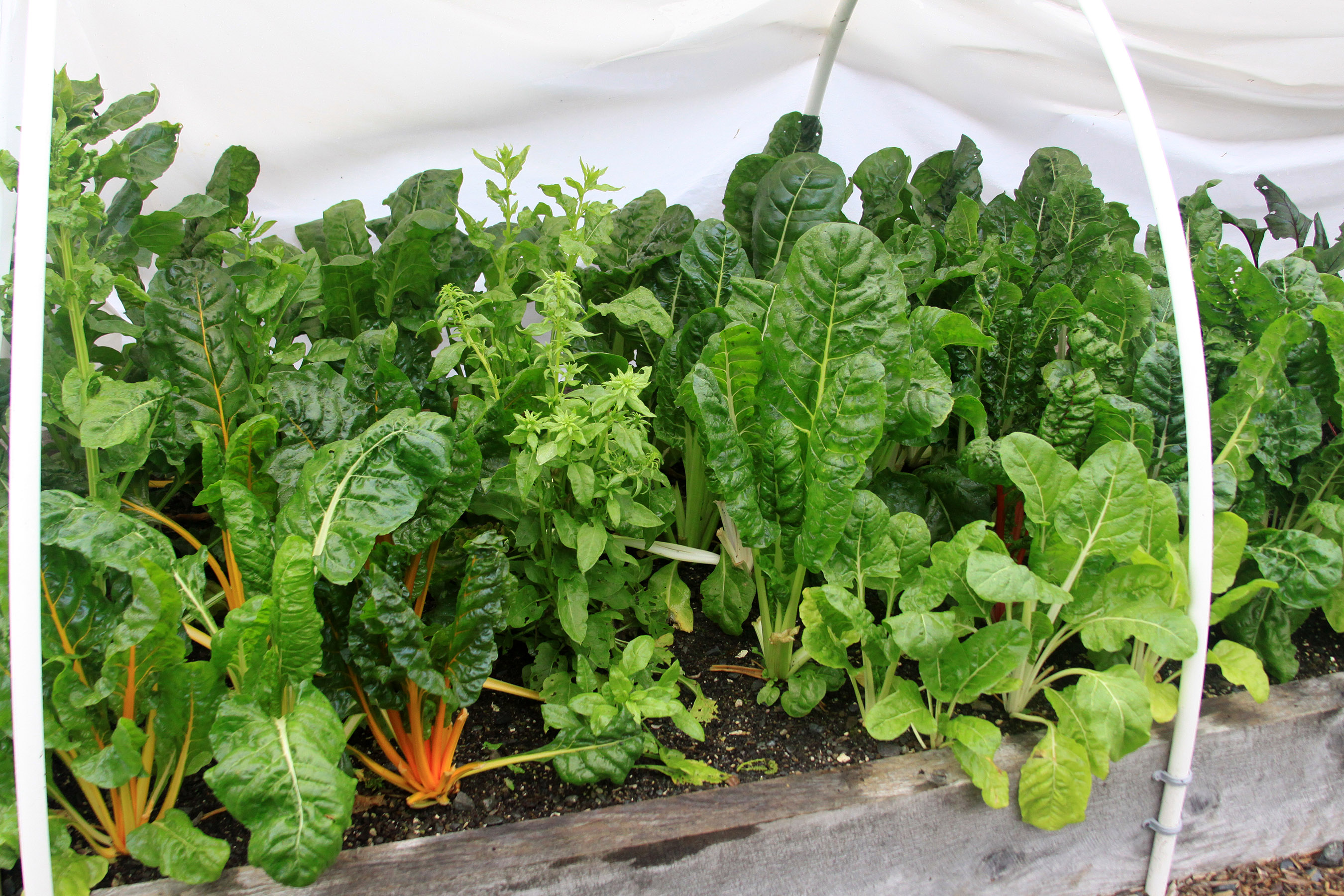
GreensInHoopHouseStPeters

Want to learn how to grow or gather your own food, or teach others about growing and gathering food? Your Sitka Local Foods Network invites Sitkans to learn more at an education committee meeting at 7 p.m. on Wednesday, Aug. 27, at Harrigan Centennial Hall.

Those interested in learning more about or volunteering on Sitka Local Foods Network education projects are invited to attend. SLFN board members and volunteers will discuss the past and future of our Family Garden Mentor Project, begin to plan the 2014-15 “It’s time to …” garden classes, and discuss new opportunities for projects such as a home business garden mentoring project and a future garden tour. Those interested in learning more and volunteering are encouraged to attend.

For those who cannot attend the meeting or want more information, contact Michelle Putz at 747-2708.

• Lori Adams’ contribution to Sitka gardening featured on Sitka Conservation Society website

Lori Adams poses with some of the ducks she keeps to help keep slugs at bay at her Down-To-Earth U-Pick Garden. (Photo Courtesy of Sitka Conservation Society)

Lori Adams poses with some of the ducks she keeps to help keep the slugs at bay at her Down-To-Earth U-Pick Garden. (Photo Courtesy of Sitka Conservation Society)

If you haven’t seen it yet, check out this recent feature story about Sitka gardener Lori Adams on the Sitka Conservation Society‘s website.

Lori Adams is owner of Down-To-Earth U-Pick Garden (located at 2103 Sawmill Creek Road), and the author of “How to Grow Vegetables in Sitka, Alaska” (a collection of her 2012 Gardening in Southeast Alaska columns originally published in the Daily Sitka Sentinel). Lori also is a regular vendor at the Sitka Farmers Market.

The feature tells the story about how Lori wanted to start a you-pick garden at her house in 2007, but city code at the time didn’t allow people to grow food and then sell it directly to people from her private property. Lori worked with the city planning department and Sitka Assembly to rewrite the code so Sitka residents can apply for a special permit to sell food grown in their home gardens. The article also features several photos from her garden.

• Bob Gorman to lead garden tour on July 31 as part of Sitka Seafood Festival

Bob Gorman, Extension Agent of the Sitka office of the University of Alaska Fairbanks Cooperative Extension Service, shows some germinating seed starts during a free garden workshop on March 11, 2009.

Bob Gorman, Extension Agent of the Sitka office of the University of Alaska Fairbanks Cooperative Extension Service, shows some germinating seed starts during a free garden workshop on March 11, 2009.

University of Alaska Fairbanks Cooperative Extension Service Professor Emeritus Bob Gorman will lead a walking garden tour at 6 p.m. on Thursday, July 31, as part of the Sitka Seafood Festival.

The tour should last about 90 minutes, and participants should dress for the weather and be prepared for a walking tour with several stops. The garden tour will feature visits to a mixture of ornamental landscapes and food gardens in the downtown area.

Many of these gardens on this tour are private, home gardens, so no public map will be released for privacy reasons. However, last September when a cruise was in town with participants in the 2013 International Master Gardeners Conference, there was a similar tour of public gardens in town and there was a map (PDF document) provided to participants (note, the USDA Experimental Farm site in Sitka usually is closed to the public).

The event is free, but pre-registration is required and can be done by calling UAF Cooperative Extension Service Sitka District office at 747-9440 or emailing Jasmine Shaw at jdshaw2@alaska.edu by noon on July 31.

• Volunteer harvesters needed at St. Peter’s Fellowship Farm

StPetersSignWithToDoListSignYour Sitka Local Foods Network needs a few volunteer harvesters to help pick the veggies at the St. Peter’s Fellowship Farm on Friday afternoons and occasional Saturday mornings.

We need veggie pickers from 3:30-5:30 p.m. every Friday throughout the summer to help harvest for the Sitka Farmers Market or our booth at Chelan Produce on non-market weeks. Volunteer harvesters also are needed from 8-9:30 a.m. on the Saturdays when we host the Sitka Farmers Market.

St. Peter’s Fellowship Farm is a communal garden located behind St. Peter’s By The Sea Episcopal Church on Lincoln Street (above Crescent Harbor). The communal garden grows produce sold at the Sitka Farmers Markets (held from 10 a.m. to 1 p.m. on alternate Saturdays — July 26, Aug. 9, Aug. 23, and Sept. 6 — at the Alaska Native Brotherhood Hall (235 Katlian St.). On non-market weekends, we host a booth with locally grown produce when the folks from Chelan Produce are in town across from AC Lakeside.

In addition, from 11 a.m. to 2 p.m. on the Mondays the week of a Sitka Farmers Market (July 21, Aug. 4, Aug. 18, and Sept. 1) people who use WIC coupons can purchase produce from St. Peter’s Fellowship Farm. We will sell produce to anybody on those Mondays, but we are not set up to take SNAP (food stamp) EBT payments and so those without WIC coupons need to pay cash.

Volunteer harvesters usually can get small amounts of produce for their family when they help at the garden. For more information, please contact St. Peter’s Fellowship Farm Lead Gardener Laura Schmidt at 738-7009. Volunteer harvesters should call Laura ahead of time to let her know you’re coming. Your help is greatly appreciated.

• Sarah Lewis to provide free pressure canner gauge testing at Saturday’s Sitka Farmers Market

Canner

SarahLewisThis is a great time of the year to be in Sitka. The fish are running, gardens are starting to produce, and berries are ripe for the picking.

Many Sitka residents have pressure canners to preserve their harvest, and this weekend Sarah Lewis of the Juneau District Office of the University of Alaska Fairbanks Cooperative Extension Service will be in town to teach three classes about canning on Friday, Saturday and Sunday. She also provide free pressure canner gauge testing at the Sitka Farmers Market from 10 a.m. to 1 p.m. on Saturday, July 26, at the Alaska Native Brotherhood Founders Hall.

“People can bring the gauge or the lid with the gauge still attached,” Sarah said. “If they have any questions about the full canner (gaskets, damage, how to use, etc.) they can bring the whole thing.”

In addition to testing pressure canner gauges, Sarah plans to work with Jasmine Shaw of the Sitka District Office of the UAF Cooperative Extension Service to have a wide variety of publications available about home canning. In addition, the UAF Cooperative Extension Service has a series of online tutorials on its website called “Preserving Alaska’s Bounty.” Pressure canner gauges should be tested at least once a year to make sure they are hitting the right pressures for safe food preservation.

We posted earlier about Sarah’s canner classes this weekend, hosted by the Sitka Kitch project, and info can be found here. However, the location for the first two classes has been moved to the Sitka Presbyterian Church (from Sitka High School) and the topic and time have been changed for Sunday’s class (new topic is Canning Jams and Jellies, new time is noon to 3 p.m., location remains Sitka High School). The canning classes are $20 each, and preregistration is required (call Marjorie at the number below).

For more information about the Sitka Kitch project and to register for Sarah’s canning classes, contact Marjorie Hennessy of the Sitka Conservation Society at marjorie@sitkawild.org or 747-7509.

• Sitka Local Foods Network, other groups make free dirt available for Sitka gardens

IMG_9095

IMG_6075Free dirt is now available to the people of Sitka for their gardening needs. On a trial basis, your Sitka Local Foods Network (SLFN) worked with and formalized an agreement with the City and Borough of Sitka, Sitka School District, and the Blatchley Community Gardens to provide free dirt to individuals, families, and non-commercial entities for developing fruit, vegetable, and flower gardens and beds.

The free community dirt pile is located at Blatchley Community Gardens, behind Blatchley Middle School. The pile is to the right (north) of the community garden and only dirt between the signs should be removed. People can remove dirt at any time, though avoiding school hours when school is in session is preferred.

“This is raw dirt, mostly from land development in forest and muskeg lots around Sitka. It is NOT top soil, but it is a good starting point for gardens when mixed with locally purchased lime and sand, and locally purchased or produced compost, manure, and other organic materials,” said Michelle Putz, SLFN vice-president. The Sitka Local Foods Network asks that gardeners not remove sand, rocks, live kelp or live creatures from local beaches to build their soil.

People taking dirt should bring their own shovels and containers for dirt. To make sure there is enough for everyone, SLFN asks Sitkans to take as much as you need but please do not use it for commercial use or developing a lot. People who are coming for dirt need to respect the gardens, gardeners, compost, equipment and other materials at the site by only taking dirt from the pile and not removing or using anything else at the site.

“One of the most asked questions SLFN gets is ‘where can I get dirt to start a garden?’ We recognize that dirt is scarce in Sitka, and we wanted to try to do something about it,” Putz said. “Making soil, the starting point of all gardens, more available to people really helps us to meet our mission of increasing the amount of locally produced and harvested food in the diets of Southeast Alaskans. We hope that people will take all the dirt they need to build new and larger vegetable, fruit, and flower beds, planters and gardens.”

Local contractors, like Troy’s Excavating are providing the dirt. If this trial goes well, the Sitka Local Foods Network hopes to continue to provide free dirt. Compost will not be given away or created at this time.

Those with questions or wishing to help volunteer on this or other SLFN projects should call Michelle Putz at 747-2708. (Editor’s note, click this link to listen to an Aug. 5 story about the community dirt pile from KCAW-Raven Radio.)