• Sitka Conservation Society hosts Wild and Scenic Environmental Film Festival

91

The largest environmental film festival in North America is coming to Sitka. Sitka Conservation Society is hosting the second annual Sitka tour stop of the Wild and Scenic Environmental Film Festival on Saturday, Oct. 24, at the Sitka Performing Arts Center.

Doors will open at 6 p.m. with informative and action booths hosted by local community groups and organizations, including a booth from the Sitka Local Foods Network. The films will begin at 6:30 p.m.

“The films include narratives coming directly from people throughout the world engaged in protecting our natural resources and wild places,” says tour manager Susie Sutphin. “The films highlight the ‘tipping point’ that the planet is reaching. Yet portrays the ‘turning of the tides,’ as communities realize what needs to change and how they are responding with creativity, resolve and heart.”

One of the films scheduled to be shown on Saturday, Homegrown Revolution, deals with the local food movement. This film examines a family’s efforts at growing all their own food in the midst of a densely urban setting in downtown Pasadena, Calif. For over twenty years, the Dervaes family has transformed their home into an urban homestead. As a family for this new paradigm, they harvest nearly three tons of organic food from their one-10th-of-an-acre garden plot while incorporating many back-to-basics practices, as well as solar energy and biodiesel.

A new film trailer by local filmmaker Ellen Frankenstein — who made the film, Eating Alaska — will be shown during the festival as well as several other films from around the world.

Tickets are $15 for adults and $10 for students and seniors. They are available at Old Harbor Books, Mountain Miss or at the door. Discounted and free tickets are available for individuals and families that sign up to be a Sitka Conservation Society member.

The film festival also will include door prizes and Young Alaskans Building Affordable Housing will sell concessions during intermission. For more information, go to http://www.sitkawild.org/ (note, site down for maintenance this week) or call 747-7509.
• Sitka Local Foods Network gets mentions in Juneau Empire, Daily Sitka Sentinel, Capital City Weekly and on APRN’s Talk of Alaska show

The Sunday edition of the Juneau Empire and Monday edition of the Daily Sitka Sentinel (Page 4) both featured a press release about a Sitka Local Foods Network-hosted presentation about “Growing in Sitka and Southeast Alaska: The Food of Today, Tomorrow and 200 Years Ago” that takes place at 5 p.m. this Friday, Oct. 16, at the Kettleson Memorial Library. The presentation is by UAS anthropology student Elizabeth Kunibe of Juneau, who has spent the last six years researching traditional gardens in Southeast Alaska. The presentation also received a write-up in this week’s issue of Capital City Weekly that came out on Wednesday.

Monday’s issue of the Daily Sitka Sentinel also featured a press release about a put-the-garden-to-bed work party the Sitka Local Foods network is hosting from 10 a.m. to 1 p.m. on Saturday, Oct. 17, at the St. Peter’s Fellowship Farm.

On Tuesday, the Alaska Public Radio Network’s statewide call-in show “Talk of Alaska” was about food security and during the show the work of the Sitka Local Foods Network was mentioned. The Talk of Alaska topic on food security was a preview of the Bioneers In Alaska conference this weekend (Oct. 16-18) in Anchorage where food security will be one of the topics. Kerry MacLane, president of the Sitka Local Foods Network, is supposed to travel to Anchorage to participate in the conference.

In addition to the Sitka Local Foods Network mentions, there has been a lot of other local foods news around Alaska this week.

In Sunday’s Juneau Empire, Ginny Mahar (a chef at Rainbow Foods) wrote a column featuring a mac and cheese recipe with king crab. Ginny also writes the Food-G blog, which features a lot of local foods recipes for Southeast Alaska.

Also in Sunday’s Juneau Empire was an article about the Alaska Native Brotherhood/Alaska Native Sisterhood Grand Camp meeting in Juneau and discussion about subsistence fishing rights following the recent arrest of Sen. Albert Kookesh.

In this week’s Capital City Weekly, there is an article from Carla Peterson about the chocolate lily and how to prepare this edible plant for food.

In the Alaska Newsreader blog Wednesday on the Anchorage Daily News Web site was a link to a feature from TheDailyGreen.com, which listed Anchorage ninth among U.S. cities in per capita space given to community gardens. The list (opens as PDF document) was compiled by the Trust for Public Land, and it had a distinct Northwest feel with Seattle ranked No. 1 and Portland, Ore., was No. 2. Click here to learn more about Anchorage’s community gardens program.

In his Anchorage Daily News garden column last week, Jeff Lowenfels wrote about planting garlic now for spring flowers and an August crop.

The Mat-Su Frontiersman recently ran an article about a sustainability project at the University of Alaska Fairbanks Mat-Su College where students were gathering organic spuds.

Finally, while this isn’t about Alaska, you might want to read an article about efforts to preserve our biodiversity so we don’t lose more food plant varieties and why these efforts are important.

• Sitka Local Foods Network hosts historical gardening presentation on Friday, Oct. 16

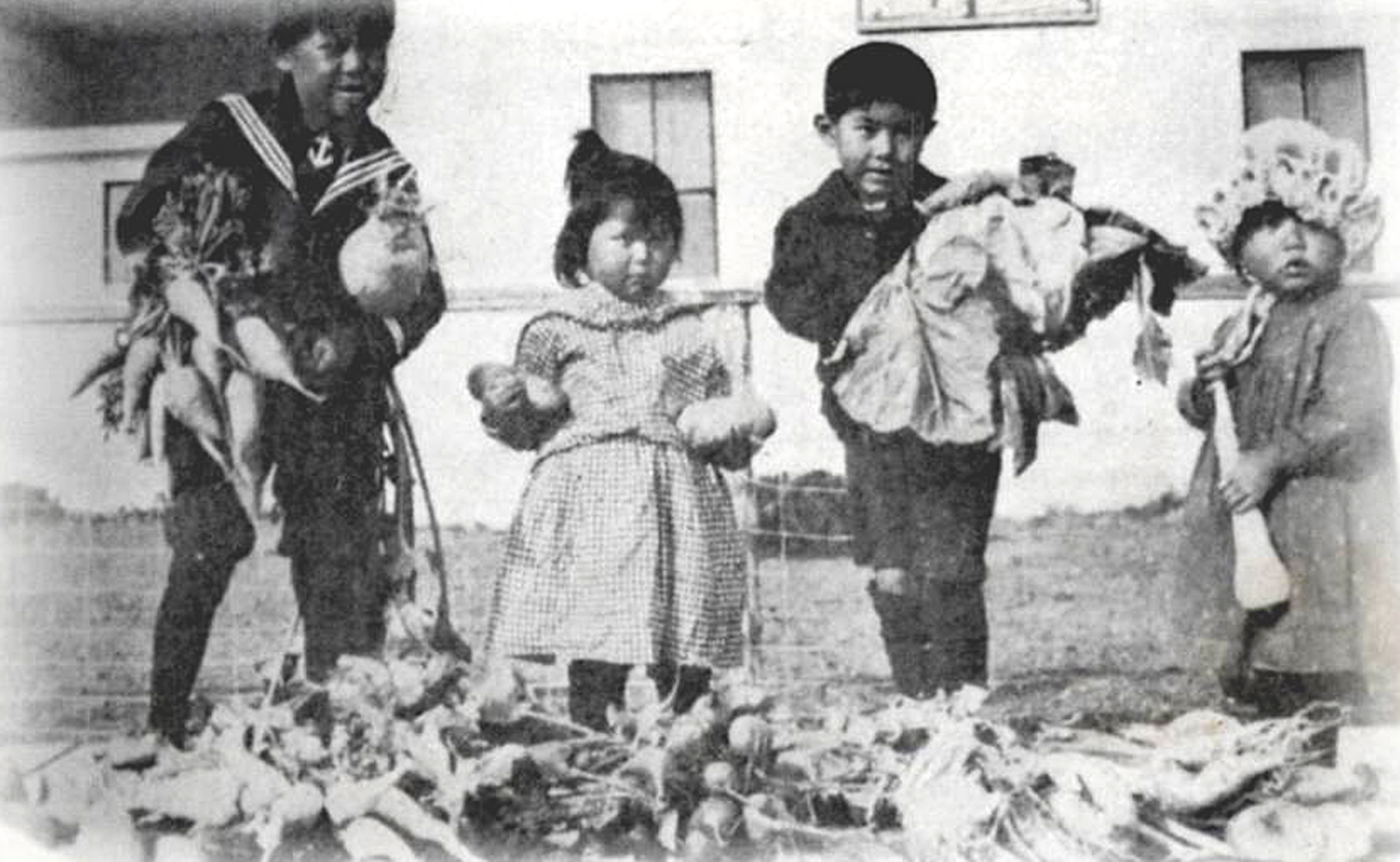
Children show off the bounty from the Klukwan School garden in 1911

Children show off the bounty from the Klukwan School garden in 1911

The Sitka Local Foods Network will host a brief historical gardening presentation by Elizabeth Kunibe, “Growing in Sitka and Southeast Alaska: Food of Today, Tomorrow and 200 Years Ago,” at 5 p.m. on Friday, Oct. 16, at the Kettleson Memorial Library. This event is free and open to all, and it should last about 45 minutes.

During her presentation, Kunibe will discuss early Tlingít gardens in Southeast Alaska, Russian gardens in Sitka in the 1800s, the first USDA Agricultural Experiment Station in Alaska comes to Sitka in 1898, an agricultural fair above the Arctic Circle in Fort Yukon, the importance of potatoes (a phytonutrient study), plant diseases and new ziplock bags made from fish gelatin. Her presentation includes a colorful slideshow that features historical information on gardening in Southeast Alaska, as well as information on what is happening in Alaska’s food systems today.

Kunibe is a University of Alaska Southeast anthropology student from Juneau who has spent the past six years researching early gardens of the Tlingít, Haida and Athabascan peoples in Alaska and the Yukon Territory. She is a 2008 and 2009 National Science Foundation EPSCoR (Experimental Program to Stimulate Competitive Research) Fellow researching food systems in Alaska.

For more information, contact Charles Bingham at 747-1065 or send e-mail to charles@sitkalocalfoodsnetwork.org/.

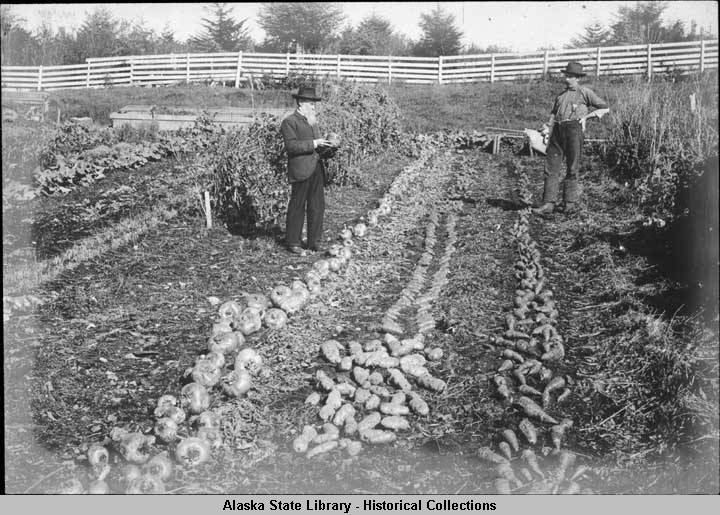
Gov. John G. Brady's garden in Sitka in 1900

Gov. John G. Brady's garden in Sitka in 1900

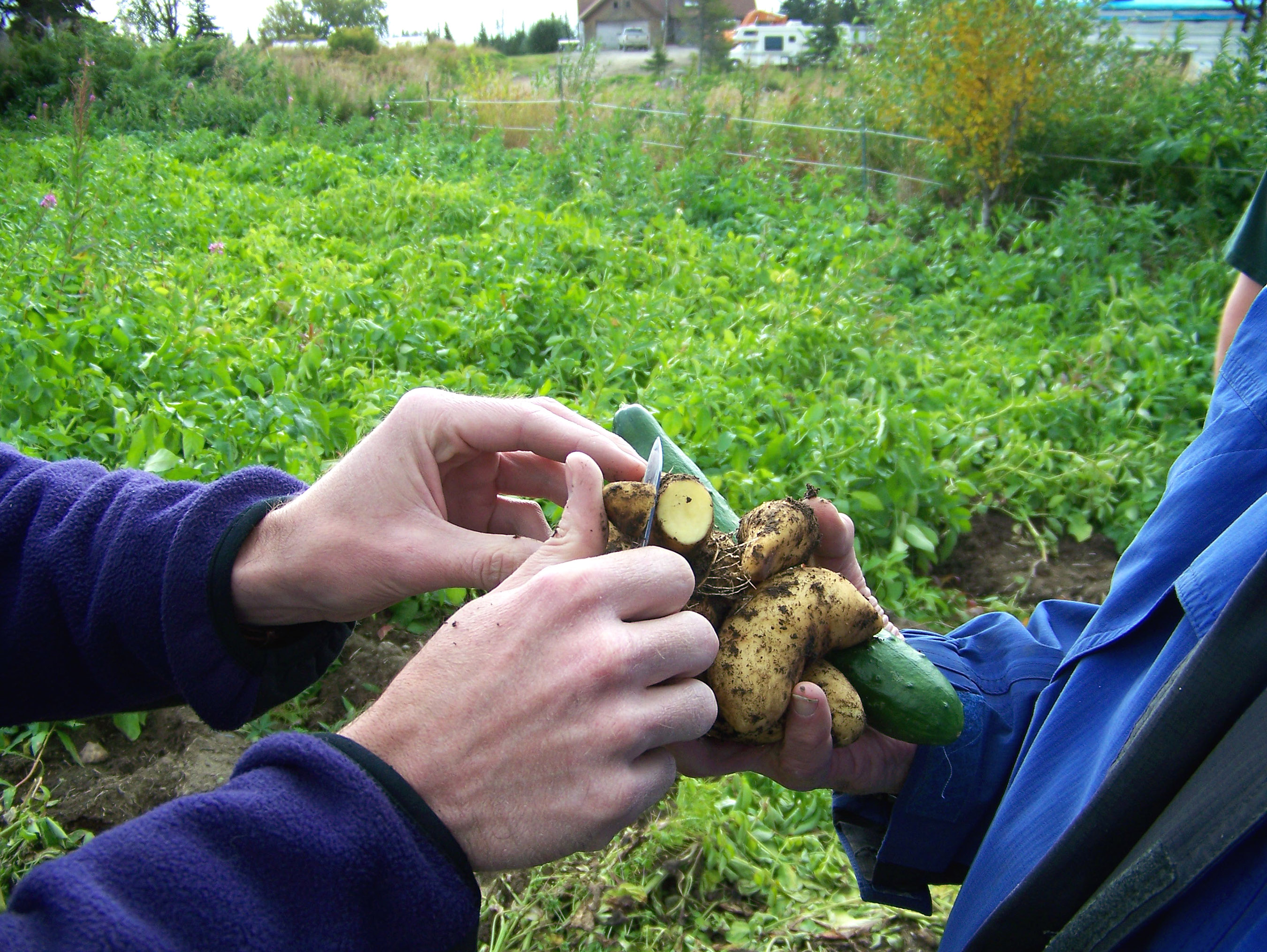
Plant geneticists Chuck Brown and Joe Kuhl of the USDA Agricultural Research Service, examine the flesh color of some potatoes being grown in Alaska. The color gives them clues to the nutrients the potatoes may contain.

Plant geneticists Chuck Brown and Joe Kuhl of the USDA Agricultural Research Service, examine the flesh color of some potatoes being grown in Alaska. The color gives them clues to the nutrients the potatoes may contain.

• Baranof Elementary students dig up potatoes and other local food stories in the news

Daily Sitka Sentinel screenshot of Baranof Elementary School student picking potatoes

Daily Sitka Sentinel screenshot of Baranof Elementary School student picking potatoes

Monday’s edition of the Daily Sitka Sentinel features a photo of Baranof Elementary School first-grader Keaton Kelling, 7, holding up a couple of potatoes he dug up from the Russian Bishop’s House garden on Thursday. First-grade students from Baranof Elementary harvested crops of peas, potatoes, carrots and other vegetables they planted last spring when they were kindergarten students. Most crops did well this year. (Sentinel Photo by James Poulson)

Monday's picking potatoes photo from the Daily Sitka Sentinel

Monday's picking potatoes photo from the Daily Sitka Sentinel

There were several other local food stories in Alaska newspapers over the weekend. Here’s a quick rundown.

Click here to read a story from Sunday’s Juneau Empire that features an Alaskanized version of a recipe for “salmon maritako,” a stew made by Spanish fishermen. The article is by Ginny Mahar, a chef at Rainbow Foods who also writes the Food-G blog. Many of the recipes Ginny posts on her blog include local, Southeast Alaska ingredients.

Click here to read an article from Sunday’s Fairbanks Daily News-Miner about a University of Alaska Fairbanks Cooperative Extension Service project at the Fairbanks Experimental Farm where they are using high-tunnel greenhouses to grow more apples and berries in northern climates. Click here to go directly to the UAF Cooperative Extension Service project page.

Click here to read Wednesday’s Anchorage Daily News gardening column by Jeff Lowenfels about now being the time to prepare plants for winter. Most of the column deals with flowers, but he does have some info about preparing tomato plants for the winter at the end of the column.

Click here to read an Associated Press story posted on the Anchorage Daily News Web site on Monday about how hoop houses (a low-cost type of greenhouse that uses plastic on a frame) are extending the growing season for urban farmers in northern climates. The version of the story on the ADN site didn’t have any photos of the hoop houses, so click here to see a version with photos.

Click here to read a transcript from National Public Radio of a story about two Walmart truckers who drive 2,600 miles one way from an Oregon warehouse to Alaska each week to deliver produce to Alaska stores. That’s a long way to transport a piece of lettuce or a carrot we can grow in Alaska, and that distance doesn’t include how far the produce had to travel to get to the Oregon warehouse before being trucked to Alaska. The story originated from the Alaska Public Radio Network, which has the story in streaming audio on its site.

Finally, click here for a humorous column from the July 2009 Field and Stream by Scott Bestul comparing the taste of Grade A Choice Holstein beef vs. wild venison when both are prepared the same way. This isn’t really a local story, but deer hunting season is coming soon in Southeast Alaska.

• Alaska Center for the Environment launches local food campaign

AlaskaCenterForTheEnvironmentLogo

The Alaska Center for the Environment is launching a new campaign to teach Alaskans about the importance of local food. This campaign is just getting going, and there’s a lot of work needed to flesh out all of the elements. But it’s good to see someone looking a local food security issues on a statewide level.

Click here to read the main information page about the campaign, which includes facts such as Alaskans spent $2.6 billion on food each year and in 2007 only 0.13 percent of that money went to agricultural products grown in Alaska. Click here to read the campaign’s Frequently Asked Questions page. Click here to read about a proposed “Alaska Food, Farms and Jobs Act” that is based on legislation out of Illinois that ACE hopes to find an Alaska legislator willing to introduce.

Finally, click here to read about the Alaska Local Food Film Festival that takes place Oct. 2-8 at the Bear Tooth Theatrepub and Grill in Anchorage. Each day during the festival the Bear Tooth will show a local food-related movie at 5:30 p.m. The films include “Food, Inc.,” “The Garden,” “Eating Alaska,” “Fresh” and “The End of the Line.” Sitka filmmaker Ellen Frankenstein will lead a discussion after her film, “Eating Alaska,” is shown on Sunday, Oct. 4.

AlaskaLocalFoodFilmFestivalPoster