• Sitka Tribe of Alaska submits editorial on protecting Pacific herring as a keystone forage fish

HerringBranches

(The following editorial about protecting forage fish, such as Pacific herring, was submitted to local media on April 11 by Sitka Tribe of Alaska tribal chairman Michael Baines.)

State of Alaska Denies Herring Forage Fish Status

2006 Herring collection 007Currently Pacific herring are acknowledged as a keystone forage fish species that is responsible for maintaining the health of the marine ecosystem in the waters of California, Oregon, Washington and British Columbia (BC).  As you cross the maritime boundary between BC and Alaska herring lose their forage fish status and become just another commercially harvested finfish.  At a recent Board of Fish meeting in Anchorage, the Board heard testimony from fishery managers, the herring industry and the public on a proposal that would have acknowledged herring as a forage fish by adding them to the State’s Forage Fish Management Plan (FFMP).

The FFMP became effective in 1999 and was intended to prevent the development of new fisheries on forage fish while allowing existing commercial forage fisheries to continue.  The Plan states that forage fish perform a critical role in the marine ecosystem by transferring energy from primary (zooplankton) and secondary (phytoplankton) producers to upper trophic level shellfish, finfish, marine mammals and sea birds.  The Plan also recognizes that, “abundant populations of forage fish are necessary to sustain healthy populations of commercially important species of salmon, groundfish, halibut, and shellfish.” 

The Alaska Department of Fish and Game commented that adding herring the FFMP would not affect the way it currently manages herring fisheries in the State. When asked by the Board if herring met the definition and fulfilled the role of a forage fish as described in the Plan, the ADF&G Southeast Regional Commercial Fisheries Coordinator responded that he felt they did.

Supporters of the plan stressed that herring are an ecological keystone species that are recognized around the world as a forage fish.  The Federal government holds herring to a higher standard that other forage fish by having no directed fisheries on herring in federal waters and by listing them as a prohibited species that is not allowed to be retained as by-catch.

Herring industry representatives testified that they felt herring stocks are healthy, well managed and did not need to be acknowledged as a forage fish.  Concerns were also expressed that listing herring as a forage fish would lead to changes in the way herring are managed.  This would have required the State to look at herring in a different light.  It may have paved the way for more conservative forage fish friendly management plans to be brought forth through the Board of Fisheries process in the future.

Unfortunately for Alaskans, this proposal was voted down on a 4-3 vote.  Three of the opposing Board members are commercial fishermen or have ties to the commercial fishing industry.  These Board members reiterated comments made by the industry that herring stocks are healthy, well managed and did not need to be listed in the plan.

The arguments put forth by the industry representatives and members of the Board in opposition to the proposal were not germane to the issue of adding herring to the FFMP.  The health of a population has nothing to do with its definition as a forage fish.  If this were the case the Lynn Canal and Prince William Sound herring stocks would be considered forage fish while the apparently healthy Togiak stock would not have the same status.  Likewise, if acknowledging herring as a forage fish by adding them to the FFMP eventually changes the way stocks are managed, it should tell us something about their current management.

The acknowledgement of herring as a forage fish would have allowed managers to look at herring in a different light and might have paved the way for more conservative forage fish friendly management plans to be brought forth through the Board of Fisheries process in the future.  Refusal by the State of Alaska to acknowledge herring as a forage fish sends a message to the world about Alaska’s biased Board of Fish process and the State’s priorities when it comes to managing its marine resources.  Alaska boasts having the best managed fisheries in the world, but that reputation is now tarnished.  It’s a sad day for Alaskans when greed and political influence win out over the common good of all who live in this great State.

If you feel the Board of Fisheries erred in their decision to deny herring forage fish status, you are encouraged to contact Alaska Governor Sean Parnell and the Board of Fisheries and request that the State reconsider adding herring to the State’s FFMP.  This is an Alaskan resource that needs to be managed for the benefit of all Alaskans.

(Sent to)

Governor Sean Parnell, P.O. Box 110001, Juneau, AK 99811-0001, Phone (907) 465-3500, governor@alaska.gov

and

Alaska Department of Fish and Game, Board of Fisheries, P.O. Box 115526, 1255 W. 8th Street, Juneau, AK 99811-5526


• Sitka Community Food Assessment project launches community survey to look at food security and resiliency in Sitka

SitkaCommunityFoodAssessmentLogo

OnepagerFinalThe Sitka Community Food Assessment work group is encouraging Sitkans to complete a 36-question survey that explores questions about local, wild food, seafood, game and plants (i.e., how do you fish, hunt, gather and/or grow). It also explores issues of food security, as well as where folks shop and how much food they store.

The data collected will augment data coming from our secondary data collection efforts, which focuses on sport and subsistence harvest data for fish and game,  as well as data on food assistance programs, food producers and food costs. It also will include focus group data that we will be gathering over the next 4-6 weeks.

FoodAssessmentDefsCollectively, the work group hopes to present the findings at a Sitka Food Summit that will take place in November 2013. Then the group will begin strategic planning to address our issues and improve food access for all Sitkans.

A link to the survey can be found on the Sitka Community Food Assessment page on Facebook (https://www.facebook.com/SitkaCommunityFoodAssessment), or by going directly to the survey at https://www.surveymonkey.com/s/MQTF22Q.

Paper copies of the survey are available at the Kettleson Memorial Library.  The survey is open through the end of April.  For more information, email sitkafoodassessment@gmail.com. This is one of three community wellness projects voted on for this year by Sitka residents attending the 2012 Sitka Health Summit.

• Sitka Community Food Assessment one-page fact sheet

• Sitka Community Food Assessment food security definitions

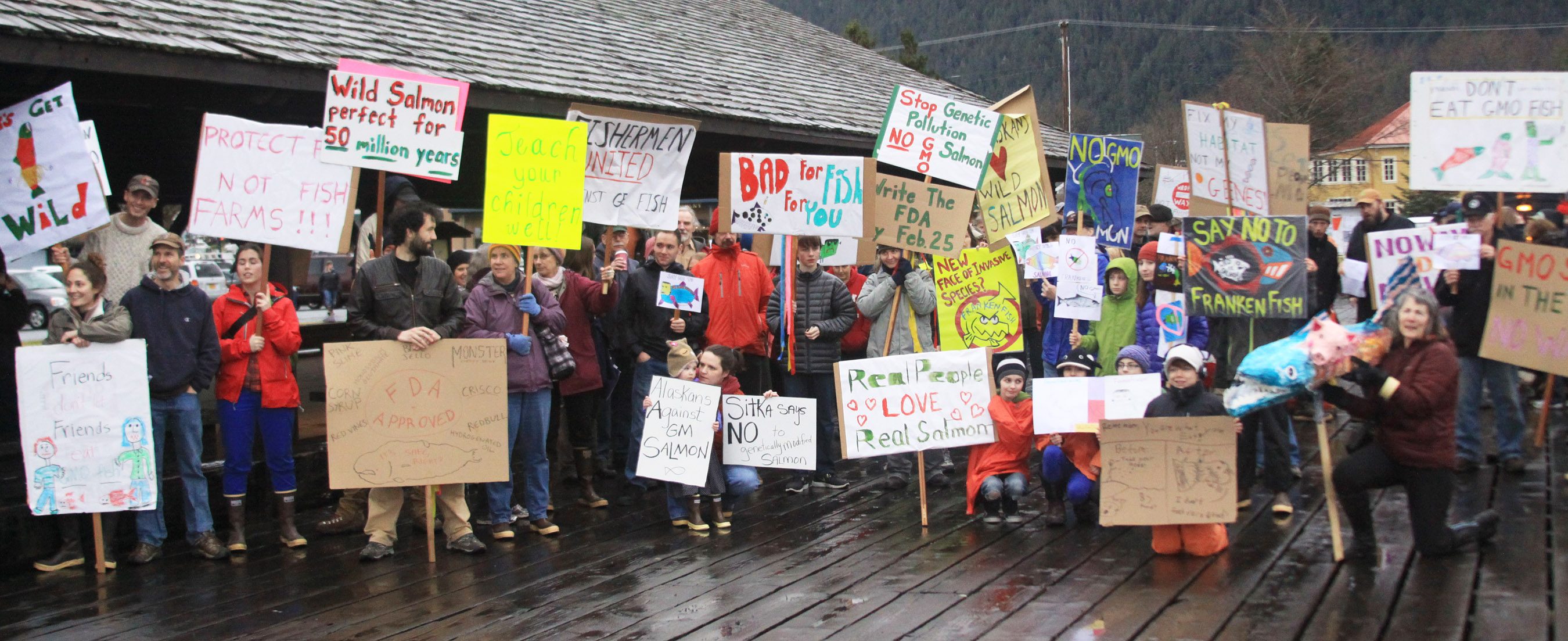
• Sitka residents say ‘No’ to genetically modified salmon during Feb. 9 rally

ProtestersOutside

Size comparison of an AquAdvantage® Salmon (background) vs. a non-transgenic Atlantic salmon sibling (foreground) of the same age. (CREDIT AquaBounty)

Size comparison of an AquAdvantage® Salmon (background) vs. a non-transgenic Atlantic salmon sibling (foreground) of the same age. (CREDIT AquaBounty)

Between 100 and 150 Sitka residents braved the wind and rain on Saturday, Feb. 9, at the Crescent Harbor Shelter to protest the possible U.S. Food and Drug Administration (FDA) approval of genetically modified salmon (aka, GMO or GE salmon, or Frankenfish).

The rally (click here to listen to rally coverage from KCAW-Raven Radio) was in protest of a genetically engineered salmon from the Massachusetts company AquaBounty Technologies, called the AquAdvantage® Salmon. The GMO salmon starts with an Atlantic salmon commonly used in fish farms, but adds genes from a Pacific king (chinook) salmon to promote growth and genes from an eel-like fish called an ocean pout that grows all year round instead of seasonally. According to AquaBounty, all of the commercialized fish will be female and sterile, and the fish are designed to be raised in fresh-water pens or tanks on land instead of the usual salt-water pens where most farmed Atlantic salmon are raised. AquaBounty promotes the fish as a faster-growing farmed salmon that takes half the time to reach maturity and be sent to market. To learn more about GMO salmon, read our post from 2010.

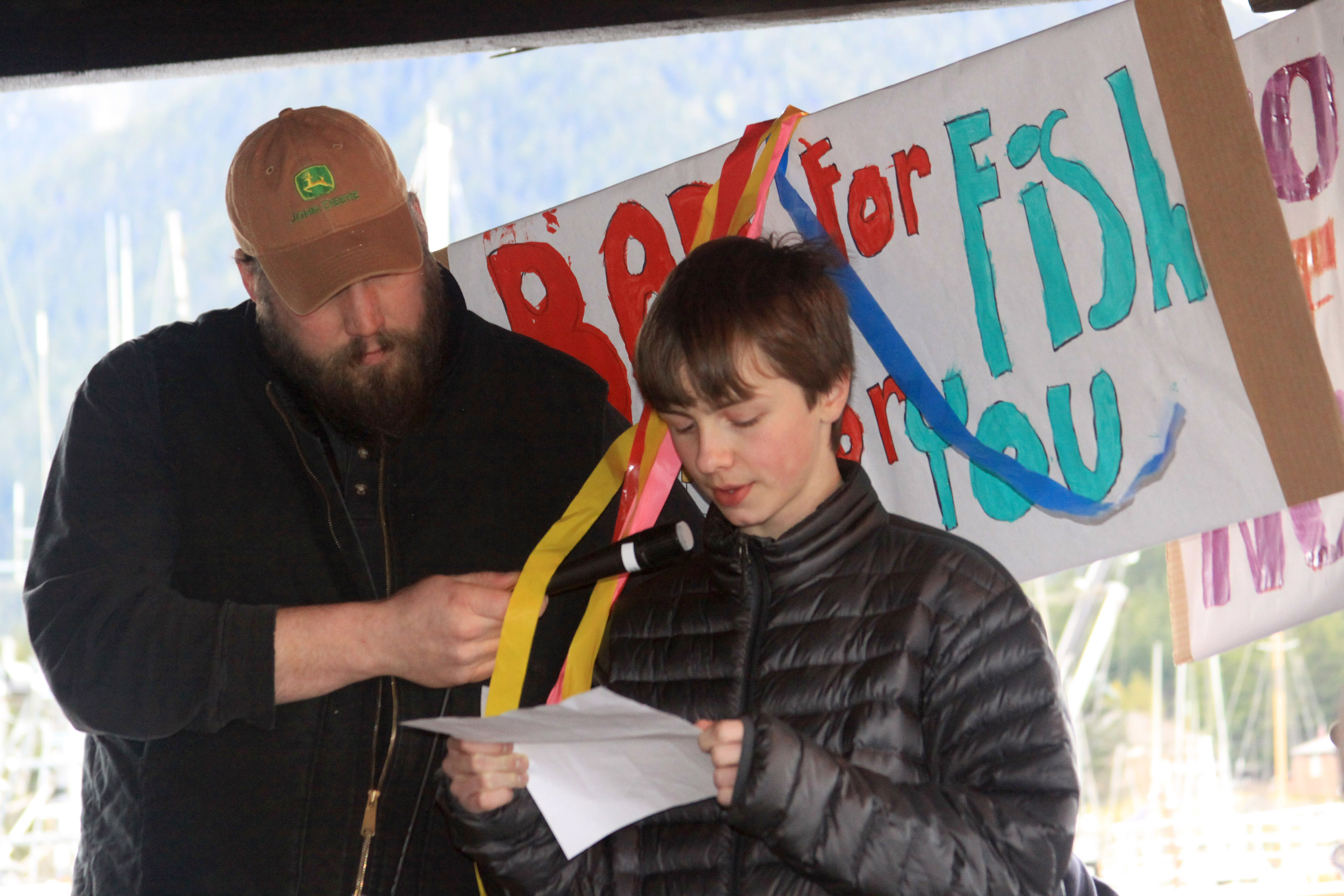
PaulRiouxSignsPaul Rioux — the Sitka resident who organized the rally with the help of local fishing groups, the Sitka Conservation Society, and others — said fishermen are concerned about what happens if these GMO salmon escape from pens. He noted that while AquaBounty said the fish will be sterile, other scientists said as many as 5 percent could be fertile, and that’s enough so that the GMO salmon as an invasive species could replace wild Pacific salmon within 40 salmon generations. DavidWilcoxSpeaksSignsDavid Wilcox, a 14-year-old Sitka resident who plans to run across the country to protest GMO foods, spoke for the other residents who said they were concerned with genetically engineered fish in general, and they worried this fish might go to market without being labeled as GMO salmon. (Click here to listen to Rioux, Wilcox and Ray Friedlander of the Sitka Conservation Society discuss why they held the rally during a Feb. 8 Morning Edition interview on KCAW-Raven Radio.)

SayNoToFrankenfishThe FDA, which has been looking at GMO salmon for more than a decade (AquaBounty started work on the fish in 1989), announced in December it planned to approve the genetically engineered fish, just in time for the holidays. At the same time, the FDA finally released environmental impact research papers it was supposed to have released in May. The FDA announcement also started a 60-day public comment period that was supposed to end on Feb. 25. On Feb. 13, the FDA extended the comment period until April 26. Sitka residents are encouraged to go to Regulations.gov and search for “GE salmon” (not “GMO”) to comment on the regulations before the April 26 deadline.

PatKehoeFrankenfishAlaska’s Congressional delegation agrees on few items, but Sen. Mark Begich, Sen. Lisa Murkowski and Rep. Don Young have been united for a couple of years in their efforts to stop Frankenfish. Sen. Begich this week introduced two bills banning GMO salmon. Last May, Sen. Murkowski introduced an amendment (that failed 50-46) requiring more study of GMO salmon by the National Oceanic and Atmospheric Agency (NOAA). In the House, Rep. Young has been one of the most vocal opponents of Frankenfish and in February he introduced a bill requiring GMO salmon be labeled. In the Alaska House of Representatives, Rep. Geran Tarr (D-Anchorage) and Rep. Scott Kawasaki (D-Fairbanks) introduced an anti-Frankenfish bill that passed out of the House Fisheries Committee this week.

This slideshow requires JavaScript.

• Sitka Conservation Society to host annual wild foods potluck on Nov. 29

The Sitka Conservation Society will host its annual wild foods potluck from 5-7:30 p.m. on Thursday, Nov. 29, at Harrigan Centennial Hall. Doors open at 5 p.m. so people can bring in their dishes, and food will be served at 5:30 p.m.

This free, family friendly, alcohol-free event allows Sitka residents to share their favorite locally foraged or harvested dishes with their neighbors. Residents bring in dishes featuring fish, wild game, seaweed, berries and other tasty treats highlighting wild food from around Sitka. Everybody is encouraed to bring in your favorite dishes featuring wild food, and if you can’t bring in a dish with wild food you can use wild plants to garnish dishes made from store-bought food.

The theme of this year’s wild foods potluck is “Restoration in the Sitka Community Use Area.” There will be live music, prizes awarded to the best wild food dishes (with categories such as “most wild”), and all kinds of other fun, stories and community.

For more information, go to http://www.sitkawild.org/events/ for a full schedule and list of contest categories. You also can call Ray Friedlander with the Sitka Conservation Society at 747-7509.

• Sitka community food assessment project to hold kick-off meeting on Monday, Oct. 29

At the 2012 Sitka Health Summit, “Developing a Community Food Assessment for a Food Resilient Sitka” was selected as one of the top three goals for 2012-2013. All members of the public who are interested in this initiative are cordially invited to a kick-off gathering from 5-7 p.m. on Monday, Oct. 29, in Room 108 at the Rasmuson Building located on the Sheldon Jackson campus.

Are you concerned about where your food comes from and how it gets to Sitka? Have you ever wondered what happens if the barge doesn’t arrive? Are you worried about rising food prices and do you worry about the future of Sitka’s food needs? What percentage of Sitka’s food is locally harvested? Do you feel the fish and game food resources you harvest are adequately protected?

Those and other questions will be asked as part of the community food assessment. All members of Sitka’s community have a need for and a right to healthy, stable, affordable food. We are interested in finding community groups and individuals who can help us in the planning stages of this assessment.

Snacks and refreshments will be provided. For more information, contact Renae Mathson at 966-8797 or renae.mathson@searhc.org.

• UAS-Sitka Campus to host annual class on how to identify Southeast Alaska mushrooms

The University of Alaska Southeast-Sitka Campus Office of Continuing Education will host Kitty LaBounty as she teaches the class “Southeast Mushrooms: How to Identify Them.”

This three-day class takes place from 7-8:30 p.m. on Thursday, Sept. 13, and from 10 a.m. to 2 p.m. on two Saturdays, Sept. 15 and Sept. 22, at the UAS-Sitka Campus (with field trips). The course fee is $49 and students should dress for the outdoors, bring waxed paper and a bucket for gathering.

This course is designed to introduce students to the mushroom flora of Southeast Alaska. The focus will be on the use of taxonomic keys for identification of fungi and recognition of both edible and poisonous mushrooms. Cooking and preservation of mushrooms will be discussed. Field trips are followed by in-class identification of collected mushrooms.

There is a maximum of 18 students allowed in this class. For more information, contact the UAS-Sitka Campus Office of Continuing Education at 747-7762. To register, call 1-800-478-6653, Ext. 7762, or go to https://aceweb.uas.alaska.edu/wconnect/ace/home.htm. Click the link below to download the course brochure as a PDF file.

• Southeast Mushrooms: How to Identify Them class brochure for 2012

• A short video to get you excited about the 2012 Sitka Seafood Festival

Elizabeth Cockrell of the Sitka Conservation Society provides this short promotional video for the 2012 Sitka Seafood Festival, which takes places Aug. 9-12 at various locations around downtown Sitka. The video was shown during a recent community salmon bake hosted by the Sitka Conservation Society. Tickets for the Friday, Aug. 10, Sitka Seafood Festival banquet at Harrigan Centennial Hall are for sale for $65 each at Old Harbor Books, and the guest chefs are sure to have exciting seafood dishes for you to try. Also, this year’s Sitka Seafood Festival will give Sitka residents a chance to watch and participate in a Scottish Highland Games. A complete schedule of events is posted on the Sitka Seafood Festival website.


• Sitka Conservation Society presents another year of Sitka Salmon Tours

Sitka Salmon Tours, presented by the Sitka Conservation Society, returns this summer for its second year, guiding visitors through the journey salmon take from forest to plate. The two-hour tour begins at 1 p.m. on Mondays through Saturdays outside the Sitka Sound Science Center and progresses through Sitka National Historical Park, Sheldon Jackson Hatchery, and ends at Crescent Harbor. Tickets cost $20 per person.

The tours mainly draw from tourists visiting Sitka, but also found interest last summer from local residents with family in town, as something fun and unique to do for an afternoon. Personalized and private tours are available upon request.

“People really respond to how we bring the salmon in nature together with the science of the hatchery and the economic and cultural roles salmon play here,” Helen Schnoes, Salmon Tours staff says. “It helps them understand the significance of salmon — and the need to protect, restore, and enhance their habitat — in a new way.”

Tour guests this year and last immensely enjoy this unique perspective on salmon and life in Sitka, as demonstrated by these Trip Advisor reviews — “Great tour: got to see the real life Alaska … really informative and fun,” “Beautiful, Informative, and Entertaining,” and “The most delightful, interesting walking tour … a breath of fresh air.”

In addition to the daily walking tour, Sitka Salmon Tours also organizes events throughout the summer tailored to Sitkans, such as occasional tours of the Seafood Producers Cooperative, specialty community tours, and a salmon bake fundraiser.

We will be sending more details as the summer progresses, but here’s a heads up, too, about some future events:

  • July 15, “The Rise and Fall of Canned Salmon,” Talk by Nic Mink, 5-6 p.m. at Kettleson Memorial Library. Free and open to the public.
  • July 19, Community Salmon Bake Fundraiser, $20 per person ($15 for children age 12-younger), 6=8 p.m. at Harrigan Centennial Hall.
  • Aug. 5, “Fishing for Change,” Talk by Elizabeth Cockrell, 5-6 p.m. at Kettleson Memorial Library. Free and open to the public.
  • Aug. 7, Seafood Trivia at the Bayview Pub. Sitka Salmon Tours takes over this weekly trivia night with questions about seafood, salmon, and everything fishy. Teams must be entered by 8:45 p.m., trivia begins 9 p.m.
  • Aug. 9-13, Sitka Seafood Festival walks, including regular Salmon Tour, local seafood tour (includes tastings at some of Sitka’s best restaurants), and SPC processor tour; Events include a processor tour (11 a.m. on Aug. 9, $35 with light meal included, meet at location TBA), at least two Sitka Salmon Tours (one at 1 p.m. on Aug. 10, a second at 9 a.m. on Aug. 11, $20, meet at Sitka Sound Science Center), and a Seafood Walk (11 a.m. on Aug. 12, $45, includes processor tour and tastings at local restaurants)

Contact Helen Schnoes for questions, reservations, or for further information about events planned in Sitka this summer. Helen can be reached at the Sitka Conservation Society office at 747-7509, or by cell at (612) 741-1591 or e-mail at helen@sitkawild.org.


• Alaska Department of Health issues PSP warning for Southeast Alaska shellfish

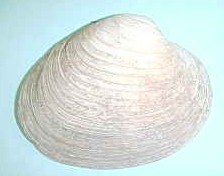
The butter clam has one set of rings that go one direction only, around the same center point (Photo courtesy of Alaska Department of Environmental Conservation)

The butter clam has one set of rings that go one direction only, around the same center point (Photo courtesy of Alaska Department of Environmental Conservation)

On Friday, June 22, the Alaska Department of Health and Social Services issued a paralytic shellfish poisoning (PSP) warning for Southeast Alaska shellfish. Please be aware that there have been several PSP blooms in recent years, and the PSP toxin has sent several people to the hospital and even resulted in a couple of deaths.

The state in general does not recommend the recreational or subsistence harvest of shellfish (in particular filter-feeding bi-valves such as clams, cockles, oysters, mussels and others) from Alaska beaches because they are not checked for the PSP toxin. Commercial shellfish is tested for PSP and safe to eat. In addition to the links in the press release below, here is a link to more information about PSP from the SouthEast Alaska Regional Health Consortium (SEARHC), http://searhc.org/publications/featured_stories/2011_06_psp.php. Now here is the text of the release:


Scientists advise against harvesting shellfish due to large “red tide” in Southeast Alaska

State health officials remind public about risks


ANCHORAGE — Warm weather combined with an increasingly large algae bloom in Southeast Alaska has scientists advising extra caution to would-be recreational shellfish harvesters. Water samples taken from around Etolin Island show increasing levels of Alexandrium algae, which produces paralytic shellfish poisoning (PSP) in shellfish. Tests have also shown a slight increase in Alexandrium levels on the west coast of Prince of Wales Island as well as extremely high levels around Juneau.

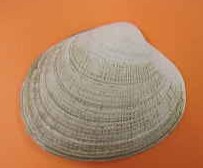
The littleneck clam has two sets of rings that cross each other at 90 degree angles (Photo courtesy of Alaska Department of Environmental Conservation)

The littleneck clam has two sets of rings that cross each other at 90 degree angles (Photo courtesy of Alaska Department of Environmental Conservation)

Scientists have also identified unsafe levels of three different species of Dinophysis algae, which produces diarrhetic shellfish poisoning (DSP), in samples from around Ketchikan. DSP can cause diarrhea, PSP can cause paralysis.

“These Alexandrium levels are similar to what we saw last year when we had such high levels of PSP toxins in shellfish,” said Kate Sullivan, with the University of Alaska Southeast and co-founder of the Alaska Harmful Algal Bloom Partnership (AHAB). “Last summer we had a number of cases, including four people who needed to be hospitalized. We want people to be extra cautious and remember that the only safe shellfish is the kind you buy at the store.”

A cockle has deep ridges similar to a Ruffles potato chip (Photo courtesy of Alaska Department of Environmental Conservation)

A cockle has deep ridges similar to a Ruffles potato chip (Photo courtesy of Alaska Department of Environmental Conservation)

Early signs of paralytic shellfish poisoning often include tingling of the lips and tongue. Symptoms may progress to tingling of fingers and toes, then loss of control of arms and legs, followed by difficulty breathing. Death can result in as little as two hours.

All locally harvested shellfish — including clams, mussels, oysters, geoducks and scallops — can contain paralytic shellfish poison. Crabmeat is not known to contain the PSP toxin, but crab guts can contain unsafe levels of toxin and should be discarded. There is no way to tell if a beach is safe for harvesting by looking at it. Toxins can be present in large amounts even if the water looks clear. Also, the toxin can remain in shellfish long after the algae bloom is over. PSP cannot be cooked, cleaned or frozen out of shellfish. Commercially grown shellfish is tested and considered safe.

Paralytic shellfish poisoning is considered a public health emergency. Suspected cases must be reported immediately to the Section of Epidemiology by health care providers at 907-269-8000 during work hours or 800-478-0084 after hours.

For more information on PSP go to:

http://www.cdc.gov/nczved/divisions/dfbmd/diseases/marine_toxins/, or

http://www.epi.alaska.gov/id/dod/psp/ParalyticShellfishPoisoningFactSheet.pdf

• Sitka herring researcher Heather Meuret-Woody makes her case for better management

(EDITOR’S NOTE: On Tuesday, May 15, the Sitka Tribe of Alaska hosted the Sitka Herring Summit to discuss issues regarding the management, or mismanagement, of herring stocks in Southeast Alaska. Sitka herring researcher Heather Meuret-Woody made this presentation, which also appeared as a shorter letter to the editor in the Daily Sitka Sentinel on May 18. The opinions expressed are Heather’s alone, though the Sitka Local Foods Network has written letters supporting the Sitka Tribe of Alaska in its bid to get the Alaska Department of Fish and Game to reduce the commercial quota for herring in Sitka Sound.)

Sitka Sound Herring Summit

May 15, 2012

Heather Meuret-Woody

Sitka Sound Herring Researcher

I have been a Sitka Sound herring researcher for about 10 years. I have decided to share my few thoughts on the Sitka Sound herring population. With this said, in my opinion there was not 144,143 tons of the predicted mature herring biomass returning to Sitka Sound. An overestimate of the biomass seems to be the suspect.

Managers of forage fish know that traditional stock management techniques do not work well with forage fish. The reason for the failure of traditional stock assessment techniques is that the “catchability” of forage fish increases as the stock declines. However, due to the schooling nature of forage fish and their vulnerability to modern acoustics and fishing gear, catch rates remain constant, even when the stock is rapidly falling in size (Beverton, 1990). Thus declines in stock size will not be apparent to managers or to the fishing industry, based on catch per unit effort statistics. Management of forage fish stocks requires direct measurement of stock size. This can be accomplished by surveying fish abundance during the spawning season, or by conducting scientifically designed acoustic surveys of schools of forage fish. Failure to monitor the stock directly will result in the inability to determine changes, even severe declines, in forage fish abundance. With that said, ADF&G does not measure the Sitka Sound herring stock directly. They may do acoustic surveys and aerial surveys but the data is not used for determining stock size in the ASA model. ADF&G relies almost entirely upon spawn deposition estimates to determine the spawning biomass. Hebert, 2010 states, “Estimates of total egg deposition on Macrocystis kelp may be highly variable, and transects that cross Macrocystis kelp beds could result in very high egg deposition estimates, resulting in high uncertainty around total estimates of egg deposition.” ADF&G also notes in this report that they have issues with diver calibration. One diver may visually estimate more or less eggs compared to another diver. Individual calibration factors can have a potentially large impact on spawn deposition estimates of biomass.
Accurate and regular estimates of fecundity are important for “ground-truthing” assumptions used by ADF&G. Fecundity estimates are used to convert estimates of herring egg deposition into mature biomass, and is used quite commonly among world-wide herring managers. ADF&G has only measured fecundity 4 times since the 1970s (Hulson et al., 2008). Since then, they just estimate fecundity based on weights, so large female herring lay approximately 40,000 eggs and small female herring lay approximately 20,000 eggs. Using un-validated parameters is extremely risky. For example, a 10% change in the egg per gram measurement used to convert spawn to fish, can result in a 20% change in the number of fish estimated.

In 2007, 2008, and 2009, spawning herring were sampled for Ichthyophonus prevalences in Sitka Sound. The results showed that 27% – 40% were positive for Ichthyophonus. All of this data is provided by Hershberger, Winton, and Purcell, from USGS Marrowstone Marine Field Station. The results of the 2010 and 2011 data from this ongoing research were not available at the time of this letter. Sitka Sound herring have had the Ichthyophonus disease for years and ADF&G has not incorporated this data into their current management. The ASA model does not account for disease, just “natural mortality.” However, this “natural mortality” is not based on observed data, but has been estimated by picking a random, but “conservative” number and applying it to the herring stock.

Sitka Sound herring follow the Pacific Decadal Oscillation (PDO) which is a 14-year oscillatory cycle and is highly correlated with an annual index of zooplankton biomass. Strong negative values of the PDO were observed in autumn 2011: “If these values persist through winter and early spring 2011-2012, they could result in the best ocean conditions observed in decades,” according to the 2011 annual update for the Ocean Ecosystem Indicators of Salmon Marine Survival in the Northern California Current research project, which has been ongoing since 1998. Additionally, “These negative values are expected to continue into spring 2012, which suggests that the northern North Pacific Ocean will also remain cold through spring 2012, giving rise to continuation of good ocean conditions.” So it is hard to imagine with this optimal ocean condition that Sitka Sound herring experienced mass mortality since last year. This winter we experienced the Arctic Oscillation which is essentially a pressure pattern that drives the jet stream, and controls how strong its winds are and where the jet stream position is. This winter, the jet stream trough, which tends to push the jet stream far to the north, helped drive storms into Alaska.

From 2006-2010, ADF&G has been trying to convince the public that the Sitka Sound herring had changed their maturation rates. They claimed that the herring were maturing later. Instead of herring reaching maturity at age-3 and age-4 they were not maturing until age-5, age-6, and age-7. Of course this was not actual observed data. ADF&G did not base this on ovarian histology or anything concrete, instead the changes were based on a number estimate to make the ASA model fit the data rather than using field data to fix the model. No other herring stocks along the Pacific Coast have herring delaying maturation, so it shouldn’t surprise anyone that Sitka’s herring are maturing at their usual rate. Additionally, ADF&G claimed that the herring were surviving longer, and the survivability rate they have been using is 87%. Again this was not based on anything managers actually observed, but was again a random number forced to make the ASA model fit the data. Even Hebert, 2010 states “External estimates of age-specific survival would improve the ASA model and provide more accurate forecasts of spawning biomasses.” If the Sitka Sound herring actually had 87% survivability rate, then the only way herring could have died was to be eaten by a predator or get caught in a purse seine net.

In 2008, I did a co-study with the ADF&G Age Determination Laboratory in Juneau. ADF&G collected 50 herring from the winter bait fishery and aged the herring via scale reading. I then received those 50 herring and aged them via otolith aging – and this is not the break and burn method, this is the thin-sectioning method that is widely recognized world-wide and even used by the California Department of Fish and Game on herring stocks. The herring aged via otolith actually aged 2 years younger on the average than the scale aging methodology. If you recall, ADF&G announced 12/16/2010 that their aging assessments were wrong for the period of 1999-2010. Once they re-aged all of the archived samples, they too came up with an average of 2 years difference. Additionally, because the ASA model used by ADF&G to forecast the mature biomass requires a long time series of reliable age estimates, the department chose not to use the ASA model, but instead relied on a biomass accounting model to forecast the 2011 Sitka Sound mature herring population.

Significant fisheries-induced evolutionary change has been researched in Norway in Baltic herring and has lead to the entrainment hypothesis: an explanation for the persistence and innovation in spawning herring migrations and life cycle spatial patterns (Petitgas et al. 2006). This research is quite intriguing and deserves more consideration. In 2008, the commercial fishery occurred along the entire Kruzof Island shore line in very shallow water. While the herring schools were being fished upon, a large percentage of the spawning biomass seemed to avoid the purse seiners and hit the first shoreline available, Kruzof, and spawned. Now if you review ADF&G spawn maps that go back to 1964 you will know that there has been less than 15 times that the herring biomass used the Kruzof shoreline as spawning habitat. The Kruzof Island shoreline is not very suitable spawning habitat as newly hatched larvae would be swept up in the currents and advected out of Sitka Sound, causing low survivability (Sundberg, 1981). However, if herring spawn on the islands, i.e. Middle Island, Kasiana, or along the road system, the currents in Sitka Sound keep the hatched larvae in the inner bays and water ways which are excellent for retention and increases survivability. Keeping in mind that herring recruit into a mature cohort at around age-4, the 2008 commercial sac roe fishery may have reduced the amount of recruits that we would have seen this year in 2012. Unfortunately we will never know because ADF&G does not measure immature herring. I have researched juvenile herring populations in Sitka Sound for several years and found that one of the most important rearing areas is along the Halibut Point Road shoreline from Katlian Bay and Nakwasina in the north to Halibut Point Marine and Cove Marina in the south (Meuret-Woody and Bickford, 2009). Unfortunately, the new dock at Halibut Point Marine will soon become a place for net pen-rearing of hatchery salmon smolts – with no consideration on the impacts it could have on juvenile herring populations.

Finally I’d like to point out that ADF&G staff has been quoted saying that herring only seem to spawn in Salisbury Sound when there is such a large biomass that extra spawning habitat is needed. So basically they claim Salisbury Sound is a spill-over spawning habitat, although they have no data to support this assertion. If this were actually true, based on biomass size, then where was the huge spill-over of spawning biomass in Salisbury Sound in 2011 and 2012 – both of which were huge forecast biomass years? In my published paper, Identifying Essential Habitat (Source vs. Sink Habitat) for Pacific Herring in Sitka Sound Using Otolith Microchemistry (Meuret-Woody and Bickford, 2009) it appears that Salisbury Sound actually supports a small discrete population of herring (10%), separate from Sitka Sound herring. Salisbury Sound may also be a source population for Hoonah Sound, supplying approximately 14% of the population for Hoonah Sound. Why doesn’t ADF&G rely on published data instead of relying on guesses made by their managers?