• Recent paralytic shellfish poisoning (PSP) serve as reminder to not eat certain types of locally harvested shellfish

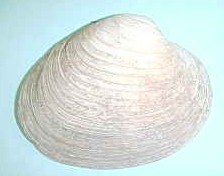
The butter clam has one set of rings that go one direction only, around the same center point (Photo courtesy of Alaska Department of Environmental Conservation)

The butter clam has one set of rings that go one direction only, around the same center point (Photo courtesy of Alaska Department of Environmental Conservation)

This past week, there were four suspected cases of paralytic shellfish poisoning (PSP) reported in Juneau. These four cases, combined with a couple of PSP cases in the Ketchikan/Metlakatla areas this winter and record-high levels of the PSP toxin found in shellfish last summer should serve as reminders that the state discourages eating recreationally and subsistence-harvested shellfish on most beaches in Alaska.

The first three PSP cases reported to the Alaska Section on Epidemiology last week involved clams harvested over the Easter weekend near Juneau — the first case reported April 10 involved razor clams from Admiralty Island and the next two cases reported April 12 involved butter clams from either Lincoln Island or Ralston Island. On April 13, another case was reported where a person ate pink neck clams (also known as surf clams) harvested from Shelter Island.
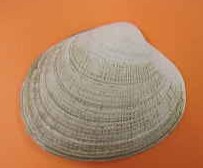
The littleneck clam has two sets of rings that cross each other at 90 degree angles (Photo courtesy of Alaska Department of Environmental Conservation)

The littleneck clam has two sets of rings that cross each other at 90 degree angles (Photo courtesy of Alaska Department of Environmental Conservation)

In each case, the people who ate the clams experienced classic PSP toxin symptoms — tingling and numbness of the mouth and tongue that eventually can extend into the extremities and then the rest of the body. Once the toxin moves into the body, it can paralyze the heart and lungs, causing them to stop and leading to intensive care treatment and possibly death (PSP deaths were reported in Juneau and Haines in 2010). If people experience these symptoms, they should get to the hospital immediately because sometimes a hospital respirator can save a life.

PSP can cause severe health problems and even death, and there is no antidote. The toxin is not visible, and requires special testing to be detected. It can occur during any month of the year, and the toxin can remain in affected shellfish for as long as two years. There is no antidote to the toxin. PSP generally affects bivalves that filter food when they eat, such as clams, cockles, mussels, oysters or scallops. Crab meat does not carry the PSP toxin, but crab guts can have the toxin since crab eat bivalves.

A cockle has deep ridges similar to a Ruffles potato chip (Photo courtesy of Alaska Department of Environmental Conservation)

A cockle has deep ridges similar to a Ruffles potato chip (Photo courtesy of Alaska Department of Environmental Conservation)

Southeast Alaska beaches, like most beaches in the state frequented by recreational and subsistence harvesters, are not tested by the state for the PSP toxin. The state does check commercially harvested shellfish for the toxin, but in recent months at least one commercial geoduck season was closed because of the toxin’s presence.

To learn more about PSP, here is an informational page created by the SouthEast Alaska Regional Health Consortium (SEARHC) after last year’s extremely high levels of PSP toxin were discovered. This page features information about how PSP is formed, what types of shellfish can carry the PSP toxin, basic first aid for PSP symptoms and more.

• Paralytic Shellfish Poisoning Fact Sheet from the State of Alaska

• As you build your garden this spring, don’t forget to Plant A Row For The Hungry

(EDITOR’S NOTE: The following article first appeared on this site in April 2010. It is repeated because much of the information remains current and newsworthy.)

As you start to plan your garden for this spring and summer, don’t forget to Plant A Row For The Hungry. The Plant A Row For The Hungry program (also known as Plant A Row or PAR) is a national campaign by the Garden Writers Association of America that got its start in Alaska.

In the cold winter of 1994, Anchorage Daily News garden columnist and former Garden Writers Association of America President Jeff Lowenfels was returning to his hotel after a Washington, D.C., event when he was approached by a homeless person who asked for some money to buy food. Lowenfels said Washington, D.C., had signs saying, “Don’t give money to panhandlers,” so he shook his head and kept on walking. But the man’s reply, “I really am homeless and I really am hungry. You can come with me and watch me eat,” stayed with Lowenfels for the rest of his trip.

Jeff Lowenfels

Jeff Lowenfels

The encounter continued to bother Lowenfels, even as he was flying back to Anchorage. During the flight, Lowenfels came up with an idea when he started writing his weekly garden column (the longest continuously running garden column in the country, with no missed weeks since it started on Nov. 13, 1976). He asked his readers to plant one extra row in their gardens to grow food to donate to Bean’s Café, an Anchorage soup kitchen. The idea took off.

When Anchorage hosted the Garden Writers Association of America convention in 1995, Lowenfels took the GWAA members to Bean’s Café to learn about the Plant A Row For Bean’s Café program. The Garden Writers Association of America liked the idea, and it became the national Plant A Row For The Hungry campaign (also known as Plant A Row or PAR). In 2002, the Garden Writers Association Foundation was created as a national 501(c)(3) nonprofit to manage the Plant A Row For The Hungry program.

“I am not surprised by the growth of PAR,” Lowenfels wrote in an e-mail to the Sitka Local Foods Network. “It is now in all 50 states and across Canada and there are thousands of variations of the original program — from prison gardens for the hungry to botanical gardens donating their produce from public display gardens. This is because gardeners always share information and extra food, so the idea was a natural.”

It took five years for the program to reach its first million pounds of donated food, but the second million only took two years and the next eight years saw a million pounds of donated food (or more) each year. Since 1995, more than 14 million pounds of food have been donated. Not only that, the program is getting ready to expand overseas to Australia, England and other countries with avid gardeners.

“We have supplied something in the vicinity of enough food for 50 million meals,” Lowenfels wrote in his e-mail. “Gardeners can solve this hunger problem without the government. And we don’t need a tea party to do it! Or chemicals, I might add, as author of a book on organic gardening (Teaming With Microbes, written with Wayne Lewis)!”

According to the U.S. Department of Agriculture, one out of every eight U.S. households experiences hunger or the risk of hunger. Many people skip meals or eat too little, sometimes going an entire day or more without food. About 33 million Americans, including 13 million children, have substandard diets or must resort to seeking emergency food because they can’t always afford to buy the food they need. In recent years the demand for hunger assistance has increased 70 percent, and research shows that hundreds of children and adults are turned away from food banks each year because of lack of resources.

While many people credit Lowenfels for creating the Plant A Row For The Hungry program, Lowenfels says the real heroes are the gardeners growing the extra food and donating it to local soup kitchens, senior programs, schools, homeless shelters and neighbors. You can hear him pass along the credit to all gardeners at the end of this interview last year with an Oklahoma television station (video also embedded below).

“One row. That’s all it takes. No rules other than the food goes to the hungry. You pick the drop-off spot or just give it to a needy friend or neighbor. Nothing slips between the lip and the cup, I say,” Lowenfels wrote in his e-mail.

For people wanting to Plant A Row For The Hungry in Sitka, there are several places that would love to help distribute some fresh locally grown veggies or berries to those who are less fortunate, such as the Salvation Army, Sitkans Against Family Violence (SAFV), local churches, Sitka Tribe of Alaska and other organizations. The food the Sitka Local Foods Network grows at St. Peter’s Fellowship Farm communal garden goes to the Sitka Farmers Market, where people who are in the WIC (Women, Infants, Children) supplemental food program (operated in Southeast Alaska by the SouthEast Alaska Regional Health Consortium or SEARHC) can use special farmers market vouchers to buy fresh vegetables.

The Sitka Local Foods Network also takes donations of local produce to sell at the Sitka Farmers Markets, and all proceeds from the Sitka Farmers Markets are used to help pay for Sitka Local Foods Network projects geared toward helping more people in Sitka grow and harvest local food. For more information, contact Sitka Local Foods Network President Kerry MacLane (maclanekerry@yahoo.com), Sitka Local Foods Network Vice President Linda Wilson (lawilson87@hotmail.com) or Sitka Farmers Market Coordinator Johanna Willingham-Guevin (johanna.willingham@gmail.com).

• 2010 Plant A Row For The Hungry marketing brochure

• 2009 Start a local Plant A Row For The Hungry campaign brochure

• Sitka’s ‘Fish to Schools’ project to be honored during Wednesday’s fish lunch at Keet Gooshi Heen Elementary School

Sitka’s Fish to Schools project will be honored with the grand prize of the Alaska Farm to School Challenge during the fish lunch from 11:20 a.m. to 12:30 p.m. on Wednesday, April 11, at Keet Gooshi Heen Elementary School. Alaska First Lady Sandy Parnell and Alaska Division of Agriculture Director Franci Havermeister will be in attendance to present the award.

Sitka’s Fish to Schools project came out of the 2010 Sitka Health Summit, when increasing access to locally harvest fish in school menus was chosen as one of the community’s top four health priorities for the year. The project started with a monthly fish lunch entrée option at Blatchley Middle School, then expanded to Keet Gooshi Heen Elementary and Pacific High School. The program now is twice-monthly, and it has grown with the support of the Sitka Conservation Society, Sitka School District, local fishermen, and other community members. The program has become a successful model for what can be done in other parts of the state.

“We are excited to honor Sitka in its efforts, and appreciate that First Lady Sandy Parnell also see the value in projects like this that highlight both Alaska’s youth and natural resource bounty,” Havermeister said in a press release.

For more information about Sitka’s Fish to Schools program, contact Tracy Gagnon at 747-7509 or tracy@sitkawild.org.

• Lori Adams discusses slugs in her latest Daily Sitka Sentinel garden column

(Lori Adams, who owns Down-To-Earth U-Pick Garden and is a frequent vendor at the Sitka Farmers Market, will be writing a regular garden column in the Daily Sitka Sentinel this summer. The Sentinel is allowing us to reprint the columns on this site after they first appear in the newspaper. This column appeared on Page 4 of the Wednesday, April 4, 2012, edition of the Daily Sitka Sentinel.)

GARDENING IN SITKA

By Lori Adams

SLUGS!

Sitka gardeners do not struggle with a lot of pests, but the few that we do have give us plenty of trouble. The worst pests I have encountered in my garden are slugs, root maggots and aphids — and the slugs are by far the biggest problem.

I have had slugs wipe out an entire bed of young lettuce plants in one night! Large slugs eat entire plants, leaving their silvery trails behind them; and tiny slugs hide in the cracks and voids of  bushy plants, riddling them with holes. The only real solution I have found for slugs is ducks.

Ducks love to eat slugs!  They love the rain, they provide delicious eggs and meat and they are endlessly entertaining. My “herd” of ducks spends every waking moment foraging for slugs and other creepy crawlers in my garden!  I could go on and on about the benefits of raising ducks, but I will try to focus on other solutions in this column.

Slugs thrive in damp, cool, dark areas — a perfect description of a Sitka garden!  They are migratory by nature, coming out mostly at night to do their damage and slinking away before daylight. You need to think of the battle against slugs as a war that never ends.  There is no permanent fix because no matter how many you kill they will continue to migrate in.

The best strategy in this war is to make your entire property a hostile environment for slugs. Cut down all brush, salmonberries and grass — TO THE GROUND.  You would be surprised how many slugs live in these areas, just close enough to your garden to provide shelter during the day. Remove all piles of brush, stacks of lumber and other junk. (Compost heaps do not pose a problem if they are kept active and hot).  Potted plants in the garden should be up on blocks to prevent slugs from living underneath them.

Slugs can crawl over virtually any surface but they do not prefer shells, wood chips, sand or gravel so use one of these materials to create a clear perimeter around your garden. Remove ornamental ground cover. My ducks can spend an hour in a patch of ground cover — what does that tell you?  It’s the perfect environment for slugs! Finally, think about getting rid of your lawn. I loved my lawn and still miss it very much, but slugs love lawns.

One other strategy is bait, but rethink how you use it. If the theory is that slugs just happen to fall into it or eat it on their way by, then you should have hundreds of bait traps scattered around your garden. If on the other hand bait actually lures slugs in then DON’T put bait in the middle of your garden! Put it far away to draw slugs away from your vegetables.

Next week’s column — Feeding Your Plants.

Brought to you by Down-To-Earth U-Pick Garden

2103 Sawmill Creek Road

Open June-August / Mon-Sat 11:00-6:00

747-6108 or 738-2241

http://downtoearthupick.blogspot.com/

• Help prepare St. Peter’s Fellowship Farm for spring planting and a summer of fresh veggies

St. Peter's Fellowship Farm sign

St. Peter's Fellowship Farm sign

It’s still a little cold to be planting outdoors, but it’s warm enough to start getting the garden ready.

There will be a special work party from 1-3 p.m. on Saturday, April 14, to expand our gardens at the St. Peter’s Fellowship Farm communal garden (located behind St. Peter’s By The Sea Episcopal Church on Lincoln Street). Produce grown at St. Peter’s Fellowship Farm is sold during the Sitka Farmers Markets to help fund Sitka Local Foods Network projects throughout the year.

During this special work party, workers are needed to help add space to the garden. We will need people to use pick-axes to clear out salmonberry roots so we can prepare new garden beds. We also need people to shovel dirt and sift soil, among other jobs.

For those wanting to do lighter work, we need people to weed, mulch and spread fertilizer (seaweed) on the existing garden beds. Most garden tools will be provided, but we will need people to bring shovels and pick-axes if they have them.

For more information, contact St. Peter’s Fellowship Farm lead gardener Laura Schmidt at 623-7003 or 738-7009. We will need a lot of bodies for this work party. We will start planting the gardens in May, once we’re past the final freeze.

• Lori Adams provides advice in her latest Daily Sitka Sentinel garden column

(Lori Adams, who owns Down-To-Earth U-Pick Garden and is a frequent vendor at the Sitka Farmers Market, will be writing a regular garden column in the Daily Sitka Sentinel this summer. The Sentinel is allowing us to reprint the columns on this site after they first appear in the newspaper. This column appeared on Page 4 of the Wednesday, March 28, 2012, edition of the Daily Sitka Sentinel.)

GARDENING IN SITKA

By Lori Adams

TAKE MY ADVICE

Your best resource for gardening advice is from experienced, successful Sitka gardeners. Ask them a lot of questions, but be ready for an interesting anomaly … they will give you different answers.

Don’t be confused and get discouraged, and DON’T think that one or both of them is wrong.  Most likely they are both right! They have each been successful and truly believe that their method is the reason why. What you need to do is gather all the information you can and then decide what is the best method for you to try. If that method doesn’t work then you can try one of the other suggested methods.

The one thing you don’t want to do is say something like, “Well, Lori Adams says that you have to raise your beds.”  This is a sure way to irritate them and they may stop offering you advise!  It would be better to form your statement into a question, “Do you think it is important  to raise your beds?” Ask lots of questions and be sure to take notes.

It is also a good idea to have some gardening resource books in your library.  The problem is finding ones that are actually helpful. Sitka has such a unique climate that we just don’t fit into any of the zones addressed in their charts and graphs.

Why are we so different?  For one thing we have a maritime climate. The ocean keeps us warm in the winter and cool in the summer. Our rainfall is 100 inches a year, and the winter is usually just a series of freezes and thaws. We get plenty of daylight hours, but since it is often cloudy we don’t get much sunlight. These are all unique characteristics, and when you put them together it makes gardening difficult. I recommend the following books:

  1. Gardening in Southeast Alaska by the Juneau Garden Club. This is the absolute Bible for gardening in Sitka. Although Juneau is warmer in the summer and colder in the winter than Sitka, this book is full of fabulous information! I try to read through it once a year.
  2. 3-Step Vegetable Gardening by Steve Mercer. This book tells you in simple terms just what you need to know about planting, growing and harvesting most types of vegetables and herbs.
  3. The Welsh Family Forget-Me-Not Gardens by Florence Welsh.  Florence has gardened on their property here since 1984.  In this booklet she generously shares information and seed varieties for successful Sitka gardening.

These books are available in Sitka stores and you can contact Florence for her booklet at florence.welsh@acsalaska.net

It’s also helpful to get a few magazines for information and inspiration.  I recommend Organic Gardening and Mother Earth News.

Next week’s column will address SLUGS!

Brought to you by Down-To-Earth U-Pick Garden

2103 Sawmill Creek Road

Open June-August / Mon-Sat 11:00-6:00

747-6108 or 738-2241

http://downtoearthupick.blogspot.com/

• Lori Adams plants some seeds in her Daily Sitka Sentinel garden column

(Lori Adams, who owns Down-To-Earth U-Pick Garden and is a frequent vendor at the Sitka Farmers Market, will be writing a regular garden column in the Daily Sitka Sentinel this summer. The Sentinel is allowing us to reprint the columns on this site after they first appear in the newspaper. This column appeared on Page 3 of the Wednesday, March 21, 2012, edition of the Daily Sitka Sentinel.)

GARDENING IN SITKA

By Lori Adams

PLANTING SEEDS

Most vegetable seeds can be planted directly outdoors after May 10, but if you have a sunny window you can get a tremendous head start by planting seeds indoors and then transplanting them outside later.

In February, I start celery, tomatoes and leeks. In March, I start broccoli, cauliflower, cabbage, kohlrabi, kale, fennel, herbs, lettuce, spinach, chard, brussel’s sprouts. In April, I start squash and cucumbers. The only things I don’t start indoors are carrots, radishes, peas, beans, beets, turnips, potatoes which I plant in April and garlic which I plant in October. Anyone can have some luck starting seeds, but you can really improve your success rate by paying attention to details.

The killers for indoor seedlings are poor germination and “damping off”(a disease caused by fungi that results in wilting and death). To prevent these things from happening to you, buy high quality seeds packaged for 2012 and sterile potting soil. I have tried to use soil from my garden to save money and it has NEVER worked. You do not want to scrimp on these two things.

Fill the containers of your choice with dampened potting soil and then set them in a shallow tray that will hold water. Be sure the pots are all the same height and the soil is level with the tops of the containers. The soil should just be damp, not waterlogged. Place the trays in any warm spot (60-80 degrees F), cover them with plastic to reduce evaporation and check on them every day.

Once you see some seedlings emerging you can uncover the trays and place the trays in the sun. Reduce the temperature to 40-60 degrees F to prevent them from getting tall and scraggly. From this point on you should only water from the bottom by pouring water in the tray using a watering can rather than a hose with a spray nozzle.

Place an oscillating fan so that it blows gently over the level surface of the soil causing the seedlings to wiggle in the breeze.  Good airflow reduces disease problems and wiggling makes the stems stronger. If you don’t have a fan, brush your hand across the tops of the seedlings twice a day.

When the seedlings start to lean toward the sun you can flip the trays around once in awhile to encourage them to grow as straight as possible. You can plan on transplanting these seedlings outside mid April-mid May. Once outside they will need to be protected with a floating row cover to survive any late freezes.

If you think it might be June before your new beds are ready, just put everything off a month.  Better late than not at all.  Just be sure that your seedlings don’t get too old, they are best when young and fresh!

Next week’s column will focus on how to find good gardening advice.

Brought to you by Down to Earth U-pick Garden

Located at 2103 Sawmill Creed Road

Open June-August / Mon-Sat 11:00-6:00

747-6108 or 738-2241

• Easing concerns about possible radiation in gathered seaweed this year

One of the prime springtime activities around Sitka is for people to gather seaweed, either for subsistence/traditional food purposes or to use it to fertilize local gardens. Seaweed is loaded with lots of healthy vitamins and minerals so it’s eaten by many in Sitka, and it also makes great fertilizer for the garden.

But this spring members of the Sitka Local Foods Network board have been hearing concerns from local gardeners and farmers about the seaweed this year possibly being contaminated by radiation (or iodine 131) from the March 2011 earthquake, tsunami and nuclear accident in Japan. Some of these concerns came after several local residents in recent weeks found Japanese fishing buoys and other debris on beaches around Sitka, and they were fueled by other stories about Japanese debris washing up on Alaska beaches.

Many people have had reservations about harvesting seaweed, either to eat or use in their gardens, and some people were skeptical about official reports that said there was no or limited radiation exposure to debris headed toward Alaska. For those people who want to test their seaweed or soil, the Plant Science Library in Anchorage is not equipped to test seaweed. But there are facilities in Washington State that are willing to test for a fee of between $50 to $200.

For those people who want to track the effects of the Fukushima Dai-ichi on U.S. marine environments, you can track the effects on Alaska coastlines at this congressional site. Other reliable websites for current information include  http://www.fda.gov/newsevents/publichealthfocus/ucm247403.htm  and http://www.srrb.noaa.gov/.

Greg Wilkinson, a public information officer with the Alaska Department of Health and Social Services, provided this link to a three-page handout about the effects of radiation on wild foods in Alaska. The State of Alaska has teamed up with the states of Hawai’i, California, Oregon and Washington, the province of British Columbia, the National Oceanographic and Atmospheric Association (NOAA) and the Environmental Protection Agency (EPA) to provide the Japan Tsunami Marine Debris Joint Information Center.

“Hopefully, disseminating this information to you all will alleviate some concerns about seaweed harvesting this year,” Sitka Local Foods Network board member Johanna Willingham said.

• Lori Adams gets the scoop on dirt in her Daily Sitka Sentinel garden column

(Lori Adams, who owns Down-To-Earth U-Pick Garden and is a frequent vendor at the Sitka Farmers Market, will be writing a regular garden column in the Daily Sitka Sentinel this summer. The Sentinel is allowing us to reprint the columns on this site after they first appear in the newspaper. This column appeared on Page 5 of the Wednesday, March 14, 2012, edition of the Daily Sitka Sentinel.)

GARDENING IN SITKA

Issue No. 3

By Lori Adams

THE SCOOP ON DIRT

If you have any dirt in your yard at all it is most likely ash.  This dirt has very little nutritional value and must be amended. Our local experts recommend the following recipe for building new beds:

  • One-third (1/3) sand (purchased or gathered);
  • One-third (1/3) seaweed (from the high tide line); and
  • One-third (1/3) dirt that you already have.

They also add that if you have to do without one of these three things, you can give up the dirt!  Be very cautious about bringing in someone else’s dirt to supplement what you already have because it may contain invasive weed roots that could plague you for years to come.  I use this recipe faithfully with excellent results.

These items should be gathered and mixed together in your bed as soon as the ground thaws out. Do not pile layers on top of a frozen bed or it will act like insulation and keep the ground frozen longer.  This mixture provides a good basic start.  Different types of crops require specific additional amendments to do their best, but you can add those as the years go by.

One additional thing I’d like to address about dirt is the pH level. Because of the amount of rain we get here in Sitka our soil is acidic.  From what I have read, only a few crops can tolerate this condition — potatoes, carrots, radishes, parsley, and parsnips. It would be a good idea to plant some of these crops your first year.

Rhubarb, mint and most berries thrive in acidic soil but you need to take into consideration that they come back year after year requiring a permanent spot in the garden.  Also, mint must be grown in a container as it can be quite invasive. If you have your heart set on growing something other than these crops you will need to add some fast-acting lime and read up on pH levels. The Internet or any good gardening encyclopedia will cover the subject in depth so I will not go into the details here.

Here are my recommendations for your new bed in order of importance:

  1. potatoes
  2. radishes
  3. rhubarb

This is a realistic plan that will reward you with produce spring, summer and fall.

If you want a little more variety and have time to put in some additional work consider:

  1. Amending a section with extra nitrogen and lime for lettuce;
  2. Putting up a trellis and amending a section with lime and inoculant for peas; and
  3. Sifting a section and amending it with bonemeal for carrots.

Brought to you by Down to Earth U-pick Garden

Located at 2103 Sawmill Creed Road

Open June-August / Mon-Sat 11:00-6:00

747-6108 or 738-2241

• Maximizing Space in Small Gardens handout

• Food advocate Andrianna Natsoulas to discuss the food sovereignty movement on Sunday, March 18

Food advocate Andrianna Natsoulas will give a free presentation about the food sovereignty movement at 5 p.m. on Sunday, March 18, at the Kettleson Memorial Library in Sitka.

Andrianna is a longtime advocate for food and environmental issues. She operates the Food Voices website, which features people from around the world (including Sitka) discussing the importance of developing a sustainable and sovereign food system. She also is writing the book, “Food Voices: Stories of the Food Sovereignty Movement.”

The food sovereignty movement is based on community-based agriculture and fishing, rather than industrial food production. More people are becoming concerned about where their food comes from and how it was produced. They are starting to recognize how local food is fresher, tastes better, puts more money back into the local economy, uses less fuel for transportation, and has fewer chemicals and pesticides.

To learn more about the food sovereignty movement, go to Andrianna’s Food Voices website or e-mail her at andrianna@foodvoices.org.