• Mark your calendar for several upcoming meetings about local food projects

As we near spring, it’s time to start marking your calendar with meetings, workshops and garden preparation events. Here is a list of some of the upcoming events, so you can add them to your calendar. All of these events are open to the public and new volunteers are more than welcome to join each project.

  • The Sitka Seafood Festival planning committee meets at 7 p.m. on Tuesday, March 1, at the Baranof Island Brewing Company, 212 Smith St. The Sitka Seafood Festival is May 20-21 this year, and there are several fundraising events (such as the Sitka Culinary Tour Passport event on March 10-13) in the months leading up to the festival. For more info, contact Alicia Olson at 1-928-607-4845 or sitkaseafoodfestival@gmail.com.
  • The Sitka Fruit Tree Initiative work group will meet at 7 p.m. on Thursday, March 3, at Harrigan Centennial Hall. For more info, contact Lisa Sadleir-Hart at 747-5985 or Doug Osborne at 747-3752.
  • The Sitka Local Foods Network Board of Directors will meet at 5:30 p.m. on Monday, March 7, at the Sitka Unitarian Universalist Fellowship building, 408 Marine St. For more info, contact Kerry MacLane at 752-0654.
  • The Sitka Farmers Market planning group meets at 7 p.m. on Thursday, March 10, at the Sitka Unitarian Universalist Fellowship building, 408 Marine St. For more info, contact Linda Wilson at 747-3096 (nights, weekends).
  • The Let’s Grow Sitka garden education event starts at noon and runs until 3 p.m. on Sunday, March 20, at the Alaska Native Brotherhood Hall, 456 Katlian St. Master Gardener Ed Buyarski of Ed’s Edible Landscaping in Juneau will be at the Let’s Grow Sitka event to discuss fruit trees. Buyarski also will give a pruning workshop at a time and location TBA on Saturday, March 19; and he will give a talk about fruit trees at 11 a.m. on Sunday, March 20, at ANB Hall. For more info, contact Linda Wilson at 747-3096 (nights, weekends).

• Alaskans Own™ community supported fisheries program expands from Sitka to Juneau

The Juneau Empire on Sunday, Jan. 23, featured an article that Sitka-based Alaskans Own™ seafood cooperative is expanding its Community Supported Fisheries program into Juneau this summer.

Last summer, Alaskans Own™ became the first community supported fisheries (CSF) program in Alaska, using a model popular with farmers called Community Supported Agriculture (CSA) where customers buy a subscription and share in the harvest. In recent weeks there has been news that the Anchorage-based Alaska Marine Conservation Council is going to offer a CSF this year for Kodiak tanner crab, making it the second Alaska program to offer a CSF. With renewed emphasis on local foods, CSFs and CSAs are becoming very popular around the country since they help the customers connect directly with the harvesters.

Alaskans Own™ still is finalizing its plan for this year’s programs in Juneau and Sitka, with prices being set once the long-lining season opens in February and they see what the seafood market price ranges are for the year. Fish quantities may be limited, so Alaskans Own™ suggests signing up for subscriptions early. Full- and half-shares are available, with each share featuring a variety of salmon, halibut, black cod (sablefish), yellow-eye rockfish and other species. Alaskans Own™ also sells some fish during the Sitka Farmers Markets.

For more information, go to the Alaskans Own™ website, e-mail alaskansown@gmail.com, or call 738-3360 (Sitka) or 209-1187 (Juneau).

• New ‘Field Guide to Seaweeds of Alaska’ will help Sitka residents identify various types of seaweeds

Alaska Natives have been gathering seaweeds and other sea vegetables for centuries, with the seaweeds providing an excellent source of vitamins and minerals. There are dozens of types of seaweeds available in Alaska, and most of them are edible.

The Alaska Sea Grant program from the University of Alaska Fairbanks recently released a new book by Mandy R. Lindeberg and Sandra C. Lindstrom called “Field Guide to Seaweeds of Alaska.” This book is billed as the first and only field guide to more than 100 common seaweeds, seagrasses and marine lichens of Alaska. The book features color photos, written descriptions and it is printed on water-resistant paper.

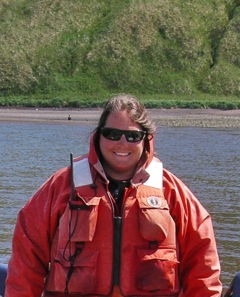
As part of the Sitka WhaleFest Maritime Market this weekend, one of the authors (Lindeberg) will be in Sitka signing copies of the new guide at 2:45 p.m. on Saturday, Nov. 6, at the Old Harbor Books booth at Harrigan Centennial Hall. Lindeberg is a self-proclaimed “nerdy” Juneau biologist who works for the National Oceanic and Atmospheric Administration/National Marine Fisheries Service Auke Bay Laboratory.

Mandy Lindeberg

Mandy Lindeberg

Lindeberg spent nearly 15 years working on the book with the help of Lindstrom, a professor and researcher in botany and marine ecology at the University of British Columbia who was born and raised in Juneau. Lindeberg took about 80 percent of the photos in the book, hoping to come up with enough decent images so scientists and naturalists had more than the sometimes-hard-to-decipher drawings found in most previous books, while Lindstrom helped with the taxonomic work and reviewed the scientific descriptions.

Lindeberg said the new guidebook will help people be able to better identify the types of seaweeds when they are out gathering (Editor’s note, federal and state subsistence laws prohibit the gathering of seaweed in urban nonsubsistence areas such as Juneau/Douglas and Ketchikan/Saxman, but seaweed gathering is legal in rural areas of Alaska including Sitka and most other Southeast Alaska communities, including areas just outside Juneau/Douglas and Ketchikan/Saxman).

Lindeberg said her guidebook will help people identify the various types of seaweeds, but it does not discuss which seaweeds are edible and how to prepare them, so people might want to use it with another Alaska Sea Grant book, “Common Edible Seaweeds in the Gulf of Alaska,” by Dolly Garza. The new “Field Guide to Seaweeds In Alaska” costs $30 and is available at Old Harbor Books or through the Alaska Sea Grant program’s online bookstore.

• Paralytic shellfish poisoning (PSP) warning issued for Southeast Alaska

The enclosed copy is courtesy of the SouthEast Alaska Regional Health Consortium (SEARHC) website.
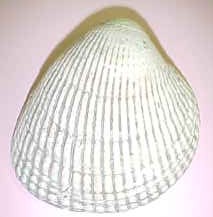
A cockle has deep ridges similar to a Ruffles potato chip (Photo courtesy of Alaska Department of Environmental Conservation)

A cockle has deep ridges similar to a Ruffles potato chip (Photo courtesy of Alaska Department of Environmental Conservation)

This past week has seen five cases of paralytic shellfish poisoning (PSP) in Alaska, including two cases in Southeast Alaska that resulted in the June 17 death of a Juneau woman who ate a cockle and the June 22 death of a Haines man who ate a Dungeness crab. The other three cases were in Kodiak and they resulted in illness from eating butter clams.

The two Southeast deaths, if confirmed by autopsy, will be the first paralytic shellfish poisoning deaths in Alaska since 1997. In 2009 there was just one reported case of PSP in Alaska, and there were no cases of PSP in 2008 and one in 2007. There have been periodic outbreaks of PSP over the years, with the most deadly instance coming when clams and mussels gathered from Peril Straits near Sitka killed more than 100 Russians and Aleuts in 1799.

According to the Alaska Department of Health and Social Services, the 57-year-old Juneau woman reportedly ate cockles she gathered on June 14 from the Point Louisa end of Auke Bay. She died June 17 after being hospitalized at Bartlett Regional Hospital in Juneau. The Alaska Department of Environmental Conservation tested cockles from Auke Bay after the woman was hospitalized and DEC found the Auke Bay cockles had much higher levels of PSP than acceptable (they should not have more than 80 parts per million, and the cockles had 2,044 parts per million).

The 57-year-old Haines man reportedly ate Dungeness crab on June 18 that he caught off Jenkins Rock near the Chilkat Inlet of Lynn Canal. He was hospitalized at Bartlett Regional Hospital on June 18 and released from the hospital on June 21. He died in his Haines home early on June 22. Dungeness crab meat does not contain PSP, but the viscera (guts) can have the toxin, health officials said. People should not eat crab viscera. The Department of Environmental Conservation plans to test crabs from Southeast for PSP.

What is paralytic shellfish poisoning (PSP)?

Paralytic shellfish poisoning, or PSP, is a potentially lethal toxin that can lead to fatal respiratory paralysis, according to the Alaska Department of Environmental Conservation. The toxin comes from algae, which is a food source for clams, mussels, crabs and other shellfish found across Alaska. This toxin can be found in shellfish every month of the year, and butter clams have been known to store the toxin for up to two years. The toxin cannot be seen with the naked eye, and there is no simple test a person can do before they harvest. One of the highest concentrations of PSP in the world was reported in shellfish from Southeast Alaska.
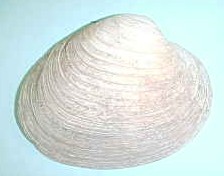
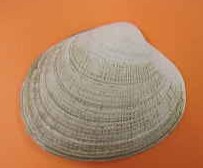
The butter clam has one set of rings that go one direction only, around the same center point (Photo courtesy of Alaska Department of Environmental Conservation)

The butter clam has one set of rings that go one direction only, around the same center point (Photo courtesy of Alaska Department of Environmental Conservation)

Symptoms of PSP can begin almost immediately, or they can take several hours after eating the affected shellfish before they appear. Symptoms include shortness of breath, tingling, dizziness and numbness. If you suspect someone has symptoms of PSP, get that person to a medical facility fast (an Alaska Sea Grant link below has first aid for PSP). Death is rare from PSP, but some people have died after eating just one clam or mussel with the PSP toxin, while in other cases it took eating many clams or mussels to get enough of the poison to cause death.

Are Southeast beaches safe for subsistence or recreational shellfish harvesting?

The Department of Environmental Conservation recommends harvesting of shellfish only from DEC-certified beaches, and the only certified beaches in the state are located in the Cook Inlet and Kachemak Bay areas of Southcentral Alaska. According to DEC, there are no certified beaches in populated areas of Southeast Alaska, Kodiak or the Aleutian Islands. The only beaches DEC can certify as safe for shellfish collecting are those where state-certified testing of clams and mussels is done regularly.

The littleneck clam has two sets of rings that cross each other at 90 degree angles (Photo courtesy of Alaska Department of Environmental Conservation)

The littleneck clam has two sets of rings that cross each other at 90 degree angles (Photo courtesy of Alaska Department of Environmental Conservation)

“Do not eat shellfish from uncertified beaches,” DEC Program Specialist George Scanlan said. “Anyone who eats PSP-contaminated shellfish is at risk for illness or death.”

The DEC warning does not apply to commercially grown and harvested shellfish available in grocery stores and restaurants. Commercially grown and harvested shellfish goes through a regular testing program before it goes to market.

Paralytic shellfish poisoning (PSP) resources

DEC page about paralytic shellfish poisoning (PSP) and how it works, http://www.dec.state.ak.us/eh/fss/seafood/psp/psp.htm

DEC links page with more info about PSP,
http://www.dec.state.ak.us/eh/fss/seafood/psphome.htm

DEC page about identifying butter clams, littleneck clams and cockles (has photos),
http://www.dec.state.ak.us/eh/fss/seafood/psp/shellfish.htm

Current DEC warning about PSP in Alaska (dated June 16, 2010),
http://dec.alaska.gov/press_releases/2010/2010_06_16_psp%20final.pdf

Joint DH&SS/DEC press release about Haines case of PSP (dated June 21, 2010),
http://www.hss.state.ak.us/press/2010/Additional_case_of_PSP_reported_062110.pdf

DH&SS  fact sheet about paralytic shellfish poisoning, http://www.hss.state.ak.us/pdf/201006_shellfish.pdf

Twitter feed for the Alaska Department of Health and Social Services,
http://twitter.com/alaska_DHSS

Alaska Sea Grant page with links about paralytic shellfish poisoning,
http://seagrant.uaf.edu/features/PSP/psp_page.html

Alaska Sea Grant page with first aid for PSP victims (get victim to medical facility fast),
http://seagrant.uaf.edu/features/PSP/PSP_aid.html

Centers of Disease Control and Prevention page on marine toxins (including PSP),
http://www.cdc.gov/nczved/divisions/dfbmd/diseases/marine_toxins/

• Juneau Farmers Market to host weekly booths with Juneau Artists Market

The Juneau Farmers Market will start hosting weekly booths this Saturday as part of the Juneau Artists Market. The Juneau Farmers Market booths will be open from 10 a.m. to noon starting on Saturday, June 12, at the Juneau Arts and Culture Center, and running through the annual Juneau Farmers Market and Local Food Festival on Aug. 28.

A companion event to the Juneau Artists Market, which offers local arts and crafts, the Juneau Farmers Market will feature locally grown produce, cut flowers, homemade jams and jellies and baked goods. Plant starts also are welcome, so don’t toss your thinnings and starts. Instead, share them with another gardener. Juneau Farmers Market booth space is limited, so advance reservation required.

The season culminates in Juneau with the third annual Juneau Farmers Market and Local Food Festival from 9 a.m. to 2 p.m. on Saturday, Aug. 28, at the Juneau Arts and Culture Center. In past years, this was the only farmers market event in Juneau, so it’s nice to see weekly markets this year. Click the link above for more details on this larger annual event, which includes produce, fish, jams and jellies, baked breads and demonstrations about how to harvest and preserve local foods, or click this link for information from the Sustainable Juneau blog.

The Juneau Farmers Market would not be possible without its sponsors and partners: the Juneau Arts and Humanities Council, the Juneau Economic Development Council, the Juneau Commission on Sustainability, the Alaska State Division of Agriculture and the UAF Cooperative Extension Service.

• Juneau hosts Alaska Greenhouse and Nursery Conference on Feb. 25-26

Save the dates: The Alaska Greenhouse and Nursery Conference takes place on Feb. 25-26 in Juneau, with the Southeast Gardening Workshop on Feb. 27. These events should be worth a trip from Sitka to Juneau.

Alaska Greenhouse and Nursery Conference topics will include slugs and snails, low maintenance landscape design, propagating native plants, new varieties for 2010 and more.

As usual, the Polar Grower Trade Show will be available during the conference. All sessions will be at the Alaska Native Brotherhood Hall in Juneau (on Willoughby Ave.). Click here for a registration brochure with more details (link opens PDF file).

The Alaska Greenhouse and Nursery Conference is hosted by the Juneau office of the University of Alaska Fairbanks Cooperative Extension Service, and conference details are available at 796-6221.

In addition to the two-day conference and trade show, there also is the Southeast Gardening Workshop on Feb. 27. For information on the Southeast Gardening Workshop, contact Darren Snyder of the UAF Cooperative Extension Service office in Juneau at 796-6281.

2010 Alaska Greenhouse and Nursery Conference brochure (opens as PDF file)

• The new Sitka Local Foods Network e-newsletter (Jan. 10)

Click here to read the current Sitka Local Foods Network e-newsletter courtesy of Linda Wilson. Don’t forget, you can sign up for the e-newsletter by typing your e-mail address in the “Join Our Mailing List” box on bottom of the left side of the page.

• Two associated with Sitka Local Foods Network win awards at Alaska Health Summit

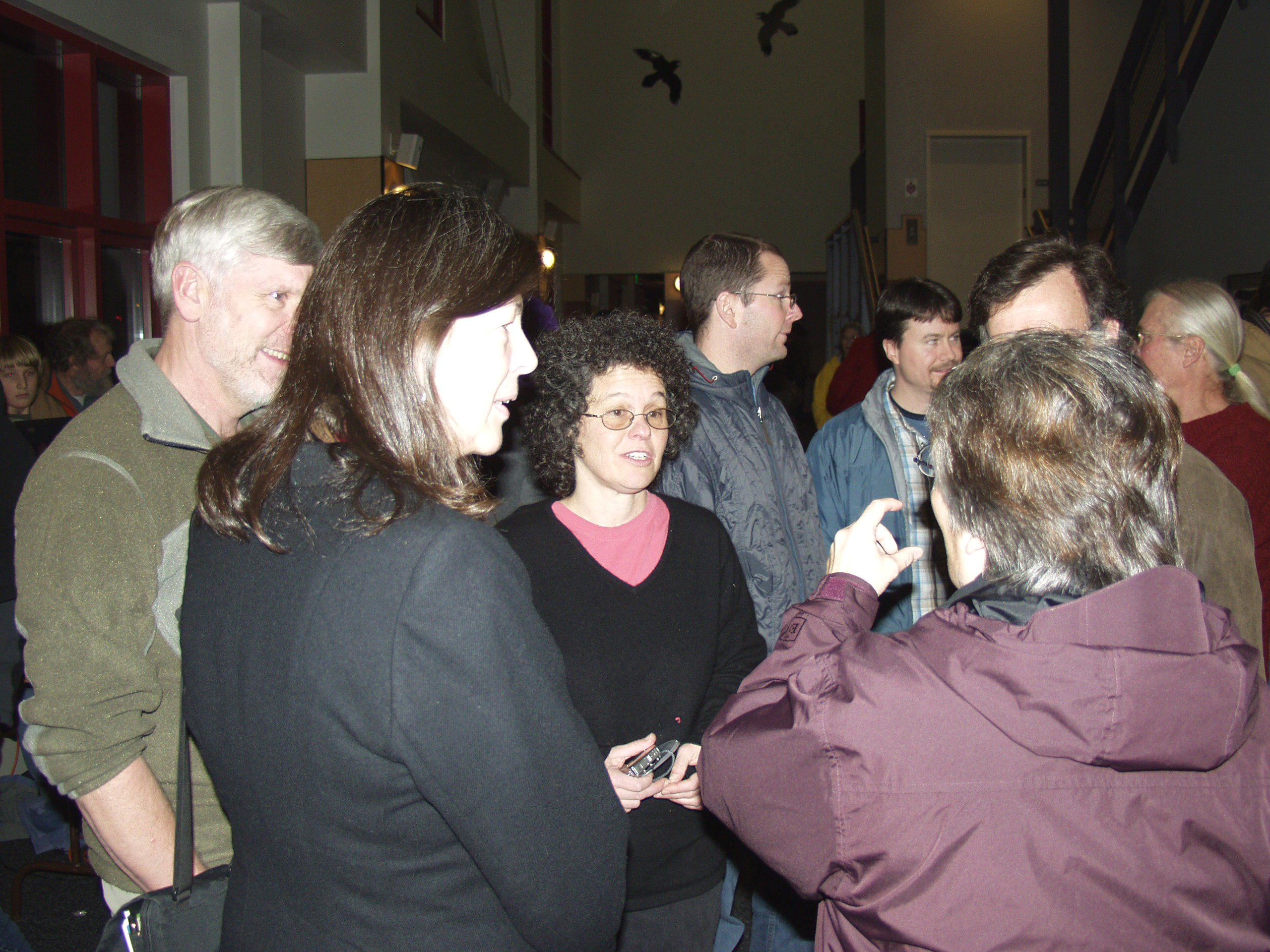
Sitka filmmaker Ellen Frankenstein, center, of Frankenstein Productions, greets fans after the Sitka premiere of her film "Eating Alaska" in October 2008

Sitka filmmaker Ellen Frankenstein, center, of Frankenstein Productions, greets fans after the Sitka premiere of her film "Eating Alaska" in October 2008

The Alaska Public Health Association (ALPHA) honored two programs with ties to the Sitka Local Foods Network during the Alaska Health Summit banquet on Dec. 9. Sitka filmmaker Ellen Frankenstein (and her Frankenstein Productions company) and the SouthEast Alaska Regional Health Consortium (SEARHC) Steps to a Healthier SE Alaska program both won the Alaska Community Service Award. According to ALPHA, the Alaska Community Service Award “recognizes an organization, business or group making a significant contribution to improving the health of Alaskans. It is ALPHA’s intent that nominees outside the public health tradition be considered for this award. A nominee does not need to be an ALPHA member.”

Frankenstein has produced several documentary films over the years, including “Eating Alaska,” which focuses on how we choose the food we eat. Eating Alaska debuted in the fall of 2008, and Frankenstein has taken it to film festivals all over the state and country. “Eating Alaska” received funding support from the SEARHC Steps to a Healthier SE Alaska program and other funders, plus technical support was provided by SEARHC health educators, physicians and dietitians. Some of Frankenstein’s other films include “No Loitering,” “Carved from the Heart,” “A Matter of Respect,” and “Miles from the Border.” She currently is working on a documentary film project with Haida weaver Dolores Churchill.

“As someone who fills in the occupation blank on forms with ‘filmmaker/artist,’ this award represents the fact that labels and lines don’t matter when it comes to social change and to making our lives healthier,” Frankenstein wrote from Austin, Texas, where she was attending a screening of Eating Alaska. “It not only validates my work, but represents your open-mindedness to the potential of working collaboratively and creatively with kids and adults, using art, media and storytelling to influence well-being and healthy communities.”

Frankenstein also sent this note to her e-mail group:

EATING ALASKA: ART AND HEALTH!
We just got the news the project has been awarded The Alaska Public Health Association’s 2009 Community Service Award for Health. In the process of making this film and in its use we’ve worked with nutritionists, health educators, medical and public health practitioners to add to the conversation about what we can do to make our homes, workplaces, schools and communities healthier and more sustainable. We appreciate the help everyone has given to the project to help us “contribute to improving the health of Alaskans” and others far beyond.

The SEARHC Steps to a Healthier SE Alaska program, which closes this month, was honored for the work it did over the life of its five-year grant (the national Steps to a Healthier US grant has ended, so that means all of the local grants that were part of the national grant also are ending). The Steps program funded 77 projects worth just over $1.1 million in 12 Southeast Alaska communities. Steps was one of the major funders and organizers of the Sitka Health Summit, which is where the Sitka Local Foods Network originated.

The Steps program’s goals were to increase opportunities for physical activity, improve nutrition and reduce the impact of tobacco in Southeast Alaska. The program also worked to reduce diabetes, obesity and asthma in Southeast communities. To accomplish its goals, Steps developed partnerships with schools, worksites, tribes and other community groups so they could change social norms and policies, and make evidence-based and culturally relevant interventions. In addition to the projects, Steps also hosted conferences and workshops to help programs learn how to work in collaboration.

The Steps program used the socio-ecological model, which emphasizes that an individual’s health status is influenced not only by his or her attitudes and practices, but also by personal relationships and community and societal factors. Nearly half of the 77 Steps grants (37) went to community projects, with the others geared toward schools and worksites. More than three-quarters of the grants (60) focused on improving nutrition and/or increasing physical activity. Together, the projects reached 128,000 people (with many people reached by multiple projects) in the communities of Angoon, Craig, Haines, Hoonah, Hydaburg, Juneau, Kake, Kasaan, Klawock, Klukwan, Sitka and Wrangell.

“Overall, the Steps initiative helped build capacity within communities, worksites and schools to work collaboratively, to plan evidence-based programs, and to monitor and evaluate program success,” said Grace Brooks, Steps Grant Manager. “Steps also contributed to an overall increased understanding of the importance of policy in supporting community, school and workplace health.”

In other local foods news from around the state this past week, the Alaska Dispatch ran an article about an indoors farmers market this winter at Anchorage’s Northway Mall.

Capital City Weekly featured a story by Carla Petersen about how the search for elusive cranberries is worth the challenge.

The National Oceanic and Atmospheric Administration (NOAA) announced last week that it is encouraging the use of catch shares to preserve the remaining stocks of halibut (the article features a photo from Sitka).

The Anchorage Daily News featured a story about Gov. Sean Parnell proposing to spend $1.3 million to research declining Yukon River salmon runs.

The Juneau Empire had a story about how an arts advocacy group in Juneau, Arts for Kids, has teamed up with Sitka-based Theobroma Chocolate Co. to offer SmART bars as a fundraiser for art scholarships for graduating seniors in Juneau.

The publicity poster for the movie Eating Alaska

• Juneau hosts second annual Juneau Farmers Market and Local Food Festival and other news

The Juneau Commission on Sustainability hosted its second annual Juneau Farmers Market and Local Food Festival on Saturday, and the Juneau Empire had plenty of coverage of Juneau’s only farmers market of the summer. Click here to reach the main story about the farmers market in Sunday’s edition of the Juneau Empire. Click here to read an editorial praising the idea of a farmers market and sustainable food.

In addition to the farmers market stories, the Juneau Empire also ran a feature about a Juneau gardener who is using aeroponics to grow his food. Click here to read the story.

The Fairbanks Daily News-Miner on Sunday ran an article about the Fairbanks Community Cooperative Market, which is an effort to get 1,500 Fairbanks residents to buy $200 memberships in a new store that would emphasize local food and organic food choices (click here to read the story). So far the project has downpayments on about two-thirds of the memberships needed to launch the project.

Finally, this week’s Alaska Journal of Commerce has a feature story about alternative energy guru Bernie Karl, who uses geothermal energy to power 44 buildings over 450 acres at the Chena Hot Springs Resort, including the resort’s large greenhouses that can grow about 150,000 to 175,000 heads of lettuce a year and other crops. Click here to read more about the Chena Hot Springs Resort greenhouses and how they can be a good model for the Sitka Community Greenhouse project.

• SEARHC, Cooperative Extension hosts free garden workshop on Sept. 9

Master gardener Bob Gorman shows off seed starts in wet paper towels during a March garden workshop

Master gardener Bob Gorman shows off seed starts in wet paper towels during a March garden workshop

Do you want to grow some of your own food this summer, so you can have more fresh food choices and eat healthier dinners? Then the fourth and final installment in a continuing series of garden workshops is for you.

The SEARHC Diabetes and Health Promotion programs have teamed up with master gardener Bob Gorman of the Sitka office of the University of Alaska Fairbanks Cooperative Extension Service to offer a series of four free garden workshops during the summer of 2009. The last workshop of the series takes place from 1:30 to 3 p.m. on Wednesday, Sept. 9.

The class will be hosted at the SEARHC Community Health Services Building third-floor conference room in Sitka (1212 Seward Dr.). But participants in other communities will join by video or audioconference from the SEARHC Juneau Administration Building Conference Room, the SEARHC Jessie Norma Jim Health Center in Angoon, the Haines Borough Library, the SEARHC Kake Health Center and the SEARHC Alicia Roberts Medical Center in Klawock.

“Even though summer is winding down, people still have a lot they can do in this year’s growing season,” said Maybelle Filler, SEARHC Diabetes Grant Coordinator. “Southeast Alaska is unique in its growing conditions, and it’s great that the SEARHC Diabetes and Health Promotion programs can partner with the Sitka office of the University of Alaska Fairbanks Cooperative Extension Service to provide information on growing things in our area.”

The first three workshops in the four-workshop series were March 11, May 6 and July 8. The topics for the remaining workshop are:

* Sept. 9 — Late-winter plantings; trees and shrubs; house plants and indoor gardening; and winterizing your garden.

For more information about this series of free workshops, contact SEARHC Diabetes Grant Coordinator Maybelle Filler at 966-8739 or maybelle.filler@searhc.org. People who aren’t able to attend at one of the listed video or audioconferencing sites, should contact Maybelle for other options. Maybelle also has extra copies of the handouts for those who miss any of the garden workshops.