Building a Local Food System: Florence Welsh of Welsh Family Forget Me Not Gardens

IMG_0604 - Version 2

Florence Welsh and her Welsh Family Forget Me Not Gardens occasionally host a booth at the Sitka Farmers Market.

(Editor’s Note: The Sitka Local Foods Network’s Bulldog on Baranof intern this summer, Claire Chang, is writing the Building a Local Food System series of articles about Sitkans working to improve food security. This is the second article of the series.)

FlorenceWelshGoing on a tour of Florence Welsh’s Welsh Family Forget Me Not Garden is a magical experience. Raspberry bushes teem with succulent, red berries. Flowers of many shapes, sizes, and colors draw the eye in all directions. Sea kale yields abundant, hearty leaves, and the squash plants have begun to fruit. A cascade of pink roses hangs over the fence that surrounds fennel and artichoke beds. Rubbing one’s hand through the copious lemon balm or mint is a wonderful, sensory experience. The branches of elegant trees near the border of the garden abound with small, round apples. With a dehydrator, pressure cooker stand, and freezers literally overflowing with frozen berries, her garage indicates that her household makes use of the growing season’s bounty throughout the year

Raised in Weymouth, Mass., Welsh grew up exploring the seashore, swamp, and woods with her large family. She came to Sitka in 1965 and immediately fell in love with the unspoiled nature that she could experience here. For many years, she worked for the Sitka School District as a guidance counselor and as an administrator. During her summers off, she and her family hunted, fished, foraged, and spent lots of time in the garden. Welsh explained that though her family did not have a garden when she was growing up, she has “felt compelled to have at least a little bit of a vegetable garden” wherever she has lived since college.

Florence Welsh with copies of her Sitka gardening book

Florence Welsh with copies of the first edition of her Sitka gardening book

The prolific space that is now Florence Welsh’s garden did not emerge overnight. Her success as a gardener required years of trial and error. Gardening, Welsh explained, “is always place-specific, and the maritime Northwest is rainier and cooler than elsewhere.” Even compared to conditions in Seattle, gardeners in Sitka must adapt to a cooler, wetter climate. As she honed her gardening skills over the years, Welsh developed her place-specific gardening knowledge. For example, she came to understand how to improve soil fertility with seaweed and herring eggs and when to start and transplant various plants.

Forget-Me-Not-Gardens_Page_01Welsh’s desire to share her gardening knowledge inspired her to try to write a book for children and others in the Sitka community. She quickly realized, however, that the highly visual nature of gardening made it difficult for her to share her knowledge in a book. About a year and a half ago, Welsh decided to start a blog, SitkaVores, which allows her to incorporate photographs and format the gardening and foraging information. At sitkavores.blogspot.com, one can read about growing a wide variety of vegetables and flowers here in Sitka, as well as about foraged items like beach asparagus and berries. The blog also includes photos at various stages of the gardening process and recipe ideas. Welsh hopes to continue to add to the blog so she can share as much of her knowledge as she can. “I don’t want people to have to reinvent the wheel when it comes to gardening here,” she says.

SitkaVoresBlogScreenshotAs much as she enjoys working in the garden, what Welsh really loves is “getting out there” and experiencing the surroundings. She fondly remembers her and her family’s many hunting, scuba diving, fishing, and snorkeling adventures. The weather in Sitka, especially in fall and winter, can make it difficult to “get out there”, but Welsh explained that creativity helps people get through the periods spent indoors. In addition to working on her blog, Welsh personally enjoys reading and making artwork, such as drawings on bracket fungus, also called bear bread.
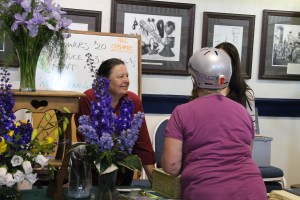
FlorenceWelshNow that she is getting older, Welsh explained that she is in the process of downsizing her garden. She will grow more perennial plants and cultivate fewer beds of vegetables. When her kids lived at home, they both helped out in the garden and ate a lot of the produce. Now, they are all grown, and Welsh “does not have the energy or endurance that she once had.” Still, her years of hard work have most certainly paid off. Not only does Florence Welsh have a beautiful, productive garden, but she has also helped many other gardeners get started her in Sitka. Without her commitment to sharing her hard-earned knowledge, many local gardeners would not have achieved the success that they have.

To learn more about Florence Welsh and the Welsh Family Forget Me Not Gardens, go to http://sitkavores.blogspot.com/.
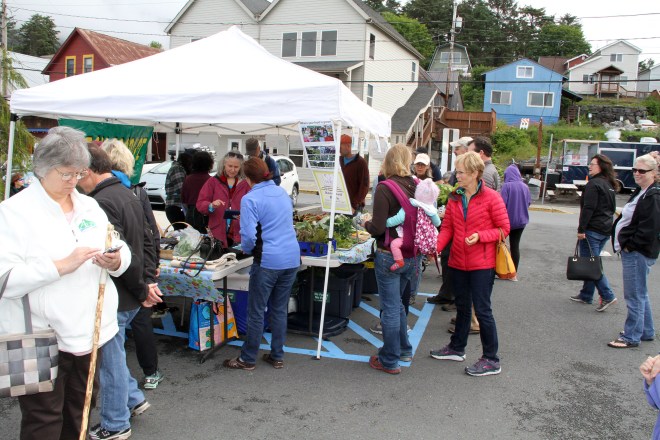
Scenes from the second Sitka Farmers Market of the 2016 summer

HeatherAndAllisGardenAnnaWaneTamieParkerSongHeatherHanson

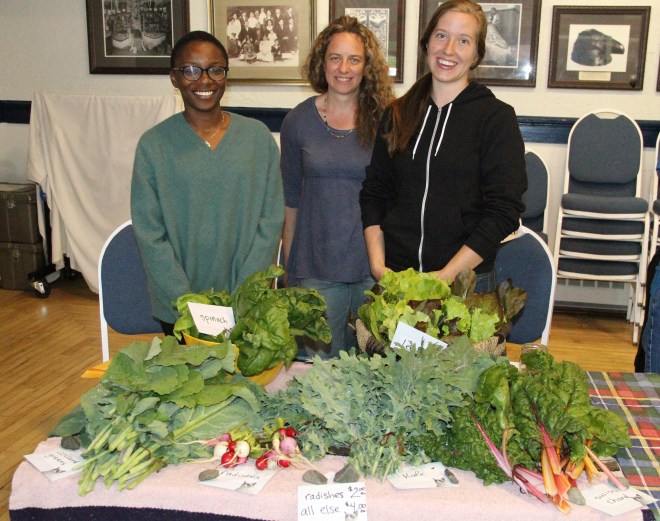
Anna Wane, Tamie Parker-Song and Heather Hanson pose with some of the produce from Heather’s and Alli’s Garden. This was one of the new booths at the market this week.

The wind was blustery, but it didn’t rain when we held the second of the seven Sitka Farmers Markets of the 2016 summer on Saturday, July 16, at the Alaska Native Brotherhood Founders Hall.

MiddleIslandOrganicProduceAndreaFragaKalebAldred

Andrea Fraga and Kaleb Aldred of Middle Island Organic Produce, another of the new booths at the market this week.

We had several new vendors at this market, but not as many customers as usual. We had four booths selling produce, two selling beach greens, another selling homemade bread, another with homemade tamales, and even some frybread.

We always welcome new vendors who want to sell produce they’ve grown, fish they’ve caught, and local cottage food products they’ve made. To learn more about how to be a vendor, contact Matthew Jackson at (907) 821-1412 or jackson.mw08@gmail.com or Brandie Cheatham at (907) 687-9927 or vista_brandie@yahoo.com.

SitkaSpruceCateringJerenSchmidtDishesUpHomemadeTamaleWithCrystal

Jeren Schmidt of Sitka Spruce Catering dishes up a homemade tamale for a customer.

The next Sitka Farmers Market will be from 10 a.m. to 1 p.m. on Saturday, July 30, at the ANB Founders Hall. The other markets this summer are on Saturdays, Aug. 13, Aug. 20, Sept. 3, and Sept. 10. The Sitka Farmers Markets receive sponsorship funding from the SouthEast Alaska Regional Health Consortium (SEARHC). Don’t forget to vote for the Sitka Farmers Market in the American Farmland Trust’s eighth annual Farmers Market Celebration.

A slideshow of scenes from the second Sitka Farmers Market of the 2016 summer is below.

This slideshow requires JavaScript.

Building a Local Food System: Keith Nyitray of Finn Island Farm and the Sitka Food Co-Op

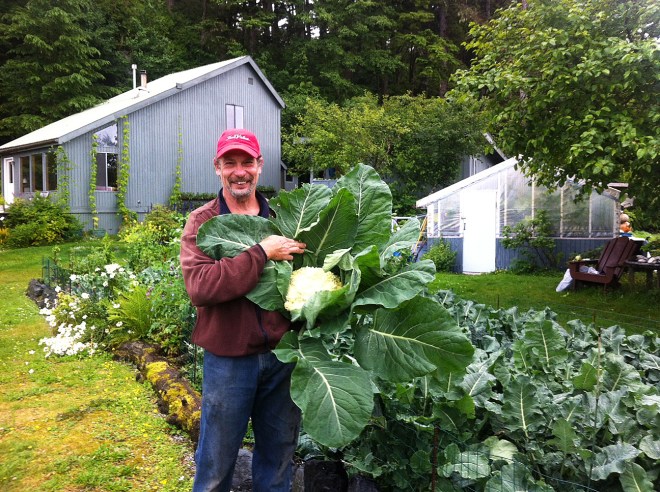
KeithNyitrayWithCabbage

(Editor’s Note: The Sitka Local Foods Network’s Bulldog on Baranof intern this summer, Claire Chang, is writing the Building a Local Food System series of articles about Sitkans working to improve food security. This is the first article of the series.)

As owner of Finn Island Farm and general manager of the Sitka Food Co-Op, Keith Nyitray is committed to improving access to quality, affordable food on a local level.

DSCN0863Born in the Bronx and raised on Long Island, Nyitray arrived in Alaska after college in 1979 to pursue mountaineering. He has had his fair share of rugged adventures, including a 10-month, 1,500 mile solo expedition across the Arctic Brooks Range that he wrote about for National Geographic in 1993. When he arrived in Sitka for the first time 17 years ago, the town’s “wonderful community” inspired him to stay.

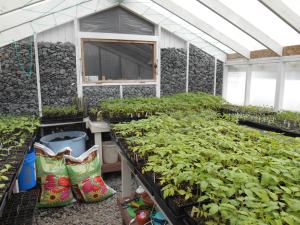
Nyitray says he learned to garden “at his grandfather’s knees.” He operates his farm and lives on Finn Island, located three miles from Sitka in the Kasiana Islands. On about 2,000 square feet of garden space, he produces plant starts and vegetables, and he also maintains a greenhouse and raises chickens.

Compared to other gardens in Sitka, one of the biggest advantages of the farm’s location on an island is what Nyitray calls the “270 degrees of sun” his garden receives. Annually, he sells 5,000 to 6,000 plant starts to True Value, to private individuals, and through the Sitka Food Co-Op. He sells most of his mature vegetables — such as green beans, zucchini, lettuce, beets, broccoli, English cucumbers, and peppers — through private trades and through the co-op.

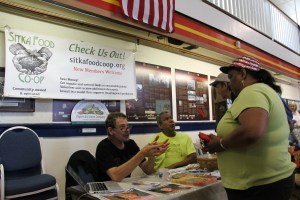
KeithNyitrayRobertBainesExplainSitkaFoodCoOpNyitray helped establish the Sitka Food Co-Op in 2011 to help meet the needs of the community. “A lot of people were struggling financially at the time,” Nyitray said, “and food prices were going up and down.”

According to Nyitray, the co-op provides Sitkans access to organic, healthy food at lower prices than local markets. Co-op members make purchases through food distributors online, and the bulk orders are shipped to Sitka as freight on barges. Organic apples purchased through the co-op, for example, cost half as much as organic apples at the grocery stores in Sitka. In addition, the co-op provides individuals with unique dietary needs, especially families with children who have allergies, with access to a wider variety of foods than local markets.

What started as a cooperative of 13 families now has more than 220 members, and sales are projected to exceed $260,000 this year. Nyitray explained that the “slow growth approach” has allowed the organization to keep membership fees at affordable levels while including as many community members as possible.

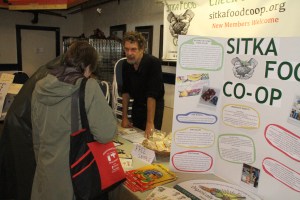
SitkaFoodCoOpKeithNyitrayMany co-ops, often in big cities or areas with large universities nearby, raise significant capital to open a retail storefront before going into operation. In contrast, the Sitka Food Co-Op does not yet have a retail store, and Nyitray describes the Sitka co-op as a “hybrid between a non-profit buyers club and a for-profit co-op.” This model, which prioritizes the co-op’s connection with the community, is consistent with Nyitray’s belief in “food for people, not for profit.”

The success of the Sitka Food Co-Op has even inspired other rural Alaskan communities, such as Petersburg and Kodiak, to ask Nyitray about starting their own co-ops. Nyitray is excited about supporting these new co-ops, as one of the “seven cooperative principles,” a set of ideals for the operation of cooperatives, is “cooperation between cooperatives.”

Nyitray describes his roles on Finn Island Farm and with the Sitka Food Co-Op as “the most rewarding jobs or positions he has ever had.” He views his work as an embodiment of the saying, “think globally, act locally.” In working toward food security in Sitka, Nyitray has been able to see “definite, positive, immediate results.”

IMG_9866For instance, Nyitray says the competition from the co-op has already led some local grocery stores to reduce some of their prices. Having previously been involved in politics, he finds these results especially gratifying. “In politics, the work was very challenging, but not always very rewarding. You could work really hard, but rarely see results.”

He also enjoys the relationships with community members that he forms through his work. “When people purchase stuff from you they are actually saying thank you,” he explains. “They appreciate the service and the quality of food and the savings. It’s very social. I know everyone by name.”

In the future, Nyitray hopes the Sitka Food Co-Op will be able to include even more members and eventually open a retail store. A retail store helps reach more people in the community who are not members of the co-op and allows shoppers to use food stamps and other forms of food assistance as payment. As he works to serve community, Nyitray will continue to enjoy some of the smaller perks of his job. “I like the organic oranges that I get,” he says, “because I like the juice.”

To learn more about Finn Island Farm, contact Keith Nyitray at knyitray@yahoo.com. To learn more about the Sitka Food Co-Op, contact Nyitray at sitkafoodcoop@gmail.com, or visit the co-op website at http://sitkafoodcoop.org.

Scenes from the first Sitka Farmers Market of the 2016 summer

SLFNBoothCrowdInFrontOfBooth

SitkaFarmersMarketSignAfter raining the night before, we ended up with some sun when we held the first of the seven Sitka Farmers Markets of the 2016 summer on Saturday, July 2, at the Alaska Native Brotherhood Founders Hall.

The market was a bit smaller than usual, partially because of competition with the Fourth of July booths at Baranof Elementary School and because of our attempts to refocus the market to put more of an emphasis on local food. We did have some new vendors at the market, and there were a couple of discussions from potential vendors asking about space at the next market.

JessicaGillMarcosMunchiesDogTreats

Jessica Gill was one of our new vendors this market with Marco’s Munchies dog treats.

We always welcome new vendors who want to sell produce they’ve grown, fish they’ve caught, and local cottage food products they’ve made. To learn more about how to be a vendor, contact Matthew Jackson at (907) 821-1412 or jackson.mw08@gmail.com or Brandie Cheatham at (907) 687-9927 or vista_brandie@yahoo.com.

The next Sitka Farmers Market will be from 10 a.m. to 1 p.m. on Saturday, July 16, at the ANB Founders Hall. The other markets this summer are on Saturdays, July 30, Aug. 13, Aug. 20, Sept. 3, and Sept. 10. The Sitka Farmers Markets receive sponsorship funding from the SouthEast Alaska Regional Health Consortium (SEARHC). Don’t forget to vote for the Sitka Farmers Market in the American Farmland Trust’s eighth annual Farmers Market Celebration.

A slideshow of scenes from the first Sitka Farmers Market of the 2016 summer is below.

This slideshow requires JavaScript.

Sitka Local Foods Network to host seven Sitka Farmers Markets this summer


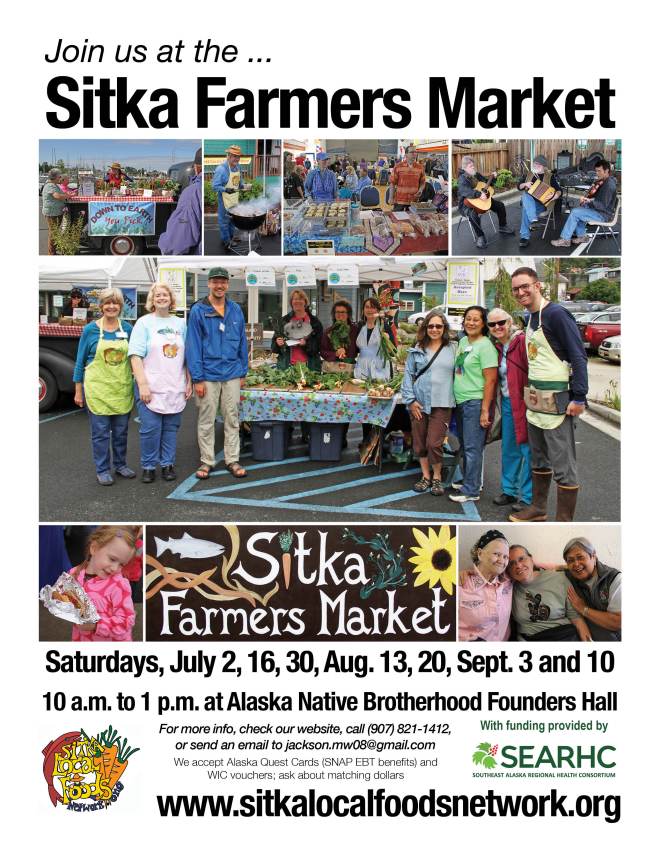
2016SitkaFarmersMarketFlier2

Sitka residents might notice a few changes when the Sitka Local Foods Network opens its ninth season of Sitka Farmers Markets this Saturday. For one, there will be more markets — seven instead of the six markets hosted in recent years. Another change is a more compact market, with a revised vendor price structure and fewer special programs that put the emphasis back on local foods.

SLFNBoothAlliGabbertHelpsGuyBuyingLocalIngredientsForHalibutChowder“The Sitka Farmers Market is a community gathering as much as it is a market,” said Matthew Jackson, newly installed president of the Sitka Local Foods Network and co-manager of the Sitka Farmers Market this year with Brandie Cheatham. “It’s a great way to connect with your neighbors and support local entrepreneurs. In Alaska we know all about the leaky bucket effect, so shopping at the Sitka Farmers Market is a way to keep money circulating in our community.”

The first Sitka Farmers Market of the season takes place from 10 a.m. to 1 p.m. on Saturday, July 2, at the Alaska Native Brotherhood Founders Hall (235 Katlian St.). The other markets this summer take place from 10 a.m. to 1 p.m. on Saturdays, July 16, July 30, Aug. 13, Aug. 20, Sept. 3, and Sept. 10, at ANB Founders Hall.

SLFNBoothLauraSchmidtAndDaughterWithPotatoesThe markets feature a variety of locally grown produce, locally harvested seafood, locally manufactured cottage foods, locally made arts and crafts, music and fun. The Sitka Farmers Market was the first market in Southeast Alaska to accept Alaska Quest (SNAP) electronic benefits transfers (EBT) and WIC coupons.

“For the last four seasons we’ve been proud to welcome Alaska Quest EBT and WIC shoppers at the market,” Jackson said. “It is so important to make sure local food is accessible to everyone.”

SLFNBoothLisaSadleirHartHelpsCustomersThe second Sitka Health Summit in April 2008 planted the seeds for the Sitka Farmers Market, as Sitka residents chose starting a local foods market as one of their community wellness initiatives for the year. About the same time, St. Peter’s By The Sea Episcopal Church was looking for a way to put some recently cleared land behind the church’s See House into use for a community project. St. Peter’s offered to lease the land to the group that became the Sitka Local Foods Network for $1 a year, and in May 2008 a group of Sitka residents built raised garden beds and planted a variety of crops. Later that summer, there was enough produce grown at St. Peter’s to supply our first three Sitka Farmers Markets starting in August 2008.

2016SitkaFarmersMarketSponsorsWe grew to five markets in 2009, followed by six markets each year from 2010-15 and now seven markets in 2016. Led by lead gardener Laura Schmidt, the production of local produce at St. Peter’s has grown each year, and there now are satellite gardens, such as the one on land owned by Pat Arvin. Most of the food grown at St. Peter’s and the satellite gardens is sold at the Sitka Farmers Market, but there has been enough for the Sitka Local Foods Network to also have a table when Chelan Produce is in town and to sell to local school lunch programs and restaurants. The money raised helps support the Sitka Local Foods Network, a 501(c)(3) nonprofit, in its mission “to increase the amount of locally produced and harvested food in the diets of Southeast Alaskans.”

To learn more about the Sitka Farmers Market and how you can become a vendor, contact Matthew Jackson at (907) 821-1412 or jackson.mw08@gmail.com. The Sitka Local Foods Network website, http://www.sitkalocalfoodsnetwork.org/, also has more info on the markets and links to vendor forms. The Sitka Farmers Market is sponsored by the SouthEast Alaska Regional Health Consortium (SEARHC).

Fifth-grade students start their own garden at Keet Gooshi Heen Elementary School

IMG_7248

Five fifth-grade boys are growing a variety of crops this year after starting their own garden at Keet Gooshi Heen Elementary School.

The five boys who started the garden — Kyan Scudero, Bridger Bird, Takeshi Handy, Samuel Jones, and Camden Young — were assisted by their classmates, teacher Jennifer Tulloh said. They will be in sixth grade at Blatchley Middle School this fall.

The boys let student-teacher Julie Jordan know they wanted to start a garden and, with Tulloh’s blessing, Jordan contacted Sitka Local Foods Network board member Jennifer Carter for technical assistance. Jordan designed the garden beds, and her husband, Karl Jordan, had the students in his Blatchley Middle School shop class build the raised garden beds.

“You know, this started as a project for my kids that weren’t interested in band but my whole class got involved in the project,” Tulloh said. “The boys got really into the planting and enjoyed meeting with Jennifer (Carter), who was so giving of her time and resources. They started and followed the garden from beginning to end and took great pride in it.”

“The young men wanted to start a vegetable garden for their school and leave it as a parting legacy before they moved on to middle school,” Carter said. “They learned how to prepare the soil, measure for proper spacing and start their own seedlings. They have planted rhubarb, strawberries, potatoes, peas, lettuce, carrots, kale, onions, and radishes.”

A slideshow of photos of the boys and their garden (taken by Jennifer Carter) can be found below.

This slideshow requires JavaScript.

Second batch of classes set for 2016 Sitka Local Foods Network garden mentor program

DSCN0338

DSCN0387The second batch of classes (Classes Three and Four) for the 2016 Sitka Local Foods Network garden mentor program are being set for our two participating first-year families and our three returning second-year families. The classes will be similar at each location, and they are open to the public.

Class Three is about garden maintenance, while Class Four is about early harvest. Class One focused on site selection, garden preparation, building planter beds, simple vegetables and soil preparation, while Class Two was about simple vegetables and planting. There are six classes in the series, with Class Five about the final harvest and Class Six about preparing the garden for winter.

Our first-year gardener families (Erin Mathes and Fran Baratki), learn how to grow four hardy crops for Sitka — kale, lettuce, potatoes and rhubarb. Our three returning families (A.J. Bastian, Rebecca Kubacki and Breezy) will be planting carrots, chard, green onions and peas this year. These four crops are slightly more difficult crops to grow that our first-year plantings of kale, lettuce, potatoes and rhubarb. Even though the crops for our second-year students are more difficult to grow, many gardeners in Sitka still have good results with these vegetables. These classes are essentially the same, so feel free to attend the Class 3 or Class 4 that best fits your schedule.

The class schedule and location for the one first-year and three second-year families is (some classes still need to be scheduled and will be announced later):


  • ERIN MATTHES (first-year family), 716 Etolin Street — CLASS 3: 3:30 p.m. on Thursday, June 2; CLASS 2: 3:30 p.m. on Tuesday, June 21.
  • FRAN BARATKI (first-year family), 180 Price Street, No. 6 (purple trailer) — CLASS 3:  7 p.m. on Tuesday, May 31; CLASS 4: TBA.
  • A.J. BASTIAN (second-year family), 207 Brady St. — CLASS 3: TBA; CLASS 4: TBA.
  • REBECCA KUBACKI (second-year family), 1202 Halibut Point Rd. — CLASS 3: 4:30 p.m. on Wednesday, June 1; CLASS 4: 4:30 p.m. on Wednesday, June 22.
  • BREEZY (second-year family), 616 Sawmill Creek Rd. — CLASS 3: 5 p.m. on Monday, June 6; CLASS 4: 5 p.m. on Monday, June 27.

This is the third year of the garden mentor program, which provides one-to-one mentoring to families who are trying to garden for the first time. In order to reach more people, our participating families allow the classes to be made public. By teaching families the basics of gardening, we are helping them improve their family nutrition, extend their family food budget, and increase food security in Sitka.

Michelle Putz has been contracted to coordinate the program and design lesson plans. We also have about a half-dozen experienced Sitka gardeners who serve as mentors for the program. For more information, please contact Michelle at 747-2708.

St. Peter’s Fellowship Farm communal garden work party takes place on Saturday, May 7

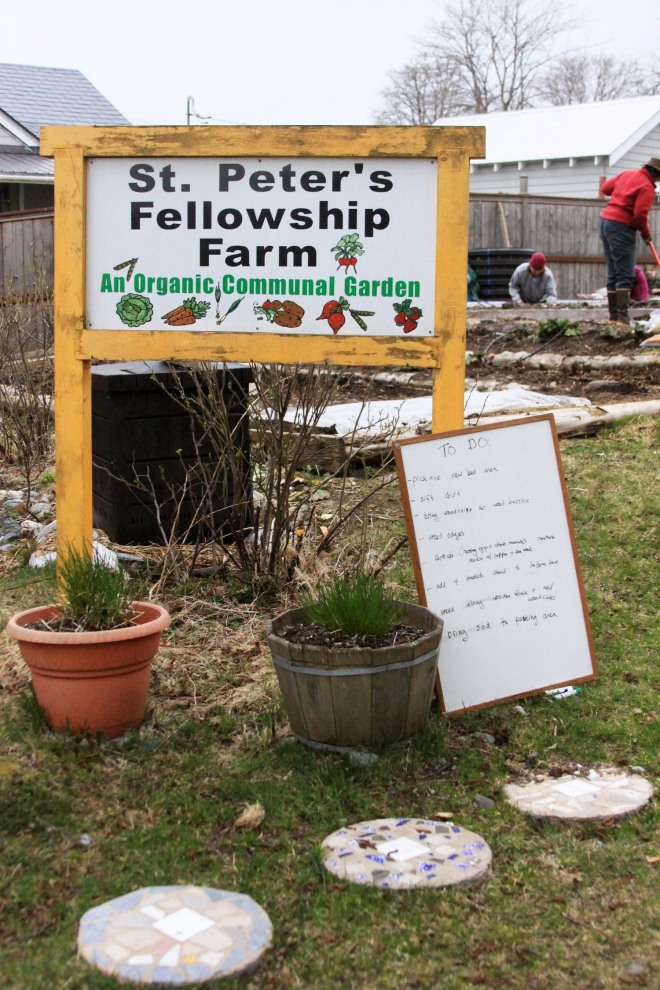
A to-do list of chores at the St. Peter's Fellowship Farm communal garden

A to-do list of chores at the St. Peter’s Fellowship Farm communal garden

A group of kids harvests garlic during an Aug. 12, 2011, work party at St. Peter's Fellowship Farm.

A group of kids harvests garlic during an Aug. 12, 2011, work party at St. Peter’s Fellowship Farm.

Are you interested in meeting other Sitka gardeners and learning about how to grow food in Sitka’s rainy climate? Then join us for a garden party from 2-4 p.m. on Saturday, May 7, at St. Peter’s Fellowship Farm.

St. Peter’s Fellowship Farm is located behind St. Peter’s By The Sea Episcopal Church, 611 Lincoln Street (the brown church with the steeple above Crescent Harbor). It is a communal garden that grows food to be sold at the Sitka Farmers Markets, at a table when Chelan Produce is in town, and used for various school lunch and hunger programs around town. This year’s Sitka Farmers Markets are from 10 a.m. to 1 p.m. on Saturdays, July 2, July 16, July 30, Aug. 13, Aug. 20, Sept. 3, and Sept. 10, at the Alaska Native Brotherhood Founders Hall (235 Katlian St.).

“We will be putting starts in the ground, weeding and prepping beds for planting,” St. Peter’s Fellowship Farm lead gardener Laura Schmidt said.

The garden work parties are kid-friendly, so feel free to bring the munchkins to help.

To learn more, call St. Peter’s Fellowship Farm lead gardener Laura Schmidt at 738-7009 or 623-7003.

First two classes set for 2016 Sitka Local Foods Network garden mentor program

DSCN0398

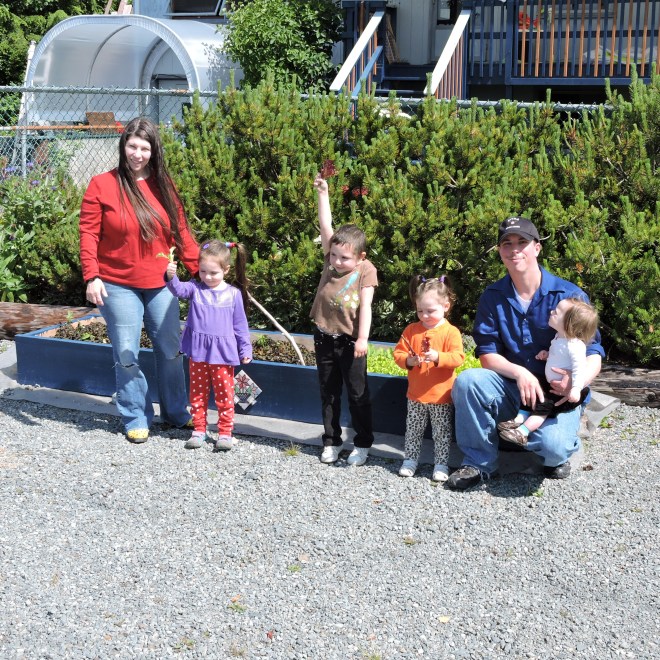
Rebecca Kubacki and her family after planting their garden bed in 2015.

DSCN0250

Breezy and her family after planting their garden bed in 2015.

The first two classes for the 2016 Sitka Local Foods Network garden mentor program have been set for our two participating first-year families and our three returning second-year families. The classes will be similar at each location, and they are open to the public. (Note: This post has been updated with our second first-year family and a new time on one of the other classes.)

For our first-year families, the first class will focus on site selection, garden preparation, building planter beds, simple vegetables and soil preparation. The second class will be about simple vegetables and planting. Our first-year gardener families (Erin Mathes and Fran Baratki), learn how to grow four hardy crops for Sitka — kale, lettuce, potatoes and rhubarb.

Our three returning families (A.J. Bastian, Rebecca Kubacki and Breezy) will be planting carrots, chard, green onions and peas this year.These four crops are slightly more difficult crops to grow that our first-year plantings of kale, lettuce, potatoes and rhubarb. Even though the crops for our second-year students are more difficult to grow, many gardeners in Sitka still have good results with these vegetables. These classes are essentially the same, so feel free to attend the Class 1 and Class 2 that best fits your schedule.

The class schedule and location for the one first-year and three second-year families is:

  • Erin Matthes (first-year family), 716 Etolin Street — CLASS 1: 3 p.m. on Wednesday, April 27; CLASS 2: 3 p.m. on Monday, May 9.
  • Fran Baratki (first-year family), 180 Price Street, No. 6 (purple trailer) — CLASS 1:  Done; CLASS 2: 4:30 p.m. on Monday, May 9.
  • A.J. Bastian, 207 Brady St. — CLASS 1: Done; CLASS 2: 3:30 p.m. on Thursday, April 28.
  • Rebecca Kubacki, 1202 Halibut Point Rd. — CLASS 1: Done; CLASS 2: 5:30 p.m. on Monday, May 2.
  • Breezy, 616 Sawmill Creek Rd. — CLASS 1: 5 p.m. on Thursday, April 28; CLASS 2: 5 p.m. on Thursday, May 5.

This is the third year of the garden mentor program, which provides one-to-one mentoring to families who are trying to garden for the first time. In order to reach more people, our participating families allow the classes to be made public. By teaching families the basics of gardening, we are helping them improve their family nutrition, extend their family food budget, and increase food security in Sitka.

Michelle Putz has been contracted to coordinate the program and design lesson plans. We also have about a half-dozen experienced Sitka gardeners who serve as mentors for the program. For more information, please contact Michelle at 747-2708.

Sitka Local Foods Network seeks two coordinators for our garden mentoring education program

KubackiFamilyVertical
IMG_0004The Sitka Local Foods Network is looking to contract with two Sitka residents to coordinate our garden mentoring education program. This year we’re splitting up the duties, so one of the coordinators will work with our returning families and the other will work with our new families (and be paid slightly more).

These contracts run from spring through fall 2016, and the coordinators will be in charge of developing curricula, teaching classes, obtaining supplies, and providing evaluation of the program. A full list of job duties and expectations can be found in the linked document at the bottom of this article.

Applicants should have at least 3-5 years of varied vegetable gardening experience, preferably in Southeast Alaska. They also should have 3-5 years of project coordination experience, as well as demonstrated communication, organizational, and teaching/mentoring skills.

100_8734BastianKidsThe garden mentoring project began in 2014 when two families of first-time gardeners were chosen to receive help planning and building a simple garden to grow four relatively easy plants for Sitka (kale, rhubarb, potatoes, lettuce). In 2015, the program was expanded to provide mentoring service to four new first-time gardening families, plus the two families from 2014 will receive a second year of mentoring as they learn to grow plants that are a bit more difficult for Sitka (carrots, peas, chard, green onions).

There are six classes with each family, and they usually are open to the public. In 2016, we expect three returning families and three new families (one of our first-year families from last year asked to repeat as a first-year family this year).

Applicants should submit a letter of interest and resume by 5 p.m. on Friday, April 8, to sitkalocalfoodsnetwork@gmail.com. Please put “Garden Mentor Coordinator” in your email subject line. The contracts pay in three installments over the summer. Questions about the contracts can be directed to sitkalocalfoodsnetwork@gmail.com.

• 2016 SLFN garden mentoring coordinator contract information