• Sitka Local Foods Network to host six Sitka Farmers Markets in 2014

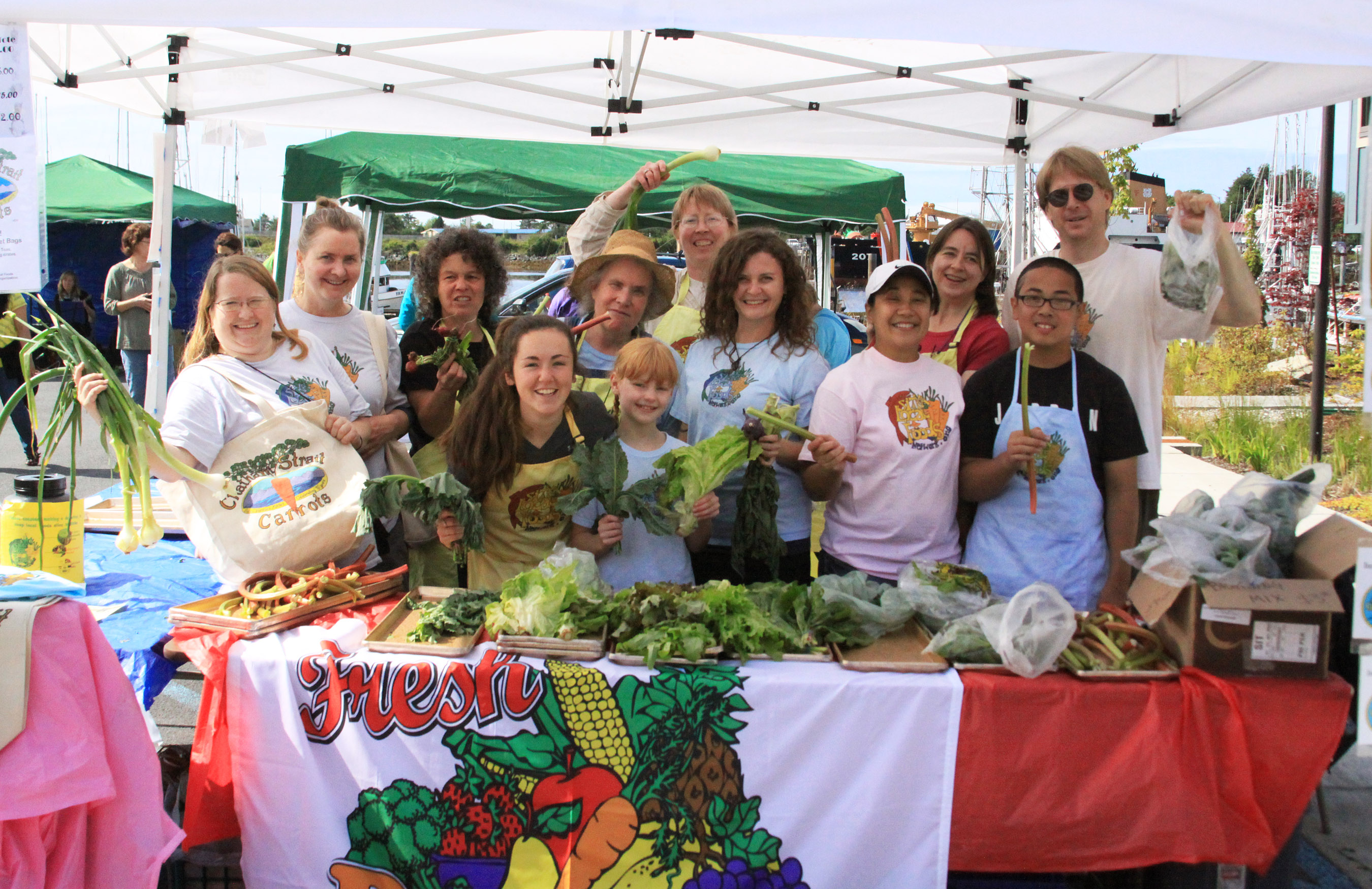
The Sitka Local Foods Network will host its seventh summer of Sitka Farmers Markets this year. The first of the six markets is from 10 a.m. to 1 p.m. on Saturday, June 28, at Alaska Native Brotherhood Founders Hall (235 Katlian St.), with the other markets on July 12, July 26, Aug. 9, Aug. 23, and Sept. 6. From left are Sitka Local Foods Network board members Charles Bingham, Maybelle Filler and Michelle Putz, Sitka Farmers Market co-managers Ellexis Howey and Debe Brincefield, vendors Linda Wilson and Pat Hanson, and helper D.J. Brincefield. (Daily Sitka Sentinel Photo by James Poulson).

The Sitka Local Foods Network will host its seventh summer of Sitka Farmers Markets this year. The first of the six markets is from 10 a.m. to 1 p.m. on Saturday, June 28, at Alaska Native Brotherhood Founders Hall (235 Katlian St.), with the other markets on July 12, July 26, Aug. 9, Aug. 23, and Sept. 6. From left are Sitka Local Foods Network board members Charles Bingham, Maybelle Filler and Michelle Putz, Sitka Farmers Market co-managers Ellexis Howey and Debe Brincefield, vendors Linda Wilson and Pat Hanson, and helper D.J. Brincefield. (Daily Sitka Sentinel Photo by James Poulson).

SitkaFarmersMarketSignThe Sitka Local Foods Network will host its seventh summer of Sitka Farmers Markets with six markets this year starting on June 28 and taking place on alternate Saturdays through Sept. 6. The Sitka Farmers Markets give Sitka residents a chance to buy and sell locally produced food and crafts.

The Sitka Farmers Markets take place from 10 a.m. to 1 p.m. on Saturday, June 28, July 12, July 26, Aug. 9, Aug. 23, and Sept. 6 at the Alaska Native Brotherhood Founders Hall (235 Katlian St.). The markets feature local seafood (fresh, frozen, and cooked, ready to eat), locally grown and harvested fruits and vegetables, baked goods, locally made jams and jellies, live entertainment and music, local arts and crafts, and a variety of other items gathered or made in Sitka. We emphasize local products and lots of fun. We were the first farmers market in Southeast Alaska to accept WIC coupons and Alaska Quest EBT for SNAP (food stamp) users. We also plan scheduled transportation from Sitka Tours for the last five markets (details coming soon), and don’t forget to support the Sitka Farmers Market in the I Love My Farmers Market Celebration (click logo) at http://www.sitkalocalfoodsnetwork.org/.

“The Sitka Farmers Market is a great way to connect with community members and support local entrepreneurs,” Sitka Local Foods Network Board President Lisa Sadleir-Hart said. “Circulating your dollars locally also has a multiplying effect and helps your neighbors.”

2014 Quest Flyer SitkaThe Sitka Farmers Market started as a community wellness project that came out of a health priority planning meeting at the 2008 Sitka Health Summit. The markets are sponsored by the Sitka Local Foods Network, Alaska Native Brotherhood Camp No. 1, Alaska Native Sisterhood Camp No. 4, Baranof Island Housing Authority, the Alaska Farmers Market Association, the Alaska Division of Public Health Cancer Control Program, and the SEARHC Health Promotion and Diabetes Prevention programs.

“We are excited to have Ellexis Howey and Debe Brincefield working as a team as our new market co-managers,” Sadleir-Hart said. “Ellexis and Debe bring loads of enthusiasm and some new ideas to the market, and they are focused on creating a sustainable market that can be in Sitka for the duration. As always, the market will be a place to support the growing local food movement in Sitka and learn more about how to eat more sustainably.”

Vendor fees are $30 for a 6-foot table, $40 for an 8-foot table and $20 for a 4-foot table. Vendors with their own tents pay $5 per foot. As always, we offer cost incentives for vendors growing locally produced food. The fees will help us cover the costs of renting ANB Founders Hall and its kitchen, hiring musicians and other expenses. To learn more about being a vendor or to sign up for a table, contact Sitka Farmers Market Co-Managers, Ellexis Howey and Debe Brincefield at 738-8683 or by e-mail sitkafarmersmarket@gmail.com. Vendor rules, registration forms and other info for potential vendors can be found on the Documents page at http://www.sitkalocalfoodsnetwork.org/.

• It’s time to … get out into the garden and pick your rhubarb

Rhubarb

Your Sitka Local Foods Network reminds you it’s time to get out in the garden and, finally, plant your garden. Perry Edwards will host a short on-the-ground rhubarb workshop at 9 a.m. on Saturday, June 7, at 131 Shelikof Way.

Rhubarb is an easy-to-grow, productive, and healthy “fruit” that grows great in Sitka. At this workshop, you will learn the right way to pick your rhubarb so it stays productive all spring and summer long.  We’ll also discuss how to plant, fertilize, and eat your rhubarb. And through a drawing, two lucky participants will go home with enough rhubarb to make a simple, delicious rhubarb sauce. Anyone may attend, but parking space is limited, so those interested in participating are asked to please consider walking, bike riding or carpooling.

The Sitka Local Foods Network is hosting a series of “It’s time to …” workshops this spring and summer designed to help local residents learn about various aspects of vegetable gardening and fruit growing. Many of these classes will be informal get-togethers at various gardens around town. Please watch our website, Facebook page, Facebook group, and local news media for information about upcoming classes. If you have an “It’s time to …” workshop you’d like to teach, contact Michelle Putz at 747-2708.

We are still looking to expand our network of local volunteers who can teach classes (formal and informal) this year about growing food, so please attend if you’re interested. If you can’t attend, please email Charles Bingham at charleswbingham3@gmail.com with info about what topics you can teach, your gardening experience, and contact information so we can add you to our database of instructors.

It’s time to … get outside and finally plant your garden

Plots at various stages of planting at Blatchley Community Garden

Plots at various stages of planting at Blatchley Community Garden

Your Sitka Local Foods Network reminds you it’s time to get out in the garden and, finally, plant your garden. Michelle Putz, Perry Edwards, and master gardener Jackie Barmoy will host a free discussion and hands-on planting lesson at 9 a.m. on Saturday, May 10, at 131 Shelikof Way.

Learn about planting some of Sitka’s easiest-to-grow vegetables, including carrots and cabbage, and lettuce and parsnips. Anyone may attend, but parking space is limited, so those interested in participating are asked to please consider walking, bike riding or carpooling.

The Sitka Local Foods Network is hosting a series of “It’s time to …” workshops this spring and summer designed to help local residents learn about various aspects of vegetable gardening and fruit growing. Many of these classes will be informal get-togethers at various gardens around town. Please watch our websiteFacebook pageFacebook group, and local news media for information about upcoming classes. If you have an “It’s time to …” workshop you’d like to teach, contact Michelle Putz at 747-2708.

We are still looking to expand our network of local volunteers who can teach classes (formal and informal) this year about growing food, so please attend if you’re interested. If you can’t attend, please email Charles Bingham at charleswbingham3@gmail.com with info about what topics you can teach, your gardening experience, and contact information so we can add you to our database of instructors.

• It’s time to … plant your broccoli, cauliflower and other brassicas class on May 7

Broccoli growing in the garden

Broccoli growing in the garden

The Sitka Local Foods Network reminds you that it’s time to plant your broccoli, cauliflower and other brassicas.

Linda Wilson will present a short workshop on planting brassicas at 4 p.m. on Wednesday, May 7, at 3509 Halibut Point Road. Broccoli, cauliflower and other brassicas are good for stir fries and other meals, and they’re fun to grow. Parking space is limited, so please consider walking, riding your bike, taking the bus or carpooling. More information is available by calling Linda at 747-3096 (nights, weekends) or by emailing her at lawilson87@hotmail.com.

The Sitka Local Foods Network is hosting a series of “It’s time to …” workshops this spring and summer designed to help local residents learn about various aspects of vegetable gardening and fruit growing. Many of these classes will be informal get-togethers at various gardens around town. Please watch our websiteFacebook pageFacebook group, and local news media for information about upcoming classes. If you have an “It’s time to …” workshop you’d like to teach, contact Michelle Putz at 747-2708.

In addition, don’t forget the Sitka Local Foods Network education committee will meet from 5:30-7 p.m. on Monday, May 5, at Harrigan Centennial Hall to discuss future workshops and classes for the rest of the spring and summer.

We are still looking to expand our network of local volunteers who can teach classes (formal and informal) this year about growing food, so please attend if you’re interested. If you can’t attend, please email Charles Bingham at charleswbingham3@gmail.com with info about what topics you can teach, your gardening experience, and contact information so we can add you to our database of instructors.

• As you build your garden this spring, don’t forget to Plant A Row For The Hungry

(EDITOR’S NOTE: The following article first appeared on this site in April 2010. It is repeated because much of the information remains current and newsworthy.)

As you start to plan your garden for this spring and summer, don’t forget to Plant A Row For The Hungry. The Plant A Row For The Hungry program (also known as Plant A Row or PAR) is a national campaign by the Garden Writers Association of America that got its start in Alaska.

In the cold winter of 1994, Anchorage Daily News garden columnist and former Garden Writers Association of America President Jeff Lowenfels was returning to his hotel after a Washington, D.C., event when he was approached by a homeless person who asked for some money to buy food. Lowenfels said Washington, D.C., had signs saying, “Don’t give money to panhandlers,” so he shook his head and kept on walking. But the man’s reply, “I really am homeless and I really am hungry. You can come with me and watch me eat,” stayed with Lowenfels for the rest of his trip.

Jeff Lowenfels

Jeff Lowenfels

The encounter continued to bother Lowenfels, even as he was flying back to Anchorage. During the flight, Lowenfels came up with an idea when he started writing his weekly garden column (the longest continuously running garden column in the country, with no missed weeks since it started on Nov. 13, 1976). He asked his readers to plant one extra row in their gardens to grow food to donate to Bean’s Café, an Anchorage soup kitchen. The idea took off.

When Anchorage hosted the Garden Writers Association of America convention in 1995, Lowenfels took the GWAA members to Bean’s Café to learn about the Plant A Row For Bean’s Café program. The Garden Writers Association of America liked the idea, and it became the national Plant A Row For The Hungry campaign (also known as Plant A Row or PAR). In 2002, the Garden Writers Association Foundation was created as a national 501(c)(3) nonprofit to manage the Plant A Row For The Hungry program.

“I am not surprised by the growth of PAR,” Lowenfels wrote in an e-mail to the Sitka Local Foods Network. “It is now in all 50 states and across Canada and there are thousands of variations of the original program — from prison gardens for the hungry to botanical gardens donating their produce from public display gardens. This is because gardeners always share information and extra food, so the idea was a natural.”

It took five years for the program to reach its first million pounds of donated food, but the second million only took two years and the next eight years saw a million pounds of donated food (or more) each year. Since 1995, more than 14 million pounds of food have been donated. Not only that, the program is getting ready to expand overseas to Australia, England and other countries with avid gardeners.

“We have supplied something in the vicinity of enough food for 50 million meals,” Lowenfels wrote in his e-mail. “Gardeners can solve this hunger problem without the government. And we don’t need a tea party to do it! Or chemicals, I might add, as author of a book on organic gardening (Teaming With Microbes, written with Wayne Lewis)!” (Lowenfels recently released a second book, Teaming With Nutrients, which is a follow-up to his first book).

According to the U.S. Department of Agriculture, one out of every eight U.S. households experiences hunger or the risk of hunger. Many people skip meals or eat too little, sometimes going an entire day or more without food. About 33 million Americans, including 13 million children, have substandard diets or must resort to seeking emergency food because they can’t always afford to buy the food they need. In recent years the demand for hunger assistance has increased 70 percent, and research shows that hundreds of children and adults are turned away from food banks each year because of lack of resources.

While many people credit Lowenfels for creating the Plant A Row For The Hungry program, Lowenfels says the real heroes are the gardeners growing the extra food and donating it to local soup kitchens, senior programs, schools, homeless shelters and neighbors. You can hear him pass along the credit to all gardeners at the end of this interview last year with an Oklahoma television station (video also embedded below).

“One row. That’s all it takes. No rules other than the food goes to the hungry. You pick the drop-off spot or just give it to a needy friend or neighbor. Nothing slips between the lip and the cup, I say,” Lowenfels wrote in his e-mail.

For people wanting to Plant A Row For The Hungry in Sitka, there are several places that would love to help distribute some fresh locally grown veggies or berries to those who are less fortunate, such as the Salvation Army, Sitkans Against Family Violence (SAFV), local churches, Sitka Tribe of Alaska and other organizations. The food the Sitka Local Foods Network grows at St. Peter’s Fellowship Farm communal garden goes to the Sitka Farmers Market.

People who participate in the Alaska Food Stamp program can use their Alaska Quest Cards to purchase produce and fish at the Sitka Farmers Market and other farmers markets around the state. People who participate in the  WIC (Women, Infants, Children) supplemental food program (operated in Southeast Alaska by the SouthEast Alaska Regional Health Consortium or SEARHC) also can use special farmers market vouchers to buy fresh vegetables at the Sitka Farmers Market and other farmers markets in Alaska (this is part of the national WIC Farmers Market Nutrition Program).

The Sitka Local Foods Network also takes donations of local produce to sell at the Sitka Farmers Markets, and all proceeds are used to help pay for SLFN projects geared toward helping more people in Sitka grow and harvest local food. For more information, contact SLFN President Lisa Sadleir-Hart or one of the other board members at sitkalocalfoodsnetwork@gmail.com.

• 2011 Plant A Row For The Hungry marketing brochure

• 2009 Start a Local Plant A Row For The Hungry campaign brochure

• As you build your garden this spring, don’t forget to Plant A Row For The Hungry

(EDITOR’S NOTE: The following article first appeared on this site in April 2010. It is repeated because much of the information remains current and newsworthy.)

As you start to plan your garden for this spring and summer, don’t forget to Plant A Row For The Hungry. The Plant A Row For The Hungry program (also known as Plant A Row or PAR) is a national campaign by the Garden Writers Association of America that got its start in Alaska.

In the cold winter of 1994, Anchorage Daily News garden columnist and former Garden Writers Association of America President Jeff Lowenfels was returning to his hotel after a Washington, D.C., event when he was approached by a homeless person who asked for some money to buy food. Lowenfels said Washington, D.C., had signs saying, “Don’t give money to panhandlers,” so he shook his head and kept on walking. But the man’s reply, “I really am homeless and I really am hungry. You can come with me and watch me eat,” stayed with Lowenfels for the rest of his trip.

Jeff Lowenfels

Jeff Lowenfels

The encounter continued to bother Lowenfels, even as he was flying back to Anchorage. During the flight, Lowenfels came up with an idea when he started writing his weekly garden column (the longest continuously running garden column in the country, with no missed weeks since it started on Nov. 13, 1976). He asked his readers to plant one extra row in their gardens to grow food to donate to Bean’s Café, an Anchorage soup kitchen. The idea took off.

When Anchorage hosted the Garden Writers Association of America convention in 1995, Lowenfels took the GWAA members to Bean’s Café to learn about the Plant A Row For Bean’s Café program. The Garden Writers Association of America liked the idea, and it became the national Plant A Row For The Hungry campaign (also known as Plant A Row or PAR). In 2002, the Garden Writers Association Foundation was created as a national 501(c)(3) nonprofit to manage the Plant A Row For The Hungry program.

“I am not surprised by the growth of PAR,” Lowenfels wrote in an e-mail to the Sitka Local Foods Network. “It is now in all 50 states and across Canada and there are thousands of variations of the original program — from prison gardens for the hungry to botanical gardens donating their produce from public display gardens. This is because gardeners always share information and extra food, so the idea was a natural.”

It took five years for the program to reach its first million pounds of donated food, but the second million only took two years and the next eight years saw a million pounds of donated food (or more) each year. Since 1995, more than 14 million pounds of food have been donated. Not only that, the program is getting ready to expand overseas to Australia, England and other countries with avid gardeners.

“We have supplied something in the vicinity of enough food for 50 million meals,” Lowenfels wrote in his e-mail. “Gardeners can solve this hunger problem without the government. And we don’t need a tea party to do it! Or chemicals, I might add, as author of a book on organic gardening (Teaming With Microbes, written with Wayne Lewis)!” (Lowenfels recently released a second book, Teaming With Nutrients, which is a follow-up to his first book).

According to the U.S. Department of Agriculture, one out of every eight U.S. households experiences hunger or the risk of hunger. Many people skip meals or eat too little, sometimes going an entire day or more without food. About 33 million Americans, including 13 million children, have substandard diets or must resort to seeking emergency food because they can’t always afford to buy the food they need. In recent years the demand for hunger assistance has increased 70 percent, and research shows that hundreds of children and adults are turned away from food banks each year because of lack of resources.

While many people credit Lowenfels for creating the Plant A Row For The Hungry program, Lowenfels says the real heroes are the gardeners growing the extra food and donating it to local soup kitchens, senior programs, schools, homeless shelters and neighbors. You can hear him pass along the credit to all gardeners at the end of this interview last year with an Oklahoma television station (video also embedded below).

“One row. That’s all it takes. No rules other than the food goes to the hungry. You pick the drop-off spot or just give it to a needy friend or neighbor. Nothing slips between the lip and the cup, I say,” Lowenfels wrote in his e-mail.

For people wanting to Plant A Row For The Hungry in Sitka, there are several places that would love to help distribute some fresh locally grown veggies or berries to those who are less fortunate, such as the Salvation Army, Sitkans Against Family Violence (SAFV), local churches, Sitka Tribe of Alaska and other organizations. The food the Sitka Local Foods Network grows at St. Peter’s Fellowship Farm communal garden goes to the Sitka Farmers Market.

People who participate in the Alaska Food Stamp program can use their Alaska Quest Cards to purchase produce and fish at the Sitka Farmers Market and other farmers markets around the state. People who participate in the  WIC (Women, Infants, Children) supplemental food program (operated in Southeast Alaska by the SouthEast Alaska Regional Health Consortium or SEARHC) also can use special farmers market vouchers to buy fresh vegetables at the Sitka Farmers Market and other farmers markets in Alaska (this is part of the national WIC Farmers Market Nutrition Program).

The Sitka Local Foods Network also takes donations of local produce to sell at the Sitka Farmers Markets, and all proceeds are used to help pay for SLFN projects geared toward helping more people in Sitka grow and harvest local food. For more information, contact SLFN President Lisa Sadleir-Hart or one of the other board members at sitkalocalfoodsnetwork@gmail.com.

• 2011 Plant A Row For The Hungry marketing brochure

• 2009 Start a Local Plant A Row For The Hungry campaign brochure

• Sitka Local Foods Network board reorganizes; recruiting three new board members and other volunteers

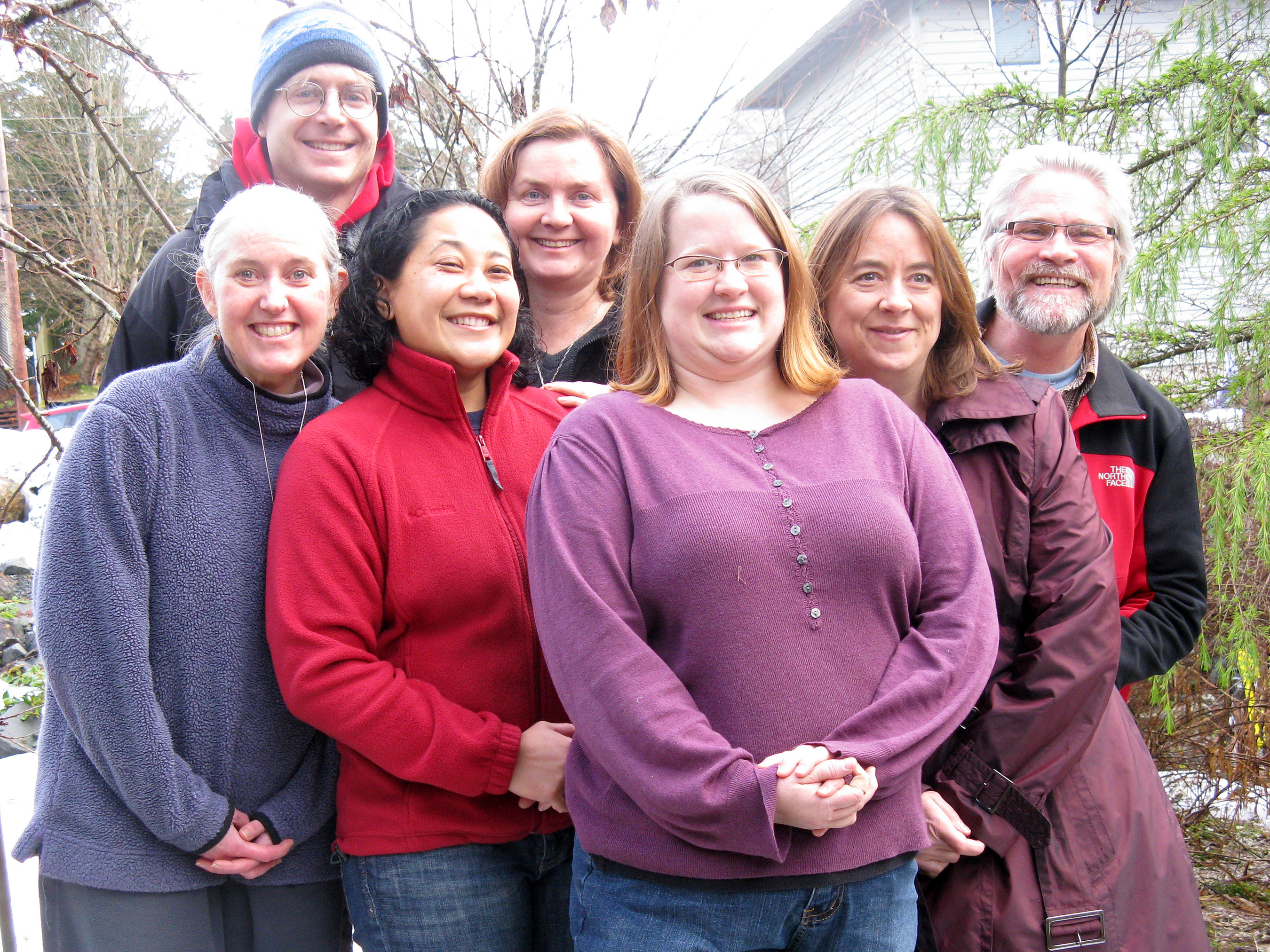
The 2011-12 Sitka Local Foods Network Board of Directors at its winter board retreat on Dec. 3, 2011. From left are Lisa Sadleir-Hart, Doug Osborne, Maybelle Filler, Cathy Lieser, Robin Grewe, Linda Wilson and Kerry MacLane. Not pictured is Tom Crane.

The 2011-12 Sitka Local Foods Network Board of Directors at its winter board retreat on Dec. 3, 2011. From left are Lisa Sadleir-Hart, Doug Osborne, Maybelle Filler, Cathy Lieser, Robin Grewe, Linda Wilson and Kerry MacLane. Not pictured is Tom Crane.

The Sitka Local Foods Network Board of Directors has a new president. Lisa Sadleir-Hart has taken the spot following the recent resignation by founding president Kerry MacLane, who wants to devote more time to getting the Sitka Community Greenhouse and Education Center built and other projects.

Joining Lisa as board officers for 2013 are Cathy Lieser as vice president, Linda Wilson as secretary and Maybelle Filler as treasurer. Kerry remains on the board, for now, but will leave the board once replacement board members are found. The Sitka Local Foods Network currently needs three new board members to complete the board of directors. In addition to Kerry’s planned departure, we recently had two board members move out of town.

Board members are concerned about increasing access to local food for all Sitka residents. They also are concerned about rising food prices in Sitka, and they want to advocate for more community and family gardens in Sitka.

Board members help direct the Sitka Local Foods Network, a non-profit that promotes the harvest and use of local food in Sitka. In addition to setting the focus of the group, board members also help on a wide variety of projects such as the Sitka Farmers Market, St. Peter’s Fellowship Farm, Blatchley Community Garden, Let’s Grow Sitka, the Sick-A-Waste compost project, the Sitka Community Food Assessment project, Sitka Fish-To-Schools, other school education projects and more.

To apply for a spot on the board, please fill out the attached application and submit it to sitkalocalfoodsnetwork@gmail.org. For more information, contact Lisa Sadleir-Hart at 747-5985.

We also are looking to increase our pool of volunteers who will help out during the various projects hosted by the network each year (no formal application needed, just send us your name/contact info and what types of projects you enjoy).

The next Sitka Local Foods Network board meeting is at 6:30 p.m. on Tuesday, May 14, at the Sitka Unitarian Universalists Fellowship Hall (408 Marine St.). The board generally meets from 6:30-8 p.m. on the first Tuesday of each month, except during the summer when board members are busy working with the Sitka Farmers Market and St. Peter’s Fellowship Farm communal garden.

• Sitka Local Foods Network board of directors application

• Sitka Local Foods Network to host Let’s Grow Sitka garden education event and Shane Smith presentation

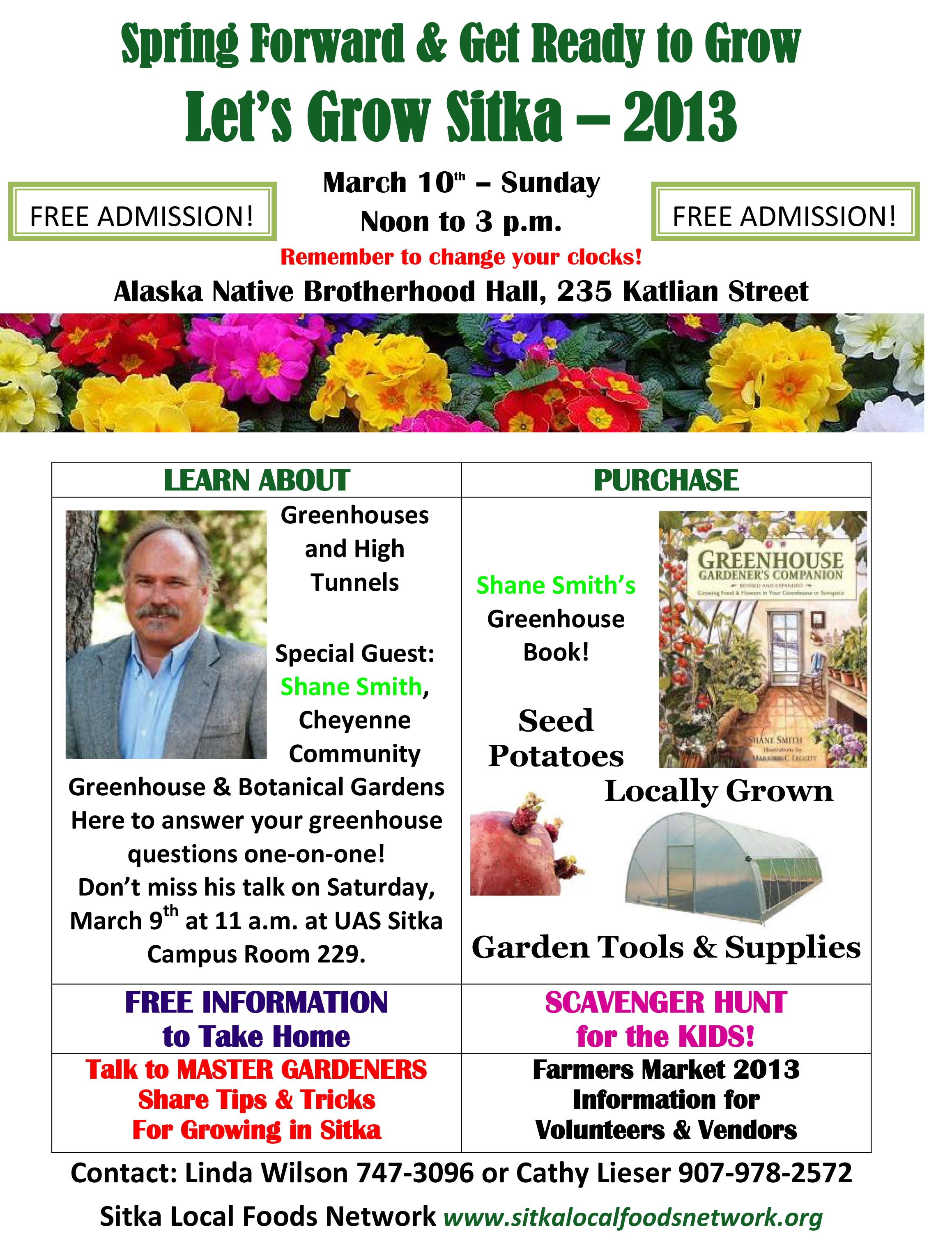
2013 LGS Flier-Feb 11-13CBEDITMark your calendars as the Sitka Local Foods Network will host two big garden events Saturday and Sunday, March 9-10, in Sitka.

The first event is a presentation by Shane Smith of the Cheyenne (Wyo.) Botanic Gardens from 11 a.m. until 12:30 p.m. on Saturday, March 9,  in Room 229 of the University of Alaska Southeast Sitka Campus. The second event is the fifth annual Let’s Grow Sitka garden education event from noon until 3 p.m. on Sunday, March 10, at the Alaska Native Brotherhood Founders Hall, 235 Katlian (don’t forget to set your clocks ahead an hour Saturday night).

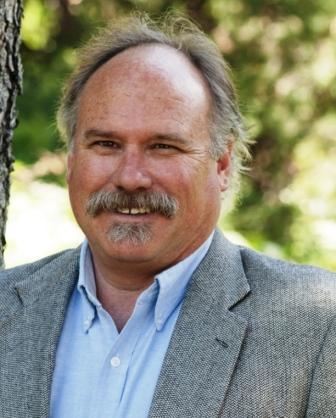
Shane-SmithThe Sitka Local Foods Network is excited to bring Shane Smith to town to discuss gardens and greenhouses. Shane is the founder of the Cheyenne (Wyo.) Botanic Gardens and has been its director since 1977. Shane is the author of the Greenhouse Gardener’s Companion, and he will be signing copies of his book. Shane received the American Horticulture Society’s 2012 Great American Gardener Award.

Shane also will have a booth at Sunday’s Let’s Grow Sitka event, which is an annual event designed to get Sitka residents excited about the upcoming garden season. This annual event brings together local garden supply stores, local gardeners, landscapers and anybody who is interested in learning how to grow food and/or flowers.

There will be a wide variety of individuals and businesses with booths for the event, with some booths providing gardening information geared toward and others selling gardening supplies. Lunch will be available for purchase. There also will be a chance to learn from certified Master Gardeners, a chance to learn about greenhouses and high tunnels, an opportunity to buy seeds and seed potatoes, and there’s a scavenger hunt for the kids.

For more information, contact Linda Wilson at 747-3096 (evenings and weekends) or Cathy Lieser at 1-907-978-2572. Table space still may be available for people wanting to provide information about different types of gardening or gardening products/services available in Sitka.

The Sitka Local Foods Network thanks the City and Borough of Sitka, Shee Atika Corp., and the SouthEast Alaska Regional Health Consortium (SEARHC) Diabetes Programs for their help in making these events possible.

• Celebrate National Farmers Market Week by going to the Sitka Farmers Market on Saturday, Aug. 18

Aug. 5-11 is National Farmers Market Week this year, as noted by the Farmers Market Coalition. The Sitka Farmers Market didn’t quite line up its dates with National Farmers Market Week this year, but if you didn’t attend our market on Saturday, Aug. 4 you still can celebrate the week by attending the Sitka Farmers Market from 10 a.m. to 2 p.m. on Saturday, Aug. 18, at the Alaska Native Brotherhood Hall (235 Katlian St.).

Farmers markets are a great way to connect with the community, while also purchasing local produce, wild fish, locally baked bread and arts and crafts. Besides providing access to fresh local produce, farmers markets create strong economic engines in communities, promote local health and bring a diverse group of people together. They also help consumers meet and get to know the people who produce their food.

“The Sitka Farmers Market serves as a family friendly place for people to meet and to visit with other members of the community,” Sitka Local Foods Network Vice-President Linda Wilson said. “Some people spend an hour or two just going around mingling with folks and chatting, catching up on the local news, telling jokes, and sharing ideas and information. There is a lot of good energy around during the market.”

Farmers markets have been growing nationally, from 2,863 in 2000 to 7,864 in 2012, a jump of more than 270 percent. While Alaska doesn’t have as many farmers markets as other states, it did have the highest percentage of new markets in the country last year, up 35 markets in 2011 or 46 percent. The national rate of new market growth was 17 percent in 2011 and 9.6 percent in 2012.

Aug. 18 will be the fourth of six full Sitka Farmers Markets this summer, with the schedule running on alternate Saturdays (July 7, 21, Aug. 4, 18, Sept. 1 and 15). The markets feature local seafood (fresh, frozen, and cooked, ready to eat), locally grown and harvested fruits and vegetables, baked bread, locally picked berries, jams and jellies, cooking demonstrations, live entertainment, locally brewed and roasted coffee, music, local arts and crafts, and a variety of other items gathered or made in Sitka. We emphasize local products and lots of fun. We are the first farmers market in Southeast Alaska to accept WIC coupons. You also can vote for the Sitka Farmers Market in the America’s Favorite Farmers Markets contest by following the links at https://sitkalocalfoodsnetwork.org/2012/06/22/%E2%80%A2-dont-forget-to-vote-for-the-sitka-farmers-market-in-this-years-americas-favorite-farmers-markets-contest/.

For more information about the market or hosting a booth, contact Sitka Farmers Market Manager Johanna Willingham at 738-8836 or johanna.willingham@gmail.com. By the way, we always need volunteers to help set up and take down the market before and after the event. Your help is greatly appreciated.

Also, there will be a couple of work parties from 4-6 p.m. on Wednesday, Aug. 8, and  from 2-4 p.m. on Saturday, Aug. 11, at St. Peter’s Fellowship Farm, which is located behind St. Peter’s By The Sea Episcopal Church (the dark brown brick-and-wood church on Lincoln Street above Crescent Harbor). Fresh veggies will be available for a donation to the Sitka Local Foods Network or a WIC Farmers Market Coupon. For more info on garden work parties, contact St. Peter’s Fellowship Farm Lead Gardener Laura Schmidt at 738-7009 or 623-7003.

• As you build your garden this spring, don’t forget to Plant A Row For The Hungry

(EDITOR’S NOTE: The following article first appeared on this site in April 2010. It is repeated because much of the information remains current and newsworthy.)

As you start to plan your garden for this spring and summer, don’t forget to Plant A Row For The Hungry. The Plant A Row For The Hungry program (also known as Plant A Row or PAR) is a national campaign by the Garden Writers Association of America that got its start in Alaska.

In the cold winter of 1994, Anchorage Daily News garden columnist and former Garden Writers Association of America President Jeff Lowenfels was returning to his hotel after a Washington, D.C., event when he was approached by a homeless person who asked for some money to buy food. Lowenfels said Washington, D.C., had signs saying, “Don’t give money to panhandlers,” so he shook his head and kept on walking. But the man’s reply, “I really am homeless and I really am hungry. You can come with me and watch me eat,” stayed with Lowenfels for the rest of his trip.

Jeff Lowenfels

Jeff Lowenfels

The encounter continued to bother Lowenfels, even as he was flying back to Anchorage. During the flight, Lowenfels came up with an idea when he started writing his weekly garden column (the longest continuously running garden column in the country, with no missed weeks since it started on Nov. 13, 1976). He asked his readers to plant one extra row in their gardens to grow food to donate to Bean’s Café, an Anchorage soup kitchen. The idea took off.

When Anchorage hosted the Garden Writers Association of America convention in 1995, Lowenfels took the GWAA members to Bean’s Café to learn about the Plant A Row For Bean’s Café program. The Garden Writers Association of America liked the idea, and it became the national Plant A Row For The Hungry campaign (also known as Plant A Row or PAR). In 2002, the Garden Writers Association Foundation was created as a national 501(c)(3) nonprofit to manage the Plant A Row For The Hungry program.

“I am not surprised by the growth of PAR,” Lowenfels wrote in an e-mail to the Sitka Local Foods Network. “It is now in all 50 states and across Canada and there are thousands of variations of the original program — from prison gardens for the hungry to botanical gardens donating their produce from public display gardens. This is because gardeners always share information and extra food, so the idea was a natural.”

It took five years for the program to reach its first million pounds of donated food, but the second million only took two years and the next eight years saw a million pounds of donated food (or more) each year. Since 1995, more than 14 million pounds of food have been donated. Not only that, the program is getting ready to expand overseas to Australia, England and other countries with avid gardeners.

“We have supplied something in the vicinity of enough food for 50 million meals,” Lowenfels wrote in his e-mail. “Gardeners can solve this hunger problem without the government. And we don’t need a tea party to do it! Or chemicals, I might add, as author of a book on organic gardening (Teaming With Microbes, written with Wayne Lewis)!”

According to the U.S. Department of Agriculture, one out of every eight U.S. households experiences hunger or the risk of hunger. Many people skip meals or eat too little, sometimes going an entire day or more without food. About 33 million Americans, including 13 million children, have substandard diets or must resort to seeking emergency food because they can’t always afford to buy the food they need. In recent years the demand for hunger assistance has increased 70 percent, and research shows that hundreds of children and adults are turned away from food banks each year because of lack of resources.

While many people credit Lowenfels for creating the Plant A Row For The Hungry program, Lowenfels says the real heroes are the gardeners growing the extra food and donating it to local soup kitchens, senior programs, schools, homeless shelters and neighbors. You can hear him pass along the credit to all gardeners at the end of this interview last year with an Oklahoma television station (video also embedded below).

“One row. That’s all it takes. No rules other than the food goes to the hungry. You pick the drop-off spot or just give it to a needy friend or neighbor. Nothing slips between the lip and the cup, I say,” Lowenfels wrote in his e-mail.

For people wanting to Plant A Row For The Hungry in Sitka, there are several places that would love to help distribute some fresh locally grown veggies or berries to those who are less fortunate, such as the Salvation Army, Sitkans Against Family Violence (SAFV), local churches, Sitka Tribe of Alaska and other organizations. The food the Sitka Local Foods Network grows at St. Peter’s Fellowship Farm communal garden goes to the Sitka Farmers Market, where people who are in the WIC (Women, Infants, Children) supplemental food program (operated in Southeast Alaska by the SouthEast Alaska Regional Health Consortium or SEARHC) can use special farmers market vouchers to buy fresh vegetables.

The Sitka Local Foods Network also takes donations of local produce to sell at the Sitka Farmers Markets, and all proceeds from the Sitka Farmers Markets are used to help pay for Sitka Local Foods Network projects geared toward helping more people in Sitka grow and harvest local food. For more information, contact Sitka Local Foods Network President Kerry MacLane (maclanekerry@yahoo.com), Sitka Local Foods Network Vice President Linda Wilson (lawilson87@hotmail.com) or Sitka Farmers Market Coordinator Johanna Willingham-Guevin (johanna.willingham@gmail.com).

• 2010 Plant A Row For The Hungry marketing brochure

• 2009 Start a local Plant A Row For The Hungry campaign brochure