Sitka Tribe of Alaska receives EPA grant to study microplastics in subsistence foods

Sockeye salmon hangs from racks in the smoker.

The Sitka Tribe of Alaska (STA) has been awarded a one-year, $30,000 grant from the Environmental Protection Agency‘s Environmental Justice Small Grant Program. The grant project, “Microplastics in Tribal Subsistence Foods In Southeast Alaska,” will include the University of Alaska, Mount Edgecumbe High School, the Southeast Alaska Watershed Coalition (SAWC), and Sitka Conservation Society as partners.
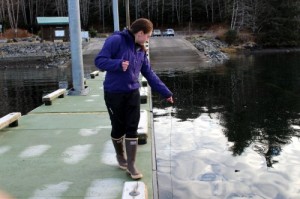
Esther Kennedy of the Sitka Tribe of Alaska Resource Protection Department samples water near the Starrigavan Recreation Area dock for marine biotoxins such as paralytic shellfish poisoning. (Photo by Emily Kwong, KCAW-Raven Radio)

“STA will collect water and subsistence food samples from four locations within STA’s traditional territory to test for the presence of microplastics and associated toxins,” Sitka Tribe of Alaska grant administrator Rachel Henderson wrote in an email. “These results will be compared to commercially purchased foods and safety standards. These results will be shared with the public so they can make informed decisions about harvesting traditional foods. Local students will assist with the sampling of local food and water.”

Henderson said Jennifer Hamblen is the project manager for the tribe, and she is working with Jeff Feldspaugh of the tribe’s resource protection department and the tribe’s partner agencies.

“Part of STA’s mission is to help ensure that subsistence resources for STA Tribal Citizens are available and safe,” Hamblen said. “In recent years, there have been many studies and publications from other places, such as British Columbia, about microplastics and their associated toxins having devastating consequences on animals, and potentially affecting the people who consume them. This is a pilot project to see if there are microplastics in subsistence foods in our area and comparing locally collected seafood to seafood available at supermarkets.”

Microplastics, aka phthalates, found at low tide. There are concerns microplastics are getting into subsistence foods and that will impact people’s health. (Photo courtesy of EPA.gov)

University of Alaska Southeast was written in as a project partner and the UAS conference in July is one of the places that STA will present the results, Henderson said. The Southeast Alaska Watershed Coalition (SAWC) has done microplastic water collection on behalf of salmon in the past, and Sitka Conservation Society (SCS) is very invested and knowledgeable about microplastics and their effects on the environment.

“We’ll be collecting shellfish from the Starrigavan estuary to process for microplastic consumption. We will also collect water samples using the methods already established by SAWC,” Henderson said.

While the project is just starting to launch, it has had one setback, Henderson said. “When we wrote the grant, we were going to send the samples to a certified, plastic-free laboratory, such as the University of Alaska Anchorage’s Applied Science, Engineering, and Technology Laboratory. That lab ran out of funding and is no longer operational, so we’re looking for another lab. Right now Jenn’s writing the QAPP (an EPA requirement before an sample collection that has to be approved before we can start work) so we can collect samples and we’ll look at presence/absence of microplastics with students from Mount Edgecumbe High School. We’ll save samples in case we get an opportunity for a larger project and find an appropriate lab to run phthalate samples. There will be photos with MEHS collecting samples and processing samples after the QAPP is approved.”
Sitka Food Co-op one of 12 finalists in 2017 Path to Prosperity business development contest

The Sitka Food Co-op is one of 12 finalists in the 2017 Path to Prosperity (P2P) business development contest for Southeast Alaska food businesses.

The Co-op now moves into Round 2, where the 12 finalists will attend a business boot camp in Juneau this fall for mentoring and a chance to better develop their business models and plans. Two of the 12 finalists will be selected as winners in December, earning $25,000 in seed funding for consulting and technical services to develop their businesses.

The Sitka Food Co-op is the only Path to Prosperity finalist from Sitka, joining businesses from Craig, Haines (2), Hoonah, Juneau (2), Ketchikan, Klawock (2) and Wrangell (2). There were 38 food businesses from 10 Southeast Alaska communities that entered the contest this year, which is sponsored by Spruce Root Inc. (formerly Haa Aaní Community Development, a subsidiary of Sealaska), The Nature Conservancy, and joining as sponsor this year, the Southeast Alaska Watershed Council (SAWC). This is the fifth year of the Path to Prosperity contest, but the first year the contest has been focused only on food businesses.

“Being selected as one of the twelve finalists in the Path To Prosperity competition is quite an honor,” said Keith Nyitray, Sitka Food Co-op general manager. “Win or lose, it will be exciting to meet and network with the other 11 finalists, especially since we’re all food-related. Hopefully some of those finalists will even become local/regional suppliers to the Co-op.”

After encouraging a variety of businesses over the past few years, this year the focus was on building food security in the region. Eligible applicants this year had to be involved in the growing, harvesting, processing, aggregation, preparation or distribution of food. Local food systems and community food security are of critical importance to the region and the sponsors.

“Creating access to local foods is essential to building sustainable economies and resilient communities in Southeast Alaska,” says SAWC Local Foods Director Lia Heifetz. “We are excited to empower entrepreneurs and businesses who want to provide and catalyze local foods for our region in a way that balances the stewardship of land and water and positive social and cultural impact.”

“Alaskans import 95% of the food we consume each year, yet we’re surrounded by nature’s bounty,” says Path to Prosperity program manager Paul Hackenmueller. “The P2P program has a chance to kick-start innovative food entrepreneurs in southeast by providing key resources that will help grow our regional food economy. This is a great group of finalists with some creative and promising business concepts.”

The 12 finalists are:

Business Name Location Applicant
1. Beaver Sisters Kombucha Craig Bettina Brentano
2. PermaFoodScaping Haines Andrew Cardella
3. Sarah J’s Espresso Shoppe Haines Sarah Jaymot
4. Game Creek Family Orchard Hoonah Robert Bishop
5. Happy Camper Juneau Amanda Kraft
6. Panhandle Produce Juneau Eli Wray
7. H20 Grow Ketchikan Kenneth White
8. Klawock Cooperative Association Klawock Quinn Aboudara
9. Wildfish Cannery Klawock Mathew Scaletta
10. Sitka Food Co-Op Sitka Keith Nyitray
11. The Local Isle Wrangell Holly Padilla
12. Mighty Bear Roots Wrangell Dixie Booker

“The Sitka Food Co-op has always believed there was a demand for the services it could provide and these past six years have proven that to be true,” Nyitray said. “We’ve grown and in ways that were almost unimaginable at the very beginning and we are proud to have achieved the level of success and community involvement that we have so far.”

All 12 finalists will participate in a three-day business boot camp Sept. 29 to Oct. 1 in Juneau. All expenses including airfare and lodging will be covered by P2P for the businesses. The intense weekend of workshops covers topics such as business plan writing, sustainable business practices, and accessing financial capital. Spruce Root Executive Director, Ed Davis, highlights the importance of the workshop to building the regions entrepreneurial ecosystem. “The goal of the workshop is to deliver as much value as possible to the business owners, so when they return to their communities they’re able to implement what they’ve learned and build successful businesses, regardless of whether or not they win the competition,” says Davis. “This capacity development is how we build a culture of entrepreneurship in Southeast Alaska.”

“Of course, the next step in the competition is to focus on developing a detailed and forward looking business plan — our own personalized path to prosperity if you will,” Nyitray said. “Should we become one of the two winners of the competition that plan — along with all the technical and financial help the award will bring — will definitely be a huge boost to improving our operation and it would most certainly increase our ability to ‘Bring Good Food and Community Together.'”

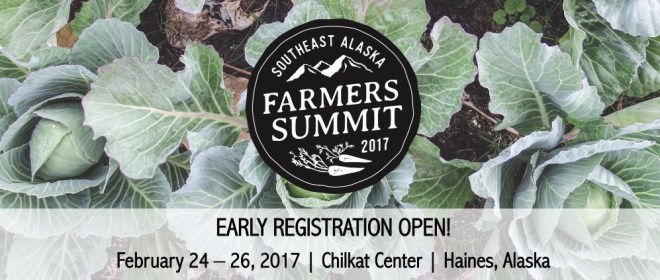
Registration open now for Southeast Alaska Farmers Summit on Feb. 24-26 in Haines

registration-open-dec

Share lessons learned and techniques for overcoming challenges of commercially growing food in Southeast Alaska; learn specific skills, technology, and research that contribute to commercial farming success and efficiency; connect with new and experienced farmers to build an inspiring network.

Early bird registration is now open for the Southeast Alaska Farmers Summit 2017, the second biennial summit designed to bring together experienced and aspiring commercial growers and support agencies. The summit will be held Friday through Sunday, Feb. 24-26, at the Chilkat Center in Haines. A discounted registration rate is available to attendees who register on or before Friday, Jan. 20. Travel and registration scholarships are available.

The conference will feature presentations from experienced commercial growers and support agencies, and topical discussions and panels to share resources and lessons learned. Speakers include Doug Collins, Extension Faculty and Soil Scientist with Washington State University’s Small Farms Program; Megan Talley, Farm Manager and Educator at Alaska Pacific University; and experienced farmers from Southeast Alaska; among others.

“This will be an opportunity for commercial growers of Southeast Alaska to learn from each other, find opportunities to collaborate, and build a network that can leverage everyone’s efforts,” said Lia Heifetz, Local Food Director for Southeast Alaska Watershed Coalition. “Many resources will be shared over the course of the weekend – from financial planning for small farms to innovative solutions for soil building, policy implications for agriculture, and much more.”

Other topics to be addressed at the Southeast Alaska Farmers Summit include:

  • On Farm Food Safety
  • Building your Farm Community
  • Planning for a CSA
  • The Future of Seed Saving in Alaska
  • High Tunnel Applications and Innovations
  • Electric and Walk-in Cold Storage for your Farm
  • Biomass Heated Greenhouses and Aquaponics
  • Per Foot Crop Values for Market Sales
  • Using Local Amendments to Improve Soil Quality
  • Fruit Trees and Grafting Techniques
  • Policy and Initiatives
  • Building a Future of Farming with Internships and Education
  • Business Planning and Farm Finances

For more information and to register for the conference, please visit this website, http://www.alaskawatershedcoalition.org/safs2017/, or contact Lia Heifetz at lia@growsoutheast.com.

USDA awards $496,840 grant to Southeast Alaska Watershed Coalition to develop a food hub network

SLFNBoothOnionsCarrots

logo_southeast-alaska-watershed-council_15Farmers and fishermen in Southeast Alaska will soon be able to expand their markets through a recent grant to the Southeast Alaska Watershed Coalition and its partners from the U.S. Department of Agriculture. The grant was part of more than $56 million in local and community food system and organic research grants announced on Sept. 28. This was the only project from Alaska to receive funding.

The grant award is for $496,840, with a match of $178,327, and it will be used to sell and distribute local foods throughout the region over the next three years.  This is the grant description posted with the list of grant winners in the Local Food Promotion Program:

Localizing the Food System in Southeast Alaska: Building Markets and Supply Award

In Southeast Alaska, a more reliable food supply and improved access to local food are critical to self‐reliance and community resiliency. The vast majority of food consumed in Southeast Alaska is shipped in by barge or plane thus increasing its cost and decreasing its nutritional value. The Southeast Alaska Watershed Coalition (SAWC) and its diverse partners propose to increase the consumption of, access to, and production of Southeast Alaska (SEAK) local foods. This will be accomplished by developing new market opportunities using a food hub model. Through a two‐part approach, SAWC and partners will; 1) provide critical training, technical assistance, and business development services to local food entrepreneurs; and 2) increase the consumption of and access to locally produced products through the development of the Southeast Alaska Food Hub Network (SEAK‐FHN).

The Southeast Alaska Watershed Council is working with Haa Aaní, the Sustainable Southeast Partnership and the Takshanuk Watershed Council (Haines) to develop the regional food hub, which they hope will improve food security in the region while also developing new food-related businesses.

TraysOfSalmonPortionsAccording to a post on the Southeast Alaska Watershed Council website, “In Southeast Alaska, improved access to local foods and a more reliable food supply are critical components of self-reliance and community resiliency. Residents of the region’s rural communities face high and rising costs of living, a declining state economy, and dependence upon air and water transport for delivery of basic commodities including food and petroleum products. According to a report commissioned by the Alaska Dept. of Health and Social Services, 95 percent of the food purchased in Alaska is imported, often shipped through extensive supply chains arriving by truck, airplane, and barge.

“The high cost of imported foods and lengthy supply chain make Southeast Alaska communities vulnerable to unforeseen disruptions in larger national food and transport systems, and send local dollars outside of the state. Many communities throughout the region have begun prioritizing the development of a localized food system to promote economic development, increase food security, and bolster the resiliency of Southeast Alaska communities.”

savethedateIn an interview with KSTK-FM radio in Petersburg, SAWC Executive Director Angie Flickinger said the system would be based on an online marketplace, allowing producers such as existing farms in Haines and Petersburg to sell their products throughout the region. The Southeast Alaska Watershed Coalition is based in Wrangell and has member community watershed coalitions in Haines, Skagway, Juneau and on Prince of Wales Island.

“And we would allow consumers to go on there and purchase foods,” Flickinger said. “We would set distribution centers where we would aggregate those foods and either ship them out, or set up a date where folks from the community could come and pick up those foods.”

Flickinger said the coalition hopes to build two distribution centers in Juneau and Haines. Both distribution centers will have cold-storage facilities, and will be certified by the Alaska Department of Environmental Conservation for food safety. The project also will help host the second biannual Southeast Alaska Farmers Summit on Feb. 24-27, 2017, in Haines.

Flickinger told KSTK that this idea was sparked from a feasibility study the Takshanuk Watershed Council did last year examining the market for local foods in Haines.

“So that kind of helped spawn this concept where we thought if we combined a lot of these producers who are based throughout the region, we could create a bigger market and make it more accessible.”

• Southeast Conference and partners release regional food system assessment

FoodAssess_3.0_email (1)_Page_01

The Southeast Conference and its partners recently released the “Southeast Alaska Food System Assessment: A pilot project to identify actions to promote self-sustaining communities and a resilient food system.”

The 32-page document is the result of a four-month research project supported by the Tongass People and Place Program (coordinated by the Southeast Alaska Watershed Coalition), Southeast Conference, Sheinberg Associates, and the University of Alaska Fairbanks Cooperative Extension Service. The report examines local food systems throughout the region to see what challenges exist and how they can be solved so Southeast Alaska communities are more food secure and sustainable.

The report looks at what foods are being grown in several communities and who’s growing them. It also weighs the strengths and weaknesses of the different food systems in the region, with a special wild food focus group hosted by the Organized Village of Kake. For more information, check out the report link below.

• Southeast Alaska Food System Assessment