• Juneau hosts Alaska Greenhouse and Nursery Conference on Feb. 25-26

Save the dates: The Alaska Greenhouse and Nursery Conference takes place on Feb. 25-26 in Juneau, with the Southeast Gardening Workshop on Feb. 27. These events should be worth a trip from Sitka to Juneau.

Alaska Greenhouse and Nursery Conference topics will include slugs and snails, low maintenance landscape design, propagating native plants, new varieties for 2010 and more.

As usual, the Polar Grower Trade Show will be available during the conference. All sessions will be at the Alaska Native Brotherhood Hall in Juneau (on Willoughby Ave.). Click here for a registration brochure with more details (link opens PDF file).

The Alaska Greenhouse and Nursery Conference is hosted by the Juneau office of the University of Alaska Fairbanks Cooperative Extension Service, and conference details are available at 796-6221.

In addition to the two-day conference and trade show, there also is the Southeast Gardening Workshop on Feb. 27. For information on the Southeast Gardening Workshop, contact Darren Snyder of the UAF Cooperative Extension Service office in Juneau at 796-6281.

2010 Alaska Greenhouse and Nursery Conference brochure (opens as PDF file)

• Sitka gardeners extend growing seasons with government pilot study on high tunnels

Several Sitka gardeners will be extending their growing seasons this year thanks to a government soil conservation program designed to study the effectiveness of “high tunnels” or “hoop houses” when it comes to growing more local food in a conservation-minded way. To qualify you need to have grown $1,000 worth of produce for two of the past five years, even if just for your family and friends.

The Sitka participants will be constructing the greenhouse-like structures this year, which will enable them to grow more local food. For participating in the study, the government will reimburse them for the cost of the materials. This project is part of a nationwide effort to improve our community food security called “Know Your Farmer, Know Your Food.” As part of the project, the U.S. Department of Agriculture will conduct a three-year, 38-state study on high tunnels to see if they help reduce pesticide use, extend the growing season, keep vital nutrients in the soil, etc. This YouTube video has more information about the pilot study and shows several smaller family garden-sized high tunnels being placed in the White House garden.

“There is great potential for high tunnels to expand the availability of healthy, locally-grown crops — a win for producers and consumers,” U.S. Department of Agriculture Deputy Secretary Kathleen Merrigan said. “This pilot project is going to give us real-world information that farmers all over the country can use to decide if they want to add high tunnels to their operations. We know that these fixtures can help producers extend their growing season and hopefully add to their bottom line.”

If you meet the requirement, feel free to participate by contacting our local USDA Natural Resources Conservation Service (NRCS) agent for Southeast Alaska, Samia Savell in Juneau at 586-7220, or go to http://www.nrcs.usda.gov/. NRCS will fund one high tunnel per qualifying farm, and a high tunnel can cover as much as 5 percent of one acre.

High tunnels have been used successfully in Alaska, including up in Fairbanks where temperatures drop to minus-50. Last September, the University of Alaska Fairbanks School of Natural Resources and Agricultural Sciences reported on a two-year project where 39 varieties of apples had been grown in high tunnels at the Fairbanks Experiment Farm. The UAF Cooperative Extension Service also reported on the project (with short videos), and the Fairbanks Daily News-Miner also reported on the story.

• Sitka Local Foods Network contracting for 2010 St. Peter’s Fellowship Farm lead gardener

Darby Osborne, Doug Osborne, Kerry MacLane and Maybelle Filler pick radishes at St. Peter's Fellowship Farm before the first Sitka Farmers Market in 2008

Darby Osborne, Doug Osborne, Kerry MacLane and Maybelle Filler pick radishes at St. Peter's Fellowship Farm before the first Sitka Farmers Market in 2008

The Sitka Local Foods Network is contracting for a lead gardener to help manage our activities at the St. Peter’s Fellowship Farm community garden this summer. St. Peter’s Fellowship Farm (SPFF) is growing, and we’re adding new garden beds so we can grow more crops. The vegetables grown at SPFF are sold at the Sitka Farmers Market to help support the efforts of the Sitka Local Foods Network, with some crops also going to local church and charity groups. Here is the lead gardener contract description.

St. Peter’s Fellowship Farm 2010 Lead Gardener Contract Description

Work Experience: 2-3 years of varied vegetable gardening experience, preferably with at least one year in Southeast Alaska. This includes planning, cultivating, harvesting, composting and preparing vegetables for sale or preservation, as well as putting the garden to rest for the season.

Contract Requirements:

  • Develop a garden plan that includes succession planting in conjunction with the SPFF tri-coordinators (board members Lisa Sadleir-Hart, Doug Osborne and Maybelle Filler)
  • Conduct soil testing and amend the soil to improve soil quality using available resources (i.e., seaweed, bone meal, etc) in conjunction with the SPFF tri-coordinators and volunteer work parties
  • Cultivate plant starts using seeds provided by the SLFN and make recommendations for SPFF seed start kits to be distributed at the Let’s Grow Sitka event on March 14, 2010
  • Use organic gardening practices
  • Host 3 initial planting parties (from 2-4:30 p.m. on three Saturdays, May 15, May 22 and May 29) i.e., coordinate with the SPFF tri-coordinators to plan and direct work
  • Direct 75 percent of the garden work parties, i.e., these are tentatively scheduled for Wednesdays 4:30-6 p.m. and Saturdays 2-3:30 p.m. (on non-Sitka Farmers Market Saturdays) during the months of June, July and August, plus the first half of September, but can be negotiated.
  • Plan and oversee the harvest of the garden for the first five 2010 Sitka Farmers Markets (harvest usually takes place early on market-day mornings, July 17, July 31, August 14, August 28 and September 4)
  • Develop a method for quantifying the amount of vegetables harvested from SPFF and implement it
  • Maintain the composting and watering systems
  • Direct any questions or concerns to the SPFF tri-coordinators

Compensation: A total of $1,500 paid in three installments (May 15, July 15 and September 15) plus 5 percent of the SPFF harvest – this compensation schedule is open for negotiation.

If interested in the SPFF lead gardener contract, e-mail a resume that includes two local references that can speak to your gardening ability and a letter of interest by February 20th to 3akharts@acsalaska.net. Direct questions to Lisa Sadleir-Hart at 747-5985 or Doug Osborne at 747-3752.

• New Sitka Local Foods Network events calendar added to site

We now have an events calendar. This link goes to a calendar for Sitka Local Foods Network and other related events in the Sitka area. You will be able to find the link under “Pages” in the right column.

This calendar will feature events such as Sitka Local Foods Network board meetings, Sitka Farmers Markets, Let’s Grow Sitka, work parties for St. Peter’s Fellowship Farm and other events sponsored by the Sitka Local Foods Network. It also will feature community events related our mission, such as UAF Cooperative Extension Service classes, Sitka Gardeners Club meetings, traditional foods classes, etc.

If you have any events you feel should be included on this calendar, please e-mail the details to charles(at)sitkalocalfoodsnetwork.org — replace the (at) with a @ symbol. Please be aware this is a work in progress, so it may take a few days to get most of our events transferred to the calendar.

• Sitka gardeners to meet Tuesday, Jan. 19, at UAS

There will be an informal get together for interested Sitka gardeners from 7-9 p.m. on Tuesday, Jan. 19, in Room 106 at the University of Alaska Southeast-Sitka Campus on Japonski Island.

The get together provides a venue for gardeners of all types, interests and skills to informally exchange ideas, information, seeds and growing tips. Share and learn from other gardeners with no dues or commitments other than good fellowship.

Sitka gardeners plan to get together the third Tuesday of the month at the UAS-Sitka Campus. This month’s meeting is sponsored by UAS-Sitka Campus and the University of Alaska Fairbanks Cooperative Extension Service. For more information, call Cheryl Stromme at 747-9473 or Bob Gorman at 747-9413.

• Sitka film featured in Palmer’s “Local Harvest, Local Food” film festival, a Sitka café featured for using local food and other local foods news

Food Film Fest Poster-2

Join the Palmer Arts Council for its inaugural “Local Harvest, Local Food” film fest from Thursday, Nov. 19, through Sunday, Nov. 22, at the Strangebird Consulting Office in downtown Palmer. “Good Food” screens at 7 p.m. on Thursday, Nov. 19; “Fresh” shows at 7 p.m. on Friday, Nov. 20; “Eating Alaska” by Sitka filmmaker Ellen Frankenstein screens at 7 p.m. on Saturday, Nov. 21; and “Ingredients” shows at 3 p.m. on Sunday, Nov. 22. After the Sunday showing there will be a discussion about women in agriculture with Cynthia Vignetti. Suggested donations are $10-15 for all films except for Sunday, which is free.

A Sitka restaurant, the Larkspur Café, was featured in Capital City Weekly last week. The article talks about the origins of the restaurant, which is located in the same building as KCAW-Raven Radio. It also discusses the restaurant’s use of local foods, including owners Amelia Budd and Amy Kane purchasing produce from the Sitka Farmers Market during the summer.

In other local foods news from around the state, the National Oceanic and Atmospheric Administration (NOAA) recently announced an expansion to the state’s subsistence halibut fishery to include more rural residents (this includes the Sitka area). The new rules, which take effect on Dec. 4, redefine who qualifies as a rural resident. The previous rules defined rural residents as people living in a rural community or people belonging to a Native tribe with customary and traditional uses of halibut, and the news rules try to catch subsistence halibut users who fell outside the previous definition. Click this link for more information about subsistence halibut regulations and applications.

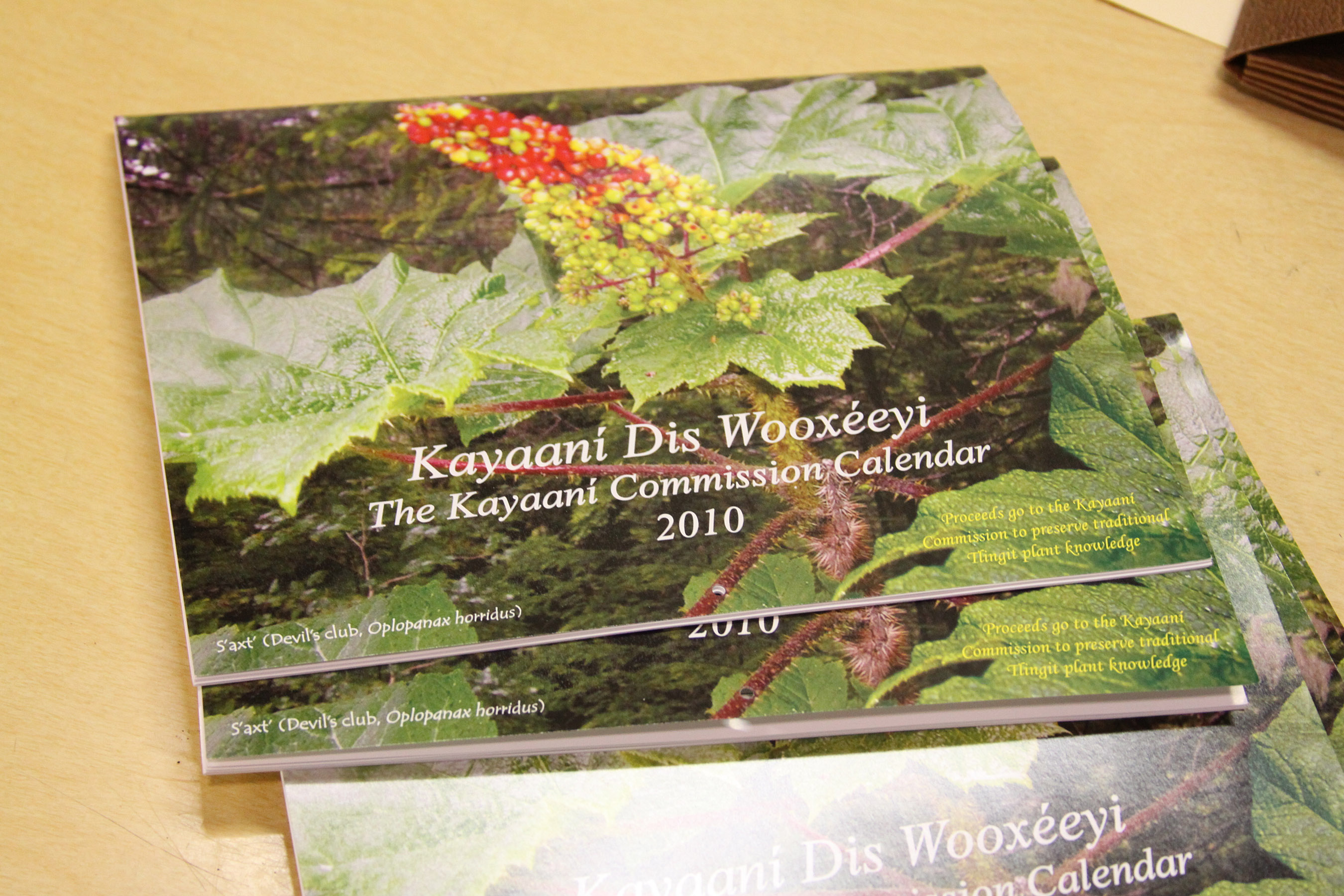
The Daily Sitka Sentinel has been running a brief announcement from the Sitka Tribe of Alaska’s Kayaaní Commission, which is selling 2010 calendars, CDRoms and field guides about traditional uses of native plants. Here is the information:

Kayaaní Native Plant Publications Available: 2010 Kayaaní Harvest Calendars featuring native plants and their traditional and cultural uses ($16, $2 postage per address); Interactive Ethnobotanical CDRoms with native species, their Tlingít, scientific and common names, and interviews with Elders on the traditional and medicinal uses of plants ($15, $1 postage per address); Ethnobotanical Field Guides ($16, $1 postage per address). We will mail to the addresses of your choice. Order by Dec. 18 for guaranteed delivery before Christmas. Call or e-mail with your order: 907-747-7178, pbass@sitkatribe.org, STA Kayaaní Commission, 456 Katlian. All proceeds will assist the nonprofit Kayaaní Commission in protecting, perpetuating and preserving knowledge of native plants.

The Chilkat Valley News weekly newspaper from Haines featured an article about sixth-graders at Haines School learning how to compost their leftover food (including leftover meat) so it can be used for gardening. The school is working with the Takshanuk Watershed Council to teach the students about composting. The students call their compost project “Marvin” because it’s a living organism.

The Alaska Dispatch recently ran a feature called “Growing Season” that discusses some of the farms in the Matanuska-Susitna valleys that grow local food. The feature includes video clips of harvest time at a couple of the farms featured.

The Mat-Su Frontiersman had a feature called “Chicken U,” which is about raising chickens in Alaska and getting them to produce eggs during the winter months.

The Anchorage Daily News also mentioned Chicken University, which will be one of several presentations at the Alaska Farm Bureau annual meeting on Friday, Nov. 13, at the Millennium Hotel in Anchorage. Other presentations are on growing apples in Alaska and preserving your harvest.

The Anchorage Daily News also had an article about how to get local produce in Anchorage during the winter, either through the Glacier Valley CSA produce boxes from Palmer or the indoor farmers market at the Northway Mall.

Anchorage Daily News garden columnist Jeff Lowenfels wrote a column about how hydroponic gardening is easier and cheaper than ever. The column includes lots of links for people who want to try this method of growing food without soil (by the way, there is a hydroponic garden at McMurdo Station in Antarctica that keeps the scientists there stocked in fresh produce in a land of ice).

Fran Durner’s “Talk Dirt To Me” blog on the Anchorage Daily News site includes a post about how snow can act as mulch for the garden.

The Ester Republic, a monthly publication for the community near Fairbanks, runs periodic articles about sustainability and local food security issues. Some of the articles are linked in the archives, and the editors are working to get more of the past articles on these topics online so more people can enjoy them.
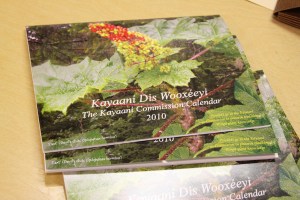
KayaaniCommissionCalendarFront´

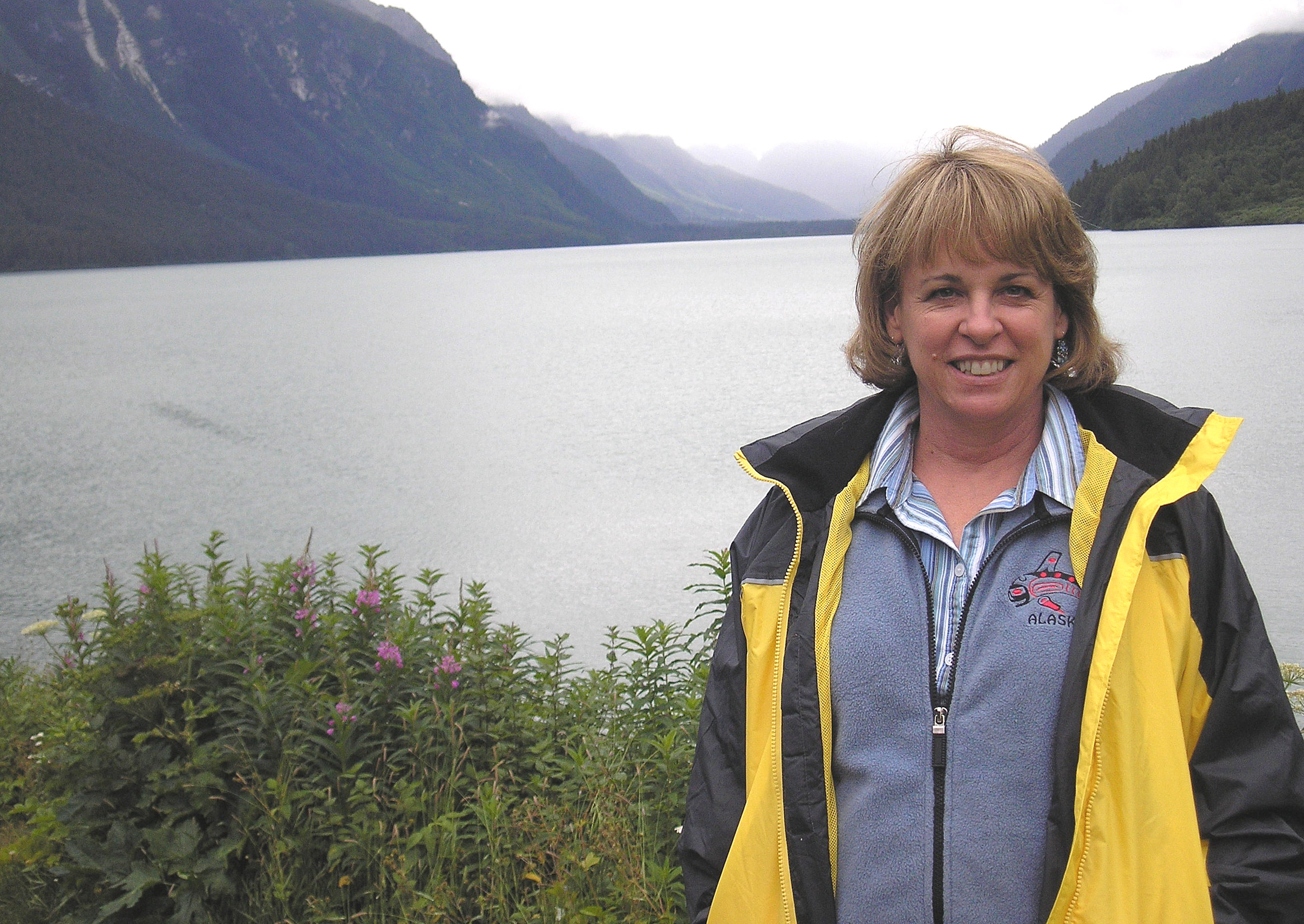
• Sonja Koukel of the UAF Cooperative Extension Service writes about storing potatoes

SKoukel

Dr. Sonja Koukel of the UAF Cooperative Extension Service

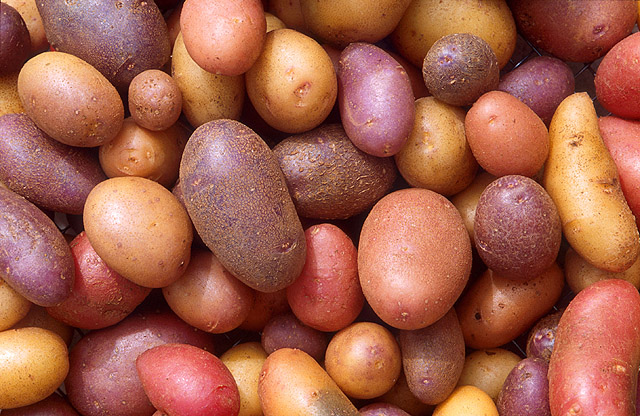
Photo courtesy of USDA Agricultural Research Service Image Gallery / Photo by Scott Bauer -- The average American eats 142 pounds of potatoes a year, making the tubers the vegetable of choice in this country

Photo courtesy of USDA Agricultural Research Service Image Gallery / Photo by Scott Bauer -- The average American eats 142 pounds of potatoes a year, making the tubers the vegetable of choice in this country

Storing Potatoes

By Dr. Sonja Koukel, PhD
Health, Home & Family Development Program
UAF Cooperative Extension Service, Juneau Office

—————

They live. They breathe. And because they’re 80 percent water, potato tubers thrive in humid locations. In moist Southeast Alaska, where are the best spots in your home to store your potatoes?

Research by University of Idaho Cooperative Extension Service scientists and College of Southern Idaho students has confirmed that the optimum sites for home-stored potatoes are cool, dark and ventilated rooms, closets, cabinets and garages. In studies conducted in their own residences, the agricultural science students also found that the perforated plastic bags used in many groceries offer the best environment for extending shelf life.

Potatoes stored inside these bags in unheated areas of the students’ homes benefited from a relatively cool average temperature of 57 degrees Fahrenheit and a relatively high average humidity of 67 percent. They shrank just 0.9 percent — only slightly more than the 0.6 percent weight loss measured in commercially stored potatoes. Potatoes on counter tops, in refrigerators and under the sink fared considerably worse.

If you only buy enough potatoes to eat within a few days, you can store them almost anywhere in your home as long as you keep them out of the light. But if you buy or harvest several pounds, your choice of location can clearly affect the potatoes’ long-term usability. Warm temperatures encourage sprouting and tuber disease, cold temperatures cause spuds to turn brown when fried, exposure to light prompts greening, sealed plastic containers starve tubers of oxygen and dry environments are downright withering.

The researchers recommend storing potatoes in an unheated entrance, spare room, attic, basement or garage insulated to protect against freezing, or in an extra refrigerator whose temperature can be set a few degrees higher than normal.

Whether you harvested potatoes from your garden or cashed in on a special sale, following these storage guidelines will help maintain a fresh product. And, a note of interest, the UAF Cooperative Extension Service has developed a new DVD on root cellars that will be available soon. You can access UAF Cooperative Extension Service publications at http://www.uaf.edu/ces/pubs/.

Article resource: University of Idaho Cooperative Extension Service, http://info.ag.uidaho.edu/pdf/CIS/CIS1153.pdf (article opens as PDF file).

• WISEGUYS men’s health group builds a community potato patch in Klukwan

Tubs of potatoes are loaded into the back of a pick-up truck after they were picked at the WISEGUYS potato patch in Klukwan

Tubs of potatoes are loaded into the back of a pick-up truck after they were picked at the WISEGUYS potato patch in Klukwan

While this site is about the Sitka Local Foods Network and projects in Sitka promoting local foods, occasionally we have news from a nearby community that’s worth reporting.

This summer, the new WISEGUYS men’s health group in Klukwan, a Tlingít community just north of Haines, decided to build a potato patch to raise potatoes and a few other vegetables for community members of the Chilkat Indian Village.

“The idea was to provide a sustainable subsistence based crop that could supply every house in Klukwan with potatoes every year,” said Mike Adams, a Community Health Practitioner at the SEARHC Klukwan Health Center. “This would also allow us to get together with the community kids, exercise and spent time together doing something for our community.”

Adams said the group started with a donated piece of land from the Chilkat Indian Village and began clearing it of debris and cleaning it up so the ground could be tilled for planting. The WISEGUYS received funding from the SEARHC WISEWOMAN Women’s Health Program so they could purchase the potato seed and fertilizer, and the SEARHC Behavioral Health Prevention Program (a program to educate youth about drug and alcohol abuse) bought a few hand tools.

Sixty hours were spent in clearing and ground preparations, as well as 20 hours of donated heavy equipment time from Chilkat Indian village and Hank Jacquot. This got us to a 100-foot-by-100-foot piece of usable ground. The preparations for planting then began. Many of us spent several days with three Roto-Tillers tilling the area, digging furrows for planting, adding organic fertilizers and ultimately planting 1,000 potato plants. Four varieties were planted — Kennebec, Tlingít, Yukon Gold and Chippawa’s.

The summer was unseasonably hot and there was a minimal water supply from a nearby creek. To supplement the creek, watering was done using the village fire truck to spray the patch with 750 gallons of water every three to five days.

“We harvested the potatoes on Sept. 25th and had many community members participate as well as all the kids from the Klukwan school and their teachers,” Adams said. “We grossed approximately 1,500 pounds of potatoes. Every child and teacher was sent home with a large bag of potatoes and every household in Klukwan was given potatoes. Due to the prolonged unseasonable hot weather all summer the final harvest amount was a bit lower then we’d hoped, but everyone was given potatoes and we all had a great time harvesting.”

Adams said the WISEGUYS received a positive note when they applied for a small grant from RurAL CAP in August to purchase supplies and equipment, and they recently found out they were awarded the grant. He said the group plans to build a sprinkler system in the potato patch next year.

“Thanks goes to everyone for all your support,” Adams said. “We look forward to another great year in 2010!”

Potato pickers gather for the potato-picking party on Sept. 25 at the WISEGUYS potato patch in Klukwan

Potato pickers gather for the potato-picking party on Sept. 25 at the WISEGUYS potato patch in Klukwan

Barren land before it was cleared to become the WISEGUYS potato patch in Klukwan

Barren land before it was cleared to become the WISEGUYS potato patch in Klukwan

Potato plants growing in the WISEGUYS potato patch in Klukwan

Potato plants growing in the WISEGUYS potato patch in Klukwan

Community members pick potatoes during a potato-picking party Sept. 25 at the WISEGUYS potato patch in Klukwan

Community members pick potatoes during a potato-picking party Sept. 25 at the WISEGUYS potato patch in Klukwan

Lani Hotch and Bev Klanott stand behind a big cabbage growing at the WISEGUYS potato patch in Klukwan. The cabbage weighed nearly 30 pounds when it was harvested.

Lani Hotch and Bev Klanott stand behind a big cabbage growing at the WISEGUYS potato patch in Klukwan. The cabbage weighed nearly 30 pounds when it was harvested.

• Thanks for “Growing in Sitka and Southeast Alaska” presentation

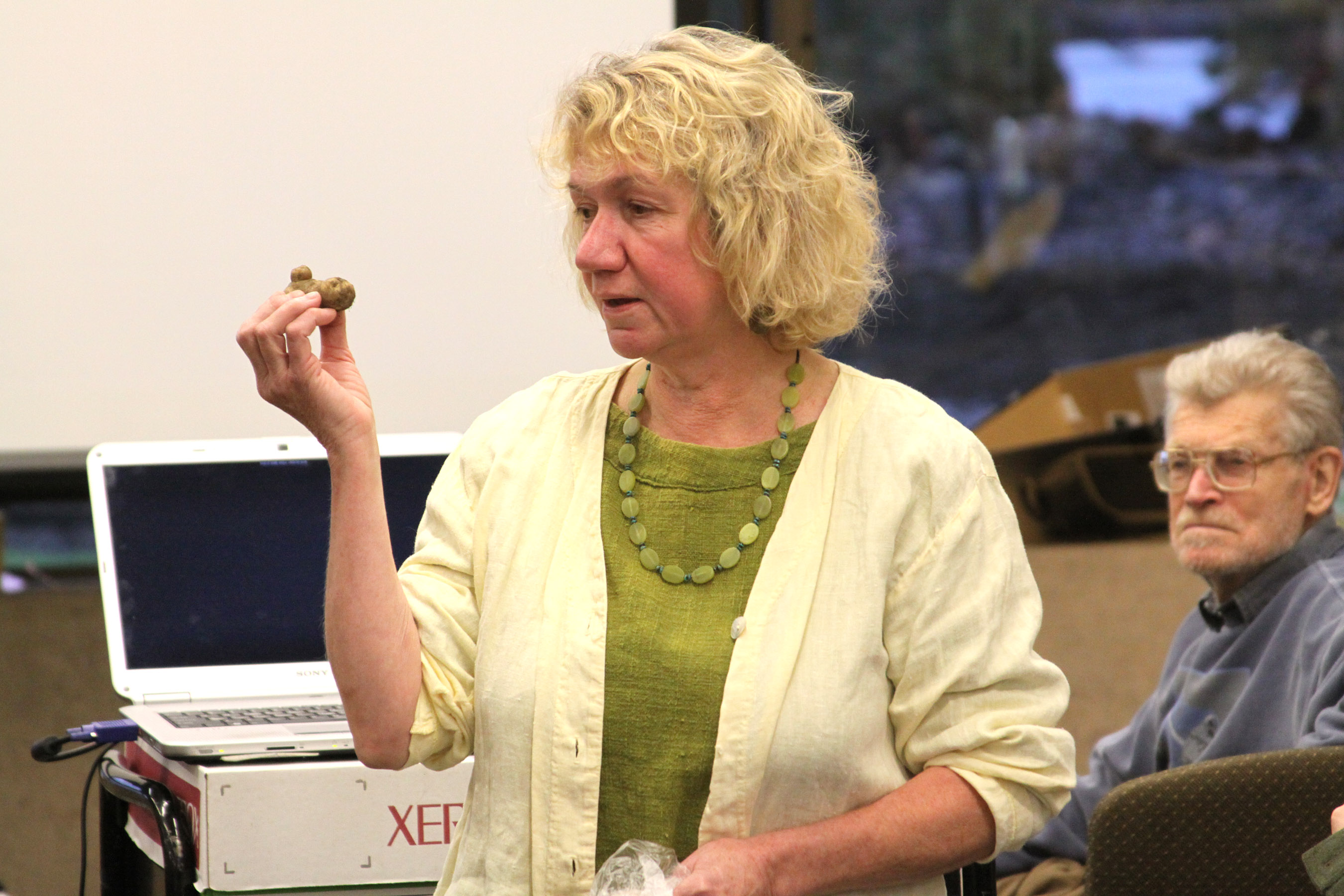
Elizabeth Kunibe shows off a Tlingít potato (also known as "Maria's potato")

On Friday afternoon, the Sitka Local Foods Network hosted anthropology student Elizabeth Kunibe of Juneau for a presentation, “Growing in Sitka and Southeast Alaska: Food of Today, Tomorrow and 200 Years Ago.” This presentation took place at the Kettleson Memorial Library and we had a standing-room-only crowd of 50-plus, despite being arranged less than a week before the event and competing with several Alaska Day happenings.

The Sitka Local Foods Network thanks Elizabeth for taking the time to make the presentation on what, for her, was a pleasure trip to Sitka for Alaska Day. We also thank the library and librarian Sarah Jones for allowing us to use Kettleson Memorial Library for the presentation.

Finally, we thank everybody who came to the presentation to hear Elizabeth discuss traditional Tlingít, Russian and American gardens in Sitka and Southeast Alaska, the Tlingít and Haida potatoes, an agricultural fair in Fort Yukon, the phytonutrients of potatoes and plant diseases.

For those people who weren’t able to attend, the presentation was recorded and it will be aired at various times this week on public access TV (Channel 11). Elizabeth said she might send over some notes from the presentation, and when those arrive they will be posted on the Sitka Local Foods Network site, http://www.sitkalocalfoodsnetwork.org/. A small gallery of photos from the presentation is posted at this link.

Thanks again,
Charles Bingham, event organizer
Sitka Local Foods Network

• Sitka Conservation Society hosts Wild and Scenic Environmental Film Festival

91

The largest environmental film festival in North America is coming to Sitka. Sitka Conservation Society is hosting the second annual Sitka tour stop of the Wild and Scenic Environmental Film Festival on Saturday, Oct. 24, at the Sitka Performing Arts Center.

Doors will open at 6 p.m. with informative and action booths hosted by local community groups and organizations, including a booth from the Sitka Local Foods Network. The films will begin at 6:30 p.m.

“The films include narratives coming directly from people throughout the world engaged in protecting our natural resources and wild places,” says tour manager Susie Sutphin. “The films highlight the ‘tipping point’ that the planet is reaching. Yet portrays the ‘turning of the tides,’ as communities realize what needs to change and how they are responding with creativity, resolve and heart.”

One of the films scheduled to be shown on Saturday, Homegrown Revolution, deals with the local food movement. This film examines a family’s efforts at growing all their own food in the midst of a densely urban setting in downtown Pasadena, Calif. For over twenty years, the Dervaes family has transformed their home into an urban homestead. As a family for this new paradigm, they harvest nearly three tons of organic food from their one-10th-of-an-acre garden plot while incorporating many back-to-basics practices, as well as solar energy and biodiesel.

A new film trailer by local filmmaker Ellen Frankenstein — who made the film, Eating Alaska — will be shown during the festival as well as several other films from around the world.

Tickets are $15 for adults and $10 for students and seniors. They are available at Old Harbor Books, Mountain Miss or at the door. Discounted and free tickets are available for individuals and families that sign up to be a Sitka Conservation Society member.

The film festival also will include door prizes and Young Alaskans Building Affordable Housing will sell concessions during intermission. For more information, go to http://www.sitkawild.org/ (note, site down for maintenance this week) or call 747-7509.