Have you ever wanted to sell your homemade breads, jams and jellies, syrups, smoked salmon, or other specialty food product? Sitka will be one of the host locations this February for a five-session distance-delivery class on starting and operating a specialty food business.
Students will learn about business plans and marketing, financing and accounting, permitting and feasibility assessments, promoting and pricing your products, and ways to enter the market, such as farmers markets, food trucks, wholesaling, and supermarkets. The instructors are seafood marketing specialist Quentin S.W. Fong of the Alaska Marine Advisory Program, and Kate Idzorek of the UAF Cooperative Extension Service, plus several special guests.
To learn more about the class and to register, click this link or contact Kate Idzorek at (907) 474-5391 or the UAF Cooperative Extension Service at (877) 520-5211.
Want to keep up with events and volunteer opportunities hosted by the Sitka Local Foods Network? Check out our new online calendar (look for it in the bar at the top of the page).
This calendar features events such as Sitka Local Foods Network board meetings, Sitka Farmers Markets, education classes, garden parties for St. Peter’s Fellowship Farm, and other events sponsored by the Sitka Local Foods Network. It also features community events related our mission, such as UAF Cooperative Extension Service classes, Sitka Gardeners Club meetings, traditional foods classes, etc.
If you have any events you feel should be included on this calendar, please email the details to sitkalocalfoodsnetwork@gmail.com and charles@sitkalocalfoodsnetwork.org.
As 2014 winds to a close, many Alaskans already are thinking about applying for their 2015 Alaska Permanent Fund Dividend check in January. As usual, Alaskans can share their wealth with a variety of Alaska nonprofits, including the Sitka Local Foods Network, through the PFD’s Pick.Click.Give. program.
This is the second year the Sitka Local Foods Network will participate in the Pick.Click.Give. program, which allows people to donate in $25 increments to their favorite statewide and local 501(c)(3) nonprofit organizations when they file their PFD applications from Jan. 1 through March 31. We thank the 56 donors who pledged $2,900 to the Sitka Local Foods Network in 2014, and we appreciate your support again in 2015.
When you choose to donate part of your PFD to the Sitka Local Foods Network, you support the Sitka Farmers Market, St. Peter’s Fellowship Farm, Blatchley Community Gardens, education programs about growing and preserving food, the sustainable use of traditional foods, the Sitka Community Food Assessment, the Sitka Food Summit, and a variety of other projects designed to increase access to healthy local foods in Sitka.
In 2014 a record 26,773 Alaskans gave $2.77 million to their favorite nonprofit organizations, up from $545,000 donated by 5,175 people in the program’s first year of 2009. Some Alaskans choose to donate to just one group, while others may spread several donations around to many groups. There now are more than 500 total 501(c)(3) nonprofit organizations participating in Pick.Click.Give. for 2015, including 22 from Sitka.
To encourage more Alaskans to donate through the Pick.Click.Give. program, this will be the second year of the Double Your Dividend contest. Anybody who makes a non-anonymous Pick.Click.Give. donation to at least one of the registered nonprofits will be entered into a contest where 10 lucky Alaskans will win a second PFD check. The winners will be announced in October, about the time the PFDs start hitting bank accounts.
So how do you make a donation to the Sitka Local Foods Network through the Pick.Click.Give. program? First, go to http://pfd.alaska.gov/ and fill out your PFD application. When you get to the section of the application asking if you want to participate in Pick.Click.Give. Charitable Contributions program, click on the PCG link and search for the Sitka Local Foods Network. You also can look for us by using the town search for Sitka.
The Pick.Click.Give. program is available only to people who file their PFD applications online, and not to those who file by mail. Even though you can’t file a new PFD application after March 31, you can go back into your application and update your Pick.Click.Give. donations through Aug. 31 each year.
You still can donate to the Sitka Local Foods Network if you aren’t from Alaska or aren’t eligible for a 2015 PFD. To donate, send your check to the Sitka Local Foods Network, 408D Marine St., Sitka, Alaska, 99835, or go to our page on Razoo.com, http://www.razoo.com/story/Sitka-Local-Foods-Network, and click the Donate button to make an online contribution. You also can send in a check or make an online donation if you are trying to make nonprofit donations before the end of the 2014 tax year. Please let us know if you need a receipt for tax purposes. For more information about donating, you can send an email to sitkalocalfoodsnetwork@gmail.com.
Shellfish lovers in Southeast Alaska have a lot to be thankful for this year, as the Sitka Tribe of Alaska hosted a regional training on how to detect paralytic shellfish poisoning and other marine biotoxins Nov. 20-21 in Sitka.
This workshop brought to town several technicians from seven different regional tribes for the first training since the Southeast Alaska Tribal Toxins (SEATT) partnership to study harmful algal blooms (HABs) was announced in October. SEATT partners include Sitka Tribe of Alaska, the Klawock Cooperative Association, Craig Tribal Association, Yakutat Tlingít Tribe, Petersburg Indian Association, Organized Village of Kasaan, and the Central Council of Tlingít and Haida Indian Tribes of Alaska (CCTHITA). In addition to the grant to create the partnership, Sitka Tribe of Alaska also received a second grant to create a regional lab in Sitka to help monitor HABs in Southeast Alaska.
Harmful algal blooms, such as paralytic shellfish poisoning (PSP), typically have not been monitored in Southeast Alaska for subsistence and recreational harvesters of clams, mussels, oysters, cockles, and other bivalves (commercial harvests are tested). Even though many people in Southeast Alaska love to harvest shellfish, eating it comes with some risks. There have been several PSP outbreaks in recent years that sent people to the hospital, and in 2010 two deaths were attributed to PSP and other HABs, such as Alexandrium, Pseudonitzchia and Dinophysis.
Being able to put trained monitors in several Southeast Alaska communities, the hope is the health risk can be reduced. Each technician will make weekly reports to the lab, which will help harvesters have better information as to the safety of their shellfish. To learn more about the training, check out this link from the Sitka Conservation Society website and this link from the National Oceanic and Atmospheric Administration (NOAA) Coastal Science website.
Do you want to garden in Sitka, but need to know the basics? The Sitka Local Foods Network education committee will kick off its 2015 schedule of classes with two free classes — Vegetable Gardening 101 and Choosing What Vegetables To Grow In Sitka.
Vegetable Gardening 101 is a beginner’s gardening class taught by Michelle Putz and Linda Wilson. The class is from 6:30-8:30 p.m. on Tuesday, Jan. 27, at Harrigan Centennial Hall. Participants will learn everything they need to start an easy-to-grow vegetable garden in Sitka.
Choosing What Vegetables To Grow In Sitka is a beginner’s class taught by Lisa Sadleir-Hart and Maybelle Filler. It takes place from 6:30-8:30 p.m. on Tuesday, Feb. 3, at Harrigan Centennial Hall. In this class, which is for new gardeners and new-to-Sitka gardeners, participants will learn which vegetables grow well in Sitka, and which vegetables can be a struggle.
These two classes will kick off a year-long series of education classes on a variety of topics related to vegetable gardening in Sitka. In addition, our garden mentor program classes also will be open to the public. For more information, contact Michelle Putz at 747-2708.
Sitka Local Foods Network President Lisa Sadleir-Hart works in Anam Cara Garden, which she and husband Tom Hart cultivate.
The Sitka Assembly will take up a plan to allow temporary home horticulture stands in residential areas during its Dec. 9 meeting at Harrigan Centennial Hall. This will be the second reading for the proposal, which passed unanimously on first reading during the Sitka Assembly’s Nov. 25 meeting. (EDITOR’S NOTE: This ordinance passed 6-0 on second reading Dec. 9, with one member absent, and will now be added to the Sitka General Code. There was some discussion about the business license requirement, but the Assembly left the requirement in.)
Ordinance 2014-38 streamlines the permitting process for home gardeners who want to set up a temporary produce stand in front of their homes to sell their extra veggies. Instead of having to go all the way to the Assembly for approval, under this proposal the Sitka Planning Commission can make the decision.
“This is an example of something that we can do very specifically to improve our food system here in Sitka,” said Sitka Local Foods Network Lisa Sadleir-Hart, who first proposed the change to the Planning Commission this summer with her husband Tom Hart. “Secondly, it’ll increase economic opportunities for Sitkans who garden or are in small farm production. Third, it’ll keep produce dollars circulating locally. Fourth, it increases neighborhood access to fresh fruits and vegetables. And fifth, it may spur other Sitkans to consider growing for more than their families and lead to further increases in our food security.”
The ordinance will allow garden stands in residential areas, but they’d be limited to six feet by eight feet. And to reduce the impact on neighbors, stands can only operate four hours a day, two days a week, between May and October. The ordinance specifically doesn’t include livestock or animal products. Home gardeners who set up produce stands in front of their homes will be required to have a business license and pay city sales tax.
The Sitka Assembly is scheduled at its Tuesday, Nov. 25, meeting a proposal that will allow local gardeners to host temporary front-yard produce stands in residential areas.
Lisa Sadeir-Hart works in Anam Cara Garden
The proposal will modify city code to change commercial use horticulture from a conditional use in residential and island zones to a permitted use. It was passed unanimously by the Sitka Planning Commission during that group’s Oct. 21 meeting, with a change that will allow an expedited review and permitting process from the Planning Commission, so home gardeners don’t have to go all the way to the Assembly for a permit. The current zoning code allows for you-pick gardens, such as Down-To-Earth U-Pick Garden, but doesn’t allow for temporary home produce stands.
Sitka Local Foods Network Board President Lisa Sadleir-Hart and her husband, Tom Hart, who operate Anam Cara Garden, first proposed the idea in August. They felt home gardeners can go through the permitting process during the winter, so they can operate their front-yard produce stands during the summer. The Planning Commission included a variety of rules on size, hours, neighbor notification, parking needs, etc., and it will review each proposed produce stand.
“I believe the public collaboration process works — it was good being able to work with the commission to make adjustments it was concerned about,” Sadleir-Hart said, according to an Oct. 22 article in the Daily Sitka Sentinel. “It will move us closer in terms of increasing the presence of locally produced food in our community. It will give Sitkans an opportunity to sell their produce to their neighbors, and benefit their pocketbooks as well.”
As we approach Thanksgiving, many families are gathering their supplies for the traditional feast. But there are a lot of people in Sitka who are struggling just to put food on the table.
In Sitka, the Salvation Army serves as the USDA-designated food bank and distribution point for commodity food. Maj. Turnie Wright (who teams up with his wife, Maj. Evadne Wright to run the local Salvation Army) said there are many items the Sitka Salvation Army can use to keep up with Sitka’s growing hunger needs. He said they served 77 meals at the soup kitchen the other day. You can learn more about Sitka’s growing number of people who need food assistance in the Sitka Community Food Assessment Indicators Report released in April 2014 (note, the number of people using the Salvation Army food bank and soup kitchen already is much higher than the numbers listed in the report).
Here’s a list:
gloves/mittens, hats, and coats (especially kids sizes)
sample-size toiletry kits
diapers (all sizes)
vegetables (canned, if possible, due to limited freezer space, or fresh for the soup kitchen)
cereals (avoid the sugar-laden junk masquerading as cereal)
peanut butter
potted meat (spreadable, such as Libby’s)
Ramen noodles
powdered milk
canned meats (such as chicken, salmon, Spam, etc.)
pork and beans
soups
spaghetti and other pasta
spaghetti sauce
fish (any type, frozen is preferred for the soup kitchen and canned for the food bank)
wild game (for the soup kitchen)
six-packs of Ocean Spray or other juices
bottled water/tea
raisins (preferably in the snack boxes)
Maj. Turnie Wright said the Salvation Army can break down bulk sizes of different foods for the food bank. He also said they accept grocery gift cards from the local stores and Costco. In addition, they can work with people who are taking their vehicles to Juneau on the ferry and have room to bring stuff back from the Southeast Food Bank or Costco (this helps Salvation Army avoid freight charges). Finally, when you design your garden this year, don’t forget to Plant A Row For The Hungry.
The Salvation Army is one of several food assistance programs in Sitka, with others being centered around local churches, the Sitka Tribe of Alaska, and Sitkans Against Family Violence. The Salvation Army will assist the Sitka Tlingít and Haida Community, Sitka Tribe of Alaska, and the Alaska Native Brotherhood/Alaska Native Sisterhood to host the annual community Thanksgiving dinner on Thursday, Nov. 27, at ANB Founders Hall. Doors open at 1 p.m., and food will start being served at 2 p.m. until it runs out (probably about 4 p.m.). Volunteers are needed, and donations of side dishes and desserts are appreciated (call Rachel Moreno at 738-6595 for details on the dinner).
For more information about how to help with the Salvation Army food bank and soup kitchen, contact Maj. Turnie Wright at 738-5854.
In producing the book, Andrianna traveled to five countries where she interviewed more than 70 small-scale farmers and fishermen (including some from Sitka). During these interviews she learned about the struggles and solutions faced by small-scale food producers within the scope of food sovereignty. Food sovereignty asserts the rights of the people to define their own food systems, and says those who produce, distribute and consume food must be at the center of decisions on food systems and policies, rather than the corporations and market institutions that have come to dominate global food trade.
“It is essential that those who are in the trenches are heard,” Andrianna said. “They are the closest to the earth and hold the responsibility in their hands to provide healthy, wholesome, culturally relevant food to their communities now and into the future. They are the roots of the food sovereignty movement.”
To learn more about the project and to order books, go to the Food Voices website.
Sitka Kitch, in conjunction with the Sitka Conservation Society, will host an apple tree workshop at 6 p.m. on Tuesday, Nov. 18, at Harrigan Centennial Hall.
Jud Kirkness will give us an introduction on the how-to’s of planting your own apple tree, and attendees will have the opportunity to place a tree order at the workshop. Let’s see if we can get 15 additional apple trees planted in Sitka.
This event is the final event of Applooza 2014, which also included the Sitka 4H club harvesting apples from local trees and making apple sauce for the Swan Lake Senior Center and Salvation Army. For more information, contact the Sitka Conservation Society at 747-7509.


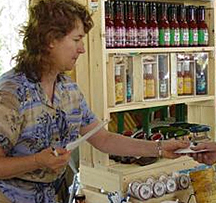 Have you ever wanted to sell your homemade breads, jams and jellies, syrups, smoked salmon, or other specialty food product? Sitka will be one of the host locations this February for a five-session distance-delivery class on starting and operating a specialty food business.


 Sitka Local Foods Network
You must be logged in to post a comment.