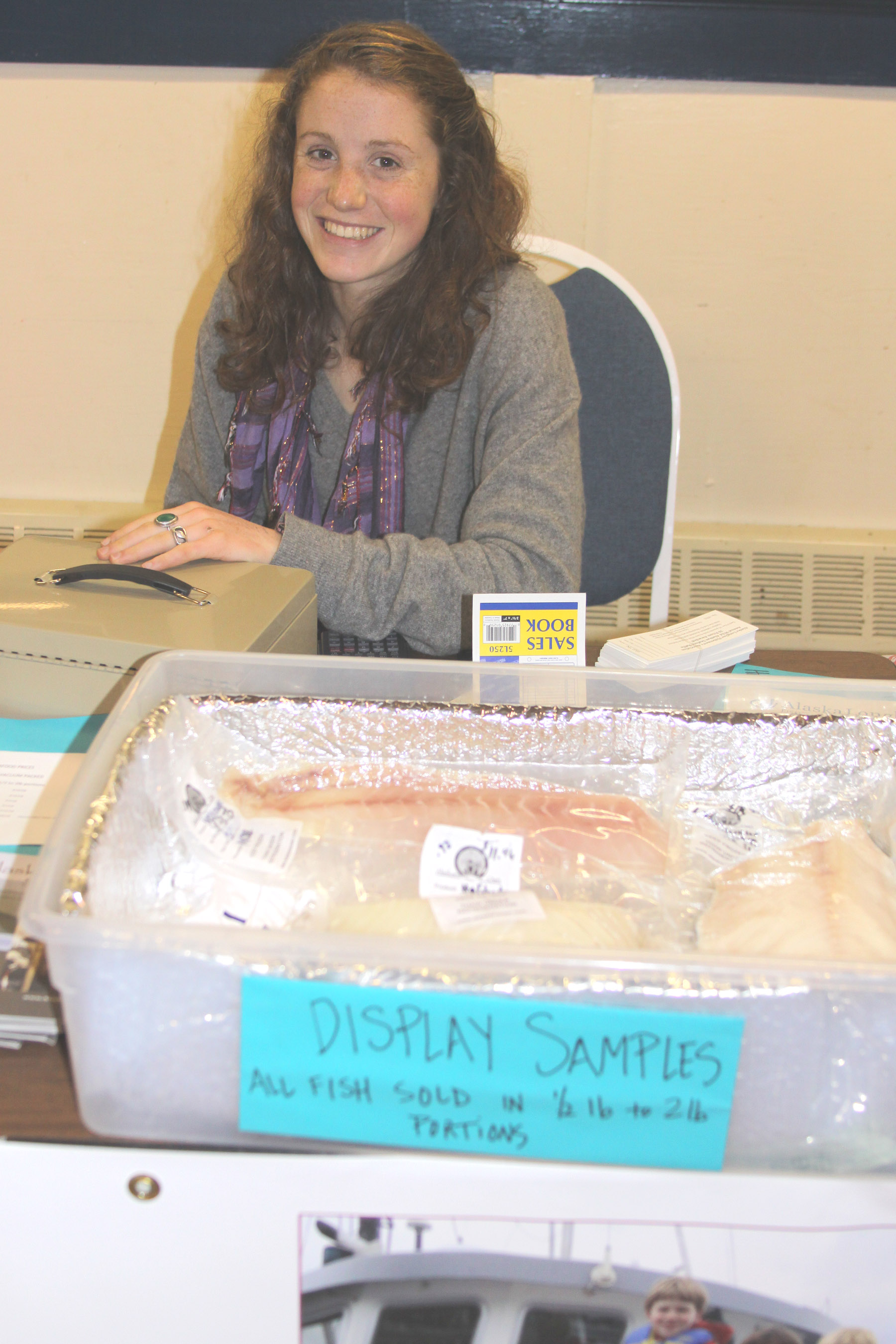
• Sitka herring researcher Heather Meuret-Woody makes her case for better management

(EDITOR’S NOTE: On Tuesday, May 15, the Sitka Tribe of Alaska hosted the Sitka Herring Summit to discuss issues regarding the management, or mismanagement, of herring stocks in Southeast Alaska. Sitka herring researcher Heather Meuret-Woody made this presentation, which also appeared as a shorter letter to the editor in the Daily Sitka Sentinel on May 18. The opinions expressed are Heather’s alone, though the Sitka Local Foods Network has written letters supporting the Sitka Tribe of Alaska in its bid to get the Alaska Department of Fish and Game to reduce the commercial quota for herring in Sitka Sound.)

Sitka Sound Herring Summit

May 15, 2012

Heather Meuret-Woody

Sitka Sound Herring Researcher

I have been a Sitka Sound herring researcher for about 10 years. I have decided to share my few thoughts on the Sitka Sound herring population. With this said, in my opinion there was not 144,143 tons of the predicted mature herring biomass returning to Sitka Sound. An overestimate of the biomass seems to be the suspect.

Managers of forage fish know that traditional stock management techniques do not work well with forage fish. The reason for the failure of traditional stock assessment techniques is that the “catchability” of forage fish increases as the stock declines. However, due to the schooling nature of forage fish and their vulnerability to modern acoustics and fishing gear, catch rates remain constant, even when the stock is rapidly falling in size (Beverton, 1990). Thus declines in stock size will not be apparent to managers or to the fishing industry, based on catch per unit effort statistics. Management of forage fish stocks requires direct measurement of stock size. This can be accomplished by surveying fish abundance during the spawning season, or by conducting scientifically designed acoustic surveys of schools of forage fish. Failure to monitor the stock directly will result in the inability to determine changes, even severe declines, in forage fish abundance. With that said, ADF&G does not measure the Sitka Sound herring stock directly. They may do acoustic surveys and aerial surveys but the data is not used for determining stock size in the ASA model. ADF&G relies almost entirely upon spawn deposition estimates to determine the spawning biomass. Hebert, 2010 states, “Estimates of total egg deposition on Macrocystis kelp may be highly variable, and transects that cross Macrocystis kelp beds could result in very high egg deposition estimates, resulting in high uncertainty around total estimates of egg deposition.” ADF&G also notes in this report that they have issues with diver calibration. One diver may visually estimate more or less eggs compared to another diver. Individual calibration factors can have a potentially large impact on spawn deposition estimates of biomass.

Accurate and regular estimates of fecundity are important for “ground-truthing” assumptions used by ADF&G. Fecundity estimates are used to convert estimates of herring egg deposition into mature biomass, and is used quite commonly among world-wide herring managers. ADF&G has only measured fecundity 4 times since the 1970s (Hulson et al., 2008). Since then, they just estimate fecundity based on weights, so large female herring lay approximately 40,000 eggs and small female herring lay approximately 20,000 eggs. Using un-validated parameters is extremely risky. For example, a 10% change in the egg per gram measurement used to convert spawn to fish, can result in a 20% change in the number of fish estimated.

In 2007, 2008, and 2009, spawning herring were sampled for Ichthyophonus prevalences in Sitka Sound. The results showed that 27% – 40% were positive for Ichthyophonus. All of this data is provided by Hershberger, Winton, and Purcell, from USGS Marrowstone Marine Field Station. The results of the 2010 and 2011 data from this ongoing research were not available at the time of this letter. Sitka Sound herring have had the Ichthyophonus disease for years and ADF&G has not incorporated this data into their current management. The ASA model does not account for disease, just “natural mortality.” However, this “natural mortality” is not based on observed data, but has been estimated by picking a random, but “conservative” number and applying it to the herring stock.

Sitka Sound herring follow the Pacific Decadal Oscillation (PDO) which is a 14-year oscillatory cycle and is highly correlated with an annual index of zooplankton biomass. Strong negative values of the PDO were observed in autumn 2011: “If these values persist through winter and early spring 2011-2012, they could result in the best ocean conditions observed in decades,” according to the 2011 annual update for the Ocean Ecosystem Indicators of Salmon Marine Survival in the Northern California Current research project, which has been ongoing since 1998. Additionally, “These negative values are expected to continue into spring 2012, which suggests that the northern North Pacific Ocean will also remain cold through spring 2012, giving rise to continuation of good ocean conditions.” So it is hard to imagine with this optimal ocean condition that Sitka Sound herring experienced mass mortality since last year. This winter we experienced the Arctic Oscillation which is essentially a pressure pattern that drives the jet stream, and controls how strong its winds are and where the jet stream position is. This winter, the jet stream trough, which tends to push the jet stream far to the north, helped drive storms into Alaska.

From 2006-2010, ADF&G has been trying to convince the public that the Sitka Sound herring had changed their maturation rates. They claimed that the herring were maturing later. Instead of herring reaching maturity at age-3 and age-4 they were not maturing until age-5, age-6, and age-7. Of course this was not actual observed data. ADF&G did not base this on ovarian histology or anything concrete, instead the changes were based on a number estimate to make the ASA model fit the data rather than using field data to fix the model. No other herring stocks along the Pacific Coast have herring delaying maturation, so it shouldn’t surprise anyone that Sitka’s herring are maturing at their usual rate. Additionally, ADF&G claimed that the herring were surviving longer, and the survivability rate they have been using is 87%. Again this was not based on anything managers actually observed, but was again a random number forced to make the ASA model fit the data. Even Hebert, 2010 states “External estimates of age-specific survival would improve the ASA model and provide more accurate forecasts of spawning biomasses.” If the Sitka Sound herring actually had 87% survivability rate, then the only way herring could have died was to be eaten by a predator or get caught in a purse seine net.

In 2008, I did a co-study with the ADF&G Age Determination Laboratory in Juneau. ADF&G collected 50 herring from the winter bait fishery and aged the herring via scale reading. I then received those 50 herring and aged them via otolith aging – and this is not the break and burn method, this is the thin-sectioning method that is widely recognized world-wide and even used by the California Department of Fish and Game on herring stocks. The herring aged via otolith actually aged 2 years younger on the average than the scale aging methodology. If you recall, ADF&G announced 12/16/2010 that their aging assessments were wrong for the period of 1999-2010. Once they re-aged all of the archived samples, they too came up with an average of 2 years difference. Additionally, because the ASA model used by ADF&G to forecast the mature biomass requires a long time series of reliable age estimates, the department chose not to use the ASA model, but instead relied on a biomass accounting model to forecast the 2011 Sitka Sound mature herring population.

Significant fisheries-induced evolutionary change has been researched in Norway in Baltic herring and has lead to the entrainment hypothesis: an explanation for the persistence and innovation in spawning herring migrations and life cycle spatial patterns (Petitgas et al. 2006). This research is quite intriguing and deserves more consideration. In 2008, the commercial fishery occurred along the entire Kruzof Island shore line in very shallow water. While the herring schools were being fished upon, a large percentage of the spawning biomass seemed to avoid the purse seiners and hit the first shoreline available, Kruzof, and spawned. Now if you review ADF&G spawn maps that go back to 1964 you will know that there has been less than 15 times that the herring biomass used the Kruzof shoreline as spawning habitat. The Kruzof Island shoreline is not very suitable spawning habitat as newly hatched larvae would be swept up in the currents and advected out of Sitka Sound, causing low survivability (Sundberg, 1981). However, if herring spawn on the islands, i.e. Middle Island, Kasiana, or along the road system, the currents in Sitka Sound keep the hatched larvae in the inner bays and water ways which are excellent for retention and increases survivability. Keeping in mind that herring recruit into a mature cohort at around age-4, the 2008 commercial sac roe fishery may have reduced the amount of recruits that we would have seen this year in 2012. Unfortunately we will never know because ADF&G does not measure immature herring. I have researched juvenile herring populations in Sitka Sound for several years and found that one of the most important rearing areas is along the Halibut Point Road shoreline from Katlian Bay and Nakwasina in the north to Halibut Point Marine and Cove Marina in the south (Meuret-Woody and Bickford, 2009). Unfortunately, the new dock at Halibut Point Marine will soon become a place for net pen-rearing of hatchery salmon smolts – with no consideration on the impacts it could have on juvenile herring populations.

Finally I’d like to point out that ADF&G staff has been quoted saying that herring only seem to spawn in Salisbury Sound when there is such a large biomass that extra spawning habitat is needed. So basically they claim Salisbury Sound is a spill-over spawning habitat, although they have no data to support this assertion. If this were actually true, based on biomass size, then where was the huge spill-over of spawning biomass in Salisbury Sound in 2011 and 2012 – both of which were huge forecast biomass years? In my published paper, Identifying Essential Habitat (Source vs. Sink Habitat) for Pacific Herring in Sitka Sound Using Otolith Microchemistry (Meuret-Woody and Bickford, 2009) it appears that Salisbury Sound actually supports a small discrete population of herring (10%), separate from Sitka Sound herring. Salisbury Sound may also be a source population for Hoonah Sound, supplying approximately 14% of the population for Hoonah Sound. Why doesn’t ADF&G rely on published data instead of relying on guesses made by their managers?

• Lori Adams discusses everything she’s learned about planting peas in her latest Daily Sitka Sentinel garden column

(Lori Adams, who owns Down-To-Earth U-Pick Garden and is a frequent vendor at the Sitka Farmers Market, will be writing a regular garden column in theDaily Sitka Sentinel this summer. The Sentinel is allowing us to reprint the columns on this site after they first appear in the newspaper. This column appeared on Page 6 of the Wednesday, May 9, 2012, edition of the Daily Sitka Sentinel.)

GARDENING IN SITKA

By Lori Adams

EVERYTHING I’VE LEARNED ABOUT PLANTING PEAS

When I first started growing peas in Sitka I had terrible results. Some people said, “Why don’t you stop growing peas? They take up so much space for so little harvest!” But I was determined and kept trying different things and now peas are one of my biggest producers of poundage.

The first thing you need to know about peas is that they are from the legume family. As a rule the members of this family grow pods with seeds in them; peas, beans, alfalfa, clover and peanuts are the most commonly known legumes. Legumes can do something no other plants can do – by working in a cooperative partnership with the Rhizobia bacteria found in the soil they can pull nitrogen right out of the air.  In this nitrogen-fixing process nodules form on the roots and the plants store nitrogen for pod formation. When you plant peas in a garden bed for the first time there is good chance that the proper strain of this bacteria will not be present in the soil, so it is important to “inoculate” the seeds.

Inoculant bacteria can be purchased in powder form and sprinkled onto the seeds at planting time.

Before planting peas prep the soil with a little compost and lime and put fencing in place to support the pea plants up off the ground. I recommend growing tall varieties of edible podded peas for the most poundage per square foot. Many gardeners prefer “self-supporting” varieties because they readily grab the fencing themselves, but I have never grown them. It does take up some of my time, but I tuck the vines in myself if they grow away from the fence.

The evening before you are going to plant, count out enough pea seeds to plant your row with two-inch spacing and put them in a jar of water to soak overnight. Do not screw the lid on tight. The next day pour the water off and sprinkle inoculant over the wet seeds.

Plant the seeds immediately in a raised bed and then cover the row with floating row cover to prevent the birds from eating the seeds. Don’t ask me how the birds know they are there, they just do — I’ve woken up the next morning to find the entire row ripped up and most of the seeds gone. Water the soil and keep it damp (not soaked) until the peas sprout, then reduce water to a minimum until the pea plants flower.

Once they flower it important to keep the soil consistently damp for optimal pod production. Try to water the ground keeping the foliage as dry as possible. It is important to pick pea pods EVERY day to encourage the plants to produce more over a long period of time. If your plants get too tall simply “top” them and throw the tender tips in your salad bowl or stir fry. When the plants die down in the fall do not remove the foliage from the row, but dig it into the soil to capture as much nitrogen as possible for next year’s crop of heavy feeding greens.

Good luck!

Next week’s column — Everything I’ve learned about planting celery.

Brought to you by Down-To-Earth U-Pick Garden

2103 Sawmill Creek Road

Open June-August / Monday to Saturday, 11 a.m. to 6 p.m.

747-6108 or 738-2241

http://downtoearthupick.blogspot.com/

• Lori Adams discusses everything she’s learned about planting carrots in her latest Daily Sitka Sentinel garden column

(Lori Adams, who owns Down-To-Earth U-Pick Garden and is a frequent vendor at the Sitka Farmers Market, will be writing a regular garden column in the Daily Sitka Sentinel this summer. The Sentinel is allowing us to reprint the columns on this site after they first appear in the newspaper. This column appeared on Page 4 of the Wednesday, May 2, 2012, edition of the Daily Sitka Sentinel.)

GARDENING IN SITKA

By Lori Adams

EVERYTHING I’VE LEARNED ABOUT PLANTING CARROTS

The carrots that are grown in Sitka are the best I have ever tasted. They are so sweet that they are more like candy than a vegetable. They are probably the single most popular item grown at the Down To Earth U-Pick Garden.

Kids love to try to judge the size of the carrot by brushing aside the dirt and looking at the tops. I never get tired of the look of joy and amazement on their faces after they finally make their selection, pull one up and get a look at their prize.

Carrots grow in fairly poor soil, don’t take up a lot of space and provide a lot of poundage per square foot. To get your bed ready for carrots, be sure the soil is not heavily fertilized. Carrots do not like a lot of nitrogen. It makes them grow beautiful, luscious tops and small, hairy roots.

It’s best to amend the bed with a small amount of organic material, like broken down leaves from last fall and then, right before planting the seeds bury starfish or amend with purchased bone meal. It’s good to add sand to the soil if you can get it. Next you should sift out any gravel or sticks that could cause the carrots to become crooked or split. I grow only Nantes varieties because they are shorter with blunt ends and do not taper. This shape is best because most of my beds are not deep enough for long carrots and my soil is not sandy enough for skinny carrots to be pulled out without breaking.

I used to just sprinkle the seeds on top of the soil and lightly rake them in, but I had bare spots and spots that were too thick, so I recently purchased a seeder. It is an expensive tool, but it’s important that every square inch of my garden is utilized to its full potential. With a seeder you use fewer seeds, the spacing is more consistent and you can predict where your seedlings are going to grow, which makes it easier to weed. Carrots should be spaced about two inches apart.

Carrot seeds take a long time to germinate, so be sure to water regularly. Don’t let the surface of the soil dry out. Because the soil is bare of vegetation for so long, it is important to cover the entire bed with row cover to discourage cats from using it as a litter box. Another drawback of having bare soil for that amount of time is that weed seeds are given free range to sprout. My carrot bed always has the most weeds.

When the carrot seedlings are about four inches high it is a good idea to weed even though it seems harsh on the fragile seedlings. They recover from weeding just fine, so be sure to get in there and pull every tiny weed.

About mid to late July you should be able to start eating delicious, sweet carrots, and you will be so glad you planted them.

Next week’s column — Everything I’ve learned about planting peas.

Brought to you by Down-To-Earth U-Pick Garden

2103 Sawmill Creek Road

Open June-August / Monday to Saturday, 11 a.m. to 6 p.m.

747-6108 or 738-2241

http://downtoearthupick.blogspot.com/

• St. Peter’s Fellowship Farm hosts another work party for spring planting and preparing for a summer of fresh veggies

This slideshow requires JavaScript.

The Sitka Local Foods Network will host its first planting party of the season from 2-4 p.m on Saturday, May 5, at St. Peter’s Fellowship Farm (located behind St. Peter’s By The Sea Episcopal Church on Lincoln Street, above Crescent Harbor).

Produce grown at St. Peter’s Fellowship Farm is sold during the Sitka Farmers Markets to help fund Sitka Local Foods Network projects throughout the year. The 2012 Sitka Farmers Markets take place from 10 a.m. to 2 p.m. on alternate Saturdays starting July 7 through Sept. 15 (July 7, 21, Aug. 4, 18, Sept. 1, 15) at the Alaska Native Brotherhood Hall on Katlian Street.

Our last work party on April 21 was an absolute success (see photo slideshow above), and we’d like to continue to build on this momentum. In addition to planting crops, we’ll continue with bed building, adding amendments to the soil, laying down wood chips to prevent future weeds and lots more.  Tools and teaching will be provided.  Dress for the weather.

For more information, contact St. Peter’s Fellowship Farm lead gardener Laura Schmidt at 623-7003 or 738-7009. We will need a lot of bodies for this work party. We will continue planting the gardens on Saturday afternoons throughout May, now that we’re past the final freeze.

• Lori Adams discusses transplanting time in her latest Daily Sitka Sentinel garden column

(Lori Adams, who owns Down-To-Earth U-Pick Garden and is a frequent vendor at the Sitka Farmers Market, will be writing a regular garden column in the Daily Sitka Sentinel this summer. The Sentinel is allowing us to reprint the columns on this site after they first appear in the newspaper. This column appeared on Page 4 of the Wednesday, April 25, 2012, edition of the Daily Sitka Sentinel.)

GARDENING IN SITKA

By Lori Adams

TRANSPLANTING TIME

Most vegetable transplant starts can not handle any frost, so it is important to know the average frost-free date in your area. In Sitka we can get frost right up to about May 15, but you can transplant out a full month earlier if you utilize a product called a “floating row cover.”

Our local stores carry several brands of row cover in varying sizes. It is basically a light-spun polyester type of fabric through which water and light can penetrate. A floating row cover protects plants from frost and raises the temperature of the bed approximately 10 degrees. It can lie directly on the plants or be held aloft with hoops, but it needs to be weighted down around the edges to keep it from blowing away.  Here at the Down To Earth U-Pick Garden, I use a seine net to hold it down. But you can use rocks or milk jugs full of water if you don’t have netting.

It would be best to leave this cover on your beds all season, but I take mine off about July 15 or when the vegetables are ready to pick, whichever comes first.

As a general rule I transplant the following vegetables outdoors in mid-April —  broccoli, cauliflower, Brussels sprouts, Swiss chard, cabbage, lettuce, spinach, kohlrabi, kale and beets.  And I sow these seeds directly into the soil — radishes, potatoes, turnips, carrots and peas. In May, I transplant — celery, leeks, fennel, sunflowers, herbs, zucchini, cucumbers and tomatoes; and I sow beans directly into the soil.

The first step in the transplanting process is to “harden off” your starts.  This is a very tedious task which I hate, but it really is a must. Hardening off is a term used to describe the process of gradually getting the transplants used to the outside environment. During this process you carry your flats of transplants outdoors into a sunny sheltered area for several hours and then bring them back inside. Each day you extend the time they spend outdoors until they are ready to go out permanently. This reduces the shock to the baby vegetables.

When transplanting make a shallow dish-shaped depression in the bed and then dig a hole for the start right in the center. Carefully remove the start from its pot without handling the fragile stem (the plant can grow another leaf but it can’t grow another stem). Put it in the hole and lightly firm the soil around it. The shallow depression should remain to help catch water. You can bury most plants up to their first true leaves, but be sure not to cover the growing center of the plant with soil. Water lightly about three times that first day and at least once a day for the next two days if it doesn’t rain. Watering with a vitamin B solution is said to help starts deal with this stressful process. In a week or so your transplants should recover from the move and start showing signs of growth.

Next week’s column — Everything I know about carrots.

Brought to you by Down-To-Earth U-Pick Garden

2103 Sawmill Creek Road

Open June-August / Monday to Saturday, 11 a.m. to 6 p.m.

747-6108 or 738-2241

http://downtoearthupick.blogspot.com/

• Lori Adams discusses crop rotation in her latest Daily Sitka Sentinel garden column

(Lori Adams, who owns Down-To-Earth U-Pick Garden and is a frequent vendor at the Sitka Farmers Market, will be writing a regular garden column in the Daily Sitka Sentinel this summer. The Sentinel is allowing us to reprint the columns on this site after they first appear in the newspaper. This column appeared on Page 4 of the Wednesday, April 18, 2012, edition of the Daily Sitka Sentinel.)

GARDENING IN SITKA

By Lori Adams

UNDERSTANDING CROP ROTATION

It’s time to start transplanting and direct sowing seeds for most crops, but before you put them in your beds you should be aware of the benefits of crop rotation. Each separate crop depletes the soil of specific nutrients and attracts specific pests. If you plant that same crop in the same place year after year that crop will decline in quality. It is good to determine to not place the same crop in the same spot for at least three years.

Different crops can be grouped together based on similar qualities and be considered “family groups”. To begin planning your crop rotation plan, familiarize yourself with the different plant family groups. There are many books and articles written on the subject. Many books I have read confused me because they separated the plants into too many groups and included too many things that don’t grow well here, like corn and eggplant. But I have used their information to separate my crops into these basic family groups:

  • First year (new dirt) — potatoes, radishes
  • Second year (amend with organic material and plant legumes that bring nitrogen into the soil) — peas green beans, fava beans
  • Third year (amend with nitrogen rich material and plant heaviest feeders) — lettuce, spinach, Swiss chard, celery, zucchini, fennel
  • Fourth year (amend again but not as heavily as previous year and plant heavy feeders that attract root maggot flies) — broccoli, cauliflower, brussel sprouts, cabbage, kohlrabi, kale, Chinese cabbage
  • Fifth year (amend with phosphorus and plant light feeding root crops) — beets, turnips, carrots, parsnips, garlic, onions, leeks

This plan is not perfectly by the book, and I apologize if I forgot anything, but it works for my garden. Rhubarb, berries and asparagus stay in the same spot every year and I am planning to keep my herbs in the same spot also because many of them over-winter well and I don’t like disturbing them in the spring to move them to a new bed.

If you feel that you need less than five groups for your garden just minimize your plan to this type of rotation: new dirt (potatoes), heavily amended soil (heavy feeders), used soil (light feeding root crops). If you don’t have the same amount of beds as you have family groups simply divide your beds into sections. Once you have your crop rotation plan in place it is a good idea to draw a diagram of your garden on paper each year and note which crops were grown in each area. Time has a way of helping you forget what you did the years before!

Many gardeners swear that growing specific crops together is beneficial — that the crops help each other in some way.  There is a good book written on the subject named, Carrots Love Tomatoes written by Louise Riotte, that you should read if you are interested in learning more about the technique.

Next week’s column — Transplanting time.

Brought to you by Down-To-Earth U-Pick Garden

2103 Sawmill Creek Road

Open June-August / Monday to Saturday, 11 a.m. to 6 p.m.

747-6108 or 738-2241

http://downtoearthupick.blogspot.com/

• Join us at the Fish to Schools benefit dinner on Wednesday, April 25

Come help Sitkans support the award-winning Fish to Schools program by attending a benefit dinner from 5:30-7:30 p.m. on Wednesday, April 25, at Sweetland Hall on the Sheldon Jackson Campus.

This benefit dinner will include a presentation of the grand prize of the Alaska Farm to Schools Challenge for the 2011-12 school year, which will be presented by Johanna Herron of the Alaska Department of Resources. The benefit features a local seafood dinner of crispy oven-baked rockfish prepared by chef Colette Nelson of Ludvig’s Bistro and students from Pacific High School’s food services program.

Tickets are $20 for adults, $15 for seniors and students, and $5 for youth age 18 and younger, and they can be purchased at Old Harbor Books. All proceeds benefit the Sitka Fish to Schools program that brings regular fish meal choices to students at Blatchley Middle School, Keet Gooshi Heen Elementary School and Pacific High School.

The Fish to Schools program (link goes to April 15 Juneau Empire article) was a community health project from the 2010 Sitka Health Summit, and the Sitka Conservation Society has been managing the 2-year-old program in partnership with the Sitka School District, local fishermen and other community partners. For more information about the Fish to Schools program, contact Tracy Gagnon of the Sitka Conservation Society at 747-7509 or tracy@sitkawild.org.

• Alaskans Own™ community supported fisheries program announces season subscriptions for Sitka and Juneau

Sitka-based Alaskans Own seafood recently announced its subscription prices for its 2012 Community Supported Fisheries (CSF) program in Sitka and Juneau. Alaskans Own was the first CSF program in the state, modeling its program after the successful Community Supported Agriculture (CSA) programs that let customers deal directly with harvesters so they can buy subscription shares to the year’s crop/catch.

This is the third year of the Alaskans Own CSF program, and this year there are four-month and six-month subscriptions. The six-month subscriptions are new this year, and they will allow people to keep receiving freshly caught seafood through October instead of August. Half-subscriptions also are available. Subscriptions include a mix of locally caught black cod (sablefish), halibut, king salmon, coho salmon, lingcod and miscellaneous rockfish, depending on the commercial fishing season.

In Sitka, pick-ups take place on the fourth Wednesday of the month (May through August for four-month subscriptions, May through October for six-month subscriptions) at the Mill Building at the Sitka Sound Science Center. A pick-up location for Juneau will be announced at a later date. Registration for 2012 subscriptions opened on April 13, and the first pick-up is scheduled for Wednesday, May 23. Subscriptions are limited, so sign up early. For those who miss out on subscriptions, Alaskans Own frequently has a booth at the Sitka Farmers Markets.

The four-month summer subscription price (May through August) is $430 plus tax for 40 pounds of seafood total, while the half-subscription price is $230 plus tax for 20 pounds. The four-month share will have two pounds of blackcod and 10 pounds of miscellaneous rockfish in May, eight pounds of lingcod and four pounds of halibut in June, six pounds of king salmon in July and 10 pounds of coho salmon in August. The half-subscription has half shares of each fish species.

The six-month summer subscription price (May through October) is $635 plus tax for 60 pounds of seafood, while the half-subscription price is $335 plus tax for 30 pounds of seafood. The six-month share will be the same as the four-month share for May through August, with September adding one pound of blackcod, five pounds of miscellaneous rockfish and four pounds of lingcod, and October including two pounds of halibut, three pounds of king salmon and five pounds of coho salmon. The half-subscription matches the four-month half-subscription through August, then adds one pound of black cod, three pounds of miscellaneous rockfish and two pounds of lingcod in September, and one pound of halibut, one pound of king salmon and two pounds of coho salmon in October.

The mix outlined is subject to change, as Alaskans Own bases its costs on estimated dock prices that can fluctuate throughout the season. For example, if July king salmon prices are higher than expected, you’ll receive a little bit less of that species and get additional pounds of coho salmon. The bottom line is you get the best mix of seafood possible for the subscription price.

For more information, go to the CSF page on the Alaskans Own website, or call 738-3360 in Sitka. You can contact Alaskans Own by e-mail in Sitka at info@alaskansown.com or in Juneau at alaskansown@gmail.com.

• Lori Adams discusses feeding plants in her latest Daily Sitka Sentinel garden column

(Lori Adams, who owns Down-To-Earth U-Pick Garden and is a frequent vendor at the Sitka Farmers Market, will be writing a regular garden column in the Daily Sitka Sentinel this summer. The Sentinel is allowing us to reprint the columns on this site after they first appear in the newspaper. This column appeared on Page 4 of the Monday, April 16, 2012, edition of the Daily Sitka Sentinel.)

GARDENING IN SITKA

By Lori Adams

FEEDING YOUR PLANTS

New seedlings do not need anything in the way of fertilizer until they have their first set of true leaves. Then I recommend a diluted liquid food administered every watering rather than periodic full-strength doses. It is less harsh and promotes steady, healthy growth. Once the starts are planted outdoors the proper food should already be in the garden soil, ready for them. So what is the proper food for vegetable plants?

First of all, I like to think of it as “feeding the soil” rather than “feeding the plants.” Garden soil is alive, and each square inch of good garden soil contains billions of microorganisms which convert organic material into energy for plants. Plants need many nutrients to do their best, but the three essential nutrients reduced to their simplest terms are:

  • Nitrogen (N) — The most important. Promotes green growth. — Natural sources are composted grass clippings, animal manure, herring eggs on seaweed or fish carcasses.
  • Phosphorus (P) — Promotes root growth. — Natural sources are starfish, pulverized deer bones or fish skeletons.
  • Potassium (K) — Promotes fruit and flower growth. — Natural sources are seaweed, greensand, granite dust or wood ashes.

Our local stores have shelves that are loaded with great fertilizer products. You just need to know how to read the labels. The amounts of NPK will always appear in the same order on the front of the product written as numbers, like this; 8-5-1. These numbers represent the percentage of NPK in the product.  In this case there is 8 percent Nitrogen, 5 percent Phosphorus and 1 percent Potassium, with the remaining 86 percent consisting of inert or inactive materials. The inactive materials help to dilute and mix the fertilizers more thoroughly.

You can research the best NPK amounts for each vegetable you are going to grow, but a good all-around ratio for the general garden would be roughly 3-1-2.  It is a good idea to fertilize (with either purchased or gathered ammendments) at the beginning of the year and again mid summer, but be sure to read any instructions for purchased fertilizers thoroughly.

Compost is a fantastic way to add nutrients, but if you want to use it exclusively it’s best to think of it as a really healthy, nutritious snack that needs to be added liberally and frequently to be effective.  Just remember that the only thing you will get out of your compost pile is what you have put into it. Compost is another subject that will be addressed in a later column.

Finally, don’t forget to address the ph level of your soil.  Even if you have applied the proper amount of fertilizer the plants can not fully utilize it if the ph level is not correct. Ph levels can be adjusted with either purchased lime or gathered seashell sand.

Next week’s column — Understanding crop rotation.

Brought to you by Down-To-Earth U-Pick Garden

2103 Sawmill Creek Road

Open June-August / Mon-Sat 11:00-6:00

747-6108 or 738-2241

http://downtoearthupick.blogspot.com/

• St. Peter’s Fellowship Farm hosts second work party to prepare for spring planting and a summer of fresh veggies

This slideshow requires JavaScript.

The Sitka Local Foods Network will host its second work party of the season from 2-4 p.m on Saturday, April 21, at St. Peter’s Fellowship Farm (located behind St. Peter’s By The Sea Episcopal Church on Lincoln Street, above Crescent Harbor).

Produce grown at St. Peter’s Fellowship Farm is sold during the Sitka Farmers Markets to help fund Sitka Local Foods Network projects throughout the year.

Our first work party on April 14 was an absolute success (see photo slideshow above), and we’d like to continue to build on this momentum. We’ll continue with bed building, adding amendments to the soil, laying down wood chips to prevent future weeds and lots more.  Tools and teaching will be provided.  Dress for the weather.

For more information, contact St. Peter’s Fellowship Farm lead gardener Laura Schmidt at 623-7003 or 738-7009. We will need a lot of bodies for this work party. We will start planting the gardens in May, once we’re past the final freeze.