• USDA Natural Resources Conservation Service offers funding support program for high tunnels

picture8

The deadline is coming up for the next round of applications for the U.S. Department of Agriculture’s Natural Resources Conservation Service (NRCA) cost-sharing program. This program enables qualifying landowners who produce food to build high tunnels with financial assistance from the USDA.

The next NRCA Alaska program deadline is June 15. However, the program usually sets two applications deadlines a year so applications can be batched and ranked. Applications that miss the June 15 deadline will be held for the next deadline (usually Sept. 15, but it hasn’t yet been posted online).

High tunnels, also known as hoop houses or temporary greenhouses, extend the growing season so more food is produced before and after the traditional weather dates for growing stuff outdoors. They also can help with irrigation and drainage, and with pest control.

High tunnels are different than greenhouses in that they are passively heated by the sun, so they have lower energy costs than greenhouses. High tunnels are at least six-feet tall, so people can walk upright in them. Low tunnels, which usually involve some PVC pipe bent over a garden bed and covered with row cover, aren’t eligible in this program. Food in high tunnels is planted either directly into the ground or in raised beds. To learn more about the USDA’s high tunnel program, click here, and click here to get information about the application procedure. This link has frequently asked questions and answers about seasonal high tunnel systems for crops.
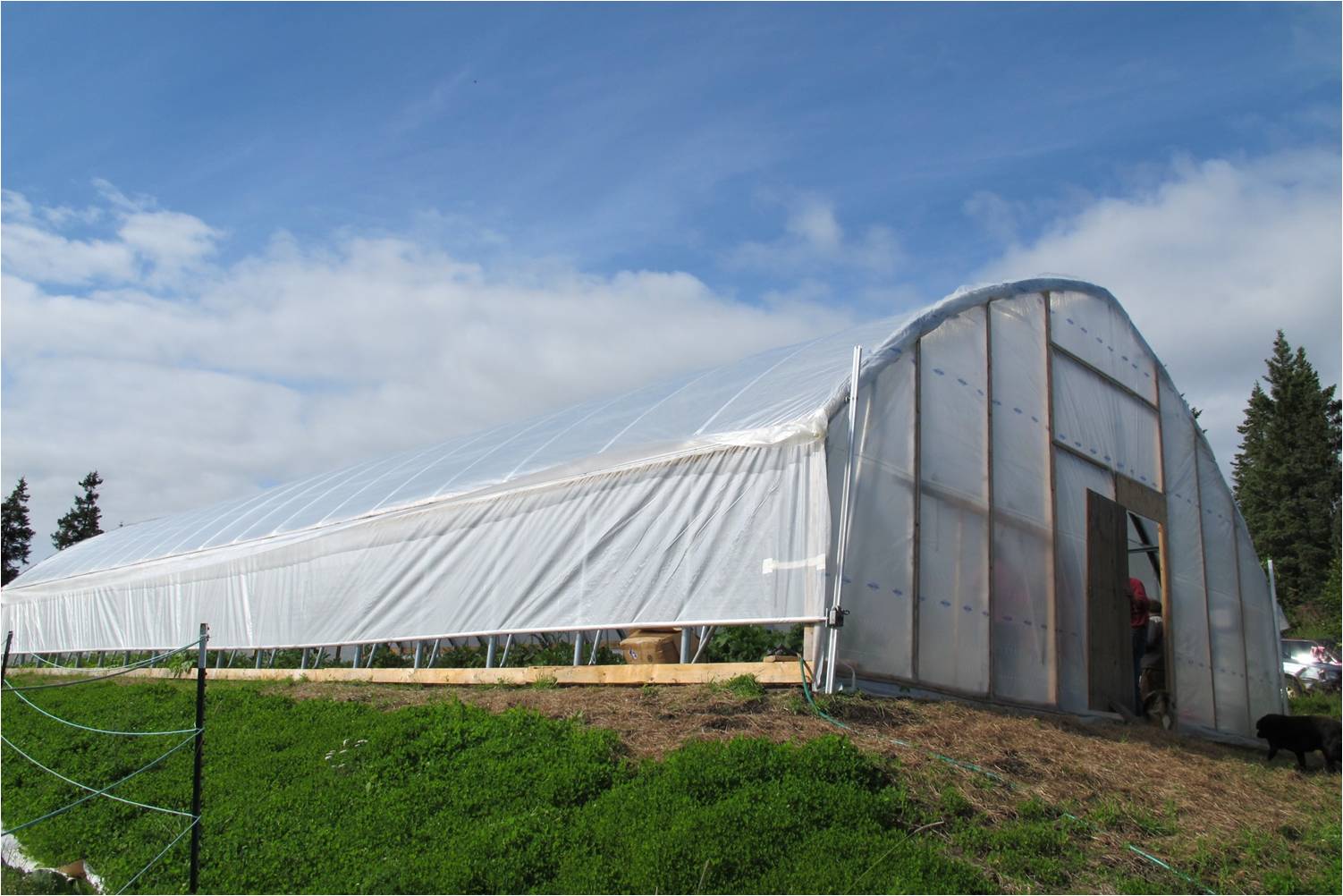
Picture10This program started a couple of years ago as a pilot program, but now is a permanent part of of the NRCS EQIP (Environmental Quality Incentive Programs). The program recently was revamped, and one major change is there now is no size restriction on the structures NRCS provides cost-sharing funds (previously it was limited to up to 2,178 square feet, or 5 percent of one acre). Also, geodesic domes are now eligible. Both the land owner and land must meet certain eligibility requirements.

Funding is provided on a reimbursable status once the high tunnel is installed and certified to meet NRCS standards. In 2012 there was just one high tunnel in Sitka, but in 2013 there were six. Other areas of the state, such as Homer, have built dozens of high tunnels through the program.

For information regarding the NRCS technical service or program participation in Southeast Alaska, please contact Samia Savell or Will Murray at the Juneau field office at (907) 586-7220 or 586-7208, or send email to samia.savell@ak.usda.gov or william.murray@ak.usda.gov. The June 15 deadline is the first deadline for the Fiscal Year 2016 funding cycle. Click here for a link to the Alaska NRCS page. Click here for an interview with Samia Savell on KRBD-FM (Ketchikan) about the program.

• High Tunnel In Alaska Fact Sheet (March 2014)

• Flier about Southeast Alaska cost-sharing program for FY2016 (March 2015)

• Check out the June 2015 edition of the Sitka Local Foods Network newsletter

SLFNJune2015NewsletterScreenshot

The Sitka Local Foods Network just sent out the June 2015 edition of its newly launched monthly newsletter. Feel free to click this link to get a copy.

This edition of the newsletter has brief stories about several new street food options in Sitka that are highlighting local seafood, a Blessing of the Garden ceremony at St. Peter’s Fellowship Farm, an update on a June 2 meeting for prospective and past vendors of the Sitka Farmers Market, and a reminder about the Plant a Row for the Hungry program. Each story has links to our website for more information.

You can sign up for future editions of our newsletter by clicking on the registration form image in the right column of our website and filling in the information. If you received a copy but didn’t want one, there is a link at the bottom of the newsletter so you can unsubscribe. Our intention is to get the word out about upcoming events and not to spam people. We will not share our email list with others to protect your privacy.

• New street food vendors add a taste of seafood to the Sitka summer

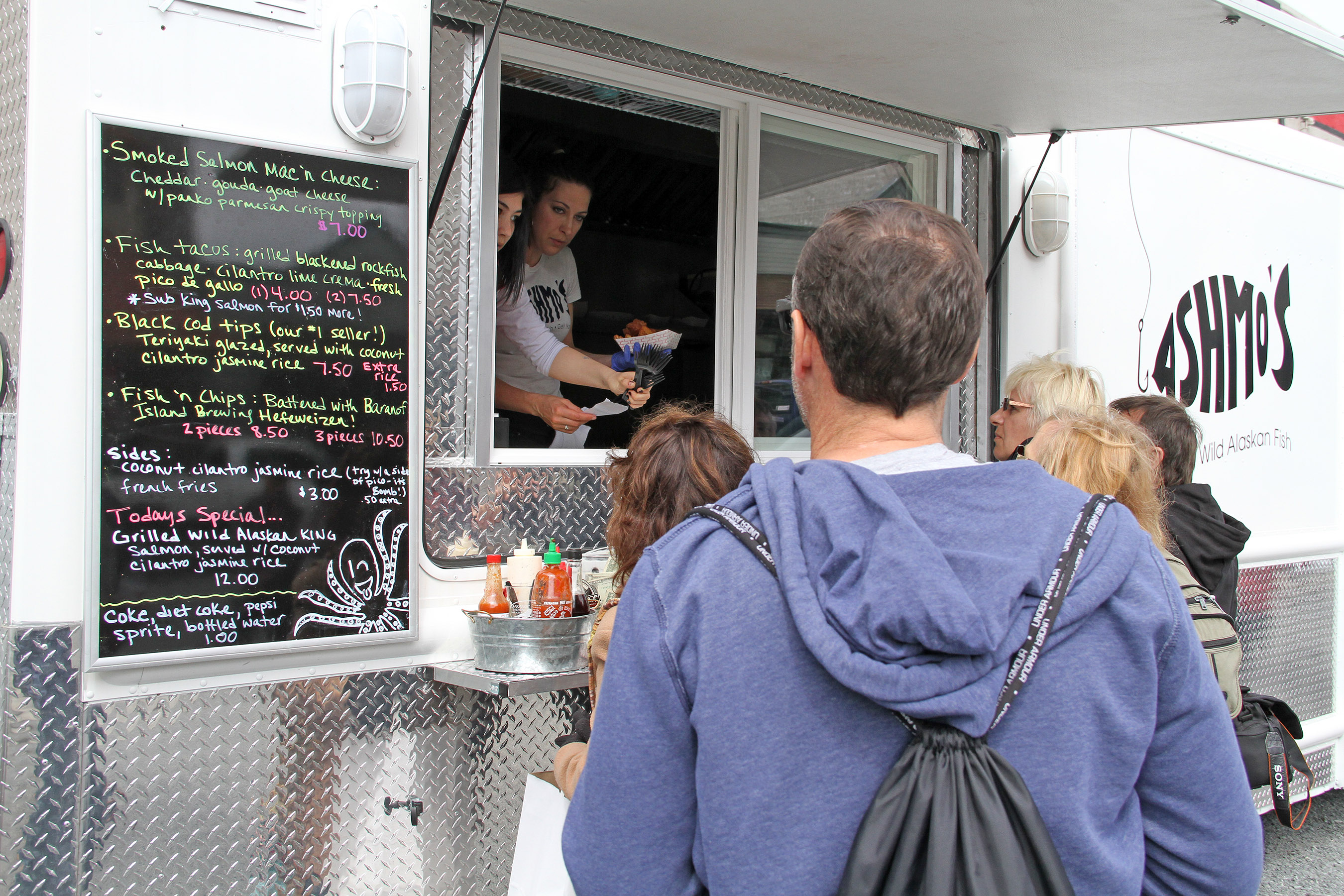
AshmosAshleyMooreServing

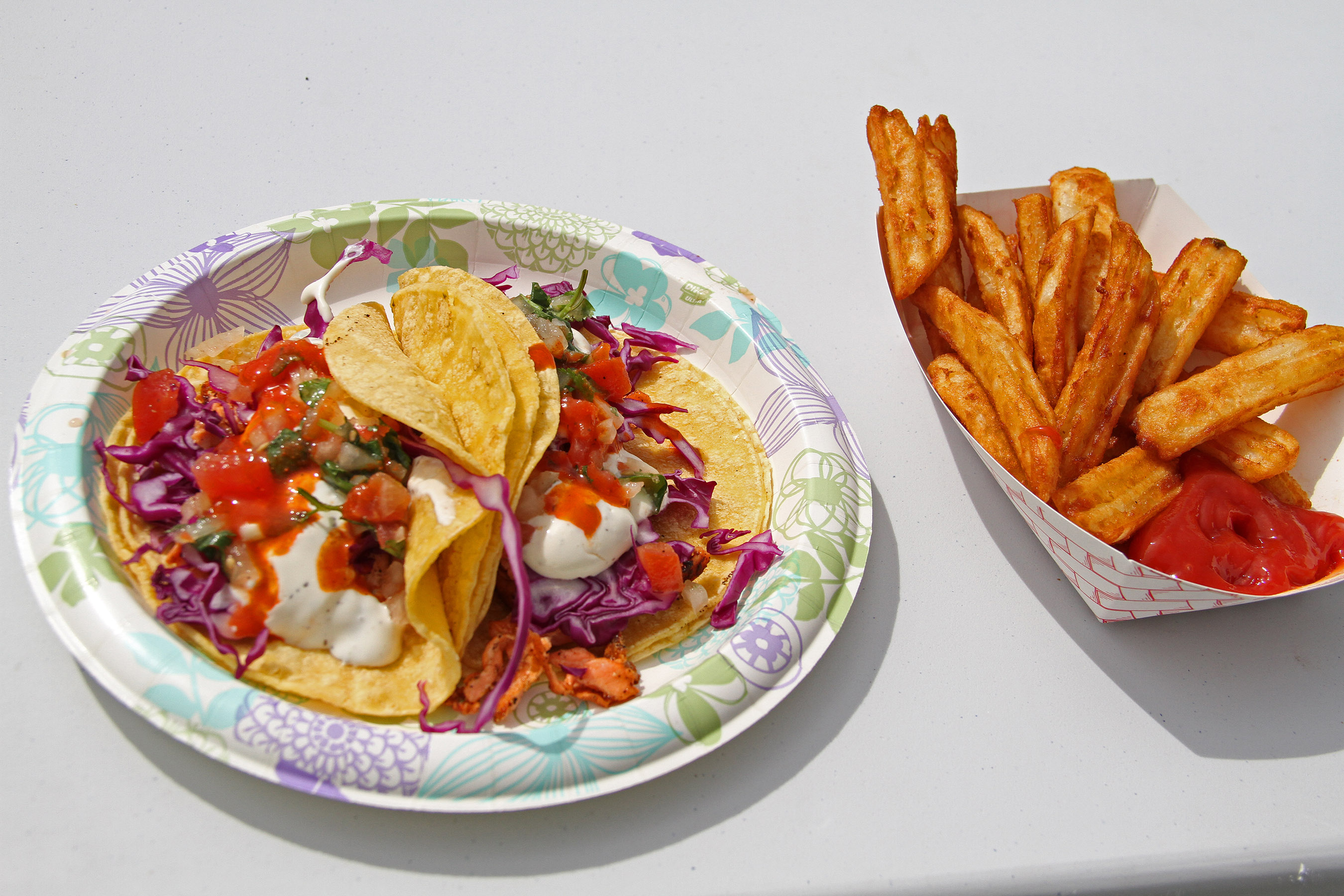
AshmosSalmonTacosAndFriesOver the past decade there have been a handful of summer pop-up street food options in Sitka. This year there are several new food trucks/carts in town, and locally sourced seafood is featured on the menu.

In past years some of the bigger street food options included Reindeer Red Hots (which this year will only do special events like the Sitka Farmers Market and Sitka Seafood Festival instead of holding its regular street corner), the Ludvig’s Bistro Chowder Cart (still serving lunch of clam chowder and salmon or prosciutto baguettes in the Mill Building by the Sitka Sound Science Center) and the short-lived Two Chicks and a Kabob Stick (which closed a couple of years ago, though you can still get the Inga’s Spice Blend fish rub developed for the food cart).

AshmosSalmonMacAndCheeseThe most mobile of the new group of street food stands is Ashmo’s, a food truck owned by Ashley Moore specializing in Alaska seafood dishes. Ashmo’s has been parked out in front of the Coliseum movie theater on Lincoln Street for much of the summer. But the truck also has been available this summer at Baranof Island Brewing Company on Tuesday nights and for other special events (including the BIBCO community benefit night May 27 for the Sitka Local Foods Network), with occasional trips to the Old Sitka Docks, and by Eliason and New Thompson harbors.

AshmosFishAndChipsAshmo’s serves a variety of seafood dishes, with a menu that does change through the week. Among the mainstays are salmon mac and cheese, rockfish tacos, BIBCO beer-battered halibut, fish (cod) and chips, blackcod collars and rice, grilled king salmon and rice, and more. Salmon sliders and salmon tacos also have been on the menu on some days. Ashmo’s is usually open during the day in front of the Coliseum, and it also has been open late nights on weekends. Ashley usually posts a weekly schedule on her Facebook site.

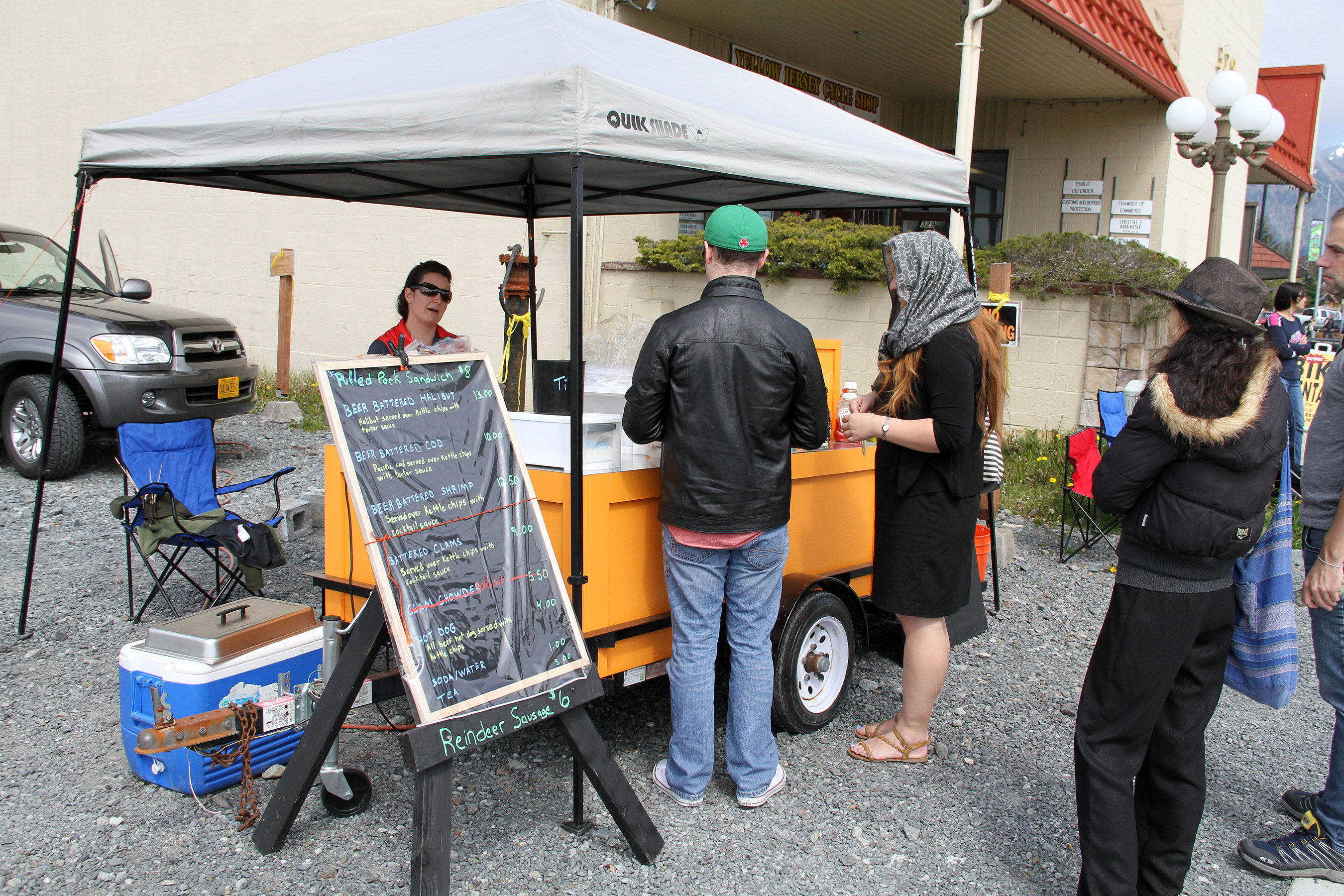
BarnacleBayKitchenHeidiMorrisonOn Harbor Drive next to Yellow Jersey Cycle Shop is Barnacle Bay Kitchen, owned by Heidi Morrison. Barnacle Bay Kitchen is open for lunch on cruise ship days and sells halibut and chips, cod and chips, rockfish lumpia (egg rolls), bacon-wrapped halibut kabobs, reindeer hot dogs, beef hotdogs, and pulled pork sandwiches.

BarnacleBayKitchenCodAndChipsIn addition, Heidi has a variety of chowders available (clam, seafood, or smoked salmon, depending on the day). For more information, call Heidi at 738-8504.

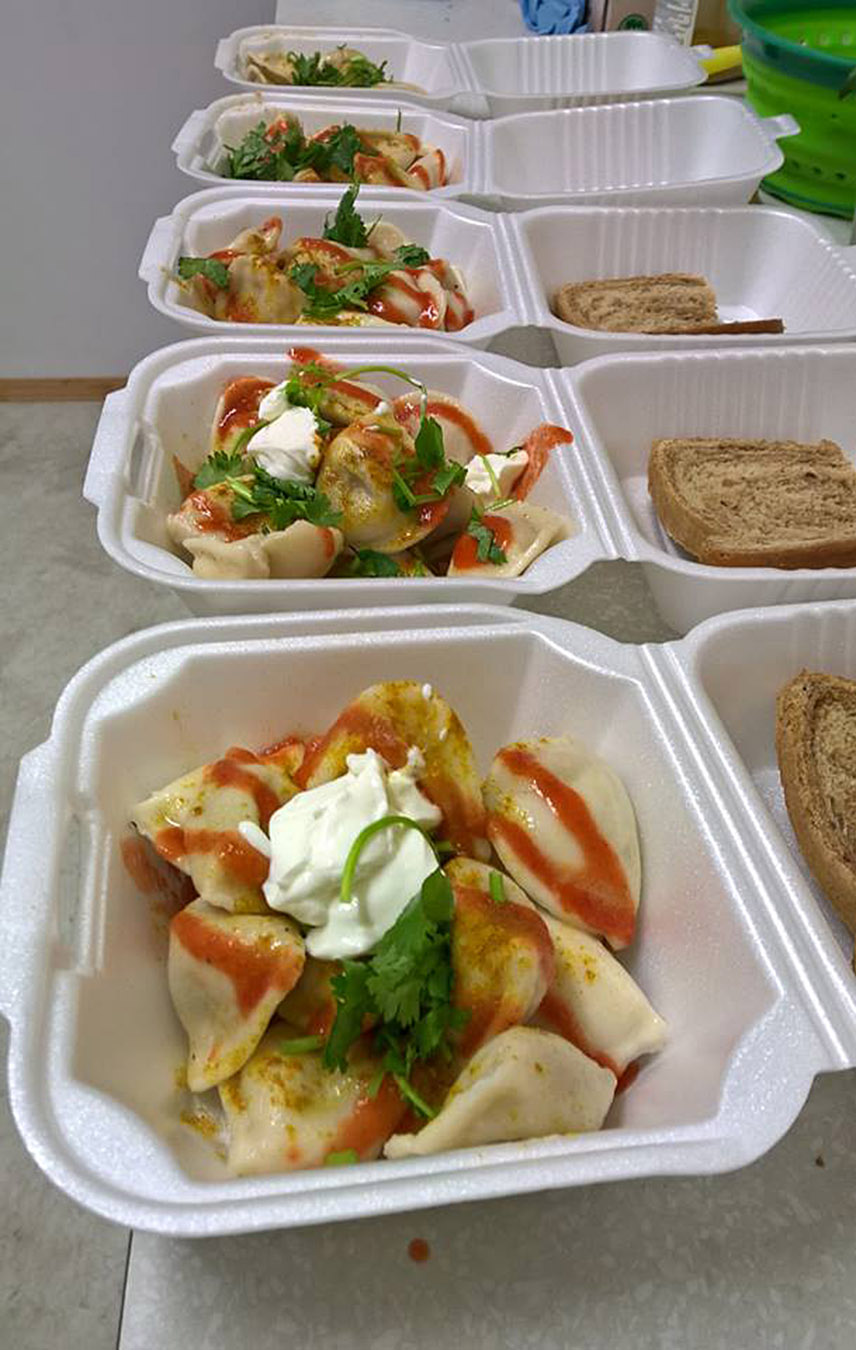
The Ráns Net pelmeni (Russian dumpling) stand actually came onto the scene in Sitka last summer, but this year owner Ayla Stromquist has a new building tucked into an alley on Lincoln Street across from Old Harbor Books and between Wintersong Soaps and the Cellar. PelmeniShe also has a couple of new flavors of pelmenis. Last year she had two flavors — meat (beef and pork mixed) and potato. This year she’s added chicken, smoked salmon and cream cheese, and sautéed onions.

The pelmeni stand is noted for being a late-night option on weekends, but it will be open for some lunches from 11 a.m. to 2:30 p.m. on Monday, Wednesday and Saturday, for dinner from 5-8 p.m. on Friday and Saturday, and from 11 p.m. to 2 a.m. on Friday and Saturday. Ayla also said she has a new machine on order to help press the pelmenis. The stand is closed until June 11, but people can watch the Facebook page or call Ayla at 738-5804 to get updated hours.

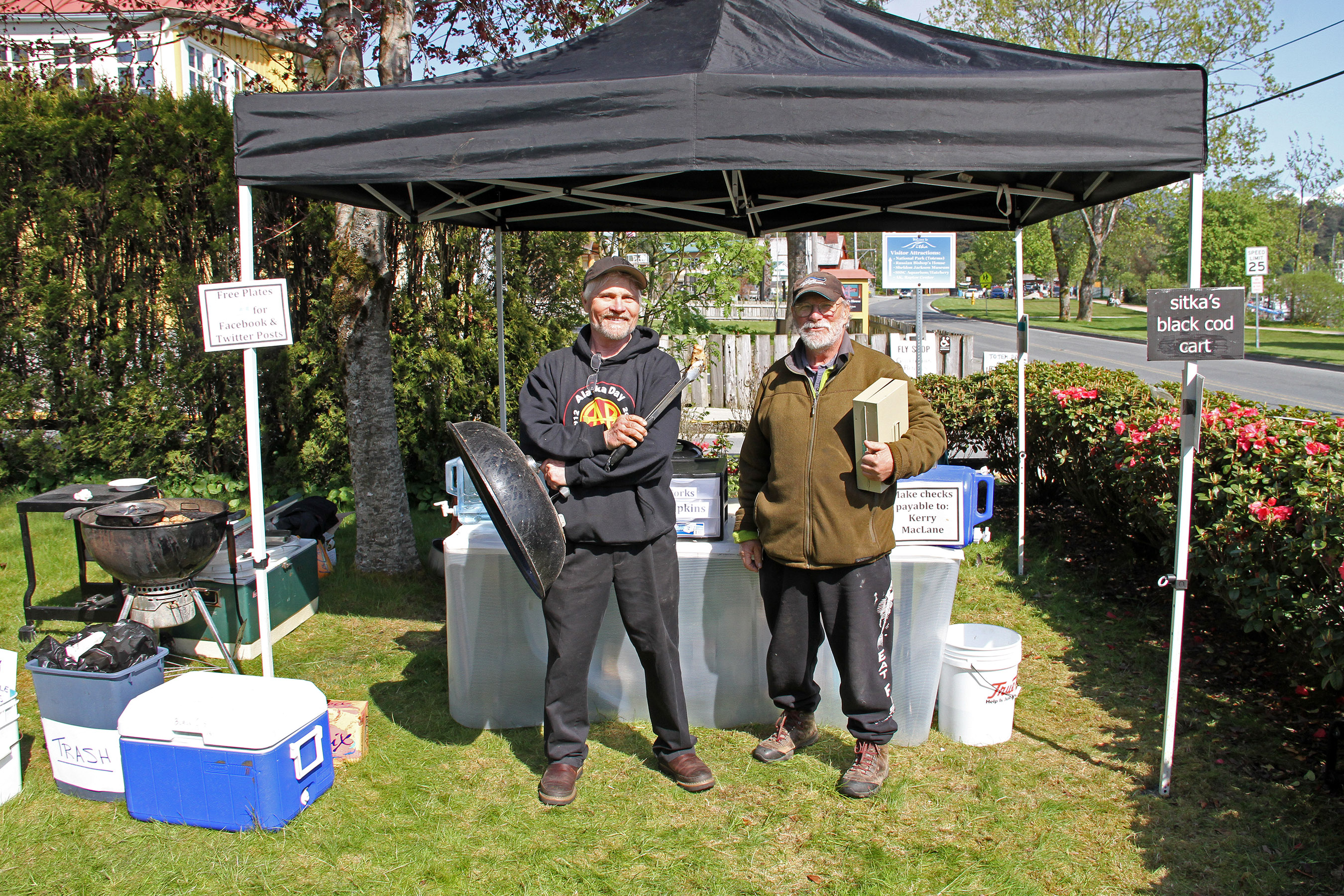
BlackcodCollarsKerryMacLaneWardEldridgeKerry MacLane and his blackcod (sablefish) collars have been a mainstay at the Sitka Farmers Market for several years. But this year he has a tent from 10 a.m. to 2 p.m. on cruise ship days in the front lawn at Sitka Rose Gallery on Lincoln Street. Kerry just sells one item, his BBQ grilled blackcod collars (aka blackcod tips) over rice. Kerry will reopen his stand on June 1. For more information, contact Kerry at 752-0654.

BlackCodTipsAndRice

• Scenes from the May 13 Blessing of the Garden service at St. Peter’s Fellowship Farm

RevJuliePlatsonBlessesRhubarb

Parishioners from St. Peter’s By The Sea Episcopal Church held a Blessing of the Garden service on Wednesday, May 13, at St. Peter’s Fellowship Farm communal garden, where they prayed for a bountiful harvest from the garden used by the Sitka Local Foods Network to grow veggies for the Sitka Farmers Market, school lunch and food assistance programs, etc. The service was led by Kit Mellema, and as part of the rogation service tradition in the church the parishioners walked to all corners of the property as Rev. Julie Platson, the new priest in charge at St. Peter’s, sprinkled holy water on the various vegetable garden beds, trees and flowers. A photo slideshow from the service is linked below.

This slideshow requires JavaScript.

• Sitka Farmers Market to host meeting June 2 for prospective and past vendors

SitkaFarmersMarketSign

The Sitka Local Foods Network will host a meeting for prospective and past vendors of the Sitka Farmers Market from 5:45-7:45 p.m. on Tuesday, June 2, at the See House behind St. Peter’s By The Sea Episcopal Church on Lincoln Street.

This is the eighth year of operation for the Sitka Farmers Market, which features six markets from 10 a.m. to 1 p.m. every other Saturday from July through September at the Alaska Native Brotherhood Founders Hall (this year’s dates are July 4, 18, August 1, 15, 29, and September 12). The Sitka Farmers Market was a community health initiative from the 2008 Sitka Health Summit.

The farmers markets feature booths from local farmers and gardeners, local fishermen, local bakers, and local artisans and craftspeople. Our emphasis is on local products from Sitka and Southeast Alaska. The farmers markets also are great Sitka gathering places.

A detailed description of the farmers markets and vendor forms can be found our websitehttp://www.sitkalocalfoodsnetwork.org/ (scroll down or look in the right-hand column). If you have any questions, please email Sitka Farmers Market Manager Debe Brincefield at sitkafarmersmarket@gmail.com.

• Check out the May 2015 edition of the Sitka Local Foods Network newsletter

May2015SLFNNewsletterScreenshot

The Sitka Local Foods Network just sent out the May 2015 edition of its newly launched monthly newsletter. Feel free to click this link to get a copy.

This edition of the newsletter has brief stories about how Sitka was Alaska’s original garden city back in the 19th and early 20th Centuries, an update on upcoming Sitka Local Foods Network education programs, an update on the Sitka Farmers Market’s new manager, and a reminder about the Plant a Row for the Hungry program. Each story has links to our website for more information.

You can sign up for future editions of our newsletter by clicking on the registration form image in the right column of our website and filling in the information. If you received a copy but didn’t want one, there is a link at the bottom of the newsletter so you can unsubscribe. Our intention is to get the word out about upcoming events and not to spam people. We will not share our email list with others to protect your privacy.

• Celebrate local farmers and gardeners on Alaska Agriculture Day on Tuesday, May 5

04.22.15 Alaska Agriculture Day

Alaskans will celebrate Alaska Agriculture Day on Tuesday, May 5. On this day, Alaskans are encouraged to support local agriculture by seeking out and purchasing products produced in Alaska and educating youth about the vital role that agriculture plays in our economy.

Here are a few ideas from the Division of Agriculture on how to celebrate Alaska Agriculture Day:

  • Join the 34,278 people who “like” the Alaska Grown Facebook page at https://www.facebook.com/dnr.alaskagrown and learn about the exciting things Alaskans are producing around the state.
  • Contact your local agriculture groups/chapters (such as FFA, Farm Bureau, Agriculture in the Classroom etc.) to see if they are hosting an event in your area.
  • Sign up for a Community Supported Agriculture (CSA) program at a local farm.
  • Buy and incorporate Alaska Grown products into your meals.
  • If you are a farmer, consider asking a local school if you can visit a classroom to educate children about your operation and Alaska agriculture.
  • Visit and thank a local farmer in person. To find a farm near you, check the Alaska Grown Source Book at http://dnr.alaska.gov/ag/sourcebook/sourcebookindex2014.html.

In Sitka, you can celebrate Alaska Agriculture Day by starting a food garden (even a couple of containers on your deck can provide you with potatoes, carrots or greens). Teachers are encouraged to offer a lesson plan or two about the importance of agriculture in Alaska and in Sitka (also, click here to listen to a Sitka History Minute feature about the potato in Sitka from KCAW-Raven Radio).

During the growing season, please support the Sitka farmers and production gardeners listed in the Alaska Grown Source Book (chief contact in parentheses) — Anam Cara Family Garden (Lisa Sadleir-Hart), Blatchley Community Gardens (David Nuetzel), Down To Earth U-Pick Garden (Lori Adams), Finn Island Farm (Keith Nyitray), Sprucecot Gardens (Judy Johnstone), and St. Peter’s Fellowship Farm (Lisa Sadleir-Hart or Laura Schmidt). There also are a few Sitka farms and production gardens not listed in the Alaska Grown Source Book, such as Sea View Garden (Linda Wilson), The Sawmill Farm (Bobbi Daniels) and Welsh Family Forget-Me-Not Garden (Florence Welsh). Many of these farms and gardens will be vendors during the Sitka Farmers Markets, which start on July 4 this summer.

• Sitka Local Foods Network seeks assistant manager for 2015 Sitka Farmers Markets (deadline extended)

SitkaFarmersMarketSign

The Sitka Local Foods Network has extended the application deadline as it looks for an assistant manager to help coordinate the 2015 Sitka Farmers Markets this summer. This is a contract position, and the assistant manager (who reports to the manager) receives a small compensation depending on experience for his or her work helping to organize and operate the six scheduled farmers markets this summer. The assistant manager must be available for all six markets and have a valid driver’s license and access to a vehicle. This position is open until filled.

SLFNGroupwLindaThis is the eighth year of operation for the Sitka Farmers Market, which features six markets from 10 a.m. to 1 p.m. every other Saturday from July through September at the Alaska Native Brotherhood Founders Hall (this year’s market dates are July 4, 18, Aug. 1, 15, 29, and Sept. 12). The farmers markets feature booths from local farmers/gardeners, local fishermen, and artisans and craftspeople. These events are great Sitka gathering places, and we promote local foods and other local goods at the markets.

A detailed description of the assistant manager duties can be found at the link below. For more information or to submit applications, contact Maybelle Filler at 738-1982 or mocampo25@hotmail.com, or you can email the Sitka Local Foods Network Board of Directors at sitkalocalfoodsnetwork@gmail.com (please put “Sitka Farmers Market Assistant Manager” in the subject line). Applications should include a cover letter, resume, three recommendations, and the position is open until filled. The assistant manager of the Sitka Farmers Market reports to the market manager, who reports to the Sitka Local Foods Network Board of Directors.

• Description of duties for assistant manager of the Sitka Farmers Market Manager (2015)

• Gardening work party set for Earth Week at St. Peter’s Fellowship Farm

StPetersSignWithToDoListSign

A group of kids harvests garlic during an Aug. 12, 2011, work party at St. Peter's Fellowship Farm.

A group of kids harvests garlic during an Aug. 12, 2011, work party at St. Peter’s Fellowship Farm.

Are you interested in meeting other Sitka gardeners and learning about how to grow food in Sitka’s rainy climate? Then join us for an Earth Week garden party from 2-4 p.m. on Saturday, April 25, at St. Peter’s Fellowship Farm.

St. Peter’s Fellowship Farm is located behind St. Peter’s By The Sea Episcopal Church on Katlian Street (the brown church with the steeple above Crescent Harbor). It is a communal garden that grows food to be sold at the Sitka Farmers Markets, at a table when Chelan Produce is in town, and used for various school lunch and hunger programs around town. This year’s Sitka Farmers Markets are from 10 a.m. to 1 p.m. on Saturdays, July 4, July 18, Aug. 1, Aug. 15, Aug. 29, and Sept. 12, at the Alaska Native Brotherhood Founders Hall (235 Katlian St.).

“We will be putting starts in the ground, weeding and prepping beds for planting,” St. Peter’s Fellowship Farm lead gardener Laura Schmidt said.

The garden work parties are kid-friendly, so feel free to bring the munchkins to help.

To learn more, call St. Peter’s Fellowship Farm lead gardener Laura Schmidt at 738-7009 or 623-7003, or contact Sitka Local Foods Network board president Lisa Sadleir-Hart at 747-5985 or sitkalocalfoodsnetwork@gmail.com.

• Rep. Jonathan Kreiss-Tomkins of Sitka introduces bill to allow donations of fish and game to nonprofit meal programs

041614_JKT_house-floor

Rep. Jonathan Kreiss-Tomkins (D-Sitka) is the prime sponsor of a tripartisan bill that will allow nonprofit meal programs — such as those found at schools, hospitals and senior centers — to serve donated fish and game from sport and subsistence harvesters.

The bill, HB 179, is co-sponsored by seven other legislators — four Republicans (Cathy Muñoz of Juneau, Charisse Millett of Anchorage, Louise Stutes of Kodiak and Tammie Wilson of North Pole), two Democrats (Neal Foster of Nome and Sam Kito III of Juneau), and an Independent (Dan Ortiz of Ketchikan). The was introduced on April 1 and already has hearings set for next week in the resources (Monday, April 6) and fisheries (Tuesday, April 7) committees. If those committees pass the bill, it could go before the House floor for a vote as early as late next week.

“Because of that broad support, this bill is in not just the fast lane, but in the Autobahn-style fast lane,” Kreiss-Tomkins told the Daily Sitka Sentinel. “This bill could go from being introduced to a vote on the floor in eight or nine days.”

Kreiss-Tomkins said the bill was inspired in part by Sitka’s Fish to Schools program, which allows commercial fishermen to donate locally caught seafood to local schools so it can be served in student lunches. However, many parts of the state don’t have commercial fisheries, and Alaska law currently bars food service organizations funded by state or federal meal programs from serving subsistence- and sport-harvested fish and game, even if it is donated.

In the sponsor statement for the bill, Kreiss-Tomkins writes:

Hunting and fishing is at the heart of our shared heritage as Alaskans. Every Alaskan looks forward to the season he or she can again fill the freezer with salmon, moose, caribou, seal, or berries. Alaskans happily share this food with family, children, and elders.

This sharing is not possible in our public institutions, however. Well-meaning state laws intended to prevent the commercialization of wild game have also largely prevented children in schools and elders in hospitals and senior centers from eating the traditional Alaska foods that we treasure. As a result, even though we are surrounded by some of the best food in the world, our children eat corndogs rather than caribou at school lunch; our elders are served spaghetti rather than seal.

This action follows a 2013 amendment U.S. Rep. Don Young (R-Alaska) included in an agriculture bill that removed barriers that previously prohibited American Indians and Alaska Natives from serving traditional foods in hospitals, elder care facilities and schools. The amendment authorized the U.S. Department of Agriculture to allow for the donation and serving of traditional foods, which meet specific safety standards, in public facilities that primarily serve American Indians and Alaska Natives.

In his sponsor statement, Kreiss-Tomkins writes:

The bill also ensures traditional wild foods donated to and served by food service programs are safe to eat. The Department of Environmental Conservation already has regulations in place providing for the safe handling and processing of many traditional wild foods. HB 179 affirms the Department’s authority to oversee the safety of these foods.

HB 179 will nourish Alaska’s children and elders, both physically and spiritually. It will limit the amount of expensive and unhealthy processed food shipped to communities that have incredible food available just a short boat or snowmachine ride away. Children will develop an appreciation where their food comes from and elders will be able to keep eating the foods they love.

• HB 179 — Traditional Foods Bill

• HB 179 — Traditional Foods Bill Sponsor Statement