• Registration opens for Southeast Alaska Farm and Fish to School Conference on April 2-3 in Juneau

FlyerPromoDecPoster-page-001

Registration has begun for the inaugural Southeast Alaska Farm and Fish to Schools Conference, which takes place April 2-3 at Centennial Hall in Juneau.

This event will be the first regional opportunity focused on building connections between Alaska’s school systems and local food entrepreneurs. Anyone interested in bringing more local foods into our school system is invited to collaborate and connect with regional experts to strengthen fish and farm to school programming across the state.

Southeast Conference, the regional economic development organization, is coordinating the conference in conjunction with the newly formed Sustainable Southeast Partnership, a diverse network of organizations working together on community sustainability in Southeast Alaska.

Farm&Fish-logo-on-photos Cropped“Often we find that the barriers to achieving access to local, healthy foods can be overcome if we work together as a region to make this initiative a priority,” said Alana Peterson, program director of the Sustainable Southeast Partnership, Haa Aani, Community Development Fund Inc. “By bringing all the key players together for a conference we are hoping to achieve just that.”

Fish and farm to school programming offers significant economic, environmental cultural and nutritional opportunities to our rural communities and region.

“Schools in southeast received more than $500,000 last year to buy Alaskan produced foods through the Nutritional Alaska Foods to Schools grant program.” said Shelly Wright, Executive Director of Southeast Conference. “However, schools are often limited by what they can procure. There are untapped opportunities for, farmers, fishermen and small business in our region. We are eager to break down barriers and grow the opportunities for everyone.”

Online registration and more detailed conference information is available at http://www.seconference.org/southeast-farm-and-fish-schools-conference. Register before Feb. 28 to be eligible for a travel stipend. For more information, contact Lia Heifetz at growsoutheast@gmail.com.

• Sitka residents team up to run neighborhood chicken coop co-ops

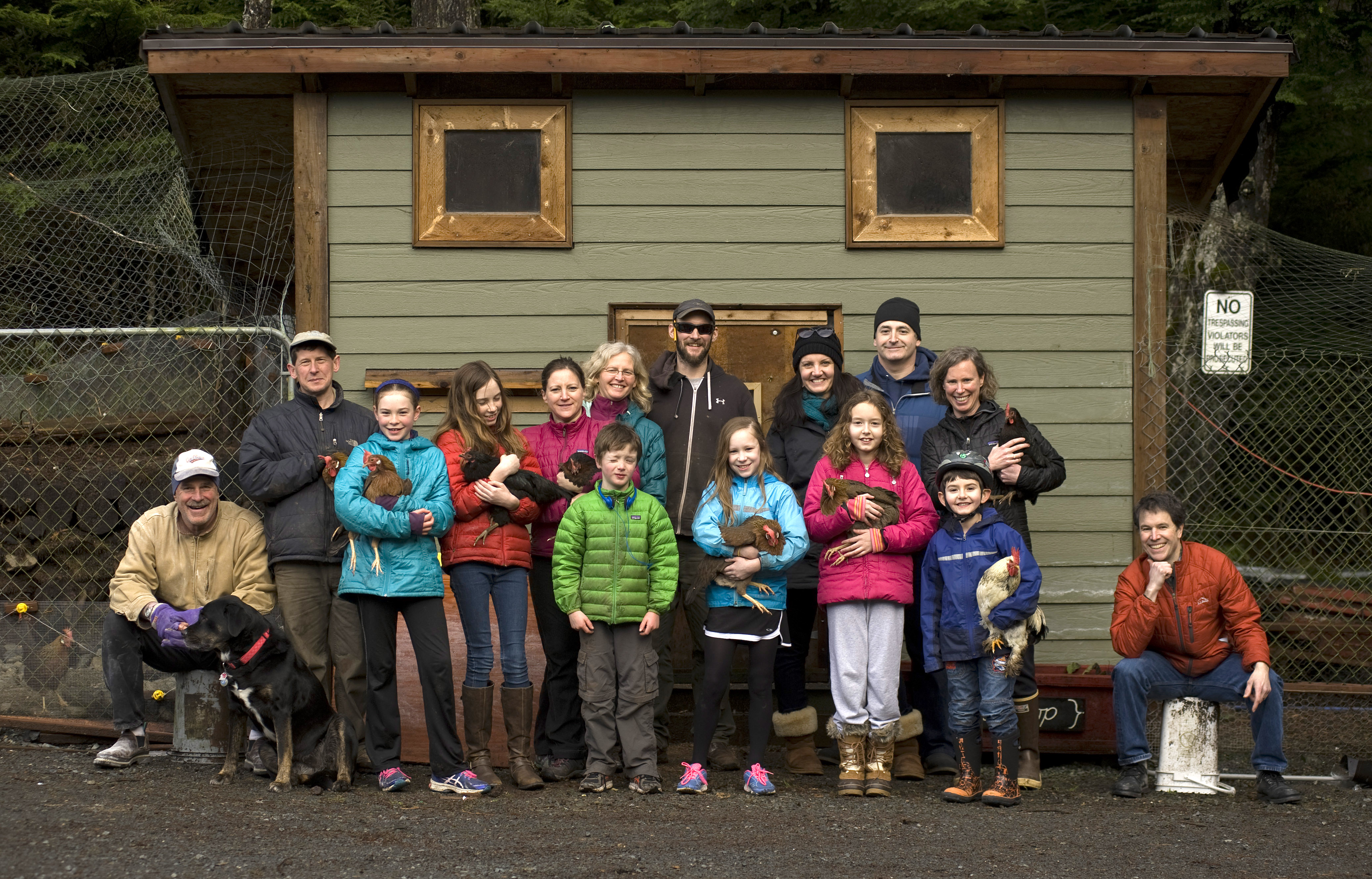
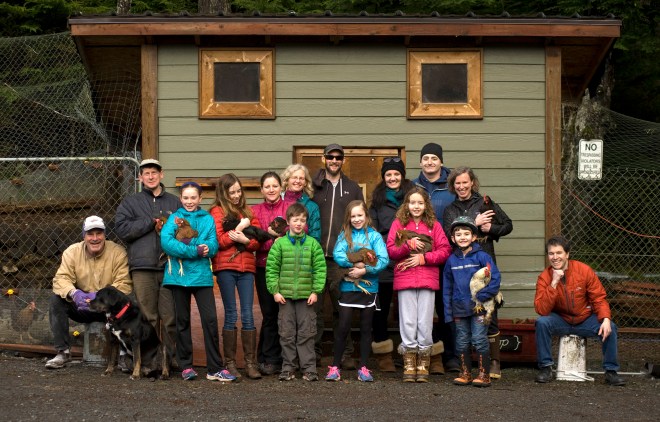
Some of the members of Le Coop, one of Sitka's chicken coop co-ops, pose with a few of their birds. (Daily Sitka Sentinel Photo by James Poulson, other photos in story are by Charles Bingham)

Some of the members of Le Coop, one of Sitka’s chicken coop co-ops, pose with a few of their birds. (Daily Sitka Sentinel Photo by James Poulson, other photos in story are by Charles Bingham)

Many Sitka families joined the backyard agriculture movement by starting gardens, but they hesitated when it came time to take the next step — raising chickens.

Chickens require daily feeding and watering, protection from predators, and other care that can be daunting for novices. However, a few Sitka families found an easier way. There now are a couple of chicken coop-co-ops in town, where neighbors or friends team up to share the duties and expense of raising chickens.

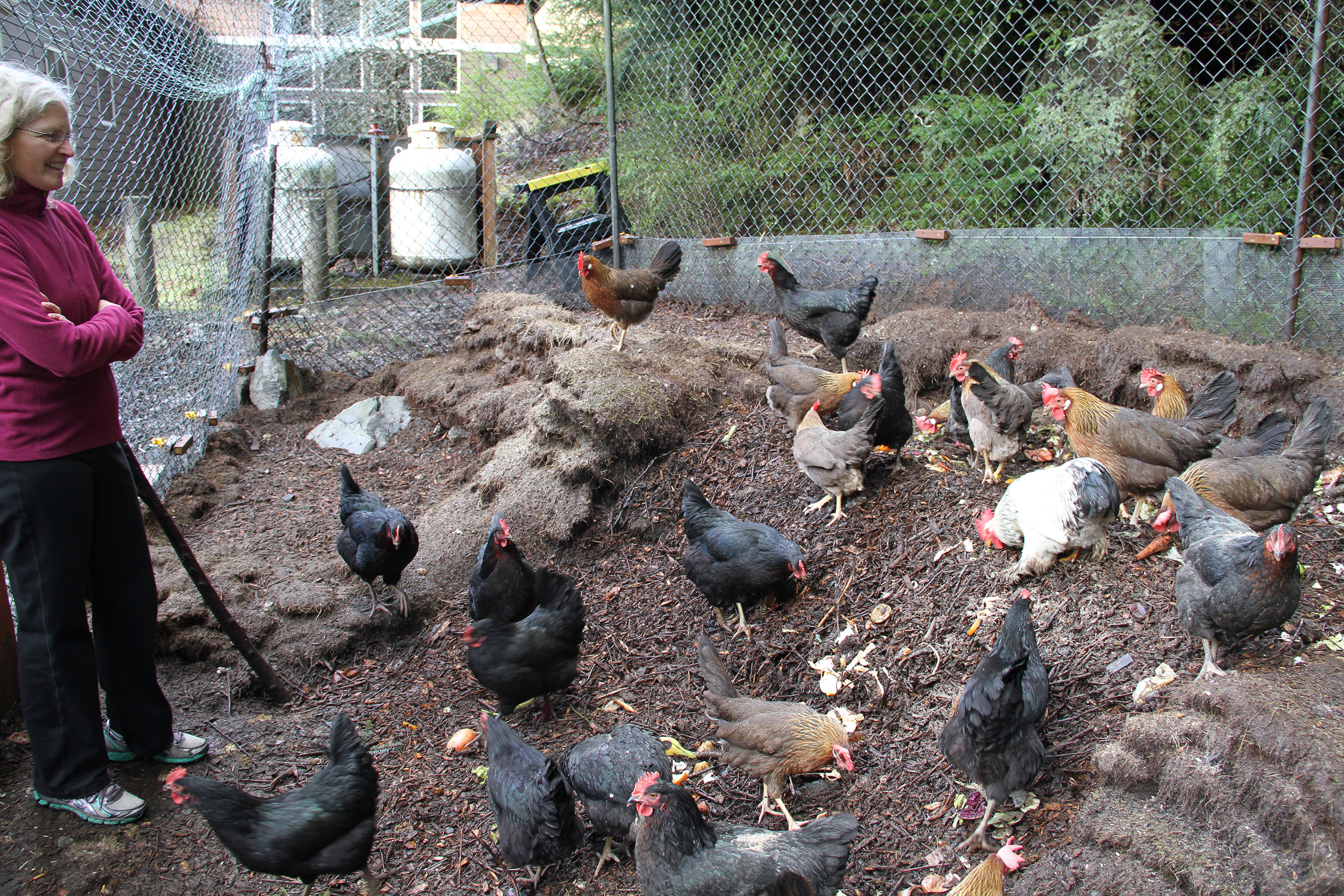
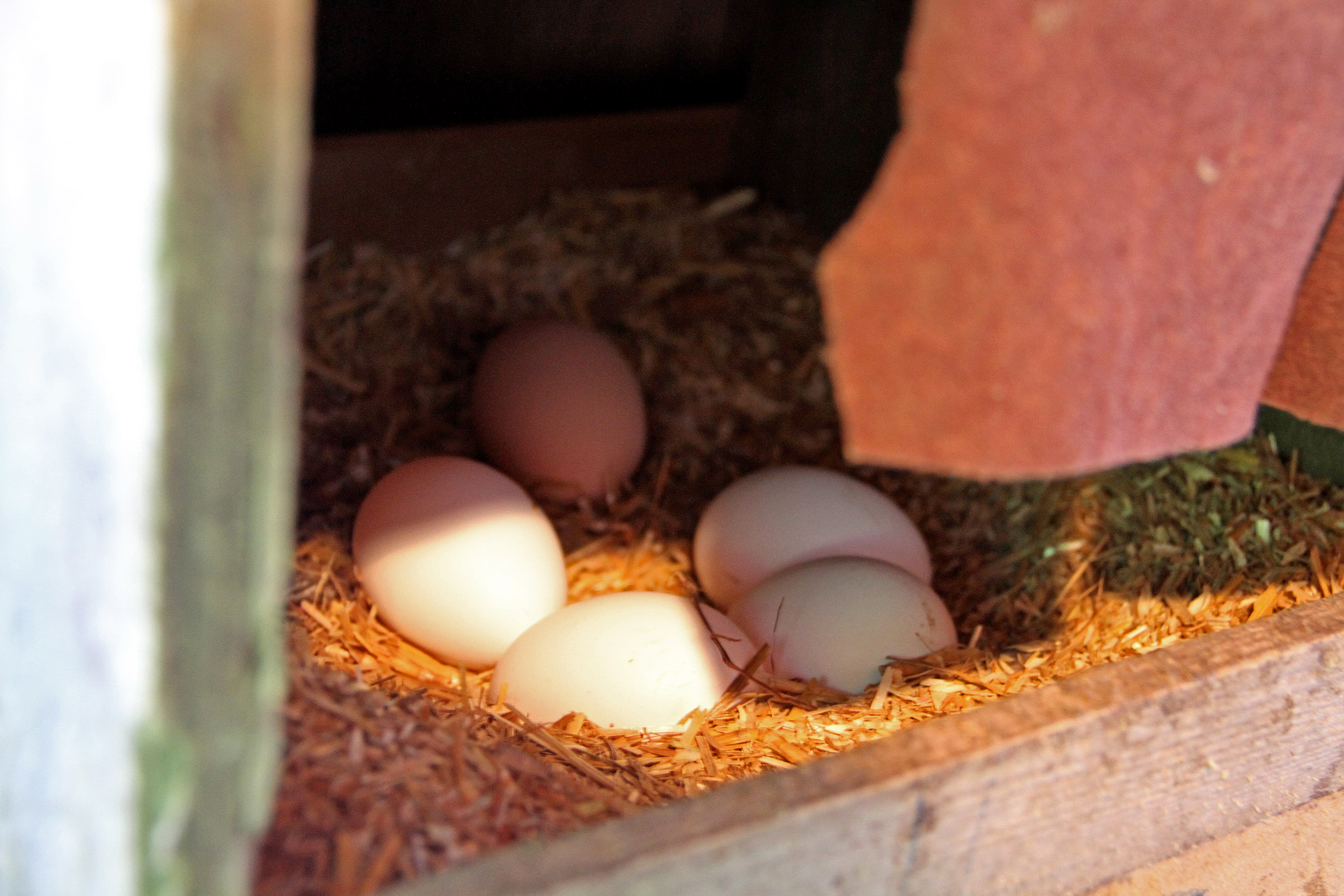
LeCoopOne of these chicken coop co-ops, Le Coop, is hidden in a back corner of the Sheldon Jackson Campus, where seven families are raising about 30 hens and one rooster. Le Coop is about 15 feet by 80 feet, with a hen house flanked by two outdoor chicken runs. The fence surrounding Le Coop is electrified (buried at least a foot below the surface to keep out varmints), with netting over the top to protect the chickens from eagles and other raptors. Inside the hen house are a dust bath for the hens, food and water buckets, an egg-laying box, and shelf space to store supplies such as extra feed.

“The advantage are only being responsible one day a week for regular chores such as feed, water, opening/closing, etc. Everything else is done at the whim of individual enthusiasms, and occasional work parties,” said Jud Kirkness, one of the co-op members. “Plus seven families means that many more people finding useful materials and resources and splitting the feed bill seven ways.”
LauraSchmidtWatchesChickensFeedLaura Schmidt, who Jud called the lead organizer/treasurer of the group, said there are six families of four and one couple, so 26 people. “About one person per hen,” she said. ” Each family typically gets about 18-30 eggs on their chicken duty day, with the hens laying more eggs in the summer.

Most of the hens were purchased as chicks last spring, and there are 15 each of red leghorns and black stars. The white rooster is of indeterminate origin, and he was added to the flock when another coop was culling its flock. Many people who raise chickens don’t like to keep roosters, but Laura said this one is small and the hens seem to be able to handle him.

The members of Le Coop have various levels of experience with raising chickens, and Erika Knox said Laura and Jud are the most experienced so they have been mentoring the other families. Erika said she wouldn’t be able to raise chickens at her house because there isn’t enough space, and lately she had to stop composting at home due to rats and other varmints getting into it.
EggsInLayingBox“This is a nice place to bring my compost, and the chickens love it,” Erika said. “It’s nice to have eggs that are fresh and organic. I give some away.”

Roger Schmidt and Kristen Homer called themselves the weak links of the group. “We just collect eggs,” Kristen said. “We let them (Laura and Jud) tell us what needs to be done.”

“It’s great because we have chicken experts like Jud and Laura, and we’ve got building experts,” said Roger, Laura’s brother and the director of the Sitka Fine Arts Camp, which owns the Sheldon Jackson Campus where Le Coop is located. He said there have been a couple of occasions when he was in a meeting on campus and suddenly remembered he had chicken duty that day.

RedLeghornAndRoosterBesides being able to share duties and costs with the chicken coop co-op, another advantage to having Le Coop on campus is the learning experiences it provides.

“It’s good for the kids. They learn a lot about chickens,” Roger said. “I bring the Head Start kids back here all the time to check on the chickens.”

“The kids love it,” Kristen said. “Razie Guillory (Laura’s daughter) did a science project charting the growth of the hens, and Asa Dow is doing a project about the economics of the co-op.”

Jud said as soon as he gets this chicken coop to where he wants it, he plans to start another chicken coop co-op for other Sitka families. “I hope it provides some inspiration.”

This slideshow requires JavaScript.

• Florence Welsh releases free update of her popular guide for Sitka gardeners

Forget-Me-Not-Gardens_Page_01

Florence Welsh with copies of her Sitka gardening book

Florence Welsh with copies of her Sitka gardening book

One of Sitka’s best known gardeners is Florence Welsh, who heads up The Welsh Family Forget-Me-Not Gardens. The Welsh family has been gardening in Sitka since 1984, and the garden on Davidoff Street has been used to teach other gardeners what works in Sitka. Several years ago Florence wrote a guide to help other gardeners take advantage of her family’s experiences trying to grow edible and ornamental plants in Sitka using organic methods. This past winter, Florence updated her book and today she released the new version of the guide as a PDF file (see link below), and she is starting a blog about local food from Sitka called SitkaVores.

“We are sharing this gardening guide with the hope that it will be of some use to other gardeners in this challenging environment,” Florence said.

The book includes information about how to prepare your garden for Sitka’s short growing season, including how to set up your home for plants you may need to start inside. She talks about using sand and seaweed in the garden to help with drainage and fertilizer. The guide also lists many of the plants, bushes and trees the Welsh family has grown in its garden, including the specific varieties that did best in Sitka. There also are several photos from the garden.

Sitka Farmers Market Co-Managers Debe Brincefield, left, and Ellexis Howey, right, present the Table Of The Day Award to Florence Welsh and her daughter Cory Welsh of Welsh Family Forget-Me-Not Gardens at the sixth and final Sitka Farmers Market of the 2014 summer on Saturday, Sept. 5, at the Alaska Native Brotherhood Founders Hall in Sitka. The Welsh family has one of the larger gardens in Sitka, raising a variety of veggies including cabbage, carrots, zuccini, potatoes, greens, and more. Florence received a gift bag with fresh greens, fresh carrots, fresh rhubarb, and a copy of the Alaska Farmers Market Cookbook. This concludes the seventh year of Sitka Farmers Markets, hosted by the Sitka Local Foods Network. While the Sitka Farmers Market is over for the summer, we will host a produce table at the 20th annual Running of the Boots, with registration at 10 a.m., costume judging at 10:30 a.m. and race at 11 a.m. on Saturday, Sept. 27, near St. Michael of the Archangel Russian Orthodox Cathedral on Lincoln Street. For more information about the Sitka Farmers Markets and Sitka Local Foods Network, go to http://www.sitkalocalfoodsnetwork.org/, or check out our Facebook page at https://www.facebook.com/SitkaLocalFoodsNetwork. (PHOTO COURTESY OF SITKA LOCAL FOODS NETWORK)

Sitka Farmers Market Co-Managers Debe Brincefield, left, and Ellexis Howey, right, present the Table Of The Day Award to Florence Welsh and her daughter Cory Welsh of Welsh Family Forget-Me-Not Gardens at the sixth and final Sitka Farmers Market of the 2014 summer on Saturday, Sept. 5, at the Alaska Native Brotherhood Founders Hall in Sitka. The Welsh family has one of the larger gardens in Sitka, raising a variety of veggies including cabbage, carrots, zucchini, potatoes, greens, and more. Florence received a gift bag with fresh greens, fresh carrots, fresh rhubarb, and a copy of the Alaska Farmers Market Cookbook.

The Welsh Family Forget-Me-Not Gardens is one of Sitka’s most productive gardens when it comes to producing food, and Florence occasionally has a booth at the Sitka Farmers Market to sell her produce. The garden grows berries, fruit trees, herbs/mints, and a wide variety of vegetables. She includes some instructions with the vegetables, and the guide also includes a timeline for seed starting so you know when to plant. The guide ends with information about invasive plants, insects and slugs, and a list of useful seed catalogs and websites.

The homemade booklet, which Florence used to print out herself, now is available posted online (see link below). It also will be posted in the Documents section of this website.

• February 2015 update of Florence Welsh’s Forget-Me-Not Gardens gardening guide for Sitka

• Rabbit, goat highlight Sawmill Farm’s farm-to-table dinner at Ludvig’s Bistro

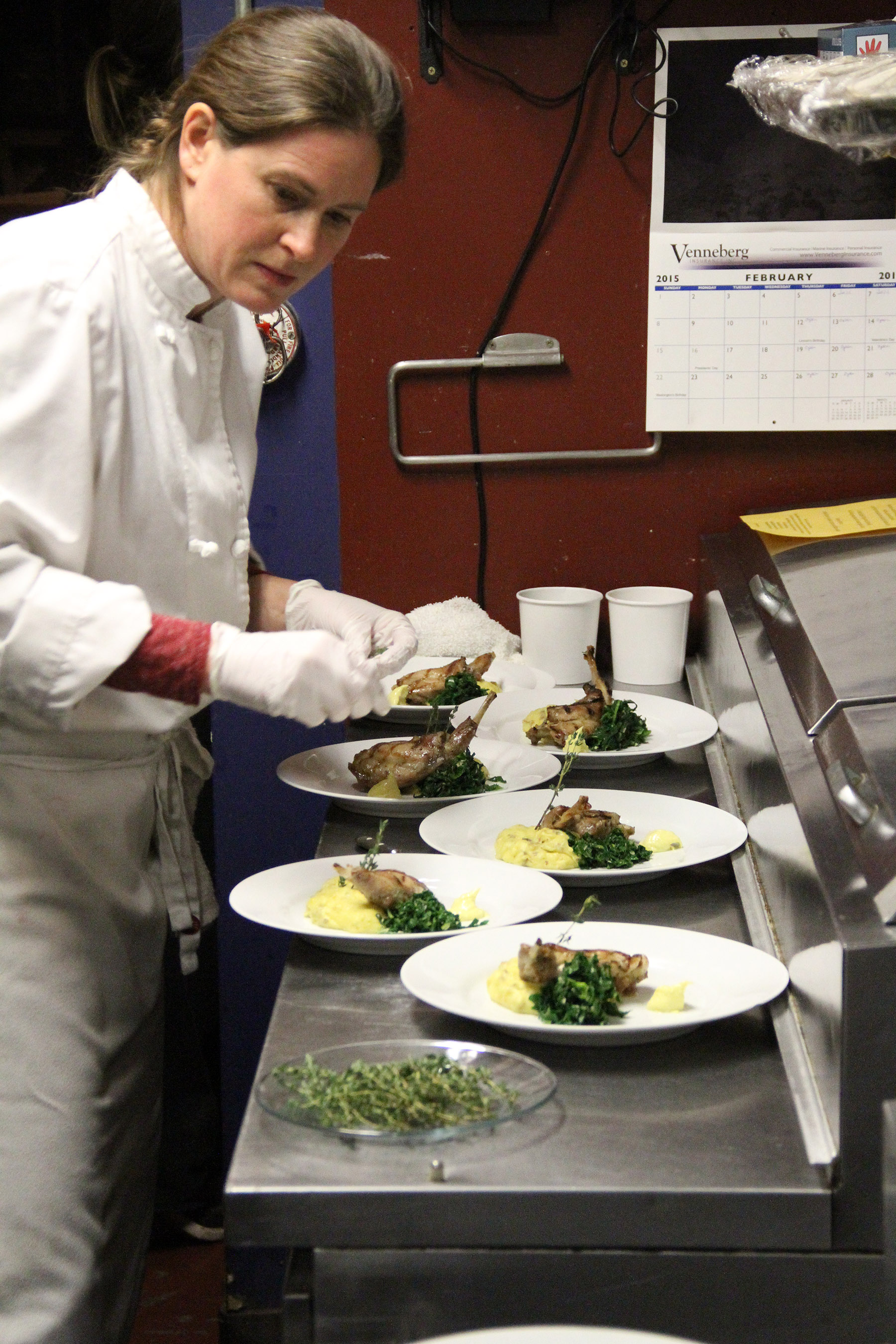
ColetteGarnishesRabbitThighs

Locally raised rabbit and goat meat from Ketchikan were the highlights of a fundraising farm-to-table dinner for the Sawmill Farm on Jan. 31 at Ludvig’s Bistro.

In an effort to raise seed money for her Sawmill Farm project, Bobbi Daniels worked with Ludvig’s Bistro owner/chef Colette Nelson to create a five-course meal featuring locally sourced food from Sitka and Southeast Alaska. Tickets were $75 per plate for the function.

Bobbi already is raising rabbits in town, and she said goats also do well in Sitka. Bobbi hopes to find a large enough lot so she can grow enough rabbits to supply local stores with meat. She said rabbit meat is one of the cleanest meats as far as toxins, and it only takes 10 weeks to raise a rabbit to harvest size. The Sawmill Farm was one of 12 semifinalists in the recent Path to Prosperity economic development contest sponsored by the Nature Conservancy and Haa Aaní Community Development Fund, and now is competing for the people’s choice award.

Working with local farmers and gardeners, Bobbi and Colette created five-course meal that featured:

  • rabbit terrine with farm egg, beach asparagus and mustard;
  • leek, heirloom tomato, zucchini and rabbit consommé with sprouted wheat bread;
  • Moroccan goat stew with ginger, preserved lemons, potatoes, dates and almonds, served with white satin carrot salad and balsamic beets;
  • grilled rabbit thigh served with aioli, Inca Bella potato purée and sautéed garlic kale; and
  • Russian pavlova with huckleberry, rhubarb, currants and Sitka rose sugar.

A variety of gardens and farms provided the food used for the meal. The Sawmill Farm supplied the rabbits and wheat berries, Sivertsen Farm in Ketchikan provided the goat, Lori Adams of Down-To-Earth U-Pick Garden supplied winter kale, Sara Taranof provided farm eggs, Linda Walker provided garlic, huckleberries, rhubarb and currants, and Florence Welsh of Forget-Me-Not Garden supplied white satin and orange carrots, heirloom tomatoes, red rose potatoes, Inca Bella potatoes, leeks, zucchini, beets, raspberry preserves and beach asparagus.

Scenes from the meal are in a slideshow below:

This slideshow requires JavaScript.

• Sitka Local Foods Network seeks host family for our summer Bulldogs on Baranof intern

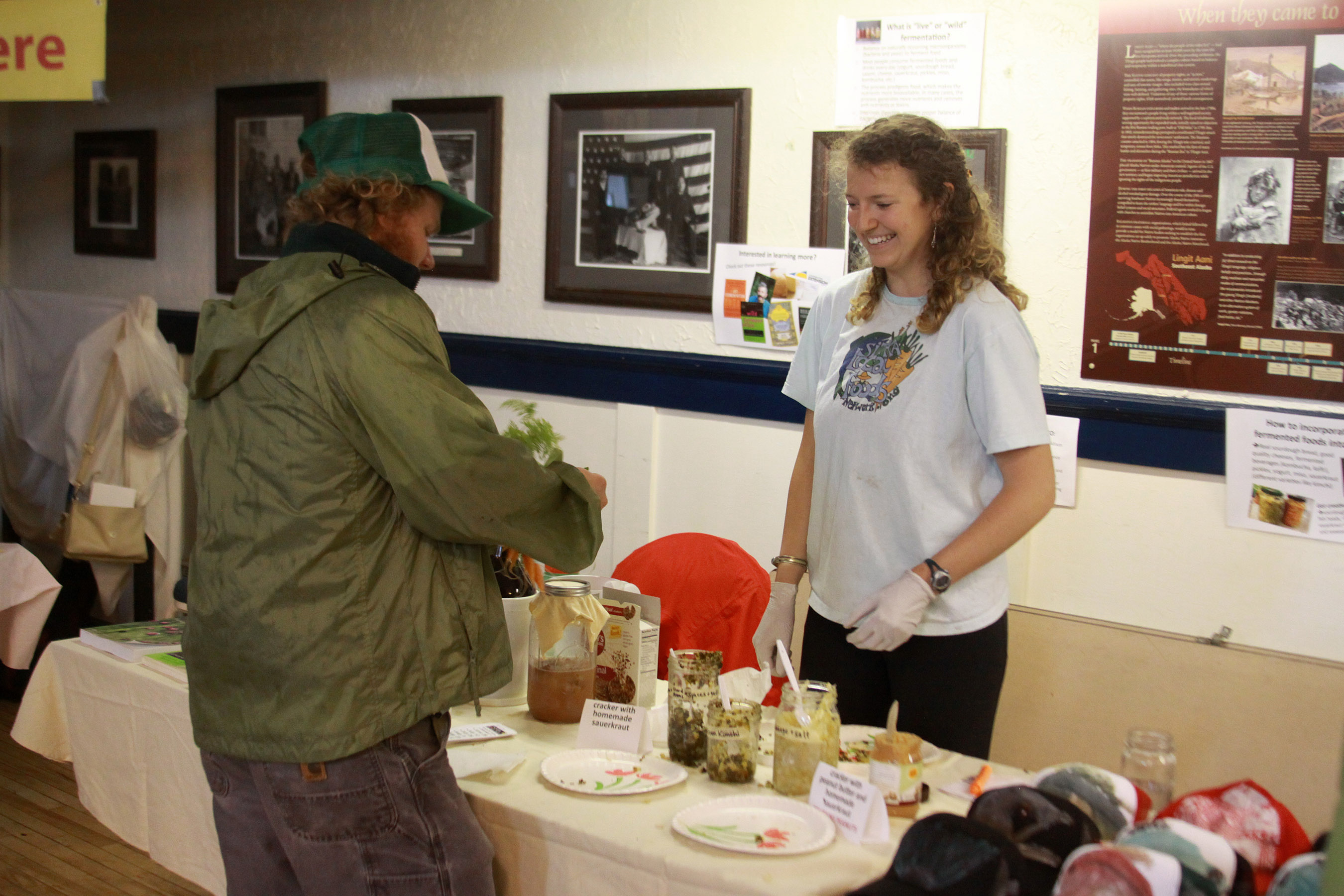
McLane Ritzel, the Sitka Local Foods Network's 2014 summer Bulldogs on Baranof intern, hosts a fermentation demonstration during the Sitka Farmers Market.

McLane Ritzel, the Sitka Local Foods Network’s 2014 summer Bulldogs on Baranof intern, hosts a fermentation demonstration during the Sitka Farmers Market.

Over the past couple of years, the Sitka Local Foods Network has hosted a Bulldogs on Baranof summer intern.

Our interns have been a big help during the summer, pitching in with the Sitka Farmers Market, St. Peter’s Fellowship Farm, lead education events, and even writing website articles about local farmers market vendors. The Bulldogs on Baranof program started out bringing Yale University students to Sitka for the summer to help out with local nonprofit organizations, but recently expanded to include students from other colleges.

Usually, a local couple hosts these interns for the 2-3 months they’re in Sitka for the summer. But this year, our usual hosts have family coming to town and won’t be able to offer housing.

We are hoping to find a host family for this summer who can host our intern from mid-June through mid-August or early September. This involves providing a spare bedroom, some meals and kitchen access, and occasional rides around town (we try to provide a bike).

If you can help, please contact Sitka Local Foods Network board president Lisa Sadleir-Hart at 747-5985 or sitkalocalfoodsnetwork@gmail.com. Thanks.

• Yaa Khusgé Yaaw Woogoo will teach middle school students about herring during spring break

2006 Herring collection 007

HerringBranchesThe Sitka School District and the Outdoor Foundation, in partnership with the Sitka Tribe of Alaska and Sitka National Historical Park, will host a free, week-long marine science and culture camp during spring break, March 16-20, for 20 sixth-grade, middle-school students. (NOTE: On Feb. 23, this program was opened up to all middle school students, grades 6-8, and the priority deadline was extended to March 6.)

Yaa Khusgé Yaaw Woogoo — Knowledge-of-Herring Camp — provides students the chance to explore the cultural and ecological importance of herring in a hands-on camp. Participants will use cutting-edge technology while working with renowned marine ecologist Michelle Ridgway to study Pacific herring in the field and in the lab. Students who participate in the camp will gain valuable experience conducting scientific research and will gain a deeper understanding of the critical role herring play in Southeast Alaska’s marine ecosystem, as well as the cultural significance of this keystone species.

Daily camp activities will include observing herring and other marine wildlife during marine field trips, conducting research throughout Sitka Sound and in the lab, learning about herring’s cultural significance from Native elders and culture bearers, exploring Sitka’s coastline to learn about critical herring habitat and using advanced scientific technology. Each daily session, held from 12:30-5:30 p.m., will conclude with a presentation or field activity lead by scientists, Native elders or local herring experts.

Applications are available at the Sitka National Historical Park visitors center, 106 Metlakatla St., at Blatchley Middle School, or they can be downloaded at http://www.nps.gov/sitk. All applicants must be in the sixth grade. Interested participants should submit an application by Feb. 20 to receive priority consideration. Completed applications should be returned to staff at Sitka National Historical Park’s visitor center. The hours of operation for the visitor center are Tuesday-Saturday from 9 a.m. to 3 p.m. For additional information, please contact Ryan Carpenter at 747-0121.

• Check out the February 2015 edition of the Sitka Local Foods Network newsletter

Feb2015NewsletterScreenGrab

The Sitka Local Foods Network just sent out the February 2015 edition of its newly launched monthly newsletter. Feel free to click this link to get a copy.

This edition of the newsletter has brief stories about the Sitka Farmers Market, some upcoming winter and spring garden classes, and the 2015 Pick.Click.Give. fundraising campaign. Each story has links to our website for more information.

You can sign up for future editions of our newsletter by clicking on the registration form image in the right column of our website and filling in the information. If you received a copy but didn’t want one, there is a link at the bottom of the newsletter so you can unsubscribe. Our intention is to get the word out about upcoming events and not to spam people. We will not share our email list with others to protect your privacy.