• 20th annual Running of the Boots costumed fun run raises funds for Sitka Local Foods Network

RunningOfTheBoots2014

It’s time to dig your XtraTufs out of the closet and gussy them up. The 20th annual Running of the Boots begins at 10 a.m. on Saturday, Sept. 27, at the big tent near St. Michael of the Archangel Russian Orthodox Cathedral on Lincoln Street.

This will be the second year featuring a new meeting point and course, allowing the race to be a bigger part of the End-of-Season Celebration festivities hosted downtown by the Greater Sitka Chamber of Commerce and the Alaska Cruise Line Association.

“I’m excited about the Running of the Boots joining the End-of-Season folks under one big tent … literally,” race organizer Kerry MacLane said. “We’ll have music, hot chocolate, and folks can enjoy a complimentary lunch after oodles of prizes have been awarded.”

So what is the Running of the Boots? It’s Southeast Alaska’s answer to Spain’s “Running of the Bulls.” Sitkans wear zany costumes and XtraTufs — Southeast Alaska’s distinctive rubber boots (aka, Sitka Sneakers). The Running of the Boots raises funds for the Sitka Local Foods Network, a nonprofit organization that hosts the Sitka Farmers Market and advocates for community gardens, a community greenhouse, sustainable uses of traditional subsistence foods and education for Sitka gardeners.

The Running of the Boots is a short race for fun and not for speed, even though one of the many prize categories is for the fastest boots. Other prize categories include best-dressed boots, zaniest costume, best couple, best kids group and more. The new course starts by St. Michael’s Cathedral, and heads down Lincoln Street toward City Hall, takes a left on Harbor Drive and loops up Maksoutov Street and back to the starting line.

The entry fee for the Running of the Boots is $5 per person and $20 per family, and people can register for the race starting at 10 a.m. Costume judging starts about 10:30 a.m., and runners hit the streets at 11 a.m. As usual, local merchants have donated bushels of prizes for the costume contest. The Sitka Local Foods Network will host a Sitka Farmers Market booth with fresh veggies for sale. The booth takes debit cards, WIC vouchers and Quest cards.

“This is a really fun way to advance the Sitka Farmers Market and our other Sitka Local Foods Network projects,” MacLane said. “This is a must-see annual change-of-the season tradition in Sitka.”

To learn more about the Running of the Boots, contact Kerry MacLane at 752-0654 or 747-7888, or by email at maclanekerry@yahoo.com.

Historical information about the race (through 2005) can be found online at http://www.runningoftheboots.org/. Info about the Sitka Local Foods Network and more recent Running of the Boots events (2008-13) is online at http://www.sitkalocalfoodsnetwork.org/ (type Running of the Boots into the search bar at the top of the page). Click here to see a slideshow of scenes from last year’s event.

Also, don’t forget to like our Facebook page at https://www.facebook.com/SitkaLocalFoodsNetwork to stay updated on Sitka Local Foods Network activities.

• Don’t forget Sunday’s the deadline to add Pick.Click.Give. donations to your PFD application

PickClickGiveFlier2PRINT

Lovalaska FB Square PhotoGrid Tag (1)If you’re like most Alaskans you probably filed your 2014 Alaska Permanent Fund Dividend (PFD) application before the March deadline. But did you know you still can add Pick.Click.Give. donations to your 2014 application through Sunday, Aug. 31? If you haven’t already, please consider making a Pick.Click.Give. donation to the Sitka Local Foods Network.

Here’s how to add or change your Pick.Click.Give. donations. First, go to the Alaska Permanent Fund Dividend application website, http://pfd.alaska.gov/, and find the green bar in the right column. Click the green bar, and follow the directions. You’ll need to enter your driver’s license number, Social Security number, and birthday to access your application, but once on the page you’ll be able to see your current Pick.Click.Give. donations (if any) and you can add or change them.

This is the first year the Sitka Local Foods Network is participating in the Pick.Click.Give. program, which allows people to donate in $25 increments to their favorite statewide and local 501(c)(3) nonprofit organizations when they file their PFD applications. When you choose to donate part of your PFD to the Sitka Local Foods Network, you support the Sitka Farmers Market, St. Peter’s Fellowship Farm, Blatchley Community Gardens, education programs about growing and preserving food, the sustainable use of traditional foods, the Sitka Community Food Assessment, the Sitka Food Summit, and a variety of other projects designed to increase access to healthy local foods in Sitka.

You still can donate to the Sitka Local Foods Network if you aren’t from Alaska or aren’t eligible for a 2014 PFD. To donate, send your check to the Sitka Local Foods Network, 408 Marine St., Suite D, Sitka, Alaska, 99835. Our EIN is 26-4629930. Please let us know if you need a receipt for tax purposes. For more information about donating, you can send an email to sitkalocalfoodsnetwork@gmail.com.

Thank you to everybody making a Pick.Click.Give. donation to your Sitka Local Foods Network. We appreciate your support.

• It’s time to … get outdoors and pick some berries

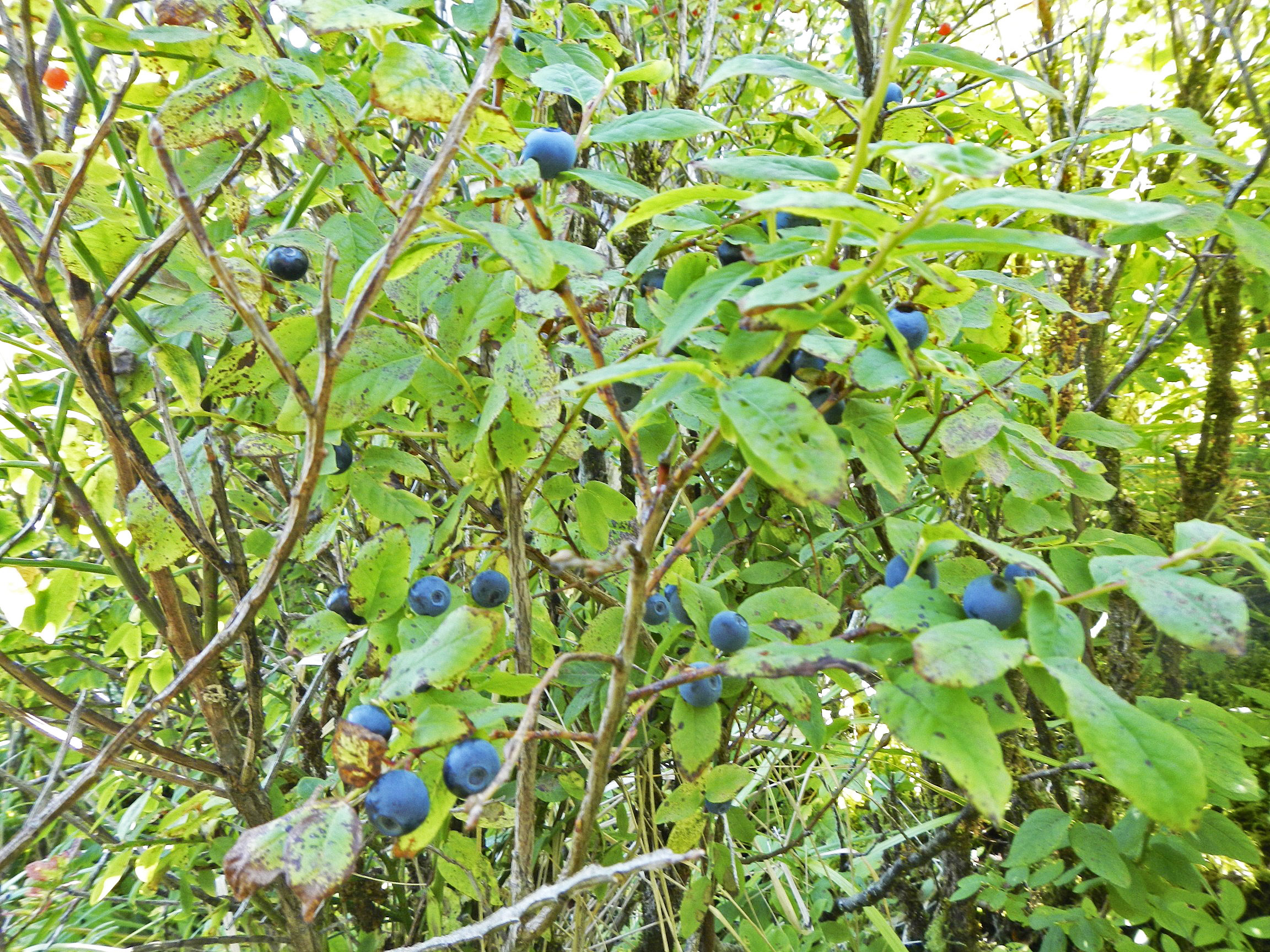
Blueberries (kanat'á)

Blueberries (kanat’á)

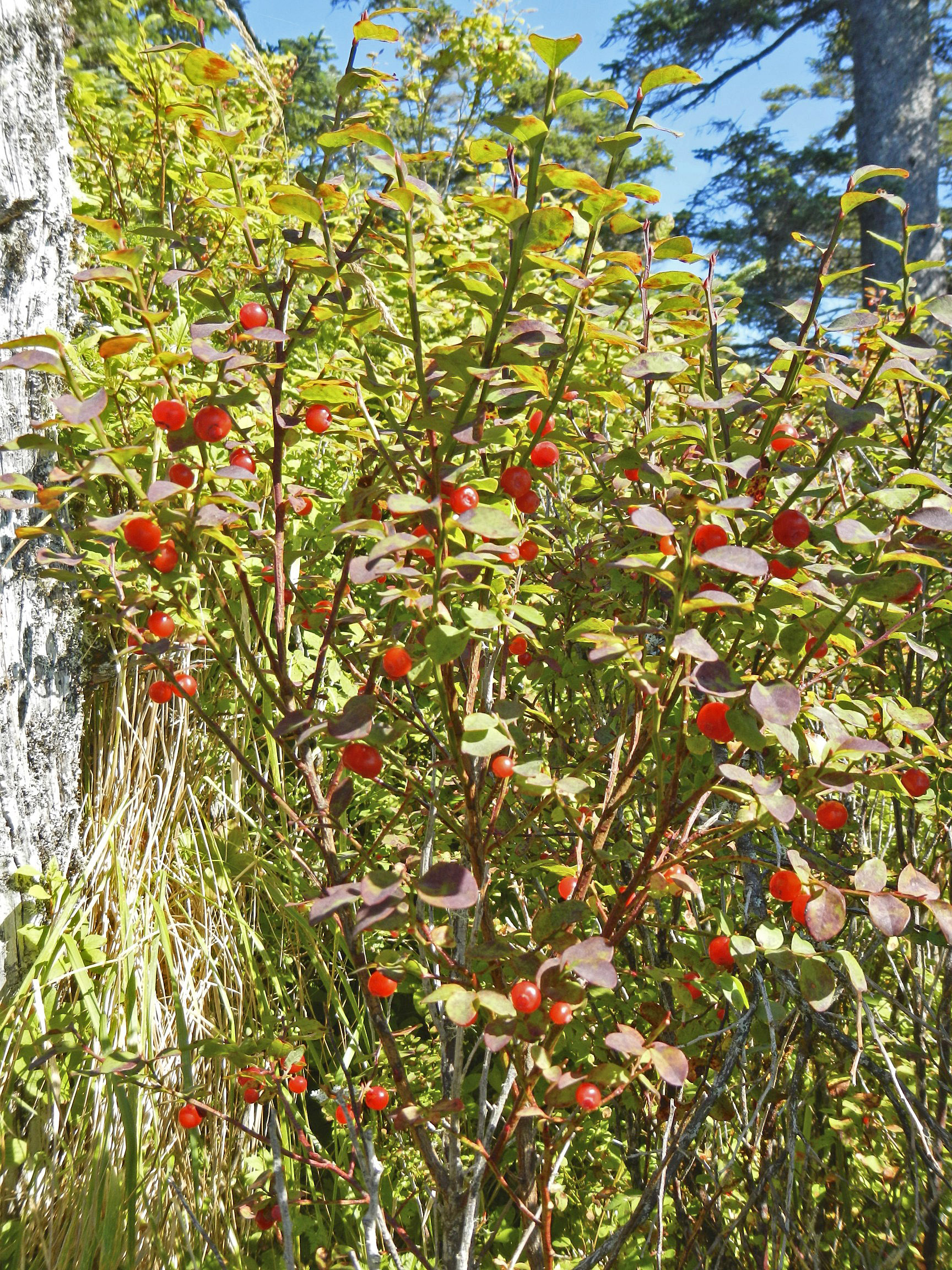
Huckleberries (tleikatánk)

Huckleberries (tleikatánk)

The Sitka Tribe of Alaska’s Kayaaní Commission (aka, the Plants Commission) and your Sitka Local Foods Network (SLFN) remind Sitka residents that it’s time to get out in the woods and pick huckleberries (tleikatánk) and blueberries (kanat’á).

Huckleberries and blueberries are extremely healthy fruits that grow in the forests and openings that surround Sitka. They are a traditional food of the Tlingít and have become a traditional food for Sitka residents who depend on nature’s bounty to keep their families healthy. They can be used fresh on a salad, in jams and smoothies, berry desserts and many other dishes. And they store well in the freezer for a healthy winter snack.

When going berry picking, please keep the following in mind (summarized from the Kayaaní Commission Traditional Harvesting Guidelines):

  • Be Courteous — other families are picking berries too; never take more than you need. If you accidentally got too much, share it with someone that you know will use it.
  • Be Safe — be positive about your identification of edible plants. Check your field guide for details if you are unsure. And pick berries during daylight with friends; make plenty of noise to keep bears away.
  • Take Care of the Berries — wash your berries with clean water before eating them and watch for rot, mildew, and insects. For best results: rinse berries, spread on a baking sheet to freeze, once frozen, slide off the tray and freeze in bags until ready to use.
  • Pick Clean Berries — from off the major road systems and in areas where you know pesticides and other chemicals will not have reached the berry plants.
  • Take Care of the Plants — make sure that there are plenty of other plants in the area (at least 10) to assure future abundance. Whenever possible, harvest so that the existing plant can reseed or recover after you are done. Treat the plants with respect. In Alaska Native cultures, it is traditional to thank the plant for its gift and give an offering. Each individual should show respect to the plant spirits in their own way.

“We encourage people to get out and pick the ripe berries. By getting out and picking berries you’ll get fresh, healthy food, exercise, and quality time with family and friends,” said Kayaaní Commission Coordinator Heather Riggs and Sitka Local Foods Network Vice President Michelle Putz. “Encouraging berry-picking for personal consumption and for winter storage supports both our missions. The Kayaaní Commission’s mission is to preserve their spiritual way of life and to preserve and protect traditional ways of their ancestral knowledge. The Sitka Local Foods Network’s mission is to increase the amount of locally produced and harvested food in the diets of Southeast Alaskans.”

While the kanat’á (blueberry) season is upon us, remember the plant is not finished offering its resources to the inhabitants of Sitka once the berries are gone. After the berries have completed their life cycle, the leaves from the plant can be utilized for its medicinal properties. Kanat’á leaves are high in antioxidants. These antioxidants can protect your body against heart disease and cancer. Making a tea from the leaves can help indigestion or a sore throat. Contact the Kayaaní Commission for more information on uses of native plants and methods of preparing plants.

More information about either group or local, traditionally harvested foods is available by calling Heather with the Kayaaní Commission at 747-7167 or Michelle with the Sitka Local Foods Network at 747-2708.

Please note that personal-use berry-picking is allowed on state and federal lands around Sitka, but any commercial-use berry-picking (money changes hands) requires a special permit, https://sitkalocalfoodsnetwork.org/2014/08/20/%E2%80%A2-tongass-national-forest-sitka-ranger-district-clarifies-rules-for-berry-picking-and-gathering-on-forest-lands/

• Kayaaní Commission Plant Gathering Guidelines

• 2003 Sitka Tribe of Alaska ordinance creating and defining the Kayaaní Commission

• UAS Sitka Campus to host annual class on how to identify Southeast Alaska mushrooms

SE mushrooms Brochure 2014_Page_2

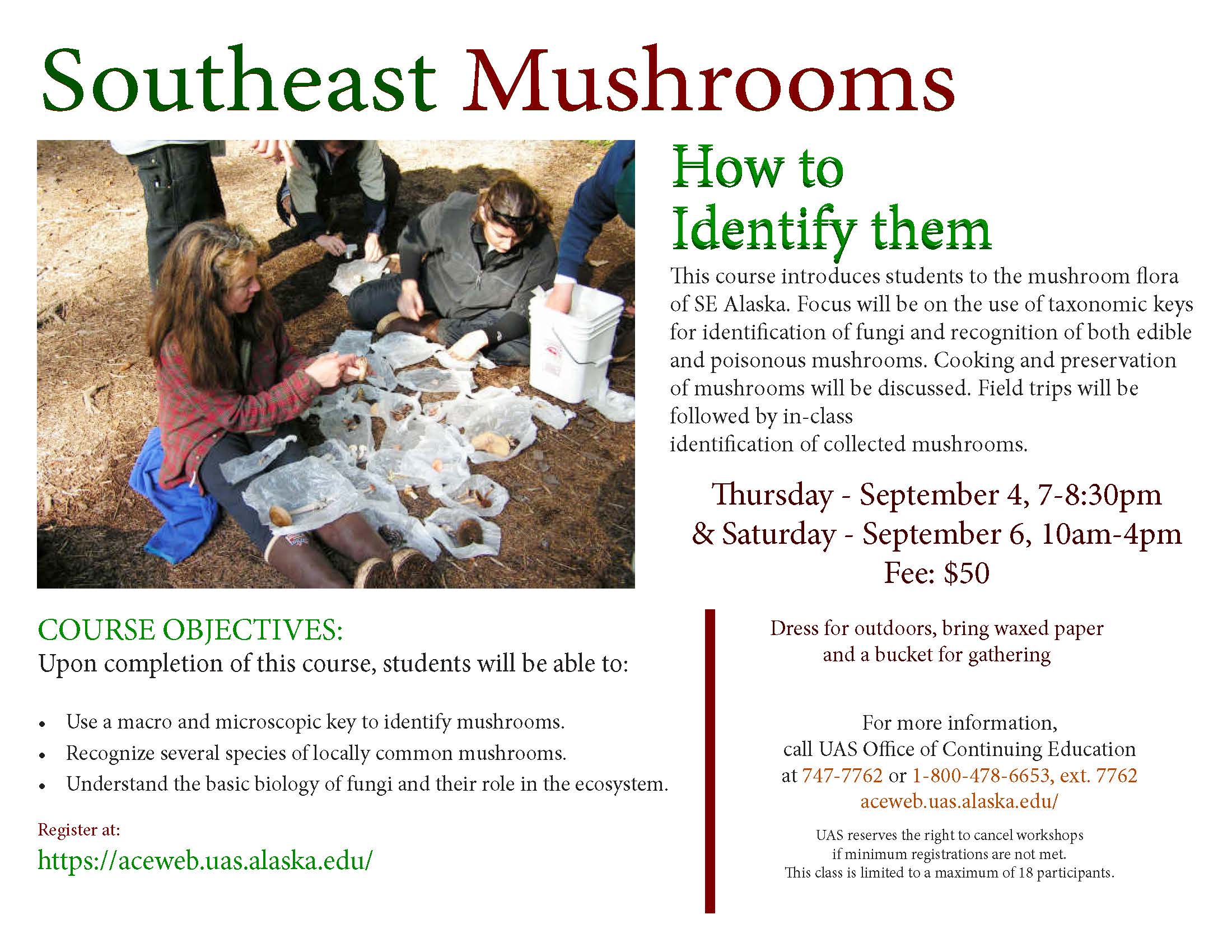
The University of Alaska Southeast Sitka Campus Office of Continuing Education will host its annual class “Southeast Mushrooms: How to Identify Them.”

This two-day class takes place from 7-8:30 p.m. on Thursday, Sept. 4, and from 10 a.m. to 4 p.m. on Saturday, Sept. 6, at the UAS Sitka Campus (with field trips). The course fee is $50 and students should dress for the outdoors, bring waxed paper and a bucket for gathering.

This course is designed to introduce students to the mushroom flora of Southeast Alaska. The focus will be on the use of taxonomic keys for identification of fungi and recognition of both edible and poisonous mushrooms. Cooking and preservation of mushrooms will be discussed. Field trips are followed by in-class identification of collected mushrooms.

There is a maximum of 18 students allowed in this class, and the class may be canceled if at least 10 people don’t pre-register for it. For more information, contact the UAS Sitka Campus Office of Continuing Education at 747-7762. To register, call 1-800-478-6653, Ext. 7762, or go to https://aceweb.uas.alaska.edu/. Click the link below to download the course brochure as a PDF file.

• “Southeast Mushrooms: How to Identify Them” class brochure for 2014

• Sitka Local Foods Network to host Alaska’s first Lexicon of Sustainability pop-up art show

LexiconOfSustainabilityBackDoorEventFlier

the_lexicon_of_sustainability_postYour Sitka Local Foods Network will host a free Alaska premiere of the Lexicon of Sustainability pop-up gallery art show from 6:30-8:30 p.m. on Thursday, Aug. 28, at the Back Door Café. Samples of a kale feta salad featuring kale grown in Sitka at St. Peter’s Fellowship Farm will be available, and the Back Door Café will be selling drinks and food during the show.

So what is the Lexicon of Sustainability? According to the website, “The Lexicon of Sustainability is based on the simple premise: People will live more sustainably if they understand the basic terms and principles that will define the next economy.” The Lexicon of Sustainability features dozens of large photos of our food and farming systems, water and energy, with a variety of topics defined on each photo, such as food security, sustainable fisheries, farm to table, permaculture, etc.

lex84_salmonsafe“The Lexicon of Sustainability illuminates the vocabulary of sustainable agriculture, and with it, the conversation about America’s rapidly evolving food culture. The Lexicon of Sustainability educates, engages and activates people to pay closer attention to how they eat, what they buy, and where their responsibility begins for creating a healthier, safer food system in America.”

In addition to the photos, the Lexicon of Sustainability includes a book, “Local: The New Face of Food and Farming in America,” by Douglas Gayeton. The project also was featured in a “Know Your Food” series of short films on PBS. Copies of Local have been ordered by Old Harbor Books and will be available for purchase soon.

WildHarvest“I had the good fortune to view the Lexicon of Sustainability art show at the Food Justice Conference in Oakland in 2012,” Sitka Local Foods Network Board President Lisa Sadleir-Hart said. “As conference attendees gathered around the posters, amazing conversations sprung up and started us thinking collaboratively about solutions and make connections with each other. I couldn’t wait to use art this way to stimulate social change conversations in Sitka around food.”

This will be the first of several Lexicon of Sustainability shows in Sitka, before the photos move north to Anchorage and the rest of the state (this batch of photos will remain in Anchorage with the Alaska Food Policy Council for future shows around the state). The photos from this first show will be on display through Saturday, Sept. 13, at the Back Door Café. Future Sitka shows include a Sitka Local Foods Network fundraiser in late October at the Sitka Fine Arts Camp/Sheldon Jackson Campus, and possibly a show at the University of Alaska Southeast Sitka Campus at a date TBA.

To learn more about this project, contact Lisa Sadleir-Hart at sitkalocalfoodsnetwork@gmail.com.

Lexicon-Local-Connected-Market-2

• Meet your vendors: Erin Fulton of Alaskans Own Seafood and the Alaska Sustainable Fisheries Trust

ErinFultonAlaskansOwnSeafood

SitkaFarmersMarketSign(This is part of a new series of “Meet your vendors” articles, where Sitka Local Foods Network Intern McLane Ritzel is writing features about our regular Sitka Farmers Market vendors.) 

Walking past the Alaskans Own Seafood booth at the farmers market, you may have noticed a kind and bright-eyed brunette with black-rimmed glasses selling extra frozen fish from the first community supported fishery (CSF) program in Alaska. 

Alaskans Own Seafood is similar to a community supported agriculture organization, or “CSA program,” where on the last Wednesday of each month, they ship fish to participating individuals or families in Seattle, Wash., Juneau, Anchorage, and host a pick-up day for members from Sitka. 

ErinFultonAlaskansOwnSeafoodErin is program coordinator of the Alaska Sustainable Fisheries Trust, but her job entails working with many fishery organizations around Sitka, including the Alaska Longline Fishermen’s Association (ALFA) and their Fishery Conservation Networks (FCN) which engage fishermen in both research and conservation initiatives. Alaskans Own Seafood is part of the Alaska Sustainable Fisheries Trust.

Sitka had always been at the back of her mind as her family took a cruise around Alaska 10 years ago. Despite the fact that they were only in town for one day, they kayaked Sitka Sound and determined it their favorite spot on the trip. Laughing, Fulton says, “I need space. I need more trees than people.”

Most of her family still lives in her hometown of Mahtomedi, Minn., a suburb of St. Paul. Her father is the president of a steel-casting firm and works with the mining industry, and her mother stayed home to raise her and her younger brother, Alex. Alex attended Duke University for graduate school and is now a mechanical engineer for Polaris Industries. 
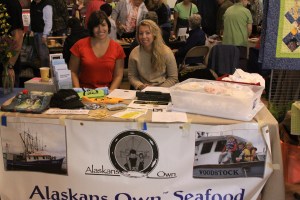
ErinFultonAshiaLaneAlaskansOwnSeafoodIn 2009, Fulton graduated from St. Olaf College in Northfield, Minn., with two degrees in biology and environmental studies. When she wasn’t studying, she played the contra alto clarinet for the St. Olaf band (“a 90-member family”) when it went on 10-day tours around the United States. Concerned about the environmental effects of their carbon footprint while traveling around the country, Fulton began a carbon-offset initiative for local farmers. 

After St. Olaf, Fulton attended graduate school at Duke University’s Nicholas School of the Environment and graduated with two master’s degrees in environmental management and forestry. According to Fulton, at Duke, there are 7,000 acres of timberland. Her master’s thesis involved getting carbon-offset, surveying the forest, and examining afforestation, reforestation, improved forest management, and avoided deforestation. 
AO_LogoHaving never worked in or pursued an education in the fisheries industry, Fulton took a job in Sitka as a Tongass Forest Resident with the Sitka Conservation Society. She was very interested in resource management in Alaska, because unlike the Lower 48 which is “locked in” with strict laws and regulations, Alaska is an active and dynamic place with constantly changing laws and continued resource extraction. Also, given her background in forest management, she is fascinated by the life cycle of salmon and its role as a “great fertilizer for the trees and forest.” She drove from her home in Minnesota to Alaska with a friend, through the Canadian Rockies and took a ferry to Sitka from Prince Rupert, British Columbia. 

Here in Sitka, Fulton is a member of the local roller derby team Sitka Sound Slayers. Last year, she broke her leg twice, but is looking forward to getting back to the sport stronger than ever this season. And from 9-10 a.m. on Friday mornings, you can catch Erin on KCAW-Raven Radio’s Good Day Show.

Come meet Erin and check out Alaska’s Own at the next Sitka Farmers Market from 10 a.m. to 1 p.m. on Saturday, Aug. 23, at the Alaska Native Brotherhood Founders Hall (235 Katlian St.).

• Scenes from the fourth Sitka Farmers Market of the 2014 summer

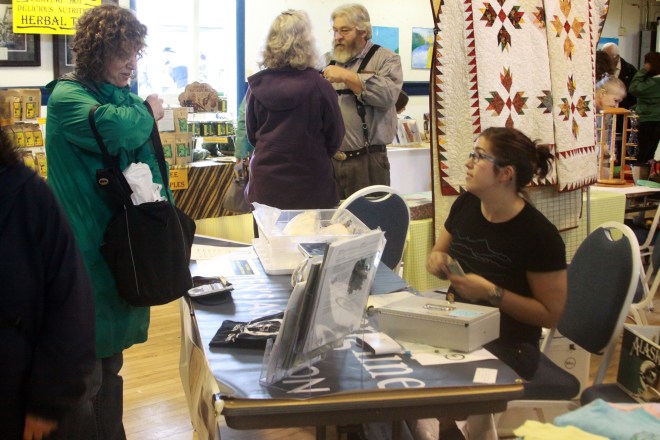
Sitka Farmers Market Co-Managers Debe Brincefield, left, and Ellexis Howey, right, present the Table Of The Day Award to Lori Adams of Down-To-Earth U-Pick Garden at the fourth Sitka Farmers Market of the 2014 summer on Saturday, Aug. 9, at the Alaska Native Brotherhood Founders Hall in Sitka. Lori has been selling fresh produce, jams and jellies, and her local book on gardening at the Sitka Farmers Market for several years. She received a gift bag with fresh greens, fresh rhubarb, a pair of earrings, a dozen eggs, and a copy of the Alaska Farmers Market Cookbook. This is the seventh year of Sitka Farmers Markets, hosted by the Sitka Local Foods Network. The next market is from 10 a.m. to 1 p.m. on Saturday, Aug. 23, at the Alaska Native Brotherhood Founders Hall, 235 Katlian St. Check our website to learn about our new bus service to the market. For more information about the Sitka Farmers Markets and Sitka Local Foods Network, go to http://www.sitkalocalfoodsnetwork.org/, or check out our Facebook page at https://www.facebook.com/SitkaLocalFoodsNetwork. (PHOTO COURTESY OF SITKA LOCAL FOODS NETWORK)

Sitka Farmers Market Co-Managers Debe Brincefield, left, and Ellexis Howey, right, present the Table Of The Day Award to Lori Adams of Down-To-Earth U-Pick Garden at the fourth Sitka Farmers Market of the 2014 summer on Saturday, Aug. 9, at the Alaska Native Brotherhood Founders Hall in Sitka. Lori has been selling fresh produce, jams and jellies, and her local book on gardening at the Sitka Farmers Market for several years. She received a gift bag with fresh greens, fresh rhubarb, a pair of earrings, a dozen eggs, and a copy of the Alaska Farmers Market Cookbook. This is the seventh year of Sitka Farmers Markets, hosted by the Sitka Local Foods Network. The next market is from 10 a.m. to 1 p.m. on Saturday, Aug. 23, at the Alaska Native Brotherhood Founders Hall, 235 Katlian St. Check our website to learn about our new bus service to the market. For more information about the Sitka Farmers Markets and Sitka Local Foods Network, go to http://www.sitkalocalfoodsnetwork.org/, or check out our Facebook page at https://www.facebook.com/SitkaLocalFoodsNetwork. (PHOTO COURTESY OF SITKA LOCAL FOODS NETWORK)

SitkaFarmersMarketSignLori Adams of Down-To-Earth U-Pick Garden won Table of the Day during the fourth Sitka Farmers Market of the 2014 summer, which took place on Saturday, Aug. 9, at the Alaska Native Brotherhood Founders Hall, 235 Katlian St.

National Farmers Market Week was Aug. 3-9, so several Sitka residents celebrated by attending the Sitka Farmers Market. We wound up with a bit of rainy weather for this market, but we still had a nice crowd and some new booths. We also enjoyed the third market with our new bus service from Sitka Tours. This free service will be available at all of the rest of our markets this summer.

The fifth Sitka Farmers Market of the season takes place from 10 a.m. to 1 p.m. on Saturday, Aug. 23, at ANB Founders Hall. A slideshow with scenes from the fourth market is below.

This slideshow requires JavaScript.

• Tongass National Forest, Sitka Ranger District, clarifies rules for berry-picking and gathering on forest lands

Salmonberries await picking near the entrance to Sitka National Historical Park

Salmonberries await picking near the entrance to Sitka National Historical Park

The Tongass National Forest, Sitka Ranger District, is reminding people that any berry-picking or other gathering for commercial use on national forest lands requires a special-use permit. The rules clarification comes after a sign recently was posted outside a grocery store offering payment for salmonberries. Personal-use berry-picking and other gathering is allowed, so long as no money changes hands.

Please note, these are not new regulations and they have been on the books for many years. But the USDA Forest Service wants to remind people about them because many Sitka residents don’t know them.

“Here is an interim policy for special forest products attached (see link below), but it is long and cumbersome for most to read,” District Ranger Perry Edwards wrote. “The short version is you can collect berries, mushrooms, etc., for personal use in a national forest. But once you sell them it becomes a commercial use and a person needs to have a special forest product permit. So far, no one has officially gone through the process to get one from the Sitka Ranger District, as it does take some time for the USDA Forest Service to do the analysis and the public process.”

The interim rules and regulations run several pages, but the two paragraphs below help clarify Special Forest Products and commercial uses.

  • Special Forest Products – Special forest products (SFPs) are defined as products derived from non-timber biological resources that are used for subsistence, personal, spiritual, educational, commercial, and scientific use. SFP resources include, but are not limited to: mushrooms, boughs, Christmas trees, bark, ferns, moss, burls, berries, cones, conks, herbs, roots, and wildflowers. Also included are cuttings (such as of willow used for restoration) and transplants (as for landscaping purposes). SFP resources exclude saw-timber, pulpwood, cull logs, small round-wood, house logs, utility poles, minerals, animals, animal parts, rocks, water and soil.
  • Commercial Uses — SFP resources that are sold, processed for sale, or used in business operations are considered commercial use. Research collections for bioprospecting or other purposes by entities that do not have a cooperative agreement with the Forest Service or other federal government agency or department are considered commercial use and are subject to the same permitting procedures and requirements as other commercial uses. Commercial use on the Tongass National Forest is subject to the standards and guidelines in the Tongass Forest Plan, national and regional SFP policies, and the following management guidelines. In all cases, commercial use should not displace subsistence, personal or other non-commercial uses.

The Alaska Division of Parks and Outdoor Recreation has similar rules for harvesting from Alaska State Parks, and earlier this summer began requiring a special permit for gathering seaweed at the Halibut Point Recreation Area in Sitka.

• Interim Special Forest Products Policy for Tongass National Forest, Sitka Ranger District

• Sitka Local Foods Network education committee to meet on Wednesday, Aug. 27


GreensInHoopHouseStPeters

Want to learn how to grow or gather your own food, or teach others about growing and gathering food? Your Sitka Local Foods Network invites Sitkans to learn more at an education committee meeting at 7 p.m. on Wednesday, Aug. 27, at Harrigan Centennial Hall.

Those interested in learning more about or volunteering on Sitka Local Foods Network education projects are invited to attend. SLFN board members and volunteers will discuss the past and future of our Family Garden Mentor Project, begin to plan the 2014-15 “It’s time to …” garden classes, and discuss new opportunities for projects such as a home business garden mentoring project and a future garden tour. Those interested in learning more and volunteering are encouraged to attend.

For those who cannot attend the meeting or want more information, contact Michelle Putz at 747-2708.

• Kathy Hope Erickson’s salmon/potato patties win top honors in Fish To Schools recipe contest

Members of the panel of judges sample one of the recipes in the Fish To Schools Recipe Contest at the Sitka Seafood Festival on Saturday, Aug. 2, 2014, at the Sheldon Jackson Campus/Sitka Fine Arts Camp.

Members of the panel of judges sample one of the recipes in the Fish To Schools Recipe Contest at the Sitka Seafood Festival on Saturday, Aug. 2, 2014, at the Sheldon Jackson Campus/Sitka Fine Arts Camp.

Recipe Contest FinalKathy Hope Erickson claimed top honors in the Fish To Schools recipe contest during the Sitka Seafood Festival, and two younger chefs tied for second place.

Kathy submitted a recipe for salmon and potato patties, which she served with a special chili ketchup, and won a gift certificate to Ludvig’s Bistro for her efforts. Tying for second place were Zoe Trafton, age 8, with her recipe for salmon mac and cheese, and Ava Newell (with her father Mike), age 8, with her recipe for coconut pecan rockfish with a blueberry dipping sauce. Zoe and Ava both won t-shirts. A panel of nine judges, including a couple of students, rated the recipes.

In all, eight local chefs submitted recipes for the contest, which was hosted by the Sitka Conservation Society, which coordinates the Sitka Fish To Schools Program to put more healthy local seafood into school lunches. The other recipes included sesame-veggie salmon cakes with tangy apple slaw by Beth Short-Rhoads and her daughter Kat Rhoads, age 6; salmon pinwheels from Judi Ozment; healthy salmon fish fingers from Anna Bisaro; baked salmon with dill from Matt Jones; and salmon-veggie wraps from Charles Bingham.

The purpose of the contest was to collect kid-friendly fish entree recipes that can be made for school lunches as part of the Fish to Schools program. The dishes should be healthy and easy to make (no special appliances). Baking the fish is preferred over frying, and recipes should be low in sodium and fat. The top seafood dishes will be used in school lunches at the Sitka School District, the state-run Mount Edgecumbe High School, and the private SEER School.

The top three recipes are posted below, and all eight recipes can be found in the attachment. For more information about the recipe contest and the Sitka Fish To Schools Program, click this link or call Sophie Nethercut or Tracy Gagnon of the Sitka Conservation Society at 747-7509.

• 2014 Fish To Schools Recipe Contest Submissions (attachment includes all eight recipes)

School Lunch Salmon Patties With Chili Ketchup (Makes 12)

Winning Recipe submitted by Kathy Hope Erickson, Sitka

  • KathyHopeErickson1 pint jar salmon
  • 2 cups cooked potatoes
  • 1/3 cup chopped onions
  • 1 egg
  • 1 teaspoon garlic seasoning
  • 1 teaspoon onion seasoning
  • 1/2 teaspoon salad herbs – dried
  • 12 Ritz crackers

Mix all, form into patties, fry in heated vegetable oil, or alternatively, spray with cooking spray and bake in 400-degree oven.

Chili Ketchup

For dipping fish patties: Combine 2 teaspoons chili powder, 1/2 teaspoon cumin, 4 1/2 teaspoon onion, and 3/4 cup ketchup.


Coconut Pecan Rockfish With Blueberry Dipping Sauce

2nd place: Submitted by Mike and Ava Newell (age 8), Sitka

  • MikeAndAvaNewel1 lb. rockfish fillets
  • 1 T coconut milk
  • salt and pepper
  • 1/2 C pecans, chopped
  • 1/2 C shredded coconut
  • 2 T plain breadcrumbs

Preheat oven to 400 degrees. Place rockfish on baking sheet. Pour coconut milk over fish. Sprinkle fish with salt and pepper. Combine pecans, coconut, and bread crumbs in a bowl. Press coconut mixture onto top of fish fillets. Bake for 15-20 minutes, just until fish is opaque throughout

Blueberry Dipping Sauce

  • 1 C wild blueberries, rinsed
  • 1/4 C water
  • 1/4 C coconut milk
  • 1/2 T cornstarch
  • salt

Place blueberries and water in small saucepan. Simmer until berries burst. Strain berries through fine mesh sieve into small bowl. Add coconut milk to bowl. Pour sauce back into saucepan. Mix cornstarch with a little bit of cold water until smooth. Add cornstarch mixture to sauce. Stir and heat until boiling. Continue to boil until desired thickness. Serve with rockfish


Salmon Mac ‘n Cheese
2nd place: Submitted by Zoe Trafton (age 8), Sitka

  • ZoeTrafton1 cup cooked salmon, chopped
  • 2 cups shredded cheese (cheddar and jack recommended)
  • 2 cups shell pasta
  • ½ cup finely chopped onions
  • ½ cup finely chopped mushrooms
  • 1 teaspoon basil
  • ½ cup Alfredo sauce
  • 1 tablespoon Frank’s Red Hot sauce
  • 1 teaspoon chili powder

Boil shells in medium pot. Sauté onions and mushrooms for three minutes. Add salmon to mushrooms and onions. Drain water and add pasta. Add cheese. Add Alfredo sauce and hot sauce. Mix carefully. Add spices and serve.