• Sitka Farmers Market’s third season opens on Saturday, July 17, at ANB Hall

The Sitka Local Foods Network will host its third summer of Sitka Farmers Markets with five markets that start on July 17 and take place on alternate Saturdays through Sept. 11. The Sitka Farmers Markets give Sitka residents a chance to buy and sell locally produced food and crafts.

The Sitka Farmers Markets take place from 10 a.m. to 2 p.m. on July 17, 31, Aug. 14, 28 and Sept. 11, at the Alaska Native Brotherhood Hall (235 Katlian St.). The markets feature local seafood (fresh, frozen, and cooked, ready to eat), locally grown and harvested fruits and vegetables, baked bread, locally picked berries, jams and jellies, cooking demonstrations, live entertainment, locally brewed and roasted coffee, music, local arts and crafts, and a variety of other items gathered or made in Sitka. We emphasize local products and lots of fun. You also can vote for the Sitka Farmers Market in the America’s Favorite Farmers Markets contest by following the links at http://www.sitkalocalfoodsnetwork.org/.

Sitka Local Foods Network board members Natalie Sattler, left, with parsnips, Lisa Sadleir-Hart, center, with turnips, and Doug Osborne, right, with turnips, show off some of the produce for sale at the final Sitka Farmers Market of 2009.

Sitka Local Foods Network board members Natalie Sattler, left, with parsnips, Lisa Sadleir-Hart, center, with turnips, and Doug Osborne, right, with turnips, show off some of the produce for sale at the final Sitka Farmers Market of 2009.

As a bonus, Medicine For The People, one of the bands in Sitka for this weekend’s Homeskillet Fest 2010, will play during this Saturday’s Sitka Farmers Market.

“The Sitka Farmers Market is like a carnival every other Saturday,” said Kerry MacLane, Sitka Local Foods Network Board President and Co-Coordinator of the Sitka Farmers Market. “It’s a fun community space to enjoy with your family or to meet your friends for fresh coffee and baked goods. There is live music, cooking demonstrations, art, and, of course, fresh veggies, fruit and seafood.”

“In 1970 there were only 340 farmers markets in America, and by 2006 there were more than 4,385. I think this dramatic growth is attributed to the many layers of social and economic benefits these markets offer,” said Doug Osborne, a health educator at the SouthEast Alaska Regional Health Consortium (SEARHC). “Last year, several participants said Sitka’s markets were among the highlights of their summer.”

The Sitka Farmers Market started as a community project that came out of a health priority planning meeting at the 2008 Sitka Health Summit. This event is sponsored by the Sitka Local Foods Network, Alaska Native Brotherhood Camp No. 1, Alaska Native Sisterhood Camp No. 4, Baranof Island Housing Authority, Sitka Conservation Society, the Alaska Farmers Market Association and the SEARHC Health Promotion and Diabetes Prevention programs.

Vendor fees are just $15 per market. Due to construction in the parking lot, only indoor booth space is available this year. We are the first farmers market in Southeast Alaska to accept WIC coupons. To learn more or to sign up for a table, contact Sitka Farmers Market Co-Coordinator Linda Wilson at 747-3096 (evenings and weekends) or e-mail lawilson87@hotmail.com. Vendor rules, registration forms and other information for potential vendors can be found at http://www.sitkalocalfoodsnetwork.org/.

• Deadline nears for getting food and other entries to the Southeast Alaska State Fair in Haines

The deadline for getting your local entries ready for the Southeast Alaska State Fair is this week if you want to take advantage of free shipping from Sitka.

Jeanette Berry, the Sitka town representative for the fair, needs to have all non-perishable entries packed and delivered to the Alaska Marine Lines office in Sitka by the afternoon of Thursday, July 8, so they can be loaded onto the Tuesday, July 13, barge to Haines. She can provide assistance and free shipping on the entries that will be barged to Haines. Perishable items will be flown to Haines, but free shipping may not available on those items (Jeanette is researching to see what shipping rates might be for perishable items).

The Southeast Alaska State Fair takes place from July 29 through Aug. 1 at the Haines Fairgrounds, just outside Haines. The fair provides a regional showcase for agricultural and domestic arts, creative arts and crafts, and the opportunity for educational, cross-cultural and social exchange.

There are exhibits for a wide variety of food items, from big veggies to jams and jellies, even homemade beer and wine. There are hundreds of categories to enter, so click this link and download the 59-page exhibitor’s guide book for information about what types of items can be entered and how the entries should be prepared.

To learn more about how Jeanette can help you ship your entries to Haines, call her at 747-3222 (home) or 1-360-271-8197 (cell). It’s not too late to share your talents with other residents of Southeast Alaska.

2010 Southeast Alaska State Fair exhibitor’s guide book (PDF file)

• ADF&G offers basic hunter education course this weekend in Sitka

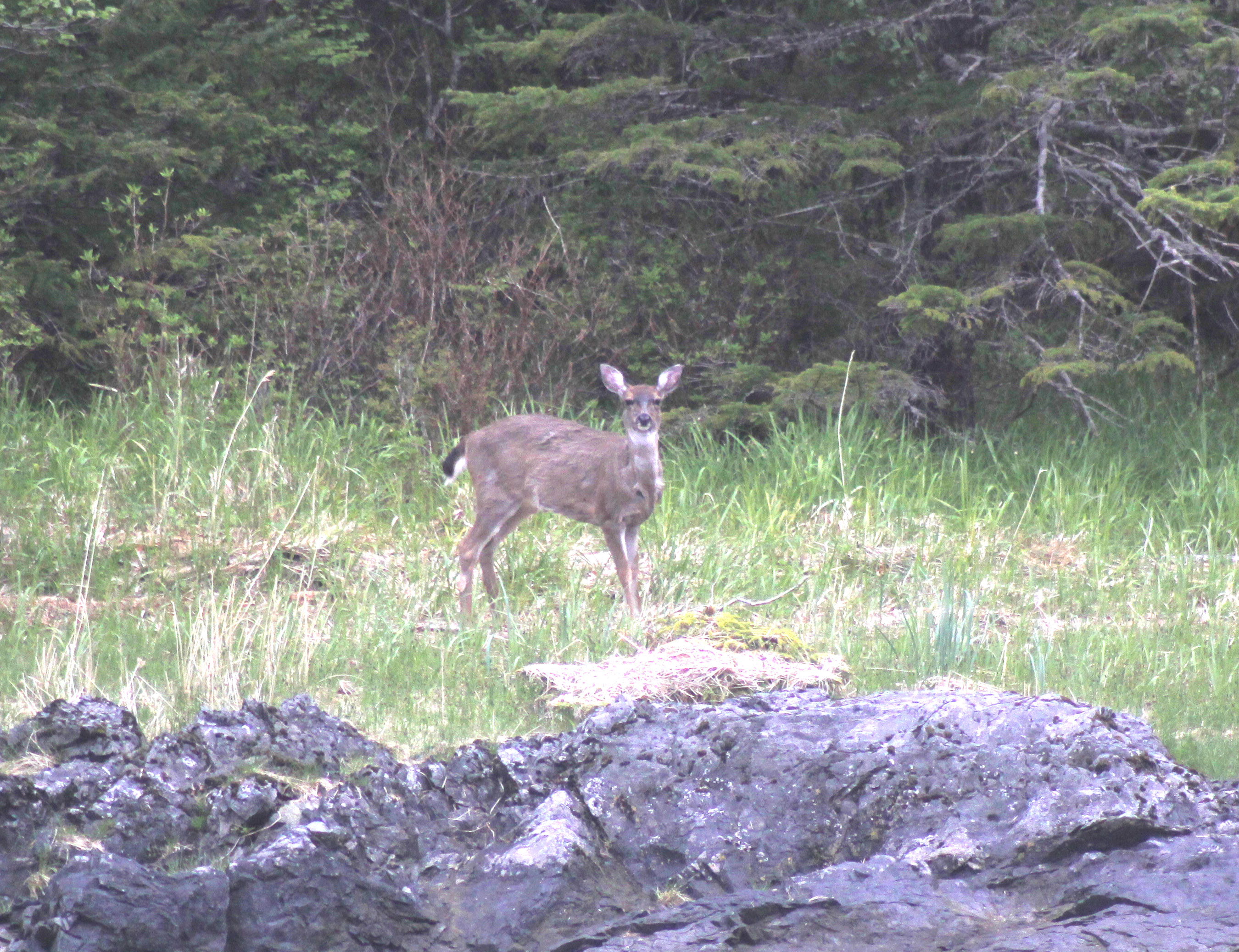
A Sitka black-tailed deer feeds on one of the barrier islands near Sitka

A Sitka black-tailed deer feeds on one of the barrier islands near Sitka

The Alaska Department of Fish and Game is offering a two-day basic hunter education class this weekend in Sitka. The class takes place from 6-9 p.m. on Friday, July 9, and from 9 a.m. to 4 p.m. on Saturday, July 10.

To register, students must purchase a $10 study packet that is available at the Sitka ADF&G office, 304 Lake St., Suite 103. The packet workbook must be completed before the start of the first class. The course is open to anyone, but it is designed for students ages 10 and older. A minimum of six students is needed for the class to take place.

For packet workbooks and additional information, contact the Sitka office of ADF&G at 747-5449. More information about the basic hunter education class also is available online at this link.

This class is required before hunters are allowed to get permits for some of Alaska’s game management areas. Successful completion of the class earns the hunter a certificate recognized by all other states, Canadian provinces and territories, and in Mexico.

• Don’t forget to vote for the Sitka Farmers Market in this year’s America’s Favorite Farmers Markets contest

The third season for the Sitka Farmers Market doesn’t open until July 17, but you can vote for us now in the second annual America’s Favorite Farmers Markets contest. The contest is sponsored by the American Farmland Trust, a non-profit organization dedicated to preserving America’s agricultural resources.

To vote, click here and then search for the Sitka Farmers Market by using the zip code or state directories. You also can vote by clicking the contest logo at the top of this site’s right column or the contest logo at the bottom of this post. Voting opened on June 1, and the deadline to vote is midnight EST on Tuesday, Aug. 31 (8 p.m. Alaska time on Monday, Aug. 30). The online voting form asks what you like best about the market, so be prepared to type something in the box. The top boutique, small, medium and large markets win a large quantity of “No Farms, No Food” totebags to distribute at a market in September, in addition to other prizes to help organizers run a better market. Click here for more information about the contest, and click here for a FAQ page with more details.

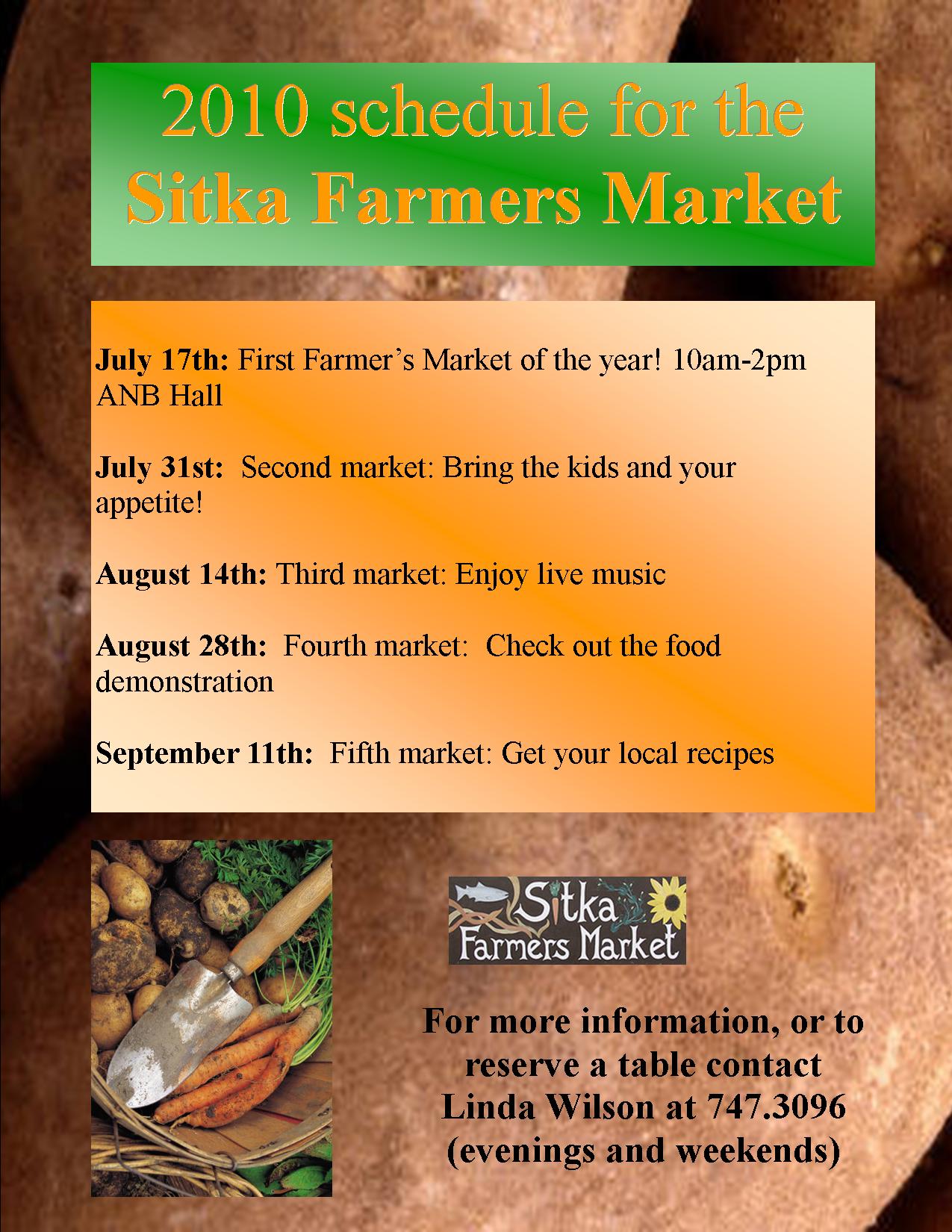
2010 Sitka Farmers Market schedule

2010 Sitka Farmers Market schedule

By the way, the summer’s first Sitka Farmers Market is from 10 a.m. to 2 p.m. on Saturday, July 17, at Alaska Native Brotherhood Hall (235 Katlian St.). Other markets are scheduled for alternate Saturdays — July 31, Aug. 14, Aug. 28 and Sept. 11. There also will be a small Sitka Farmers Market produce booth at the Running of the Boots fundraiser for the Sitka Local Foods Network on Sept. 25 at the Crescent Harbor covered shelter. We’re looking forward to seeing you at the markets.

Our markets feature a variety of vendors with locally grown produce, locally caught fish, baked bread, prepared foods and arts and crafts. We usually have musicians on stage and a table with children’s activities. Due to construction this summer, we will not be able to have many of our usual booths outdoors in the ANB Hall/Baranof Island Housing Authority parking lot. We will do the best we can to fit as many booths inside ANB Hall as we can, and we are asking vendors to try and do more with vertical displays. To learn more about reserving booths for the Sitka Farmers Market, contact Linda Wilson at 747-3096 (evenings and weekends) or by e-mail at lawilson87@hotmail.com. Vendor rules and other information can be found at this link.

If you have extra produce from your garden, the Sitka Local Foods Network table (outside ANB Hall by the Sitka Farmers Market sign) gladly accepts donations and will buy some produce to sell at its booth. The Sitka Local Foods Network sells produce grown at the St. Peter’s Fellowship Farm communal garden and a few other local gardens at its Sitka Farmers Market booth. All money raised by the Sitka Local Foods Network booth goes into various projects sponsored by the network — a 501(c)(3) non-profit group — including the Sitka Farmers Market, community gardens, the proposed Sitka Community Greenhouse and Education Center and other projects.

Local Food and Local Farms

• Sitka Seafood Festival to hold picnic with Monday’s steering committee meeting

The next meeting of the Sitka Seafood Festival steering committee will feature a picnic in addition to the business part of the meeting. The picnic should help spice up the planning process and boost attendance.

The next steering committee meeting takes place at 7 p.m. on Monday, June 28, at Halibut Point Recreation Area’s main shelter. Participants should bring their own drinks and side dishes. Hamburgers and sausage will be provided.

“We have a few important things to cover, but would just like to get everyone together and get excited about this event that is soon approaching again,” Sitka Seafood Festival steering committee chairperson Alicia Peavey said. “Thanks for everyone’s hard work, I really appreciate it and I do think the festival is going to be amazing thanks to all of you!”

The inaugural Sitka Seafood Festival takes place Friday and Saturday, Aug. 6-7, at Harrigan Centennial Hall and various other places around Sitka. The guest chef is Robert Kinneen of Orso Ristorante in Anchorage, with entertainment provided by the bluegrass band Trampled By Turtles and the four-man juggling, acrobatic, martial arts and comedy troupe “NANDA: Acrobaticalist Ninja Action Heroes.” The basic format of the event features a special dinner on Friday night with a variety of educational events, seafood booths and entertainment all day Saturday.

To learn more about the Sitka Seafood Festival or to volunteer to help on one of the committees, e-mail sitkaseafoodfestival@gmail.com. You also can contact Alicia Peavey at alaska_al33@hotmail.com or 1-928-607-4845. The minutes from the June 22 Sitka Seafood Festival steering committee meeting are posted below. The steering committee also will meet at 7 p.m. on Wednesday, July 7, at Harrigan Centennial Hall.

Sitka Seafood Festival minutes from the June 22, 2010, steering committee meeting

• Paralytic shellfish poisoning (PSP) warning issued for Southeast Alaska

The enclosed copy is courtesy of the SouthEast Alaska Regional Health Consortium (SEARHC) website.

A cockle has deep ridges similar to a Ruffles potato chip (Photo courtesy of Alaska Department of Environmental Conservation)

A cockle has deep ridges similar to a Ruffles potato chip (Photo courtesy of Alaska Department of Environmental Conservation)

This past week has seen five cases of paralytic shellfish poisoning (PSP) in Alaska, including two cases in Southeast Alaska that resulted in the June 17 death of a Juneau woman who ate a cockle and the June 22 death of a Haines man who ate a Dungeness crab. The other three cases were in Kodiak and they resulted in illness from eating butter clams.

The two Southeast deaths, if confirmed by autopsy, will be the first paralytic shellfish poisoning deaths in Alaska since 1997. In 2009 there was just one reported case of PSP in Alaska, and there were no cases of PSP in 2008 and one in 2007. There have been periodic outbreaks of PSP over the years, with the most deadly instance coming when clams and mussels gathered from Peril Straits near Sitka killed more than 100 Russians and Aleuts in 1799.

According to the Alaska Department of Health and Social Services, the 57-year-old Juneau woman reportedly ate cockles she gathered on June 14 from the Point Louisa end of Auke Bay. She died June 17 after being hospitalized at Bartlett Regional Hospital in Juneau. The Alaska Department of Environmental Conservation tested cockles from Auke Bay after the woman was hospitalized and DEC found the Auke Bay cockles had much higher levels of PSP than acceptable (they should not have more than 80 parts per million, and the cockles had 2,044 parts per million).

The 57-year-old Haines man reportedly ate Dungeness crab on June 18 that he caught off Jenkins Rock near the Chilkat Inlet of Lynn Canal. He was hospitalized at Bartlett Regional Hospital on June 18 and released from the hospital on June 21. He died in his Haines home early on June 22. Dungeness crab meat does not contain PSP, but the viscera (guts) can have the toxin, health officials said. People should not eat crab viscera. The Department of Environmental Conservation plans to test crabs from Southeast for PSP.

What is paralytic shellfish poisoning (PSP)?

Paralytic shellfish poisoning, or PSP, is a potentially lethal toxin that can lead to fatal respiratory paralysis, according to the Alaska Department of Environmental Conservation. The toxin comes from algae, which is a food source for clams, mussels, crabs and other shellfish found across Alaska. This toxin can be found in shellfish every month of the year, and butter clams have been known to store the toxin for up to two years. The toxin cannot be seen with the naked eye, and there is no simple test a person can do before they harvest. One of the highest concentrations of PSP in the world was reported in shellfish from Southeast Alaska.

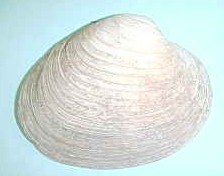
The butter clam has one set of rings that go one direction only, around the same center point (Photo courtesy of Alaska Department of Environmental Conservation)

The butter clam has one set of rings that go one direction only, around the same center point (Photo courtesy of Alaska Department of Environmental Conservation)

Symptoms of PSP can begin almost immediately, or they can take several hours after eating the affected shellfish before they appear. Symptoms include shortness of breath, tingling, dizziness and numbness. If you suspect someone has symptoms of PSP, get that person to a medical facility fast (an Alaska Sea Grant link below has first aid for PSP). Death is rare from PSP, but some people have died after eating just one clam or mussel with the PSP toxin, while in other cases it took eating many clams or mussels to get enough of the poison to cause death.

Are Southeast beaches safe for subsistence or recreational shellfish harvesting?

The Department of Environmental Conservation recommends harvesting of shellfish only from DEC-certified beaches, and the only certified beaches in the state are located in the Cook Inlet and Kachemak Bay areas of Southcentral Alaska. According to DEC, there are no certified beaches in populated areas of Southeast Alaska, Kodiak or the Aleutian Islands. The only beaches DEC can certify as safe for shellfish collecting are those where state-certified testing of clams and mussels is done regularly.

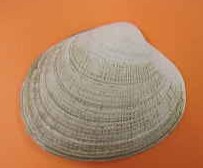
The littleneck clam has two sets of rings that cross each other at 90 degree angles (Photo courtesy of Alaska Department of Environmental Conservation)

The littleneck clam has two sets of rings that cross each other at 90 degree angles (Photo courtesy of Alaska Department of Environmental Conservation)

“Do not eat shellfish from uncertified beaches,” DEC Program Specialist George Scanlan said. “Anyone who eats PSP-contaminated shellfish is at risk for illness or death.”

The DEC warning does not apply to commercially grown and harvested shellfish available in grocery stores and restaurants. Commercially grown and harvested shellfish goes through a regular testing program before it goes to market.

Paralytic shellfish poisoning (PSP) resources

DEC page about paralytic shellfish poisoning (PSP) and how it works, http://www.dec.state.ak.us/eh/fss/seafood/psp/psp.htm

DEC links page with more info about PSP,
http://www.dec.state.ak.us/eh/fss/seafood/psphome.htm

DEC page about identifying butter clams, littleneck clams and cockles (has photos),
http://www.dec.state.ak.us/eh/fss/seafood/psp/shellfish.htm

Current DEC warning about PSP in Alaska (dated June 16, 2010),
http://dec.alaska.gov/press_releases/2010/2010_06_16_psp%20final.pdf

Joint DH&SS/DEC press release about Haines case of PSP (dated June 21, 2010),
http://www.hss.state.ak.us/press/2010/Additional_case_of_PSP_reported_062110.pdf

DH&SS  fact sheet about paralytic shellfish poisoning, http://www.hss.state.ak.us/pdf/201006_shellfish.pdf

Twitter feed for the Alaska Department of Health and Social Services,
http://twitter.com/alaska_DHSS

Alaska Sea Grant page with links about paralytic shellfish poisoning,
http://seagrant.uaf.edu/features/PSP/psp_page.html

Alaska Sea Grant page with first aid for PSP victims (get victim to medical facility fast),
http://seagrant.uaf.edu/features/PSP/PSP_aid.html

Centers of Disease Control and Prevention page on marine toxins (including PSP),
http://www.cdc.gov/nczved/divisions/dfbmd/diseases/marine_toxins/

• Wealth of resources available to learn about traditional foods

A selection of traditional plant books that are in popular use in Southeast Alaska

A selection of traditional plant books that are in popular use in Southeast Alaska

Living in Southeast Alaska, Sitka residents are exposed to a wealth of traditional foods that grow in our forests or can be found along our beaches. But many Sitka residents aren’t familiar with which plants are safe to eat, and which plants they should avoid. They also aren’t familiar with when are the prime times to gather certain plants.

In recent years, several books have been published to help teach people more about traditional plants and how they can be used. There also have been other groups, such as the Sitka Tribe of Alaska’s Kayaaní Commission, the Sealaska Heritage Institute and the Alaska Native Knowledge Network, that have posted traditional plant information online, including complete curriculum outlines for teachers to use in their classrooms.

Some of the more popular books used in Sitka (many of these can be found at Old Harbor Books) include:

  • Wild Edible & Medicinal Plants: Alaska, Canada & Pacific Northwest Rainforest: An Introductory Pocket Trail Guide (Volumes 1 and 2) by Carol R. Biggs
  • Wild Edible and Poisonous Plants of Alaska by the University of Alaska Fairbanks Cooperative Extension Service (FNH-00028)
  • Collecting and Using Alaska’s Wild Berries and Other Wild Products by the University of Alaska Fairbanks Cooperative Extension Service (FNH-00120)

In addition to these books, the Sealaska Heritage Institute has created curriculum resources using the Tlingít and Haida languages that are built around using traditional foods (links on language names go to Grades K-2 versions, but upper-lever courses available on main curriculum link). Examples of the Tlingít and Haida Grade K-2 courses for Plants are linked below as PDF documents, but there also are separate courses for beach greens, berries, cedar trees, hemlock trees, spruce trees, herring, hooligan, salmon, sea mammals, as well as for other cultural knowledge such as canoes, totem poles and Elizabeth Peratrovich.

The Alaska Native Knowledge Network also some curriculum resources posted online for Tlingít, Haida and Tsimshian culture, including some by Sitka teacher Pauline Duncan. The Alaska Native Plant Society has some information on traditional plant use, but the group is geared more toward the Anchorage area. The Alaska Natural History Program publishes an online Alaska Rare Plant Field Guide. The University of Alaska Fairbanks Cooperative Extension Service has online and printed guides available on plant identification, berries and berry use, and even has online tutorials about how to home can jams and jellies.

On a related note, the SouthEast Alaska Regional Health Consortium (SEARHC) Diabetes Program will be turning its focus to traditional living classes for 2011. The program will focus on traditional foods and activities to teach its Native patients and other community members how to prevent and manage their diabetes (the SEARHC Diabetes Program operates throughout Southeast Alaska, not just in Sitka). The SEARHC Diabetes Program is looking for resident experts in traditional living (fishing, hunting, gathering, preparation, storage, gardening, etc.) who can help teach these skills to others. The program also wants to learn what types of classes people want to see offered in their communities. For more information, contact SEARHC Health Educator Renae Mathson at 966-8797 or renae.mathson@searhc.org.

Sealaska Heritage Institute Tlingít plant curriculum (Grades K-2)

Sealaska Heritage Institute Haida plant curriculum (Grades K-2)

UAF Cooperative Extension Service Native Plants of Alaska page on devil’s club

Nellie’s Recipes: An ANTHC (Alaska Native Tribal Health Consortium) Traditional Food Cookbook for Assisted Living Homes

Alaska Traditional Food Resources (list from Eat Smart Alaska program run by Alaska Division of Public Health)

• St. Peter’s Fellowship Farm hosts Saturday and Wednesday work parties throughout the summer

This slideshow requires JavaScript.

There will be St. Peter’s Fellowship Farm work parties from 4:30-6 p.m. 5-6:30 p.m. every Wednesday afternoon and from 3-5 p.m. 2-4 p.m. every Saturday afternoon (when there aren’t Sitka Farmers Markets scheduled) throughout the summer. (PLEASE NOTE CORRECTED TIMES)

While most of the garden has been planted and veggies are growing, there is a lot of maintenance work needed to keep the gardens working at full capacity. Tasks include watering the plants (when needed), weeding, thinning out some crops so the remaining ones have more room to grow, and even making some early harvests of food and replanting some of the faster-growing veggies. There were several radishes ready during the last planting party in May, so volunteers got to add them to their salads. Yum. Besides the May 29 planting party photos above, there is a similar photo gallery on the Sitka Local Foods Network’s page on Shutterfly.

Food grown at the St. Peter’s Fellowship Farm communal garden is sold at the Sitka Farmers Markets. This summer the Sitka Farmers Markets take place on five alternate Saturdays starting on July 17 and running through Sept. 11. The St. Peter’s Fellowship Farm communal garden is located by the See House behind St. Peter’s By The Sea Episcopal Church on Lincoln Street.

For more information on the work parties, contact Lisa Sadleir-Hart at 747-5985 or 3akharts@acsalaska.net, or contact Doug Osborne at 747-3752 or doug_las@live.com.

• Juneau Farmers Market to host weekly booths with Juneau Artists Market

The Juneau Farmers Market will start hosting weekly booths this Saturday as part of the Juneau Artists Market. The Juneau Farmers Market booths will be open from 10 a.m. to noon starting on Saturday, June 12, at the Juneau Arts and Culture Center, and running through the annual Juneau Farmers Market and Local Food Festival on Aug. 28.

A companion event to the Juneau Artists Market, which offers local arts and crafts, the Juneau Farmers Market will feature locally grown produce, cut flowers, homemade jams and jellies and baked goods. Plant starts also are welcome, so don’t toss your thinnings and starts. Instead, share them with another gardener. Juneau Farmers Market booth space is limited, so advance reservation required.

The season culminates in Juneau with the third annual Juneau Farmers Market and Local Food Festival from 9 a.m. to 2 p.m. on Saturday, Aug. 28, at the Juneau Arts and Culture Center. In past years, this was the only farmers market event in Juneau, so it’s nice to see weekly markets this year. Click the link above for more details on this larger annual event, which includes produce, fish, jams and jellies, baked breads and demonstrations about how to harvest and preserve local foods, or click this link for information from the Sustainable Juneau blog.

The Juneau Farmers Market would not be possible without its sponsors and partners: the Juneau Arts and Humanities Council, the Juneau Economic Development Council, the Juneau Commission on Sustainability, the Alaska State Division of Agriculture and the UAF Cooperative Extension Service.

• Vote for the Sitka Farmers Market in this year’s America’s Favorite Farmers Markets contest

The Sitka Farmers Market won’t open until July 17, but you can vote for us now in the second annual America’s Favorite Farmers Markets contest sponsored by the American Farmland Trust, a non-profit organization dedicated to preserving America’s agricultural resources.

To vote, click here and then search for the Sitka Farmers Market by using the zip code or state directories. Voting opened on June 1, and the deadline to vote is midnight EST on Tuesday, Aug. 31 (8 p.m. Alaska time on Monday, Aug. 30). The online voting form asks what you like best about the market, so be prepared to type something in the box. The top boutique, small, medium and large markets win a large quantity of “No Farms, No Food” totebags to distribute at a market in September, in addition to other prizes to help run the market. Click here for more information about the contest, and click here for an FAQ page with more details.

2010 Sitka Farmers Market schedule

2010 Sitka Farmers Market schedule

By the way, the first Sitka Farmers Market is from 10 a.m. to 2 p.m. on Saturday, July 17, at Alaska Native Brotherhood Hall (235 Katlian St.). Other markets are scheduled for alternate Saturdays, July 31, Aug. 14, Aug. 28 and Sept. 11. We’re looking forward to seeing you at the markets.

Our markets feature a variety of vendors with locally grown produce, locally caught fish, baked bread, prepared foods and arts and crafts. We usually have musicians on stage and a table with children’s activities. Due to construction this summer, we will not have our usual booths outdoors in the ANB Hall parking lot and we will do the best we can to fit as many booths inside as we can. To learn more about reserving booths for the Sitka Farmers Market, contact Linda Wilson at 747-3096 (evenings and weekends) or by e-mail at lawilson87@hotmail.com.

If you have extra produce from your garden, the Sitka Local Foods Network table (outside by the Sitka Farmers Market sign) accepts donations and does buy some produce to sell at its booth. All money raised by the Sitka Local Foods Network booth goes into various projects sponsored by the 501(c)(3) non-profit group, including the Sitka Farmers Market, community gardens, the proposed Sitka Community greenhouse and other projects. The Sitka Local Foods Network also sells produce grown at the St. Peter’s Fellowship Farm communal garden at its booth at the Sitka Farmers Market.

Local Food and Local Farms