• New curriculum guide released for movie “Eating Alaska” by Sitka filmmaker Ellen Frankenstein

The publicity poster for the movie Eating Alaska

Sitka filmmaker Ellen Frankenstein has released a new curriculum book for teachers using her movie, “Eating Alaska.” You can click here to download the guide from the New Day Films site, which has more info about the movie, or you can download the PDF file by clicking the attachment below.

EATING ALASKA GUIDE NOV 2009

• Food security in Alaska a big issue in recent local foods news stories

Last week, the Anchorage Daily News’ Alaska Newsreader blog reported on a story from the Huffington Post’s The Daily Beast blog that ranked Alaska second in failing to properly feed its people. The story used data from a new USDA survey on household food security in 2008, where Alaska was ranked in the middle of the pack, but it re-ranked the states based on the household food security rankings combined with statewide income and access to programs (including bureaucratic issues) that feed the hungry. By the way, Colorado had the dubious No. 1 ranking. The Juneau Empire ran an editorial from the Washington Post about the USDA survey that compared food insecurity vs. hunger.

The University of Alaska Fairbanks School of Natural Resources and Agricultural Science blog reported on a food security meeting in Fairbanks earlier this month hosted by the Sustainable Community Action Network for Fairbanks (SCANFairbanks, site hasn’t been updated in more than a year). The UAF SNRAS blog article mentioned food security projects from around the state, including work being done by the Sitka Local Foods Network. The Fairbanks Community Cooperative Market blog also had an article about the meeting.

The food security issue has been around for awhile. Earlier this year, the Alaska Food Coalition reported on Alaska’s Hungriest Communities. More than a year ago, back when Sarah Palin still was governor, Kim Sollien of the Alaska Trust Food Network (and Chickaloon Tribe) wrote an open letter to then-Gov. Palin detailing Alaska’s food security problems. While the letter is more than a year old, many of the issues still exist. Last year, the Christian Science Monitor ran an article about Alaska’s food challenges and how new farmers are coming online.

In other local foods news this week, the Tundra Drums reported that a teacher from the Kuskokwim River village of Quinhagak is receiving a $10,000 grant from former talk show host Jenny Jones’ foundation to build a community greenhouse.

Laine Welch’s Alaska Fisheries column this week discussed how more halibut this year was consumed in homes instead of restaurants.

The Fairbanks Daily News-Miner reported on a problem moose hunters in the Interior have been having with Tanana Valley Meats being overloaded so it’s taking too long to process the meat, processed meat returns have been light and some meat has been rancid.

Finally, the Alaska Dispatch reported on a KTVA-TV story about Permafrost Alaska Vodka, which is made by Glacier Creek Distillery and uses potatoes grown in the Mat-Su valleys, earning a top ranking from the Beverage Tasting Institute of Chicago.

• Sitka film featured in Palmer’s “Local Harvest, Local Food” film festival, a Sitka café featured for using local food and other local foods news

Food Film Fest Poster-2

Join the Palmer Arts Council for its inaugural “Local Harvest, Local Food” film fest from Thursday, Nov. 19, through Sunday, Nov. 22, at the Strangebird Consulting Office in downtown Palmer. “Good Food” screens at 7 p.m. on Thursday, Nov. 19; “Fresh” shows at 7 p.m. on Friday, Nov. 20; “Eating Alaska” by Sitka filmmaker Ellen Frankenstein screens at 7 p.m. on Saturday, Nov. 21; and “Ingredients” shows at 3 p.m. on Sunday, Nov. 22. After the Sunday showing there will be a discussion about women in agriculture with Cynthia Vignetti. Suggested donations are $10-15 for all films except for Sunday, which is free.

A Sitka restaurant, the Larkspur Café, was featured in Capital City Weekly last week. The article talks about the origins of the restaurant, which is located in the same building as KCAW-Raven Radio. It also discusses the restaurant’s use of local foods, including owners Amelia Budd and Amy Kane purchasing produce from the Sitka Farmers Market during the summer.

In other local foods news from around the state, the National Oceanic and Atmospheric Administration (NOAA) recently announced an expansion to the state’s subsistence halibut fishery to include more rural residents (this includes the Sitka area). The new rules, which take effect on Dec. 4, redefine who qualifies as a rural resident. The previous rules defined rural residents as people living in a rural community or people belonging to a Native tribe with customary and traditional uses of halibut, and the news rules try to catch subsistence halibut users who fell outside the previous definition. Click this link for more information about subsistence halibut regulations and applications.

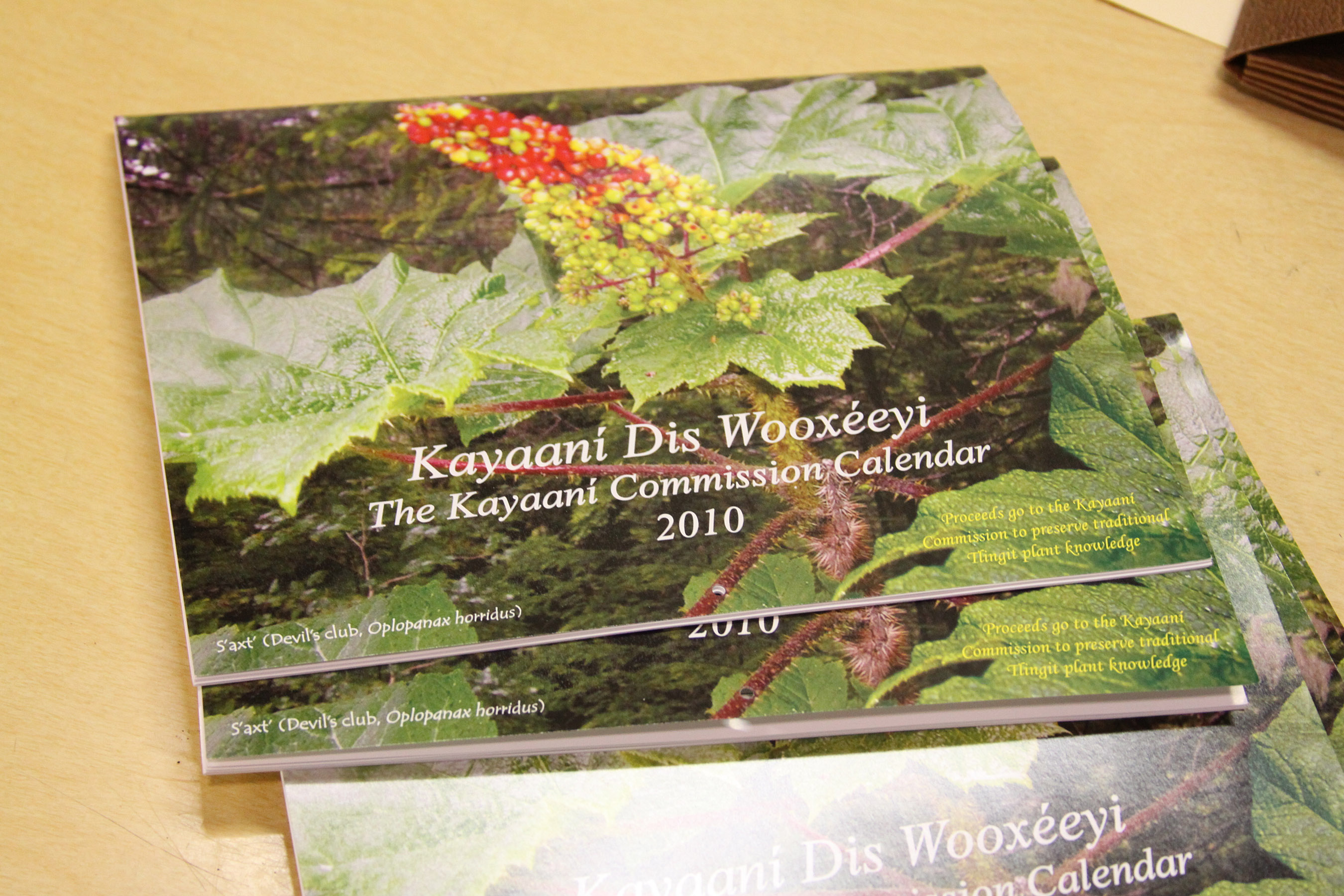
The Daily Sitka Sentinel has been running a brief announcement from the Sitka Tribe of Alaska’s Kayaaní Commission, which is selling 2010 calendars, CDRoms and field guides about traditional uses of native plants. Here is the information:

Kayaaní Native Plant Publications Available: 2010 Kayaaní Harvest Calendars featuring native plants and their traditional and cultural uses ($16, $2 postage per address); Interactive Ethnobotanical CDRoms with native species, their Tlingít, scientific and common names, and interviews with Elders on the traditional and medicinal uses of plants ($15, $1 postage per address); Ethnobotanical Field Guides ($16, $1 postage per address). We will mail to the addresses of your choice. Order by Dec. 18 for guaranteed delivery before Christmas. Call or e-mail with your order: 907-747-7178, pbass@sitkatribe.org, STA Kayaaní Commission, 456 Katlian. All proceeds will assist the nonprofit Kayaaní Commission in protecting, perpetuating and preserving knowledge of native plants.

The Chilkat Valley News weekly newspaper from Haines featured an article about sixth-graders at Haines School learning how to compost their leftover food (including leftover meat) so it can be used for gardening. The school is working with the Takshanuk Watershed Council to teach the students about composting. The students call their compost project “Marvin” because it’s a living organism.

The Alaska Dispatch recently ran a feature called “Growing Season” that discusses some of the farms in the Matanuska-Susitna valleys that grow local food. The feature includes video clips of harvest time at a couple of the farms featured.

The Mat-Su Frontiersman had a feature called “Chicken U,” which is about raising chickens in Alaska and getting them to produce eggs during the winter months.

The Anchorage Daily News also mentioned Chicken University, which will be one of several presentations at the Alaska Farm Bureau annual meeting on Friday, Nov. 13, at the Millennium Hotel in Anchorage. Other presentations are on growing apples in Alaska and preserving your harvest.

The Anchorage Daily News also had an article about how to get local produce in Anchorage during the winter, either through the Glacier Valley CSA produce boxes from Palmer or the indoor farmers market at the Northway Mall.

Anchorage Daily News garden columnist Jeff Lowenfels wrote a column about how hydroponic gardening is easier and cheaper than ever. The column includes lots of links for people who want to try this method of growing food without soil (by the way, there is a hydroponic garden at McMurdo Station in Antarctica that keeps the scientists there stocked in fresh produce in a land of ice).

Fran Durner’s “Talk Dirt To Me” blog on the Anchorage Daily News site includes a post about how snow can act as mulch for the garden.

The Ester Republic, a monthly publication for the community near Fairbanks, runs periodic articles about sustainability and local food security issues. Some of the articles are linked in the archives, and the editors are working to get more of the past articles on these topics online so more people can enjoy them.

KayaaniCommissionCalendarFront´

• WISEGUYS men’s health group builds a community potato patch in Klukwan

Tubs of potatoes are loaded into the back of a pick-up truck after they were picked at the WISEGUYS potato patch in Klukwan

Tubs of potatoes are loaded into the back of a pick-up truck after they were picked at the WISEGUYS potato patch in Klukwan

While this site is about the Sitka Local Foods Network and projects in Sitka promoting local foods, occasionally we have news from a nearby community that’s worth reporting.

This summer, the new WISEGUYS men’s health group in Klukwan, a Tlingít community just north of Haines, decided to build a potato patch to raise potatoes and a few other vegetables for community members of the Chilkat Indian Village.

“The idea was to provide a sustainable subsistence based crop that could supply every house in Klukwan with potatoes every year,” said Mike Adams, a Community Health Practitioner at the SEARHC Klukwan Health Center. “This would also allow us to get together with the community kids, exercise and spent time together doing something for our community.”

Adams said the group started with a donated piece of land from the Chilkat Indian Village and began clearing it of debris and cleaning it up so the ground could be tilled for planting. The WISEGUYS received funding from the SEARHC WISEWOMAN Women’s Health Program so they could purchase the potato seed and fertilizer, and the SEARHC Behavioral Health Prevention Program (a program to educate youth about drug and alcohol abuse) bought a few hand tools.

Sixty hours were spent in clearing and ground preparations, as well as 20 hours of donated heavy equipment time from Chilkat Indian village and Hank Jacquot. This got us to a 100-foot-by-100-foot piece of usable ground. The preparations for planting then began. Many of us spent several days with three Roto-Tillers tilling the area, digging furrows for planting, adding organic fertilizers and ultimately planting 1,000 potato plants. Four varieties were planted — Kennebec, Tlingít, Yukon Gold and Chippawa’s.

The summer was unseasonably hot and there was a minimal water supply from a nearby creek. To supplement the creek, watering was done using the village fire truck to spray the patch with 750 gallons of water every three to five days.

“We harvested the potatoes on Sept. 25th and had many community members participate as well as all the kids from the Klukwan school and their teachers,” Adams said. “We grossed approximately 1,500 pounds of potatoes. Every child and teacher was sent home with a large bag of potatoes and every household in Klukwan was given potatoes. Due to the prolonged unseasonable hot weather all summer the final harvest amount was a bit lower then we’d hoped, but everyone was given potatoes and we all had a great time harvesting.”

Adams said the WISEGUYS received a positive note when they applied for a small grant from RurAL CAP in August to purchase supplies and equipment, and they recently found out they were awarded the grant. He said the group plans to build a sprinkler system in the potato patch next year.

“Thanks goes to everyone for all your support,” Adams said. “We look forward to another great year in 2010!”

Potato pickers gather for the potato-picking party on Sept. 25 at the WISEGUYS potato patch in Klukwan

Potato pickers gather for the potato-picking party on Sept. 25 at the WISEGUYS potato patch in Klukwan

Barren land before it was cleared to become the WISEGUYS potato patch in Klukwan

Barren land before it was cleared to become the WISEGUYS potato patch in Klukwan

Potato plants growing in the WISEGUYS potato patch in Klukwan

Potato plants growing in the WISEGUYS potato patch in Klukwan

Community members pick potatoes during a potato-picking party Sept. 25 at the WISEGUYS potato patch in Klukwan

Community members pick potatoes during a potato-picking party Sept. 25 at the WISEGUYS potato patch in Klukwan

Lani Hotch and Bev Klanott stand behind a big cabbage growing at the WISEGUYS potato patch in Klukwan. The cabbage weighed nearly 30 pounds when it was harvested.

Lani Hotch and Bev Klanott stand behind a big cabbage growing at the WISEGUYS potato patch in Klukwan. The cabbage weighed nearly 30 pounds when it was harvested.

• Thanks for “Growing in Sitka and Southeast Alaska” presentation

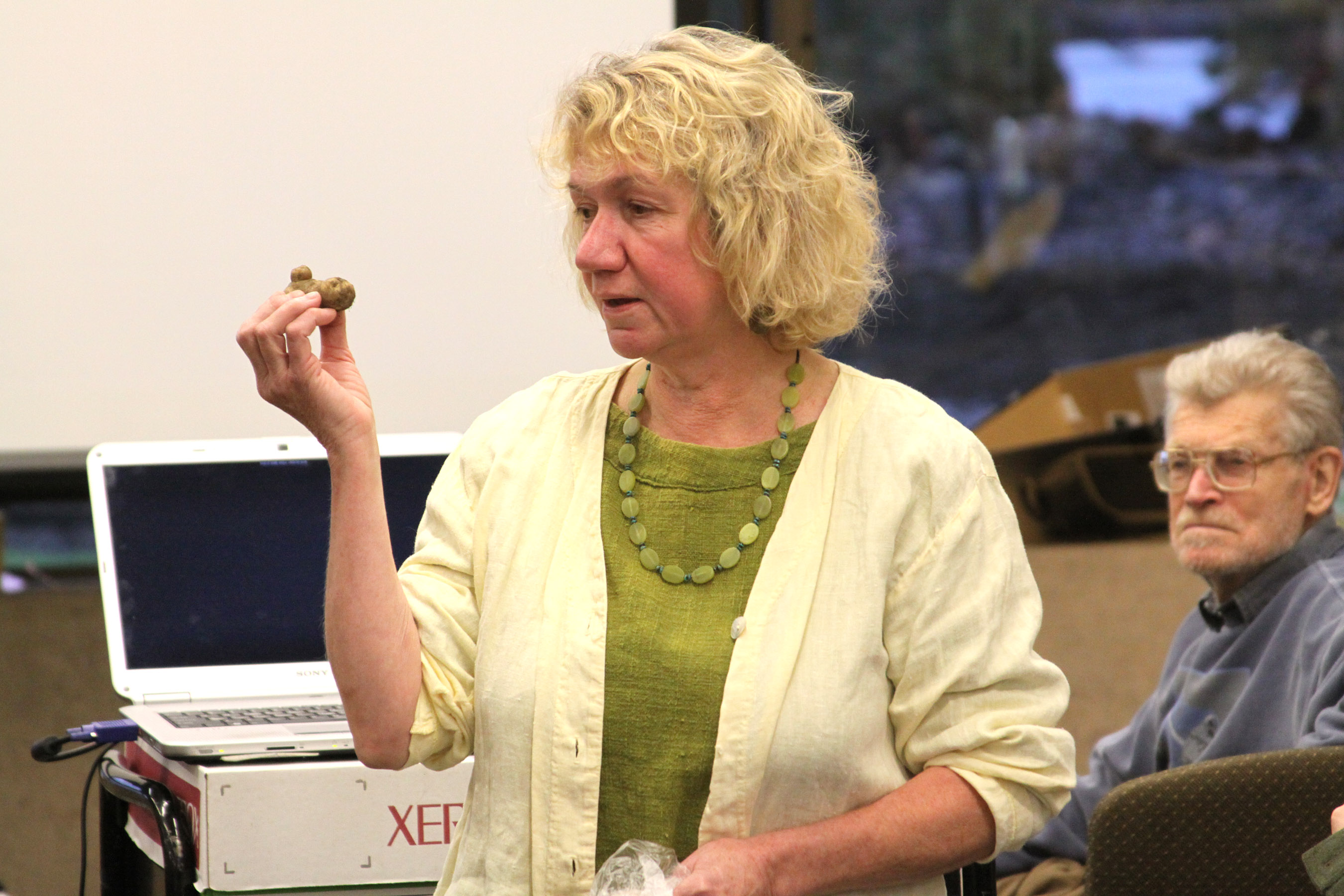
Elizabeth Kunibe shows off a Tlingít potato (also known as "Maria's potato")

On Friday afternoon, the Sitka Local Foods Network hosted anthropology student Elizabeth Kunibe of Juneau for a presentation, “Growing in Sitka and Southeast Alaska: Food of Today, Tomorrow and 200 Years Ago.” This presentation took place at the Kettleson Memorial Library and we had a standing-room-only crowd of 50-plus, despite being arranged less than a week before the event and competing with several Alaska Day happenings.

The Sitka Local Foods Network thanks Elizabeth for taking the time to make the presentation on what, for her, was a pleasure trip to Sitka for Alaska Day. We also thank the library and librarian Sarah Jones for allowing us to use Kettleson Memorial Library for the presentation.

Finally, we thank everybody who came to the presentation to hear Elizabeth discuss traditional Tlingít, Russian and American gardens in Sitka and Southeast Alaska, the Tlingít and Haida potatoes, an agricultural fair in Fort Yukon, the phytonutrients of potatoes and plant diseases.

For those people who weren’t able to attend, the presentation was recorded and it will be aired at various times this week on public access TV (Channel 11). Elizabeth said she might send over some notes from the presentation, and when those arrive they will be posted on the Sitka Local Foods Network site, http://www.sitkalocalfoodsnetwork.org/. A small gallery of photos from the presentation is posted at this link.

Thanks again,
Charles Bingham, event organizer
Sitka Local Foods Network

• Sonja Koukel of the UAF Cooperative Extension Service writes about home canning crab and shrimp

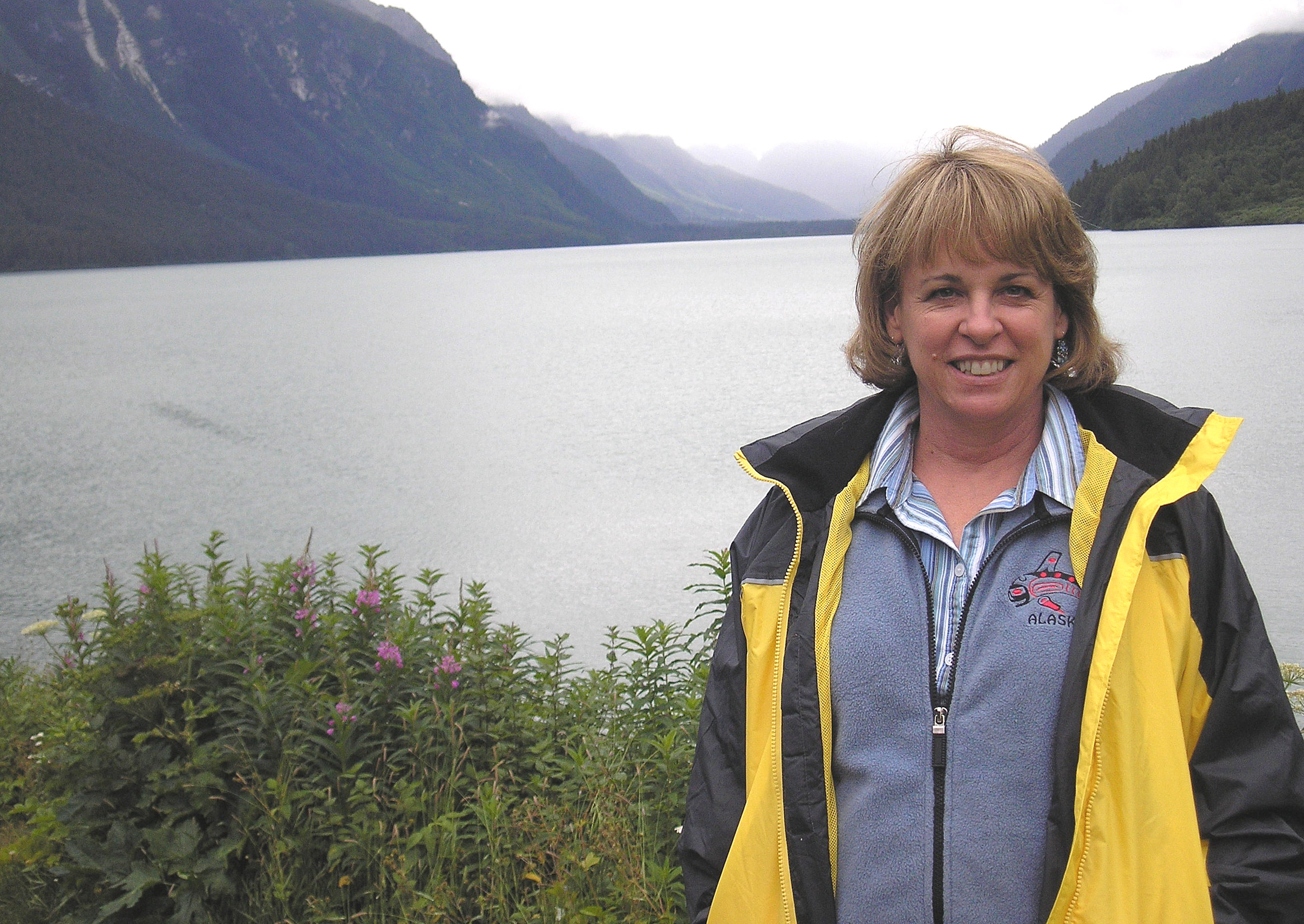
Dr. Sonja Koukel of the UAF Cooperative Extension Service
Dr. Sonja Koukel of the UAF Cooperative Extension Service

2814027500088610947sTovNd_ph

The following column originally appeared in the Sept. 30-Oct. 6, 2009, issue of Capital City Weekly and was made available to the Sitka Local Foods Network site. This column runs monthly.

More on Home Canning Seafood: Crab and Shrimp

By Dr. Sonja Koukel, PhD
Health, Home & Family Development Program
UAF Cooperative Extension Service

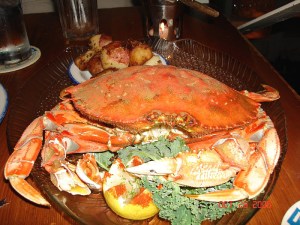
For the Aug. 5 Capital City Weekly issue, I submitted an article focusing on home canning seafood, specifically crab and geoducks. I was pleased to receive an e-mail from a reader asking for more information. As many of you may have had the same questions I’m sharing my responses here.

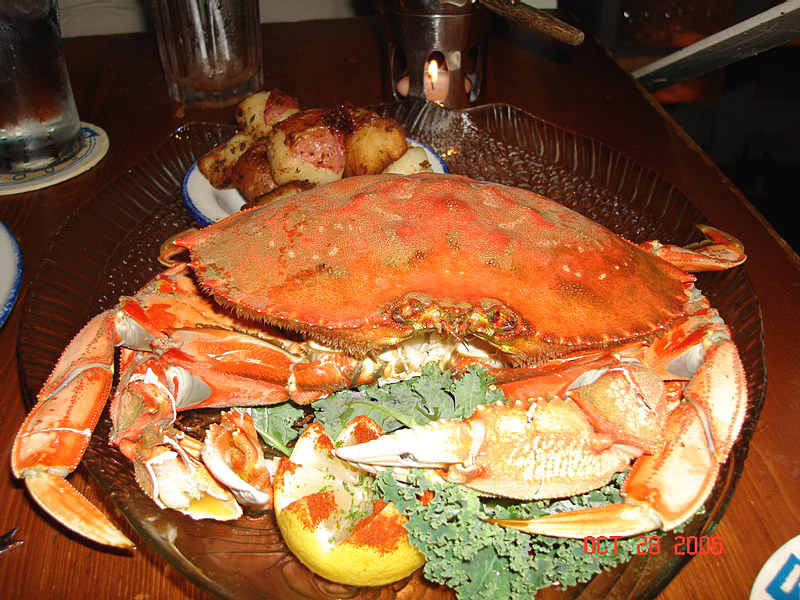
To refresh: In the article, I provided the guideline for freezing crab as that is the best preservation method for this food. Experts recommend boiling the live crab for five minutes -– at which time the crab is considered “cooked.”

Our reader asked two questions.

The first:

“Please let me know if this [recommended time] is a misprint. All the people I know who cook crab heat water in a crab cooking vessel until the water boils, then they boil the crab a minimum of 15 minutes before cooling it. I have often wondered if the 15-minute boiling period is too long, but have always deferred to the locals with crab experience. What is the critical issue in crab cooking?”

The second question:

“When cooking shrimp, on the other hand, the accepted practice seems to be: put the critters in a pot, bring the water to boil, then remove the shrimp when they float to the surface, which does not take very long.”

My responses to these two questions follow.

Dear Capital City Weekly Reader,

In regards to your questions, I did some further research over the weekend on the topics of cooking crab and shrimp. Here is what I found.

Crab:

The University of Alaska Fairbanks Cooperative Extension Service uses the University of Georgia Extension publication, “So Easy to Preserve,” as the main resource for home canning and food preservation information. Much of the information in this publication is based on the USDA, “Complete Guide to Home Canning,” as well as research from Extension Services across the US. In fact, Alaska Cooperative Extension is represented in the publication for the processing times for canning fish in quart jars (Kristy Long, Foods Specialist UAF CES).

For more information, I resourced other Extension websites and found a variety of cooking times for preparing crab for freezing. Oregon State University Extension publication, “home freezing of seafood” (PNW0586), recommends the following for whole crab: [after preparing crab] Cook in boiling salt water (2-4 Tbsp. per gallon, according to your taste preference) for 12-15 minutes. If the back is left intact, add 10 minutes to the cooking time. Add 2-3 minutes to the cooking time if the water doesn’t boil within a few minutes after adding the crab.

This from the Sea Grant Extension Program, UC Davis, “Freezing Seafood at Home”: You can either freeze crabmeat in the shell or as picked crabmeat. Cook crab before freezing to prevent discoloration of the crabmeat. Drop live crabs into enough boiling water to cover the crabs. Cover and return water to a boil. Boil for about 25 minutes. Remove crabs from boiling water and cool them immediately in cold water. Let crabs cool for several minutes and then drain.

One purpose served by boiling the crab prior to freezing is that the process makes the meat easier to remove from the shell. As far as food safety, boiling will kill any parasites and/or bacteria that contribute to the decay of the shellfish. My sources claim that this is done after one minute in the boiling water. A celebrity chef wrote on his website that the cooking time for crab is not based on food safety but on the product being undercooked, cooked, and overcooked. A good guideline for cooking crab is to check the color of the shell. When the crab is done, the shell turns an orange/red color.

Something to take into consideration when looking at information on the Internet, many sources group all types of crab into one category. On the East Coast, most crab will be Maryland blue crab which are smaller than the Dungeness crab normally consumed in the Northwest. Just keep in mind that you have a safe and easy to handle product when the crab is boiled at least five minutes prior to freezing.

Now, the reply to the shrimp question.

The Sea Grant Extension Program, University of Delaware, instructs cooking the live shrimp just to the point of being done (the flesh turns from translucent to opaque). The cooking method you describe — putting live shrimp in a pot of boiling water and removing when they float to the top — is right on. If you were to time this procedure you probably will find that it takes approximately 3-5 minutes to boil one pound of medium sized shrimp.

I appreciate input from readers and welcome all suggestions, inquiries, and ideas. Please contact me via email: sdkoukel@alaska.edu or phone: 907-796-6221.

Sonja Koukel, PhD, is an assistant professor in the Health, Home & Family Development Program for the Juneau District office of the UAF Cooperative Extension Service. Reach her at sdkoukel@alaska.edu or 907-796-6221.


• Capital City Weekly features Sitka Farmers Market Table of the Day, Running of the Boots fundraiser for Sitka Local Foods Network

Screenshot of Capital City Weekly page about Mike Wise winning the Table of the Day Award at the final Sitka Farmers Market of the summer

Screenshot of Capital City Weekly page about Mike Wise winning the Table of the Day Award at the final Sitka Farmers Market of the summer

Click here to see this week’s Capital City Weekly coverage of Mike Wise of Raven’s Peek Roasters and Sailor’s Choice Coffee winning the Table of the Day Award for the final Sitka Farmers Market of the summer on Sept. 12.

Click here to read a notice in this week’s Capital City Weekly about the Running of the Boots on Saturday, Sept. 26.

For those of you who will be in Juneau and not in Sitka on Saturday for the Running of the Boots, click here to read about the Autumn Garden Party and Wine Tasting event on Saturday at the Jensen-Olson Arboretum up in Juneau.

In a local foods story from the Northwest Arctic, Kotzebue author/photographer Seth Kantner (author of “Ordinary Wolves” and “Shooping for Porcupine”) writes an essay for the Alaska Dispatch Web site about hunting caribou to provide meat for his family.

Finally, we have two stories about the role salmon played in the development of two Southeast Alaska communities — Ketchikan and Pelican. Ketchikan’s Dave Kiffer writes one of his regular history columns for the Stories in the News Web site about how Ketchikan became “the canned salmon capital of the world.” In the Capital City Weekly, Norm Carson writes a story about how a cold storage plant helped Pelican “settled closest to the fish.”

• Spaghetti dinner and auction fundraiser Friday (Sept. 18) for ANB Hall repairs

Alaska Native Brotherhood Hall, where the Sitka Farmers Markets take place

Alaska Native Brotherhood Hall, where the Sitka Farmers Markets take place

A spaghetti dinner and auction fundraiser to raise money to make needed repairs to Alaska Native Brotherhood Hall Camp No. 1 takes place from 5-8 p.m. on Friday, Sept. 18, at ANB Hall (235 Katlian St.).

Funds raised at the spaghetti dinner and auction will be used to make repairs as ANB gets ready for its 100th anniversary in 2012. ANB Hall is on the list of National Register of Historic Places, so the building has a cultural significance for Sitka in addition to being the venue used by the Sitka Local Foods Network to host our Sitka Farmers Markets each summer. The Sitka Local Foods Network encourages Sitka residents to support our partner.

The fundraiser will feature a spaghetti dinner, followed by a Chinese auction (so bring your dollar bills). There also will be a silent auction where people can win prizes from around the world. Jude Pate will be the auctioneer.

The dinner costs $8 for adults and $5 for children. For more information, contact Carolyn McKee at 747-3310.

• ADF&G hunter education safety courses offered in Sitka

The Alaska Department of Fish and Game is offering an Online Basic Hunter Education Field Day and a Basic Hunter Education class this month in Sitka.

The Online Basic Hunter Education Field Day will be held from 9 a.m. to 2 p.m. on Saturday, Sept. 19. This field day course is only for students who already have successfully completed the electronic portion of the Online Basic Hunter Education class. Upon passing the online exam, students will receive a field day qualifier certificate, which grants admission to the field day. Students must have their field day qualifier number before registering for the field day. Register online at http://www.hunt.alaska.gov (click the “Hunter Education/Shooting” link at the bottom-right corner of the grid listing services). Detailed information about each course can be found on the Hunter Education/Shooting link.

The three-day Basic Hunter Education class will run from 6-8 p.m. on Friday and Saturday, Sept. 24-25, and from 9 a.m. to 5 p.m. on Sunday, Sept. 26. To register, students must purchase a $10 study packet available at the Alaska Department of Fish and Game office in Sitka. The packet workbook must be completed prior to the start of class.

Classes will be held at the Sitka Sportsman’s Association building located at 5211 Halibut Point Road. For additional information, please contact the Sitka office for the Alaska Department of Fish and Game at 747-5449.

• Running of the Boots raises funds for Sitka Local Foods Network

Runners hit the trail during the 14th Annual Running of the Boots race on Sept. 27, 2008, in Sitka.

Runners hit the trail during the 14th Annual Running of the Boots race on Sept. 27, 2008, in Sitka.

It’s time to dig your XtraTufs out of the closet and get them painted up. The 15th annual Running of the Boots takes place at 11 a.m. on Saturday, Sept. 26, at the Crescent Harbor shelter.

The Running of the Boots is part of the second annual Season’s End Celebration, an event sponsored by the Greater Sitka Chamber of Commerce and the Alaska Cruise Association that includes a free lunch for Sitka residents. The chamber’s board donates money raised by the Running of the Boots to the Sitka Local Foods Network, the non-profit group that hosts the Sitka Farmers Market and advocates for community gardens, a community greenhouse, sustainable uses of traditional subsistence foods and education for Sitka gardeners.

So what is the Running of the Boots? It’s Southeast Alaska’s answer to Spain’s “Running of the Bulls.” But unlike the Pamplona spectacle, humans do the running in Sitka and they wear zany costumes and XtraTufs — Southeast Alaska’s distinctive rubber boots (aka, Sitka Sneakers). The entry fee for the Running of the Boots is $5 per person and $20 per family, and people can register for the race starting at 10 a.m. There is a lip synch contest after the race, which costs $10 to enter.

The Running of the Boots is a short race for fun and not for speed, even though one of the many prize categories is for the fastest boots. Categories include best dressed boots, zaniest costume, best couple, best kids group and many others. The course includes a loop around St. Michael’s Cathedral before returning to Crescent Harbor for families with children, or a run from Crescent Harbor to the corner of Katlian and Lincoln streets and back for Sitka’s hardier souls.

“This event will be one of the highlights of our Season’s End Celebration, after which Sitkans can partake of the Alaska Cruise Association’s free lunch,” said Sheila Finkenbinder, executive director of the Greater Sitka Chamber of Commerce. Finkenbinder started the ‘run’ 15 years ago, inspired by an idea from KCAW-Raven Radio general manager Ken Fate.

“This is a really fun way to advance the Sitka Farmers Market and our other Sitka Local Foods Network projects,” Sitka Local Foods Network President Kerry MacLane said. “And just like at the market, there will be live music by the Sitka Blues Band.”

To learn more about the Running of the Boots, contact Kerry MacLane at 752-0654 or by e-mail at maclanekerry@yahoo.com. More information about the race can be found online at http://www.runningoftheboots.org/ and photos from the 2008 Running of the Boots can be found online at
http://sitkalocalfoodsnetwork.shutterfly.com/80?startIndex=100 (scroll down to find Running of the Boots photos).

Dressing up in costume is half the fun of the annual Running of the Boots race

Dressing up in costume is half the fun of the annual Running of the Boots race