• Celebrate National Farmers Market Week by visiting the Sitka Farmers Market on Aug. 9

WhyFarmersMarkets

SitkaFarmersMarketSignU.S. Secretary of Agriculture Tom Vilsack has declared Aug. 3-9 as National Farmers Market Week this year, as noted by the Farmers Market Coalition, and you can celebrate the week by attending the Sitka Farmers Market from 10 a.m. to 2 p.m. on Saturday, Aug. 9, at the Alaska Native Brotherhood Founders Hall (235 Katlian St.).

Farmers markets are a great way to connect with the community, while also purchasing local produce, wild fish, locally baked bread and arts and crafts. Besides providing access to fresh local produce, farmers markets create strong economic engines in communities, promote local health and bring a diverse group of people together. They also help consumers meet and get to know the people who produce their food.
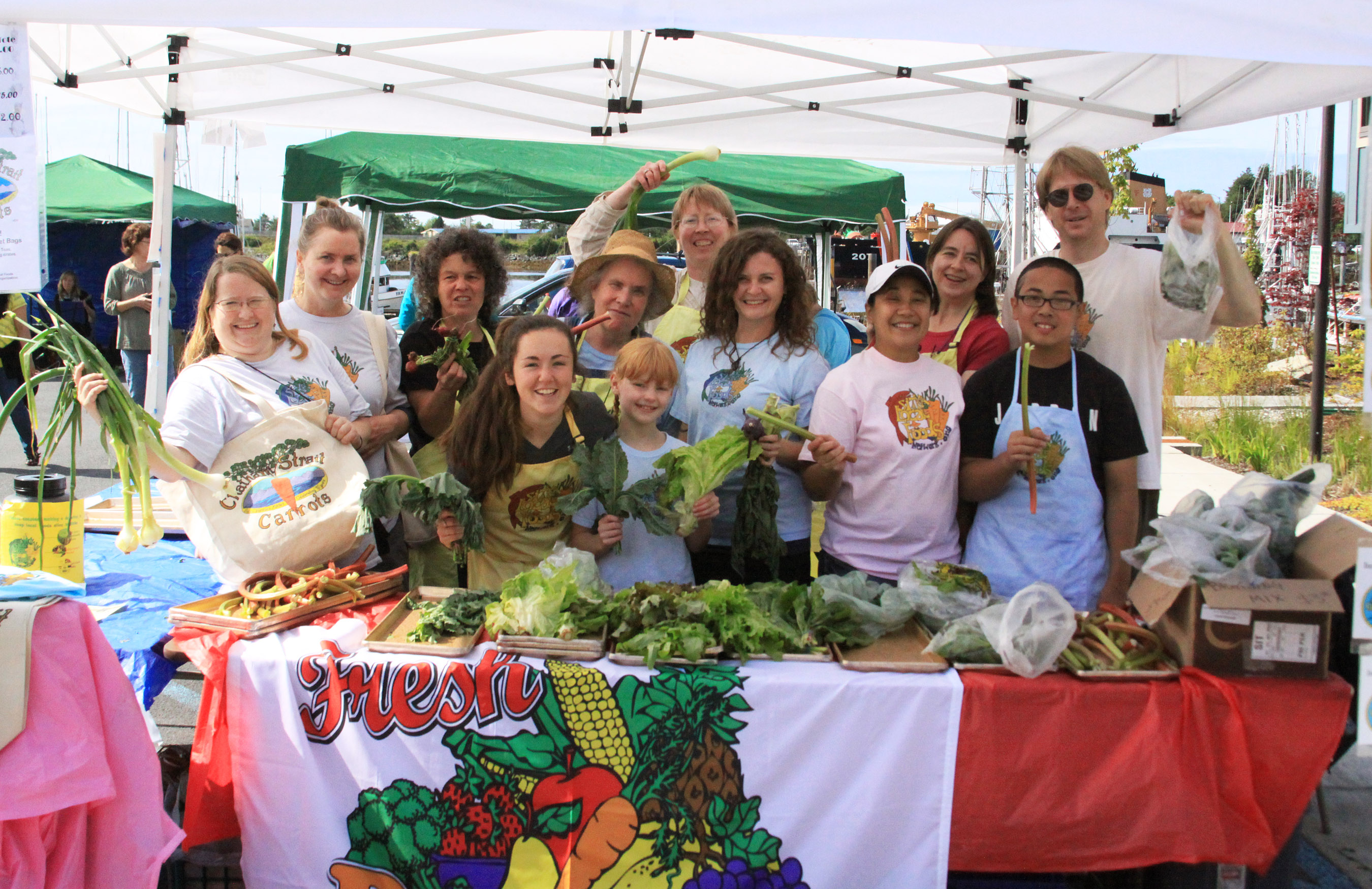
SLFNGroupwLinda“The Sitka Farmers Market is a community festival where people of all walks of life come together and find great stuff, good food, amazing music, awesome produce, freshly harvested, and above all, great company!” said Debe Brincefield, one of the two Sitka Farmers Market co-managers.

Farmers markets have been growing nationally, from 2,863 in 2000 to more than 8,100 in 2014, a jump of more than 280 percent. While Alaska doesn’t have as many farmers markets as other states, it did have the highest percentage of new markets in the country in recent years, up to 35 markets in 2011 or 46 percent. The national rate of new market growth was 17 percent in 2011 and 9.6 percent in 2012.

Aug. 9 will be the fourth of six full Sitka Farmers Markets this summer, with the schedule running on alternate Saturdays (June 28, July 12, July 26, Aug. 9, Aug. 23, and Sept. 6). The markets feature local seafood (fresh, frozen, and cooked, ready to eat), locally grown and harvested fruits and vegetables, baked bread, locally picked berries, jams and jellies, cooking demonstrations, live entertainment, locally brewed and roasted coffee, music, local arts and crafts, and a variety of other items gathered or made in Sitka. We emphasize local products and lots of fun.

SitkaFarmersMarketBusNEW2The Sitka Farmers Market was the first farmers market in Southeast Alaska to accept WIC coupons, and we also accept SNAP EBT payments. In addition, this year we teamed up with Sitka Tours to offer free bus service on market Saturdays. The bus picks up at Sawmill Creek Apartments at 9:45 a.m., at Indian River at 9:50 a.m., and Swan Lake Senior Center at 10 a.m., with the return trip leaving ANB Founders Hall at noon.

For more information about the market or hosting a booth, contact Sitka Farmers Market Co-Managers Ellexis Howey or Debe Brincefield at 738-8683 or sitkafarmersmarket@gmail.com. By the way, we always need volunteers to help set up and take down the market before and after the event. Your help is greatly appreciated.

Also, we need volunteer harvesters from 3:30-5:30 p.m. every Friday and 8-9:30 a.m. on market Saturdays at St. Peter’s Fellowship Farm, which is located behind St. Peter’s By The Sea Episcopal Church (the dark brown brick-and-wood church on Lincoln Street above Crescent Harbor). Fresh veggies will be available for a donation to the Sitka Local Foods Network or a WIC farmers market coupon from 11 a.m. to 2 p.m. on the Mondays before a market Saturday. For more info on garden work parties, contact St. Peter’s Fellowship Farm Lead Gardener Laura Schmidt at 738-7009 or 623-7003.

• Lori Adams’ contribution to Sitka gardening featured on Sitka Conservation Society website

Lori Adams poses with some of the ducks she keeps to help keep slugs at bay at her Down-To-Earth U-Pick Garden. (Photo Courtesy of Sitka Conservation Society)

Lori Adams poses with some of the ducks she keeps to help keep the slugs at bay at her Down-To-Earth U-Pick Garden. (Photo Courtesy of Sitka Conservation Society)

If you haven’t seen it yet, check out this recent feature story about Sitka gardener Lori Adams on the Sitka Conservation Society‘s website.

Lori Adams is owner of Down-To-Earth U-Pick Garden (located at 2103 Sawmill Creek Road), and the author of “How to Grow Vegetables in Sitka, Alaska” (a collection of her 2012 Gardening in Southeast Alaska columns originally published in the Daily Sitka Sentinel). Lori also is a regular vendor at the Sitka Farmers Market.

The feature tells the story about how Lori wanted to start a you-pick garden at her house in 2007, but city code at the time didn’t allow people to grow food and then sell it directly to people from her private property. Lori worked with the city planning department and Sitka Assembly to rewrite the code so Sitka residents can apply for a special permit to sell food grown in their home gardens. The article also features several photos from her garden.

• UAF Cooperative Extension Service to give presentation on antioxidants in Alaska’s wild berries

OWL Happy Health Hour specific July 28

The University of Alaska Fairbanks Cooperative Extension Service‘s Happy Health Hour talk this month will be about antioxidants in Alaska’s wild berries.

The talk takes place from 5:30-6:30 p.m. on Monday, July 28 (Happy Health Hour talks are the fourth Monday of every month) and is available at libraries statewide on the OWL Network. In Sitka, these talks usually are accessed at Kettleson Memorial Library. But this month’s talk will be available for Sitka residents in Room 106 at the University of Alaska Southeast Sitka Campus, because Kettleson Memorial Library is closed while it moves into temporary quarters for the upcoming library expansion project.

Roxie Rodgers Dinstel of the UAF Cooperative Extension Service will talk about the health benefits of antioxidants, the levels of antioxidants in a variety of Alaska’s wild berries, and how different preservation methods affect antioxidant levels. Many wild berries in Alaska, such as blueberries, are considered super foods because of the high levels of healthy antioxidants in them, and Alaska wild blueberries are even richer in antioxidants than wild blueberries from the Lower 48.

To learn more about the Happy Health Hour and this presentation, call the UAF Cooperative Extension Service at 1-877-520-5211 or go to http://www.uaf.edu/ces/.

• State of Alaska updates safe seafood consumption guidelines

FishConsumptionCalc

Eat all the salmon you want, but limit your amount of salmon shark, the Alaska Section of Epidemiology (part of the Division of Public Health) said when it recently updated its safe seafood consumption guidelines.

The Section of Epidemiology, in partnership with the Alaska Department of Environmental Conservation, started testing Alaska seafood for toxic heavy metals, such as mercury, and other pollutants, such as pesticides, back in 2001. The main reason for the research was to determine safe levels of seafood consumption for pregnant women, nursing mothers, infants, and others. According to the Alaska Dispatch News, the research involved testing fish, and using human hair samples to see how the heavy metals moved from species to species.

The Division of Public Health Division recommends eating fish at least twice a week. Medical research shows salmon are high in omega 3 fatty acids, which are believed to improve cholesterol and fight heart disease. Many types of Alaska seafood also are part of the traditional Alaska Native diet.

The good news is Alaska’s five salmon varieties (chinook/king, sockeye/red, coho/silver, chum/keta/dog, and humpy/pink) all tested as safe for everybody, with no limitations for pregnant women or others, as did halibut smaller than 40 pounds and Alaska pollock (commonly found in fish sticks and fast food fishburgers). This year’s expanded testing increased the number of safe-for-all species to 23 from 11 in 2007 (see chart above for complete list).

However, there were some seafood species where the Office of Epidemiology suggests consumption limits. Alaskans should use a point system, where people can eat up to 12 points a week (the safe species get zero points), with points based on six-ounce portions. Halibut (40-80 pounds), lingcod (35-40 inches) and lake trout are worth three points. Halibut (80-140 pounds), lingcod (40-45 inches) and longnose skate are worth four points. Halibut (140-220 pounds) and yelloweye rockfish are worth six points. Halibut (220 pounds or larger), lingcod (45 inches or longer), salmon shark and spiny dogfish are worth 12 points and should only be eaten once per week.

• Sarah Lewis to provide free pressure canner gauge testing at Saturday’s Sitka Farmers Market

Canner

SarahLewisThis is a great time of the year to be in Sitka. The fish are running, gardens are starting to produce, and berries are ripe for the picking.

Many Sitka residents have pressure canners to preserve their harvest, and this weekend Sarah Lewis of the Juneau District Office of the University of Alaska Fairbanks Cooperative Extension Service will be in town to teach three classes about canning on Friday, Saturday and Sunday. She also provide free pressure canner gauge testing at the Sitka Farmers Market from 10 a.m. to 1 p.m. on Saturday, July 26, at the Alaska Native Brotherhood Founders Hall.

“People can bring the gauge or the lid with the gauge still attached,” Sarah said. “If they have any questions about the full canner (gaskets, damage, how to use, etc.) they can bring the whole thing.”

In addition to testing pressure canner gauges, Sarah plans to work with Jasmine Shaw of the Sitka District Office of the UAF Cooperative Extension Service to have a wide variety of publications available about home canning. In addition, the UAF Cooperative Extension Service has a series of online tutorials on its website called “Preserving Alaska’s Bounty.” Pressure canner gauges should be tested at least once a year to make sure they are hitting the right pressures for safe food preservation.

We posted earlier about Sarah’s canner classes this weekend, hosted by the Sitka Kitch project, and info can be found here. However, the location for the first two classes has been moved to the Sitka Presbyterian Church (from Sitka High School) and the topic and time have been changed for Sunday’s class (new topic is Canning Jams and Jellies, new time is noon to 3 p.m., location remains Sitka High School). The canning classes are $20 each, and preregistration is required (call Marjorie at the number below).

For more information about the Sitka Kitch project and to register for Sarah’s canning classes, contact Marjorie Hennessy of the Sitka Conservation Society at marjorie@sitkawild.org or 747-7509.

• Scenes from the second Sitka Farmers Market of the 2014 summer

TODAllisonSayerHeartsAndFlowers

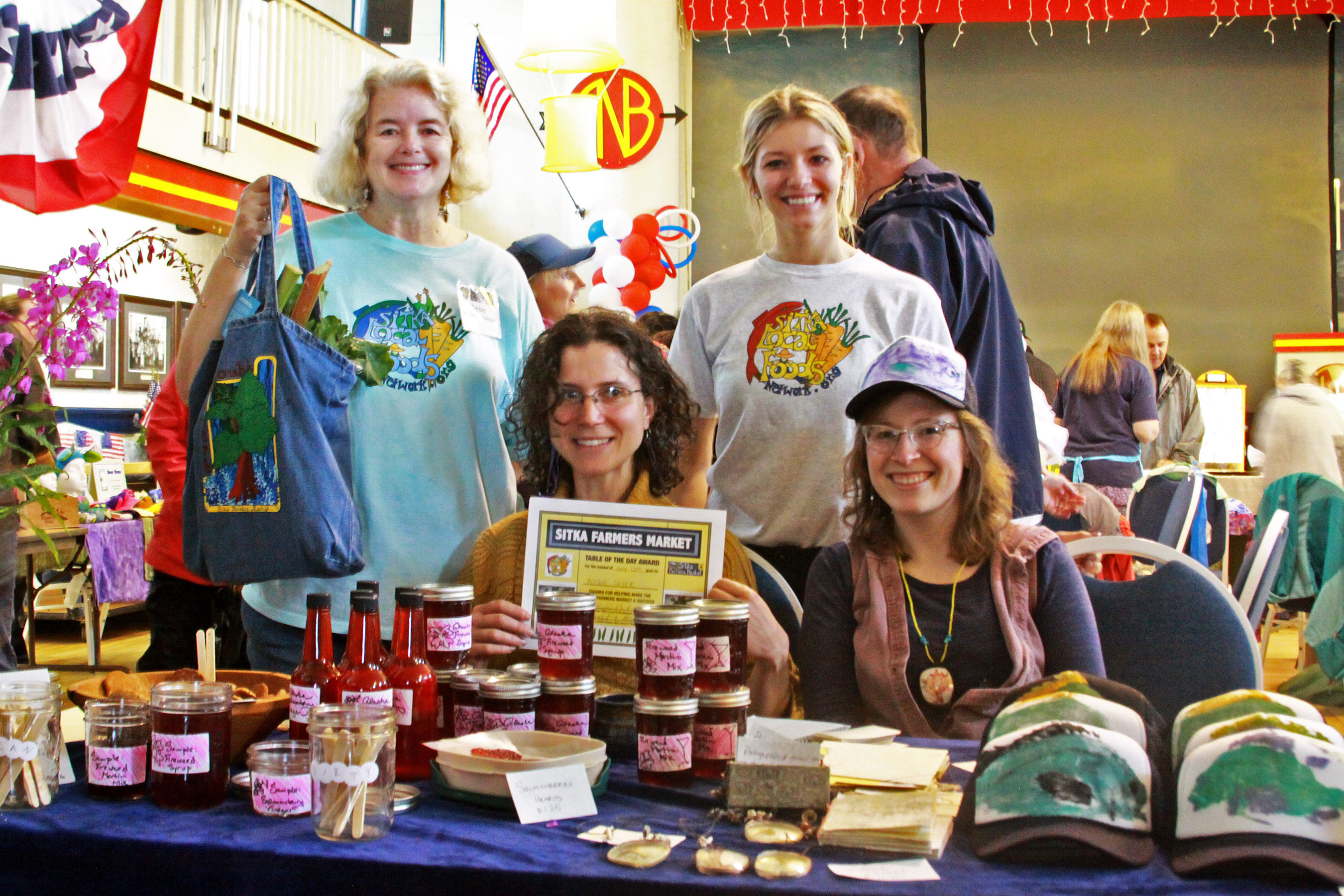
Sitka Farmers Market Co-Managers Debe Brincefield, left, and Ellexis Howey, third from left, present the Table Of The Day Award to Allison Sayer of Hearts and Flowers, second from left, while tablemate Kitty Sopow looks on at the second Sitka Farmers Market of the 2014 summer on Saturday, July 12, at the Alaska Native Brotherhood Founders Hall in Sitka. Allison is a new vendor at the Sitka Farmers Market and she sold fireweed syrups and jellies, salmonberry fruit leather in the shape of a heart, journals and pendants. Allison received a gift bag with fresh greens, fresh rhubarb, and a copy of the Alaska Farmers Market Cookbook. This is the seventh year of Sitka Farmers Markets, hosted by the Sitka Local Foods Network. The next market is from 10 a.m. to 1 p.m. on Saturday, July 26, at the Alaska Native Brotherhood Founders Hall, 235 Katlian St. Bring your canner pressure gauge to this market to have it checked. Also, check our website to learn about our new bus service to the market. For more information about the Sitka Farmers Markets and Sitka Local Foods Network, go to http://www.sitkalocalfoodsnetwork.org/ or check out our Facebook page at https://www.facebook.com/SitkaLocalFoodsNetwork. (PHOTO COURTESY OF SITKA LOCAL FOODS NETWORK)

SitkaFarmersMarketSignThe second Sitka Farmers Market of the 2014 summer took place on Saturday, July 12, at the Alaska Native Brotherhood Founders Hall, 235 Katlian St.

We wound up with a bit of rainy weather for this market, but we still had a nice crowd and some new booths. We also launched our new bus service from Sitka Tours. This free service will be available at all of the rest of our markets this summer.

The third Sitka Farmers Market of the season takes place from 10 a.m. to 1 p.m. on Saturday, July 26, at ANB Founders Hall. Sarah Lewis of the Juneau District Office of the University of Alaska Fairbanks Cooperative Extension Service will be at this market providing free pressure canner gauge testing, so bring in your gauge or pressure canner. To learn more, watch this site for updates. A slideshow with scenes from the second market is below.

This slideshow requires JavaScript.

• It’s time to … learn how to amend your soil and increase your production — free workshops

LoriAdamsWithBook

Your Sitka Local Foods Network reminds Sitkans that now is a great time to think about scaling up vegetable garden production with local soil amendments. Large scale production in your garden takes some forethought and requires good, productive, healthy soil. Local amendments such as seaweed, fish parts, chicken and duck manure, and other materials can help boost the production in your garden.

Lori Adams, owner and manager of Down-to-Earth U-Pick Garden, will host two discussions and hands-on workshops on large-scale garden production using local amendments at her u-pick garden at 2103 Sawmill Creek Road (across from the Mormon church). Classes will be held from 3-4 p.m. on Sunday, July 27, or at 10 a.m. on Monday, July 28.  All are welcome to come and attend these free classes.

Other topics that may be discussed include using ducks in the garden, organizing and simplifying techniques to keep costs down, and proven seed varieties for success.

Lori grew up on a farm in Oregon, and has gardened in Sitka for 20 years. Her u-pick garden has been in production for about six years. In 2012, Lori wrote a series of garden columns for the Daily Sitka Sentinel (and reprinted on the Sitka Local Foods Network website), and in 2013 she produced a book of those columns, “How to Grow Vegetables in Sitka, Alaska,” which she sells for $20 a copy at her Sitka Farmers Market booth. For information or directions to the garden, call Lori at 747-6108 or 738-2241.

The Sitka Local Foods Network education committee has been hosting a series of “It’s time to …” workshops this spring and summer designed to help local residents learn about various aspects of vegetable gardening and fruit growing. Many of these classes will be informal get-togethers at various gardens around town. Please watch our website, Facebook pageFacebook group, and local news media for information about upcoming classes. If you have an “It’s time to …” workshop you’d like to teach, contact Michelle Putz at 747-2708.

The SLFN education committee is still looking to expand our network of local volunteers who can teach classes (formal and informal) this year about growing food, please email Charles Bingham at charleswbingham3@gmail.com with info about what topics you can teach, your gardening experience, and contact information so we can add you to our database of instructors.

• Tickets available for fifth annual Sitka Seafood Festival; volunteers needed all week

salmon boat header

ssflogo2The fifth annual Sitka Seafood Festival is finalizing its schedule for July 31-Aug. 2 at various locations around Sitka, but tickets have gone on sale for its three main events — the VIP cocktail hour on Friday night, the five-course banquet on Friday night, and the headline entertainment concert by the Yup’ik soul group Pamyua on Saturday night (link to Pamyua’s Facebook page).

The major events for the Sitka Seafood Festival will take place on Friday and Saturday, Aug. 1-2, but there are some additional events set for July 31 (a wine bottle-signing and a garden tour). A full festival schedule is available here.

On Friday, Aug. 1, the VIP cocktail hour takes place from 5:30-6:30 p.m. at the Harrigan Centennial Hall Exhibit Room, and the cost is $35 per person. The five-course seafood banquet prepared by guest chefs starts at 7 p.m. at Harrigan Centennial Hall (doors open at 6:30 p.m.). The banquet costs $65 per person, or you can buy a whole table for $600 (10 seats per table). There are Friend of the Festival tables available for $800 that feature special bartender service, are close to the stage, and feature gift bags).

The tentative menu for Friday’s banquet features (according to an email from event founder Alicia Haseltine):

  • Amuse Bouche — herring roe, finger lime, baby fennel, cucumber, bulls blood
  • First Course — ricotta gnocchi, sea asparagus (pesto), foraged mushroom xo, tat soi oil, brown butter
  • Second Course — scallops, pistachio crumble, fromage blanc, yellow squash puree, snap pea coulis, pancetta
  • Third Course — rockfish, spruce tip nage, lemon ash marshmallow, arugula, whole barley, carrot
  • Fourth Course — salmon, tomato jam, scallion potato puree, black garlic aioli, leeks charred
  • Fifth Course — cocoa praline rocks, chocolate soil, sudachi curd, huckleberry, merlot caramel, bergamot cloud mascarpone and cream base

On Saturday, Aug. 2, the day opens with tote races at 11 a.m. at Crescent Harbor, followed by the parade at 11:30 a.m. from Crescent Harbor Shelter to the Sitka Fine Arts Camp/Sheldon Jackson Campus, and the marketplace from noon until 7 p.m. There will be a variety of entertainment from noon until 4 p.m., and the Scottish Highland Games are from noon to 6 p.m., both at the Sitka Fine Arts Camp/Sheldon Jackson Campus. The headline entertainment concert by Pamyua starts at 7 p.m. at Allen Hall at the Sitka Fine Arts Camp/Sheldon Jackson Campus, and tickets are $20 per person.

Volunteers are needed all week for the festival, which includes event set up and tear down. To learn more, contact Sitka Seafood Festival Director Carolyn Kinneen at (907) 222-8422 or email sitkaseafoodfestival@gmail.com. Parade participants should contact Linda Olson at 747-6985. Scottish Highland Games participants are welcome to practice at 5:30 p.m. on Wednesdays and Sundays at the Moller Field Track


• It’s time to … make homemade wine from your extra rhubarb; learn how on July 18

WINERY

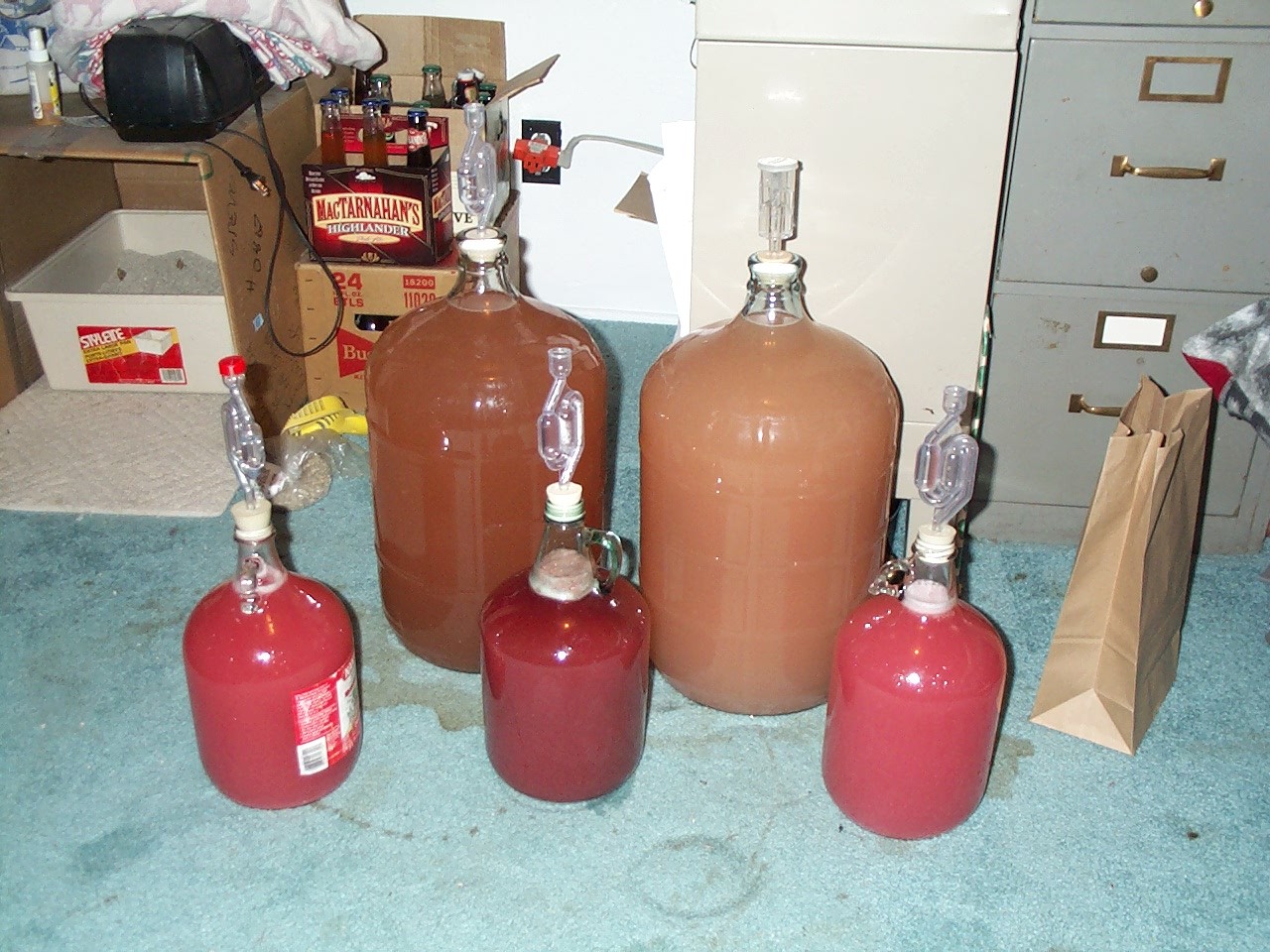
RhubarbWine1Rhubarb is one of the easiest plants to grow in Sitka. So what do you do with all the extra rhubarb, after you’ve already made as many pies and jams and other rhubarb recipes as you can handle? You can make rhubarb wine.

Perry Edwards and Michelle Putz, who are members of the Sitka Global Warming Group, will teach their annual homemade wine-making class at 7 p.m. on Friday, July 18, at their home (address and directions will be given to people who register for the class). This fun and informative beginner’s class will teach people how to use locally grown fruit, such as rhubarb, apples or berries, to make wine. This class will offer simple wine-making tips, techniques, tools, and will feature Perry and Michelle’s award-winning rhubarb wine recipe.

This class is free and open to all adults age 21 or older. Space is very limited and this class fills up fast. Please pre-register to assure your spot in the class. For more information, or to register for the class, please call Michelle at 747-2708. This wine-making class is sponsored by the Sitka Global Warming Group.

• Samia Savell of USDA Natural Resources Conservation Service to give presentation in Sitka on high tunnels

picture8

Picture10Want to learn how to extend your growing season with high tunnels and find out how Sitka growers can receive help from the USDA to purchase a high tunnel? Samia Savell of the Juneau office of the U.S. Department of Agriculture’s Natural Resources Conservation Service will give a presentation from 5-6 p.m. on Thursday, July 10, at Harrigan Centennial Hall.

In recent years, the USDA Natural Resources Conservation Service (NRCS) has offered a cost-sharing program that enables qualifying landowners who produce food to build high tunnels. Samia has overseen that program for Southeast Alaska, and several gardeners in Sitka have taken advantage of the program.

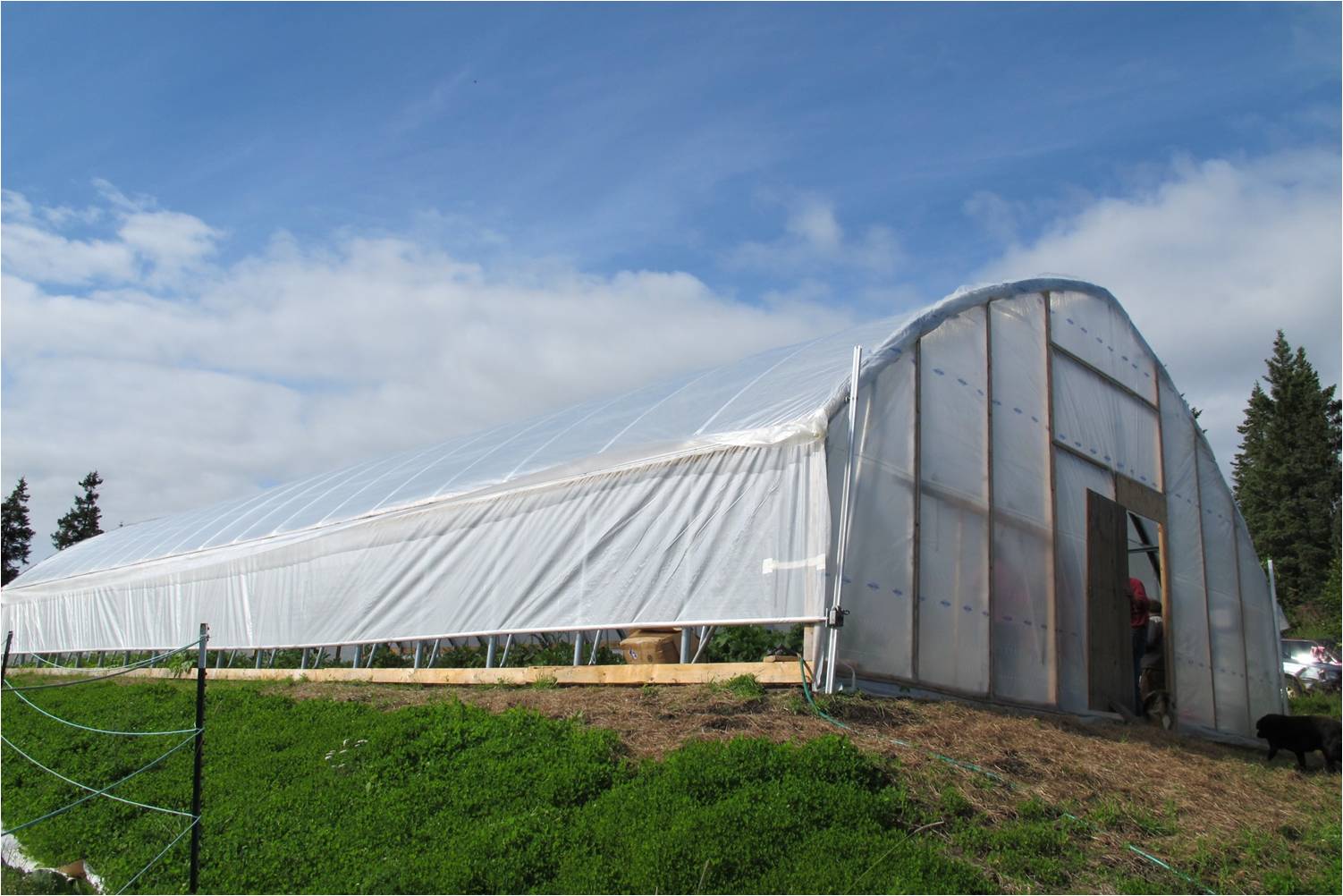
High tunnels, also known as hoop houses or temporary greenhouses, extend the growing season so more food is produced before and after the traditional dates for growing stuff outdoors. High tunnels are different than greenhouses in that they are passively heated by the sun, so they have lower energy costs than greenhouses. High tunnels are at least six-feet tall, and low tunnels aren’t eligible in this program. Food in high tunnels is planted either directly into the ground or in raised beds.

For more information about the presentation, contact Sitka Local Foods Network Board President Lisa Sadleir-Hart at 747-5985. To learn more about the USDA NRCS high tunnel program, contact Samia Savella at the Juneau field office at (907) 586-7220 or samia.savell@ak.usda.gov.