• Sitka Farmers Market vendor forms, information sheets and regulations for 2014 now available

SitkaFarmersMarketSignVendors looking to sell local food, arts and crafts, and other items at the 2014 Sitka Farmers Markets can find all the vendor forms, information sheets and regulations for this year by going to the Documents page on this site, or look at the bottom of this post for the documents. The forms are in downloadable Acrobat PDF files.

The 2014 Sitka Farmers Markets will be managed by Ellexis Howey and Debe Brincefield, and they can be reached at sitkafarmersmarket@gmail.com or 738-8683 during the market season. Our 2014 Sitka Farmers Markets will be from 10 a.m. to 1 p.m. on six alternating Saturdays starting in late June (June 28, July 12, 26, Aug. 9, 23, and Sept. 6) at the Alaska Native Brotherhood Founders Hall on Katlian Street.

Ellexis and Debe will host at least one pre-market meeting for potential market vendors, tentatively scheduled for 6:30 p.m. on Wednesday, May 21, at the See House behind St. Peter’s By The Sea Episcopal Church. They will be available to answer questions and to make suggestions that will help new and returning vendors adjust to any food regulation changes from the Alaska Department of Environmental Conservation, changes to the Alaska Quest electronic benefits program, and any other changes.

For more information, contact Ellexis or Debe at the numbers above.

Sitka Farmers Market vendor forms

• Guide to Operating a Successful Home-Based Food Business (March 2014 document from UAF Cooperative Extension Service and Alaska Department of Environmental Conservation includes Alaska food safety information and regulations for farmers markets and other food sales)

• 2014 City and Borough of Sitka Sales Tax Form for Sitka Farmers Market Vendors

• 2014 Sitka Farmers Market Vendor Rules And Responsibilities Packet

• 2014 Sitka Farmers Market Vendor Registration Packet

• 2014 Sitka Farmers Market Vendor Guidelines Signature Page (this must be on file for all vendors)

• It’s time to … get down and dirty and plant the veggies at St. Peter’s Fellowship Farm

StPetersSignWithToDoListSignThe Sitka Local Foods Network will host planting parties from 2-4 p.m. on Saturday, May 10, and from 2-4 p.m. on Saturday, May 31, to start planting this summer’s crops at the St. Peter’s Fellowship Farm communal garden (located behind St. Peter’s By The Sea Episcopal Church on Lincoln Street).

Produce grown at St. Peter’s Fellowship Farm is sold during the Sitka Farmers Markets to help fund Sitka Local Foods Network projects throughout the year. Some of it also is sold to people using SNAP benefits (food stamps) and to local schools for their lunch programs.

In addition to planting, there may be other garden chores to do. During these work parties we usually need people to shovel dirt and sift soil, weed, mulch and spread fertilizer (seaweed) on the existing garden beds. Most garden tools will be provided, but we will need people to bring shovels and pick-axes if they have them. These garden parties are a great place for Sitka residents new to gardening to get some hands-on instruction on how to plant their own veggie garden.

For more information, contact St. Peter’s Fellowship Farm lead gardener Laura Schmidt at 623-7003 or 738-7009, or contact Lisa Sadleir-Hart at 747-5985.

• Sitka to host two-week Introduction to Ethnobotany course for college credit

EBOT 100 flyer 2014

Sitka will be the site of a two-week Introduction to Ethnobotany summer fieldwork course May 19-30 offered by the University of Alaska Fairbanks Kuskokwim Campus (Bethel).

The Ethnobotany Certificate Program operated by the UAF Kuskokwim Campus is the first such program in this state and only one of a handful that are currently being offered in the entire United States. Ethnobotany is integral to life in Alaska because it recognizes cultural knowledge and deepens our connection with the expansive and exceptional natural world at our doorstep.

Students enrolled in the EBOT program will learn basic plant biology and floral ecology of Alaska, economic applications of ethnobotany, basic applied chemistry of plants, research methods for local specific projects, as well as traditional and new uses of Alaska native plants. These skills will prepare Alaska Native students for employment in wildlife and cultural management agencies, education, and other rural-based jobs, as well as further college milestones such as the associate’s and bachelor’s of
science degrees.

The Sitka-based class EBOT 100, “Introduction to Ethnobotany,” will discuss the relationships between people and plants in the Sitka region as well as other parts of Alaska and the rest of the world. People relate to plants in many ways, for example, by eating them, using them as medicine, naming them and telling stories about them.

To give you an idea of the types of things we’ll discuss, we have included a few sample pages from our ethnobotany program’s upcoming book on the ethnobotany of the Yukon-Kuskokwim region, in Western Alaska. This will give you a feeling for how people of a different region relate to a few species you may also have in your area. Please read the descriptions on the EBOT program website of fireweed, Labrador tea and cloud berry. Then you can take a short quiz to see what you learned, and what you already know about plants and the study of how people use them.

The three-credit class (biology credits) costs $600 for tuition, books and materials, but there are scholarships available for Alaska-based students enrolled in the EBOT certificate program. In addition to the class, there will be a three-day program stakeholder meeting that will end on May 31 with a local foods dinner.

Registration forms for the class and the ethnobotany program are linked below. For more information, contact Kuskokwim Campus Ethnobotany Program Coordinator Rose Meier, PhD, at 1-907-474-6935 (voice), 1-907-474-5952 (fax) or by email at rameier@alaska.edu.

• Kuskokwim Campus Introduction to Ethnobotany 100 (Sitka) course application 2014

• Kuskokwim Campus Ethnobotany Program Application 2014

• UAF College of Rural and Community Development Registration Form

• Sitka Community Food Assessment Indicators Report helps define Sitka’s food culture

Food Assessment Indicator Report web version_Page_01

SitkaCommunityFoodAssessmentLogoThe Sitka Community Food Assessment Indicators Report was released on Monday, and the findings will help guide future food system planning in Sitka.

A 2012 Sitka Health Summit project, the Sitka Community Food Assessment has examined where Sitka residents get their food, what types they eat, what they grow, what they hunt and fish for, where they shop, what type of access people have to healthy food, and other questions about Sitka’s food supply. The findings of the food assessment will help Sitka improve its food security.

After Sitka residents chose the Sitka Community Food Assessment as a project at the September 2012 Sitka Health Summit, the work group received a grant to hire a coordinator and contract with a data person. A revised version of a questionnaire from a similar project on the Kenai Peninsula was posted online, available at the library, and discussed in focus groups, with more than 400 residents answering the 36 questions. In November 2013, some of the initial data was presented at the Sitka Food Summit, where about 60 residents discussed the results and noted any further research that needed to be done. Since then, the work group, in partnership with The Island Institute and others, fine-tuned the data before writing and editing the indicators report.

“We hope the Sitka Community Food Assessment Indicators Report can guide future food system planning and plant seeds for innovative responses that will strengthen Sitka’s food landscape,” project coordinator Lisa Sadleir-Hart wrote in the 26-page document’s introduction. “The Sitka Community Food Assessment Indicators Report uncovers many weaknesses in our food system as well as some incredible assets that define Sitka’s food culture — a rich ecosystem filled with nutritious gems from the land and sea plus a generous spirit of sharing with our neighbors. Now that we’ve defined the current foodscape in Sitka, let’s work together to build a more resilient food system that can deeply nourish the entire community for generations to come.”

The Sitka Community Food Assessment Indicators Report opens with Sitka’s demographics and several Sitka food facts. It then features data about how many people in Sitka hunt, fish, gather, and/or grow their own food, as well as some barriers. Next is information about where people in Sitka shop for their food, followed by how many people in Sitka are on some form of food assistance. The report also includes information about food in the schools, and local food manufacturing.

The findings will be presented to the community during an upcoming meeting of the Sitka Assembly, and the report will be posted online here (see below) and on The Island Institute’s website.

• Sitka Community Food Assessment Indicator Report (April 14, 2014, opens as PDF file)

• UAF Cooperative Extension Service to host two-part workshop on Sitka gardening

Bob Gorman, Extension Agent of the Sitka office of the University of Alaska Fairbanks Cooperative Extension Service, shows some germinating seed starts during a free garden workshop on March 11, 2009.

Bob Gorman, Extension Agent of the Sitka office of the University of Alaska Fairbanks Cooperative Extension Service, shows some germinating seed starts during a free garden workshop on March 11, 2009.

Bob Gorman with the Sitka District office of the University of Alaska Fairbanks Cooperative Extension Service will host a two-part informative class on Mondays, April 21 and 28, about the unique challenges of gardening in Southeast Alaska. He also will host a workshop on Tuesday, April 22, about sustainable wood heat options for rural Alaska. All classes will take place at the University of Alaska Southeast Sitka Campus.

The two-part class about Southeast gardening will include topics such as selecting and starting seeds, transplants, grow lights, greenhouses, growing media, and managing garden soils. These are the last three workshops Bob will teach before he retires after a long career with the UAF Cooperative Extension Service in Sitka.

  • Monday, April 21, 7-8:30 p.m., UAS Sitka Campus Room 229, “Extending the Growing Season.”
  • Tuesday, April 22, 7-8:30 p.m., UAS Sitka Campus Room 106, “Sustainable Wood Heat.”
  • Monday, April 28, 7-8:30 p.m., UAS Sitka Campus Room 106, “Garden Soils.”

For more information, call the Sitka District office of the UAF Cooperative Extension Service at 747-9440.

• Sitka Food Co-op, Sitka Local Foods Network make plant starts available on co-op delivery days

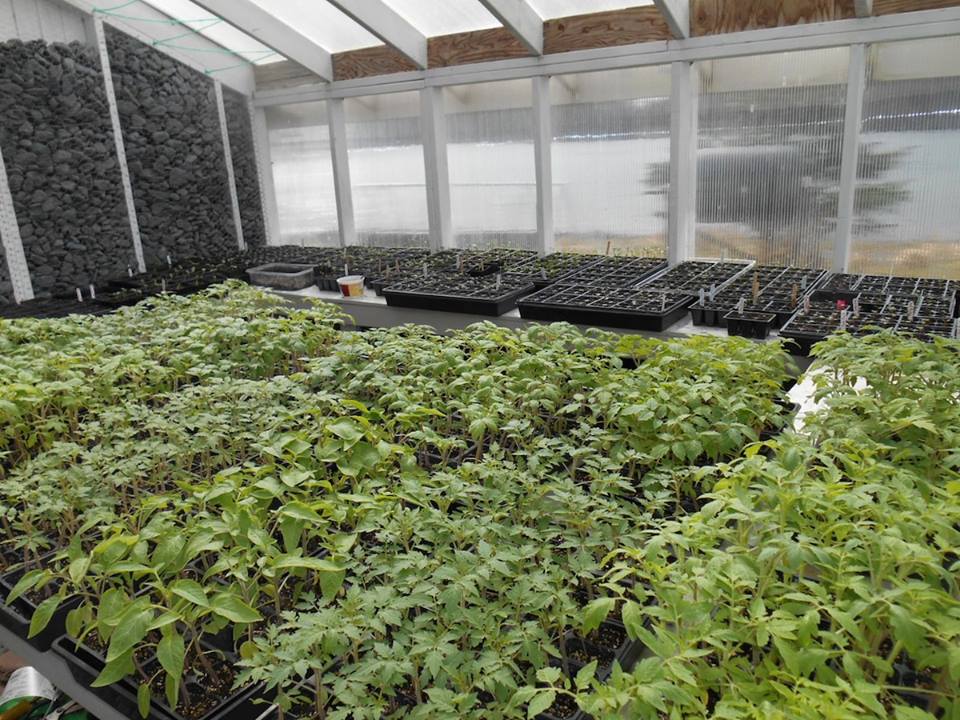
Plant starts in Sitka gardener Keith Nyitray's greenhouse

Plant starts in Sitka gardener Keith Nyitray’s greenhouse

The Sitka Local Foods Network and Sitka Food Co-op are teaming up to make garden starts available for Sitka food gardeners.

The plant starts will be available through the Sitka Local Foods Network on the next three monthly Sitka Food Co-op delivery days, from 4:30-6:30 p.m. on Monday, April 21, May 19 and June 23, at the Sitka First Presbyterian Church (505 Sawmill Creek Road). The sale of these plant starts helps benefit the Sitka Local Foods Network, and we thank the Sitka Food Co-op for the opportunity to sell them on their delivery pick-up days. The plant starts are from Sitka gardeners and are of plants that do well in Sitka’s climate.

For more information, contact Keith Nyitray of the Sitka Food Co-op at sitkafoodcoop@gmail.com or go to http://sitkafoodcoop.org/

• UAF Cooperative Extension Service releases new guide for home-based food businesses

Home-BasedFoodBusinessPhoto

Photo courtesy of UAF Cooperative Extension Service

The Sitka District office and other regional offices of the University of Alaska Fairbanks Cooperative Extension Service now have on hand a new publication, “Guide to Operating a Successful Home-Based Food Business.”

Have questions about Alaska Food Code exemption requirements? Want to know more about recipe formulation, product testing, labeling, safe preparation packaging, or starting your own business? Are you curious which homemade foods can be sold at farmers markets and festivals, and which ones require a commercial kitchen?

The 12-page handout features the answers to these questions and many other topics discussed during the training sessions about food regulations for farmers markets, hosted in February by Kate Idzorek with the UAF Cooperative Extension Service, and by Lorinda Lhotka and Morgan Poloni with the Alaska DEC Food Safety and Sanitation office.

View and download a copy of the publication onlineor contact the UAF Cooperative Extension Service’s Sitka office at 747-9440 for a hard copy.

• State grants available for summer ‘Chef at the Market’ program at local farmers markets

Suzan Brawnlyn, the Chef at the Market, holds a sample cup of honey miso-glazed black cod with broccoli and bok choy stir fry during a cooking demonstration on July 21, 2012, at the second Sitka Farmers Market of the season.

Suzan Brawnlyn, the Chef at the Market, holds a sample cup of honey miso-glazed black cod with broccoli and bok choy stir fry during a cooking demonstration on July 21, 2012, at the second Sitka Farmers Market of the season.

The state’s Chef at the Market program is accepting grant applications from Alaska chefs interested in providing demonstrations at local farmers markets between May and September this year, according to a press release in the Juneau Empire.

The Chef at the Market program began in 2011 to promote fresh Alaska Grown specialty crops and teach Alaskans new ways to prepare them. The program has also provided a new opportunity for chefs to develop relationships with the local food vendors who supply restaurants and with Alaskans interested in cooking Alaska Grown at home.

In the summer of 2013, six Alaska chefs performed a total of 27 demonstrations at nine local farmers markets and special events.

Suzan Brawnlyn hosted four Chef at the Market presentations during the 2012 Sitka Farmers Market season, but wasn’t able to renew her grant last year because the kitchen was closed due to construction at the Alaska Native Brotherhood Founders Hall in 2013. The construction is finished and the kitchen is open again, so Sitka chefs are encouraged to apply for 2014. In addition to hosting demonstrations at the Sitka Farmers Market, Suzan prepared recipes and other information about how to use the local produce she highlighted each week.

To apply for a 2014 summer program grant, go to
http://dnr.alaska.gov/ag/ag_grants.htm. Grant applications are due on Wednesday, April 30.

To find out more information about Chef at the Market demonstrations, contact Jacquelyn Schade at jacquelyn.schade@alaska.gov or 907-761-3858.

• USDA Natural Resources Conservation Service offers funding support program for high tunnels

picture8

The U.S. Department of Agriculture’s Natural Resources Conservation Service (NRCA) has revamped its cost-sharing program that enables qualifying landowners who produce food to build high tunnels.

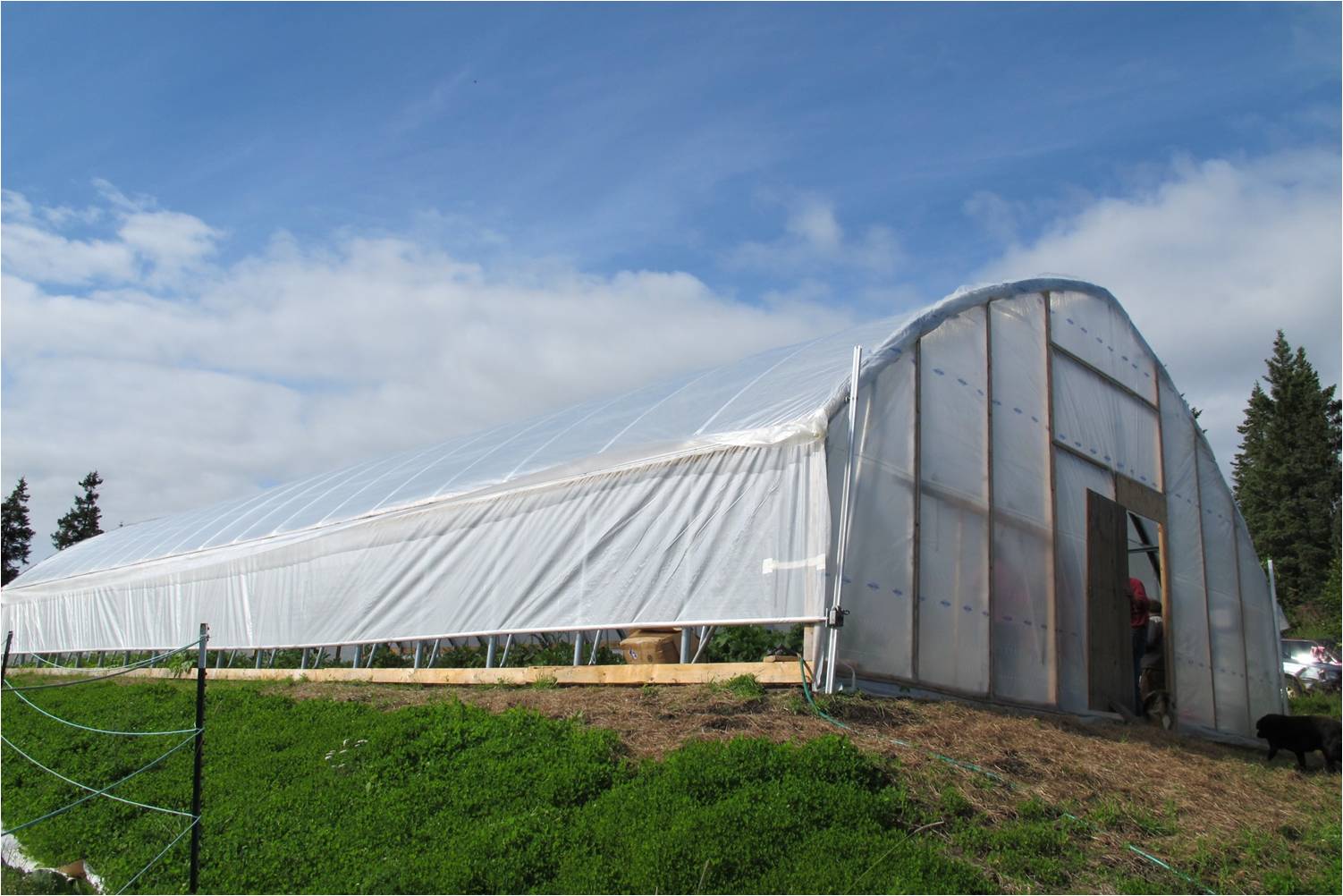
High tunnels, also known as hoop houses or temporary greenhouses, extend the growing season so more food is produced before and after the traditional dates for growing stuff outdoors.

High tunnels are different than greenhouses in that they are passively heated by the sun, so they have lower energy costs than greenhouses. High tunnels are at least six-feet tall, and low tunnels aren’t eligible in this program. Food in high tunnels is planted either directly into the ground or in raised beds. To learn more about the USDA’s high tunnel program, click here (note, link is to FY2013 program information, there have been updates for FY2015 but no link was available). This link has frequently asked questions and answers about seasonal high tunnel systems for crops.

Picture10This program started a couple of years ago as a pilot program, but now is a permanent part of of the NRCS EQIP (Environmental Quality Incentive Programs). One major change is there now is no size restriction on the size of structures NRCS will provide cost-sharing funds (previously it was limited to up to 2,178 square feet, or 5 percent of one acre). Also, geodesic domes are now eligible. Both the land owner and land must meet certain eligibility requirements. Funding is provided on a reimbursable status once the high tunnel is installed and certified to meet NRCS standards. In previous years only a couple of Sitka residents have taken advantage of the program, but other areas of the state, such as Homer, have built dozens of high tunnels through the program.

For information regarding the NRCS technical service or program participation in Southeast Alaska, please contact Samia Savella at the Juneau field office at (907) 586-7220 or samia.savell@ak.usda.gov. Applications currently are being accepted for the 2015 fiscal year (Oct. 1, 2014, to Sept. 30, 2015) and applications must be received at the Juneau field office on or before June 15, 2014. Click here for a link to the Alaska NRCS page.

• High Tunnel Fact Sheet March 2014

• Flier about Southeast Alaska cost-sharing program March 2014

• Kayaaní Commission accepting letters of interest for commissioners.

Devils-Club__SE-Alaska1

Sitka Tribe of Alaska‘s Kayaaní Commission is accepting letters of interest to fill two open commissioner seats — a three-year term tribal citizen seat, and a one-year term general membership seat.

The Kayaaní Commission works to preserve and protect plants and the traditional ways they are used. It is a commission of knowledgeable tribal citizens, elders and knowledgeable Sitka residents who care for the preservation of traditional ways, protection of native species and their uses. The commission then shares that knowledge so it is not lost. A few years ago, the Kayaaní Commission published The Kayaaní Commission Ethnobotany Field Guide to Selective Plants in Sitka, Alaska, which details some of the food and medicinal uses of a variety of local plants.

For the open commission seats, the term “tribal citizen” shall mean any individual enrolled at the Sitka Tribe of Alaska, and the term “general membership” of the Kayaani Commission shall mean all tribal citizens and residents of Sitka who have resided here for at least six months. Deadline is close of business on Friday, March 28.

Please mail or hand deliver letters of interest to the STA’s Resource Protection Department, 456 Katlian Street, Sitka, AK 99835, Attention: Heather Riggs, or email letters to heather.riggs@sitkatribe-nsn.gov. For more information, please contact Heather @ 747-7167.