• Sitka Seafood Festival steering committee to meet June 22

The Sitka Seafood Festival steering committee’s next meeting will be at 7 p.m. on Tuesday, June 22, at Harrigan Centennial Hall.

Each of the steering committee’s smaller committees should have held meetings since the large group met in May, and those updates will be discussed at this meeting. The Sitka Seafood Festival takes place on Aug. 6-7 at Harrigan Centennial Hall and other locations around Sitka.

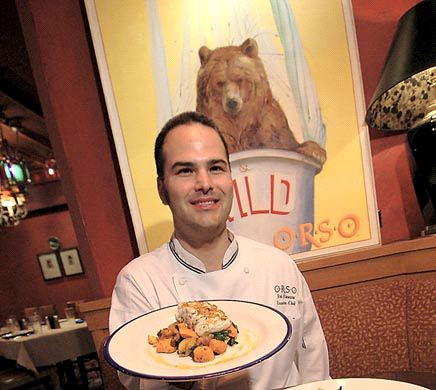
Chef Robert Kinneen of Orso Ristorante in Anchorage shows off an entrée featuring fresh Alaska yelloweye rockfish (Alaska Journal of Commerce photo by Rob Stapleton)

Chef Robert Kinneen of Orso Ristorante in Anchorage shows off an entrée featuring fresh Alaska yelloweye rockfish (Alaska Journal of Commerce photo by Rob Stapleton)

In other news, the Sitka Seafood Festival has chosen a guest chef — Robert Kinneen of Orso Ristorante in Anchorage, who has been featured in the Alaska Journal of Commerce for his extensive use of local foods at the restaurant. During the festival, Robert will be the featured chef for Friday night’s banquet and he will have a booth set up during Saturday’s festivities. Robert is currently filming a “Web-A-Thon” and has a professional camera crew that he would like to bring here to cover some of the festival. The Sitka Seafood Festival is in need of Alaska Airline miles to help bring the chef, his family and the filming crew to Sitka for the festival. While in Sitka, the camera crew may be available to film other projects related to fishing or tourism. If you can help the Sitka Seafood Festival out with air miles, send an e-mail to sitkaseafoodfestival@gmail.com or contact Alicia Peavey at 1-928-607-4845.

Sitka Seafood Festival steering committee minutes from May 20, 2010

• Wealth of resources available to learn about traditional foods

A selection of traditional plant books that are in popular use in Southeast Alaska

A selection of traditional plant books that are in popular use in Southeast Alaska

Living in Southeast Alaska, Sitka residents are exposed to a wealth of traditional foods that grow in our forests or can be found along our beaches. But many Sitka residents aren’t familiar with which plants are safe to eat, and which plants they should avoid. They also aren’t familiar with when are the prime times to gather certain plants.

In recent years, several books have been published to help teach people more about traditional plants and how they can be used. There also have been other groups, such as the Sitka Tribe of Alaska’s Kayaaní Commission, the Sealaska Heritage Institute and the Alaska Native Knowledge Network, that have posted traditional plant information online, including complete curriculum outlines for teachers to use in their classrooms.

Some of the more popular books used in Sitka (many of these can be found at Old Harbor Books) include:

  • Wild Edible & Medicinal Plants: Alaska, Canada & Pacific Northwest Rainforest: An Introductory Pocket Trail Guide (Volumes 1 and 2) by Carol R. Biggs
  • Wild Edible and Poisonous Plants of Alaska by the University of Alaska Fairbanks Cooperative Extension Service (FNH-00028)
  • Collecting and Using Alaska’s Wild Berries and Other Wild Products by the University of Alaska Fairbanks Cooperative Extension Service (FNH-00120)

In addition to these books, the Sealaska Heritage Institute has created curriculum resources using the Tlingít and Haida languages that are built around using traditional foods (links on language names go to Grades K-2 versions, but upper-lever courses available on main curriculum link). Examples of the Tlingít and Haida Grade K-2 courses for Plants are linked below as PDF documents, but there also are separate courses for beach greens, berries, cedar trees, hemlock trees, spruce trees, herring, hooligan, salmon, sea mammals, as well as for other cultural knowledge such as canoes, totem poles and Elizabeth Peratrovich.

The Alaska Native Knowledge Network also some curriculum resources posted online for Tlingít, Haida and Tsimshian culture, including some by Sitka teacher Pauline Duncan. The Alaska Native Plant Society has some information on traditional plant use, but the group is geared more toward the Anchorage area. The Alaska Natural History Program publishes an online Alaska Rare Plant Field Guide. The University of Alaska Fairbanks Cooperative Extension Service has online and printed guides available on plant identification, berries and berry use, and even has online tutorials about how to home can jams and jellies.

On a related note, the SouthEast Alaska Regional Health Consortium (SEARHC) Diabetes Program will be turning its focus to traditional living classes for 2011. The program will focus on traditional foods and activities to teach its Native patients and other community members how to prevent and manage their diabetes (the SEARHC Diabetes Program operates throughout Southeast Alaska, not just in Sitka). The SEARHC Diabetes Program is looking for resident experts in traditional living (fishing, hunting, gathering, preparation, storage, gardening, etc.) who can help teach these skills to others. The program also wants to learn what types of classes people want to see offered in their communities. For more information, contact SEARHC Health Educator Renae Mathson at 966-8797 or renae.mathson@searhc.org.

Sealaska Heritage Institute Tlingít plant curriculum (Grades K-2)

Sealaska Heritage Institute Haida plant curriculum (Grades K-2)

UAF Cooperative Extension Service Native Plants of Alaska page on devil’s club

Nellie’s Recipes: An ANTHC (Alaska Native Tribal Health Consortium) Traditional Food Cookbook for Assisted Living Homes

Alaska Traditional Food Resources (list from Eat Smart Alaska program run by Alaska Division of Public Health)

• Sitka represented at first meeting of new Alaska Food Policy Council

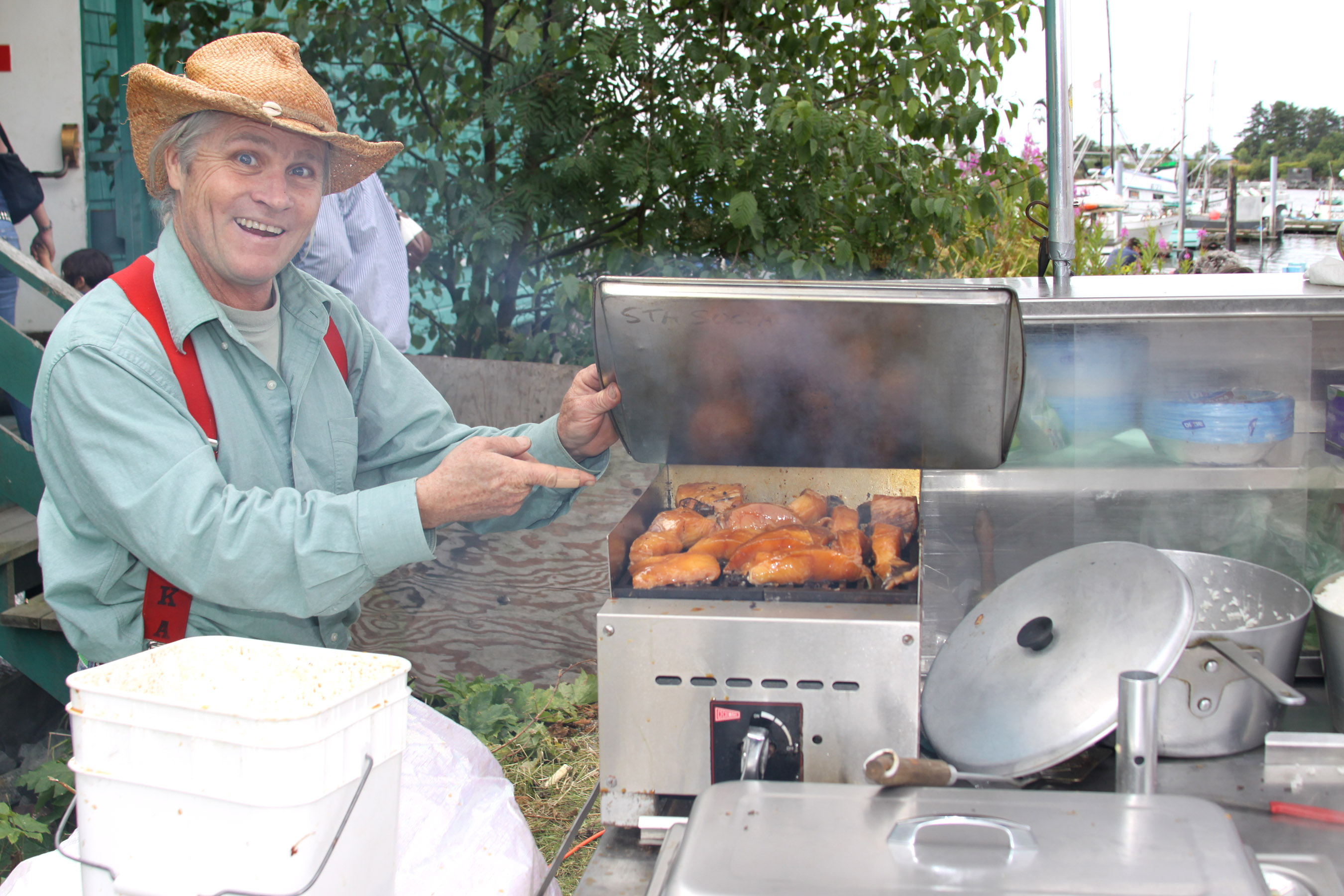
Kerry MacLane grills black cod for the Alaska Longline Fisherman's Association booth at an August 2009 Sitka Farmers Market

Kerry MacLane grills black cod for the Alaska Longline Fisherman's Association booth at an August 2009 Sitka Farmers Market

When the new Alaska Food Policy Council held its first meeting in Anchorage last month, Sitka Local Foods Network president Kerry MacLane was among the 80 or so people in attendance.

“There were nutritionists, politicians, state and federal government folks galore, Native groups, Alaska ranchers (of reindeer, musk ox, elk, goats and even cows), our one creamery, schools, WIC (Women, Infants, Children supplemental nutrition program), restaurants, truckers, a food wholesaler and even some people growing fruits and vegetables,” said Kerry, whose meeting notes are linked as a PDF file at the bottom of this story. “I was honored to represent Sitka at the first meeting of the Alaska Food Policy Council.”

The Alaska Food Policy Council is a new venture in Alaska, but food policy councils are becoming more common around the country at the state and regional level, especially as more people are becoming concerned about where their food comes from and what’s in it. The first meeting of the Alaska Food Policy Council featured guest speaker Mark Winne of the Community Food Security Coalition, who discussed what food policy councils do, and there was a panel of experts from around the state who gave brief presentations about different parts of Alaska’s food system. Many of the participants also took an online survey about Alaska’s food system, which helped provide guidance for the two-day meeting.

“This group will take a critical look at our current food system and start thinking about ideas for building a stronger regional system,” Daniel Consenstein, executive director of the U.S. Department of Agriculture’s Alaska Farm Service Agency, wrote about the meeting. “Most of these stakeholders know that keeping more of our food dollars in Alaska will help create jobs and spur economic development. They know that if Alaska can produce more of its own food, we can build healthier communities and be less vulnerable to food disruptions in times of emergencies. The long-term goals of the Food Policy Council will be to identify barriers to building a viable Alaskan food system, create a strategic plan to address these barriers, and make the necessary recommendations to decision makers to implement this plan. Over the next year, this group will develop an action plan to make Alaska more food secure.”

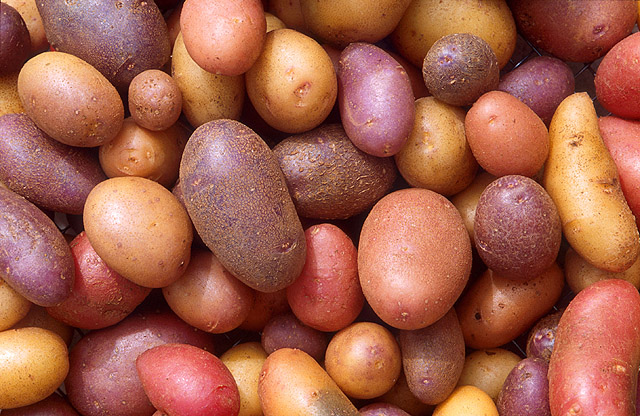
Photo courtesy of USDA Agricultural Research Service Image Gallery / Photo by Scott Bauer -- The average American eats 142 pounds of potatoes a year, making the tubers the vegetable of choice in this country

Photo courtesy of USDA Agricultural Research Service Image Gallery / Photo by Scott Bauer -- The average American eats 142 pounds of potatoes a year, making the tubers the vegetable of choice in this country

Diane Peck of the Alaska Division of Public Health is coordinating the Alaska Food Policy Council, which is having its creation funded by a grant from the U.S. Department of Agriculture and from a two-year grant from the Alaska Department of Health and Social Services Obesity Prevention and Control Program (grant originally provided through the U.S. Centers of Disease Control and Prevention). Detailed meeting minutes and a purpose and next steps document are linked below as PDF files.

The University of Alaska Fairbanks School of Natural Resources and Agricultural Sciences posted a good, detailed wrap-up of the first meeting on its blog, and the University of Alaska’s “Statewide Voice” also had an article about the meeting.

The creation of the Alaska Food Policy Council has sparked regional interest in Southeast Alaska. The Health, Education and Social Services committee of the Southeast Conference will meet by teleconference at 10 a.m. on Tuesday, June 22, to discuss the Alaska Food Policy Council (click Calendar and Events on the link to get call-in numbers and codes). “We have opportunity to advance our local food production and utilize the bounty of our region to sustain our people and improve our health,” Southeast Conference executive director Shelly Wright wrote about the Alaska Food Policy Council.

“There are numerous benefits that food policy changes could mean for residents of Southeast Alaska,” Kerry MacLane said. “The bycatch regulations could be modified to encourage great recovery, processing and distribution. This would result in affordable fish in local markets, schools, health institutions and statewide. Federal, state and local government institutions would have more incentives and few restrictions to include local food in their purchases. More economic development funds could be made available to food system-related entrepreneurs. State and federal storage of (Alaska) emergency food supplies could be in our communities instead of in Portland, Ore. The Alaska Food Policy Council can help Alaskans increase our self-reliance and be more prepared for the coming rise in fuel costs.”

To learn more about the Alaska Food Policy Council, contact Diane Peck with the Alaska Division of Public Health at 1-907-269-8447 (Anchorage) or by e-mail at diane.peck@alaska.gov. Most of the council’s communication and meetings will be by e-mail and teleconference.

Minutes from the May 18-19, 2010, first meeting of the Alaska Food Policy Council

Purpose and next steps for Alaska Food Policy Council

Kerry MacLane’s notes on the first meeting of the Alaska Food Policy Council

• St. Peter’s Fellowship Farm hosts Saturday and Wednesday work parties throughout the summer

This slideshow requires JavaScript.

There will be St. Peter’s Fellowship Farm work parties from 4:30-6 p.m. 5-6:30 p.m. every Wednesday afternoon and from 3-5 p.m. 2-4 p.m. every Saturday afternoon (when there aren’t Sitka Farmers Markets scheduled) throughout the summer. (PLEASE NOTE CORRECTED TIMES)

While most of the garden has been planted and veggies are growing, there is a lot of maintenance work needed to keep the gardens working at full capacity. Tasks include watering the plants (when needed), weeding, thinning out some crops so the remaining ones have more room to grow, and even making some early harvests of food and replanting some of the faster-growing veggies. There were several radishes ready during the last planting party in May, so volunteers got to add them to their salads. Yum. Besides the May 29 planting party photos above, there is a similar photo gallery on the Sitka Local Foods Network’s page on Shutterfly.

Food grown at the St. Peter’s Fellowship Farm communal garden is sold at the Sitka Farmers Markets. This summer the Sitka Farmers Markets take place on five alternate Saturdays starting on July 17 and running through Sept. 11. The St. Peter’s Fellowship Farm communal garden is located by the See House behind St. Peter’s By The Sea Episcopal Church on Lincoln Street.

For more information on the work parties, contact Lisa Sadleir-Hart at 747-5985 or 3akharts@acsalaska.net, or contact Doug Osborne at 747-3752 or doug_las@live.com.

• Juneau Farmers Market to host weekly booths with Juneau Artists Market

The Juneau Farmers Market will start hosting weekly booths this Saturday as part of the Juneau Artists Market. The Juneau Farmers Market booths will be open from 10 a.m. to noon starting on Saturday, June 12, at the Juneau Arts and Culture Center, and running through the annual Juneau Farmers Market and Local Food Festival on Aug. 28.

A companion event to the Juneau Artists Market, which offers local arts and crafts, the Juneau Farmers Market will feature locally grown produce, cut flowers, homemade jams and jellies and baked goods. Plant starts also are welcome, so don’t toss your thinnings and starts. Instead, share them with another gardener. Juneau Farmers Market booth space is limited, so advance reservation required.

The season culminates in Juneau with the third annual Juneau Farmers Market and Local Food Festival from 9 a.m. to 2 p.m. on Saturday, Aug. 28, at the Juneau Arts and Culture Center. In past years, this was the only farmers market event in Juneau, so it’s nice to see weekly markets this year. Click the link above for more details on this larger annual event, which includes produce, fish, jams and jellies, baked breads and demonstrations about how to harvest and preserve local foods, or click this link for information from the Sustainable Juneau blog.

The Juneau Farmers Market would not be possible without its sponsors and partners: the Juneau Arts and Humanities Council, the Juneau Economic Development Council, the Juneau Commission on Sustainability, the Alaska State Division of Agriculture and the UAF Cooperative Extension Service.

• Fast Food Nation author encourages Alaskans to grow their own local food

Fast Food Nation author Eric Schlosser, second from left, visits with University of Alaska Fairbanks School of Natural Resources and Agricultural Sciences associate professor Joshua Greenberg, left, student Charles Caster, third from left, and professor Milan Shipka, right, during a May 27 visit to speak at UAF. (Photo courtesy of the UAF School of Natural Resources and Agricultural Sciences blog)

Fast Food Nation author Eric Schlosser, second from left, visits with University of Alaska Fairbanks School of Natural Resources and Agricultural Sciences associate professor Joshua Greenberg, left, student Charles Caster, third from left, and professor Milan Shipka, right, during a May 27 visit to speak at UAF. (Photo courtesy of the UAF School of Natural Resources and Agricultural Sciences blog)

Eric Schlosser, the author of “Fast Food Nation” and “Chew On This,” encouraged Alaskans to grow their own local foods during a May 27 lunch of Alaska-grown food with University of Alaska Fairbanks (UAF) School of Natural Resources and Agricultural Sciences (SNRAS) students, faculty and staff involved with food security and food production.

Schlosser, who also co-produced the films “Food, Inc.” and “There Will Be Blood,” was in Fairbanks to give a lecture that night as part of UAF’s Summer Sessions. Stories about his lecture can be found on the SNRAS blog and in the UAF Sun Star student newspaper, and a preview story was in the Fairbanks Daily News-Miner.

During his free lecture, Schlosser discussed the recent changes to how our food is grown and prepared, and about how we are losing contact with how our food gets to our plates. He focused on many of the industrial agriculture themes highlighted in his more popular book, “Fast Food Nation,” and some of the resulting problems, such as the low wages and vulnerable workforce in fast food production and the use of hormones in feedlot cattle and issues with antibiotics given feedlot animals.

He also delved into some of the resulting health issues from eating too much fast food, a topic he discussed in his book “Chew On This,” which was written for older children. (Editor’s note: “Chew On This” has a section about the Stop The Pop movement by schools in rural Alaska to eliminate soda pop from their school vending machines.) According to the SNRAS blog, Schlosser discussed the connections between our highly processed, industrial food and diseases such as diabetes.

The people most at risk are children and the elderly. Fast food, which is high in fat, sugar, starch, and salt, compromises the health of these vulnerable citizens. “These are ideal foods to make you unhealthy,” Schlosser said. “And they sell tons of soda because it is the most profitable thing they sell.”

While people in the US used to be some of the most fit people now they are terribly unfit. The obesity rate has nearly doubled for toddlers and tripled for children ages 6 to 11. “Alaska has one of the highest obesity rates in the US,” Schlosser said. “Alaska has more in common with Alabama and Mississippi than western states when it comes to obesity.”

Diabetes is another concern, with one in three children born in 2000 destined to develop diabetes. Among poor people the number is one in two.

“What is to be done?” Schlosser asked. “That all sounds really grim but an entirely different system is possible and necessary.” He stressed organic foods, buying local food, and reconnecting people with where food comes from. He said he is encouraged by the interest in sustainability found on college campuses.

“The fast food system exploits the weak and the poor and threatens our entire democratic system,” he said. “We need an agricultural system based on social policies and access to healthy, nutritional food for every member of society.”

Schlosser also noted how dependent Alaska has become on imported food, and how that impacts food security.

“Hey, you guys in Alaska gotta grow your own. You need to remember where food comes from. Alaska is the most food insecure state; that is not good.” He said Alaska has 15 million acres suitable for agriculture, yet only 30,000 acres are cultivated. (See addendum below.) “Rhode Island has twice as many farms as you and their value of agricultural products is twice as big. Now come on, you guys need to grow food in your back yards, have school gardens, and buy food grown in this state.”

(Addendum — From SNRAS Dean and AFES Director Carol Lewis, June 1, 2010: The 15 million acres is a wonderful quote, but if you look at Roeger (1958), you’ll see the rest of the story. Only 500,000 are accessible by road or rail. There are opportunities to use non-agricultural lands if we use controlled environments and composting, however. There are more than 30,000 acres actually cleared and in Delta alone there are about 100,000 acres.)

• Vote for the Sitka Farmers Market in this year’s America’s Favorite Farmers Markets contest

The Sitka Farmers Market won’t open until July 17, but you can vote for us now in the second annual America’s Favorite Farmers Markets contest sponsored by the American Farmland Trust, a non-profit organization dedicated to preserving America’s agricultural resources.

To vote, click here and then search for the Sitka Farmers Market by using the zip code or state directories. Voting opened on June 1, and the deadline to vote is midnight EST on Tuesday, Aug. 31 (8 p.m. Alaska time on Monday, Aug. 30). The online voting form asks what you like best about the market, so be prepared to type something in the box. The top boutique, small, medium and large markets win a large quantity of “No Farms, No Food” totebags to distribute at a market in September, in addition to other prizes to help run the market. Click here for more information about the contest, and click here for an FAQ page with more details.

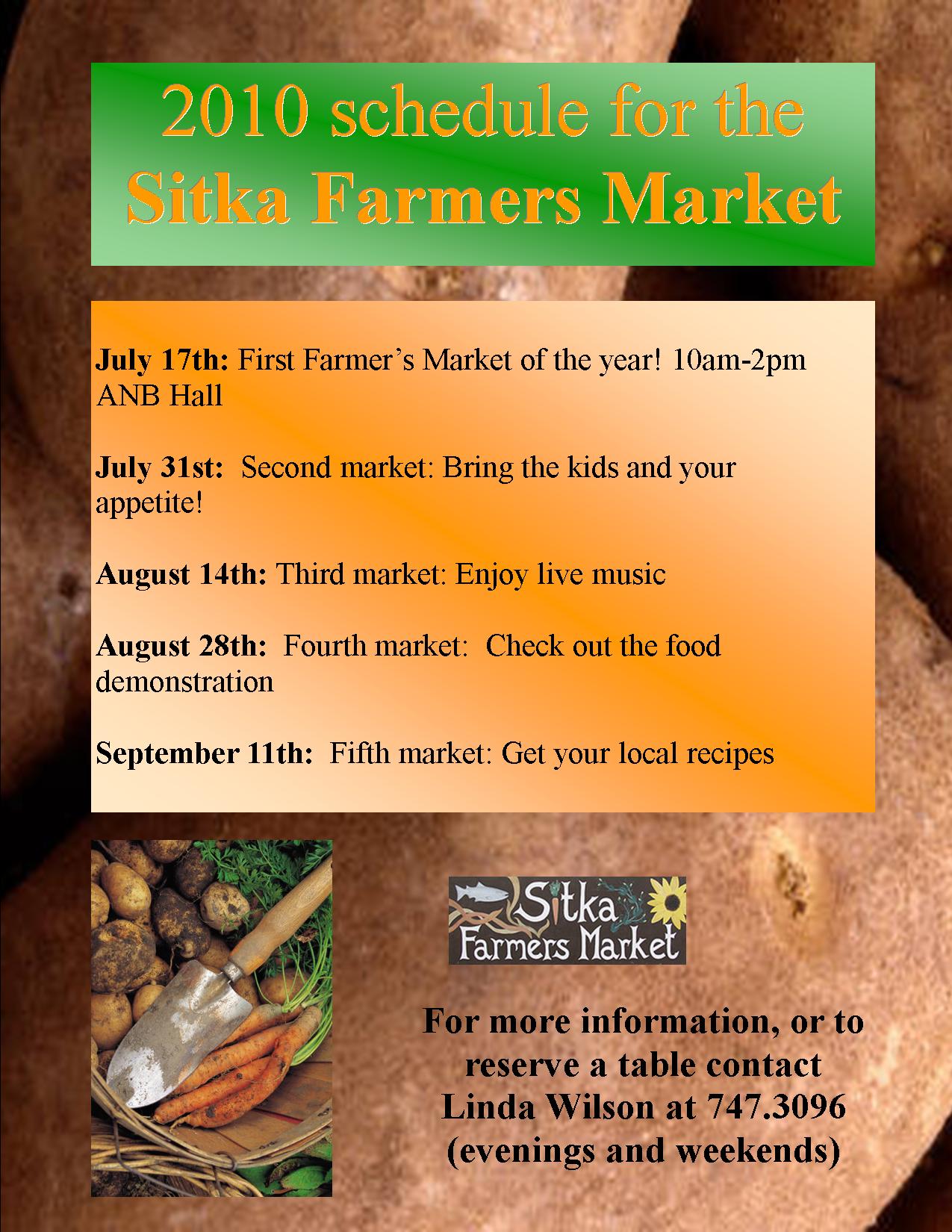
2010 Sitka Farmers Market schedule

2010 Sitka Farmers Market schedule

By the way, the first Sitka Farmers Market is from 10 a.m. to 2 p.m. on Saturday, July 17, at Alaska Native Brotherhood Hall (235 Katlian St.). Other markets are scheduled for alternate Saturdays, July 31, Aug. 14, Aug. 28 and Sept. 11. We’re looking forward to seeing you at the markets.

Our markets feature a variety of vendors with locally grown produce, locally caught fish, baked bread, prepared foods and arts and crafts. We usually have musicians on stage and a table with children’s activities. Due to construction this summer, we will not have our usual booths outdoors in the ANB Hall parking lot and we will do the best we can to fit as many booths inside as we can. To learn more about reserving booths for the Sitka Farmers Market, contact Linda Wilson at 747-3096 (evenings and weekends) or by e-mail at lawilson87@hotmail.com.

If you have extra produce from your garden, the Sitka Local Foods Network table (outside by the Sitka Farmers Market sign) accepts donations and does buy some produce to sell at its booth. All money raised by the Sitka Local Foods Network booth goes into various projects sponsored by the 501(c)(3) non-profit group, including the Sitka Farmers Market, community gardens, the proposed Sitka Community greenhouse and other projects. The Sitka Local Foods Network also sells produce grown at the St. Peter’s Fellowship Farm communal garden at its booth at the Sitka Farmers Market.

Local Food and Local Farms

• Construction to limit space for this summer’s Sitka Farmers Markets

Due to construction, this summer’s Sitka Farmers Markets will have no outdoor vendor space. The Baranof Island Housing Authority (BIHA) is constructing a building this summer in part of the shared Alaska Native Brotherhood Hall/BIHA parking lot, and the parking lot will be closed off for safety and to store supplies.

We will try to make as much room as possible available to vendors inside ANB Hall. We encourage vendors to create vertical displays so more people can share the tables. This year, the Sitka Farmers Markets are scheduled for 10 a.m. to 2 p.m. on alternate Saturdays, July 17 and 31, Aug. 14 and 28, and Sept. 11, at the Alaska Native Brotherhood Hall.

2010 Sitka Farmers Market schedule

2010 Sitka Farmers Market schedule

Because of the space limitations, we may have to give our local food booths a limited priority over arts and crafts. The earlier you register for booth space, the more likely we will be able to find a spot for you.

We really, really, need more locally grown produce vendors, home bakers, fish mongers, prepared food vendors and volunteers this year. If you know of someone who can help, please let us know. If you have extra locally grown produce but don’t have the time to staff a booth, you can donate it or sell it to the Sitka Farmers Market for resale at the Sitka Farmers Market booth. Proceeds from the produce sold at the Sitka Farmers Market booth goes toward Sitka Local Foods Network projects.

This year we had to raise the vendor fee for a table to $15 to cover costs of renting the ANB Hall and kitchen, hiring musicians and other expenses. There is an option to get your vendor space free if you help out with set-up and clean-up.

The registration form and market rules are linked below as PDF files. If you have any questions, please contact Linda Wilson at 747-3096 (nights and weekends only) or by e-mail at lawilson87@hotmail.com.

• 2010 Sitka Farmers Market vendor rules

• 2010 Sitka Farmers Market food rules

• 2010 Sitka Farmers Market vendor registration form (revised May 26, 2010)

• Sam Benowitz to give free presentation tonight (Monday, May 24) about growing fruit in Sitka

A cluster of Parkland apples (photo from the Alaska Pioneer Fruit Growers Association gallery, http://www.apfga.org/)

A cluster of Parkland apples (photo from the Alaska Pioneer Fruit Growers Association gallery, http://www.apfga.org/)

Sam Benowitz of RainTree Nursery in Morton, Wash., will be in Sitka to give a free presentation tonight about how to grow fruit in Southeast Alaska.

The presentation takes place at 7 p.m. tonight (Monday, May 24) at Harrigan Centennial Hall. His Sitka presentation will be about about selecting, growing, and maintaining fruit trees, berry bushes and other edible landscape features.
Benowitz is the founder of RainTree Nursery, and he frequently gives presentations in Washington and Alaska about how to grow fruit trees. In Sitka, it’s possible to grow several varieties of apples and a couple of types of cherries. For more information, check out the Alaska Pioneer Fruit Growers Association site. There also are a multitude of berries that grow around Sitka, including many wild varieties and cultivated types such as raspberries and tayberries.

Cherry blossoms at Blatchley Community Garden

Cherry blossoms at Blatchley Community Garden

Benowitz was one of the keynote speakers at this past weekend’s Southeast Alaska Gardeners Conference and Garden Tours event in Juneau, and he agreed to offer a free presentation when he passed through Sitka on his way home to Washington.

For more information about tonight’s presentation, contact Jud Kirkness at 738-3254 or by e-mail at judkirkness@yahoo.com.

• St. Peter’s Fellowship Farm hosts first planting party of the season

This slideshow requires JavaScript.

The first of three scheduled planting parties this month took place on Saturday, May 15, at the St. Peter’s Fellowship Farm communal garden (located by the See House behind St. Peter’s By The Sea Episcopal Church on Lincoln Street). In addition to the slideshow above (which also includes some photos from a SEARHC WISEGUYS men’s health group work party the same day at its plot in the Blatchley Community Garden), click here and scroll down for a similar slideshow on our Shutterfly site.

The volunteers planted a variety of plant starts, including many that were grown by local residents who signed contracts at the Let’s Grow Sitka garden show in March. Residents who have plant starts from their Let’s Grow Sitka contracts can drop them off at the St. Peter’s Fellowship Farm planting parties.

Food grown at the St. Peter’s Fellowship Farm communal garden is sold at the Sitka Farmers Markets. This summer the Sitka Farmers Markets take place on five alternate Saturdays starting on July 17 and running through Sept. 11.

Two more planting parties are planned, from 2-4 on Saturday, May 22 and 29. Tools and gloves will be provided. For more information on the planting parties, contact Lisa Sadleir-Hart at 747-5985 or 3akharts@acsalaska.net, or contact Doug Osborne at 747-3752 or doug_las@att.net.