• Sitka Local Foods Network seeks manager and co-manager for 2013 Sitka Farmers Markets

SitkaFarmersMarketSignThe Sitka Local Foods Network is looking for a manager and co-manager to coordinate the 2013 Sitka Farmers Markets this summer. These are contract positions, and the manager and co-manager (who reports to the manager) receive small stipends for their work organizing the six scheduled farmers markets this summer.
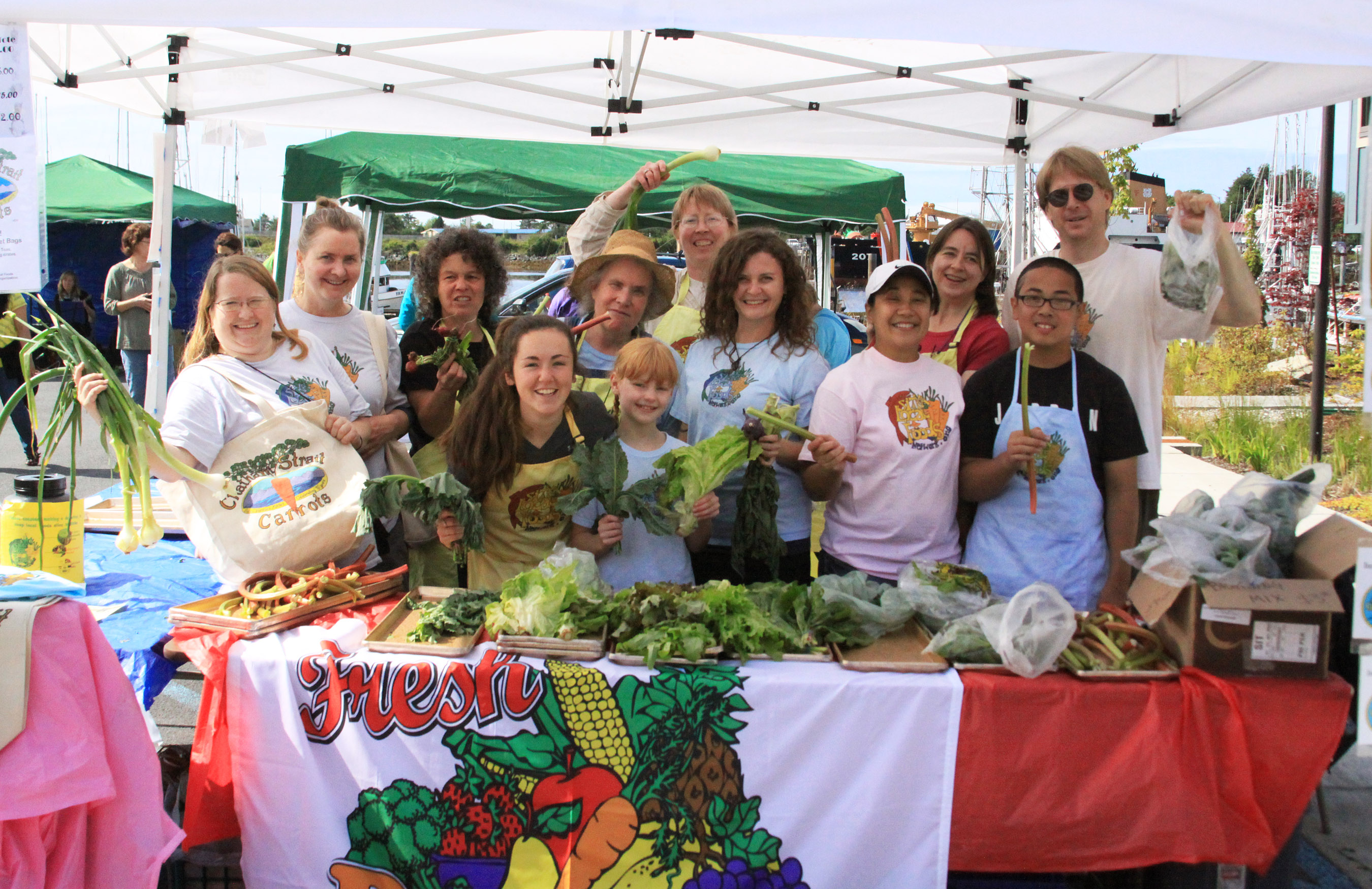
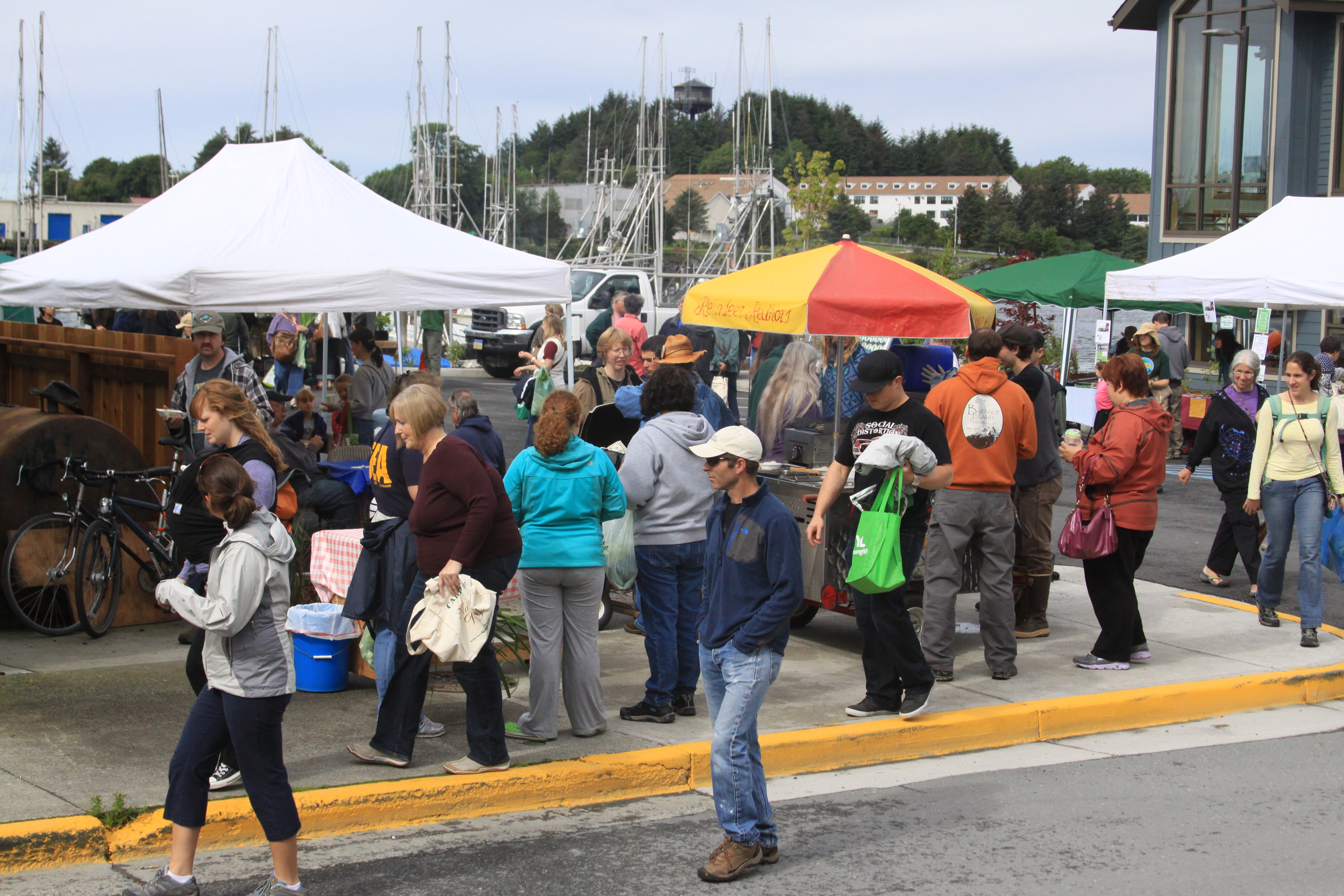
SLFNGroupwLindaThis is the sixth year of operation for the Sitka Farmers Market, which features six markets from 10 a.m. to 2 p.m. every other Saturday from July through September at the Alaska Native Brotherhood Hall (this year’s dates are TBA pending the release of the Chelan Produce Co. schedule for when its van is in Sitka, the Sitka Farmers Market alternates weekends with Chelan during the summer). The farmers markets feature booths from local farmers/gardeners, local fishermen, and artisans and craftspeople. These events are great Sitka gathering places, and we promote local foods and other local goods at them.


A detailed description of the market manager duties can be found at the link below. For more information or to submit applications, contact Maybelle Filler at 747-2761 or 738-2761, or e-mail the Sitka Local Foods Network Board of Directors at sitkalocalfoodsnetwork@gmail.com. The market manager of the Sitka Farmers Market reports to the Sitka Local Foods Network Board of Directors.

• Description of duties for market manager of the Sitka Farmers Market Manager (2013)

• Running of the Boots raises funds for Sitka Local Foods Network

It’s time to dig your XtraTufs out of the closet and gussy them up. The 18th annual Running of the Boots begins at 10 a.m. on Saturday, Sept. 29, at the Crescent Harbor shelter.

So what is the Running of the Boots? It’s Southeast Alaska’s answer to Spain’s “Running of the Bulls.” Sitkans wear zany costumes and XtraTufs — Southeast Alaska’s distinctive rubber boots (aka, Sitka Sneakers). The Running of the Boots raises funds for the Sitka Local Foods Network, a non-profit group that hosts the Sitka Farmers Market and advocates for community gardens, a community greenhouse, sustainable uses of traditional subsistence foods and education for Sitka gardeners. The network also has a representative on the Alaska Food Policy Council.

The Running of the Boots is a short race for fun and not for speed, even though one of the many prize categories is for the fastest boots. Other prize categories include best-dressed boots, zaniest costume, best couple, best kids group and more. The course involves a run from Crescent Harbor to the corner of Katlian and Lincoln streets and back, with a short course for kids looping around St. Michael’s Cathedral.

The entry fee for the Running of the Boots is $5 per person and $20 per family, and people can register for the race starting at 10 a.m. Costume judging starts about 10:30 a.m. There is no longer a lip synch contest after the race. Prizes will be awarded right after the race so folks will have time to get to the free Season’s End Celebration food booths on Lincoln Street, which are being sponsored by the Alaska Cruise Association and the Greater Sitka Chamber of Commerce.

Local merchants have donated bushels of prizes for the costume contest, including a flightseeing trip for three from Harris Air and a new pair of XtraTufs from Russell’s. Honeywell, the maker of XtraTuf boots, is helping sponsor the event and all prize winners will be provided with a new pair of XtraTuf boots (Honeywell is providing 50 pairs of boots). The Sitka Local Foods Network will host a Sitka Farmers Market booth with fresh veggies for sale. The booth will be able to take debit cards, WIC vouchers and Quest cards.

“This is a really fun way to advance the Sitka Farmers Market and our other Sitka Local Foods Network projects,” Sitka Local Foods Network Board President Kerry MacLane said. “This is a must-see annual change-of-the season tradition in Sitka.”

To learn more about the Running of the Boots, contact Kerry MacLane at 752-0654 or by e-mail at maclanekerry@yahoo.com. Historical information about the race (through 2005) can be found online at http://www.runningoftheboots.org/, and info about the Sitka Local Foods Network and more recent Running of the Boots events (2008-11) is online at http://www.sitkalocalfoodsnetwork.org/ (type Running of the Boots into the search bar at the top of the page).

• 2012 Running of the Boots flier (feel free to print a few copies and post them around town)

• Join us for St. Peter’s Fellowship Farm work parties on Wednesday and Saturday

The Sitka Local Foods Network will host a pair of work parties this week at the St. Peter’s Fellowship Farm communal garden located behind St. Peter’s By The Sea Episcopal Church on Lincoln Street (the dark brown brick/wood church above Crescent Harbor).

The first work party will be from 4-6 p.m. on Wednesday, Aug. 22. The second work party is from 2-4 p.m. on Saturday, Aug. 25. Dress for the weather, and tools and gloves are provided for use. We will be weeding, picking slugs and other garden maintenance tasks that need to be done.

In addition to the work parties, we will have fresh produce available for either a donation or WIC produce warrants.

Food grown at St. Peter’s Fellowship Farm is sold at the Sitka Farmers Market to raise money for Sitka Local Foods Network projects during the year. For more information, contact St. Peter’s Fellowship Farm lead gardener Laura Schmidt at 738-7009 or 623-7003.

• SitNiks to provide musical entertainment during the third Sitka Farmers Market of the season, Aug. 4

The SitNiks will provide musical entertainment during the third Sitka Farmers Market of the season, from 10 a.m. to 2 p.m. on Saturday, Aug. 4, at the Alaska Native Brotherhood Hall (235 Katlian St.).

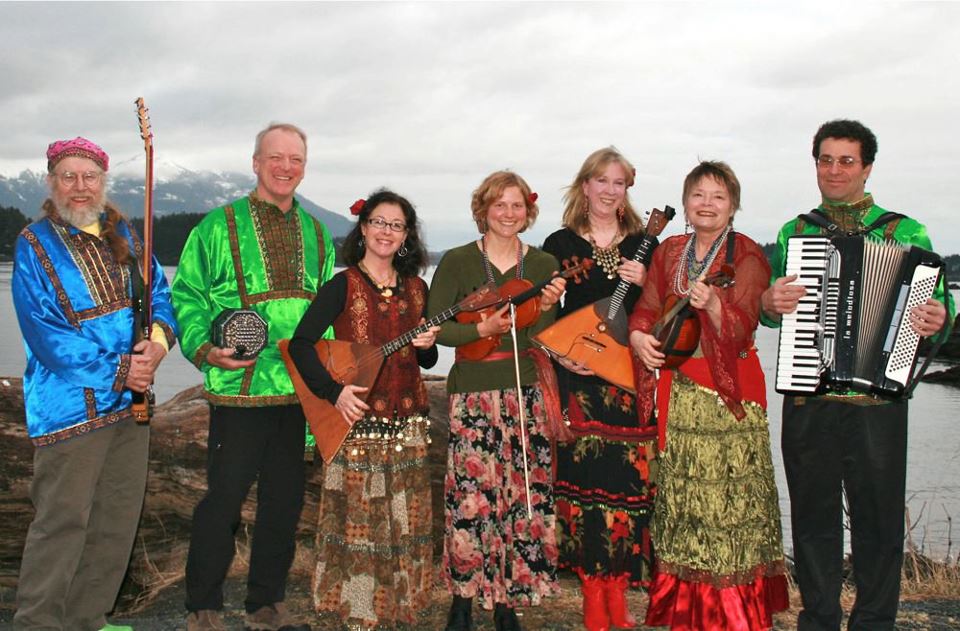
The SitNiks, who will play from 10 a.m. to noon, perform music from Russian and other Eastern European countries. Members of the group include, from left, Ritch Phillips on bass, John Fulton on concertina, Pattie Skannes on balalaika, Bree Hack on fiddle, Jeanne Stolberg on balalaika, Kris Fulton on fiddle and Mike Litman on accordion (not pictured is J Bradley on various stringed instruments).

The Sitka Farmers Market is happy to provide a showcase for local musicians. Musical acts for future Sitka Farmers Markets this year will be announced later. For more information about providing musical entertainment, contact market coordinator Johanna Willingham at 738-8336.

The Sitka Local Foods Network also is seeking volunteers to help set up tables and tents before the market starts, and to tear down and pack up the market after it ends. We need volunteers for all of the remaining markets (Aug. 4, 18, Sept. 1 and 15). If you have a strong back and helping hands, please contact Johanna at the number above.

In addition, the Sitka Local Foods Network needs people to help harvest veggies from St. Peter’s Fellowship Farm to sell at the Sitka Farmers Market. Work/harvest parties will take place from 4-5 p.m. on Friday, Aug. 3, and from 8-9 a.m. on Saturday, Aug. 4, at St. Peter’s Fellowship Farm (located behind St. Peter’s By The Sea Episcopal Church on Lincoln Street). We expect to have lots of veggies to harvest for Saturday’s market, so we hope to have several people help with the picking.

• Mama Lien Spring Rolls wins Table of the Day at second Sitka Farmers Market of 2012

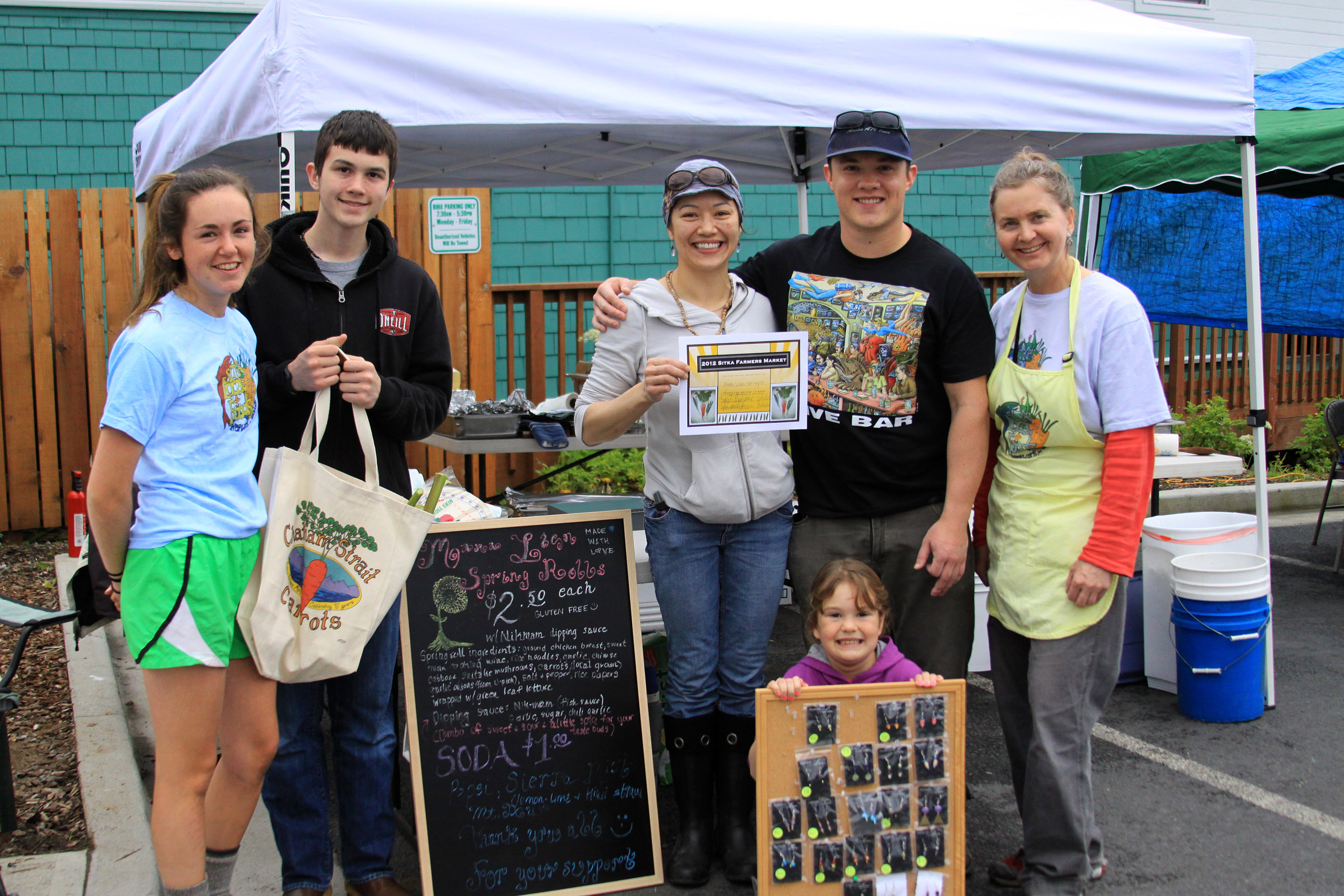
TABLE OF THE DAY: Sitka Local Foods Network intern Christine Devlin, far left, and Sitka Local Foods Network board member Cathy Lieser present the Table of the Day Award to Mama Lien Spring Rolls for the second Sitka Farmers Market of the season, on July 21, 2012, at ANB Hall. Representing Mama Lien Spring Rolls are, from second to left, Michael Ihde, Jessica Lew, Jack Lew and Taylor Ihde (in front). The Sitka Local Foods Network board selects a Table of the Day winner from the vendors at each Sitka Farmers Market of the season, and the winners receive prizes such as a fifth-anniversary market tote bag and check.

The next Sitka Farmers Market is scheduled for 10 a.m. to 2 p.m. on Saturday, Aug. 4, at ANB Hall. The Sitka Local Foods Network is seeking volunteers to help set up tables and tents before the market starts, and to tear down and pack up the market after it ends. We need volunteers for all of the remaining markets (Aug. 4, 18, Sept. 1 and 15). If you have a strong back and helping hands, please contact Johanna Willingham at 738-8336 for more details.

• Alaskans Own Seafood wins Table of the Day at first Sitka Farmers Market of 2012

Table of the Day: Natalie Sattler of Alaskans Own Seafood, center, receives the Table of the Day award from Sitka Farmers Market Manager/Sitka Local Foods Network Board Member Johanna Willingham, left, and Sitka Local Foods Network Board Member Doug Osborne during the first Sitka Farmers Market of the season on Saturday, July 7, 2012, at the Alaska Native Brotherhood Hall in Sitka. At each market a vendor is honored by the Sitka Local Foods Network, which sponsors the Sitka Farmers Market. The next market is from 10 a.m. to 2 p.m. on Saturday, July 21, 2012, at ANB Hall, 235 Katlian St.

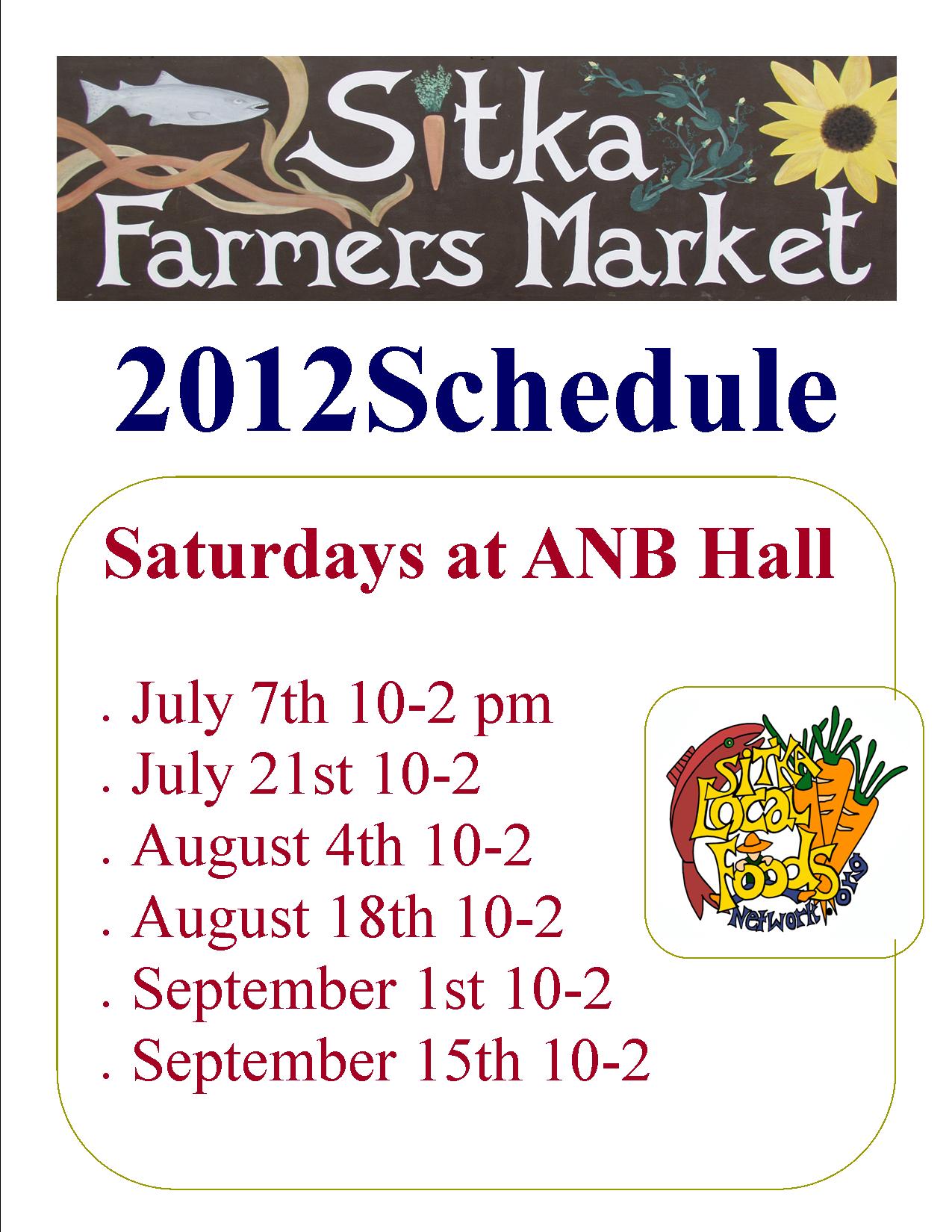
• Sitka Local Foods Network to host six Sitka Farmers Markets in 2012

The Sitka Local Foods Network will host its fifth summer of Sitka Farmers Markets with six markets that start on July 7 and take place on alternate Saturdays through Sept. 15. The Sitka Farmers Markets give Sitka residents a chance to buy and sell locally produced food and crafts.

The Sitka Farmers Markets take place from 10 a.m. to 2 p.m. on Saturday, July 7, 21, Aug. 4, 18, Sept. 1 and Sept. 15 at the Alaska Native Brotherhood Hall (235 Katlian St.). The markets feature local seafood (fresh, frozen, and cooked, ready to eat), locally grown and harvested fruits and vegetables, baked bread, locally made jams and jellies, cooking demonstrations, live entertainment, locally brewed and roasted coffee, music, local arts and crafts, and a variety of other items gathered or made in Sitka. We emphasize local products and lots of fun. We are the first farmers market in Southeast Alaska to accept WIC coupons. You also can vote for the Sitka Farmers Market in the America’s Favorite Farmers Markets contest by following the links at http://www.sitkalocalfoodsnetwork.org/.

“The Sitka Farmers Market is like a carnival every other Saturday,” Sitka Local Foods Network Board President Kerry MacLane said. “It’s a fun community space to enjoy with your family or to meet your friends for fresh coffee and baked goods. There is live music, cooking demonstrations, art, and, of course, fresh veggies, fruit and seafood.”

The Sitka Farmers Market started as a community project that came out of a health priority planning meeting at the 2008 Sitka Health Summit. This event is sponsored by the Sitka Local Foods Network, Alaska Native Brotherhood Camp No. 1, Alaska Native Sisterhood Camp No. 4, Baranof Island Housing Authority, Sitka Conservation Society, the Alaska Farmers Market Association and the SEARHC Health Promotion and Diabetes Prevention programs.

“Thanks to our creative and enthusiastic vendors, the Sitka Farmers Market will be celebrating its fifth successful year.” said Johanna Willingham, Sitka Local Foods Network Board Member and Sitka Farmers Market Coordinator. “We have delighted in watching our market grow over the years and due to popular demand we are beginning our market two weeks earlier this year. Outdoor vendors and musicians will still be able to enjoy the newly paved parking lot with landscaping, thanks to BIHA. A tent will be set up for outdoor dining where you can listen to live music and enjoy some great food. Some new items will be added to some familiar vendors’ tables — dried sea veggies, sea asparagus and sea salt. Look forward to fresh snap and snow peas for snacking, ready-to-eat salads, handmade tamales and, as always, fresh black cod tips.”

Vendor fees are $20 for a 6-foot table, $30 for an 8-foot table and $15 for a 4-foot table. Vendors with their own tents pay $2 per foot. As always, we offer cost incentives for vendors growing locally produced food. The fees will help us cover the costs of renting ANB Hall and its kitchen, hiring musicians and other expenses. To learn more about being a vendor or to sign up for a table, contact Sitka Farmers Market Coordinator Johanna Willingham at 738-8336 or by e-mail johanna.willingham@gmail.com. Vendor rules, registration forms and other information for potential vendors can be found at http://www.sitkalocalfoodsnetwork.org/.

• Sitka Farmers Market vendor forms ready for 2012

The vendor forms for the 2012 Sitka Farmers Markets are finally ready so prospective vendors can review them and familiarize themselves with the food safety, market and sales tax rules.

This year the Sitka Farmers Markets take place from 10 a.m. to 2 p.m. on alternate Saturdays starting on July 7 and running through Sept. 15 (July 7, 21, Aug. 4, 18, Sept. 1 and 15) at the historic Alaska Native Brotherhood Hall located at 235 Katlian St. This year we have a new market manager, Johanna Willingham-Guevin, and she will be assisted by Jasmine Shaw. Please remember that our focus is on locally grown or produced items at the market (no goods produced outside Alaska allowed, except for certain food items that are to be consumed at the market).

Prospective vendors can send their completed forms to Johanna Willingham, P.O. Box 6235, Sitka, Alaska 99835. Johanna’s e-mail address is johanna.willingham@gmail.com, and her cell number is 738-8336. All forms can be downloaded as Adobe Acrobat (PDF) files. These forms also are posted on our Forms page.

• 2012 Sitka Farmers Market Vendor Registration Packet

• 2012 Sitka Farmers Market Food Rules Vendor Packet

• 2012 Sitka Farmers Market Home Baker Guidelines Packet

• 2012 Sitka Farmers Market Home Baker Vendor Application Packet (Required By Alaska Department Of Environmental Conservation)

• 2012 Sitka Farmers Market Home Baker Ingredient Inventory Forms (Required By Alaska Department Of Environmental Conservation).

• 2012 “Do I Need A Permit?” List For Food Vendors

• 2012 “Safe, Small, Local” Brochure About Preparing Food For Farmers Markets, Bazaars And Other Events From Alaska Department of Environmental Conservation

• 2012 Sitka Farmers Market Sales Tax Form For City And Borough Of Sitka

• 2012 Sitka Farmers Market Vendor Rules And Responsibilities Packet (Has Table/Tent Fee Information)

• Alaska Food Policy Council seeks people to join its five priority strategies action plan work groups

The Alaska Food Policy Council  is seeking Alaska residents to participate in five workgroups to help develop action plans for certain key food issues in the state.

A group of 30 council members met on April 4-5 to develop basic action plans geared toward five priority strategies to improve food security in the state. Now they need people to begin implementing the individual action plans. The five priority strategies are part of the Alaska Food Policy Council’s three-year strategic plan developed at its Jan. 12 meeting.

The five priority strategies include:

  • Improving school-based programs such as Farm to Schools and Fish to Schools;
  • Strengthening enforcement of the state’s 7-percent bidding preference for Alaska Grown food;
  • Improving emergency food preparedness plans throughout the state;
  • Serving as a research aggregator/resource to help people get a better handle on Alaska’s food situation and supply chain; and
  • Supporting local food efforts throughout the state.

The Alaska Food Policy Council got its start during a May 18-19, 2010, meeting in Anchorage. Sitka Local Foods Network treasurer Lisa Sadleir-Hart, a registered dietitian and SEARHC Health Educator, is one of the 30 members of the council.

These five work groups are open to anybody who has a special interest in the various topics. To learn more about the work groups, contact Lisa Sadleir-Hart at 966-8735 or lisa.sadleir-hart@searhc.org, or contact Alaska Food Policy Council Coordinator Diane Peck with the Alaska Department of Health and Social Services Obesity Prevention and Control Program at 269-8447 or diane.peck@alaska.gov.

• Alaska Food Policy Council School Programs Action Plan (Strategy 1)

• Alaska Food Policy Council Local Grown Action Plan (Strategy 2)

• Alaska Food Policy Council Disaster Preparedness Action Plan (Strategy 3)

• Alaska Food Policy Council Research and Information Action Plan (Strategy 4)

• Alaska Food Policy Council Public Engagement Action Plan (Strategy 5)

• Lori Adams discusses maximizing small garden spaces in her latest Daily Sitka Sentinel garden column

(Lori Adams, who owns Down-To-Earth U-Pick Garden and is a frequent vendor at the Sitka Farmers Market, will be writing a regular garden column in the Daily Sitka Sentinel this summer. The Sentinel is allowing us to reprint the columns on this site after they first appear in the newspaper. This column appeared on Page 4 of the Wednesday, June 6, 2012, edition of the Daily Sitka Sentinel.)

GARDENING IN SITKA

By Lori Adams

MAXIMIZING SPACE IN A SMALL GARDEN

Make beds wide and pathways narrow. A raised bed is effective as long as it is no wider than 48 inches. Many people don’t like beds this wide because they can’t straddle them, but the effort it takes to walk around the row is worth it if you get more vegetables. My pathways are wider than I’d like because I need room for groups of people, but for most gardens the pathways only need to be wide enough for a small wheelbarrow.

Go vertical.  Build trellises and chose varieties that take advantage of vertical space.  For instance,  tomatoes can be grown in cages, zucchini and cucumber plants can be trained to grow up trellises, plants like strawberries can be grown in hanging pots, and tall varieties of peas and beans will easily  climb up fencing. Hill up potato plants for more spuds and leeks for longer blanched stalks.

Choose varieties that give you the most bang for your buck. Many broccoli varieties continue to produce sprouts long after you have harvested the central head. I have harvested fresh broccoli from the garden for Thanksgiving dinner. Grow leaf lettuce instead of head lettuce for multiple harvests, and edible podded peas (snap and snow peas) rather than shelling peas for more poundage. Choose hard-neck rather than soft-neck garlic so you can harvest the scapes for summer garlic flavor in stir fries, in addition to the bulbs you harvest in the fall. There are beet and radish varieties that are cylindrical rather than round, and if you have deep sifted soil you can choose extra long carrot varieties. Choose cabbage varieties that produce dense, heavy heads. Also, choose both early and late varieties of each crop to assure a continuous supply.

Use harvest methods that encourage more growth.  Leaf lettuce will tolerate up to three harvests if you cut it 2-3 inches from the ground instead of harvesting the entire plant. Peas, cucumbers, beans, radish pods, berries and tomatoes all benefit from frequent pickings. Most will stop producing if you don’t keep up with them. I have seen pea pods mature overnight. Pea pods must be picked EVERY DAY. If possible, celery, Swiss chard and rhubarb should be harvested a few stalks at a time rather than all at once. The plants recover faster if they still have two-thirds of their foliage. Harvest only outer stalks and use a pulling, twisting motion rather than cutting the stalks. When cutting fennel bulbs leave a generous amount of root and it will sprout with multiple baby fennel plants. Rather than pulling up green onions, cut them off 2-3 inches above the soil line and they will continue to grow more greens all season. I believe you could do the same thing with leeks but I have never tried it. Harvest root crops from crowded areas first to encourage surrounding plants to bulk up.

Pruning is important.  Herb plants that are shooting up and trying to go to seed should be pinched back to encourage branching out. The same holds true with spinach. Pruning off dead leaves and rotten vegetables or fruit keeps all plants healthier and producing longer. Pea plants can be topped once they have reached the desired height and they will branch out resulting in more peas. Don’t forget that many pea tops are edible. Prune excess broccoli and cauliflower leaves because they take a lot of energy. Target leaves that are diseased, touching the ground, touching other plants or shading surrounding vegetables. Just don’t remove more that one-third of the leaves on any one plant. Don’t forget that broccoli and cauliflower leaves are edible. Raspberries can be successfully topped to prevent them from falling over or breaking. They will also branch out and you can end up with more berries. Each raspberry clump should have all dead stalks removed and have no more than 3-5 live stalks remaining. As Brussels sprouts reach the size of marbles, start breaking off leaves starting from the bottom to send more energy into the sprouts. Toward the end of the season pinch out the top of the plant for really large sprouts. Don’t forget that Brussels sprout tops and leaves are edible. Remove strawberry runners so more energy goes into the berries.

Use floating row cover.  Using a row cover such as “remay” or “agribond” can extend your season by as much as 3-4 months. It keeps the soil and crops about 10 degrees warmer than the outside temperature. Ideally you should keep your vegetables covered all year, but at the very least you should keep all brassica crops covered until July 15th to protect them from root maggot flies. Supports are not necessary but beneficial — they protect the plants and extend the life of the cover.

Plant seeds at the recommended spacing.  More does not always mean more. If plants are too crowded they will not produce as well as they should. Broccoli, cauliflower and cabbages that are planted too closely together produce small heads. Consider placing seeds or transplants rather than sprinkling seeds, or better yet purchase a seeder. The extra time that it takes to carefully place your seeds ensures that every square inch of a small garden is utilized.

Plant in blocks rather than rows. A row of broccoli can leaf out over a row of beets next to it and shade it out. A block of broccoli planted on the north side of a block of beets will have no negative affects.

Practice successive plantings. About 1-2 months (depending on the crop) after you plant crops like spinach, fennel, cilantro, kohlrabi, napa cabbage, lettuce or cauliflower, you can start a second set of them indoors. The second set will be ready to plant out about the time you harvest the first set. With some crops you can do this several times during the season. Don’t forget to amend the soil between each successive planting.

Consider pulling up some of your flowers. This last idea is not a very popular one. It is pleasant to have ornamentals in your yard, but consider scaling back, mixing vegetables in amongst your flowers or even replacing ornamentals with edibles that are pretty, such as sunflowers, nasturtiums, flowering kale, chives, cabbage, herbs or rainbow Swiss chard.

Brought to you by Down-To-Earth U-Pick Garden

2103 Sawmill Creek Road

Open June-August / Monday to Saturday, 11 a.m. to 6 p.m.

747-6108 or 738-2241

http://downtoearthupick.blogspot.com/