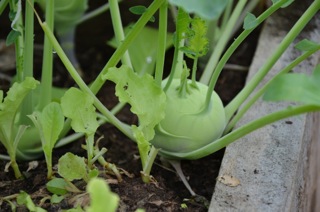
The Sitka Local Foods Network will host a planting party from 2-4 p.m. on Saturday, May 31, to continue planting this summer’s crops at the St. Peter’s Fellowship Farm communal garden (located behind St. Peter’s By The Sea Episcopal Church on Lincoln Street).
Produce grown at St. Peter’s Fellowship Farm is sold during the Sitka Farmers Markets to help fund Sitka Local Foods Network projects throughout the year. Some of it also is sold to people using SNAP benefits (food stamps) and to local schools for their lunch programs.
In addition to planting, there may be other garden chores to do. During these work parties we usually need people to shovel dirt and sift soil, weed, mulch and spread fertilizer (seaweed) on the existing garden beds. Most garden tools will be provided, but we will need people to bring shovels and pick-axes if they have them. These garden parties are a great place for Sitka residents new to gardening to get some hands-on instruction on how to plant their own veggie garden.
For more information, contact St. Peter’s Fellowship Farm lead gardener Laura Schmidt at 623-7003 or 738-7009, or contact Lisa Sadleir-Hart at 747-5985.
Vendors looking to sell local food, arts and crafts, and other items at the 2014 Sitka Farmers Markets can find all the vendor forms, information sheets and regulations for this year by going to the Documents page on this site, or look at the bottom of this post for the documents. The forms are in downloadable Acrobat PDF files.
The 2014 Sitka Farmers Markets will be managed by Ellexis Howey and Debe Brincefield, and they can be reached at sitkafarmersmarket@gmail.com or 738-8683 during the market season. Our 2014 Sitka Farmers Markets will be from 10 a.m. to 1 p.m. on six alternating Saturdays starting in late June (June 28, July 12, 26, Aug. 9, 23, and Sept. 6) at the Alaska Native Brotherhood Founders Hall on Katlian Street.
Ellexis and Debe will host at least one pre-market meeting for potential market vendors, tentatively scheduled for 6:30 p.m. on Wednesday, May 21, at the See House behind St. Peter’s By The Sea Episcopal Church. They will be available to answer questions and to make suggestions that will help new and returning vendors adjust to any food regulation changes from the Alaska Department of Environmental Conservation, changes to the Alaska Quest electronic benefits program, and any other changes.
For more information, contact Ellexis or Debe at the numbers above.
The Sitka Local Foods Network will host planting parties from 2-4 p.m. on Saturday, May 10, and from 2-4 p.m. on Saturday, May 31, to start planting this summer’s crops at the St. Peter’s Fellowship Farm communal garden (located behind St. Peter’s By The Sea Episcopal Church on Lincoln Street).
Produce grown at St. Peter’s Fellowship Farm is sold during the Sitka Farmers Markets to help fund Sitka Local Foods Network projects throughout the year. Some of it also is sold to people using SNAP benefits (food stamps) and to local schools for their lunch programs.
In addition to planting, there may be other garden chores to do. During these work parties we usually need people to shovel dirt and sift soil, weed, mulch and spread fertilizer (seaweed) on the existing garden beds. Most garden tools will be provided, but we will need people to bring shovels and pick-axes if they have them. These garden parties are a great place for Sitka residents new to gardening to get some hands-on instruction on how to plant their own veggie garden.
For more information, contact St. Peter’s Fellowship Farm lead gardener Laura Schmidt at 623-7003 or 738-7009, or contact Lisa Sadleir-Hart at 747-5985.
Are you interested in seeing year-round produce and flower production in Sitka? The Sitka Community Greenhouse and Education Center ad-hoc committee will give a project update to the City and Borough of Sitka Parks and Recreation Committee at noon on Thursday, May 1, at the Harrigan Centennial Hall Exhibit Room.
The Sitka Community Greenhouse and Education Center idea started off as a project from the 2008 Sitka Health Summit, but problems acquiring land kept the center from advancing much beyond the concept stage. In recent months, the project gained some new momentum when city officials suggested using land at the city’s Turnaround Park (the old amphibious plane turnaround near the corner of Halibut Point Road and Katlian Street, where the Sitka Skatepark and Sitka Trail Works office are located).
The current proposal is to build a 25-foot-diameter geodesic dome in the middle of the site’s current parking lot. As the project grows, the plan is to build a 90-foot-diameter geodesic dome in the center (the smaller geodesic dome will be moved to another location), with two conventional greenhouses along the ridge by Katlian Street and by the guardrail by the Sitka Trail Works building. There also are plans for some garden landscaping around the site to help clean it up and make it a more attractive place to visit. The greenhouse project will not impede the use of the Sitka Skatepark.
The slideshow below includes several concept drawings by James Patterson. These plans are subject to change, but they help give people an idea of where the project stands right now. Another option is to start off with a high tunnel greenhouse and build around it.
Sitka residents are encouraged to attend the meeting Thursday to show their support for the project. “If we don’t make it through this committee meeting it be ‘back to the drawing board,'” project coordinator Kerry MacLane said. “Your appearance for even a few minutes from 12:10 12:30 p.m. would mean a lot.”
The project was presented to the Sitka Historic Preservation Commission in mid April (the Sitka Turnaround Park is a historic site). If the greenhouse concept is approved by the Parks and Rec Committee on Thursday, it then will be presented to the Sitka Planning Commission on May 6. After that, the proposal will go to the Sitka Assembly to approve a lease to use the property.
Linked below are some concept points and a response to some questions by Parks and Rec’s partner, the Alaska Department of Natural Resources. For more information, contact Kerry MacLane at 747-7888.
(EDITOR’S NOTE: The following article first appeared on this site in April 2010. It is repeated because much of the information remains current and newsworthy.)
As you start to plan your garden for this spring and summer, don’t forget to Plant A Row For The Hungry. The Plant A Row For The Hungry program (also known as Plant A Row or PAR) is a national campaign by the Garden Writers Association of America that got its start in Alaska.
In the cold winter of 1994, Anchorage Daily News garden columnist and former Garden Writers Association of America President Jeff Lowenfels was returning to his hotel after a Washington, D.C., event when he was approached by a homeless person who asked for some money to buy food. Lowenfels said Washington, D.C., had signs saying, “Don’t give money to panhandlers,” so he shook his head and kept on walking. But the man’s reply, “I really am homeless and I really am hungry. You can come with me and watch me eat,” stayed with Lowenfels for the rest of his trip.
Jeff Lowenfels
The encounter continued to bother Lowenfels, even as he was flying back to Anchorage. During the flight, Lowenfels came up with an idea when he started writing his weekly garden column (the longest continuously running garden column in the country, with no missed weeks since it started on Nov. 13, 1976). He asked his readers to plant one extra row in their gardens to grow food to donate to Bean’s Café, an Anchorage soup kitchen. The idea took off.
When Anchorage hosted the Garden Writers Association of America convention in 1995, Lowenfels took the GWAA members to Bean’s Café to learn about the Plant A Row For Bean’s Café program. The Garden Writers Association of America liked the idea, and it became the national Plant A Row For The Hungry campaign (also known as Plant A Row or PAR). In 2002, the Garden Writers Association Foundation was created as a national 501(c)(3) nonprofit to manage the Plant A Row For The Hungry program.
“I am not surprised by the growth of PAR,” Lowenfels wrote in an e-mail to the Sitka Local Foods Network. “It is now in all 50 states and across Canada and there are thousands of variations of the original program — from prison gardens for the hungry to botanical gardens donating their produce from public display gardens. This is because gardeners always share information and extra food, so the idea was a natural.”
It took five years for the program to reach its first million pounds of donated food, but the second million only took two years and the next eight years saw a million pounds of donated food (or more) each year. Since 1995, more than 14 million pounds of food have been donated. Not only that, the program is getting ready to expand overseas to Australia, England and other countries with avid gardeners.
“We have supplied something in the vicinity of enough food for 50 million meals,” Lowenfels wrote in his e-mail. “Gardeners can solve this hunger problem without the government. And we don’t need a tea party to do it! Or chemicals, I might add, as author of a book on organic gardening (Teaming With Microbes, written with Wayne Lewis)!” (Lowenfels recently released a second book, Teaming With Nutrients, which is a follow-up to his first book).
According to the U.S. Department of Agriculture, one out of every eight U.S. households experiences hunger or the risk of hunger. Many people skip meals or eat too little, sometimes going an entire day or more without food. About 33 million Americans, including 13 million children, have substandard diets or must resort to seeking emergency food because they can’t always afford to buy the food they need. In recent years the demand for hunger assistance has increased 70 percent, and research shows that hundreds of children and adults are turned away from food banks each year because of lack of resources.
While many people credit Lowenfels for creating the Plant A Row For The Hungry program, Lowenfels says the real heroes are the gardeners growing the extra food and donating it to local soup kitchens, senior programs, schools, homeless shelters and neighbors. You can hear him pass along the credit to all gardeners at the end of this interview last year with an Oklahoma television station (video also embedded below).
“One row. That’s all it takes. No rules other than the food goes to the hungry. You pick the drop-off spot or just give it to a needy friend or neighbor. Nothing slips between the lip and the cup, I say,” Lowenfels wrote in his e-mail.
For people wanting to Plant A Row For The Hungry in Sitka, there are several places that would love to help distribute some fresh locally grown veggies or berries to those who are less fortunate, such as the Salvation Army, Sitkans Against Family Violence (SAFV), local churches, Sitka Tribe of Alaska and other organizations. The food the Sitka Local Foods Network grows at St. Peter’s Fellowship Farm communal garden goes to the Sitka Farmers Market.
The Sitka Local Foods Network also takes donations of local produce to sell at the Sitka Farmers Markets, and all proceeds are used to help pay for SLFN projects geared toward helping more people in Sitka grow and harvest local food. For more information, contact SLFN President Lisa Sadleir-Hart or one of the other board members at sitkalocalfoodsnetwork@gmail.com.
Suzan Brawnlyn, the Chef at the Market, holds a sample cup of honey miso-glazed black cod with broccoli and bok choy stir fry during a cooking demonstration on July 21, 2012, at the second Sitka Farmers Market of the season.
The state’s Chef at the Market program is accepting grant applications from Alaska chefs interested in providing demonstrations at local farmers markets between May and September this year, according to a press release in the Juneau Empire.
The Chef at the Market program began in 2011 to promote fresh Alaska Grown specialty crops and teach Alaskans new ways to prepare them. The program has also provided a new opportunity for chefs to develop relationships with the local food vendors who supply restaurants and with Alaskans interested in cooking Alaska Grown at home.
In the summer of 2013, six Alaska chefs performed a total of 27 demonstrations at nine local farmers markets and special events.
Suzan Brawnlyn hosted four Chef at the Market presentations during the 2012 Sitka Farmers Market season, but wasn’t able to renew her grant last year because the kitchen was closed due to construction at the Alaska Native Brotherhood Founders Hall in 2013. The construction is finished and the kitchen is open again, so Sitka chefs are encouraged to apply for 2014. In addition to hosting demonstrations at the Sitka Farmers Market, Suzan prepared recipes and other information about how to use the local produce she highlighted each week.
Gordon Wrobel will give a presentation at 1 p.m. on Saturday, April 12, in Room 106 (note room change from original post) at the University of Alaska Southeast Sitka Campus about gardening in Southeast Alaska, in particular in Elfin Cove where he is completing a three-year USDA project to improve local food systems.
Gordy will provide an overview of his project, including the challenges and opportunities (such as available land, soils, pests/diseases, climate/temperature, markets, and crop/seed selection). His project objectives and results included creating access to fresh produce in the rural Southeast Alaska community of Elfin Cove, evaluating the economic viability of a floating island garden, evaluating the strategies of a floating island, container, hoop garden and greenhouse, creating a composting program for the community of Elfin Cove, and evaluating the potential for a sustainable produce business in Elfin Cove. There will be a short question-and-answer session after his presentation.
For more information, contact Sitka Local Foods Network board members Michelle Putz at 747-2708 or Charles Bingham at 738-8875.
The U.S. Department of Agriculture’s Natural Resources Conservation Service (NRCA) has revamped its cost-sharing program that enables qualifying landowners who produce food to build high tunnels.
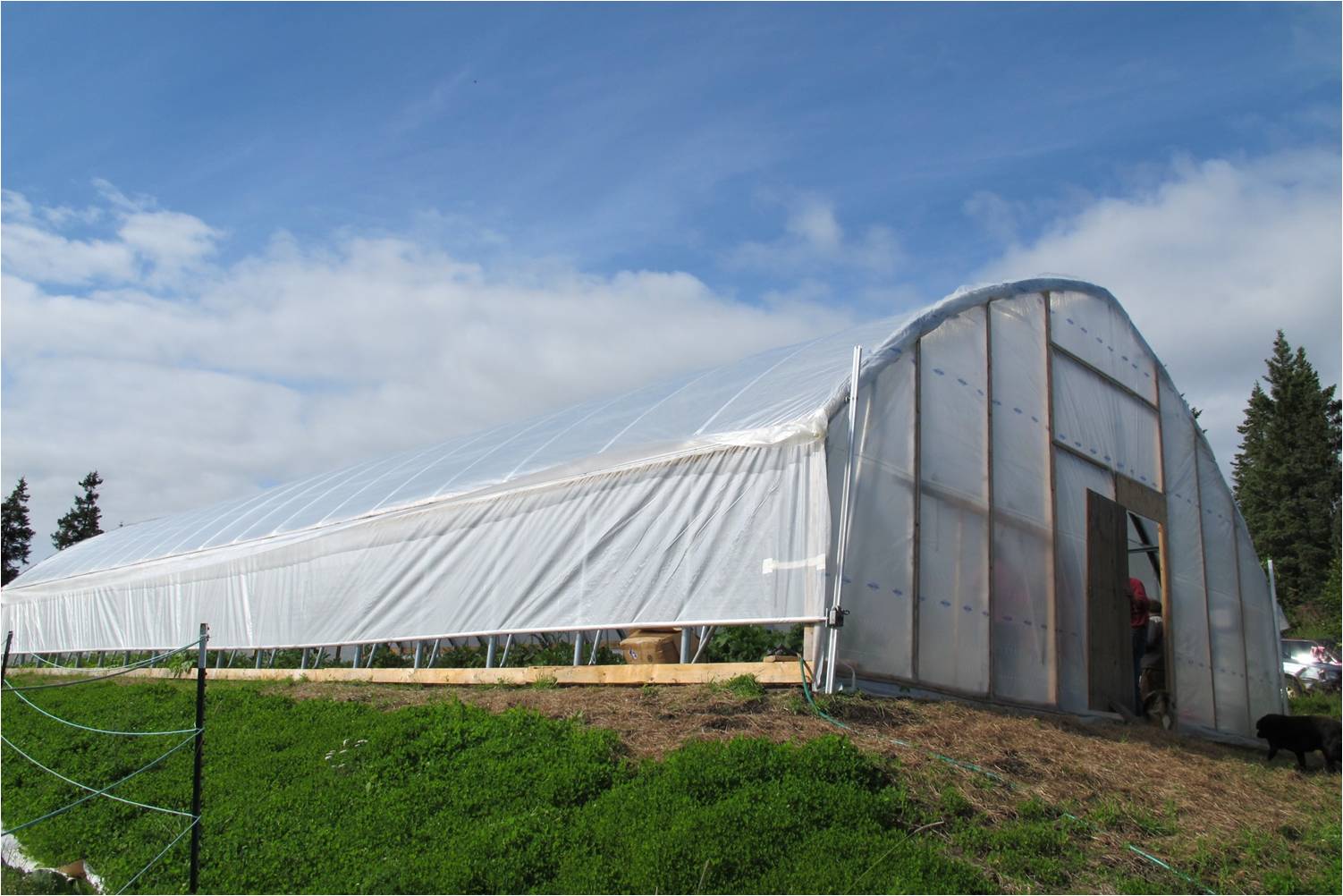
High tunnels, also known as hoop houses or temporary greenhouses, extend the growing season so more food is produced before and after the traditional dates for growing stuff outdoors.
High tunnels are different than greenhouses in that they are passively heated by the sun, so they have lower energy costs than greenhouses. High tunnels are at least six-feet tall, and low tunnels aren’t eligible in this program. Food in high tunnels is planted either directly into the ground or in raised beds. To learn more about the USDA’s high tunnel program, click here (note, link is to FY2013 program information, there have been updates for FY2015 but no link was available). This link has frequently asked questions and answers about seasonal high tunnel systems for crops.
This program started a couple of years ago as a pilot program, but now is a permanent part of of the NRCS EQIP (Environmental Quality Incentive Programs). One major change is there now is no size restriction on the size of structures NRCS will provide cost-sharing funds (previously it was limited to up to 2,178 square feet, or 5 percent of one acre). Also, geodesic domes are now eligible. Both the land owner and land must meet certain eligibility requirements. Funding is provided on a reimbursable status once the high tunnel is installed and certified to meet NRCS standards. In previous years only a couple of Sitka residents have taken advantage of the program, but other areas of the state, such as Homer, have built dozens of high tunnels through the program.
For information regarding the NRCS technical service or program participation in Southeast Alaska, please contact Samia Savella at the Juneau field office at (907) 586-7220 or samia.savell@ak.usda.gov. Applications currently are being accepted for the 2015 fiscal year (Oct. 1, 2014, to Sept. 30, 2015) and applications must be received at the Juneau field office on or before June 15, 2014. Click here for a link to the Alaska NRCS page.
The Sitka Local Foods Network has extended the application deadline as it seeks a manager and assistant manager to coordinate the 2014 Sitka Farmers Markets this summer. These are contract positions, and the manager and assistant manager (who reports to the manager) receive small compensation depending on experience for their work organizing the six scheduled farmers markets this summer. The new application deadline for both positions is 5 p.m. on Tuesday, March 18.
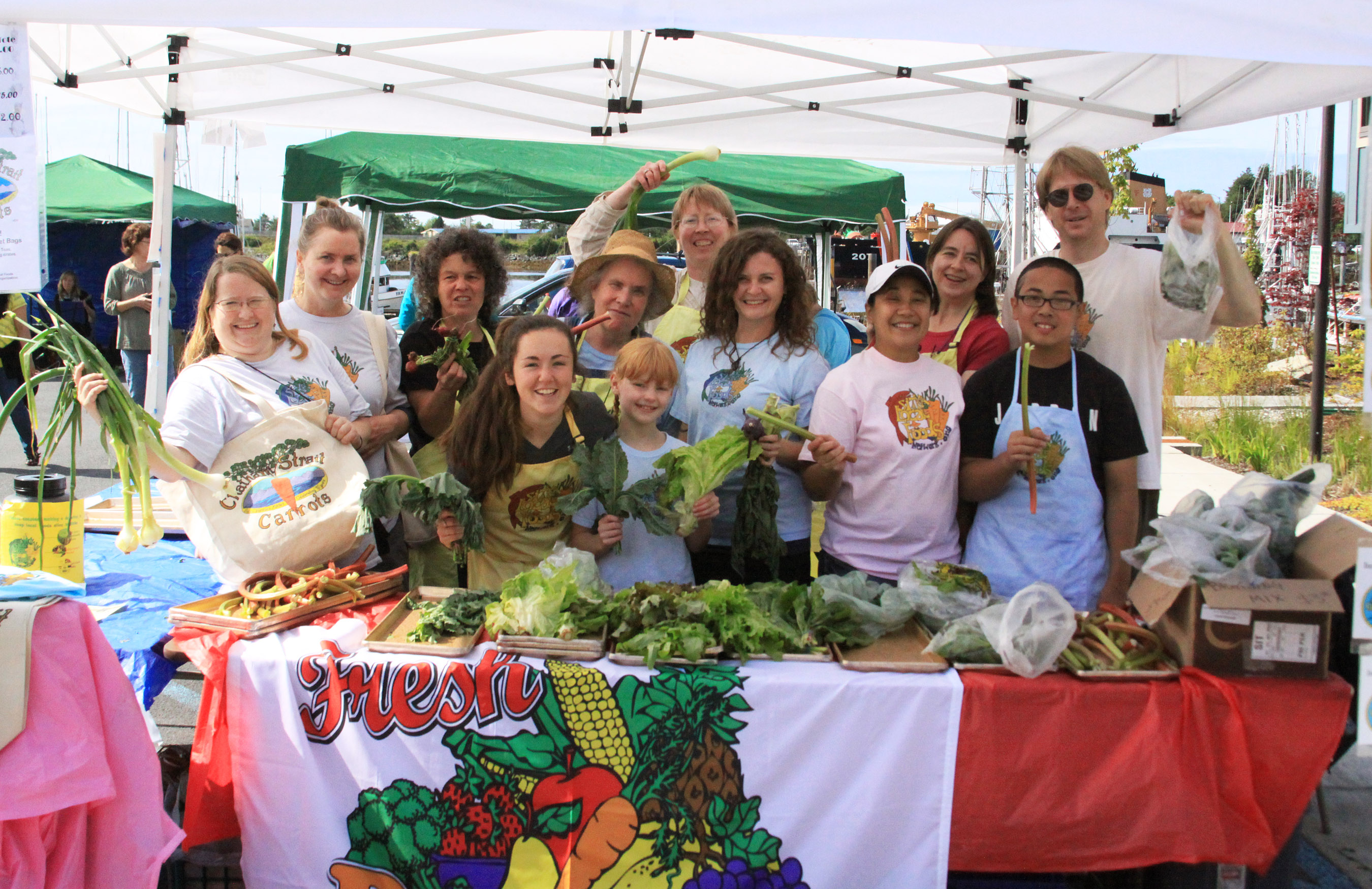
This is the seventh year of operation for the Sitka Farmers Market, which features six markets from 10 a.m. to 1 p.m. every other Saturday from June through September at the Alaska Native Brotherhood Founders Hall (this year’s tentative dates are June 28, July 12, 26, Aug. 9, 23, and Sept. 6). The farmers markets feature booths from local farmers/gardeners, local fishermen, and artisans and craftspeople. These events are great Sitka gathering places, and we promote local foods and other local goods at them.
A detailed description of the market manager duties can be found at the link below. For more information or to submit applications, contact Maybelle Filler at 738-1982 or mocampo25@hotmail.com, or you can email the Sitka Local Foods Network Board of Directors at sitkalocalfoodsnetwork@gmail.com. Applications (a cover letter, resume, and contact information for three recommendations) are due by 5 p.m. on Tuesday, March 18. The market manager of the Sitka Farmers Market reports to the Sitka Local Foods Network Board of Directors.
Wednesday, March 19, is the registration deadline for a certified food protection manager workshop being taught on Wednesday, April 2, by University of Alaska Fairbanks Cooperative Extension Service. This is an all-day statewide class that will be offered live in Fairbanks and Palmer, and by videoconferencing to Sitka, Kodiak and Valdez.
A certified food protection manager (CFPM) is responsible for monitoring and managing all food establishment operations to ensure that the facility is operating in compliance with food establishment regulations.
A CFPM is knowledgeable about food safety practices and uses this knowledge to provide consumers with safe food, protect public health and prevent food-borne illnesses. Alaska regulations require food establishments to have at least one CFPM on staff.
This course takes place from 9 a.m. to 5 p.m. (with a half-hour lunch), and participants will take a computer-based exam at the end of the class. The reason the deadline is two weeks before the class is to guarantee course materials reach all the students in time for the class. The cost is $175, and the course will be taught by Kate Idzorek of Fairbanks and Julie Cascio of Palmer. Students can register here (scroll down and select the April 2 item)
The Sitka videoconference for the class will take place in Room 110 at the University of Alaska Southeast Sitka Campus. To learn more, contact the Sitka District Office of the UAF Cooperative Extension Service at 747-9440, or contact Kate Idzorek at 907-474-5391 (toll-free, 1-877-520-5211) or kjidzorek@alaska.edu in Fairbanks.

 The Sitka Local Foods Network will host a planting party from 2-4 p.m. on Saturday, May 31, to continue planting this summer’s crops at the St. Peter’s Fellowship Farm communal garden (located behind St. Peter’s By The Sea Episcopal Church on Lincoln Street).







 Sitka Local Foods Network
You must be logged in to post a comment.