• Photo album from the 2010 ‘Let’s Grow Sitka!’ available

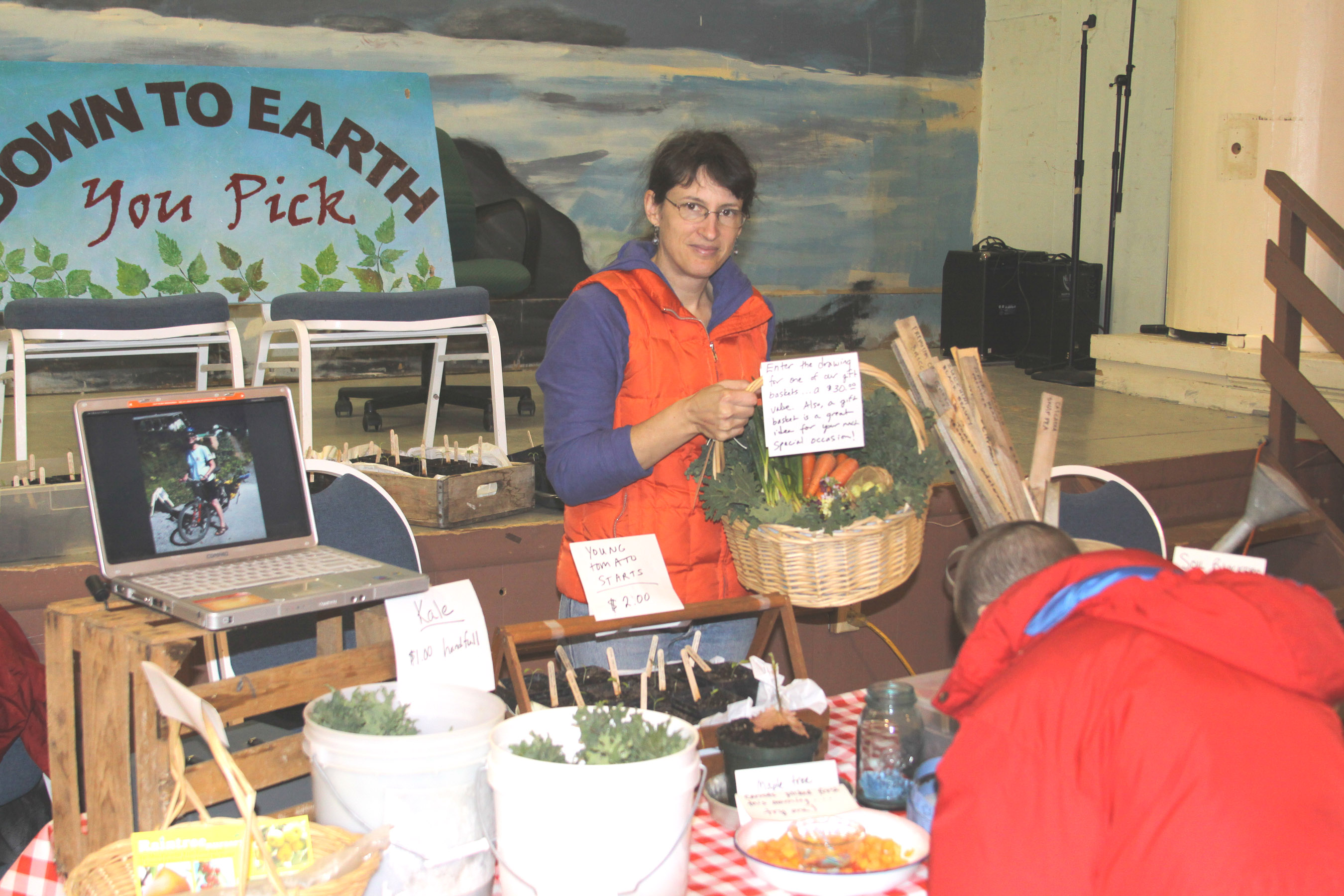
Lori Adams of Down To Earth U-Pick Gardens shows off a basket of produce she was giving away

Lori Adams of Down To Earth U-Pick Gardens shows off a basket of produce she was giving away

The Sitka Local Foods Network extends a big thank you to the more than 200 people who stopped by Sunday, March 14, for the “Let’s Grow Sitka!” garden show at Alaska Native Brotherhood Hall.

If you stopped by, you were able to check out booths from local gardeners who sell their surplus veggies, learn about Sitka’s first CSA (Community Supported Agriculture) venture, buy a new Sitka gardening handbook from Florence Welsh, pet some baby chicks, get your pressure canner gauge checked, start some seeds for the St. Peter’s Fellowship Farm, eat some Sisterhood Stew sold by the Alaska Native Sisterhood Camp No. 4, register for a master gardener certification course, learn about composting and slug control, and buy seeds for your own garden. Over the next few weeks, more details will be posted about some of the individual projects.

For now, click here to see a photo gallery from Let’s Grow Sitka! (look for the album with the Let’s Grow Sitka name). Keep an eye open, because there may be video links posted later, depending on how things turned out.

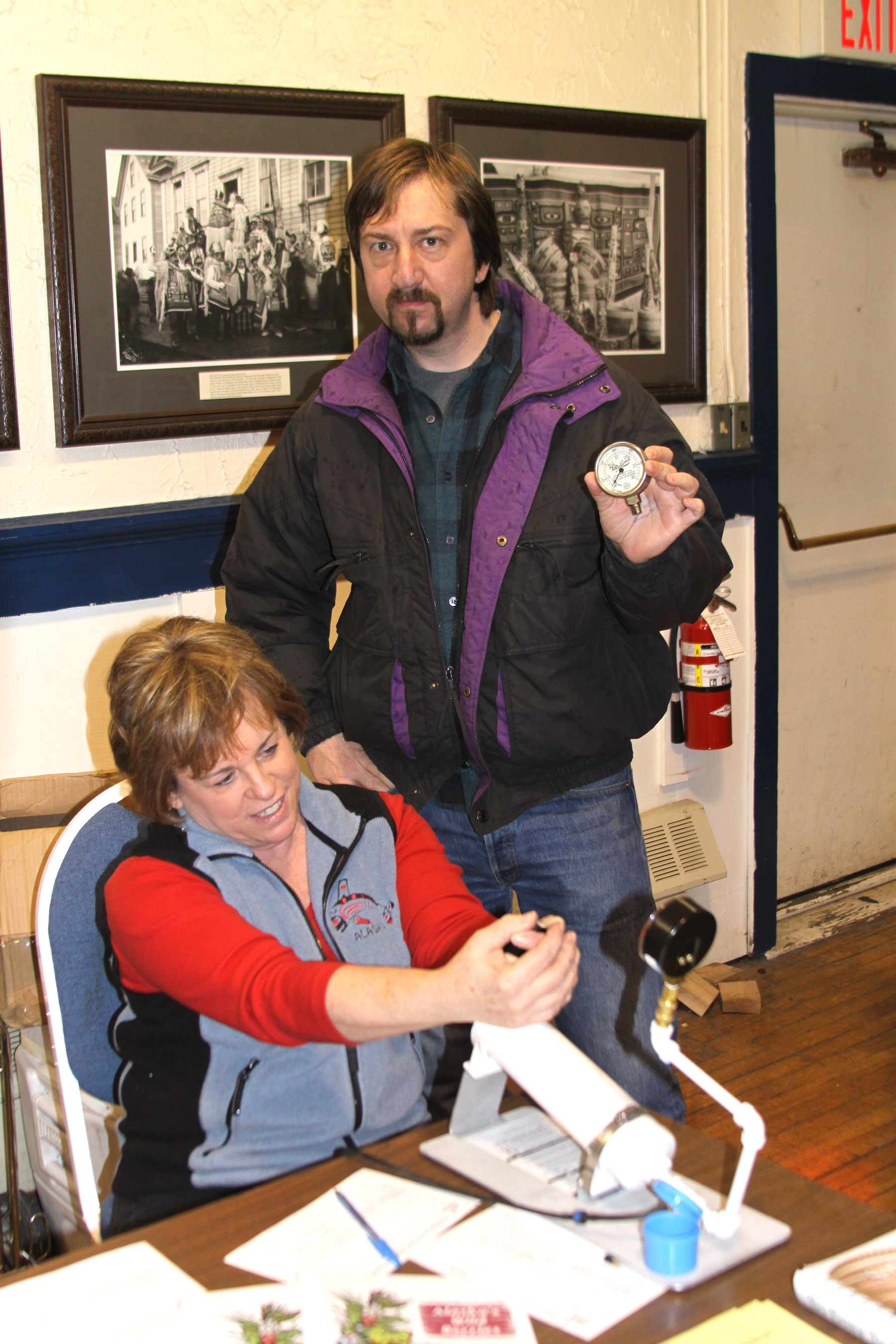
Sonja Koukel of the UAF Cooperative Extension Service's Juneau office checks pressure gauges for Perry Edwards of Sitka

Sonja Koukel of the UAF Cooperative Extension Service's Juneau office checks pressure gauges for Perry Edwards of Sitka

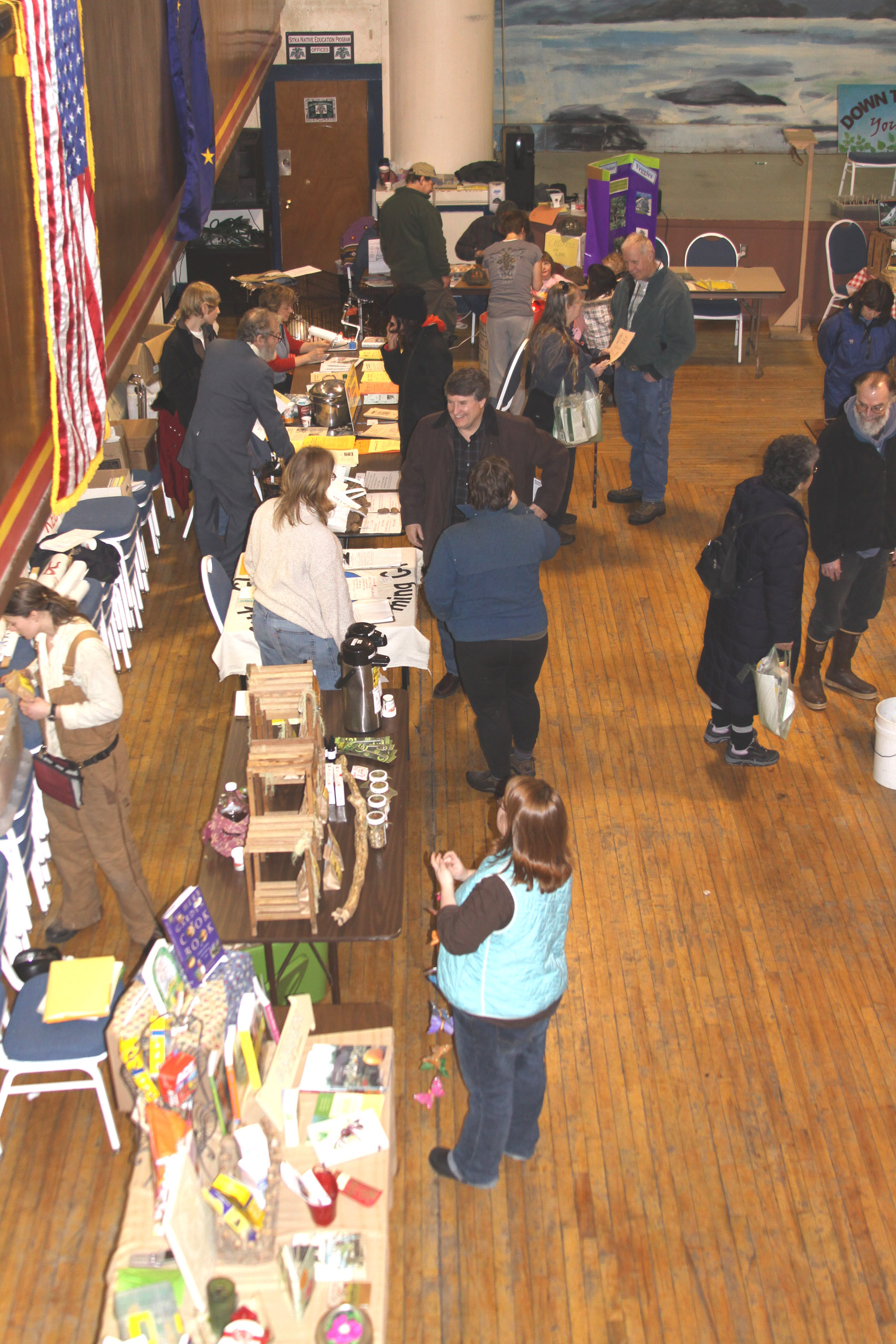
Let's Grow Sitka booths are still busy after closing time

Let's Grow Sitka booths are still busy after closing time

Lina and her mom hold one of several baby chicks owned by Andrew Thoms

Lina and her mom hold one of several baby chicks owned by Andrew Thoms

• Sitka office of UAF Cooperative Extension Service to host Master Gardener class

Master gardener Bob Gorman shows off seed starts in wet paper towels during a March garden workshop

The Sitka office of the University of Alaska Fairbanks Cooperative Extension Service will host a 40-hour Master Gardener class from 6-9 p.m. every Wednesday night from March 3 through May 12 in Sitka.

The class also will involve two 9 a.m. to 3 p.m. Saturday sessions, on March 20 and May. All classes take place at the University of Alaska Southeast Sitka Campus. Local field trips and growing projects are part of the class.

The non-credit course costs $50 for materials and a student agreement to provide 40 hours of gardening-related service to the community within 12 months of completing the course. UAF Cooperative Extension Service Resource Development Agent Bob Gorman will be the course’s instructor. Guest presenters will assist during the classes.

The class includes topics such as plant propagation, soil management, pest identification and control, extending the growing season, vegetable and fruit gardening, greenhouse and indoor gardening, and ornamental gardening.

The purpose of the program is to train volunteers to assist the UAF Cooperative Extension Service by providing the public with gardening-related information. Volunteer service includes help with the Sitka native plants and demonstration garden, youth and in-school gardening, community gardening events, helping with plant pest identification, and assisting with the Sitka Local Foods Network.

Class size is limited and students are encouraged to register early. Those people interested in the class are encouraged to leave their names, contact information and a phone message on the Sitka office of the UAF Cooperative Extension Service at 747-9440. Registration packets are available at the UAS Sitka Campus front desk. The course is offered by the UAF Cooperative Extension Service and the UAS Sitka Campus.

For more information about master gardeners, here are links to the Alaska Master Gardeners and the Southeast Alaska Master Gardeners pages.

• Sitka Local Foods Network board meetings

Just a reminder that the Sitka Local Foods Network board of directors meets for lunch, from noon to 1 p.m., on the first Monday of each month (except the summer months of June, July and August). The meetings now take place at the See House, located behind St. Peter’s By The Sea Episcopal Church on Lincoln Street. This also is where the St. Peter’s Fellowship Farm community garden is located. The Sitka Local Foods Network board meetings are open to the public and we welcome new volunteers who want to help with our projects.

• Sitka film featured in Palmer’s “Local Harvest, Local Food” film festival, a Sitka café featured for using local food and other local foods news

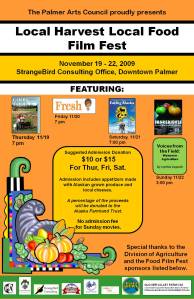
Food Film Fest Poster-2

Join the Palmer Arts Council for its inaugural “Local Harvest, Local Food” film fest from Thursday, Nov. 19, through Sunday, Nov. 22, at the Strangebird Consulting Office in downtown Palmer. “Good Food” screens at 7 p.m. on Thursday, Nov. 19; “Fresh” shows at 7 p.m. on Friday, Nov. 20; “Eating Alaska” by Sitka filmmaker Ellen Frankenstein screens at 7 p.m. on Saturday, Nov. 21; and “Ingredients” shows at 3 p.m. on Sunday, Nov. 22. After the Sunday showing there will be a discussion about women in agriculture with Cynthia Vignetti. Suggested donations are $10-15 for all films except for Sunday, which is free.

A Sitka restaurant, the Larkspur Café, was featured in Capital City Weekly last week. The article talks about the origins of the restaurant, which is located in the same building as KCAW-Raven Radio. It also discusses the restaurant’s use of local foods, including owners Amelia Budd and Amy Kane purchasing produce from the Sitka Farmers Market during the summer.

In other local foods news from around the state, the National Oceanic and Atmospheric Administration (NOAA) recently announced an expansion to the state’s subsistence halibut fishery to include more rural residents (this includes the Sitka area). The new rules, which take effect on Dec. 4, redefine who qualifies as a rural resident. The previous rules defined rural residents as people living in a rural community or people belonging to a Native tribe with customary and traditional uses of halibut, and the news rules try to catch subsistence halibut users who fell outside the previous definition. Click this link for more information about subsistence halibut regulations and applications.

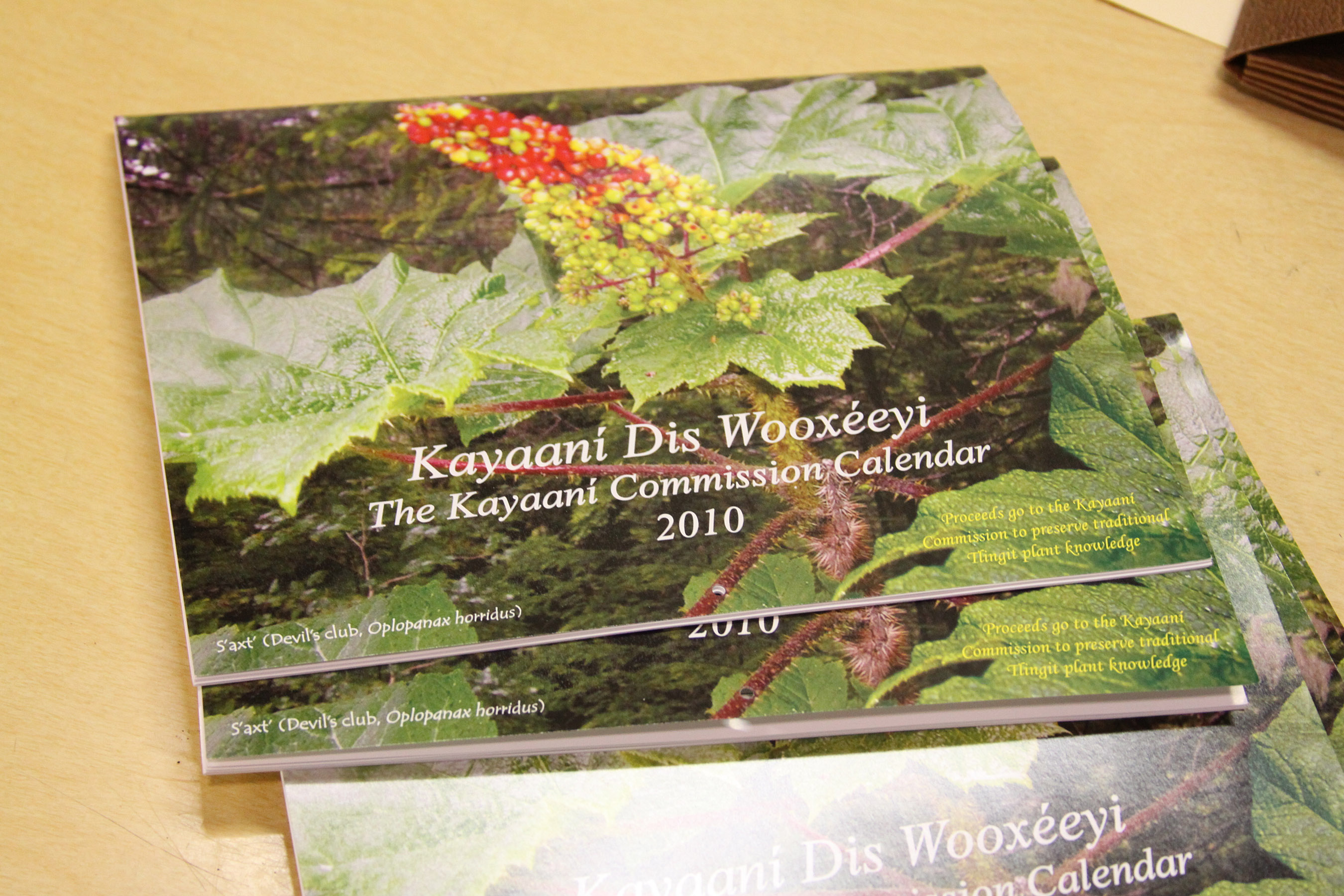
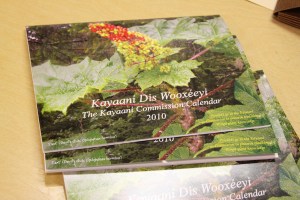
The Daily Sitka Sentinel has been running a brief announcement from the Sitka Tribe of Alaska’s Kayaaní Commission, which is selling 2010 calendars, CDRoms and field guides about traditional uses of native plants. Here is the information:

Kayaaní Native Plant Publications Available: 2010 Kayaaní Harvest Calendars featuring native plants and their traditional and cultural uses ($16, $2 postage per address); Interactive Ethnobotanical CDRoms with native species, their Tlingít, scientific and common names, and interviews with Elders on the traditional and medicinal uses of plants ($15, $1 postage per address); Ethnobotanical Field Guides ($16, $1 postage per address). We will mail to the addresses of your choice. Order by Dec. 18 for guaranteed delivery before Christmas. Call or e-mail with your order: 907-747-7178, pbass@sitkatribe.org, STA Kayaaní Commission, 456 Katlian. All proceeds will assist the nonprofit Kayaaní Commission in protecting, perpetuating and preserving knowledge of native plants.

The Chilkat Valley News weekly newspaper from Haines featured an article about sixth-graders at Haines School learning how to compost their leftover food (including leftover meat) so it can be used for gardening. The school is working with the Takshanuk Watershed Council to teach the students about composting. The students call their compost project “Marvin” because it’s a living organism.

The Alaska Dispatch recently ran a feature called “Growing Season” that discusses some of the farms in the Matanuska-Susitna valleys that grow local food. The feature includes video clips of harvest time at a couple of the farms featured.

The Mat-Su Frontiersman had a feature called “Chicken U,” which is about raising chickens in Alaska and getting them to produce eggs during the winter months.

The Anchorage Daily News also mentioned Chicken University, which will be one of several presentations at the Alaska Farm Bureau annual meeting on Friday, Nov. 13, at the Millennium Hotel in Anchorage. Other presentations are on growing apples in Alaska and preserving your harvest.

The Anchorage Daily News also had an article about how to get local produce in Anchorage during the winter, either through the Glacier Valley CSA produce boxes from Palmer or the indoor farmers market at the Northway Mall.

Anchorage Daily News garden columnist Jeff Lowenfels wrote a column about how hydroponic gardening is easier and cheaper than ever. The column includes lots of links for people who want to try this method of growing food without soil (by the way, there is a hydroponic garden at McMurdo Station in Antarctica that keeps the scientists there stocked in fresh produce in a land of ice).

Fran Durner’s “Talk Dirt To Me” blog on the Anchorage Daily News site includes a post about how snow can act as mulch for the garden.

The Ester Republic, a monthly publication for the community near Fairbanks, runs periodic articles about sustainability and local food security issues. Some of the articles are linked in the archives, and the editors are working to get more of the past articles on these topics online so more people can enjoy them.
KayaaniCommissionCalendarFront´

• Local foods a topic of several Alaska news stories over the past week or so

This has been an interesting couple of weeks, with food security being discussed at the Alaska Federation of Natives convention, subsistence rights and responsibilities in the news and other stories highlighting the local foods market in Alaska.

The Alaska Public Radio Network ran a story about food security being a hot topic at the Alaska Federation of Natives convention. One element of the discussion was a report from former state Sen. Kim Elton, now is the Interior Department’s senior advisor for Alaska Affairs, who said Interior Secretary Ken Salazar plans to upgrade subsistence management for the coming decades.

The Alaska Public Radio Network also ran a story (from KRBD-FM in Ketchikan) about an invasive plant species conference in Ketchikan and how to prevent the spread of noxious and invasive plants in Alaska.

The Fairbanks Daily News-Miner ran an article about how food grown in gardens on the University of Alaska Fairbanks campus is finding its way onto the plates of UAF students at the Lola Tilly Commons.

The Alaska Journal of Commerce had an article about how wild plant seeds from Alaska are being stored at the Kew Gardens Millennium Seed Bank (aka the Royal Botanical Gardens) southwest of London.

The Alaska Journal of Commerce also had an article about Anchorage chef Robert Kineen of Orso Ristorante and how he is incorporating more local foods into his menus.

This week’s issue of the Alaska Journal of Commerce also has several articles about various fisheries, from whitefish to salmon to crab. Included in the issue is an article about how wild-caught Alaska salmon and Pacific cod made the Monterey Bay Aquarium’s recent listing of “super green” seafoods because of their health benefits, the sustainable ways the fish are harvested and lack of contamination. Here is a link to the full list from the Monterey Bay Aquarium’s Consumer’s Guide to Sustainable Seafood.

Former Anchorage Daily News Outdoors Editor Craig Medred, who now writes for the Alaska Dispatch Web site, wrote this column about how some hunters have lost their connection to the culture of hunting.

The Alaska Dispatch also had an article about tough times at the Triple D Farm and Hatchery in Palmer. The turkey farm was made infamous during a KTUU-TV interview of then-Gov. Sarah Palin video last year, when she was pardoning a turkey as a worker in the background was butchering other turkeys (a link to the video is with the story).

The Anchorage Daily News also ran an obituary for Lawrence Clark, 94, aka “The Apple Man,” who was one of the leading apple tree growers in the Anchorage area and a member of the Alaska Pioneer’s Fruit Growers Association. Clark also was able to grow apricots on his land in the Rabbit Creek area south of Anchorage.

The Fairbanks Community Cooperative Market blog posted this essay about sustainable agriculture in Alaska from Mike Emers, the owner of Rosie Creek Farm in the Fairbanks bedroom community of Ester (Rosie Creek Farm is the northernmost certified organic farm in the country). Emers writes about how he wouldn’t have imagined his life’s direction 10-20 years ago, and how becoming a farmer is such a departure for someone who comes from a long line of Jewish tailors. By the way, while you’re done reading Emers’ essay, check out the rest of the Fairbanks Community Cooperative Market site. This is a project to build a market specializing in local foods for the Fairbanks area.

Finally, here is an article from the USDA’s Agricultural Research Service about whether or not there are regions in the country that have lost their ability to feed themselves. The article focuses on a county-by-county study in the northeast part of the U.S. about what local foods currently are available, but it sounds like similar studies are taking place across the country.

• Sitka Local Foods Network hosts garden work party on Oct. 17

The Sitka Local Foods Network will host a “putting the garden to rest” work party from 10 a.m. to 1 p.m. on Saturday, Oct. 17, at St. Peter’s Fellowship Farm.

The Oct. 17 work party involves a last bit of weeding, pulling out the annual plants for compost, putting mulch and protective coverings over the perennials, and getting all the tools inventoried and stored away for the winter. This will help make the garden easier to get ready for spring planting. Most of the vegetables grown at the St. Peter’s Fellowship Farm are sold at the Sitka Farmers Markets during the summer.

For more information about the work party, contact Lisa Sadleir-Hart at 747-5985 or Maybelle Filler at 738-1982.

To learn more about the Sitka Local Foods Network and how it supports community gardens and greenhouses, organizes the Sitka Farmers Market, supports traditional foods and provides education and encouragement to local gardeners, browse through this site.

• Alaska Grown hosts the “Eat Local Challenge 2009” on Aug. 23-29

Flier for the Alaska Grown "Eat Local Challenge"

The Alaska Grown program will launch its “Eat Local Challenge 2009” this week, Sunday through Saturday, Aug. 23-29 (click here to read more).

During the next week, Alaska residents are encouraged to:

• Try eating at least one home-cooked meal this week, made of mostly local ingredients.
• Try to incorporate at least one never-before-used local ingredient into a meal.
• Try “brown-bagging” at least one meal this week made primarily of local ingredients.
• Try talking to at least one local food retailer and one food producer about local food options.
• Try to choose local food products whenever possible.

By the way, a good time to buy local food this week is the fourth Sitka Farmers Market of the summer, which takes place from 10 a.m. to 2 p.m. on Saturday, Aug. 29, at Alaska Native Brotherhood Hall (235 Katlian St.). We’ll see you there.

• Sitka Farmers Market debriefing and work party on Wednesday

The Sitka Local Foods Network will host a Sitka Farmers Market debriefing and St. Peter’s Fellowship Farm work party on from 4:30-6 p.m. on Wednesday, Aug. 19, at the communal garden located behind St. Peter’s By The Sea Episcopal Church, 611 Lincoln St.

Ideas on how to improve the Sitka Farmers Markets will be discussed, and we’ll do some weeding and slug hunting. The person that catches the most slugs gets a rare, tasty, healthy prize. Volunteers are discouraged from bringing slugs from their own yards in an attempt to increase their odds of winning. This event is open to the public.

For more information, contact Linda Wilson at 747-3096 (nights and weekends).

• Local foods articles in Capital City Weekly and Fairbanks Daily News-Miner

This week’s issue of Capital City Weekly, a free weekly newspaper distributed throughout Southeast Alaska, included four local food-related stories. The Fairbanks Daily News-Miner, a daily paper in Fairbanks, also has had a couple of local food-oriented stories the past couple of days. Here are some links to the articles.

Click here to read a Capital City Weekly article on a new community garden being built behind the Glory Hole homeless shelter in downtown Juneau.

Click here to read a Capital City Weekly article on the Montessori Borealis Adolescent Program’s vegetable garden project in Juneau’s Mendenhall Valley.

Click here to read a story about a couple of upcoming University of Alaska Fairbanks Cooperative Extension Service classes this weekend in Juneau about how to market specialty food products (geared toward people selling at farmers markets).

Click here to read a Capital City Weekly article on home canning of crab and geoducks by Sonja Koukel of the Juneau office of the UAF Cooperative Extension Service.

Click here to read a Fairbanks Daily News-Miner story from Wednesday’s paper from Roxie Rodgers Dinstel of the Fairbanks office of the UAF Cooperative Extension Service about how fireweed (which grows wild in Sitka) can add a subtle flavor to different meals.

Click here to read a Fairbanks Daily News-Miner story from Tuesday’s paper about how Fairbanks students are turning their schoolyards into blooming gardens as part of the EATING (Engaging Alaska Teens IN Gardening) program run by the Calypso Farm and Ecology Center. Click here to read more about the EATING program on the Calypso Farm site.

• Welcome to the Sitka Local Foods Network blog

SitkaLocalFoodsNetwork5Logo

Hello and welcome to the Sitka Local Foods Network blog. The Sitka Local Foods Network is a 501(c)3 non-profit group dedicated to promoting the growing, harvesting and eating of local foods in Sitka, Alaska. This blog will be used to keep people updated on what we’re doing and let people know how they can participate in this community effort.

The 2008 Sitka Health Summit planted the seeds for the Sitka Local Foods Network when Sitka community members got together and chose two local-foods-oriented projects as community health priorities. The Sitka Health Summit participants wanted to start a public market so Sitka residents had easier access to local fish and produce, and the participants wanted to build a community greenhouse and expand the community garden programs so more local produce could be grown in Sitka. Since there were a lot of tie-ins between the two projects, the Sitka Local Foods Network was created to streamline the work efforts.

The Sitka Local Foods Network now has five major focus areas:

* Creating and operating the Sitka Farmers Market, where people can sell locally grown produce, locally harvested fish and locally produced arts and crafts.

* Expanding local community gardens, so people who don’t have their own plots of land can grow their own fruits and vegetables. Sitka currently has the Blatchley Community Garden where families and other groups can get their own plot, and the new St. Peter’s Fellowship Farm which is a cooperative community garden with most of the food being sold at the farmers markets or used by non-profit groups.

* Planning and building a Sitka Community Greenhouse, which can help extend the growing season and allow us to grow additional crops.

* Promoting the use of traditional foods (subsistence foods), such as local salmon, halibut, cod, deer, berries, seaweeds and other foods that were in the Tlingít diet before non-Natives arrived in Sitka.

* Providing educational opportunities, technical expertise and encouragement so Sitka residents who want to build their own gardens have the knowledge and support they need.