• Fish to Schools seafood recipe contest seeks kid-friendly dishes at Sitka Seafood Festival

Recipe Contest FinalDo you have a favorite kid-friendly and healthy fish entree recipe that uses local seafood? The program wants you to enter your dish in its recipe contest at the .

Do you have a favorite kid-friendly and healthy fish entree recipe that uses local seafood? The Fish to Schools program wants you to enter your dish in its recipe contest at the Sitka Seafood Festival.

The contest is free, just type up your recipe and email it to Sophie Nethercut of the Sitka Conservation Society at sophie@sitkawild.org. You also will be asked to make up a batch for sampling. A panel of local residents will judge the recipes at 4:30 p.m. on Saturday, Aug. 2, at the Sitka Seafood Festival’s main tent on the Sheldon Jackson Campus, and the winners receive prizes (including a gift certificate for Ludvig’s Bistro for the grand prize).

2014SSFSchedule5The purpose of the contest is to collect kid-friendly fish entree recipes that can be made for school lunches as part of the Fish to Schools program. The dishes should be healthy and easy to make (no special appliances). Baking the fish is preferred over frying, and recipes should be low in sodium and fat. The top seafood dishes will be used in school lunches at the Sitka School District, the state-run Mount Edgecumbe High School, and the private SEER School.

Samples of the dish (enough for at least 15 people to nibble) should be brought by 4:15 p.m. on Saturday to the Sitka Seafood Festival main tent at Sheldon Jackson Campus for judging. Entrants are encouraged to print out a copy of the recipe to include with your samples, and bring a photo of you making the dish (if possible).

For more information, click this link or call Sophie at 747-7509. This is one of many events as part of this year’s Sitka Seafood Festival, which has events on July 31-Aug. 2 at various locations around Sitka. Additional info about the Sitka Seafood Festival can be found here.


• State of Alaska updates safe seafood consumption guidelines

FishConsumptionCalc

Eat all the salmon you want, but limit your amount of salmon shark, the Alaska Section of Epidemiology (part of the Division of Public Health) said when it recently updated its safe seafood consumption guidelines.

The Section of Epidemiology, in partnership with the Alaska Department of Environmental Conservation, started testing Alaska seafood for toxic heavy metals, such as mercury, and other pollutants, such as pesticides, back in 2001. The main reason for the research was to determine safe levels of seafood consumption for pregnant women, nursing mothers, infants, and others. According to the Alaska Dispatch News, the research involved testing fish, and using human hair samples to see how the heavy metals moved from species to species.

The Division of Public Health Division recommends eating fish at least twice a week. Medical research shows salmon are high in omega 3 fatty acids, which are believed to improve cholesterol and fight heart disease. Many types of Alaska seafood also are part of the traditional Alaska Native diet.

The good news is Alaska’s five salmon varieties (chinook/king, sockeye/red, coho/silver, chum/keta/dog, and humpy/pink) all tested as safe for everybody, with no limitations for pregnant women or others, as did halibut smaller than 40 pounds and Alaska pollock (commonly found in fish sticks and fast food fishburgers). This year’s expanded testing increased the number of safe-for-all species to 23 from 11 in 2007 (see chart above for complete list).

However, there were some seafood species where the Office of Epidemiology suggests consumption limits. Alaskans should use a point system, where people can eat up to 12 points a week (the safe species get zero points), with points based on six-ounce portions. Halibut (40-80 pounds), lingcod (35-40 inches) and lake trout are worth three points. Halibut (80-140 pounds), lingcod (40-45 inches) and longnose skate are worth four points. Halibut (140-220 pounds) and yelloweye rockfish are worth six points. Halibut (220 pounds or larger), lingcod (45 inches or longer), salmon shark and spiny dogfish are worth 12 points and should only be eaten once per week.

• Wilcox family of Sitka completes cross-country run from California to New Jersey to raise awareness about GMOs in our food

WilcoxFamily25thAnniversary

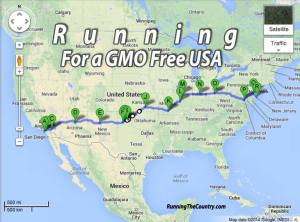
WilcoxFamilyRunMapAfter nearly 3,000 miles and six months of running, the Wilcox family from Sitka reached its finish line Saturday, July 19, in Ocean City, N.J., to complete its cross-country run across the country to raise awareness about genetically modified organisms (GMOs) in our food system and the roles of large agribusiness companies, such as Monsanto, in making it difficult for consumers to know which food contains GMOs.

Fifteen-year-old David Wilcox decided he wanted to run across country back in 2010, when he read about another teenage runner to complete the USA crossing, so he and his father, Brett, 53, started training. In January, Brett quit his job as a behavioral health clinician and David’s mom, Kris, put her cleaning business on hold, and the family rented out its home in Sitka. Brett and David started the run on Jan. 18 in Huntington Beach, Calif., and started running about 20 miles a day, six days a week. While Brett and David ran, Kris and David’s younger sister, Olivia, 13, drove ahead on the course in the used pick-up truck and trailer the family purchased for the trip. Along the way, Brett and David took turns pushing a runner’s stroller loaded with their supplies for the day, water bottles, lunch, some GMO-free lettuce seeds, GMO literature, a few copies of Brett’s book, We’re Monsanto: Feeding the World, Lie After Lie, Book One, and the 15-year-old family dog, Angel. (Note, after awhile, Angel decided she didn’t like riding in the stroller and preferred riding in the truck, so the Wilcox family adopted a new dog, Jenna, while in Texas.)

DavidAndBrett“Being able to run 20 miles with David is a good thing,” Brett said. “Running with him for 20 miles a day, day after day for six months across 13 states is a great thing. I got to know David far better than I would have in our routines back in Sitka. I have a lot of respect for David for sticking with it even when it was tough going. Of course our run would not have been possible if Kris and Olivia had not been there to support us. Our last day’s run included a big radio interview and a police escort to the beach. Kris and several other runners joined in and ran with us. We passed through a cheering crowd as we entered the boardwalk. It was a special moment. Of course, the fact that Kris and I celebrated our 25th wedding anniversary on the same day we finished our run gave the whole occasion a fairy tale sort of ending.”

The Wilcox family decided to use the run to raise awareness about our food supply because the family is vegetarian, and they don’t like seeing more GMOs enter the food supply, and consumers not being able to find out which foods have GMOs. “Running For a GMO Free USA was the perfect cause for us. We learned that virtually all people — regardless of location — oppose chemically-saturated genetically modified organisms,” Brett said.

Trying to find GMO-free food on the run did become an issue for the family, and for part of the trip they stopped eating corn tortillas because of how much of our nation’s corn now has GMOs (they did find some Navajo corn tortillas they decided to try). GMOs also are in soy, sugar beets, and several other plants, and they may soon be coming to potatoes used by large fast food corporations. Along the way, the Wilcox family passed through St. Louis just in time to participate in the annual March Against Monsanto (an international event on May 24 this year) right outside Monsanto headquarters. Last year, the Wilcox family hosted a March Against Monsanto event in Sitka.

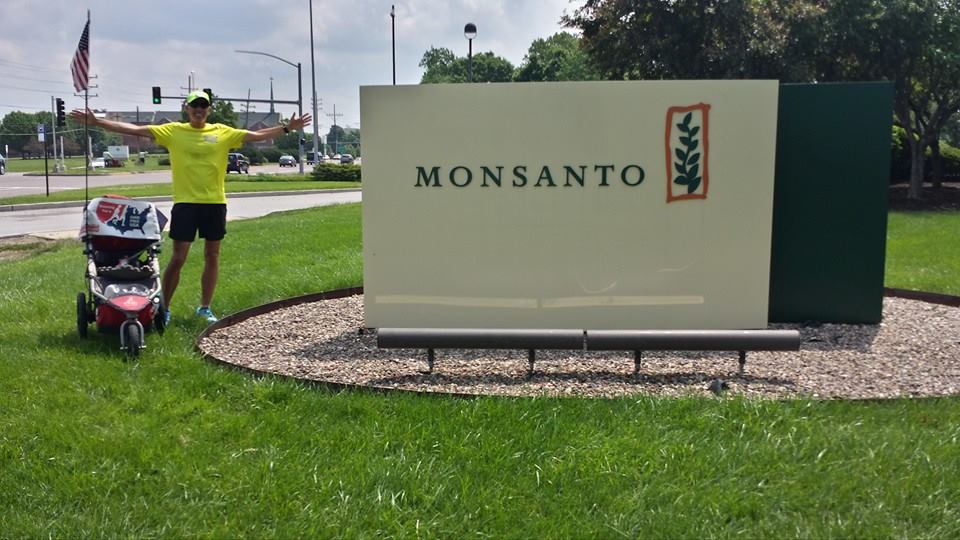
BrettWilcoxAtMonsantoHeadquartersWhen they planned the run, the Wilcox family hooked up with several anti-GMO groups across the country, and those groups helped connect the family to local media outlets and runners where they could spread their message. The anti-GMO groups helped the Wilcox family raise some funds and find places to stay for the trip, and there were two Indiegogo crowd-funding campaigns coordinated by Owen Kindig of Sitka (the first campaign raised $7,500 when it closed in January, and the current campaign still has 40-plus days left to run and has raised roughly $1,400). Along the way, Brett and Kris regularly updated the family’s Running the Country blog and Facebook page. Different media groups covered the run (here’s a link to our story before the run), and the media coverage increased as Brett and David neared the finish line. In recent weeks there has been coverage from small media outlets and large ones, such the Philadelphia Inquirer and Runner’s World magazine. Here is a link to the KCAW-Raven Radio story that aired July 21 about the Wilcox family run.

DavidWHIZNewsInterviewBrett and David trained for the run, but soon realized their training was a little lacking in LSD (long, slow, distance) runs. David won the Southeast Conference (Region V) cross-country running title in October, but most of his runs during the season were about five miles. Brett, a regular bike commuter, also ran shorter distances, and he and David had one or two longer runs a week. Running 20 miles a day, six days a week resulted in a lot of blisters, several worn-out pairs of shoes, and a couple of injuries along the way. Brett was hobbled early in the run by a bad foot, David had a bad leg, and Brett said he plans to have minor surgery in the near future for another injury.

“I had a couple of months where I couldn’t run, so instead I just walked,” David said. “Probably the best day for me was the day the fourth chiropractor fixed me. He was really nice to us, he let us take a shower. I told him where it hurt, and he told me what was wrong and he told me he was going to fix it and I was sort of wondering if he could really fix it. A muscle that’s supposed to be on the inside of my hip was on the outside. He pulled it over and told me I was fixed. Then he adjusted something else that I didn’t even know was wrong. He also worked on my mom and dad.”

As the miles piled up, the Wilcox family enjoyed the scenery. But sometimes the weather was a bit too hot for folks used to a temperate rain forest and then there were the ticks.

“Pennsylvania was probably the most beautiful state, but I could never live there because it’s too hot and humid,” David said. “I can’t wait to get back to Sitka so I can run the trails and not have to worry about ticks.”

WilcoxFamiyFinishesCrossCountryRunNow that the Wilcox family is done with the run, the next plan is to go to Washington, D.C., to talk with members of Congress and various agencies about GMOs. They already have meetings scheduled with Rep. Don Young and Sen. Lisa Murkowski, and hope to add a meeting with Sen. Mark Begich. “It will be fun to pass on to them what we learned from our cross-country run,” Brett said.

The family also will be doing more fundraising to help pay for the trip. “Our run is now over but we’ve spent far more than we’ve received from donations,” Brett said. “If you’d like to help us out with our expenses, please donate online at RunningTheCountry.com or at Indiegogo.com. The name of our Indiegogo fundraising campaign is ‘Help the Wilcox Family Finish Strong.’ Thanks to all the people who have helped us help David achieve his big dream to run across the USA.”


• Tickets available for fifth annual Sitka Seafood Festival; volunteers needed all week

salmon boat header

ssflogo2The fifth annual Sitka Seafood Festival is finalizing its schedule for July 31-Aug. 2 at various locations around Sitka, but tickets have gone on sale for its three main events — the VIP cocktail hour on Friday night, the five-course banquet on Friday night, and the headline entertainment concert by the Yup’ik soul group Pamyua on Saturday night (link to Pamyua’s Facebook page).

The major events for the Sitka Seafood Festival will take place on Friday and Saturday, Aug. 1-2, but there are some additional events set for July 31 (a wine bottle-signing and a garden tour). A full festival schedule is available here.

On Friday, Aug. 1, the VIP cocktail hour takes place from 5:30-6:30 p.m. at the Harrigan Centennial Hall Exhibit Room, and the cost is $35 per person. The five-course seafood banquet prepared by guest chefs starts at 7 p.m. at Harrigan Centennial Hall (doors open at 6:30 p.m.). The banquet costs $65 per person, or you can buy a whole table for $600 (10 seats per table). There are Friend of the Festival tables available for $800 that feature special bartender service, are close to the stage, and feature gift bags).

The tentative menu for Friday’s banquet features (according to an email from event founder Alicia Haseltine):

  • Amuse Bouche — herring roe, finger lime, baby fennel, cucumber, bulls blood
  • First Course — ricotta gnocchi, sea asparagus (pesto), foraged mushroom xo, tat soi oil, brown butter
  • Second Course — scallops, pistachio crumble, fromage blanc, yellow squash puree, snap pea coulis, pancetta
  • Third Course — rockfish, spruce tip nage, lemon ash marshmallow, arugula, whole barley, carrot
  • Fourth Course — salmon, tomato jam, scallion potato puree, black garlic aioli, leeks charred
  • Fifth Course — cocoa praline rocks, chocolate soil, sudachi curd, huckleberry, merlot caramel, bergamot cloud mascarpone and cream base

On Saturday, Aug. 2, the day opens with tote races at 11 a.m. at Crescent Harbor, followed by the parade at 11:30 a.m. from Crescent Harbor Shelter to the Sitka Fine Arts Camp/Sheldon Jackson Campus, and the marketplace from noon until 7 p.m. There will be a variety of entertainment from noon until 4 p.m., and the Scottish Highland Games are from noon to 6 p.m., both at the Sitka Fine Arts Camp/Sheldon Jackson Campus. The headline entertainment concert by Pamyua starts at 7 p.m. at Allen Hall at the Sitka Fine Arts Camp/Sheldon Jackson Campus, and tickets are $20 per person.

Volunteers are needed all week for the festival, which includes event set up and tear down. To learn more, contact Sitka Seafood Festival Director Carolyn Kinneen at (907) 222-8422 or email sitkaseafoodfestival@gmail.com. Parade participants should contact Linda Olson at 747-6985. Scottish Highland Games participants are welcome to practice at 5:30 p.m. on Wednesdays and Sundays at the Moller Field Track


• Vendors sought for fifth annual Sitka Seafood Festival Marketplace on Aug. 2

SitkasSignatureSeafoodOfferings

ssflogo2The Sitka Seafood Festival seeks vendors for the all-day marketplace that takes place from 11 a.m. to 7 p.m. at the Sitka Fine Arts Camp/Sheldon Jackson Campus. The all-day marketplace is one of the highlights from the fifth annual Sitka Seafood Festival, scheduled for Thursday, July 31, through Sunday, Aug. 3, at various locations in Sitka.

“Last year we had an overwhelming amount of people show up, and the vendors sold out of food early,” said festival founder Alicia Haseltine. “This year we are ready for you, Sitka! We are currently accepting vendor applications for food, merchandise, educational booths, or any other ocean- or seafood-related activity.”

The Sitka Seafood Festival helps Sitka celebrate its seafood heritage with a variety of events. The 2014 schedule still is being finalized, but in 2013 the festival included a sea poetry contest, native plants garden tour, pasta cruise, book signings, VIP banquet, marathon and half-marathon, parade through downtown, all-day marketplace, crab races, Scottish Highland games, fishhead toss, fishhead bobbing, blind-folded tote rates, live entertainment, and a golf tournament. Click this link and scroll to the bottom to see a slideshow of scenes from the 2013 Sitka Seafood Festival.

For more information or to register as a vendor, please contact Mary Helem at oceanfront@gci.net. You also can download a registration form below or at http://www.sitkaseafoodfestival.org (note, please send your forms to Mary, the Sitka Local Foods Network is a separate organization than the Sitka Seafood Festival). See you at the festival.

• Sitka Seafood Festival 2014 Marketplace Vendor App Pages 1-2

• Sitka Seafood Festival 2014 Marketplace Vendor App Page 3

• Sitka Local Foods Network to host six Sitka Farmers Markets in 2014

The Sitka Local Foods Network will host its seventh summer of Sitka Farmers Markets this year. The first of the six markets is from 10 a.m. to 1 p.m. on Saturday, June 28, at Alaska Native Brotherhood Founders Hall (235 Katlian St.), with the other markets on July 12, July 26, Aug. 9, Aug. 23, and Sept. 6. From left are Sitka Local Foods Network board members Charles Bingham, Maybelle Filler and Michelle Putz, Sitka Farmers Market co-managers Ellexis Howey and Debe Brincefield, vendors Linda Wilson and Pat Hanson, and helper D.J. Brincefield. (Daily Sitka Sentinel Photo by James Poulson).

The Sitka Local Foods Network will host its seventh summer of Sitka Farmers Markets this year. The first of the six markets is from 10 a.m. to 1 p.m. on Saturday, June 28, at Alaska Native Brotherhood Founders Hall (235 Katlian St.), with the other markets on July 12, July 26, Aug. 9, Aug. 23, and Sept. 6. From left are Sitka Local Foods Network board members Charles Bingham, Maybelle Filler and Michelle Putz, Sitka Farmers Market co-managers Ellexis Howey and Debe Brincefield, vendors Linda Wilson and Pat Hanson, and helper D.J. Brincefield. (Daily Sitka Sentinel Photo by James Poulson).

SitkaFarmersMarketSignThe Sitka Local Foods Network will host its seventh summer of Sitka Farmers Markets with six markets this year starting on June 28 and taking place on alternate Saturdays through Sept. 6. The Sitka Farmers Markets give Sitka residents a chance to buy and sell locally produced food and crafts.

The Sitka Farmers Markets take place from 10 a.m. to 1 p.m. on Saturday, June 28, July 12, July 26, Aug. 9, Aug. 23, and Sept. 6 at the Alaska Native Brotherhood Founders Hall (235 Katlian St.). The markets feature local seafood (fresh, frozen, and cooked, ready to eat), locally grown and harvested fruits and vegetables, baked goods, locally made jams and jellies, live entertainment and music, local arts and crafts, and a variety of other items gathered or made in Sitka. We emphasize local products and lots of fun. We were the first farmers market in Southeast Alaska to accept WIC coupons and Alaska Quest EBT for SNAP (food stamp) users. We also plan scheduled transportation from Sitka Tours for the last five markets (details coming soon), and don’t forget to support the Sitka Farmers Market in the I Love My Farmers Market Celebration (click logo) at http://www.sitkalocalfoodsnetwork.org/.

“The Sitka Farmers Market is a great way to connect with community members and support local entrepreneurs,” Sitka Local Foods Network Board President Lisa Sadleir-Hart said. “Circulating your dollars locally also has a multiplying effect and helps your neighbors.”

2014 Quest Flyer SitkaThe Sitka Farmers Market started as a community wellness project that came out of a health priority planning meeting at the 2008 Sitka Health Summit. The markets are sponsored by the Sitka Local Foods Network, Alaska Native Brotherhood Camp No. 1, Alaska Native Sisterhood Camp No. 4, Baranof Island Housing Authority, the Alaska Farmers Market Association, the Alaska Division of Public Health Cancer Control Program, and the SEARHC Health Promotion and Diabetes Prevention programs.

“We are excited to have Ellexis Howey and Debe Brincefield working as a team as our new market co-managers,” Sadleir-Hart said. “Ellexis and Debe bring loads of enthusiasm and some new ideas to the market, and they are focused on creating a sustainable market that can be in Sitka for the duration. As always, the market will be a place to support the growing local food movement in Sitka and learn more about how to eat more sustainably.”

Vendor fees are $30 for a 6-foot table, $40 for an 8-foot table and $20 for a 4-foot table. Vendors with their own tents pay $5 per foot. As always, we offer cost incentives for vendors growing locally produced food. The fees will help us cover the costs of renting ANB Founders Hall and its kitchen, hiring musicians and other expenses. To learn more about being a vendor or to sign up for a table, contact Sitka Farmers Market Co-Managers, Ellexis Howey and Debe Brincefield at 738-8683 or by e-mail sitkafarmersmarket@gmail.com. Vendor rules, registration forms and other info for potential vendors can be found on the Documents page at http://www.sitkalocalfoodsnetwork.org/.

• Pledge to spend at least $10 at the Sitka Farmers Market as part of the ‘I Love My Farmers Market’ celebration

LoveMyFarmersMarketApples

AFT_Love_My_Market_InfographicHow well do you love the Sitka Farmers Market? You can show your love by clicking this linkand pledging to spend at least $10 at the next Sitka Farmers Market as part of the “I Love My Farmers Market” Celebration, sponsored by the American Farmland Trust.

According to the American Farmland Trust:

AFT’s I Love My Farmers Market Celebration is raising national awareness about local farmers markets and putting money directly in the pockets of family farmers.

Throughout the celebration, consumers will pledge dollars they intend to spend at their local farmers markets. A pledge is a commitment to spend $10 at your farmers market. Pledges can be cast once a day, and farmers market shoppers can pledge to support more than one farmers market.

Each week, one lucky participant and their favorite farmer will receive a free No Farms No Food® hat.

The Top 100 most celebrated markets will receive a special logo honoring their achievement, “No Farms, No Food”® gear, and recognition on the I Love My Farmers Market Celebration’s website, www.lovemyfarmersmarkets.org/.

The 2014 I Love My Farmers Market Celebration started on June 13 and will end at midnight EST on Sept. 13.

Click here to listen to a 90-second PSA from the American Farmland Trust about the importance of shopping at your local farmers market, and how farmers markets benefit your health and local economy.

The Farmers Market Coalition, which provides technical resources for farmers markets and sponsors National Farmers Market Week on Aug. 3-9, recently released a report about the benefits of farmers markets. Some of the findings included:

  • There were more than 7,800 farmers markets in the US in 2012—an increase of nearly 10% in just one year.
  • For every $100 spent at a farmers market, $62 stays in the local economy, and $99 stays in-state.
  • People who shop at farmers markets have 15-20 social interactions per visit, while they would only have one or two at the grocery store.

SitkaFarmersMarketSignThere will be six Sitka Farmers Markets in 2014. The first one takes place from 10 a.m. to 1 p.m. on Saturday, June 28, at the Alaska Native Brotherhood Founders Hall (235 Katlian St.). The remaining five Sitka Farmers Market are from 10 a.m. to 1 p.m. on Saturdays, July 12, July 26, Aug. 9, Aug. 23, and Sept. 6, at the Alaska Native Brotherhood Founders Hall (235 Katlian St.). The Sitka Farmers Market accepts Alaska Quest card electronic benefits transfers for people using SNAP (Supplemental Nutrition Assistance Program) benefits, aka food stamps.

• UAF Cooperative Extension Service offers Certified Food Protection Manager class by videoconference in Sitka

CFPM flyer 7-9-14

Friday, June 27, is the registration deadline for a certified food protection manager workshop being taught on Wednesday, July 9, by University of Alaska Fairbanks Cooperative Extension Service. This is an all-day statewide class that will be offered live in Fairbanks and Palmer, and by videoconferencing to Sitka and Ketchikan.

A certified food protection manager (CFPM) is responsible for monitoring and managing all food establishment operations to ensure that the facility is operating in compliance with food establishment regulations.

A CFPM is knowledgeable about food safety practices and uses this knowledge to provide consumers with safe food, protect public health and prevent food-borne illnesses. Alaska regulations require food establishments to have at least one CFPM on staff.

This course takes place from 9 a.m. to 5 p.m. (with a half-hour lunch), and participants will take a computer-based exam at the end of the class. The reason the deadline is two weeks before the class is to guarantee course materials reach all the students in time for the class. The cost is $200, and the course will be taught by Marsha Munsell of Fairbanks and Julie Cascio of Palmer. Students can register here (scroll down and select the July 9 item)

The Sitka videoconference for the class will take place in Room 110 at the University of Alaska Southeast Sitka Campus. To learn more, contact the Sitka District Office of the UAF Cooperative Extension Service at 747-9440, or contact Kathy McDougall at (907) 474-2420 (Fairbanks number) or kmmcdougall@alaska.edu.

• Sitka Farmers Market vendor forms, information sheets and regulations for 2014 now available

SitkaFarmersMarketSignVendors looking to sell local food, arts and crafts, and other items at the 2014 Sitka Farmers Markets can find all the vendor forms, information sheets and regulations for this year by going to the Documents page on this site, or look at the bottom of this post for the documents. The forms are in downloadable Acrobat PDF files.

The 2014 Sitka Farmers Markets will be managed by Ellexis Howey and Debe Brincefield, and they can be reached at sitkafarmersmarket@gmail.com or 738-8683 during the market season. Our 2014 Sitka Farmers Markets will be from 10 a.m. to 1 p.m. on six alternating Saturdays starting in late June (June 28, July 12, 26, Aug. 9, 23, and Sept. 6) at the Alaska Native Brotherhood Founders Hall on Katlian Street.

Ellexis and Debe already have hosted one pre-market meeting for potential market vendors, and the next pre-market meeting for market vendors is at 6:30 p.m. on Tuesday, June 17, at the See House behind St. Peter’s By The Sea Episcopal Church on Lincoln Street. All potential market vendors are encouraged to attend. Ellexis and Debe are available to answer questions and to make suggestions that will help new and returning vendors adjust to any food regulation changes from the Alaska Department of Environmental Conservation, changes to the Alaska Quest electronic benefits program, and any other changes.

For more information, contact Ellexis or Debe at the numbers above.

Sitka Farmers Market vendor forms

• Guide to Operating a Successful Home-Based Food Business (March 2014 document from UAF Cooperative Extension Service and Alaska Department of Environmental Conservation includes Alaska food safety information and regulations for farmers markets and other food sales)

• 2014 City and Borough of Sitka Sales Tax Form for Sitka Farmers Market Vendors

• 2014 Sitka Farmers Market Vendor Rules And Responsibilities Packet

• 2014 Sitka Farmers Market Vendor Registration Packet

• 2014 Sitka Farmers Market Vendor Guidelines Signature Page (this must be on file for all vendors)

• 2014 Sitka Farmers Market EBT Alaska Quest Vendor Agreement

• Sitka Community Food Assessment Indicators Report helps define Sitka’s food culture

Food Assessment Indicator Report web version_Page_01

SitkaCommunityFoodAssessmentLogoThe Sitka Community Food Assessment Indicators Report was released on Monday, and the findings will help guide future food system planning in Sitka.

A 2012 Sitka Health Summit project, the Sitka Community Food Assessment has examined where Sitka residents get their food, what types they eat, what they grow, what they hunt and fish for, where they shop, what type of access people have to healthy food, and other questions about Sitka’s food supply. The findings of the food assessment will help Sitka improve its food security.

After Sitka residents chose the Sitka Community Food Assessment as a project at the September 2012 Sitka Health Summit, the work group received a grant to hire a coordinator and contract with a data person. A revised version of a questionnaire from a similar project on the Kenai Peninsula was posted online, available at the library, and discussed in focus groups, with more than 400 residents answering the 36 questions. In November 2013, some of the initial data was presented at the Sitka Food Summit, where about 60 residents discussed the results and noted any further research that needed to be done. Since then, the work group, in partnership with The Island Institute and others, fine-tuned the data before writing and editing the indicators report.

“We hope the Sitka Community Food Assessment Indicators Report can guide future food system planning and plant seeds for innovative responses that will strengthen Sitka’s food landscape,” project coordinator Lisa Sadleir-Hart wrote in the 26-page document’s introduction. “The Sitka Community Food Assessment Indicators Report uncovers many weaknesses in our food system as well as some incredible assets that define Sitka’s food culture — a rich ecosystem filled with nutritious gems from the land and sea plus a generous spirit of sharing with our neighbors. Now that we’ve defined the current foodscape in Sitka, let’s work together to build a more resilient food system that can deeply nourish the entire community for generations to come.”

The Sitka Community Food Assessment Indicators Report opens with Sitka’s demographics and several Sitka food facts. It then features data about how many people in Sitka hunt, fish, gather, and/or grow their own food, as well as some barriers. Next is information about where people in Sitka shop for their food, followed by how many people in Sitka are on some form of food assistance. The report also includes information about food in the schools, and local food manufacturing.

The findings will be presented to the community during an upcoming meeting of the Sitka Assembly, and the report will be posted online here (see below) and on The Island Institute’s website.

• Sitka Community Food Assessment Indicator Report (April 14, 2014, opens as PDF file)